
时尚消费

Search documents
上城:全力进军CID 探索中心城区突围之路
Hang Zhou Ri Bao· 2025-08-08 02:33
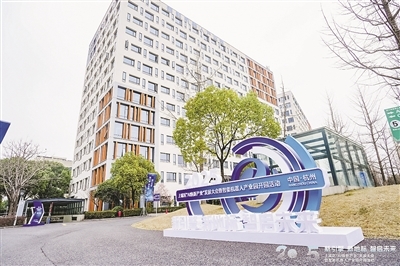
Core Insights - The establishment of the Central Innovation District (CID) in Shangcheng is aimed at driving high-quality development through a comprehensive innovation revolution, addressing the challenges of urban growth and development bottlenecks [2][3][4] Strategic Decisions - The CID initiative is characterized by proactive engagement and strategic choices, positioning Shangcheng's development within national and regional frameworks, and contributing to broader goals such as common prosperity and global innovation leadership [2][3] Innovation Framework - The CID represents an evolution from traditional Central Business Districts (CBD) to a model that integrates artificial intelligence, focusing on creating a vibrant innovation ecosystem with enhanced innovation platforms and higher industrial capabilities [5][6] Industry Restructuring - The CID's structure is defined by a "1+5" functional matrix, where "1" refers to the embodiment of intelligent leading areas, and "5" includes various specialized zones such as the Qiantang Financial Harbor and the Smart Fashion Consumption District, all aimed at fostering a comprehensive innovation ecosystem [7][8] Financial Integration - The financial sector in Shangcheng currently accounts for about 25% of GDP, indicating significant potential for deeper integration with industrial development, with ambitions to reach an investment management scale of over 3 trillion yuan by 2030 [8]

在加快建设创新浙江中挑大梁当头雁
Hang Zhou Ri Bao· 2025-08-05 02:58
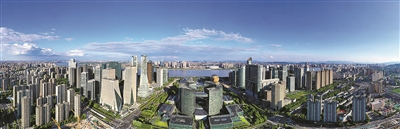
Core Viewpoint - The article emphasizes the importance of technological innovation as a pathway to modernize and enhance the quality of development in Hangzhou, with various districts outlining their strategies to implement the decisions made during the recent municipal conference [2]. Group 1: Innovation and Development Strategies - The districts are focusing on innovation as the primary driving force for development, with specific plans to enhance urban productivity and establish innovation zones [3][4][5][6][8]. - Each district is encouraged to integrate education, technology, and talent reforms to support innovation and industrial integration, particularly in artificial intelligence [4][5][6][8][9]. Group 2: Economic Growth and Industrial Focus - Emphasis is placed on creating new industrial landmarks and enhancing the local economy through initiatives like the "China Calculation Valley" and the development of cultural and creative industries [4][5][8]. - The districts aim to attract high-quality projects and enhance local enterprises' investment potential to stimulate economic growth [10][11][12][14]. Group 3: Urban and Rural Integration - There is a strong focus on urban-rural integration, with plans to improve public services and infrastructure to enhance the quality of life for residents [10][12][13][14]. - The districts are working on projects that promote ecological and cultural development, ensuring sustainable growth while preserving local heritage [13][14].
时评:擦亮“京”字招牌,燃动时尚消费新引擎
Sou Hu Cai Jing· 2025-06-19 07:26
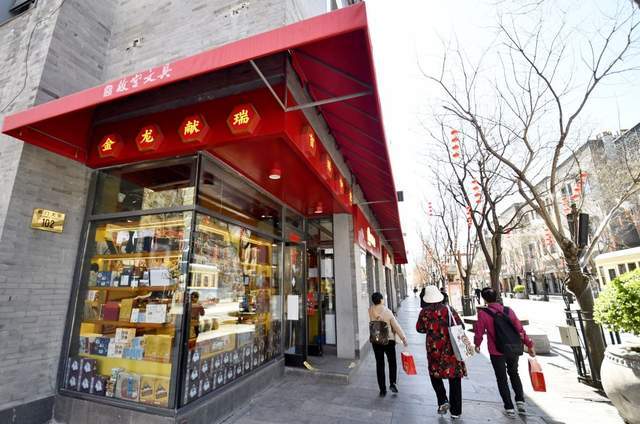
Core Viewpoint - Beijing's fashion consumption potential is being stimulated through a comprehensive action plan that includes five major initiatives and 21 specific measures aimed at enhancing the city's fashion appeal and economic growth [1][3]. Group 1: Action Plan Overview - The action plan, titled "Beijing's Special Action Plan for Expanding Fashion Consumption," was jointly released by the Beijing Municipal Bureau of Commerce and other departments [1]. - The plan focuses on cultivating fashion scenes, enhancing activities, and promoting brand innovation to invigorate the fashion consumption landscape in Beijing [1][3]. Group 2: Cultural and Economic Context - Beijing, as a cultural and international consumption center, possesses a unique advantage in creating a top-tier fashion consumption hub due to its rich historical and cultural background [3]. - The integration of traditional and modern elements in fashion consumption is highlighted, showcasing the city's cultural essence through various fashion experiences [4][6]. Group 3: Economic Impact and Consumer Engagement - The emergence of flagship stores in areas like Sanlitun has significantly boosted local dining and tourism, demonstrating the economic dynamism of fashion consumption [5]. - Data indicates that over 900 new flagship stores are expected to open in Beijing in 2024, reflecting brands' interest in the cultural influence associated with the city's identity [5]. Group 4: Innovation and Local Brand Empowerment - The action plan emphasizes the importance of preserving local culture while introducing innovative business models, such as transforming traditional streets into vibrant cultural consumption spaces [6]. - Support for local brands, including the establishment of design laboratories and the promotion of traditional crafts in modern fashion, is a key focus of the initiative [6]. Group 5: Future Vision and Cultural Confidence - The plan aims to enhance Beijing's cultural confidence by positioning the city as a global fashion narrative, encouraging the fusion of traditional elements with contemporary design [7]. - Future initiatives include establishing international fashion release centers and transforming historical sites into fashionable destinations, further integrating culture and consumption [7].
财达证券每日市场观察-20250610
Caida Securities· 2025-06-10 07:04
Market Performance - On June 9, the Shanghai Composite Index rose by 0.43%, the Shenzhen Component Index increased by 0.65%, and the ChiNext Index gained 1.07%[3] - Market turnover reached 1.31 trillion, an increase of approximately 130 billion compared to the previous trading day[1] Sector Analysis - All sectors except food and beverage saw gains, with pharmaceuticals, military industry, agriculture, and textiles leading the increases[1] - The military and innovative pharmaceuticals sectors have shown significant strength, driven by recent geopolitical events and advancements in clinical research[1] Economic Indicators - In May, the Consumer Price Index (CPI) decreased by 0.1% year-on-year, while the Producer Price Index (PPI) fell by 0.4% month-on-month, with a year-on-year decline of 3.3%[5] - For the first five months of the year, China's total goods trade value reached 17.94 trillion, reflecting a year-on-year growth of 2.5%[6] Investment Trends - In the first week of June, new fund issuance exceeded 31 billion, with equity funds showing a "high volume, low amount" characteristic, totaling only 5.82 billion[11] - Public REITs' total market value surpassed 200 billion for the first time, with the Shanghai Stock Exchange accounting for nearly 70% of this total[12][13]
影响市场重大事件:工信部表态,加大对舆论关注度高、存在较大质量安全隐患等车型的抽查力度
Mei Ri Jing Ji Xin Wen· 2025-06-09 22:42
Group 1 - The central government is set to establish a commercial health insurance innovative drug catalog to better meet the multi-level medication guarantee needs of the public [1] - The Ministry of Industry and Information Technology and the Ministry of Civil Affairs are promoting the design and development of intelligent elderly care service robots, with a pilot period from 2025 to 2027 [3] - The Ministry of Housing and Urban-Rural Development aims to achieve an average resource utilization rate of over 50% for construction waste in cities at the prefecture level and above by 2027 [6] Group 2 - The Beijing Municipal Bureau of Commerce is planning to create a global first-release center to support the renovation and upgrading of commercial districts and shopping malls [8] - The State Administration for Market Regulation has issued compliance guidelines for the "6·18" online promotional event, emphasizing fair market competition and the prevention of illegal activities [10] - Guiyang is establishing a joint meeting system to promote the development of the sports industry, with plans to introduce supportive policies and funding for sports products and services [11]
时尚消费再升级 北京将增加更多特色空间、文化体验区、休闲功能区等
Bei Jing Shang Bao· 2025-06-09 07:01
Core Viewpoint - The implementation of the "Beijing Fashion Consumption Expansion Special Action Plan" aims to stimulate the potential of fashion consumption in Beijing and enhance the city's influence in the fashion consumption sector [5] Group 1: Fashion Scene Development - Beijing will create diverse and integrated special spaces to establish international consumption experience zones, catering to various consumer needs [1] - The city will encourage urban renewal to release new spaces for non-standard businesses while preserving historical cultural elements [1] - A series of cultural and commercial integration projects will be developed to enrich various sectors such as performing arts, sports, and cultural heritage [1] Group 2: Health and Leisure Function Areas - The city plans to optimize and integrate sports and event resources to create distinctive gathering areas [2] - Near-mountain consumption scenes will be developed utilizing mountain resources, enhancing consumer offerings [2] - Initiatives will include the construction of traditional Chinese medicine tourism consumption pilot units to merge health culture with experiential activities [2] Group 3: Fashion Activity Enhancement - Beijing aims to establish itself as a trendsetter by enhancing the international and professional levels of major fashion events like China International Fashion Week and Beijing Fashion Week [2] - The city will promote the integration of film arts with the fashion industry through the Beijing International Film Festival [2] - Various international fashion exhibitions and activities will be encouraged to create a diverse fashion event ecosystem [2] Group 4: Fashion Brand Innovation - Beijing will establish global launch centers to stimulate the vitality of domestic brands and attract high-quality global brands to set up stores [3] - Support will be provided for local fashion customization brands and the establishment of R&D design centers [3] - The city encourages collaborations between traditional brands and well-known IPs to enhance the appeal of domestic products [3] Group 5: Urban Atmosphere Creation - The city will enhance urban landscapes and promote green urbanization through the development of parks and public spaces [4] - Initiatives will include creating micro boutique areas that integrate cultural tourism, sports, and commerce [4] - The promotion of night-time economy through extended hours for parks and museums will be encouraged to enrich night-time consumption experiences [4]
又一批A股公司将“摘星脱帽”,投资仍需注意这些风险
Di Yi Cai Jing Zi Xun· 2025-05-12 12:40
Core Viewpoint - The recent trend of companies in the A-share market "removing risk warnings" indicates a shift from "passive clearing" to "active optimization" in the market, reflecting positive signals in risk mitigation for listed companies [2] Group 1: Companies Removing Risk Warnings - *ST You Tree (300209.SZ) will remove its delisting risk warning and change its stock name to "You Ke Shu" starting May 13, following improvements in financial indicators [1] - Other companies that have successfully "removed risk warnings" include Wen Tou Holdings (600715.SH), Xin Ning Logistics (300013.SZ), Hanma Technology (600375.SH), Hezhan Energy (000809.SZ), Tian Chuang Fashion (603608.SH), and others, primarily due to financial improvements and completion of internal control rectifications [1][5] - *ST You Tree's net assets improved to 925 million yuan by the end of 2024, allowing it to eliminate both "star" and "hat" warnings [3] Group 2: Financial Improvements and Audits - Wen Tou Holdings also removed its risk warning on May 6 after restructuring and improving its net assets from negative to positive [3] - Xin Ning Logistics improved its financial situation by introducing state-owned shareholders and resolving debt risks, leading to a positive net asset status by the end of 2024 [4] - Companies like Li Gong Navigation (688282.SH) and Hengyu Xintong (300965.SZ) achieved revenue exceeding 100 million yuan in 2024, allowing them to remove risk warnings [5] Group 3: Ongoing Risk Warnings and Applications - Some companies, such as *ST Aonong (603363.SH) and *ST Weiti (603023.SH), have submitted applications to remove risk warnings, but still face unresolved issues that prevent complete risk clearance [7][8] - The removal of risk warnings does not equate to the complete elimination of risks, as it indicates only a temporary resolution of specific risk situations [2][8] - The market has seen a significant increase in the ST sector index, which rose by 13.87% from April 9 to May 12, reflecting market reactions to the "removal of warnings" [9]
资产价格与居民消费和消费类公司股价表现关系的思考
CMS· 2025-04-08 07:17
Investment Rating - The report emphasizes the importance of stabilizing the stock and real estate markets to boost consumer spending, indicating a positive outlook for the consumption sector as asset prices stabilize [3][4]. Core Insights - The relationship between asset prices and consumer spending is complex, with asset price increases leading to higher income levels and economic activity, which in turn boosts consumption [3][5]. - The report highlights that real estate assets dominate household wealth in China, making housing price stability crucial for consumer confidence and spending [3][10]. - The impact of asset price fluctuations on discretionary consumption is more pronounced than on essential consumption, with discretionary spending responding more immediately to asset price changes [24][30]. - The report identifies key investment themes in the consumption sector, including smart consumption driven by technological advancements, the preferences of Generation Z, and the aging population's consumption needs [3][32]. Summary by Sections 1. Impact of Asset Prices on Consumption - The report outlines five main effects through which asset prices influence consumption: wealth effect, expectation effect, borrowing effect, savings effect, and cultural effect [5][6]. - It notes that the wealth and expectation effects are dominant, with a growing influence from borrowing and savings effects [6][10]. 2. Differences in Impact Between Housing and Stock Prices - Housing assets significantly outweigh financial assets in Chinese households, leading to a greater impact of housing price changes on consumer behavior compared to stock prices [10][12]. - The report discusses the synchronized movements of housing and stock prices, noting that while they often rise and fall together, their effects on consumption differ [19][20]. 3. Consumption Categories and Asset Price Influence - The report categorizes consumption into essential and discretionary, stating that asset price changes have a more immediate effect on discretionary spending [24][30]. - It emphasizes the need for updated classifications of consumption categories to reflect changing consumer behaviors and preferences [30]. 4. Investment Strategies Based on Asset Price Trends - The report suggests differentiated investment strategies for high-end and mass-market products, indicating that high-end products tend to perform well in strong liquidity environments [32][34]. - It highlights the importance of aligning investment strategies with the current economic cycle and consumer trends [32][34]. 5. Sector-Specific Insights - The report provides insights into specific sectors such as high-end liquor, where the relationship between asset prices and consumption is particularly strong [39][40]. - It also discusses the performance of high-end traditional Chinese medicine products, noting their resilience despite economic fluctuations [55][58].