
科技服务等

Search documents
2026年“亚洲科技变革”峰会:解码创新机遇,驱动商业增长
Di Yi Cai Jing Zi Xun· 2026-02-26 10:15
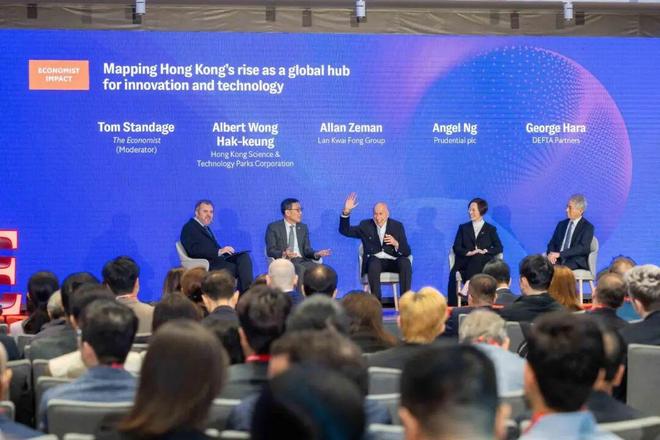
Group 1 - The Economist Impact will host a summit in Hong Kong from March 11 to 12, 2026, gathering over 700 representatives from business and government to explore pathways for corporate prosperity in an era of rapid technological change [1] - The 2026 agenda will focus on the practical applications of artificial intelligence, discussing regulatory differences across Asia, the scaling of autonomous intelligent agents, opportunities within the Greater Bay Area's innovation ecosystem, and the impact of smart mobility technologies on reshaping global supply chains [1] Group 2 - The 2025 Asia Technology Transformation Summit will see over 600 industry and government leaders convene to discuss the transformative impact of technological innovation in the region [3] - Tom Standage, Deputy Editor of The Economist, emphasized the uncertainty in geopolitics, international trade, and financial markets, stating that business leaders have the power to influence their external macro environment through technology application [3] - Confirmed speakers include prominent figures such as Yang Yi from Tuya Smart, James Elwes from HSBC, and Aseem Puri from Unilever, among others [3][4]

印度汽车巨头内讧,董事长快垮台了
汽车商业评论· 2026-02-25 23:04
Core Viewpoint - A power struggle is emerging within the Tata Group, particularly regarding the reappointment of Chairman Natarajan Chandrasekaran, which has been delayed amid internal conflicts and differing strategic visions [4][10][19]. Group 1: Leadership and Governance - Natarajan Chandrasekaran's current term is set to end in February 2027, but his reappointment is contested by Noel Tata, the chairman of the Tata Trusts, which holds a significant stake in Tata Sons [6][8]. - The Tata Trusts, which own 66% of Tata Sons, represent the true power center of the Tata empire, creating governance challenges due to the conflict between their non-profit mission and commercial objectives [8][13]. - Noel Tata's opposition to Chandrasekaran's reappointment is rooted in concerns over the latter's age and the strategic direction of the group, particularly regarding its financial performance and debt levels [10][20][19]. Group 2: Financial Performance and Strategic Concerns - Tata Group's debt has surged by 83% as it pursues high-growth strategies, with significant losses reported by key subsidiaries, including a $1.6 billion annual loss for Air India [20]. - Jaguar Land Rover has faced operational challenges, including production halts, leading to the lowest UK automotive output in 70 years [21]. - Tata Consultancy Services (TCS), the group's cash engine, has seen a 14% decline in net profit and laid off 12,000 employees due to disruptions caused by artificial intelligence [22]. Group 3: Internal Conflicts and Future Directions - Noel Tata has expressed dissatisfaction with the perceived neglect of the Tata Trusts in investment decisions, highlighting a lack of adherence to governance protocols regarding large investments [24]. - The ongoing internal power struggle is complicated by the differing views of the SP Group, which advocates for Tata Group's public listing to enhance governance and liquidity, contrasting with Noel Tata's stance against it [45][48]. - The leadership dynamics between Chandrasekaran and Noel Tata are characterized by a complex interplay of authority, with Noel holding significant influence over companies that report to Chandrasekaran [30][31]. Group 4: Historical Context and Transformation - Chandrasekaran is the first non-family member to lead Tata Group, a position that has both empowered and isolated him within the traditionally family-led organization [34][35]. - Under his leadership, Tata Group has seen substantial revenue growth, with revenues increasing from 6 trillion rupees in March 2017 to 11.9 trillion rupees in March 2025 [38]. - The group is undergoing a significant transformation, with investments of 5.5 trillion rupees aimed at future-oriented businesses, including a semiconductor manufacturing facility expected to begin operations by the end of 2026 [40].

香港不是美国随意开启的提款机!中国这一拳重重打向特朗普!
Sou Hu Cai Jing· 2026-02-16 06:40
Group 1 - The ongoing trade war initiated by Trump has led to significant losses for the U.S., with the stock market losing $4 trillion in just half a month [3][5] - The U.S. government is attempting to shift focus to Hong Kong as a new target for its policies, aiming to undermine its financial sector through a report filled with negative portrayals and threats of sanctions [5][8] - Despite U.S. efforts to destabilize Hong Kong, the region has shown resilience, with no significant market panic or withdrawal of international capital, indicating strong investor confidence [9][11] Group 2 - China's response to U.S. sanctions includes placing 16 American companies on an export control list, primarily targeting those in the financial and technology sectors with significant operations in Hong Kong [13] - The Chinese government is also implementing strategies to enhance Hong Kong's financial position, such as expanding the Shanghai-Hong Kong Stock Connect and promoting the internationalization of the Renminbi, which could attract international capital [15][22] - Hong Kong's unique institutional advantages and its role as the largest offshore Renminbi market, handling 75% of cross-border payments, solidify its critical position in the global financial system, making it less susceptible to U.S. sanctions [22]
近五年GDP接近翻番 前海今年瞄准六大方向
2 1 Shi Ji Jing Ji Bao Dao· 2026-02-12 04:29
Core Insights - During the "14th Five-Year Plan" period, Qianhai has achieved significant economic growth, with GDP nearly doubling and modern service industry value increasing over 100% [1][2] - The region's focus on reform, innovation, and deepening cooperation with Hong Kong has led to substantial improvements in key economic indicators [2][3] Economic Growth - Qianhai's GDP is projected to grow from 175.57 billion yuan to 331.81 billion yuan from 2021 to 2025, nearly doubling [2] - The added value of the modern service industry is expected to rise from 96.41 billion yuan to 218.20 billion yuan, representing over 100% growth [2] - The region's import and export volume is anticipated to increase from 378.05 billion yuan to 757.43 billion yuan, achieving a doubling effect [2] Investment and Foreign Capital - Over the past five years, Qianhai has completed fixed asset investments exceeding 700 billion yuan [2] - Actual foreign capital utilization reached 157.52 billion yuan, with 29.32 billion yuan utilized in 2025, accounting for 58.1% of Shenzhen's total [2] Institutional Innovation - Qianhai has replicated and promoted 105 institutional innovation achievements nationwide over the past five years [2] - The region's institutional innovation index has ranked first among national free trade zones for four consecutive years [2] Modern Service Industry Development - Qianhai has established 18 specialized industrial clusters, with ship leasing assets exceeding 20 billion yuan, ranking first in South China and third nationally [3] - The area has attracted 183 Fortune Global 500 companies and 42 regional and functional headquarters of global service providers [3] Deepening Hong Kong Cooperation - There are 11,065 Hong Kong-funded enterprises in Qianhai, with over 10,000 Hong Kong residents employed in the area [3] - 26 categories of Hong Kong and Macau professionals can practice in Qianhai without taking mainland qualification exams, facilitating cross-border professional services [3] Living Standards and Healthcare - The Qianhai Hong Kong-Macau Youth Dream Factory has incubated 1,632 entrepreneurial teams, raising a total of 7.2 billion yuan in financing [4] - The "Hong Kong-Macau Drug and Medical Device Access" initiative has achieved full coverage in local hospitals, benefiting over 1,700 patients [4] Business Environment Optimization - Qianhai has implemented "instant approval" for business establishment and introduced reforms that save companies approximately 38 million yuan annually [5] - The region has launched a provincial-level service platform for enterprises going abroad, offering 70 public services [5] Internationalization and Urban Development - The "Qianhai Land Space Planning (2025-2035)" has been implemented, establishing a spatial pattern that promotes connectivity and urban development [6] - Major infrastructure projects, including the Shenzhen-Zhongshan Corridor and various rail lines, are enhancing transportation networks [6] Future Development Plans - In 2026, Qianhai will focus on six key tasks, including building a modern industrial system and enhancing international competitiveness [7] - The region aims to implement new measures to boost trade and investment, targeting a 6% growth in total imports and exports [8] Regional Cooperation and Talent Attraction - Qianhai plans to enhance cooperation with Hong Kong, including the establishment of a dual-headquarters base and facilitating cross-border logistics [8] - New policies will support Hong Kong youth and provide high-quality services for talent from Hong Kong and Macau [8] Urban Center Development - Qianhai aims to create a future urban center in the Guangdong-Hong Kong-Macau Greater Bay Area, emphasizing internationalization and cultural integration [9] - The region will implement various urban development projects to enhance its appeal as a modern coastal city [9] Political and Organizational Support - Qianhai is committed to strengthening political foundations for development through innovative party-building efforts and governance [10] - The region aims to align its development with national and local policies, ensuring comprehensive and coordinated growth [10]
各地加大力度培育首发经济 持续激发消费活力
Yang Shi Xin Wen Ke Hu Duan· 2026-01-25 01:32
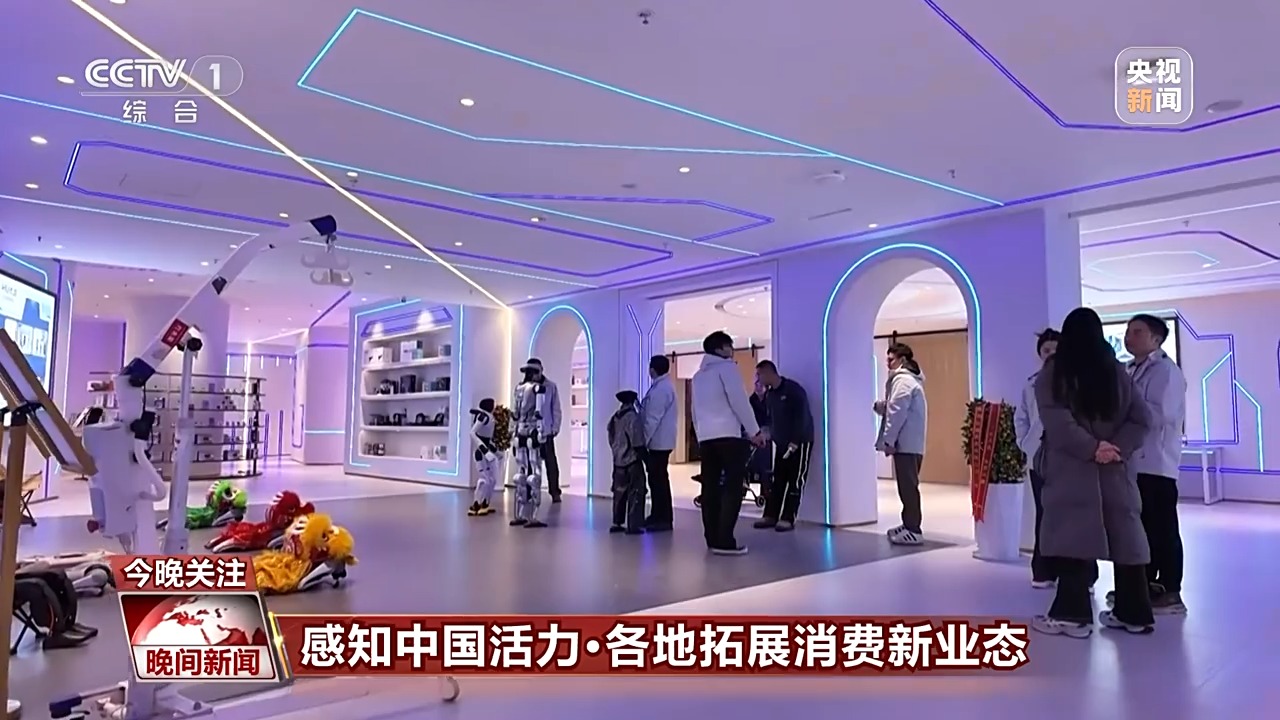
Group 1 - The new year sees various regions intensifying efforts to cultivate the "first launch economy," continuously enriching and expanding new business formats to stimulate consumer vitality [1] - Guizhou's first robot 6S store has opened in Guiyang, showcasing over a hundred cutting-edge domestic service and educational robots, allowing citizens to experience the service functions and industry development trends [3] - Inner Mongolia is enhancing the development of experiential new business formats, with a new sports park in Hohhot attracting many citizens, and plans to add over 20 flagship and innovative concept stores in Baotou this year [5] Group 2 - Shaanxi is exploring an innovative model of "intangible cultural heritage + shopping malls + street blocks," planning to introduce a batch of first stores from Northwest and nationwide [7] - Hebei is focusing on ten sectors including catering, culture, and exhibitions, creating 28 multi-format consumption scenarios to continuously stimulate the vitality of the first launch economy [9] - Shanghai is transforming many first stores and flagship stores to align with local characteristics, with plans to introduce global food brands and create international food districts supported by specific policies [11][12]
财政部等5部门:明确实施中小微企业贷款贴息政策|政策与监管
清华金融评论· 2026-01-20 10:44
Group 1 - The article discusses the implementation of a loan interest subsidy policy for small and micro enterprises in China, aimed at helping them overcome difficulties and promote high-quality economic development [2][3] - The policy will support fixed asset loans and new policy financial tools for eligible small and micro private enterprises starting from January 1, 2026, with a subsidy rate of 1.5% per year for up to two years [3] - The maximum loan amount eligible for the subsidy is 50 million yuan, with a maximum subsidy of 1.5 million yuan per enterprise [3] Group 2 - The supported sectors include key industrial chains, production service industries, and emerging fields such as artificial intelligence, with specific focus areas like new energy vehicles, medical equipment, and industrial software [3] - The Ministry of Finance and the financial regulatory authority will conduct joint inspections to ensure compliance, with strict penalties for serious violations by enterprises or banks involved in fraudulent subsidy operations [3]

海淀的“海”是蓝海的“海”
Bei Jing Ri Bao Ke Hu Duan· 2026-01-07 01:10
Core Insights - In 2025, Haidian District aims to become the "most investment-worthy city" by focusing on technological innovation, public welfare, and urban governance, contributing to high-quality development in the capital and laying a solid foundation for the 14th Five-Year Plan [1] Urban Development and Infrastructure - The second medium- and long-term development plan for the northern area was successfully completed, with 6.32 million square meters of construction started or resumed and 1.74 million square meters completed [3] - Key infrastructure projects include the completion of the Northwest Wang Technology Park Phase II and the commencement of 12 public service projects, including the Sujiatuo Sports Center [3] - Traffic improvements include the addition of 6.5 kilometers of rail transit and 30.33 kilometers of road, with 43 new roads completed [3][4] Economic and Industrial Growth - The "1+X+1" modern industrial system is becoming more refined, focusing on the integration of innovation resources and the development of strategic emerging industries [6] - Haidian District is establishing itself as a hub for artificial intelligence, with initiatives such as the AI Origin Community and partnerships with local universities to foster innovation [8][10] - The district has launched 27 key projects and 43 major projects, all of which are on schedule for commencement and production [11] Consumer and Market Expansion - New commercial spaces totaling 279,000 square meters have opened, enhancing consumer experiences [13] - The district has added 24 new convenient living circles, bringing the total to 103, ensuring coverage across all neighborhoods [14] Environmental and Urban Quality - Haidian has been recognized for its ecological achievements, including maintaining the best air quality in the city for 11 consecutive years and achieving a 100% compliance rate for surface water quality [35] - Urban renewal initiatives have led to the construction of new parks and green spaces, with 60 hectares of new green areas created [39] Social Welfare and Community Services - Employment initiatives have resulted in a 15% increase in the number of recruited college graduates, the highest in the city [42] - The district has expanded its elderly care services, with 65 new meal assistance points and 5,017 childcare spots created [42][78] Cultural and Educational Development - Haidian has been recognized as a top district for venture capital value, with 9 new listed companies, bringing the total to 264 [19][20] - The district is enhancing its educational offerings, with 7,910 new school places created through various construction projects [45][80] Governance and Administrative Efficiency - The district has maintained the top position in the city's business environment evaluations for two consecutive years [25] - Administrative reforms have streamlined processes, including the introduction of an intelligent government service platform to facilitate easier access for businesses and residents [27][74]

招商新动能哪里来?徐州经开区招商队伍给出答案
Yang Zi Wan Bao Wang· 2025-12-15 13:47
Core Viewpoint - The Xuzhou Economic Development Zone is actively promoting investment through a "2+3" industrial layout, integrating manufacturing, technology, and services to drive high-quality economic development in Xuzhou [1] Group 1: Investment Attraction Strategies - The Xuzhou Economic Development Zone has formed specialized teams for manufacturing, technology, and services, focusing on precise targeting and alignment with industrial needs to strengthen the foundation for investment [2] - Manufacturing investment efforts are centered on enhancing the engineering machinery and intelligent manufacturing sectors, with a focus on attracting key projects in the "three electric" systems and digital hydraulics [2] - The technology investment strategy targets core areas such as biomedicine, health, and electronic information, aiming to connect industry needs with innovative projects and startups [3] Group 2: Resource Collaboration and Project Support - The zone emphasizes resource collaboration to support project implementation, recognizing that successful project landing requires synergy among industrial, innovation, and service chains [4] - A "school-enterprise dual advancement" mechanism has been established to facilitate cooperation between enterprises and academic institutions, resulting in over 80 collaborative projects and technology demands being matched [4] - The development of high-level platforms for innovation is underway, including national and provincial manufacturing innovation centers, to support the transition from research to production [5] Group 3: Long-term Empowerment and Ecosystem Optimization - The Xuzhou Economic Development Zone aims to create a supportive business environment through policy support and service optimization, ensuring that projects can thrive post-implementation [6] - Innovative policies, such as zero-rent initiatives for startups, are designed to alleviate financial burdens and encourage technology-driven enterprises to settle in the area [7] - Continuous improvements in supporting services, including logistics and commercial facilities, are being made to enhance the living and working conditions for talent and businesses in the region [7]
太白湖新区厚植营商沃土,激活发展动能
Qi Lu Wan Bao· 2025-12-09 06:54
Core Viewpoint - The "Implementation Plan for Further Optimizing the Business Environment in Taibai Lake New District" has transformed from a blueprint into tangible development results, enhancing market vitality and driving high-quality regional development [1]. Group 1: Government-Enterprise Communication - The plan emphasizes a service philosophy of "prompt action for requests, no disturbance when there are none," which has been integrated into every aspect of service for enterprises [2]. - A multi-channel communication model has been established, including regular visits, special assistance activities, and an "Entrepreneur's Reception Room," ensuring that enterprise requests receive timely responses [2]. - The district has conducted 48 government-enterprise seminars, achieving a responsive mechanism where enterprises' needs are addressed by the government [2]. Group 2: Policy Awareness and Support - The district has implemented a comprehensive policy promotion strategy, conducting 228 training sessions and disseminating 325 pieces of information through various channels [3]. - An online platform for enterprise requests has been established, processing 528 requests with a 100% completion rate [3]. Group 3: Enterprise Growth Initiatives - The plan includes four cultivation programs aimed at supporting enterprises throughout their lifecycle, facilitating transitions from individual businesses to larger entities [4][5]. - The "Emerging Plan" has streamlined the process for individual businesses to transition into companies, reducing procedural steps by 50% [4]. - The "Leading Plan" focuses on supporting companies in their listing efforts, with 22 companies already listed on the Qilu Equity Exchange [6]. Group 4: Comprehensive Empowerment - A "four-dimensional" empowerment system has been created to address innovation, space, financing, and talent challenges faced by enterprises [7]. - The district has established 30 financial institutions and facilitated financing of 8.09 billion yuan to alleviate funding difficulties for enterprises [8]. - Talent recruitment initiatives have successfully attracted over 1,000 young talents and several high-level professionals to the district [8]. Group 5: Entrepreneurial Ecosystem - The plan aims to create a supportive ecosystem for entrepreneurs through growth, service, and care initiatives [9]. - A "Entrepreneur Care Project" has been launched to provide personalized support for high-level talents, including housing and education services [10]. Group 6: Economic Performance - As of November, the district has 17,285 market entities, with an increase of 2,906 entities, and significant growth in industrial investment and service sector revenue [11]. - The optimization of the business environment has led to a 793.4% increase in industrial investment and a 91.8% increase in foreign trade imports and exports [11].
我国服务业经济实现较快增长
Jing Ji Wang· 2025-10-30 02:46
Economic Performance - In the first three quarters, the service industry added value reached 592,955 billion yuan, with a year-on-year growth of 5.4% [1] - The service industry's contribution to GDP growth was 60.7%, driving a 3.1 percentage point increase in GDP [1] Policy Initiatives - The government has implemented various policies to boost service consumption, including the "Special Action Plan to Boost Consumption" and measures to enhance service consumption quality [2] - Local governments have introduced specific initiatives, such as low-interest loans for cultural tourism enterprises and subsidies for technology service consumption [2] Market Dynamics - There is a positive interaction between policy and market, with subsidies and financing supporting innovation in service forms, while consumer vouchers stimulate demand [3] - Innovative consumption scenarios are emerging, driven by cultural and technological integration, enhancing consumer engagement [4] Cultural and Tourism Integration - The integration of culture and tourism is creating new market opportunities, with significant growth in tourism-related e-commerce and cultural services [4] - Events like the National Day holiday have seen a surge in sports service consumption, indicating a growing trend in diverse service offerings [4] Film and Entertainment Sector - The film industry is evolving into a multi-dimensional consumption ecosystem, with initiatives to convert cinema traffic into offline consumption [6] - The cross-industry integration of film with other sectors is generating substantial derivative consumption markets, with projections indicating significant growth in the animation derivative market by 2025 [7][8]