
海洋渔业

Search documents
采冰开张 用于海鲜保鲜
Ren Min Ri Bao· 2026-01-23 01:47
对采冰人来说,天气越冷,采冰越安全。这也是当地人只在每年最冷的时间采冰的主要原因。早 期,当地采冰完全靠人工凿冰、抬冰、运冰,随着采冰作业方式不断升级,机动锯、电动传送带等现代 机械设备逐渐成为主要"劳动力",人工逐渐退居辅助。 东港采冰季较短,采冰人必须抓紧时间作业,保证当地海洋渔业生产、海鲜运输等行业一年的用冰 量。采出的天然冰块,厚度一般约40厘米,重量约为100公斤,大都运到靠近北黄海的大小冰场。每年1 月末,北黄海岸边会摞起几十个高高的冰垛,颇为壮观。当地人采冰、储冰历史悠久,会对冰块采取多 层保温措施存储,以保证春夏秋三季冰垛里的天然冰减少融化。 在辽宁东港市,每年元旦到立春的这段时间,是当地的采冰季。在东北其他非沿海地区,冬季采冰 多为制作冰雕;而东港人采冰,主要是用于海鲜保鲜。 东港市是我国北方的海鲜主产地之一。一年四季,无论是渔船出海作业还是海鲜运输,都需要大量 天然冰保证海鲜的鲜度和品质。 ...
阿尔及利亚与印度尼西亚探讨加强农业和渔业合作
Shang Wu Bu Wang Zhan· 2026-01-22 11:05
Core Viewpoint - Algeria and Indonesia are enhancing cooperation in agriculture and fisheries to align with their historical and political relations, focusing on food security and production capacity [1] Group 1: Cooperation Discussions - The meeting involved discussions on elevating agricultural and fisheries collaboration to match the bilateral historical and political relationship [1] - Emphasis was placed on developing a joint strategy for food security and enhancing production capabilities in agriculture, marine fishing, aquaculture, and productive investments [1] Group 2: Technical and Legal Frameworks - Both parties expressed willingness to expand cooperation and deepen experience exchange and technology transfer, particularly in irrigation technology and increasing food crop productivity [1] - There is a commitment to update legal frameworks to strengthen collaboration in marine fisheries and aquaculture, along with the development of a comprehensive action plan [1] - The parties agreed to continue studying legal texts related to plant and animal quarantine to finalize them and further enhance the partnership between Algeria and Indonesia in this area [1]
“水下慧眼”已上线!媒体+瀚界科技用声呐重塑智慧渔业新图景
Nan Fang Nong Cun Bao· 2026-01-22 11:00
"水下慧眼"已上 线!媒体+瀚界 科技用声呐重塑 智慧渔业新图景 _南方+_南方 plus 为进一步推动声 呐技术在水产种 质资源监测、养 殖环境调控、渔 业资源评估等领 域的标准化应 用,助力海洋牧 场产业智慧化发 展。1月20日-21 日,由上海瀚界 科技发展有限公 司(下称"瀚界 科技")主办, 南方海洋科学与 工程广东省实验 室(湛江)、湛 江市远海渔业协 会、湛江瀚高科 技有限公司联合 承办的"海洋牧 场"声呐应用研 讨会在广东湛江 召开。 大会邀请到国内 海洋渔业、水声 等领域的专家学 者、企业代表, 聚焦声呐技术在 海洋牧场的创新 应用,充分探讨 了海洋牧场的技 术创新与产业融 合新路径。 广东农业技术推 广中心副主任张 海发在致辞中表 示,瀚界科技牵 头承担国家重点 研发计划,与湛 江湾实验室深入 合作并携手举办 研讨会,架通了 科研与市场的桥 梁,中心将会全 力支持海洋牧场 技术创新,让更 多先进技术得以 转化,成果得以 落地。 广东农业技术推广中心副主任张海发 前沿报告 声呐技术驱动牧 场智能化 南方海洋科学与 工程广东省实验 室(湛江)总工 程师杨仁友为大 会致辞并作《智 科研优势与瀚界 ...


聚焦中印尼“两国双园”建设 福州两会代表委员建言赋能
Zhong Guo Xin Wen Wang· 2026-01-22 08:04
Group 1 - The establishment of the China-Indonesia Economic and Trade Innovation Development Demonstration Park marks a significant milestone, with the park officially approved in January 2023, indicating the acceleration of the "two parks" initiative between China and Indonesia [1][2] - As of now, there are 251 industrial enterprises in the Yuanhong Investment Zone, focusing on five cross-border industrial chains: marine fisheries, tropical agriculture, light industry and textiles, mechanical electronics, and green mining [1] - The first imports of Indonesian fresh coconuts and frozen durians to Fuzhou are expected in April and November 2025, respectively, showcasing the ongoing industrial agglomeration effects and expanding cross-border industrial cooperation [1] Group 2 - The "two parks" initiative is a crucial strategic support for Fuzhou's development as a core area of the Maritime Silk Road, with significant investment growth and positive development momentum in marine fisheries, tropical agriculture, and materials processing [2] - The Fuzhou government plans to implement 18 cooperation projects, including the Indonesian Fisheries Center, by 2026, aiming to strengthen the "two parks" initiative [2] - Suggestions for improving trade facilitation include optimizing customs processes and creating online cross-border declaration channels to reduce institutional costs and enhance efficiency [2]
(经济观察)中印尼“两国双园”建设提速
Zhong Guo Xin Wen Wang· 2026-01-22 06:48
Core Insights - The construction of the China-Indonesia "Two-Country Twin Parks" is accelerating, becoming a key support for Fuzhou's connection to the global market [1][2] Group 1: Project Development - The China-Indonesia Economic and Trade Innovation Development Demonstration Park was officially established in Fuzhou's Yuanhong Investment Zone, marking the formal launch of the "Two-Country Twin Parks" [1] - As of now, there are 251 industrial enterprises in the Chinese park, collaborating across five cross-border industrial chains: marine fisheries, tropical agriculture, light industry and textiles, machinery and electronics, and green mining [1] - The first imports of Indonesian fresh coconuts and frozen durians to Fuzhou are expected in April and November 2025, respectively, showcasing the ongoing industrial agglomeration effects [1] Group 2: Strategic Importance - The "Two-Country Twin Parks" are a crucial strategic support for Fuzhou in establishing itself as a core area of the Maritime Silk Road [2] - The Yuanhong Investment Zone has developed a cross-border industrial cooperation pattern in marine fisheries, tropical agriculture, and materials processing, with expanding investment scales and positive growth momentum [2] Group 3: Recommendations for Improvement - Suggestions include optimizing customs and inspection processes, creating online cross-border declaration channels, and reducing institutional costs to enhance trade facilitation [2] - There is a call for breakthroughs in regulatory alignment and institutional innovation to overcome cross-border regulatory barriers and promote mutual recognition of standards and regulatory collaboration [2] - Emphasis on macro-level policy coordination to address barriers in cross-border taxation and logistics, and to expand the regional supply chain center in collaboration with multiple ASEAN countries [2]
如何打造新时代“海上新烟台”?
Qi Lu Wan Bao· 2026-01-21 07:21
Core Viewpoint - Yantai aims to leverage its marine resources and develop a modern marine economy during the "14th Five-Year Plan" period, focusing on blue development and ecological protection [1][9]. Group 1: Bay Planning - The government report emphasizes the need for comprehensive bay planning, aiming to create beautiful bays and achieve two national-level beautiful bays by 2026 [2][3]. - Yantai's marine economy is transitioning from "point development" to "overall planning," necessitating a shift from a large marine economy city to a modern marine strong city [2][3]. - A proposal for a special leadership group to initiate a comprehensive planning and high-quality development action for Yantai's main bays has been suggested, promoting a "one bay, one policy" approach for differentiated development [3]. Group 2: Port-Industry-City Integration - The government report highlights the construction of a world-class marine port and the deepening of port-industry-city integration, targeting a cargo throughput of over 550 million tons by 2026 [5]. - The integration of port and local industries is crucial, with plans to develop regional industry clusters such as stone, new energy, and high-end chemicals to enhance port competitiveness [5][6]. - The marine equipment industry is identified as a core support for Yantai's marine economy, with initiatives to strengthen marine equipment and marine renewable energy industry chains [6][7]. Group 3: Ecological Protection - The government report calls for the establishment of a model for island protection and development, including the construction of a zero-carbon island [7][8]. - The promotion of ecological aquaculture is essential for the "blue granary" initiative, with suggestions for a multi-species ecological farming model to enhance water quality and seafood quality [8]. - Plans to build deep-sea aquaculture facilities and a resource bank for marine species are set to strengthen Yantai's "blue granary" foundation, promoting a transition to technology-driven and ecologically sustainable fishing practices [8].

海南海洋经济跑出加速度
Zhong Guo Zi Ran Zi Yuan Bao· 2026-01-21 02:05
Core Viewpoint - Hainan's marine economy is expected to maintain rapid growth by 2025, serving as a "ballast" and "engine" for the province's economic development, significantly contributing to the construction of Hainan Free Trade Port with strong "blue energy" [1] Group 1: Economic Growth and Industry Development - Hainan's marine economy is benefiting from policy coordination, technological support, and industrial upgrades, driving the province towards its goal of "strengthening maritime capabilities" [1][3] - The marine strategic emerging industries in Hainan are projected to experience explosive growth by 2025, with the marine oil and gas sector's added value expected to reach 11.6 billion, a year-on-year increase of 48.1% [3] - The marine power industry is also set to see significant growth, with an expected added value of 1.3 billion, a staggering increase of 306% [3] Group 2: Technological Innovation and Research - Technological innovation is crucial for the development of Hainan's marine economy, with the establishment of a leading deep-sea scientific research infrastructure in the Yazhou Bay Science and Technology City [4] - Hainan has formed a deep-sea technology innovation ecosystem, with over 1,000 researchers and 45 research teams contributing to national and provincial projects [4] - The province is advancing the application of intelligent unmanned equipment in deep-sea testing and monitoring, enhancing its capabilities in marine research [4] Group 3: Regulatory and Institutional Framework - Hainan's marine economy development is supported by a comprehensive institutional framework, including the establishment of a joint mechanism between the Ministry of Natural Resources and the provincial government [6] - The province is actively drafting regulations to promote high-quality development of the marine economy, ensuring a cohesive strategy for marine development [6][7] - A multi-layered marine monitoring network is being constructed to enhance disaster prevention and response capabilities in the face of increasing marine disaster risks [7][8] Group 4: International Cooperation and Regional Integration - Hainan is enhancing its international cooperation in marine technology, with initiatives such as the establishment of a global marine dynamics calibration center and a deep-sea technology enterprise cooperation center [10] - The province is promoting practical cooperation projects and has successfully signed contracts for 23 deep-sea industry projects during a global industry promotion conference [10] - Hainan's maritime transport routes are being upgraded to strengthen connections with the western land-sea new corridor, facilitating deeper integration with the Free Trade Port [10]
向海洋要发展,青岛着力建设现代海洋中心城市
Qi Lu Wan Bao· 2026-01-20 14:33
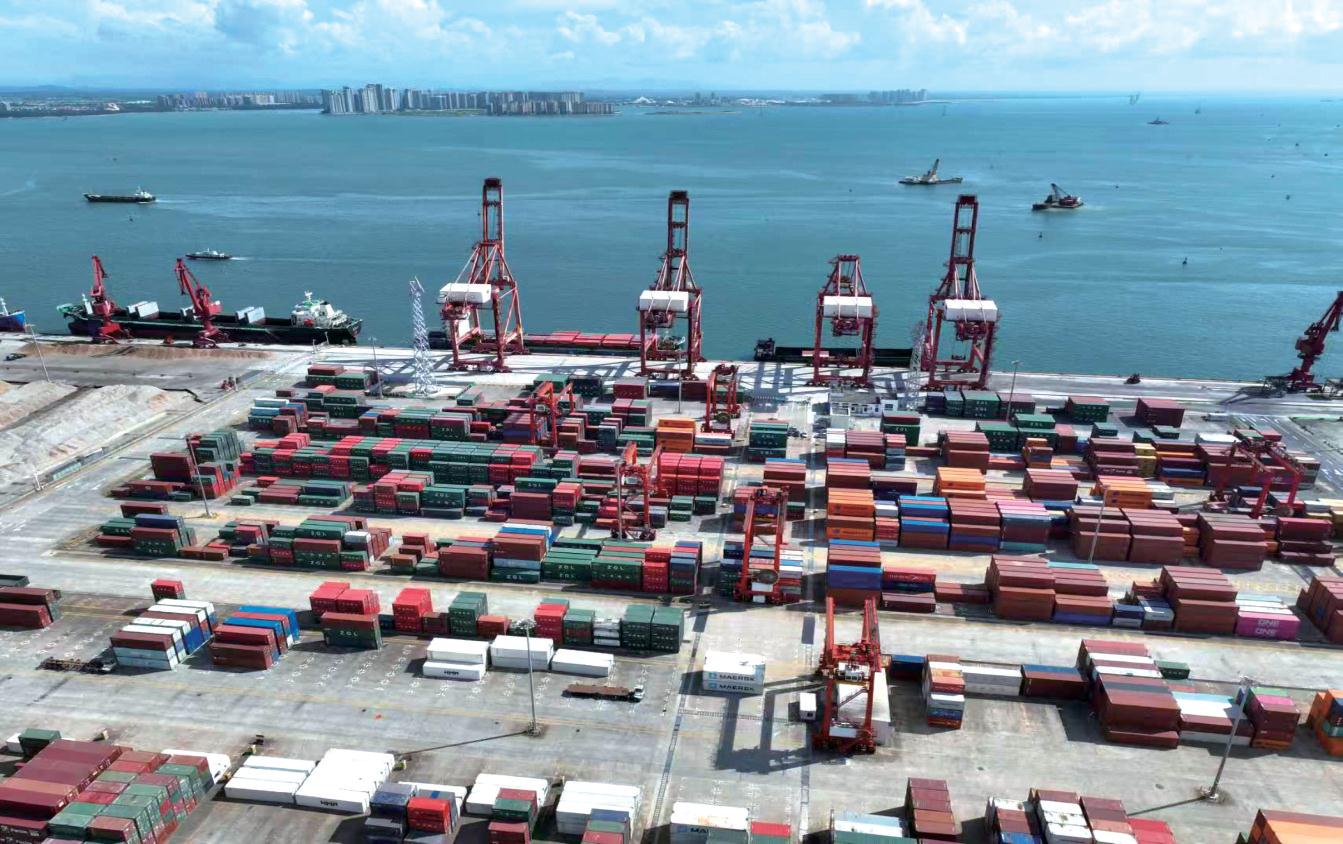
Core Viewpoint - Qingdao is positioning itself as a modern marine center city, aiming for a marine GDP growth of approximately 6.5% by 2025, ranking third among marine cities in China, supported by a comprehensive policy framework for high-quality marine economic development [1][9]. Policy Upgrades - The "Marine 20 Policies" are set to provide over 400 million yuan in funding, tripling the previous policy's scale, focusing on key industries and supporting measures from technology talent incentives to blue finance [2]. - The policies aim to revitalize traditional fisheries and promote emerging sectors like marine equipment and marine pharmaceuticals, with specific financial support for new marine health products and cosmetics [2]. Technological Leadership - Qingdao's marine technology sector is bolstered by significant research capabilities, with eight provincial marine technology innovation centers and 137 technology achievements transitioned to practical applications during the "14th Five-Year Plan" [3]. - The city has completed the first Asian cylindrical floating production storage and offloading unit, enhancing its capabilities in deep-water oil and gas development [3]. Artificial Intelligence Integration - By 2025, Qingdao will establish the first national marine AI model industry alliance, with models capable of predicting global marine environments with 3000 times the efficiency of traditional methods [4]. Exploration of Marine Economy - The modern marine industry now accounts for 44% of Qingdao's economy, with significant growth in marine vessel and equipment manufacturing [5]. - Innovations in traditional fisheries have led to the development of large-scale intelligent fishing vessels, enhancing productivity and operational efficiency [5]. Shipping Sector Growth - Qingdao's port has expanded its capabilities, with new shipping routes and a ranking of fourth in global cargo throughput, while also enhancing its international shipping service functions [7]. - The establishment of various marine insurance and oil and gas centers has improved Qingdao's position in the global shipping index [7]. Future Development Plans - By 2026, Qingdao aims to further integrate marine strategies, focusing on 188 key projects with a total investment of 210 billion yuan, and enhancing its role in global marine governance [9]. - The city plans to implement ten key marine cooperation projects and host significant international marine forums to strengthen its global influence [9].
投入超33亿元护海!广东交出多项“全国第一”的蓝色成绩单
Nan Fang Du Shi Bao· 2026-01-20 12:11
Core Viewpoint - Guangdong has made significant progress in marine ecological protection and development, investing over 3.3 billion yuan since the 14th Five-Year Plan, with multiple marine ecological indicators ranking among the best in the country [1] Group 1: Marine Ecological Protection Achievements - Guangdong has established a marine ecological protection red line covering 16,600 square kilometers, accounting for 25.62% of its jurisdictional sea area [2] - The province has improved the proportion of nearshore waters with good quality to 91.2% by 2025, exceeding the planned target by 5.2 percentage points [4] - Over 40 kilometers of mainland ecological restoration coastline has been added, with a projected completion of 36.4% of the national task for maintaining mainland natural coastline [3] Group 2: Pollution Control and Water Quality Improvement - Guangdong has implemented a dynamic management system for over 9,900 river discharge outlets, contributing to a 9 percentage point increase in the average proportion of good water quality in nearshore areas compared to the previous five-year period [4] - The province has developed a closed-loop management system for marine waste, enhancing the regular cleaning of marine debris [4] Group 3: Investment in Marine Restoration Projects - Guangdong has received over 3.3 billion yuan in special funds for marine ecological restoration, supporting 33 restoration projects [5] - The province has restored over 200 kilometers of coastline and created approximately 25 kilometers of attractive beaches [6] Group 4: Mangrove Protection and Carbon Trading - Guangdong has planted over 4,900 hectares of new mangroves and restored over 2,600 hectares, leading the nation in new planting area [7] - The province has innovated in carbon trading mechanisms, achieving over 4 million yuan in transactions from mangrove carbon credits [7] Group 5: Sustainable Fisheries Development - Guangdong has created 13 traditional artificial reef-type marine ranches, covering over 1,000 square kilometers, and has released approximately 1.3 billion units of various aquatic species [8] - The province is promoting the transformation of nearshore traditional aquaculture to enhance ecological sustainability [8] Group 6: Green Shipping Initiatives - Guangdong has implemented a monitoring platform for ship water pollutants, conducting over 13,510 inspections and reducing illegal discharges significantly [9] - The province is advancing the use of LNG and battery-powered vessels, with high coverage rates for port shore power [9]
制度型开放赋能福建海洋经济高质量发展
Xin Lang Cai Jing· 2026-01-19 23:20
Core Viewpoint - The 20th Central Committee of the Communist Party of China has established "steadily expanding institutional openness" as the core path for deepening reform and expanding openness, emphasizing the need to "enhance maritime capabilities and promote high-quality development of the marine economy," providing fundamental guidance for coastal provinces to build a higher-level open marine economic system [1]. Historical Logic of Institutional Openness Empowering Fujian's Marine Economic Development - The development trajectory of Fujian's marine economy is essentially a process of deepening and evolving institutional openness, with historical roots in ancient maritime trade traditions and modern port openings [2]. - Fujian's historical maritime trade, particularly during the Tang and Song dynasties, established a foundation for an open and inclusive marine culture, which has been further strengthened by modern advancements in maritime technology and management [2]. Theoretical Logic of Institutional Openness Empowering Fujian's Marine Economic Development - Institutional openness, characterized by the alignment of rules, regulations, management, and standards, is essential for the high-quality development of the marine economy, which inherently requires support from institutional frameworks [3]. Practical Logic of Institutional Openness Empowering Fujian's Marine Economic Development - Fujian aims to leverage unique marine resources and strategic positioning through institutional innovation in customs facilitation, industrial clustering, regional collaboration, and ecological protection to establish a high-quality development path for its marine economy [6]. Key Initiatives for Institutional Innovation - **Customs Service Innovation**: Aiming to overcome bottlenecks in marine trade facilitation by promoting integrated customs processes and optimizing cross-border trade mechanisms [7]. - **Industrial Policy Innovation**: Focused on enhancing the capabilities of emerging marine industries through dynamic policy adjustments and collaborative mechanisms for technology transfer [8]. - **Regional Collaboration**: Enhancing the efficiency of land-sea hubs and establishing information-sharing networks to facilitate the flow of marine products [8]. - **Ecological Innovation**: Strengthening the foundation for green development in the marine economy by improving carbon trading systems and enhancing marine environmental protection measures [8].