
运输机械

Search documents
二季度日本制造业经常利润下滑11.5%
Xin Hua Cai Jing· 2025-09-01 06:03
Core Insights - Japan's manufacturing sector experienced a significant decline in recurring profits, down 11.5% year-on-year in Q2, influenced by U.S. tariff policies and other factors [1] - Overall sales in Japan's non-financial sectors saw a slight increase of 0.8% year-on-year, while recurring profits in non-manufacturing rose by 6.6% [1] - The transportation machinery sector, heavily reliant on the automotive industry, faced the most severe profit drop of 29.7% [1] Manufacturing Sector Analysis - In Q2, manufacturing sales increased by 1.3% year-on-year, but recurring profits fell by 11.5%, marking a consecutive decline over two quarters [1] - Out of 11 manufacturing industries, 7 reported a decrease in recurring profits, with declines exceeding 10% in sectors such as petroleum, steel, metal products, transportation machinery, chemical industry, commercial machinery, and general machinery [1] Investment Trends - Total equipment investment across all industries, including software investments, grew by 7.6% year-on-year [1] - A representative from the Ministry of Finance indicated that while the economy is showing signs of slow recovery, U.S. trade policies pose a downside risk, necessitating close monitoring of corporate trends [1]
【环球财经】二季度日本制造业经常利润下滑11.5%
Xin Hua Cai Jing· 2025-09-01 05:47
Core Insights - Japan's manufacturing sector experienced a significant decline in recurring profits, down 11.5% year-on-year in Q2, influenced by U.S. tariff policies and other factors [1] - Overall sales in Japan's non-financial and insurance sectors saw a slight increase of 0.8% year-on-year, while recurring profits in the non-manufacturing sector grew by 6.6% [1] - The transportation machinery industry, particularly the automotive sector, faced the most severe profit drop of 29.7% [1] Manufacturing Sector Performance - Total sales in the manufacturing sector increased by 1.3% year-on-year, but recurring profits fell by 11.5% [1] - Out of 11 manufacturing industries, 7 reported a decline in recurring profits, with significant drops in sectors such as petroleum, steel, metal products, and transportation machinery [1] - The report indicates that the manufacturing sector's recurring profits have now declined for two consecutive quarters [1] Investment Trends - Equipment investment across all industries, including software investment, rose by 7.6% year-on-year [1] - The Ministry of Finance noted that while the economy is showing signs of slow recovery, U.S. trade policies pose a risk to economic stability, warranting close monitoring of corporate trends [1]
【环球财经】日经225指数涨0.77%
Xin Hua Cai Jing· 2025-08-18 07:23
Core Points - The Tokyo stock market indices experienced a significant rise, with the Nikkei 225 index closing up by 0.77% and the Tokyo Stock Exchange Price Index up by 0.43%, both reaching historical highs [1][2] - The market opened slightly higher and showed a trend of fluctuating upward movement, driven by profit-taking from some investors and increased participation from others attracted by relatively undervalued blue-chip stocks [1] - The depreciation of the yen against the dollar positively impacted export-oriented stocks, particularly in the automotive sector, with shares of Toyota, Honda, and Nissan rising [1] - Semiconductor equipment manufacturers like Tokyo Electron and Lasertec faced downward pressure due to investor concerns over potential tariffs on semiconductors proposed by Trump [1] Sector Performance - The Nikkei index rose by 336.00 points, closing at 43714.31 points, while the Tokyo Stock Exchange index increased by 13.28 points to 3120.96 points [2] - Most of the 33 industry sectors on the Tokyo Stock Exchange saw gains, with service, transportation machinery, and precision machinery sectors leading the increases [2] - Conversely, nine sectors, including banking, marine transportation, and electric and gas utilities, experienced declines on the same day [2]
东京股市明显回落
Xin Hua Wang· 2025-08-14 08:46
Market Performance - The Tokyo stock market experienced a significant decline on August 14, with the Nikkei 225 index falling by 1.45% and the Tokyo Stock Exchange Price Index decreasing by 1.10% [1] - After two days of gains, profit-taking by investors dominated the market, leading to a slight opening decline [1] - The Nikkei index closed down by 625.41 points at 42649.26 points, while the Tokyo Stock Exchange index fell by 33.96 points to 3057.95 points [1] Sector Analysis - Most of the 33 industry sectors on the Tokyo Stock Exchange saw declines, with machinery, wholesale, and transportation machinery sectors experiencing the largest drops [1] - Conversely, sectors such as banking, electric and gas utilities, and information and communication showed gains [1] Currency Impact - The Japanese yen appreciated against the US dollar in the foreign exchange market, which contributed to the sell-off of export-related stocks, including those of Toyota and other automotive companies [1]
【环球财经】东京股市明显回落 日经225指数跌1.45%
Xin Hua Cai Jing· 2025-08-14 08:41
Market Overview - The Tokyo stock market experienced a significant decline on August 14, with the Nikkei 225 index falling by 1.45% and the Tokyo Stock Exchange Price Index decreasing by 1.10% [1] - After two days of gains, profit-taking by investors dominated the market, leading to a slight opening decline [1] Index Performance - The Nikkei index closed down by 625.41 points at 42649.26 points, while the Tokyo Stock Exchange index ended down by 33.96 points at 3057.95 points [1] Sector Performance - Most of the 33 industry sectors on the Tokyo Stock Exchange saw declines, with machinery, wholesale, and transportation machinery sectors experiencing the largest drops [1] - Conversely, seven sectors, including banking, electric and gas utilities, and information and communication, recorded gains [1] Currency Impact - The Japanese yen appreciated against the US dollar, which contributed to selling pressure on export-related stocks, notably affecting companies like Toyota [1]
东京股市显著上涨
Xin Hua She· 2025-08-08 08:00
Core Viewpoint - The Tokyo stock market experienced significant gains on July 23, driven by a new trade agreement between the United States and Japan, which reduced tariffs on Japanese imports to the U.S. [1] Market Performance - The Nikkei 225 index closed up by 3.51%, while the Tokyo Stock Exchange Price Index rose by 3.18% [1] - The Nikkei index increased by 1396.40 points, closing at 41171.32 points, and the Tokyo Stock Exchange index rose by 90.19 points, closing at 2926.38 points [1] Sector Performance - All 33 industry sectors on the Tokyo Stock Exchange saw gains, with transportation machinery, banking, and metal products leading the increases [1]
【环球财经】东京股市三连涨 东证指数再创新高
Xin Hua Cai Jing· 2025-08-07 08:04
Core Points - The Tokyo stock market indices have risen for three consecutive trading days, with the Nikkei 225 index closing up by 0.65% and the Tokyo Stock Exchange Price Index up by 0.72%, reaching a new highest closing point for the year [1] - The market was buoyed by the positive performance of the three major US stock indices the previous night, leading to a volatile upward trend in the morning session [1] - However, semiconductor-related stocks such as Tokyo Electron and Advantest fell in response to Trump's threat of imposing a 100% tariff on imported chips and semiconductor products [1] - Toyota significantly lowered its profit forecast for the current fiscal year, resulting in a drop in its stock price, contributing to a decline in the transportation machinery sector, which was the worst-performing sector of the day [1] - By the end of the trading day, the Nikkei index rose by 264.29 points to close at 41059.15 points, while the Tokyo Stock Exchange index increased by 21.35 points to 2987.92 points, marking a new historical high [1] - Most of the 33 industry sectors on the Tokyo Stock Exchange saw gains, with the electric and gas industry, warehousing and transportation-related sectors, and banking sector leading the increases; however, the transportation machinery, precision machinery, and rubber products sectors experienced declines [1]
运机集团实控人方8天减持229.2万股 套现4113.8万元
Zhong Guo Jing Ji Wang· 2025-07-29 06:38
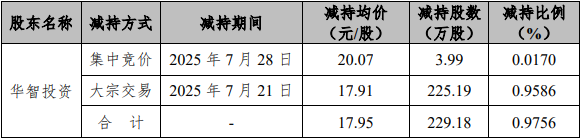
Core Viewpoint - The announcement from the company indicates that its controlling shareholder's action partner, Huazhi Investment, has completed its share reduction plan, having sold a total of 2,291,800 shares, representing approximately 0.9756% of the company's total share capital [1][3]. Group 1: Share Reduction Details - Huazhi Investment reduced its holdings through two methods: a block trade and a centralized bidding process [2]. - On July 21, 2025, Huazhi Investment sold 2,251,900 shares via block trading at an average price of 17.91 yuan per share, accounting for 0.9586% of the total shares [1][2]. - On July 28, 2025, an additional 3,990 shares were sold through centralized bidding at an average price of 20.07 yuan per share, representing 0.0170% of the total shares [1][2]. - The total amount raised from the share reduction was approximately 41.14 million yuan [1]. Group 2: Company Background and Financials - The company was listed on the Shenzhen Stock Exchange on November 1, 2021, with an initial public offering (IPO) price of 14.55 yuan per share, raising a total of 582 million yuan [3]. - The funds raised from the IPO were allocated to various projects, including technological upgrades and the establishment of a research center [3]. - In 2023, the company issued convertible bonds, raising a total of 730 million yuan, with net proceeds amounting to approximately 720.4 million yuan after deducting fees [4].

运机集团: 关于部分限制性股票回购注销完成暨不调整运机转债转股价格的公告
Zheng Quan Zhi Xing· 2025-07-22 16:16
Core Viewpoint - The company has completed the repurchase and cancellation of a portion of restricted stocks as part of its 2024 incentive plan, affecting a total of 45,136 shares, which is 0.0192% of the company's total share capital [1][6][10]. Group 1: Repurchase and Cancellation Details - The repurchase price for the restricted stocks is set at 7.6786 yuan per share, which includes bank interest for the period [1][8]. - The total amount for the repurchase is approximately 350,446.88 yuan, sourced from the company's own funds [9]. - The repurchase was necessitated by the departure of one incentive object and performance issues of others, leading to the cancellation of their restricted stocks [6][9]. Group 2: Approval and Disclosure Process - The incentive plan and its related matters were approved during the board meetings held on April 8, 2024, and subsequent meetings [2][3][5]. - The company conducted a public notice period for the initial grant of the incentive objects, receiving no significant objections [2][3]. Group 3: Impact on Company Structure - Following the cancellation, the company's total share capital will decrease from 234,962,565 shares to 234,917,429 shares [9][10]. - The structure of the company's shares will slightly change, with the proportion of restricted shares decreasing from 35.52% to 35.50% [9]. Group 4: Convertible Bond Price Adjustment - The conversion price for the company's convertible bonds remains unchanged at 12.09 yuan per share despite the stock repurchase, as the cancellation of shares is minimal [10][12].
尽管美国关税担忧未减 日本7月制造业信心回升
news flash· 2025-07-15 23:13
Group 1 - Japan's manufacturing confidence has slightly improved in July, with the manufacturing sentiment index rising from +6 in June to +7 in July, driven by a recovery in the semiconductor industry [1] - The service sector sentiment index has remained unchanged at +30 for the third consecutive month, indicating stability in service industry confidence [1] - The electronic machinery sector index improved from -16 in June to -4 in July, while the chemical sector index rose from +12 to +18, attributed to better chip demand [1] Group 2 - The transportation machinery sector index, which includes Japan's key automotive industry, decreased from +20 in June to +9 in July, with concerns over the impact of a 25% U.S. tariff on exports and costs [1] - Overall service sector confidence showed mixed results, with wholesalers experiencing improved confidence, while sectors such as real estate, retail, IT, and transportation saw declines compared to June [1]