KTV

Search documents
KTV被年轻人盘成健身房
经济观察报· 2025-11-23 07:33
Core Viewpoint - The transformation of KTV is centered around the reconstruction of commercial space value, focusing on what users can create rather than what brands provide [1][17]. Group 1: KTV as a Fitness Alternative - Young people are increasingly viewing KTV as a viable alternative to traditional gyms, integrating singing into their fitness routines [2][4]. - Users like Cheng Jie have reported significant calorie burn while singing, with one session burning over 700 calories [3]. - Social media trends such as KTV减肥 (KTV weight loss) are gaining traction among younger demographics, highlighting the blend of enjoyment and fitness [5][6]. Group 2: KTV Industry Challenges - The KTV industry faces declining market size, with projections indicating a market scale of approximately 633.73 billion yuan in 2024, down 0.99% year-on-year [15]. - The number of KTV-related enterprises has decreased from 120,000 nine years ago to about 72,000 as of November 2025 [15]. - The rise of alternative entertainment options like escape rooms and live houses has diverted the core audience away from traditional KTV [15]. Group 3: KTV Brand Innovations - KTV brands are innovating by integrating fitness elements, such as dance and exercise routines, into their offerings [10][11]. - Companies like Pure K and Star Gathering are collaborating with fitness influencers to create engaging content that combines singing and exercise [10][12]. - The introduction of new business models, such as smaller, more flexible venues and AI-enhanced experiences, is being adopted to attract a broader audience [16][17]. Group 4: User Engagement and Experience - KTV venues are increasingly focusing on user-generated content and interactive experiences, such as dance challenges and social media engagement [12][17]. - The concept of "KTV 100 Ways to Play" has successfully attracted over 60,000 customer visits, showcasing the demand for diverse entertainment options [12]. - Brands are exploring new revenue streams through virtual gifts and competitive events, shifting away from traditional profit models [17].


KTV被年轻人盘成健身房
Jing Ji Guan Cha Bao· 2025-11-22 05:15
Core Insights - KTV is increasingly being viewed as a fitness venue by young people, combining enjoyment with physical activity [1][2][6] - The trend is driven by social media engagement, where users share their experiences of singing as a form of exercise [2][3] - KTV brands are adapting to this trend by incorporating fitness elements into their offerings, such as dance routines and workout videos [6][12] Group 1: User Experiences - Users like Cheng Jie and Wan Ning have found that singing in KTV can burn significant calories, with Cheng burning over 700 calories in three hours [1][3] - Wan Ning reported improvements in his physical fitness, including increased lung capacity and faster running times, attributed to his KTV singing sessions [3] - The social aspect of KTV, where friends gather to sing and dance, enhances the overall experience, making it a fun and engaging way to stay active [5][8] Group 2: Industry Adaptation - KTV brands are responding to the decline in traditional KTV popularity by diversifying their offerings to include fitness-related activities [11][12] - Innovations include integrating dance routines and fitness videos into the KTV experience, as seen in partnerships with popular platforms like Bilibili [6][12] - The shift towards a multi-functional space aims to attract a younger audience seeking a blend of entertainment, social interaction, and fitness [11][12] Group 3: Market Trends - The KTV industry is facing challenges, with a significant decline in the number of KTV establishments and market size, projected to be around 633.73 billion yuan in 2024 [11] - New entertainment options such as escape rooms and live music venues are drawing audiences away from traditional KTV [11] - KTV brands are exploring new business models, including smaller venues and enhanced user experiences, to remain competitive in the evolving entertainment landscape [12][13]
KTV破局寻路
Jing Ji Guan Cha Wang· 2025-11-21 14:29
Core Insights - KTV is emerging as a popular alternative for fitness among young people, combining enjoyment with physical activity [1][2][6] - The trend is driven by social media engagement, where users share their experiences of singing as a form of exercise [2][3] - KTV brands are adapting to this trend by incorporating fitness elements into their offerings, such as dance routines and workout videos [6][9] Group 1: User Experiences - Users like Cheng Jie and Wan Ning have found that singing in KTV can burn significant calories, with Cheng burning over 700 calories in three hours [1][3] - Wan Ning reported improvements in his physical fitness, including increased lung capacity and faster running times, attributed to his KTV singing sessions [3][4] - The social aspect of KTV, where friends gather to sing and dance, enhances the overall experience, making it feel less like a workout and more like a fun activity [5][6] Group 2: Industry Adaptation - KTV brands are innovating by offering new features such as dance routines and fitness-related content, responding to the demand for more engaging experiences [6][9] - The introduction of "KTV fitness" concepts, such as dance-along videos and interactive singing sessions, aims to attract a younger audience seeking multifaceted entertainment [6][11] - Companies are shifting from traditional business models to more dynamic ones, integrating various entertainment forms like dance, social gaming, and live performances [12][14] Group 3: Market Trends - The KTV industry is facing challenges, with a decline in the number of establishments and market size, prompting a need for transformation [11][12] - The market size for the karaoke industry is projected to be approximately 63.37 billion yuan in 2024, showing a slight decline from previous years [12] - The rise of alternative entertainment options, such as escape rooms and live music venues, has contributed to the shifting preferences of younger consumers [12][14]
7万家KTV黯然倒闭,说明了什么?时代选择,没有道理可言
Sou Hu Cai Jing· 2025-10-29 04:19
Core Insights - The KTV industry, once a leading entertainment sector, has experienced a significant decline since 2014, with many establishments closing down and the market shrinking [1][3]. Industry Overview - Over the past nine years, approximately 70,000 KTV venues have shut down, leaving around 90,000 KTV companies in China, but only about 18,000 are still operational, representing less than 20% of the total [3]. Reasons for Decline - **Shift in Consumer Demographics**: The primary consumer base has shifted from the 70s and 80s generations to the 90s and 00s, who prefer diverse entertainment options like online games and short videos, leading to a decline in KTV's appeal [5][7]. - **Inability to Adapt**: KTV establishments have failed to keep pace with technological advancements, as free karaoke apps allow users to sing anywhere and share their performances online, diminishing the demand for traditional KTV experiences [9]. - **Change in Business Socializing**: The preference for business meetings has shifted from KTV to dining settings, where informal interactions are more conducive to building trust and facilitating deals, reducing KTV's role in business networking [10].
7万家KTV黯然倒闭,说明了什么?时代的选择,没有道理可言
Sou Hu Cai Jing· 2025-10-18 06:19
Core Insights - The KTV industry, once thriving, has seen a significant decline since 2014, with approximately 70,000 KTV venues closing in just nine years, leaving around 90,000 still operational, but less than 20% of them are effectively maintaining operations, totaling fewer than 18,000 [1][3] Group 1: Reasons for Decline - The first reason for the decline is the loss of the young consumer demographic, as KTV was once a popular entertainment choice for the 70s and 80s generations, but the rise of smartphones and the internet has led the 90s and 00s generations to prefer diverse entertainment options like online gaming and short videos, significantly reducing KTV's appeal [4][3] - The second reason is the outdated business model, as various karaoke apps allow users to sing anytime and anywhere, share their performances, and interact with others, while KTV offers a relatively closed singing space with limited external interaction. Additionally, the affordability of home karaoke equipment has led many families to opt for in-home singing experiences, further isolating KTV from modern entertainment trends [6][3] - The third reason is the shift in business socializing methods, where businesspeople previously preferred KTV for negotiations, but the current business environment favors dining culture, which allows for quieter and more conducive settings for serious discussions, making the noisy KTV environment less suitable for business meetings [8][3]
中产最体面的「崩溃」方式:去KTV干饭
3 6 Ke· 2025-10-14 01:40
Core Viewpoint - The KTV industry is evolving into a dining destination for urban workers, where food quality is becoming a significant factor in KTV selection, alongside traditional singing and entertainment offerings [4][5][39]. Group 1: KTV as a Dining Destination - KTVs are no longer just about singing; they are becoming recognized as food hubs, with diverse and high-quality menu options that rival traditional dining establishments [5][6][9]. - The competition among KTVs now includes the quality of their food offerings, with many locations featuring local specialties and unique dishes that cater to regional tastes [9][12][39]. - Urban workers are increasingly using KTVs for dining, with the experience of eating and singing together becoming a popular social activity [11][14][45]. Group 2: The Role of Pre-prepared Food - The rise of pre-prepared meals in KTVs is reshaping the dining experience, allowing for convenience and consistency in food quality, which appeals to busy urban workers [21][22][39]. - KTVs are leveraging pre-prepared food to meet the demands of young consumers who prioritize taste, convenience, and affordability in their dining choices [39][44]. - The acceptance of pre-prepared meals in KTVs reflects a broader trend where consumers are willing to overlook the origins of their food as long as it meets their expectations for flavor and value [22][37]. Group 3: Changing Consumer Preferences - The shift in consumer behavior indicates that younger generations are seeking venues that combine dining, entertainment, and social interaction, with KTVs filling this niche effectively [45][47]. - KTVs are adapting to the changing entertainment landscape by offering a space that caters to the emotional and social needs of urban workers, providing a buffer between work and personal life [45][47]. - The transformation of KTVs into multi-functional spaces highlights the industry's response to the decline in traditional singing venues, as they strive to attract a younger audience [42][44].
探访成都老牌KTV欢乐迪:撬动夜经济的秘诀何在?
Sou Hu Cai Jing· 2025-09-15 03:10
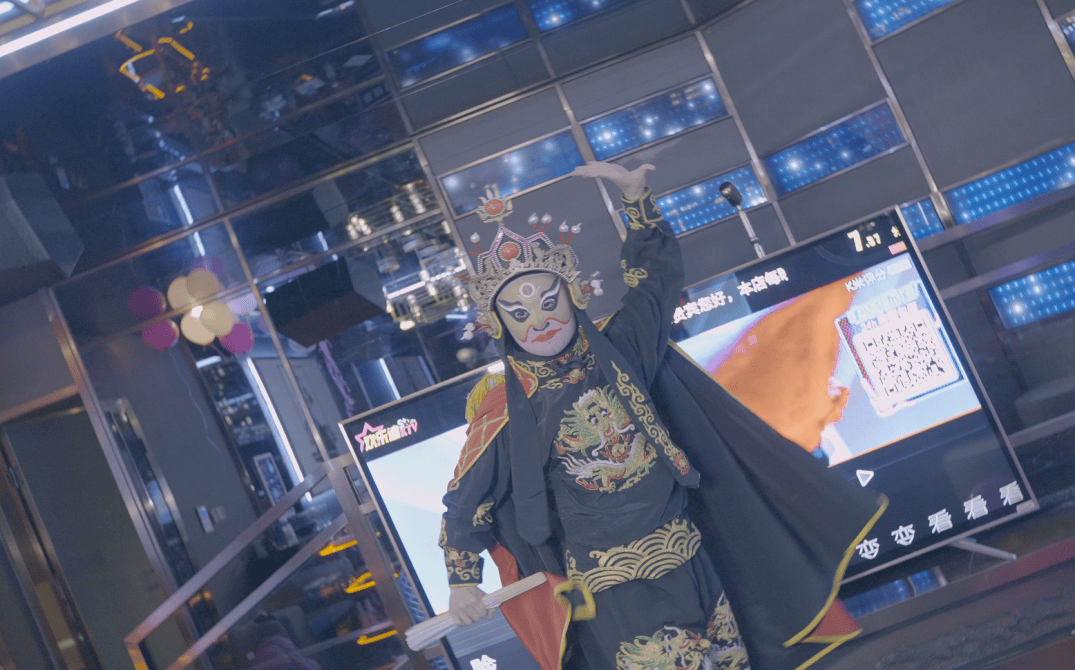
Core Viewpoint - The KTV industry is evolving to become a key player in the night economy by enhancing its service offerings and creating immersive experiences, thus driving growth in nighttime consumption. Group 1: Environmental Upgrades - The company has invested millions to upgrade all its venues, incorporating advanced acoustic systems and smart lighting to create a comfortable and private social atmosphere [1]. - The goal is to transcend traditional KTV experiences and provide a unique entertainment space for customers [1]. Group 2: Differentiated Services - Since 2019, the company has introduced innovative service projects, including the integration of traditional cultural performances like Sichuan Opera face-changing shows, enhancing customer engagement with cultural experiences [1]. - The introduction of late-night snacks aims to provide comfort food that resonates with customers during late hours, enhancing the overall experience [3]. Group 3: Emotional Celebration Services - The company offers themed packages for birthdays and anniversaries, providing comprehensive services from venue decoration to personalized playlists, creating memorable experiences for significant life events [4]. Group 4: Industry Insights - Industry experts emphasize the need for continuous innovation and deeper cultural engagement in the KTV sector to maintain competitiveness amid evolving consumer demands [6]. - The company’s chairman highlights the blend of traditional service values with modern innovations, indicating a commitment to adapt and thrive in the changing market landscape [6].
10年消失超8万家,KTV真的被抛弃了吗?
2 1 Shi Ji Jing Ji Bao Dao· 2025-09-13 02:13
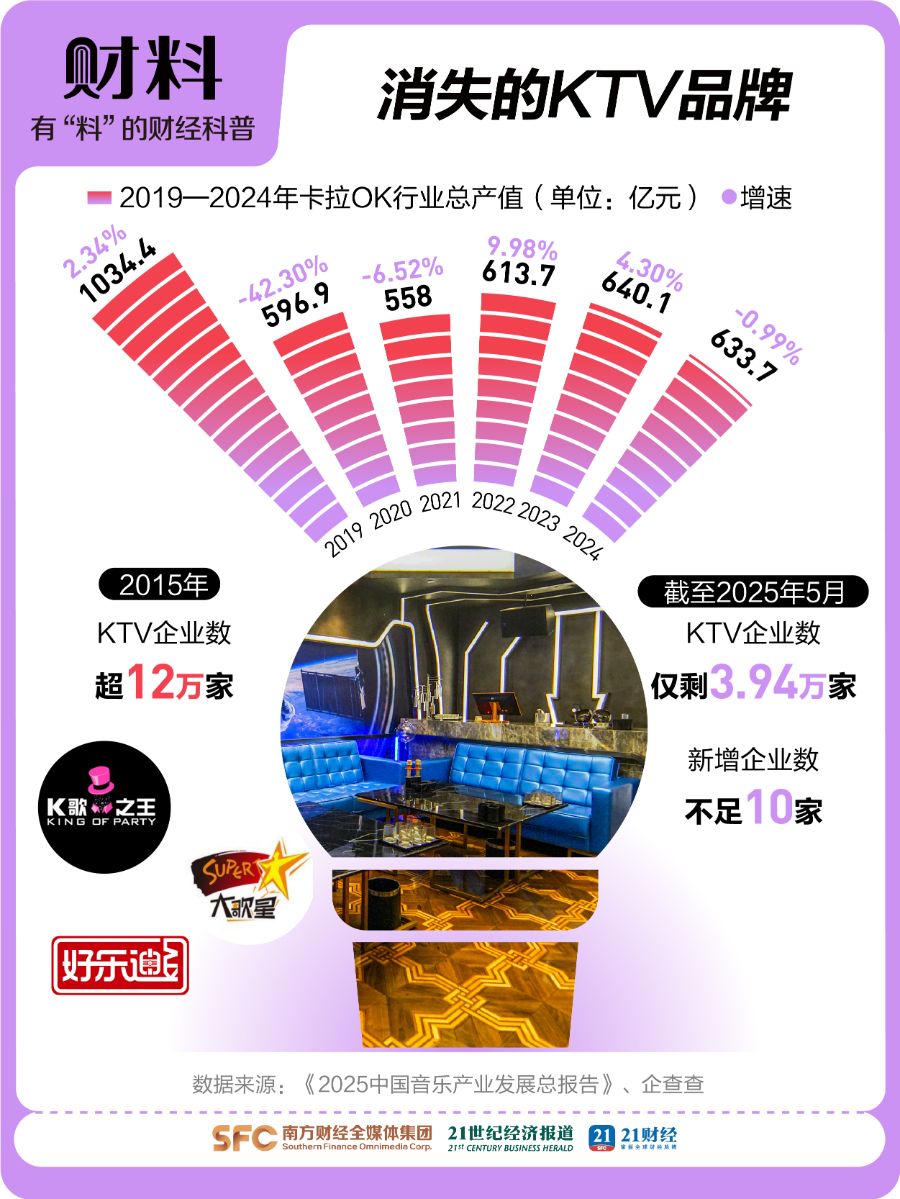
Core Insights - The KTV industry has seen a significant decline, with over 80,000 establishments disappearing in the past decade, dropping from over 120,000 in 2015 to approximately 39,400 by May 2025 [1][2] - Interestingly, the elderly population (60 years and above) now constitutes 35% of KTV consumers, with their average consumption frequency being 1.8 times that of younger individuals [2] - KTV establishments are undergoing transformation to adapt to changing consumer preferences, introducing various promotional offers and diversifying their services to include dining, gaming, and even AI self-service KTV options [3] Group 1 - The KTV industry peaked in 2015 with over 120,000 establishments, but has since faced a drastic decline, with only 39,400 remaining by May 2025 [1] - The elderly demographic is emerging as a primary consumer group, accounting for 35% of KTV patrons [2] - KTV venues are innovating by offering discounts and integrating new entertainment formats, such as dining and gaming, to attract customers [3] Group 2 - The shift in consumer behavior has led to the rise of "KTV+" concepts, where traditional KTV spaces are repurposed for activities like studying and fitness [3] - The KTV industry is not disappearing but is instead seeking new positioning through strategic transformations [3]
10年消失超8万家 KTV真的被抛弃了吗?
2 1 Shi Ji Jing Ji Bao Dao· 2025-09-13 02:09
Group 1 - The KTV industry has seen a significant decline, with over 80,000 KTV establishments disappearing in the past decade, dropping from over 120,000 in 2015 to approximately 39,400 by May 2025 [1] - The elderly population is emerging as a new consumer group, with individuals aged 60 and above accounting for 35% of KTV consumers, and their average consumption frequency is 1.8 times that of younger consumers [3] - KTV establishments are undergoing transformation to adapt to changing consumer preferences, introducing promotional offers and diversifying services by incorporating dining, billiards, gaming, home theaters, bars, and even AI self-service KTV at prices nearly 1/3 lower than traditional KTV [6] Group 2 - Young consumers are changing their engagement with KTV, with trends like "KTV+" gaining popularity, where KTV venues are used for activities such as study sessions or group fitness classes [7] - The decline in KTV popularity among younger generations raises questions about their engagement with the traditional KTV experience [10]
“满屏满地铁的AI广告,差点把我吓出心脏病”
Hu Xiu· 2025-09-03 09:07
Group 1 - The article discusses the pervasive influence of AI in various aspects of daily life, highlighting its presence in advertising, food delivery, and entertainment, often leading to a disconnect between consumer expectations and reality [5][9][38] - AI-generated content is criticized for lacking authenticity and quality, with examples of misleading advertisements and subpar products that do not match their AI-enhanced representations [19][27][38] - The cost-effectiveness of AI in advertising is emphasized, with reports indicating that AI-generated ads can be produced at approximately one-fourth the cost of traditional methods, raising concerns about the impact on brand image and consumer trust [36][37][38] Group 2 - The article notes that brands are increasingly adopting AI technologies, with major companies like H&M and Levi's utilizing AI models to create diverse marketing images without human involvement, which may lead to a decline in the perceived value of human creativity [23][48] - There is a growing trend of AI-generated models in e-commerce, with platforms like Taobao and Pinduoduo facing challenges related to authenticity and consumer trust, as AI-generated images often do not reflect the actual products [19][20][27] - The introduction of regulations requiring clear labeling of AI-generated content is mentioned, indicating a shift towards greater transparency in the use of AI in marketing and advertising [50][51]