量子科技

Search documents
科创100ETF基金(588220)涨近1%,一键布局“十五五”科技发展方向
Xin Lang Cai Jing· 2025-12-05 06:42
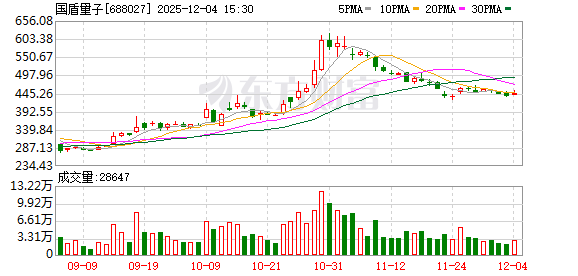
截至2025年12月5日 14:17,上证科创板100指数(000698)成分股铂力特(688333)上涨9.92%,埃夫特 (688165)上涨6.15%,财富趋势(688318)上涨6.04%,睿创微纳(688002)上涨5.21%,孚能科技(688567)上 涨4.55%。科创100ETF基金(588220)上涨0.78%,最新价报1.3元。 科创100ETF基金(588220),跟踪科创100指数[000698.SH],覆盖九大申万一级行业,一键布局科创板 市值中等且流动性较好的100 只证券。其中电子占比40.42%、生物医药占比17.36%、电力设备占比 14.54%。汇聚细分板块优秀标的与专精特新企业。其中专精特新成份股总计48家,累计权重占比 48.28%,未来发展潜力足。 数据显示,截至2025年11月28日,上证科创板100指数(000698)前十大权重股分别为华虹公司(688347)、 东芯股份(688110)、百济神州(688235)、源杰科技(688498)、国盾量子(688027)、睿创微纳(688002)、中 科飞测(688361)、安集科技(688019)、翱捷科技(68822 ...
前沿生物药物研发最高可奖4800万元
Si Chuan Ri Bao· 2025-12-04 22:51
Group 1 - The core viewpoint of the article is the introduction of the "1+9" industrial development support policy in Chengdu's Jinniu District, aimed at providing substantial financial support to enterprises and stimulating operational vitality [1] - The "1+9" policy includes a main policy document and nine specific policies targeting advanced manufacturing, technological innovation, urban cultural tourism, commerce, healthcare, and rail transit [1] - High-intensity support is provided for cutting-edge sectors and strategic emerging industries, with rewards of up to 48 million yuan for biopharmaceutical research and up to 10 million yuan for quantum technology projects [1] Group 2 - The policy enhances the "no application, immediate enjoyment" ratio, allowing companies to receive funds directly without the need for proactive applications, with significant rewards for new stores [1] - The policy also encourages industrial clustering, offering rewards for industrial parks that gather more than ten rail transit companies and for projects recognized at the municipal level [2]

“皖”约未来——安徽加快建设三大科创引领高地
Shang Hai Zheng Quan Bao· 2025-12-04 20:06
Core Insights - Anhui is focusing on building a future industry system that is innovative, self-controlled, and competitive, with a goal to exceed 200 billion yuan by 2027 and reach 500 billion yuan by 2030 [3] - The province is establishing three major innovation-led high grounds: quantum information, fusion energy, and deep space exploration, positioning itself as a significant source of innovation and industry leadership globally [2][12] Quantum Information - Over a hundred quantum industry chain enterprises have gathered in Anhui, with core companies accounting for one-third of the national total, forming a collaborative ecosystem [2][7] - Hefei aims to develop the quantum industry into a 100 billion yuan cluster by 2027 [2][7] - Hefei ranks second globally in the quantum technology field, with three local companies in the top 20 worldwide [5] - The "Qianzi" action plan aims to implement over 1,000 application scenarios by 2027 and over 3,000 by 2030 [6] Fusion Energy - Anhui has made significant strides in fusion energy, achieving a world record with the EAST device, which completed high-quality burning at 100 million degrees Celsius for 1,000 seconds [8] - The BEST project is expected to be completed by the end of 2027, aiming to demonstrate energy output exceeding consumption [8] - The international community is closely watching China's progress in fusion energy, with over 160 fusion devices currently in operation, construction, or planning [9] Deep Space Exploration - The deep space exploration laboratory in Hefei is a key research base for advancing critical technologies and implementing large-scale missions [10] - The laboratory is transitioning from government-led investments to a model that encourages market participation, fostering a collaborative ecosystem for deep space economy [11] - The establishment of the International Deep Space Exploration Society headquarters in Hefei further solidifies the province's role as a global innovation hub in this field [11]

创新无畏 技术“追光” “科大系”的时代担当
Shang Hai Zheng Quan Bao· 2025-12-04 19:24
Core Viewpoint - The article highlights the significant contributions of the University of Science and Technology of China (USTC) to China's technological advancement and its impact on the capital market through its alumni and their companies [3][4][9]. Group 1: Historical Context and Development - USTC was established in 1958 to meet the urgent need for advanced scientific talent in China, particularly for the "Two Bombs, One Satellite" project, attracting renowned scientists to educate students [3]. - The university has received continuous support from Anhui province, which has been crucial for its development and the promotion of high-level education and technology transfer [3][4]. Group 2: Alumni and Market Impact - USTC alumni have founded 31 publicly listed companies, with over half listed on the Sci-Tech Innovation Board, contributing significantly to the regional market [4][9]. - The average market capitalization of these companies, excluding Cambrian, is 29.5 billion yuan, with seven USTC-affiliated companies in Anhui contributing over 7.6% to the regional market capitalization [4]. Group 3: Technological Innovation and Entrepreneurship - USTC alumni are characterized by their strong technical backgrounds, often transitioning from research to entrepreneurship, exemplified by companies like iFlytek and Cambrian [4][5]. - The article emphasizes the importance of technology-driven innovation among USTC entrepreneurs, who focus on transforming scientific achievements into practical applications [4][9]. Group 4: Recent Developments and Initiatives - The "Empowerment Reform" initiated by USTC has significantly accelerated the commercialization of scientific research, resulting in a threefold increase in successful technology transfers compared to the previous five years [11][12]. - The establishment of USTC Silicon Valley aims to create a global network for innovation and entrepreneurship, facilitating the transformation of research into marketable products [14][16]. Group 5: Educational and Institutional Innovations - The USTC Business School was established to bridge the gap between technology and industry, focusing on cultivating talents who understand both technological and managerial aspects [17]. - The school aims to create a new generation of professionals who can effectively integrate technology with market needs, enhancing the university's role in societal innovation [17].

【科技日报】我科学家实现纠缠增强纳米尺度单自旋量子传感
Ke Ji Ri Bao· 2025-12-04 06:14
在材料制备上,研究团队利用自主研发的超纯金刚石生长与纳米精度定点掺杂技术,成功制备出间 距小至5纳米的氮—空位色心对结构。在探测方法上,研究团队创造性地将一对色心制备成一种特殊的 量子纠缠态。这种状态让它们能"无视"来自远端的相同背景噪声,同时协同聚焦并放大近端目标单自旋 的独特信号。该策略成功解决了信号放大与噪声干扰之间长期存在的矛盾,将探测单个自旋的空间分辨 率提升了1.6倍。 研究人员表示,这项成果不仅通过实验验证了量子纠缠在纳米尺度传感中的优势与潜力,也展示了 金刚石量子传感器能够作为强大的纳米磁强计,为在原子层面研究量子材料打开新窗口,将为凝聚态物 理、量子生物学和化学等领域提供革命性研究工具。 (原载于《科技日报》 2025-12-04 06版) 中国科学技术大学教授王亚等与浙江大学海洋精准感知技术全国重点实验室合作,首次实现噪声环 境下纠缠增强的纳米尺度单自旋探测。相关研究成果日前在线发表于国际期刊《自然》。 自旋是电子的一个基本属性。探测单个自旋,不仅能为理解物性提供全新视角,更可以为发展单分 子磁探测技术和推进量子科技奠定坚实基础。然而,由于物质中含有大量自旋,对单个自旋的探测相当 于在喧闹 ...
我科学家实现纠缠增强纳米尺度单自旋量子传感
Ke Ji Ri Bao· 2025-12-04 00:57
因具备纳米级的分辨能力和高灵敏的磁探测能力,金刚石氮—空位色心量子传感器一直是实现单自旋探 测的重要技术途径。理论上,量子纠缠是突破单自旋探测瓶颈的可能途径,它能将探测精度逼近量子力 学所允许的极限。研究团队通过材料制备与量子操控两条路径的协同创新,首次成功开发出纠缠增强型 纳米单自旋探测技术,在固态体系中实现了微观磁信号灵敏度与空间分辨率的同步提升,为纳米尺度量 子精密测量技术的持续发展铺平道路。 (文章来源:科技日报) 在材料制备上,研究团队利用自主研发的超纯金刚石生长与纳米精度定点掺杂技术,成功制备出间距小 至5纳米的氮—空位色心对结构。在探测方法上,研究团队创造性地将一对色心制备成一种特殊的量子 纠缠态。这种状态让它们能"无视"来自远端的相同背景噪声,同时协同聚焦并放大近端目标单自旋的独 特信号。该策略成功解决了信号放大与噪声干扰之间长期存在的矛盾,将探测单个自旋的空间分辨率提 升了1.6倍。 研究人员表示,这项成果不仅通过实验验证了量子纠缠在纳米尺度传感中的优势与潜力,也展示了金刚 石量子传感器能够作为强大的纳米磁强计,为在原子层面研究量子材料打开新窗口,将为凝聚态物理、 量子生物学和化学等领域提供 ...
济南加速布局量子产业应用场景
Ke Ji Ri Bao· 2025-12-04 00:51
近日,工业和信息化部办公厅公布了2025年未来产业创新任务揭榜挂帅入围名单,山东国耀量子雷达科 技有限公司(以下简称"国耀量子")凭借"碳监测光量子雷达"技术入围量子科技方向揭榜名单。 12月2日,科技日报记者来到国耀量子,该公司总经理申屠国樑指着一台光量子雷达介绍:"传统激光雷 达绘制一张360度的大气污染地图需要1小时,光量子雷达只需5—8分钟,就能快速捕捉污染源产生、飘 动、消逝的过程,6公里内准确率95%。" 济南市科技局高新技术发展处相关负责人介绍,目前,济南已布设15台上述设备,组建了全国首个"颗 粒物光量子雷达监测网络",基本实现主城区全覆盖。 "此次成功入围,是我们在量子精密测量与绿色低碳技术融合领域长期深耕的成果。"申屠国樑表示,针 对传统碳监测技术在精度、抗干扰性、复杂环境适应性等方面的痛点,国耀量子组建专项研发团队攻坚 突破,形成了碳监测光量子雷达技术方案。该技术依托量子态的独特物理特性,可实现对工业碳排放源 的精准溯源、实时监测与数据核验,为"双碳"目标落地提供更高效、可靠的技术支撑。 国耀量子是济南量子科技落地产业化的众多案例之一。"布局量子产业,济南在国内城市中走在前 列。"济南量 ...
启动科创海外基金+揭牌祖泉研究院,复旦大学加码科技成果转化!
Zheng Quan Shi Bao Wang· 2025-12-03 13:57
(原标题:启动科创海外基金+揭牌祖泉研究院,复旦大学加码科技成果转化!) 12月3日,在复旦大学和上海国投公司主办的2025年复旦科创大会上,复旦科创海外投资基金启动,首 期目标规模为1亿美元,同时揭牌上海祖泉创新转化研究院(以下简称"祖泉研究院"),这意味着复旦 大学正在系统性布局科技成果转化。 复旦大学校长、中国科学院院士金力在致辞中表示,复旦科创事业未来要深化基础研究,筑牢创新根 基,支持科学家勇闯"无人区";培育科创人才,赋能成果转化,培养更多兼具科学素养、产业视野和创 业精神的复合型人才;促进跨界融合,构建互补生态,打破学科壁垒、机构界限,构建科技协同创 新"生态圈";扩大开放合作,汇聚全球智慧,以更加开放的姿态融入全球创新网络,为世界科技进步贡 献中国智慧与复旦力量。 上海国投公司党委副书记、总裁戴敏敏在致辞中表示,上海国投公司将与复旦大学携手并肩,共同打 造"热带雨林式"的创新生态,着力推动创新链、产业链、资金链、人才链深度融合,不断打通基础研 究、成果转化与产业化的"最后一公里"。上海国投公司将以上海未来启点社区为载体,与复旦大学深化 合作,持续推动创新应用场景建设,大力构建"创新+创业+创投 ...
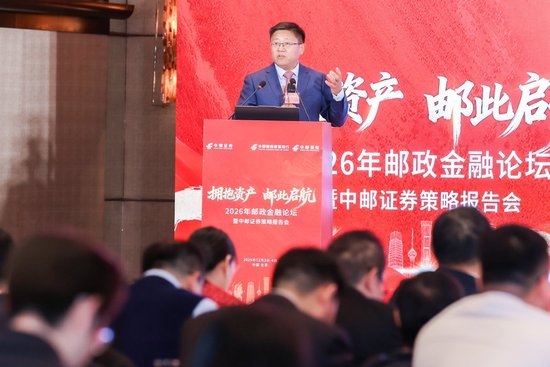
中邮证券黄付生:制造业“K”型分化,居民财富将迎修复
Xin Lang Cai Jing· 2025-12-03 12:25
Core Insights - The report presented by Huang Fusheng at the "2026 Postal Financial Forum" highlights China's economic recovery, driven by the "14th Five-Year Plan" focusing on modern industrial systems and high-tech sectors [3][8]. Group 1: Economic Recovery and Industrial Policy - China is building a modern industrial system under the "14th Five-Year Plan," with a focus on high-tech sectors showing significant performance [3][8]. - The plan prioritizes the construction of a modern industrial system and strengthening the real economy, aiming to "recreate a Chinese high-tech industry" over the next decade [3][8]. - Key strategies include enhancing traditional industries, addressing core technology challenges, and fostering strategic emerging industries like new materials and quantum technology [3][8]. Group 2: Manufacturing Sector Performance - The manufacturing sector exhibits a K-shaped recovery, with high-tech product exports growing faster than the overall export growth rate of 5.3% in the first ten months of 2025 [4][9]. - Profit growth in upstream manufacturing sectors like transportation equipment and non-ferrous metal smelting significantly outpaces that of downstream industries such as furniture and apparel [4][9]. - A-share non-financial companies reported a revenue increase of 0.9% year-on-year in Q3 2025, with net profits rising by 3.29% [4][10]. Group 3: Consumer Wealth and Spending Trends - Recovery of resident wealth is projected to take 3-5 years, with service consumption identified as a future growth area [5][10]. - In 2025, there remains a significant gap in resident wealth compared to the peak in 2021, but optimistic scenarios suggest recovery to previous levels by 2028 [5][10]. - The consumption structure indicates a saturation in goods consumption (15% of GDP) compared to major Western countries, while service consumption in healthcare and education is below global averages, indicating substantial growth potential [5][10].
奋楫“十五五”,资本与国策共创
Sou Hu Cai Jing· 2025-12-03 01:52
Core Insights - The focus of national development is shifting from "quantitative recovery" post-pandemic to "qualitative leap" in the "15th Five-Year Plan" [1] - The "15th Five-Year Plan" emphasizes "high-level technological self-reliance" and aims for a dual goal of "effective qualitative improvement and reasonable quantitative growth" [5][11] Group 1: Economic and Industrial Strategy - The national strategy is entering a new cycle centered on innovation efficiency, industrial structure, and regional collaboration, marking a shift from "policy following" to "system co-creation" [4] - The plan aims to build a modern industrial system with advanced manufacturing as the backbone, focusing on future industries like quantum technology, biomanufacturing, and hydrogen energy [11] - The transition from "incremental manufacturing" to "efficiency manufacturing" indicates a shift in focus from merely increasing production to optimizing resource allocation [12] Group 2: Investment Opportunities - Hard technology investment, including semiconductors and advanced materials, is positioned as a foundational logic for "systematic breakthroughs" [10] - Investment institutions are encouraged to engage in pre-financing and result transformation for national technology tasks, fostering capital co-creation [10] - The emphasis on "entrepreneurial investment + risk-sharing mechanisms" presents opportunities for investment firms to participate in national innovation initiatives [10] Group 3: Green Development - The "15th Five-Year Plan" elevates green development from a secondary goal to a structural institution, influencing all industrial allocations [17] - The integration of green issues into financial and market mechanisms signifies a shift in perspective, making green development a capital issue [17] - Sustainable investment opportunities in green infrastructure and carbon asset management are expected to grow [20] Group 4: Consumer and Market Dynamics - The plan positions consumption upgrade as a core driver of economic structural transformation, moving from recovery to quality enhancement [22] - The "silver economy" is recognized as a significant industrial opportunity, transforming aging issues into growth engines [22][25] - Investment opportunities in healthcare, elder care, and technology-assisted living are anticipated to rise due to demographic shifts [25] Group 5: Regional Development - The focus of regional policy is shifting from "development gradient" to "structural coordination," promoting a unified market and efficient resource allocation [27] - Investment institutions are encouraged to collaborate with local guiding funds to strengthen project foundations and facilitate new industry development in less developed regions [30] Group 6: Financial Market Reforms - The "15th Five-Year Plan" emphasizes structural improvements in capital markets, transitioning from a focus on financing to a comprehensive investment-funding-exit cycle [32] - Direct investment institutions are identified as key players in building a strong financial nation, with multiple exit pathways being developed [35] - The plan aims to enhance the inclusivity and adaptability of capital market systems, promoting direct financing methods [31] Strategic Summary - The "15th Five-Year Plan" outlines new engines for China's economic growth, including technological innovation and green transformation, while establishing a more inclusive capital market system [36] - Investment institutions are encouraged to align their strategies with national planning, leveraging professional judgment to identify promising sectors and companies for investment [36]