基础设施建设

Search documents
深圳上半年GDP同比增长5.1% 多个主要指标增速较一季度加快
Mei Ri Jing Ji Xin Wen· 2025-07-30 12:47
Economic Performance - In the first half of 2025, Shenzhen's GDP reached 1.83 trillion yuan, reflecting a year-on-year growth of 5.1% at constant prices [1] - Major economic indicators showed accelerated growth compared to the first quarter, indicating a stable and improving economic trend [1] Industrial and Service Sector - The added value of industrial enterprises above designated size increased by 4.3% year-on-year, with a slight acceleration of 0.1 percentage points from the first quarter [1] - The service sector's added value was 1.18 trillion yuan, growing by 6.1% year-on-year, also up by 0.1 percentage points from the first quarter [1] - Retail sales of consumer goods totaled 494.868 billion yuan, marking a year-on-year increase of 3.5%, with an acceleration of 0.4 percentage points from the first quarter [1] Investment Trends - Fixed asset investment in Shenzhen decreased by 10.9% year-on-year, primarily due to a decline in real estate development investment, which fell by 15.1% [1] - Excluding real estate, private investment grew by 3.6% year-on-year, with private industrial investment increasing by 10.6% [1] - Infrastructure investment rose by 7.7% year-on-year, while industrial technological transformation investment surged by 47.1% [1] Foreign Trade - In the first half of 2025, Shenzhen's total import and export volume was 2.17 trillion yuan, a year-on-year decrease of 1.1%, with the decline narrowing by 1.7 percentage points compared to the first quarter [2] - Exports amounted to 1.31 trillion yuan, down by 7.0% year-on-year, while imports increased by 9.5% to 858.864 billion yuan [2] - The decline in exports was attributed to a high base from the previous year when foreign trade growth was rapid [2]
福州市城乡建总集团有限公司2021年度第一期中期票据获“AAA”评级
Sou Hu Cai Jing· 2025-07-30 05:22
Core Viewpoint - The report from United Ratings indicates that Fuzhou Urban Construction Group Co., Ltd. has been rated "AAA" for its first phase of medium-term notes in 2021, highlighting its significant role in infrastructure development in Fuzhou [1][2]. Group 1: Company Overview - Fuzhou Urban Construction Group Co., Ltd. is a key player in Fuzhou's infrastructure construction, with a prominent regional position [2]. - The company primarily engages in comprehensive development and renovation, municipal construction, engineering contracting, real estate sales, and trade [2]. Group 2: Financial Performance - In 2024, the company's total revenue is expected to decline significantly due to a sharp decrease in trade income [2]. - The scale of investment in municipal construction and comprehensive development projects is large, with expected fiscal funding, but there are concerns about cash flow mismatches and future investment pressures [2]. - The construction business has a complete qualification structure, ensuring good business continuity [2]. Group 3: Asset and Liability Management - The company's assets are heavily weighted towards real estate construction costs and municipal infrastructure investments, with a high proportion of non-current assets [2]. - There is a significant amount of receivables, some of which carry collection risks [2]. - The company's equity structure is primarily formed from capital reserves related to municipal project funding, with a generally stable but dynamically adjusted funding allocation [2]. - The debt scale is continuously growing, with an overall moderate debt burden and good short-term repayment indicators [2]. Group 4: Risks and Challenges - The company faces substantial future funding pressures related to the construction scale of commercial and affordable housing projects [2]. - The trade business, while large in scale, has limited profit margins and poses collection risks [2]. - There are significant contingent risks due to large amounts involved in lawsuits against subsidiaries [2].
天津市静海城市基础设施建设投资集团有限公司2023年度第一期中期票据获“AA+”评级
Sou Hu Cai Jing· 2025-07-30 04:30
Core Viewpoint - Tianjin Jinghai Urban Infrastructure Construction Investment Group Co., Ltd. received an "AA+" rating for its 2023 first phase medium-term notes, indicating strong creditworthiness and stability in its operations [1][2]. Company Overview - The company is a key player in infrastructure construction in Tianjin's Jinghai District and holds a monopoly in the local heating business, which provides a competitive advantage [2]. - In 2024, both the district's GDP and general public budget revenue are expected to grow year-on-year, creating a favorable external environment for the company [2]. Business Operations - The company's revenue primarily comes from construction and heating services, with a noted delay in the collection of payments for infrastructure projects, leading to significant investment pressure [2]. - Revenue from the heating business has increased year-on-year, demonstrating strong sustainability, although capital expenditure pressures exist for heating projects [2]. Financial Analysis - The company's asset structure is relatively balanced, but there is uncertainty regarding the collection period for receivables, and inventory settlement is heavily influenced by government financial arrangements, affecting liquidity [2]. - The equity structure is stable, with a high proportion of paid-in capital and capital reserves [2]. - The company relies heavily on bond financing, facing a substantial debt burden and significant short-term repayment pressure [2]. - Fiscal subsidies significantly contribute to total profits, but profitability indicators remain weak [2]. - Short-term debt repayment indicators are strong, while long-term repayment indicators are average, indicating a need to diversify financing channels and potential contingent liability risks [2].
一揽子货币政策落地见效
Sou Hu Cai Jing· 2025-07-30 00:27
Core Insights - The implementation of a package of monetary policy measures in Anhui province has shown positive effects on credit growth and economic support [2][3][4] - As of June, the total RMB loans in Anhui reached 9.19 trillion yuan, with a year-on-year growth of 9.37%, surpassing the national average by 2.31 percentage points [1][2] - The focus on supporting high-quality economic development through financial measures is evident, with significant increases in loans to manufacturing, technology, and other key sectors [5][6][7] Credit Growth and Structure - The total new loans in Anhui for the first half of the year amounted to 589.69 billion yuan, with corporate loans making up the majority [4][5] - Corporate loans increased by 526.06 billion yuan, accounting for 89.21% of the total loan growth, indicating strong financial support for the real economy [5] - Manufacturing loans reached 1.11 trillion yuan, growing by 14.93%, while loans for infrastructure and agriculture also showed stable growth [6] Monetary Policy Measures - The People's Bank of China has implemented measures such as lowering the reserve requirement ratio and increasing long-term liquidity supply, releasing 6.596 billion yuan in long-term funds [3] - New tools are being utilized to support technology innovation and consumption, with significant loan agreements signed for various projects [3][4] - The average interest rate for newly issued corporate loans in Anhui decreased to 3.21%, down 39 basis points year-on-year, reflecting a reduction in financing costs [5] Technology and Innovation Support - The "Common Growth Plan" has been a key initiative, with over 10,700 financial institutions participating and more than 14,000 enterprises signing agreements [7] - Technology loans reached 1.65 trillion yuan, with a year-on-year growth of 16.71%, highlighting the focus on supporting tech-driven enterprises [7] - The province aims to enhance financial support for technology and innovation, fostering a cycle of mutual benefit between finance and industry [7]
“穿透式”审计监督确保政府投资安全高效
Qi Lu Wan Bao· 2025-07-30 00:07
Group 1 - The key investment construction projects are crucial for expanding domestic demand, stabilizing growth, and ensuring people's livelihoods. The provincial audit office emphasizes enhancing audit efforts on these projects to ensure government investment is safe and efficient, and projects are implemented according to regulations through "penetrating" audit supervision [1] - The audit revealed issues in disaster prevention and mitigation funding, such as projects inflating investment completion figures to disburse funds to construction companies, and inadequate management of urban waterlogging points. The audit office is pushing for accountability and immediate rectification to ensure disaster prevention goals are met [2][3] - From 2021 to 2023, 554 projects involving 6,848 kilometers of national and provincial road upgrades were implemented, along with 27,000 kilometers of rural road reconstruction, significantly improving road network quality and ensuring safe travel for the public [2] Group 2 - The audit office is focusing on the effective implementation of policies aimed at high-quality development, addressing challenges in policy execution, and ensuring that subsidy funds are accurately and efficiently distributed to consumers. This includes auditing the implementation of the old-for-new consumer subsidy policy [4] - The audit findings indicate shortcomings in the management of natural resources, such as illegal logging and inadequate collection of non-tax revenues. The audit office is urging immediate corrective actions and has facilitated the collection of 798 million yuan in funds and the allocation of 1.04 billion yuan [5]
3家川企上榜《财富》世界500强
Si Chuan Ri Bao· 2025-07-29 22:04
Group 1 - In 2025, three Sichuan companies made it to the Fortune Global 500 list, namely New Hope Group, Shudao Investment Group, and Tongwei Group [1] - Compared to last year, the rankings of these companies have declined, with New Hope Group at 426th (down 48 places), Shudao Investment Group at 454th (down 18 places), and Tongwei Group at 479th (down 12 places) [1] - Sichuan companies have been on the Global 500 list for four years, with New Hope Group being the first to enter in 2021, followed by Shudao Investment Group and Chengdu Xincheng Investment Group in 2022, and Tongwei Group in 2023 [1] Group 2 - Overall, China has 130 companies on the list this year, a decrease of three from last year, with 124 companies from mainland China (including Hong Kong), down four from last year [2] - The total revenue of the companies on the list is approximately $41.7 trillion, which is over one-third of the global GDP, reflecting a growth of about 1.8% from last year [2] - The minimum sales revenue required to enter the list increased from $32.1 billion to $32.2 billion, while the total net profit of the listed companies grew by approximately 0.4% to around $2.98 trillion [2]


绿地控股集团股份有限公司2025年第二季度房地产经营情况简报
Shang Hai Zheng Quan Bao· 2025-07-29 17:34
Group 1: Real Estate Project Status - In Q2 2025, the company completed new construction area of 280,000 square meters, a decrease of 61.11% year-on-year; completed construction area of 1.61 million square meters, a decrease of 52.8% year-on-year [2] - For the first half of 2025, the company completed new construction area of 491,000 square meters, a decrease of 47.03% year-on-year; completed construction area of 2.239 million square meters, a decrease of 47.31% year-on-year [2] Group 2: Sales Performance - In Q2 2025, the company achieved contract sales area of 2.217 million square meters, an increase of 31.03% year-on-year; contract sales amount of 21.752 billion yuan, an increase of 16.93% year-on-year [3] - For the first half of 2025, the company achieved contract sales area of 3.73 million square meters, an increase of 25.63% year-on-year; contract sales amount of 33.895 billion yuan, an increase of 6.46% year-on-year [3] Group 3: Project Reserves - In Q2 2025, the company had no new real estate projects [4] - In the first half of 2025, the company added 3 new real estate projects with land area of 116,400 square meters, equity land area of 77,700 square meters; gross floor area of 199,800 square meters, equity gross floor area of 105,200 square meters [4] Group 4: Rental Performance - As of the end of June 2025, the company had rental property area of 4.0319 million square meters, with a rental rate of 81.97%; hotel room count was 8,258, with an occupancy rate of 40.03% [5] - In the first half of 2025, the company generated rental income of 617.9789 million yuan from rental properties and operating income of 443.6784 million yuan from hotels [5]

绿地控股(600606) - 绿地控股2025年第二季度基建业务经营情况简报
2025-07-29 10:30
证券代码:600606 股票简称:绿地控股 编号:临 2025-030 绿地控股集团股份有限公司 2025 年第二季度基建业务经营情况简报 本公司董事会及全体董事保证本公告内容不存在任何虚假记载、误导性陈述 或者重大遗漏,并对其内容的真实性、准确性和完整性承担法律责任。 一、新增项目情况 (一)第二季度 2025 年 4-6 月,公司基建业务新增项目情况如下: 1、业务分部 | 细分行业 | 房屋建设 | 基建工程 | 其他 | 总计 | | --- | --- | --- | --- | --- | | 项目数(个) | 281 | 149 | 188 | 618 | | 总金额(万元) | 1,961,920 | 1,047,620 | 592,138 | 3,601,678 | | 总金额同比增减(%) | -39.08 | -30.35 | 18.75 | -31.04 | 2、地区分部 | 项目地区 | 境内 | 境外 | 总计 | | --- | --- | --- | --- | | 项目数(个) | 605 | 13 | 618 | | 总金额(万元) | 3,438,199 | 163,47 ...
31省份经济半年报:多省增长超预期,京沪消费增速垫底
Jing Ji Guan Cha Wang· 2025-07-29 09:04
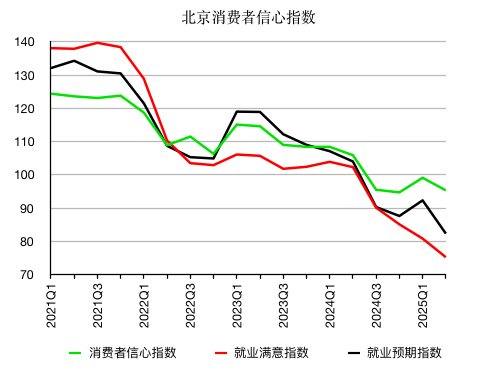
Economic Performance Overview - As of July 28, 2025, 31 provinces (excluding Hong Kong, Macau, and Taiwan) reported their economic performance for the first half of the year, with significant growth in major economic provinces, although some provinces experienced fluctuations in their economic data [1] - Among the top eight economic provinces, all except Guangdong achieved GDP growth rates exceeding the national average of 5.3%, with growth rates of 5.6% and above [1][2] - Guangdong's GDP growth rate was 4.2%, ranking it among the bottom three provinces [1] Provincial GDP Growth - In the first half of 2025, 21 provinces exceeded their annual GDP growth targets set at the beginning of the year, indicating a solid foundation for achieving their full-year goals [1] - Notably, Tibet, Gansu, and Hubei had the highest GDP growth rates, all above 6% [2] - Hubei's GDP growth rate reached 6.2%, surpassing the national average by 0.9 percentage points [2] Consumption Trends - Nationally, final consumption expenditure contributed 52% to economic growth in the first half of 2025, with 19 provinces reporting retail sales growth above the national average of 5% [2] - The "old-for-new" policy significantly boosted consumption in several provinces, with retail sales of wearable smart devices and related products in Henan growing over 85% [3] Retail Sales Performance - Beijing and Tianjin reported negative growth in retail sales, with Beijing's retail sales declining by 3.8% in the first half of 2025, primarily due to significant drops in automotive and communication equipment sales [4][5] - Shanghai's retail sales growth was 1.7%, ranking it among the lowest in the country [4] Fixed Asset Investment - Despite strong economic growth, several provinces, including Guangdong and Jiangsu, experienced declines in fixed asset investment, with Guangdong's investment dropping by 9.7% [9][10] - The decline in real estate development investment was a major factor affecting fixed asset investment growth in these provinces [10] Consumer Confidence - Consumer confidence in Beijing remained low, with the consumer confidence index below 100 for four consecutive quarters, indicating weak consumer sentiment [6][8] - The employment satisfaction index in Beijing hit a historical low of 75.2 in the second quarter of 2025, reflecting concerns over job security and income [5][6] Investment Opportunities - Some provinces, such as Beijing, reported strong fixed asset investment growth of 14.1%, driven by significant increases in equipment purchase investments [12] - Hebei's real estate development investment grew by 2.0%, supported by ongoing urban development projects [13]

下半年:还将出台哪些新政策?︱重阳荐文
重阳投资· 2025-07-29 07:31
Core Viewpoint - The article discusses the economic outlook for the second half of the year, emphasizing the need for policy support to achieve the annual GDP growth target of 5% after a 5.3% growth in the first half of the year [1][5]. Economic Performance - The actual GDP growth in the first half of the year was 5.3%, with Q1 at 5.4% and Q2 at 5.2%, exceeding the 5% annual target [5][7]. - The GDP deflator index in Q2 fell by 1.2%, marking the ninth consecutive quarter of negative growth, leading to a nominal GDP growth of only 3.9% [5][8]. - The growth was primarily driven by proactive policies and early consumer demand stimulation, particularly through the "trade-in" policy [7][8]. Consumer and Investment Trends - Retail sales of consumer goods increased by 5% in the first half, with significant growth in categories related to the "trade-in" policy, such as home appliances and furniture [8][11]. - Fixed asset investment grew by only 2.8%, with infrastructure investment up by 4.6% and manufacturing investment by 7.5%, while real estate investment declined by 11.2% [11][19]. - Equipment investment surged by 17.3%, contributing 86% to overall investment growth [11][19]. Export Dynamics - Exports showed resilience, with a 5.9% increase in dollar terms, despite a 10.9% decline in exports to the U.S. [15][19]. - The diversification of exports helped mitigate the impact of reduced U.S. demand, with significant growth in exports to Africa, ASEAN, and the EU [15][19]. Economic Concerns - Despite positive data, there are concerns about potential weaknesses in the economy, particularly in consumer spending and manufacturing investment in the second half [19][20]. - The "trade-in" policy's impact on retail sales is expected to diminish in the latter half of the year due to lower funding and higher base effects from last year [19][20]. - Real estate sales and prices are showing signs of weakness, with new housing sales down by 3.5% and sales revenue down by 5.5% in the first half [23][24]. Policy Outlook - The article anticipates that the government will focus on targeted policies rather than large-scale stimulus, given the strong economic foundation laid in the first half [27][28]. - Potential policy directions include optimizing existing programs like the "trade-in" initiative and addressing restrictions on consumer spending [29][30]. - Infrastructure investment is expected to be a key area of focus, with ongoing projects and new financing tools being introduced to support technology and consumption [30][31]. Monetary Policy - The monetary policy is expected to remain supportive, with potential for minor adjustments in reserve requirements and interest rates [34][35]. - The article suggests that the central bank may take a cautious approach to monetary easing, focusing on maintaining stability in the currency exchange rate [35][36]. Structural Issues - The article highlights that the main challenges facing the Chinese economy are structural rather than total output-related, emphasizing the need for a focus on domestic and international circulation [26][38].