
潮玩

Search documents
华鑫证券:维持名创优品(09896)“买入”评级 春晚赋能开启新征程
智通财经网· 2026-02-03 06:29
Core Viewpoint - The company is expected to benefit from the growth of the Chinese trendy toy industry, with a projected revenue increase and a strategic shift towards becoming a leading global IP operation platform [1][2][3] Group 1: Financial Projections - Revenue forecasts for the company from 2025 to 2027 are estimated at 20.257 billion, 24.130 billion, and 28.739 billion yuan, respectively, with EPS projected at 2.10, 2.70, and 3.20 yuan, leading to corresponding PE ratios of 16, 13, and 11 times [1] - The company maintains a "buy" investment rating based on its growth potential and strategic initiatives [1] Group 2: Expansion and IP Strategy - The company opened its MINISOLAND store in Guangzhou, covering over 1,100 square meters, with over 90% of products being IP-related, aiming for annual sales of 100 million yuan [1] - The global retail network has expanded to over 8,500 stores across 112 countries, with plans to increase to over 10,000 stores in the next three years [1] - The company has developed 16 proprietary IPs and partnered with 180 international IPs, with significant sales from the collaboration with "Zootopia" [1] Group 3: AI and IP Integration - The company is developing a humanoid robot based on its proprietary IP "YOYO," targeting the home companion market with an expected price in the ten-thousand yuan range [2] - The "YOYO" blind box products have shown significant sales growth, indicating a successful integration of AI technology with IP [2] Group 4: Cultural Collaboration - The company has become the first trendy toy partner for the 2026 Spring Festival Gala, marking a significant collaboration with CCTV and launching a co-branded product series [3] - This partnership is seen as a key step in the company's strategy to transition from a retail-focused business to a cultural and creative enterprise [3]
名创优品:公司动态研究报告:从IP乐园到AI融合,春晚赋能开启新征程-20260203
Huaxin Securities· 2026-02-03 05:45
Investment Rating - The report maintains a "Buy" investment rating for the company [1] Core Insights - The company is transitioning from a retail business to a global IP operation platform, with a focus on expanding its store network and enhancing its IP offerings [3][4] - The launch of MINISO LAND stores and the development of humanoid robots signify the company's commitment to integrating AI with its IP strategy [4][5] - The collaboration with the Spring Festival Gala marks a significant step in the company's marketing strategy and brand transformation [5] Summary by Sections Market Performance - The company has shown resilience in its market performance, with a notable comparison to the Hang Seng Index [2] Company Dynamics - MINISO LAND's first store opened in Guangzhou, aiming for annual sales of 100 million yuan, with over 90% of products being IP-related [3] - The company plans to increase its global store count to over 10,000 in the next three years, with a significant portion of stores being upgraded to IP-themed locations [3] AI and IP Integration - The company is developing a humanoid robot based on its IP "YOYO," targeting the home companion market, with expected pricing in the ten-thousand yuan range [4] - The YOYO blind box products have seen significant sales growth, indicating strong market demand for IP-related merchandise [4] Strategic Collaborations - The partnership with the Central Radio and Television Station for the Spring Festival Gala is expected to enhance brand visibility and align with the trend of mainstreaming collectible toys [5] Financial Forecast - Revenue projections for 2025-2027 are 202.57 billion yuan, 241.30 billion yuan, and 287.39 billion yuan, respectively, with corresponding EPS of 2.10, 2.70, and 3.20 yuan [7] - The company is expected to benefit from the growing collectible toy industry and its strategic store expansion, maintaining a favorable outlook on profitability [7]
台北灯节引入大陆潮玩,绿营“破防”
Xin Lang Cai Jing· 2026-02-02 23:10
Group 1 - The Taipei Lantern Festival will open on February 25, featuring a collaboration with the mainland brand Pop Mart in the Ximen exhibition area, which has sparked controversy among local political factions [1][2] - The festival's theme includes "Transformers" for the Flower Expo area and Pop Mart for the Ximen area, aiming to create a new trendy light zone [1] - Criticism from the pro-independence camp claims that the collaboration with a mainland brand represents a form of cultural invasion and softening of Taiwanese youth's perception of mainland China [1][2] Group 2 - Supporters from the Kuomintang argue that Pop Mart is a popular brand among international celebrities and that cultural exchange is a natural part of life, dismissing the politicalization of everyday matters [2] - The Taipei City Government emphasizes that collaborations with globally recognized brands like Pop Mart are beneficial for tourism and cultural exchange, countering claims of cultural invasion [2] - The presence of Pop Mart in Taipei, including flagship stores and collaborations with international events, highlights its status as a significant player in the cultural and commercial landscape [2]

海外网友为何热衷“成为中国人”(环球热点)
Ren Min Ri Bao Hai Wai Ban· 2026-02-02 22:48
Core Viewpoint - The trend of "Becoming Chinese" reflects the growing interest and recognition of Chinese culture among foreign netizens, showcasing China's cultural appeal and the evolving dynamics of cross-cultural exchange [8][9][10]. Group 1: Cultural Engagement - The "Becoming Chinese" phenomenon began with a video by an American Chinese influencer, which gained over a million views and encouraged foreign viewers to adopt Chinese lifestyle habits [10]. - Many foreign participants have shifted their dietary habits to include traditional Chinese foods, expressing enjoyment and a desire to learn more about Chinese cooking [10][11]. - This cultural trend has led to a two-way interaction, with Chinese netizens sharing their lifestyle tips, creating a sense of community and connection across cultures [11][12]. Group 2: Cross-Cultural Exchange - The increasing interest in Chinese culture is linked to China's rising global influence and the improved perception of its daily life among foreign audiences [12][13]. - The trend has evolved from mere observation to immersive participation, indicating a shift in foreign attitudes towards a more nuanced understanding of Chinese culture [11][12]. - The "Becoming Chinese" movement is characterized by a grassroots cultural resonance rather than top-down cultural export, fostering a more equitable cultural exchange [17][18]. Group 3: Tourism and Accessibility - China's recent policy changes, including visa facilitation and the establishment of free trade zones, have enhanced international tourism, allowing more foreigners to experience Chinese culture firsthand [13][15]. - The number of foreign visitors to China has significantly increased, with a reported 40.6 million foreign arrivals, marking a 27.2% year-on-year growth [15]. - The appeal of Chinese daily life and culture is becoming a vital part of China's image abroad, as tourists share their experiences through social media [15][16]. Group 4: Youth Perception - The younger generation in the U.S. is increasingly drawn to Chinese culture, with trends indicating a desire to engage with Chinese products and social media platforms [16][17]. - The popularity of Chinese media, such as animated films and video games, has contributed to a positive perception of Chinese culture among young people globally [16][17]. - The "Becoming Chinese" trend serves as a new avenue for cultural exchange, emphasizing shared human aspirations for a better life [17][18].


泡泡玛特马年元素“MOLLY”亮相香港迎新春
Zhong Guo Xin Wen Wang· 2026-02-02 09:16
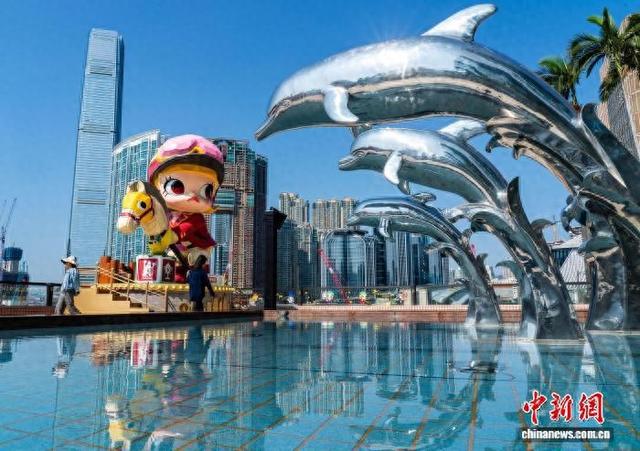
Core Viewpoint - The event "MOLLY's Shining Journey - Tracking the Starlight Trail" showcased a 7-meter tall "MOLLY" statue in Hong Kong, celebrating the Lunar New Year with a focus on the Year of the Horse [2]. Group 1 - The event took place on February 2, featuring a prominent "MOLLY" statue designed as a jockey, along with 20 other different "MOLLY" designs [2]. - The 7-meter tall jockey statue is located at the platform garden of China Hong Kong City, providing a scenic view of Victoria Harbour [2][4]. - The display aims to enhance the festive atmosphere in Hong Kong for the Lunar New Year [2]. Group 2 - Visitors were seen exploring and taking photos among the various "MOLLY" statues, indicating strong public interest and engagement with the installation [6][12]. - The event attracted both tourists and local citizens, showcasing the appeal of the "MOLLY" brand in a public space [8][13].
从电子木鱼到奇点生态 恒生活重塑潮玩消费新范式
Sou Hu Wang· 2026-02-02 08:32
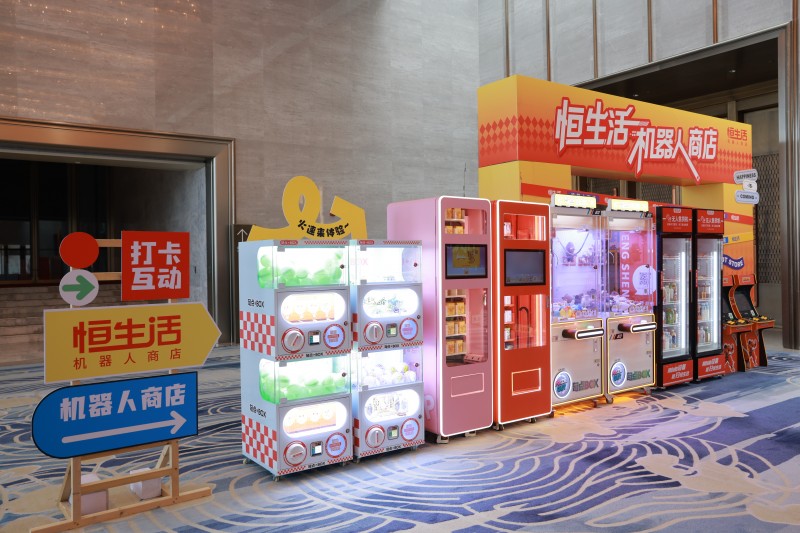
Core Insights - The emergence of two popular products, "Electronic Wooden Fish" and "Star People," highlights the rise of emotional consumption among Generation Z, tapping into their need for light-heartedness and resonance [1][2][3] Group 1: Emotional Economy and Consumer Behavior - Over 90% of young consumers recognize the "emotional value," with nearly 60% willing to pay for it, indicating a shift from practical to emotional spending [2][3] - The average monthly expenditure on emotional consumption for young consumers is 949 yuan, with 18.1% willing to spend over 2000 yuan [2] - The "Electronic Wooden Fish" provides instant stress relief through simple interactions, while "Star People" addresses emotional healing with a design that resonates with vulnerability [2][3] Group 2: Industry Trends and Market Growth - The emotional consumption sector in China has seen an annual compound growth rate of 12% since 2013, with the market expected to exceed 2 trillion yuan by 2025 [3] - The transition from "aesthetic economy" to "emotional economy" is evident, with companies evolving from product manufacturers to "emotional service providers" [3][4] Group 3: Innovative Business Models - Heng Life has developed the "Singularity BOX," integrating smart hardware, IP, and scenarios to create a new consumption paradigm in the emotional economy [4][8] - The "Singularity BOX" features high-quality aesthetics and is designed to cater to various offline scenarios, enhancing emotional value through visual appeal [7] - The company has signed over 100 global IPs, including Disney and Marvel, to create a diverse supply system for emotional products [8] Group 4: Market Penetration and Future Outlook - Heng Life's "Singularity BOX" has penetrated key cities, integrating emotional companionship into daily life and creating a network of emotional support [8][9] - The ongoing development of the emotional economy and the Singularity ecosystem positions Heng Life to expand its global footprint and redefine the toy industry [9]
港股异动丨泡泡玛特逆势涨近5%,在伦敦设欧洲总部,将在英国新增7间门市
Ge Long Hui A P P· 2026-02-02 02:51
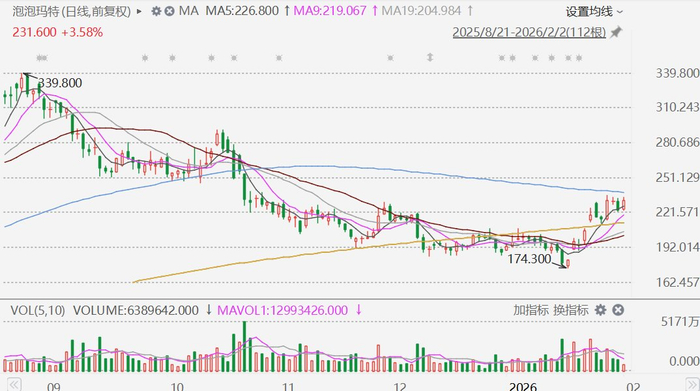
Core Viewpoint - Pop Mart (9992.HK) has announced the establishment of its European headquarters in London, aiming to expand its presence in Europe and enhance its brand's global market reach [1] Group 1: Company Expansion - Pop Mart's stock rose nearly 5% to HKD 234.2 amid the announcement of its European headquarters [1] - The company plans to open 7 new stores in the UK, including flagship locations in Birmingham, Cardiff, and London’s Oxford Street [1] - A total of 20 new stores are planned for expansion across Europe, which is expected to create over 150 jobs in the UK [1] Group 2: Strategic Importance - The founder of Pop Mart, Wang Ning, emphasized that London is a key global creative hub, making it an ideal location for the brand to establish its European base [1] - The establishment of the European headquarters will allow Pop Mart to integrate global creative resources and collaborate with outstanding artists in Europe [1] - The initiative aims to continuously explore the creative value of intellectual property (IP) and promote cultural exchange between China and foreign markets [1]
泡泡玛特逆势涨近5%,宣布将伦敦定为欧洲总部所在地,在英国新增7间门市
Xin Lang Cai Jing· 2026-02-02 02:50
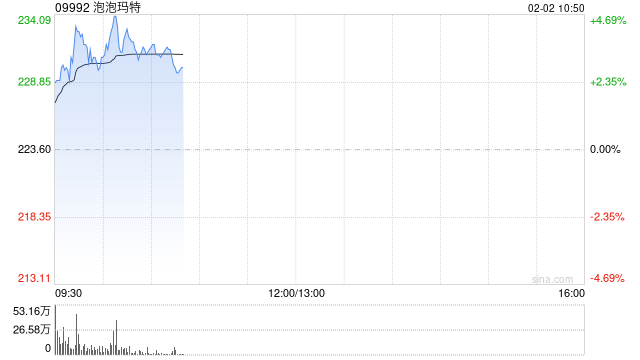
Core Viewpoint - Pop Mart (9992.HK) experienced a nearly 5% increase in stock price, reaching 234.2 HKD, with a trading volume exceeding 15 billion HKD on February 2 [1][5]. Financial Performance - The stock opened at 223.8 HKD and had a closing price of 223.6 HKD the previous day, with a trading volume of 6.7633 million shares [2][6]. - The highest price during the trading session was 234.2 HKD, while the lowest was 223.2 HKD, resulting in a price fluctuation of 4.92% [2][6]. - The average price recorded was 230.9 HKD, with a total market capitalization of 308.287 billion HKD [2][6]. Strategic Developments - At the recent UK-China Business Forum, Pop Mart's founder Wang Ning announced the establishment of London as its European headquarters [2][3]. - The company plans to open seven new stores in the UK, including flagship locations in Birmingham, Cardiff, and Oxford Street, and aims to expand to 20 stores across Europe, creating over 150 jobs in the UK [2][3][6]. Creative Integration - Wang Ning emphasized that London serves as a core of the global creative ecosystem, making it a strategic choice for the brand to deepen its presence in Europe and globally [3][7]. - The establishment of the European headquarters will enable Pop Mart to integrate global creative resources and collaborate with outstanding artists in Europe, enhancing the value of its IP and promoting cultural exchange [3][7].
泡泡玛特涨近3% 近日宣布将伦敦定为欧洲总部所在地 持续挖掘IP创意价值
Zhi Tong Cai Jing· 2026-02-02 01:47
Core Viewpoint - Pop Mart (09992) has announced the establishment of its European headquarters in London, with plans to open 27 new stores across Europe, including 7 in the UK, which will create over 150 jobs in the region [1] Group 1: Company Expansion - The CEO of Pop Mart, Wang Ning, revealed the company's strategy to expand its presence in Europe by opening new stores in key locations such as Birmingham, Cardiff, and Oxford Street in London [1] - The investment in the UK is part of a broader plan to integrate global creative resources and enhance collaboration with talented artists in Europe [1] Group 2: Strategic Importance - Wang Ning emphasized that London is a vital hub for global creative ecosystems, making it an ideal location for the brand to establish its European base and deepen its global market penetration [1] - The establishment of the European headquarters is aimed at promoting the exchange and integration of Chinese and foreign pop culture [1]
港股异动 | 泡泡玛特(09992)涨近3% 近日宣布将伦敦定为欧洲总部所在地 持续挖掘IP创意价值
智通财经网· 2026-02-02 01:43
Core Viewpoint - Pop Mart (09992) has announced the establishment of its European headquarters in London, with plans to open 27 new stores across Europe, including 7 in the UK, which will create over 150 jobs in the region [1]. Group 1: Company Expansion - Pop Mart's stock rose by 2.86% to 230 HKD, with a trading volume of 428 million HKD [1]. - The CEO, Wang Ning, highlighted London as a key location for the brand's European operations, emphasizing its role in integrating global creative resources [1]. Group 2: Job Creation and Market Strategy - The new stores in the UK will include flagship locations in Birmingham, Cardiff, and Oxford Street in London [1]. - The establishment of the European headquarters aims to enhance collaboration with talented artists and to explore the creative value of IP, promoting cultural exchange between China and foreign markets [1].