
酒业

Search documents
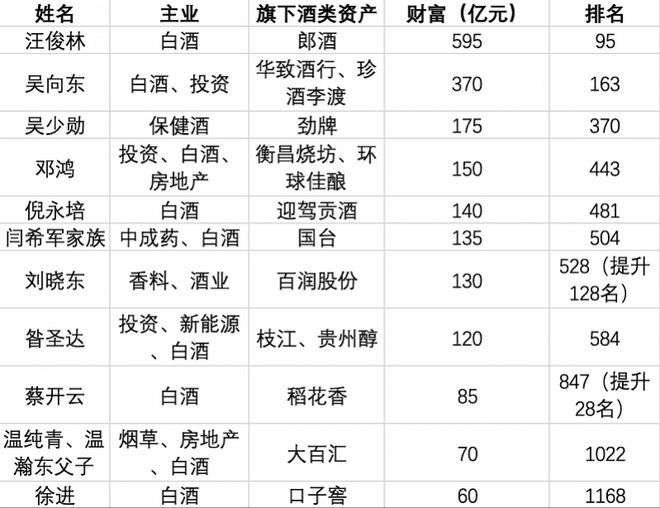
最新版胡润百富榜披露,11名酒企人士上榜,但排名普遍下降
Nan Fang Du Shi Bao· 2025-10-28 12:12
Core Insights - The latest "Hurun Rich List" for 2025 was released, showing a total wealth of 203 billion yuan among 11 individuals from the liquor industry, with only two seeing an increase in their rankings compared to last year [1][2]. Group 1: Wealth and Rankings - Wang Junlin, with a wealth of 59.5 billion yuan, ranks 95th, making him the highest-ranked liquor entrepreneur [3]. - Wu Xiangdong, with 37 billion yuan, ranks 163rd, experiencing a drop of 6 places due to a significant decline in revenue for his companies [3]. - Wu Shaoxun, with 17.5 billion yuan, ranks 370th, falling 64 places as his company's products faced poor sales despite initial popularity [3]. - Liu Xiaodong and Cai Kaiyun are the only two entrepreneurs who improved their rankings, with Liu at 528th (up 128 places) and Cai at 847th (up 28 places) [3]. Group 2: Industry Trends - The liquor industry is undergoing a deep adjustment period, leading to significant changes in consumption patterns and a majority of entrepreneurs experiencing declines in their rankings [2][3]. - Kuozi Jiao's Xu Jin, with 6 billion yuan, ranks 1168th, dropping 293 places due to poor market performance [3][4]. - Kuozi Jiao reported a continued decline in its third-quarter results, with revenue down 27.24% and net profit down 43.39% year-on-year [4].


共话全球酒业高质量发展 首届赤水河论坛落地茅台
Bei Jing Shang Bao· 2025-10-28 10:10
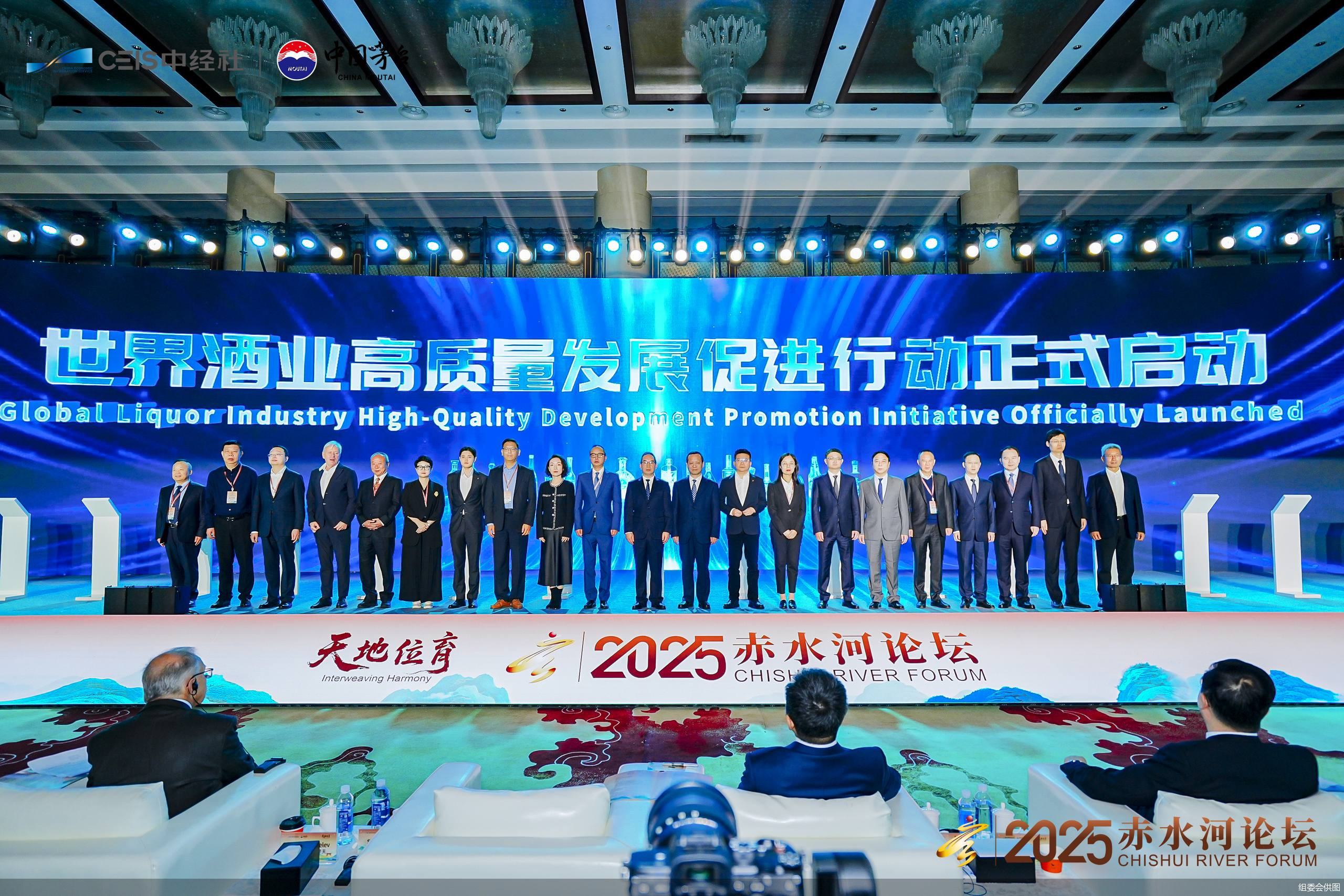
Core Insights - The event "Tian Di Wei Yu" 2025 Chishui River Forum was held to emphasize the ecological and industrial value of the Chishui River, known for producing world-class liquor brands like Moutai and Langjiu [1][3] - The forum aimed to foster international cooperation, innovation in techniques, and resource sharing within the liquor industry, contributing to high-quality global development [3][4] Industry Developments - The forum gathered over 400 participants, including international guests, liquor company representatives, and media, focusing on the "liquor+" concept [3] - The "World Liquor Industry High-Quality Development Promotion Action" was launched, aiming to create a collaborative global liquor community through communication and innovation [3] - A series of reports were set to be released, including the "Cultural Integration and Future Building through Liquor" think tank report and the "International Liquor Development Index Report (2025)" [3][4] Cultural and Economic Impact - The forum highlighted the importance of cultural heritage and green transformation in the liquor industry, providing authoritative references for consumers, investors, and industry professionals [4] - The outcomes of the forum are expected to enhance the industry's quality development while promoting cultural exchange and sustainable growth [4]

茅台集团董事长陈华:绿色发展是必由之路,开放共享是必然趋势
Bei Ke Cai Jing· 2025-10-28 08:57
Core Insights - The forum "Tian Di Wei Yu" 2025 aims to create a platform for deep dialogue and exchange in the global wine industry, focusing on sustainable development [1][2] - The chairman of Moutai Group emphasizes the importance of green development and open sharing as essential trends for the wine industry [1][2] Group 1: Cultural Significance - The chairman describes the Red River as a "cultural river" that embodies the heritage and innovation of wine culture, urging industry peers to uphold quality and cultural roots [1] - Moutai Group adheres to the values of "respecting nature and people" and promotes craftsmanship while developing cultural IPs [1] Group 2: Ecological Commitment - The Red River is recognized as an "ecological river," supporting rare species and being a core area for world-class sauce-flavored liquor [1] - Moutai has invested over 400 million yuan to collaborate with upstream and downstream enterprises to protect the ecosystem, aligning with the "dual carbon" strategy [1] Group 3: Open and Inclusive Development - The Red River is characterized as an "open river," with Moutai products being sold in 64 countries and regions across five continents [2] - The company advocates for open sharing as a trend in the wine industry, aiming to build a new global wine ecosystem through enhanced communication [2] Group 4: Social Responsibility - The Red River is also seen as a "development river," with Moutai committed to social contributions and long-term partnerships with farmers to boost income [2] - The chairman highlights the importance of "gratitude and giving back" as a reflection of corporate responsibility, promoting ESG principles for societal harmony and improved living standards [2]
首届赤水河论坛启幕,20余家酒企发布《国际名酒赤水河宣言》
Bei Ke Cai Jing· 2025-10-28 08:55
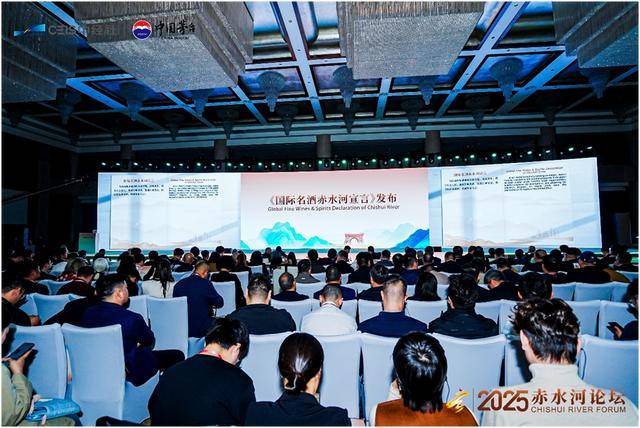
Core Viewpoint - The "International Famous Liquor Declaration" was launched at the "Tian Di Wei Yu" 2025 Chishui River Forum, aiming to promote global liquor industry development through ecological, quality, consumption, social responsibility, technological innovation, and cultural exchange initiatives [1][2] Group 1: Declaration Objectives - The declaration emphasizes the importance of respecting and protecting natural resources, advocating for sustainable production methods to maintain ecological balance [1] - It highlights the need for quality preservation and cultural inheritance, focusing on innovative practices within a comprehensive quality management system [1] - The declaration promotes responsible consumption and marketing, encouraging a civilized and healthy drinking culture [1] Group 2: Social Responsibility and Technological Integration - It calls for the integration of ESG principles throughout the development process, aiming to create a more harmonious social environment through public welfare and sustainable practices [1] - The declaration encourages the adoption of modern technology to enhance product stability and diversity, providing consumers with high-quality and varied options [1] Group 3: Cultural Exchange and Collaboration - It advocates for the exploration of the spiritual and historical values of liquor culture, creating interactive drinking experiences that embody cultural significance [2] - The declaration promotes mutual respect for the history and brewing techniques of different liquor types and regions, fostering understanding through cultural exchange [2] - It suggests establishing a regular and diverse international dialogue mechanism to facilitate cross-border tasting and cultural forums, enhancing mutual learning and coexistence [2]
赤水河宣言发布 全球酒业加快进入新纪元
Sou Hu Cai Jing· 2025-10-28 08:22
Core Insights - The global alcoholic beverage market is undergoing significant structural adjustments driven by changes in consumer habits, technological innovations, and cultural awakenings, marking a historical turning point for the industry [3] - In China, the production of baijiu is declining, leading the industry to shift from "volume and price increase" to "quality improvement and efficiency enhancement" [3] - The rise of younger consumer groups is accelerating the transformation of the alcohol industry, with the "Z generation" distancing themselves from traditional drinking culture, necessitating a redefinition of value propositions [3][4] Industry Trends - Italian sparkling wine is experiencing growth, with exports expected to increase by 12% in 2024, while China's imports of sparkling wine grew by 18.81% from January to May 2025 [3] - The quality expression of alcoholic beverages needs to be restructured, moving from traditional social consumption to more personalized and diverse consumption scenarios [4] - Digital technologies are being integrated into the production process, enhancing quality control and creating new consumer experiences through innovations like blockchain and 3D printing [5] Company Strategies - Moutai Group emphasizes an open approach to global engagement, with products sold in 64 countries and regions, aiming to enhance international presence and cultural exchange [6] - Moutai's overseas sales revenue reached 5.189 billion yuan in 2024, marking a 19.27% year-on-year increase, indicating strong international demand [7] - Companies are shifting focus from channel competition to deep user engagement, creating new paradigms in the "experience economy" to meet high-end consumer demands [7]
茅台集团董事长陈华:开放共享是酒企顺应时代的必然趋势
Nan Fang Du Shi Bao· 2025-10-28 06:08
Core Insights - Chen Hua, the newly appointed chairman of Moutai, emphasized the importance of "open sharing" for the liquor industry to adapt to modern trends [2] - Moutai products are distributed globally across 64 countries and regions, showcasing the company's commitment to international development [2] - The inaugural Chishui River Forum aims to highlight the ecological value and industrial collaborative development of the Chishui River basin [2] Environmental Commitment - Moutai prioritizes ecological protection and green development, aligning with the national "dual carbon" strategy, and has invested over 400 million yuan to protect the river basin's ecology [3] - The company advocates for a harmonious coexistence between humans and nature, emphasizing the need to preserve the ecological diversity and stability of its production areas [3] Global Collaboration - The "World Liquor Industry High-Quality Development Promotion Action" was launched at the forum, aiming to create a global liquor community through collaboration and innovation [3] - Over 20 renowned global liquor companies jointly released the "International Famous Liquor Chishui River Declaration" to promote shared values and standards in the industry [3]
李迅雷:要进一步加大促消费的力度!建议放松喝酒范围限制,提振酒业发展
Ge Long Hui· 2025-10-28 04:22
Core Viewpoint - The "2025 Chishui River Forum" held in Maotai Town emphasizes the potential for growth in service consumption, particularly in the food and beverage sector, as China aims to align its consumption patterns with its rising income levels [1] Group 1: Economic Insights - The current service consumption in China stands at approximately 50%, indicating significant room for improvement [1] - The average GDP per capita in China has reached the level of middle-income countries, suggesting a shift towards a more affluent society [1] - The goal for China is to become a moderately developed country by 2035, which necessitates an increase in service and beverage consumption to match living standards [1] Group 2: Recommendations for Growth - There is a suggestion to relax restrictions on alcohol consumption to stimulate the beverage sector, particularly in light of the current sluggishness in dining consumption [1] - Increased efforts to promote consumption and significantly boost the development of the liquor industry are recommended [1]
茅台集团党委书记、董事长陈华:赤水河是文化、生态、开放、发展之河,茅台愿与同仁构建全球酒业新生态
Sou Hu Cai Jing· 2025-10-28 03:58
Core Viewpoint - The first Chishui River Forum held in Maotai Town, Guizhou, emphasized the themes of culture, ecology, openness, and development in the global liquor industry, with a focus on sustainable development and collaboration among industry peers [2][8]. Group 1: Cultural Aspects - Chishui River is described as a "cultural river" that has nurtured various cultural treasures over centuries, including the traditional brewing techniques of Maotai liquor, which is recognized as a national intangible cultural heritage [9]. - The company aims to uphold its quality and cultural roots while promoting innovative development of liquor culture through events like the Maotai Liquor Festival [9]. Group 2: Ecological Commitment - Chishui River is characterized as an "ecological river," supporting over 40% of the rare fish species in the upper Yangtze River and maintaining a diverse ecosystem [10]. - The company has invested over 400 million yuan to protect the river's ecology and aligns with the national "dual carbon" strategy, emphasizing green development [10]. Group 3: Openness and Global Reach - Chishui River is referred to as an "open river," with the company exporting products to 64 countries and regions across five continents, aiming to enhance global engagement [10]. - The company promotes an open and shared approach to build a new ecosystem in the global liquor industry [10]. Group 4: Social Responsibility and Development - Chishui River is seen as a "development river," with the company creating over 75 billion yuan in agricultural output and contributing to the income of over 8.5 million farmers [11]. - The company has invested over 10 billion yuan in social welfare initiatives, including education, benefiting over 250,000 students [11].
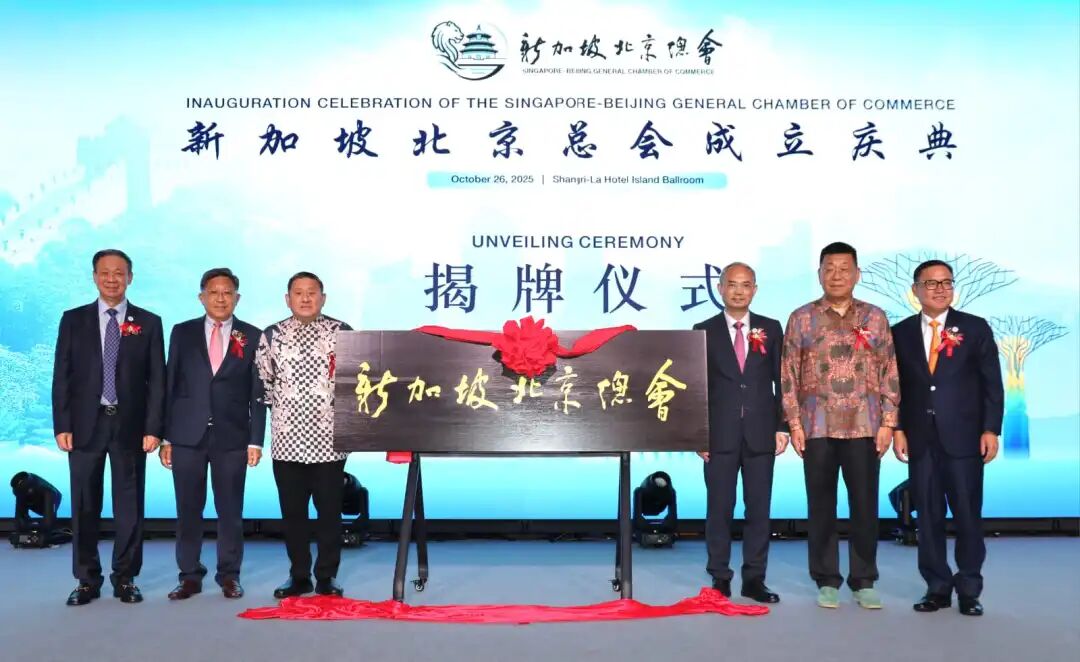
新加坡北京总会正式成立 助推新京合作迈向新台阶
Jin Tou Wang· 2025-10-28 02:18
Core Points - The Singapore Beijing Association has officially been established to enhance cooperation between Singapore and Beijing in various fields such as trade, culture, and technology [1][3][9] Group 1: Establishment and Purpose - The Singapore Beijing Association was launched on October 26, 2025, with the aim of promoting deep exchanges and cooperation between the two regions [3][9] - The association's mission is defined as "public welfare-oriented, integrating new China and Singapore, innovative development, and win-win cooperation" [9] Group 2: Key Figures and Attendance - The establishment ceremony was held at the Shangri-La Hotel in Singapore, attended by nearly 500 representatives from various sectors, including diplomats and business leaders [6][11] - Notable attendees included the Chinese Ambassador to Singapore, the Singapore Ambassador to China, and various leaders from business and cultural organizations [6][11] Group 3: Diplomatic and Economic Context - The establishment of the association coincides with the 35th anniversary of diplomatic relations between China and Singapore, which have evolved into a "comprehensive high-quality forward-looking partnership" [11][12] - The association aims to serve as a bridge for businesses to explore opportunities in both markets, facilitating investment and trade [11][12] Group 4: Vision and Future Opportunities - The association envisions creating an "Innovation Ecosystem" termed "New China-Singapore Science and Technology Rainforest," which will include top research institutions and enterprises from both regions [17] - The collaboration is expected to leverage Singapore's role as a financial and innovation hub alongside Beijing's strengths in technology and research [17]
酒香也怕巷子深?酿新篇:中国酒业的三味“新曲”
Sou Hu Cai Jing· 2025-10-26 03:03
Core Insights - The 23rd China International Wine Expo showcased a comprehensive display of the entire industry chain, moving beyond just finished products to include raw materials, smart equipment, and digital marketing [4][10] - The industry is undergoing significant transformations characterized by three main themes: youthfulness, digitalization, and internationalization, which are essential for the industry's evolution [2][12] Youthfulness - Wine companies are actively adapting to attract younger consumers, with products like "no high-low" yellow wine targeting health-conscious youth, and innovative offerings such as wine-infused chocolates and face masks [6][7] - The shift towards youthfulness is driven by the emergence of Generation Z as a new consumer force, emphasizing personalized experiences and health-conscious choices [7][9] Digitalization - The digital transformation in the wine industry is evident through automation in production processes and the integration of technologies like blockchain for transparency and AR/VR for immersive experiences [9][10] - However, the digitalization efforts are primarily benefiting larger enterprises, raising concerns about the potential widening gap between large and small companies in the industry [9][12] Internationalization - Chinese wine companies are increasingly engaging with global markets, supported by China's growing international influence and proactive industry reforms [10][12] - The internationalization of Chinese wine faces challenges, including the need to meet international quality standards and cultural recognition in foreign markets [12][13] Conclusion - The wine expo reflects a broader trend of transformation in traditional industries, where youthfulness, digitalization, and internationalization are interconnected and mutually reinforcing [13][15] - The industry must embrace change with an open mindset and innovative spirit to navigate the complexities of modern market dynamics [15]




