
文化产业

Search documents
文化生产力指数高居全国第四!开福区跻身全国文化产业竞争力百强区Top30
Chang Sha Wan Bao· 2025-10-25 09:56
Core Insights - The "China Cultural Industry Competitiveness Top 100 District Index (2025)" was released, highlighting the strong cultural industry performance of Changsha, with four districts ranked in the top 30 [1][3] - Among these, Kaifu District ranked 5th nationally in the comprehensive index, showcasing its robust cultural soft power [1][4] Group 1: Cultural Industry Competitiveness - The index evaluates cultural industry development at the district level based on productivity, influence, and driving force [3] - Kaifu District achieved a high cultural productivity index, ranking 4th nationally, and an influence index ranking 5th [1][4] Group 2: Integration of Culture and Technology - Kaifu District is implementing a "Cultural + Technology" development model, forming a digital cultural industry ecosystem characterized by high-tech video [6][8] - The district has established a global influence in the digital video industry, integrating content creation, production, storage, broadcasting, and trading [8] Group 3: Cultural and Tourism Integration - The district promotes a "Cultural + Tourism" strategy, enhancing the quality of the tourism industry through cultural initiatives [9] - Plans include a comprehensive cultural tourism development strategy and actions to expand cultural product offerings [9]


迈向“十五五”的文化图景 | 有声有色讲好文化里的中国故事
Ren Min Ri Bao· 2025-10-24 06:01
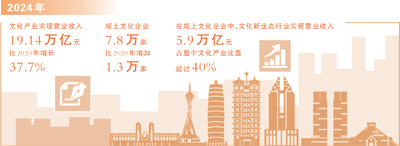
Core Insights - The article emphasizes the importance of promoting and practicing socialist core values while accelerating the development of the cultural industry and enhancing the influence of Chinese civilization [1] Group 1: Cultural Industry Development - The cultural industry in China has reached a new level during the "14th Five-Year Plan" period, significantly contributing to national strategies, meeting cultural needs, and enhancing the influence of Chinese culture [5] - By 2024, the cultural industry is projected to achieve a revenue of 19.14 trillion yuan, a 37.7% increase compared to 2020, with the number of large-scale cultural enterprises increasing by 1.3 million [5] - New cultural business models are emerging, with the new cultural industry expected to generate 5.9 trillion yuan in revenue by 2024, accounting for over 40% of the total cultural industry [5] Group 2: Technological Integration - The integration of culture and technology is being actively pursued, utilizing multimedia, virtual reality, and augmented reality to enhance audience experiences [2] - The "Only Henan: Drama Fantasy City" has successfully attracted 1.05 million viewers during the recent holidays, indicating the cultural industry's role as a strong driver of local economic development [2] - Government support is evident through policies promoting digital upgrades in scenic areas, aiming to create national 5A-level tourist attractions [2] Group 3: Future Outlook - Looking ahead to the "15th Five-Year Plan," the focus will be on further integrating cultural creativity, technological innovation, and industrial fusion to stimulate growth and meet diverse cultural needs [6]
数说中国|从“十四五”成就看“十五五”经济社会发展主要目标
Xin Hua She· 2025-10-24 05:47
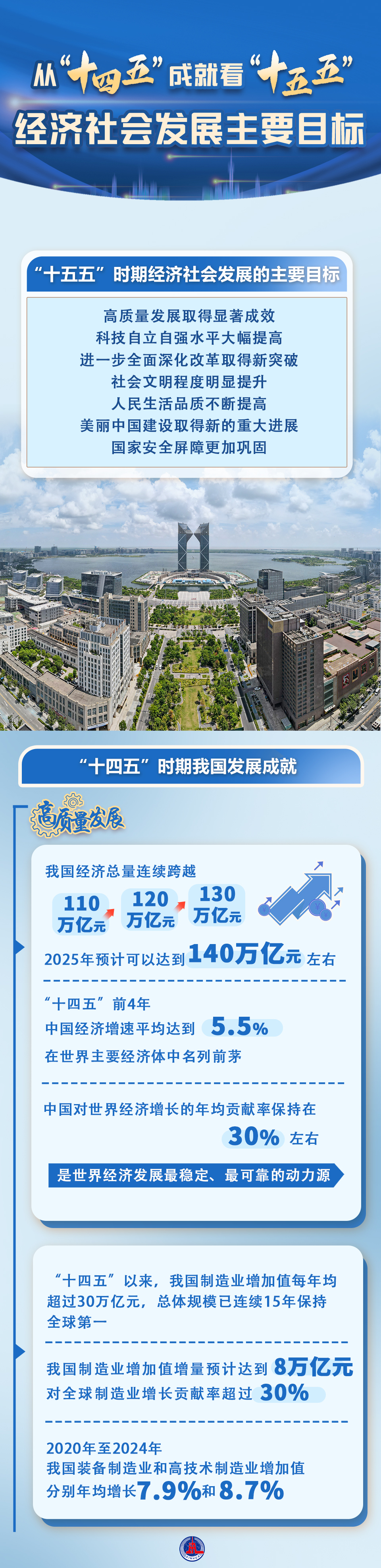
Core Points - The article highlights the significant achievements and goals of China's economic and social development during the "14th Five-Year Plan" period, emphasizing high-quality development and technological self-reliance [2][8][40] Economic Growth - China's GDP is projected to reach approximately 140 trillion yuan by 2025, with an average growth rate of 5.5% during the first four years of the "14th Five-Year Plan" [6] - The country has maintained a contribution rate of around 30% to global economic growth, positioning itself as a stable and reliable driver of world economic development [6] Manufacturing Sector - The added value of China's manufacturing industry has consistently exceeded 30 trillion yuan annually, maintaining its status as the world's largest manufacturing sector for 15 consecutive years [7] - The growth rates for equipment manufacturing and high-tech manufacturing sectors are projected at 9% and 8.7% respectively from 2020 to 2024 [7] Domestic Consumption - From 2021 to 2024, domestic demand contributed an average of 86.8% to economic growth, with final consumption expenditure accounting for 59.9% [19][20] - China remains the second-largest consumer market globally and the largest online retail market [20] Technological Innovation - The number of global top 100 technology innovation clusters has reached a leading position, with over 460,000 high-tech enterprises [13] - R&D expenditure is expected to increase by 12 billion yuan, with the intensity of R&D investment rising to 2.68%, nearing the OECD average [14] Social Development - By 2024, the per capita disposable income of rural residents is projected to reach 23,119 yuan, reflecting a steady increase in farmers' income [22] - The urban employment rate remains stable, with over 12 million new jobs created annually [34] Environmental Progress - Forest coverage has increased to over 25%, contributing significantly to global greening efforts [38] - The proportion of good water quality in surface water monitoring points is 90.4%, with air quality maintaining a favorable level [38]
有声有色讲好文化里的中国故事(迈向“十五五”的文化图景)
Ren Min Ri Bao· 2025-10-24 00:57
Core Insights - The article emphasizes the importance of promoting and practicing socialist core values while accelerating the development of the cultural industry and enhancing the influence of Chinese civilization [1] Group 1: Cultural Industry Development - The "Only Henan: Drama Fantasy City" has received approximately 50 million visitors since its opening in June 2021, showcasing the potential of cultural tourism [1] - The park features 21 theaters and nearly 1,000 actors, offering a total of 800 minutes of performances that highlight the Yellow River civilization [1] - During the recent National Day and Mid-Autumn Festival holidays, the park attracted 1.05 million viewers, contributing to over 3.06 million visitors in the surrounding area, indicating a significant boost in local tourism [2] Group 2: Technological Integration - The integration of multimedia, virtual reality, and augmented reality technologies enhances the immersive experience for audiences, breaking down barriers between actors, viewers, and the stage [2] - The local government supports digital upgrades for cultural sites, aiming to create a national 5A-level tourist attraction through collaboration between technology companies and cultural venues [2] Group 3: Economic Impact - The cultural industry in China has seen substantial growth, with projected revenues of 19.14 trillion yuan in 2024, a 37.7% increase from 2020 [5] - The number of large-scale cultural enterprises has increased by 1.3 million since 2020, indicating a growing market presence [5] - New cultural business models are expected to generate 5.9 trillion yuan in revenue, accounting for over 40% of the total cultural industry revenue by 2024 [5] Group 4: Future Outlook - The upcoming "15th Five-Year Plan" aims to further integrate cultural creativity, technological innovation, and industry collaboration to stimulate growth and meet diverse cultural needs [6]
“十五五”时期,中国将着重办好这些事
Yang Shi Xin Wen· 2025-10-23 12:13
Core Points - The Fourth Plenary Session of the 20th Central Committee of the Communist Party of China was held from October 20 to 23, 2025, in Beijing, where a work report by Xi Jinping was discussed and the proposal for the 15th Five-Year Plan was approved [1] Economic Development - The focus during the 15th Five-Year Plan period will be on building a modern industrial system and strengthening the foundation of the real economy, emphasizing intelligent, green, and integrated development [2] - There will be an emphasis on optimizing traditional industries while nurturing emerging and future industries, alongside promoting high-quality development in the service sector [2] Technological Advancement - The plan aims to accelerate high-level self-reliance in technology, enhancing the national innovation system and boosting independent innovation capabilities [3] - Key areas include original innovation and tackling core technologies, integrating technological and industrial innovation, and advancing digital China initiatives [3] Domestic Market - The strategy will focus on expanding domestic demand, linking consumer and investment needs, and fostering a positive interaction between supply and demand [4][5] - Efforts will be made to stimulate consumption and increase effective investment while removing barriers to a unified national market [5] Economic System - The establishment of a high-level socialist market economy will be prioritized, enhancing the driving force for high-quality development [6][7] - The plan includes activating various business entities and improving the market-oriented allocation of resources [7] International Cooperation - The strategy includes expanding high-level opening-up and creating a win-win cooperation landscape, maintaining a multilateral trade system, and promoting international circulation [8][9] Agricultural Development - The modernization of agriculture and rural areas will be a key focus, addressing rural issues and promoting urban-rural integration [10] - Enhancements in agricultural production capacity and quality, along with rural development, will be prioritized [11] Regional Development - The plan aims to optimize regional economic layouts and promote coordinated regional development, enhancing the effectiveness of major productivity layouts [12][13] Cultural Development - There will be a push to invigorate cultural innovation and development, promoting socialist culture with strong ideological and international influence [14] Social Welfare - The strategy emphasizes improving people's livelihoods and promoting common prosperity, focusing on employment, income distribution, education, and social security [15] Environmental Sustainability - The plan aims for a comprehensive green transformation of economic and social development, focusing on carbon neutrality and ecological safety [16] National Security - The modernization of the national security system and capabilities will be prioritized to ensure social order and vitality [17][18] Military Modernization - The strategy includes achieving the centenary goals of the military and advancing the modernization of national defense and armed forces [19][20]
园区行活动携首都学子漫步南中轴,邂逅“文化+科技”赋能新场景
Xin Jing Bao· 2025-10-22 14:27
Core Points - The event "‘京’彩文化 青春绽放" 2025 Park Tour was organized to showcase the transformation of the Dahongmen area from a clothing wholesale market to a cultural and technological hub [2][4] - The South Central Axis International Cultural Technology Park has undergone significant renovations since October 2022, evolving into a multifunctional cultural industry park [2][4] - The park integrates modern office spaces, commercial facilities, and talent apartments, emphasizing a blend of culture and technology [4][8] Group 1 - The park is located at 15 Nanyuan Road, Fengtai District, and was previously known as the Dahongmen Clothing Trade City, the largest wholesale market in the area [2][4] - The renovation includes the removal of illegal constructions and the addition of interactive spaces like indoor courtyards and outdoor rooftop gardens [2][4] - The park aims to create a vibrant waterfront architectural interface that harmonizes with the surrounding environment, attracting local residents and enhancing commercial vitality [4] Group 2 - Students from three universities participated in the event, experiencing advanced technologies such as digital humans and XR technology [1][6] - The XR Cloud Performing Arts Center showcased real-time rendering technology, allowing students to see how backgrounds can be automatically synthesized without the need for green screens [6] - The event provided students with insights into the integration of culture and technology, enhancing their understanding of modern industries [7][8]

“十四五”·答卷|文脉赓续 绘就高质量发展新图景
Yang Shi Wang· 2025-10-22 13:54
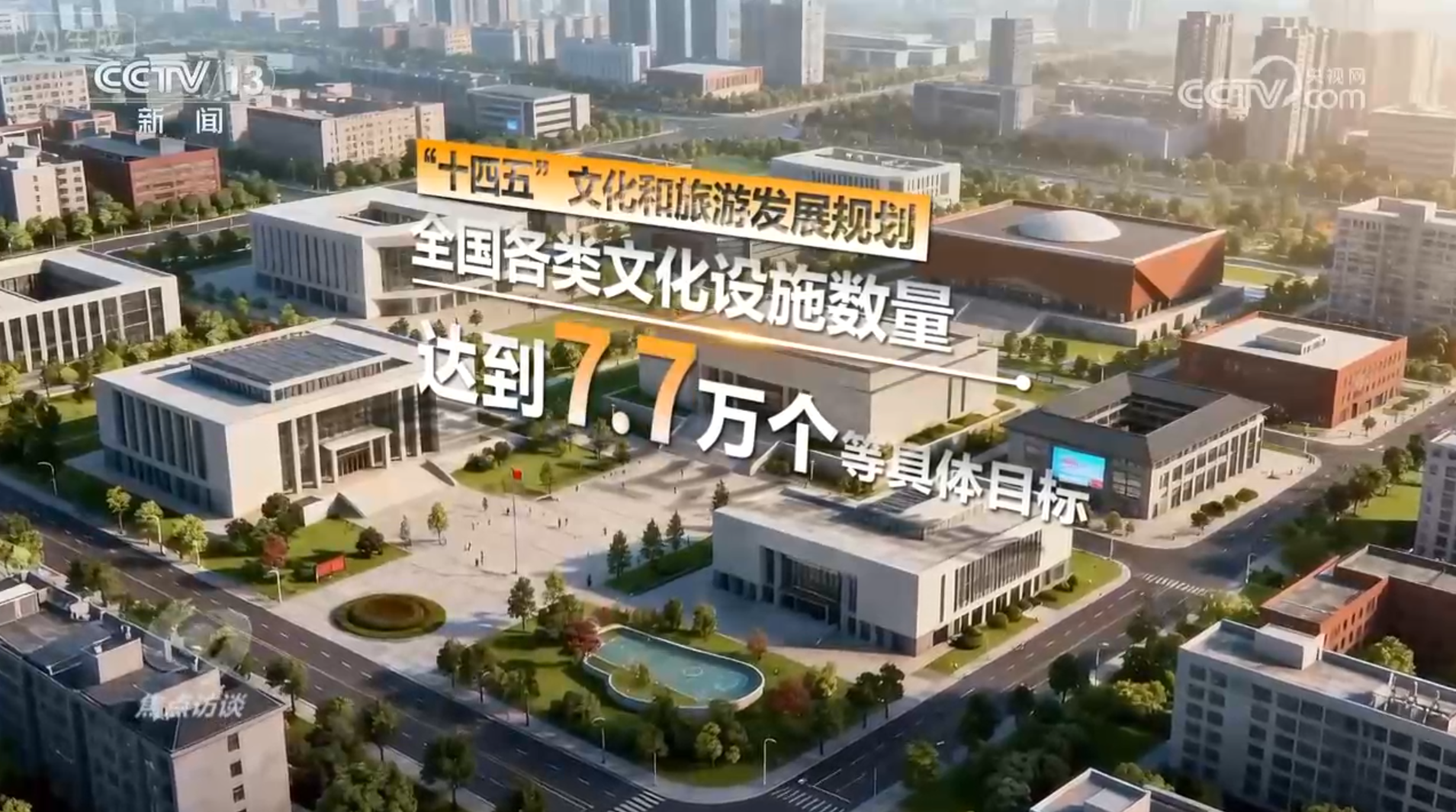
Core Insights - The "14th Five-Year Plan" emphasizes the development of socialist advanced culture and the enhancement of national cultural soft power, focusing on improving social civilization, public cultural service levels, and modern cultural industry systems [1][3] Public Cultural Services - The plan aims for a more balanced public cultural service layout, significantly improved service levels, and diversified service supply methods, with breakthroughs in digital and intelligent development [1][3] - By the end of 2024, there will be 3,248 public libraries and nearly 44,000 cultural institutions at the county level, providing more cultural service options for the public [3] - The expected annual circulation of public libraries is projected to reach 1 to 1.1 billion by 2025, with actual figures reaching 1.34 billion by 2024, surpassing the target [3] Cultural Industry Growth - The cultural industry has seen significant growth, with revenues reaching 19.14 trillion yuan in 2024, a 37.7% increase from 2020, indicating an average annual growth rate exceeding 8% [7][10] - The number of large-scale cultural enterprises has increased to 78,000, up by 1,300 from 2020, reflecting a shift from traditional models to innovative integrations [7][10] - The cultural industry's contribution to GDP has increased, indicating a broader market space and solid demand foundation for cultural industry development [7][10] Integration of Culture and Technology - The deep integration of culture and technology has become a key driver for the cultural industry's growth, with new business models emerging in digital creativity, online audio-visual, and digital publishing [10] - The rise of "Guochao" (national trend) culture has revitalized traditional crafts and industries, such as the ceramics industry in Jingdezhen, which has an annual output value exceeding 90 billion yuan [11][13] Cultural Heritage and Tourism - The integration of cultural heritage protection and tourism development has led to increased visitor numbers at cultural sites, enhancing the overall cultural experience [15][17] - The "cultural tourism" model has evolved, with immersive digital tourism products providing deeper engagement with local culture and heritage [15][17]
香港创意联手内地研发互补破局 大湾区文投会促产业协同
2 1 Shi Ji Jing Ji Bao Dao· 2025-10-21 14:43
Core Insights - The "Cultural Industry Investment Conference of the Guangdong-Hong Kong-Macao Greater Bay Area" aims to facilitate the understanding of cultural industry innovation and cross-industry integration among Hong Kong cultural enterprises and investment institutions [1][2] Group 1: Event Overview - The conference will take place from November 26 to 28, 2025, at the Huangpu International Conference Center in Guangzhou, focusing on connecting funding with projects [2][3] - The event adopts a "3+365" model, providing three days of main activities and year-round financing support [2] Group 2: Investment Opportunities - The conference will feature a "1+8+N" activity system, including one main conference, eight investment roadshows, and various investment service activities [2] - Over 200 well-known investment institutions and more than 300 quality cultural enterprises are expected to participate, highlighting the event's role as a platform for investment and business collaboration [3][7] Group 3: Industry Insights - The conference emphasizes the complementary advantages between the gaming industries of mainland China and Hong Kong, with mainland strengths in R&D and cost control, while Hong Kong excels in international operations and market expansion [6] - The integration of culture and technology is a key focus, particularly in areas like AI, robotics, virtual reality, and the metaverse [6] Group 4: Policy Support - In May 2023, Guangdong Province released a policy package to promote high-quality development in the cultural industry, encompassing 87 specific measures across various sectors [7]
“夜京城”IP矩阵浮出水面 北京夜经济场景再扩容
Bei Jing Shang Bao· 2025-10-21 12:36
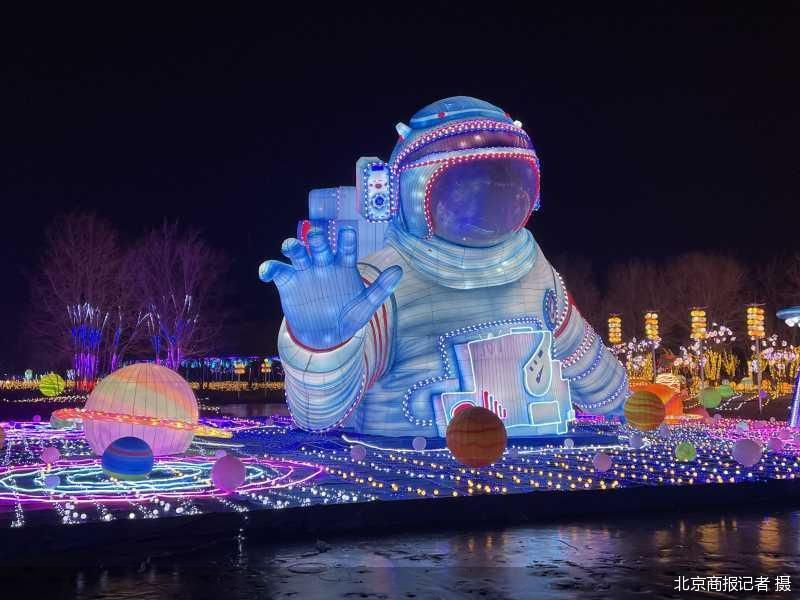
Core Viewpoint - The newly released "14th Five-Year Plan for Urban Lighting Development in Beijing" aims to enhance the night economy by transitioning from "point lighting" to a comprehensive "all-region quality improvement" approach, leveraging the "Night Beijing" IP matrix to stimulate consumption and employment [2][6]. Urban Nightscape Structure - The plan proposes a nightscape structure of "one core, two axes, four rings, and multiple points," highlighting the capital's urban features during both day and night [3]. - "One core" refers to the capital's functional core area, "two axes" are the central axis and its extensions, and "four rings" represent the second to fifth ring roads, with "multiple points" indicating areas outside the central city [3]. Operational Management - The management approach shifts from fixed models to refined control, introducing a new "major event guarantee" level to dynamically adjust lighting times and modes based on various factors [4]. - The plan aims to increase the application rate of LED light sources from 60% to 90%, enhancing user experience while reducing energy consumption [4]. Transition from Point Lighting to Systematic Layout - The night economy development in the "14th Five-Year Plan" focused on key commercial areas, while the "15th Five-Year Plan" emphasizes a qualitative leap towards a comprehensive layout [6]. - The new structure aims to create a three-dimensional nightscape network that connects urban areas and breaks the dominance of central districts in the night economy [6]. Scene Creation and IP Matrix Operation - The plan shifts from single business types to an IP matrix operation, integrating various night-time activities and experiences [6]. - The "Night Beijing" IP will connect major water systems and parks, creating a "blue night artery" and a "green night puzzle" to enhance cultural and ecological integration [6]. Economic Value of Night Economy Expansion - The implementation of the IP matrix is expected to stimulate consumer enthusiasm for night-time spending, extending consumption time and space [7]. - Data indicates that during the 2024 light festival, key commercial areas in Chaoyang District saw over 12 million visitors, a 13% increase year-on-year, with sales reaching 2.8 billion yuan, a 5% increase [7][8]. Industry and Cultural Integration - The IP matrix will promote the integration of cultural industries with tourism and commerce, leading to the development of derivative products and services [8]. - The unique IP matrix is anticipated to enhance Beijing's national and global recognition, positioning it as an attractive international tourism destination [8].
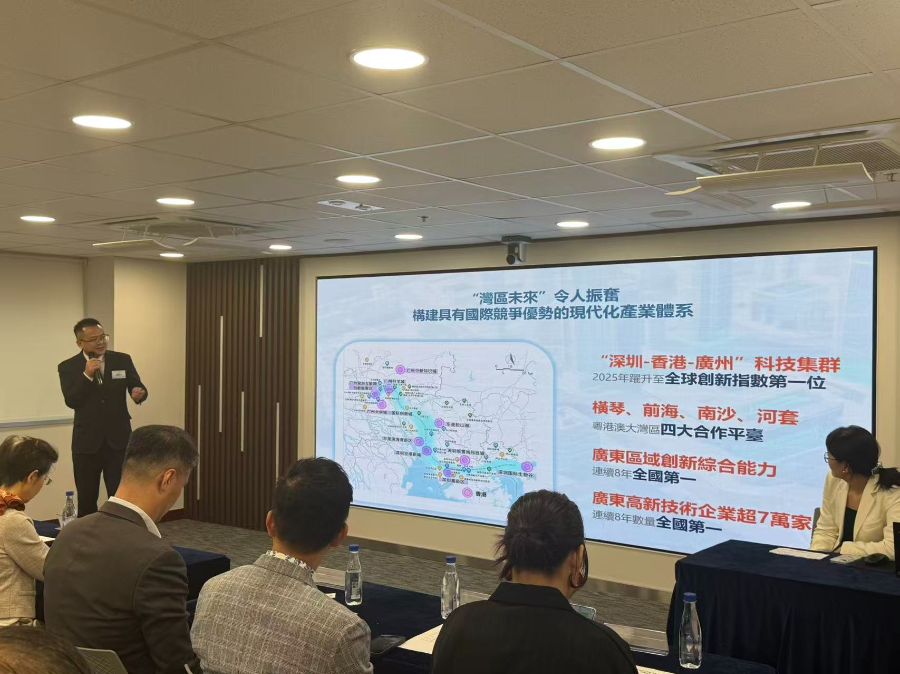
香港创意联手内地研发互补破局,大湾区文投会促产业协同
2 1 Shi Ji Jing Ji Bao Dao· 2025-10-21 12:13
Core Viewpoint - The "Cultural Industry Investment Conference of the Guangdong-Hong Kong-Macao Greater Bay Area" aims to enhance the understanding of cultural enterprises and investment institutions regarding the conference's background, core values, and project selection standards, facilitating efficient capital matching with quality cultural projects [1][2]. Group 1: Conference Structure and Goals - The 2025 conference will take place from November 26 to 28 in Guangzhou, featuring a "1+8+N" activity system, which includes one main conference, eight investment roadshows, and various investment service activities [2]. - The conference emphasizes the operational philosophy of "finding projects for funds and funds for projects," focusing on early-stage investments for startups in the cultural sector [2][3]. Group 2: Industry Collaboration and Opportunities - The conference serves as a platform for industry exchange and business cooperation, with past examples showing significant business growth for participating companies, such as a robotics project securing orders and a Hong Kong animation company’s market valuation increasing from under 500 million to 2 billion [2][4]. - There is a notable complementarity between the gaming industries in mainland China and Hong Kong, with mainland strengths in R&D and cost control, while Hong Kong excels in international operations and market expansion [3]. Group 3: Policy Support and Development - In May, Guangdong Province released a "policy package" to promote high-quality development in the cultural industry, comprising six policy documents with 87 specific measures across various sectors, including film, performing arts, and e-sports [5]. - The conference has successfully hosted two editions, with over 800 investment institutions and cultural enterprises participating in 2024, resulting in intended investment contracts worth 5.6 billion [4].