
芯片

Search documents
传言成真?英伟达对OpenAI的“1000亿美元投资”最终“打了三折”
Hua Er Jie Jian Wen· 2026-02-21 08:03
Core Insights - Nvidia is finalizing a $30 billion equity investment in OpenAI, shifting from a complex long-term commitment to a more direct capital arrangement [1][2] - The initial $100 billion deal was stalled due to internal concerns at Nvidia regarding the terms, with Jensen Huang emphasizing that the agreement was non-binding [1][2] - OpenAI's larger funding round aims to raise over $100 billion, potentially valuing the company at $730 billion, excluding new capital [1] Group 1: Investment Details - The $30 billion investment is part of a broader financing plan for OpenAI, which is expected to reinvest most of the new capital into Nvidia hardware [1][2] - The original $100 billion agreement involved Nvidia planning to invest in ten installments of $10 billion each, contingent on OpenAI's growing demand for computing power [2] - The new arrangement will support the construction of new gigawatt-level computing resources, with potential for further transactions over time [2] Group 2: Relationship Dynamics - Despite the changes in the investment structure, both Sam Altman and Jensen Huang have publicly maintained a positive relationship between the two companies [3] - OpenAI is also in discussions with SoftBank for an additional $30 billion investment, while Amazon may invest up to $50 billion as part of a broader collaboration [3] - OpenAI executives are actively meeting with venture capitalists and other investors to secure additional interest, planning to spend approximately $600 billion on computing resources by 2030 [3]

都想学英伟达“芯片换融资” 谷歌(GOOGL.US)和AMD(AMD.US)都要扶持“AI云”
智通财经网· 2026-02-21 05:38
Group 1 - Nvidia's strategy of supporting CoreWeave to create a "compute-finance" loop is compelling, prompting Google and AMD to explore building their own AI chip ecosystems [1] - Google is negotiating to invest approximately $100 million in the cloud computing startup Fluidstack, valuing it at around $7.5 billion, aiming to enhance its AI chip usage among computing providers [2] - Google is also providing financing support to former cryptocurrency mining companies like Hut 8 and Cipher Mining, facilitating their transition to AI compute factories in exchange for adopting Google's TPU chips [3] Group 2 - AMD is taking a more aggressive approach by providing substantial backing for a $300 million loan to the startup Crusoe, which will be used to purchase AMD's AI chips, including a "buyback clause" if Crusoe cannot find customers [4] - Both Google and AMD are circumventing traditional cloud giants due to their lack of interest in TPU chips, as major providers like Amazon AWS and Microsoft Azure are focused on developing their own AI chips [5] - Google is considering restructuring its TPU team into an independent department to attract external capital, although this has been officially denied, and faces challenges with production capacity and global shortages of essential components [7]


2025年,哪些芯片最火?(附全年热门料号汇总)
芯世相· 2026-02-21 02:07
Core Insights - The chip market in 2025 is showing signs of recovery compared to the lows of previous years, driven by tariffs, market events, and a sustained demand for storage chips [3][4] - Monthly tracking of popular chip models has revealed both transient and stable demand patterns, with certain models consistently appearing in the market [3][4] Summary by Sections Annual Stable Chip Model - The W25Q128JVSIQ, a 128M-bit SPI NOR Flash from Winbond, has been a standout model, applicable across various sectors including wearables and automotive [5][7] - Its price surged from 1.8 RMB in July to around 6 RMB by December, with a notable increase to 9-10 RMB in January 2026, indicating strong market demand [7] Consistent Presence in Market - The ICM-42688-P, a 6-axis MEMS motion tracker from TDK InvenSense, has maintained a strong market presence, with prices rising from around 9 RMB to nearly 30 RMB by December, and further escalating to 50-60 RMB in January 2026 [9][11] - The KLM8G1GETF-B041, an 8GB eMMC chip from Samsung, has also seen significant price increases, from approximately 20 RMB in April to around 120 RMB in January 2026, following a product lifecycle end notification [13][15] Power Module Performance - The LTM4644, a highly integrated DC/DC buck converter, has been consistently featured in popular models, with prices peaking at 450 RMB in April before stabilizing around 150-160 RMB [19][20][21] MCU Market Stability - The STM32F103 and STM32F407 series from STMicroelectronics have shown consistent demand, appearing frequently in popular models despite a less volatile market for MCUs [23][24][25] Impact of Market Events - The Nexperia BAV99 series, particularly the automotive-grade BAV99-Q, experienced a price spike following a market event in October, with prices reaching close to 10 RMB, reflecting the volatility in the automotive chip sector [27][28] Summary of Popular Chip Models - A comprehensive list of popular chip models for 2025 includes various types such as NOR Flash, eMMC, and IMUs, indicating diverse applications and ongoing demand across sectors [29][30][34]


全球首款!柔性存算芯片来了 超百亿次运算零错误
Shang Hai Zheng Quan Bao· 2026-02-21 00:38
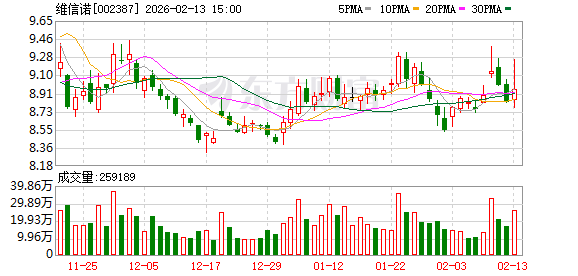
上证报记者从维信诺获悉,清华大学联合北京大学、维信诺合作研发的全球首款柔性存算芯片FLEXI, 近日登上国际期刊《自然》。该芯片首次在柔性平台实现存内计算架构,面向AI与神经网络推理应用 场景,开启柔性AI计算硬件的新时代。 当前可穿戴设备、柔性机器人等应用呼唤轻量、可弯曲、高能效的端侧AI芯片,但传统硅基芯片难以 适配曲面形态,现有柔性方案(通过硬质芯片嵌入软质基底实现一定的可挠性)又受限于集成度、灵活 性与功耗等多重因素。FLEXI芯片采用存算一体架构,兼顾超薄、柔性及超高能效,为柔性智能硬件产 业化提供关键技术支撑。 超百亿次运算零错误 业内分析,该技术填补了柔性电子领域AI专用计算硬件的空白。未来通过新型半导体材料应用、功率 门控技术优化等,有望进一步提升性能。若能持续优化生产良率与芯片尺寸,将推动可穿戴健康设备、 物联网终端等领域的产业升级与技术革新。 值得一提的是,FLEXI芯片采用维信诺自主研发的CMOS LTPS驱动背板工艺制造,证明了采用平板显 示工艺制备高性能柔性集成电路的可行性,为柔性电子奠定了工艺基础。 FLEXI芯片采用互补金属氧化物半导体(CMOS)低温多晶硅(LTPS)工艺,可直 ...

OpenAI下调算力支出目标至6000亿美元,推进新一轮巨额融资
Di Yi Cai Jing· 2026-02-21 00:05
Group 1 - OpenAI plans to invest approximately $600 billion in computing power by 2030, with a significant portion allocated for hardware procurement, including chips from Nvidia [1] - The company is pursuing a financing round that may exceed $100 billion, with around 90% of the investment coming from strategic investors, including Nvidia, SoftBank, and Amazon [1] - OpenAI's revenue is projected to surpass $280 billion by 2030, with contributions from consumer and enterprise businesses being roughly equal [1] Group 2 - Nvidia's $30 billion investment in OpenAI will replace a previously announced $100 billion collaboration framework, which was intended to be executed over several years [2] - OpenAI's revenue target for 2025 has been raised to $13.1 billion, exceeding the earlier goal of $10 billion, while the expected cash burn for that year is now estimated at $8 billion, down from $9 billion [2] Group 3 - OpenAI, founded in 2015, transitioned from a non-profit research lab to a mainstream market player after launching ChatGPT, which currently has over 900 million weekly active users [3] - The growth of ChatGPT has faced competitive pressure, leading the company to enter a "code red" state to enhance its chatbot capabilities [3] - OpenAI's programming product Codex has over 1.5 million weekly active users, competing directly with Anthropic's Claude Code [3]

据悉谷歌考虑将TPU部门重组为一个单独的部门
Jin Rong Jie· 2026-02-20 18:36
据报道,谷歌为自家 AI芯片扩大市场寻找方法,考虑将TPU部门重组为一个单独的部门,但还没有相 应的计划;正商谈向初创公司Fluidstack投资约1亿美元,希望放大Fluidstack的增长潜力。 ...

中美博弈结束了吗?现实更残酷:美国没输,只是连牌桌都下不去了
Sou Hu Cai Jing· 2026-02-20 14:59
可几年过去,美国自己先懵了——老办法不管用了。 中国经济没停,反而在好几个关键地方跑得更快了。 中美这场大戏,从贸易战那会儿就正式开锣了。 没人能想到,美国一上来就祭出关税大棒,还把技术封锁玩得越来越狠,以为这么一压,中国就得趴下。 美国这边倒好,制造业空心化的问题越捂越臭,供应链全靠外面输血,结果一打起来,自己先断了气。 现在美国制造业占GDP也就10%左右,听着还行?可这10%里头,四成集中在军工、半导体和制药这三个领域,其他地方基本是空的。 说白了,美国在全球价值链里,早就不是那个能自己造东西的主了,而是个靠别人供货的中间商。 中国呢?连续15年稳坐全球制造业头把交椅,到2024年,制造业增加值已经占到全世界的31.6%。 出口也不再是以前那种"十亿件衬衫换一架飞机"的老路子了,现在卖的是高端机电、数码设备,技术含量高,利润也厚。 美国想用关税把工厂逼回本土,可现实狠狠打了脸——人工贵、地价高、工人还招不到,建厂成本翻着跟头往上蹿。 你让企业回去?回去等于烧钱。 芯片,成了中美掰手腕最硬的那根骨头。 从2018年开始,美国对华技术封锁层层加码,光刻机不卖,EDA软件卡脖子,连先进制程的设备都锁得死死的。 ...

英伟达Q4财报公布在即 奥本海默预计将超市场预期 重申其“跑赢大盘”评级
美股IPO· 2026-02-20 14:57
Schafer表示,云服务提供商的资本开支仍在持续上升,预计2026年全球云厂商资本开支将达到6500亿美元,明显高于2025年超过 4000亿美元的水平。同时,前沿大模型(LLM)规模仍以每年约10倍的速度增长,推理类token的需求增速也超过5倍,这进一步推高了对 高性能AI算力的需求。 在产品层面,Schafer指出,英伟达的机架级解决方案NVL72在单位功耗下的AI性能方面依然处于行业领先地位,而新一代Vera Rubin(VR200)平台正按计划推进,预计将在2026财年第三季度实现量产爬坡,随后更高端的VR300 Ultra有望在2027财年第三季度初 期推出。 Schafer进一步估算,Vera Rubin平台的平均售价有望比GB300高出40%至50%。作为参考,GB300单套售价约为350万美元。基于 此,Vera Rubin系列产品未来有望为英伟达带来约80亿美元的新增营收。 此外,随着中国市场重新纳入可服务范围,潜在可触达市场规模或高达500亿美元,这也可能进一步推升英伟达的总体可服务市场规模 (TAM),目前已被估算至约4万亿美元。Schafer表示,从长期来看,英伟达仍是"最具通用性 ...

全球首款!柔性存算芯片来了
Shang Hai Zheng Quan Bao· 2026-02-20 14:00
Core Viewpoint - The FLEXI chip, developed by Tsinghua University in collaboration with Peking University and Visionox, is the world's first flexible storage-computing chip, recently published in the journal Nature, marking a new era for flexible AI computing hardware [2][4]. Group 1: Technology and Innovation - The FLEXI chip features an integrated storage-computing architecture, providing ultra-thin, flexible, and high energy efficiency, which is crucial for the industrialization of flexible smart hardware [4]. - Utilizing CMOS low-temperature polycrystalline silicon (LTPS) technology, the chip can be manufactured directly on flexible substrates, offering low power consumption, low cost, and high integration advantages [6]. - The chip achieves a clock frequency exceeding 10 MHz, significantly enhancing computational speed and energy efficiency, enabling real-time operation of AI models on flexible hardware [6][9]. Group 2: Performance and Applications - The FLEXI chip has demonstrated stability after over 40,000 bends and zero errors in over 10 billion operations, maintaining performance under various voltage fluctuations and temperature changes [9]. - It has successfully performed tasks such as arrhythmia detection with an accuracy of 99.2% and human activity classification with an accuracy of 97.4%, showcasing its potential for local intelligent processing in low-power conditions [9]. - The technology fills a gap in AI-specific computing hardware for flexible electronics, with future enhancements expected through new semiconductor materials and power gating technology [9]. Group 3: Market and Industrialization Challenges - The mass production of flexible chips is anticipated to face challenges in the next two to three years, primarily due to technological and market limitations [12]. - There remains a generational gap in performance between flexible chips and mature silicon-based chips, necessitating improvements in circuit density and architectural design [12]. - The application scenarios for flexible chips are still in the exploratory phase, similar to the current state of AI large models, requiring time for market cultivation [12]. Group 4: Future Plans - Visionox plans to continue collaborating with academic institutions to enhance the performance of flexible chips and validate the integration of multifunctional modules into flexible SoCs [12]. - The company aims to follow a progressive industrialization path from laboratory to pilot production to mass production, leveraging experiences from its Micro LED sector [12].
港股马年首个交易日收跌 恒指跌1.10% 科指跌2.91%
Xin Hua Cai Jing· 2026-02-20 09:36
新华财经香港2月20日电(记者林迎楠)马年首个交易日,港股主要指数低开,截至收盘,恒生指数下 跌1.10%至26413.35点,恒生科技指数下跌2.91%至5211.50点,国企指数下跌1.22%至8959.56点。 成交额前三的个股中,腾讯控股跌2.06%,成交超111亿港元;阿里巴巴跌4.91%,成交超104亿港元; MINMAX-WP涨14.52%,成交超35亿港元。 (文章来源:新华财经) 整体来看,多数板块下跌,生物医药、石油与天然气、高铁基建等股多为上涨,券商、银行等股有涨有 跌,黄金、有色金属、铜矿股、芯片、新能源车企、科网、房地产、建材水泥、航空、煤炭等股多有下 跌。 个股方面,小米集团跌3.55%,美团跌1.58%,中芯国际跌3.15%,泡泡玛特跌2.71%,长飞光纤光缆跌 2.96%,东方电气涨1.77%,紫金矿业跌2.02%,智谱涨42.72%,荣昌生物涨1.42%,建设银行涨0.37%, 长和跌0.63%,小鹏汽车跌2.58%,老铺黄金跌2.29%,汇丰控股涨0.07%。 当日恒指低开48.10点,开报26657.84点,开盘以较大振幅波动,午后振幅缩小,最终恒指跌292.59点, 主 ...