无人机

Search documents
优良天数率稳超90% 绘就长江黄河上游生态屏障新图景
Yang Guang Wang· 2026-01-17 13:57
Core Viewpoint - The article highlights the significant progress made in ecological protection and sustainable development in Sichuan, showcasing the transformation of ecological advantages into development momentum as the province enters 2026 [2][15]. Environmental Quality Improvement - In 2025, Sichuan achieved a historic breakthrough in air quality, with PM2.5 concentration dropping below 30 micrograms per cubic meter for the first time, and further improving to 25.3 micrograms in the first ten months of 2026, marking the best performance since monitoring began [6]. - The province maintains a good air quality rate of around 90%, ranking among the top in the country, with heavy pollution days reduced by 80% compared to a decade ago [6]. Water Quality Achievements - Sichuan has maintained a 100% compliance rate for drinking water sources at the county level and above for six consecutive years, with all urban and rural black and odorous water bodies eliminated [7]. - The water quality of major rivers, including the Yangtze and Yellow Rivers, remains stable at Class II or above, with rural sewage treatment rates increasing from under 20% in 2019 to 78% [7]. Soil and Waste Management - The province has implemented strict controls on soil pollution sources, maintaining stable soil quality and achieving a construction waste recycling rate of 70%, the highest in Western China [9]. - Sichuan has established over 3,400 "waste-free city cells," promoting resource recycling and waste reduction [9]. Biodiversity and Ecological Restoration - Since the 14th Five-Year Plan, Sichuan has designated 148,700 square kilometers as ecological protection red lines, significantly enhancing biodiversity and protecting species such as the giant panda [11]. - The population of wild giant pandas has increased, with monitoring showing a rise from 135 individuals to 185 by 2024 [11]. Green Economic Development - Sichuan has taken the lead in implementing carbon market initiatives, with a cumulative trading volume exceeding 1.2 billion yuan, and is actively promoting over 3,018 ecological projects [12]. - The green low-carbon industry is thriving, with significant developments in sectors such as photovoltaic, drone, and lithium battery industries, contributing to a diversified green energy landscape [12]. Ecological Civilization Demonstration - By the end of 2025, Sichuan had established 43 ecological civilization demonstration zones, ranking third nationally and first in the west, promoting ecological protection and green development [14]. - The province's efforts in ecological civilization have led to improved vegetation coverage and successful cross-provincial ecological collaborations [14].


优良天数率超90% 绘就长江黄河上游生态屏障新图景
Huan Qiu Wang· 2026-01-17 12:51
Core Viewpoint - The article highlights the significant progress made in ecological protection and sustainable development in Sichuan, showcasing the province's efforts to harmonize economic growth with environmental conservation as it enters the new phase of the 14th Five-Year Plan in 2026 [2][15]. Environmental Quality Improvement - In 2025, Sichuan achieved a historic breakthrough in air quality, with PM2.5 concentration dropping below 30 micrograms per cubic meter for the first time, and further improving to 25.3 micrograms in the first ten months of 2026, marking the best performance since monitoring began [5]. - The province's good air quality days stabilized around 90%, ranking among the top in the country, with heavy pollution days reduced by 80% compared to a decade ago [5]. Water Quality Management - Sichuan has maintained a 100% compliance rate for drinking water sources at the county level and above for six consecutive years, successfully eliminating 124 urban and 284 rural black and odorous water bodies [6]. - The water quality of major rivers, including the Yangtze and Yellow Rivers, has consistently remained at Class II or above, with rural sewage treatment rates increasing from under 20% in 2019 to 78% [6]. Soil and Waste Management - The province has implemented strict controls on soil pollution sources, maintaining stable soil environmental quality, and has established over 3,400 "waste-free city cells" [9]. - The comprehensive utilization rate of construction waste has increased from 55% at the end of the 13th Five-Year Plan to 70%, leading the western region [9]. Biodiversity and Ecological Restoration - Sichuan has designated 148,700 square kilometers as ecological protection red lines, effectively safeguarding critical ecological spaces and enhancing biodiversity through the establishment of national parks and ecological corridors [10]. - The population of wild giant pandas has increased, with the number of sightings in the wild rising from 135 to 185 between 2024 and the present [10]. Green Economic Development - Sichuan has taken the lead in implementing carbon market initiatives, with cumulative trading volumes exceeding 1.2 billion yuan, and has promoted over 3,018 ecological projects to drive industrial transformation [11]. - The green low-carbon industry is thriving, with significant developments in sectors such as photovoltaic energy, drone technology, and lithium battery production, contributing to a diversified green energy industry [11]. Ecological Civilization Demonstration - By the end of 2025, Sichuan had established 43 ecological civilization demonstration zones and 14 "Green Water and Green Mountains are Golden Mountains and Silver Mountains" practice innovation bases, ranking third nationally and first in the western region [14]. - The province's efforts in ecological civilization have led to improved ecological protection and green development, with significant achievements in areas like grassland and forest conservation [14].

竞逐万亿级低空赛道:广深珠莞创新场景解锁“新玩法”
2 1 Shi Ji Jing Ji Bao Dao· 2026-01-16 17:31
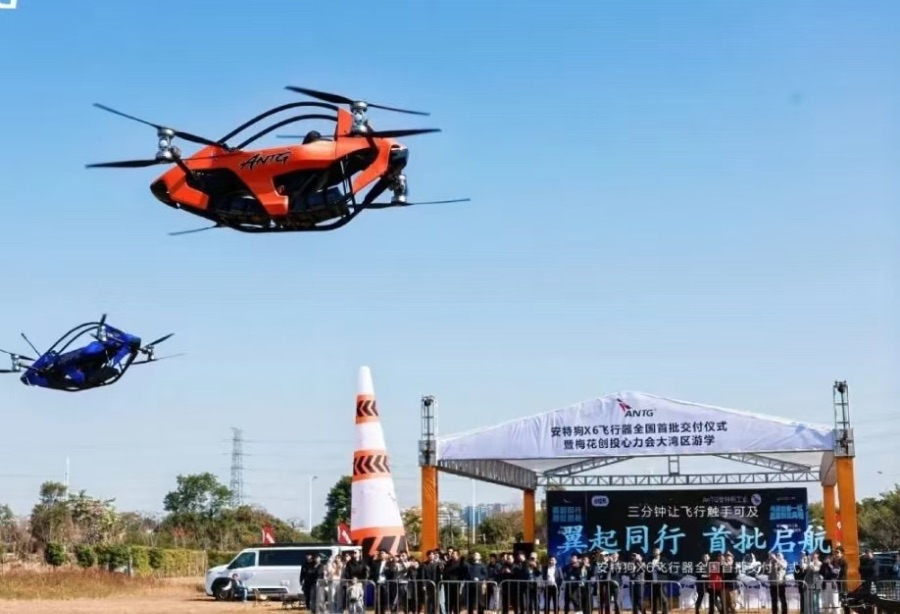
Core Insights - The low-altitude economy is rapidly developing in the Guangdong-Hong Kong-Macao Greater Bay Area, with significant advancements in drone logistics and applications across various sectors [2][3][5]. Group 1: Market Overview - The low-altitude economy in Guangdong has reached a scale of over 100 billion yuan, with more than 2,000 drone manufacturing companies and over 15,000 related enterprises, accounting for over 30% of the national low-altitude economy industry chain [2]. - The annual production of drones in Guangdong is 6.94 million units, with consumer and industrial drones holding 70% and 50% of the global market share, respectively [2]. - By 2026, the low-altitude economy is expected to reach a trillion yuan level, becoming a new economic growth point [2]. Group 2: Technological Advancements - The ANT-X6 aircraft, Asia's first mass-produced flying vehicle, has achieved multiple technological breakthroughs in lightweight design and power system optimization, providing new options for low-altitude travel and emergency rescue [1][7]. - Shenzhen has launched multiple low-altitude logistics routes, including a notable air logistics commercial route that meets the demand for high-efficiency delivery [3][12]. Group 3: Application Scenarios - Various application scenarios for low-altitude technology are emerging, including logistics, emergency rescue, and urban governance, with significant improvements in operational efficiency [4][6]. - The Shenzhen Metro has implemented a drone inspection system that enhances safety and efficiency, achieving a 50% increase in work efficiency compared to traditional methods [4]. - In emergency rescue, drones can be deployed within 25 seconds of an alert, significantly improving response times and operational effectiveness [4]. Group 4: Regional Development - Different cities in the Greater Bay Area are developing unique low-altitude economic characteristics, with Shenzhen focusing on logistics, while Zhuhai and Guangzhou are enhancing their respective applications and infrastructure [9][10]. - By 2026, Shenzhen plans to open over 1,000 low-altitude commercial routes, covering more than 70% of the city's population [8]. - Dongguan is establishing a comprehensive low-altitude economic cluster, aiming for a scale of 100 billion yuan by 2026, with a focus on logistics and emergency services [10][11]. Group 5: Future Prospects - The low-altitude economy is projected to grow at an annual rate of around 20%, with the logistics sector alone expected to exceed 1 trillion yuan by 2035 [12]. - Collaborative efforts among cities in the Greater Bay Area are essential for optimizing airspace management and enhancing the overall low-altitude economic ecosystem [11].
突破卫星信号黑洞,“山东造”无人机告别导航盲区
Qi Lu Wan Bao· 2026-01-16 03:45
Core Viewpoint - The development of low-altitude economy and innovative application scenarios is crucial for the advancement of drone technology, particularly in environments where satellite signals are limited [1]. Group 1: Drone Technology and Applications - The "Xingxun" drone developed in Shandong has achieved stable operation under limited satellite signals, providing essential support for intelligent operations in complex conditions [1]. - The drone can autonomously fly and collect data in areas previously requiring manual inspection, reducing inspection time from nearly one hour to just 15 minutes [1]. - The technology addresses the challenges faced by drones in environments like tunnels and under bridges where satellite signals are absent, which previously hindered operational capabilities [1][2]. Group 2: Technical Innovations - The integration of multi-modal signal fusion positioning technology allows the drone to utilize various sensors, achieving centimeter-level positioning accuracy [1]. - The drone's design has been optimized through extensive testing, resulting in a compact size of under 450 millimeters while maintaining a flight endurance of 20 minutes and the ability to cover two kilometers in a single operation [2]. - The drone has successfully completed pilot applications in infrastructure inspection and geological exploration [2]. Group 3: Future Developments and Industry Goals - The company has initiated the development of a new generation of the "Xingxun" drone, which will be smaller and more capable of operating in diverse complex scenarios [3]. - By 2027, the province aims to establish over 10 benchmark low-altitude flight application scenarios and cultivate more than 10 leading enterprises in the industry chain, with a target low-altitude economy scale of 100 billion yuan [3].

国网河北电力首次应用氢电无人机巡检
Zhong Guo Dian Li Bao· 2026-01-16 03:16
Core Insights - The State Grid Hebei Xingtai Power Company has successfully applied hydrogen-powered drones for the first time in line inspection, marking a significant advancement in drone technology for power line maintenance [1] - The initiative aims to address the limitations of lithium battery-powered drones, particularly in complex terrains where flight duration and recharging times are critical [1] Group 1: Technology and Innovation - The company collaborated with Hebei Fenghang Drone Technology Co., Ltd. and Zhejiang Hydrogen Aviation Technology Co., Ltd. to upgrade the drone's power system from lithium batteries to hydrogen fuel cells [1] - The new hydrogen energy system allows for a quick refueling process, taking only 2 minutes to replace hydrogen canisters, thus overcoming the limitations of traditional lithium batteries [1] Group 2: Performance Metrics - The DJI M350 drone, originally powered by lithium batteries, had a flight duration of only 25 minutes and could inspect 40 tower bases [2] - After the conversion to a hydrogen energy system, the same drone can achieve a flight duration of 70 minutes and inspect 152 tower bases, resulting in a 3 to 4 times increase in inspection efficiency [2]
广货行天下,不只卖产品
Xin Lang Cai Jing· 2026-01-16 00:33
Core Viewpoint - The "Guangdong Goods Going Global" spring campaign represents a collaborative effort among the government, platforms, and enterprises to transform the industrial ecosystem, moving beyond mere product sales to showcase Guangdong's manufacturing innovation and competitiveness [1][2][3] Government Role - The event is supported by six government departments, indicating a shift from merely promoting products to acting as industrial planners, aiming to elevate Guangdong manufacturing through coordinated promotional activities [1] - The campaign will span an entire season, featuring weekly promotional events and 18 series of activities around key consumption periods, demonstrating the government's proactive role in enhancing the industrial landscape [1] Platform Support - The campaign introduces an innovative "live demonstration zone," utilizing major e-commerce platforms like Taobao, JD.com, Douyin, and Pinduoduo to showcase Guangdong products and provide targeted promotional information [2] - This model combines live presentations, immediate experiences, and online sales, creating a synergistic effect that boosts short-term sales and establishes long-term consumer recognition of Guangdong products [2] Enterprise Participation - Over 6,000 enterprises are participating, driven by the desire to expand market reach and revenue, while showcasing innovative products such as AI appliances and energy-efficient devices [2] - The transition from "Guangdong manufacturing" to "Guangdong intelligent manufacturing" is highlighted, with products gaining global recognition due to their technological advancements and superior user experiences [2] Overall Significance - The "Guangdong Goods Going Global" initiative is a comprehensive system involving collaboration among government, platforms, and enterprises, aimed at promoting Guangdong products as intelligent, green, and open to the world [3] - This initiative is positioned as a crucial pathway for Guangdong manufacturing to achieve high-quality development and establish itself as a global leader in intelligent manufacturing [3]
“昆山造”无人机高原地区物流航线首飞
Xin Hua Ri Bao· 2026-01-15 22:02
Group 1 - The FP-985 "Golden Bull" large fixed-wing drone successfully completed its first verification flight for logistics routes in high-altitude areas of China, addressing challenges such as low transport efficiency and high risk in these regions [1] - The drone flew from Linzhi Milin Airport, known for its high difficulty in flight, to Kangding Airport, covering approximately 800 kilometers in 3 hours and 44 minutes, significantly reducing the previous 27-hour land transport time to under 4 hours [1] - The successful operation of the "Golden Bull" drone in extreme geographical and meteorological conditions marks a new phase for China's drone technology, enabling regular operations in high-altitude airports [1] Group 2 - The FP-985 "Golden Bull" is designed for special geographical environments, with a maximum takeoff weight of 5.7 tons, effective payload over 2 tons, and a range exceeding 2000 kilometers, making it suitable for both standard and simplified airport operations [2] - The construction of low-altitude logistics channels in the Sichuan-Tibet region will enhance the efficiency of transporting local agricultural products and ensure the supply of materials into Tibet, contributing to regional economic development and rural revitalization [2] - The recent successful flight of another drone model, the "Archer," in the Middle East, demonstrates China's capabilities in large drone logistics and signifies the establishment of a comprehensive low-altitude economic solution in that region [2][3]
技术破壁与政策护航 低空经济2026开启规模化运营新篇章
Zheng Quan Ri Bao Wang· 2026-01-15 09:17
Core Insights - The low-altitude economy is rapidly developing, with significant policy support and technological breakthroughs, leading to a projected market size of 1.5 trillion yuan by 2025, with nearly 20,000 drone operating companies and annual eVTOL orders exceeding 30 billion yuan [1][10] - The low-altitude manufacturing sector, which constitutes 50%-80% of the total industry output, is expected to transition from "following" to "leading" in key technology areas by 2025, focusing on power systems, avionics, and energy systems [2][4] - The drone sector is experiencing a scale explosion driven by core scene development and technological empowerment, with over 36,000 existing drone-related companies in China [5][9] Policy and Market Dynamics - The low-altitude economy has been included in government work reports for two consecutive years, indicating ongoing policy incentives and a shift from pilot testing to large-scale operations by 2026 [1][10] - The establishment of a comprehensive low-altitude flight infrastructure network, including smart nests and low-altitude communication networks, is crucial for the industry's growth [8] Technological Advancements - Key components such as motors, electronic controls, and communication navigation chips are seeing accelerated domestic replacement, enhancing the competitive barrier in the low-altitude manufacturing sector [4] - Innovations in materials and energy technologies, including solid-state batteries and high-performance composite materials, are critical for addressing the limitations of low-altitude equipment [2] Application Scenarios - Low-altitude logistics, particularly in last-mile delivery, cold chain transport, and intercity routes, is identified as a key growth area, with companies like Meituan and JD.com successfully implementing drone logistics [7] - Agricultural and industrial applications are also expanding, with drones improving efficiency in pest control and inspection tasks [7] Industry Growth and Investment Opportunities - The number of registered low-altitude economy-related companies has surged, with over 100,000 currently active and a 162.36% year-on-year increase in 2025 [9] - Investors can leverage tools to trace capital flows and identify core technology companies within the low-altitude manufacturing sector [4]
低空经济驶入规模化爆发快车道 去年新增企业激增162%丨封面有数
Sou Hu Cai Jing· 2026-01-15 06:29
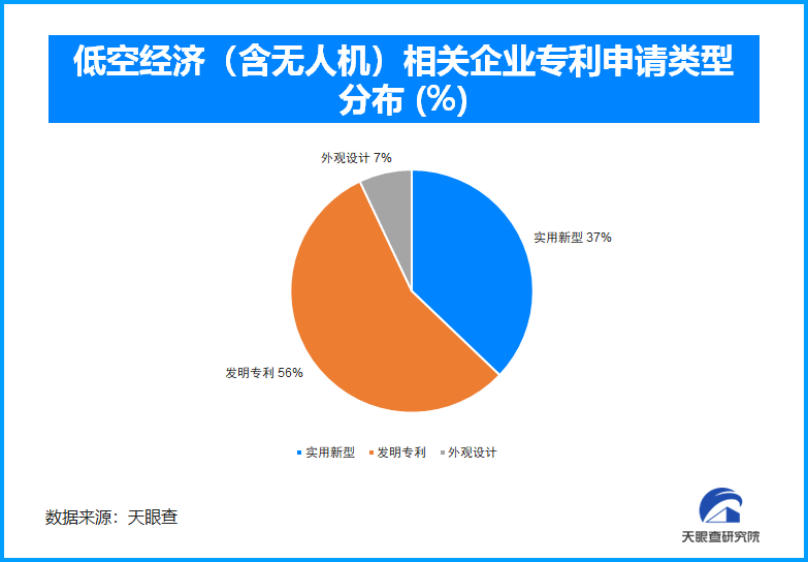
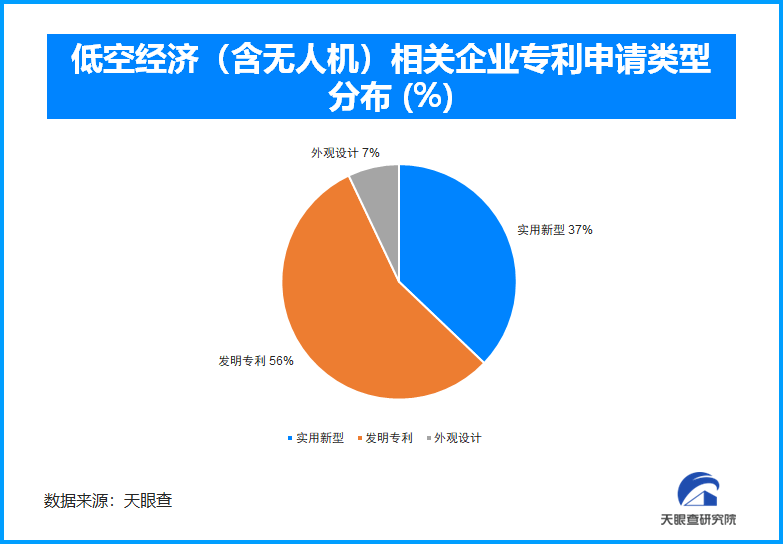
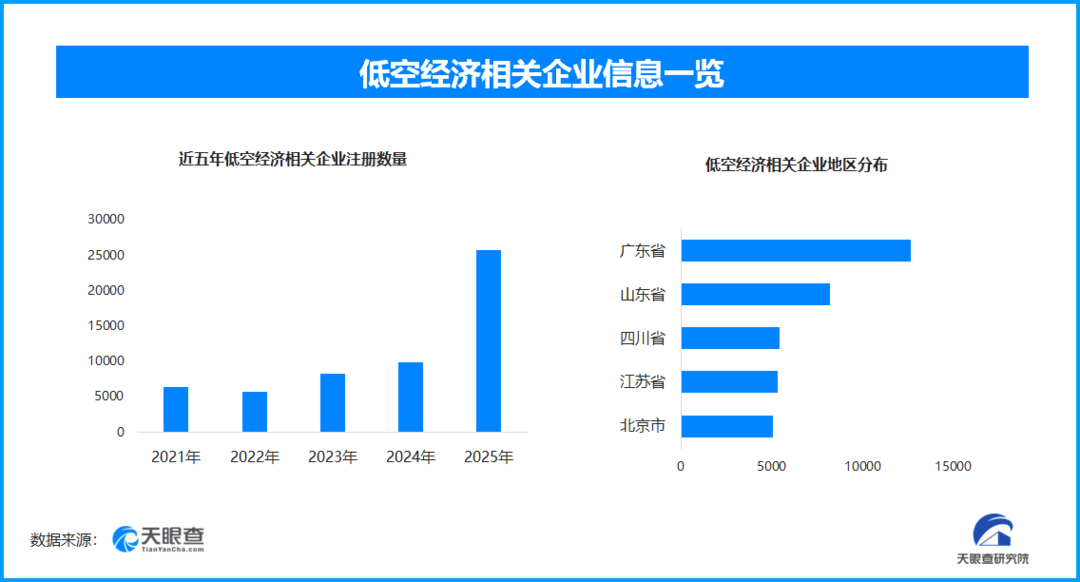
Core Insights - The low-altitude economy is rapidly developing, with significant policy support and technological breakthroughs, transitioning from pilot testing to large-scale operations by 2026 [1][6] - The low-altitude manufacturing sector is crucial, accounting for 50%-80% of the total industry output value, with a focus on key areas such as power systems and avionics by 2025 [3][4] - The drone sector is experiencing a surge, with over 36,000 existing companies in China, and logistics applications are expected to drive substantial growth [6][7] Industry Overview - As of now, there are over 36,000 drone-related companies in China, with Guangdong province leading with over 7,400 companies, representing 20.06% of the total [6][7] - The low-altitude economy is projected to reach a market size of 1.5 trillion yuan by 2025, with nearly 20,000 drone operating companies and eVTOL annual orders exceeding 30 billion yuan [4] - The number of low-altitude economy-related companies is expected to grow significantly, with a projected increase of over 25,000 new registrations by 2025, marking a year-on-year growth of 162.36% [6][7] Technological Advancements - Key breakthroughs in materials and energy technologies are essential for low-altitude manufacturing, with advancements in solid-state batteries and high-performance composite materials enhancing operational capabilities [4] - The patent landscape in the low-altitude economy is robust, with over 179,000 related patent applications, indicating a strong technological foundation [4][6] Future Outlook - The low-altitude economy is anticipated to enter a "normal operation" phase in 2026, driven by refined airspace management and diverse business models [7] - The integration of "low-altitude+" effects is expected to create a complementary and symbiotic ecosystem, contributing to high-quality economic development in China [7]
万亿低空经济启幕:2026从试点飞行迈向常态运营元年
Jin Rong Jie Zi Xun· 2026-01-15 03:13
Core Insights - The low-altitude economy is rapidly developing, with significant policy support and technological breakthroughs leading to a projected market size of 1.5 trillion yuan by 2025, marking substantial growth from previous years [1] - The low-altitude manufacturing sector is crucial, accounting for 50%-80% of the total industry output value, with advancements in key technologies such as power systems and avionics expected to shift from "following" to "leading" by 2025 [2][4] - The drone sector is experiencing a scale explosion driven by innovative applications and deep technological integration, with over 36,000 drone-related companies currently operating in China [5][7] Policy and Market Trends - The low-altitude economy has been included in government work reports for two consecutive years, indicating ongoing policy support and the transition from pilot programs to regular operations by 2026 [1][11] - The establishment of a comprehensive low-altitude flight infrastructure and the optimization of airspace management policies are essential for the industry's growth, with a focus on creating a "sky network + ground network" support system by 2025 [8][9] Technological Advancements - Key components such as motors, electronic controls, and communication navigation chips are seeing increased domestic production rates, enhancing the competitive landscape of the low-altitude manufacturing industry [4] - Innovations in materials and energy technologies, including solid-state batteries and high-performance composite materials, are critical for addressing the limitations of low-altitude equipment and facilitating commercial viability [2] Application Scenarios - Low-altitude logistics, particularly in last-mile delivery and cold chain transport, is identified as a key growth area, with companies like Meituan and JD.com successfully implementing drone delivery services [7] - The agricultural and industrial inspection sectors are also benefiting from drone technology, improving efficiency and reducing costs in high-risk environments [7] Industry Growth and Safety - The number of registered low-altitude economy-related companies has surged, with over 100,000 currently in operation, reflecting a 162.36% year-on-year increase in 2025 [9][11] - Safety and compliance management are becoming increasingly important for the sustainable development of the low-altitude flight industry, with AI technologies being integrated into safety oversight [9][11]