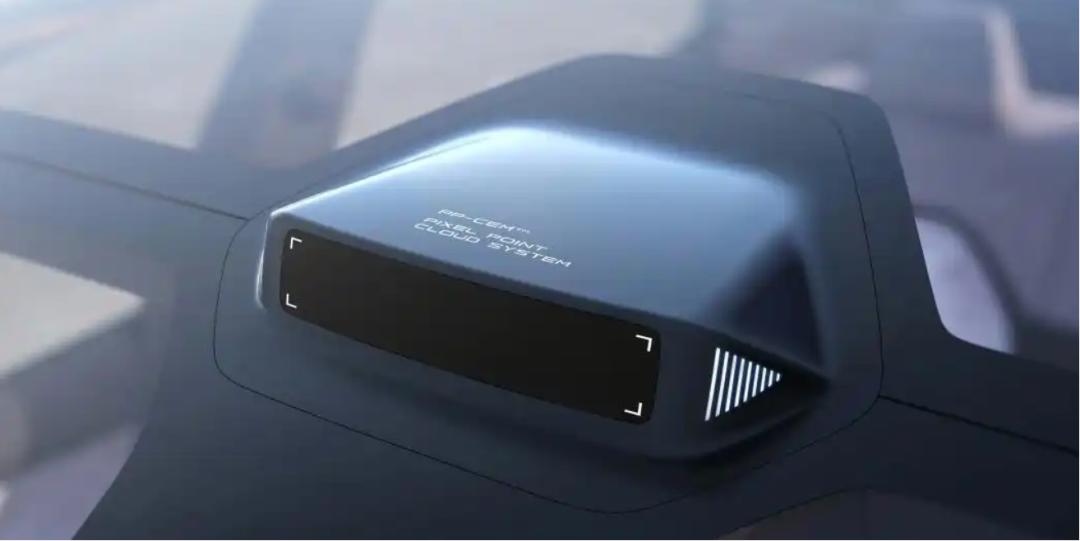
激光雷达

Search documents
芯报丨AI巨头Anthropic拟最早2026年IPO,估值或超3000亿美元
Xin Lang Cai Jing· 2025-12-03 13:20
Group 1 - Shanghai Buchou Quantum Technology Co., Ltd. completed angel round financing of several tens of millions of RMB, led by Zhongke Chuangxing, with funds aimed at building low-noise ultra-clean rooms and accelerating quantum computing core technology development and industrialization [1][1] - Wuhan Wanjie Technology Co., Ltd. plans to introduce strategic investors, raising 55 million RMB to enhance its laser radar business layout and market competitiveness [2][2] - Chip manufacturer Xinsaiwei joined the Shenzhen Camera Industry Association (SCIA), marking its commitment to building a domestic visual ecosystem and collaborating with industry partners [2][2] Group 2 - Anke Innovation Technology Co., Ltd. submitted a listing application to the Hong Kong Stock Exchange, with sponsorship from CICC, Goldman Sachs, and JPMorgan, indicating its expansion into the capital market [2][2] - AI startup Anthropic is preparing for a potential IPO as early as 2026, with a valuation possibly exceeding 300 billion USD, having engaged Wilson Sonsini law firm for the process [2][2]
汽车智能化系列专题之决策篇(7):各厂商技术持续突破,robotaxi商业化进展迎拐点
Guoxin Securities· 2025-12-03 11:58
Investment Rating - The report maintains an "Outperform" rating for the industry [1] Core Insights - The development of intelligent driving is an inevitable trend supported by national strategies and policies, leading to multi-dimensional improvements in society and industry [2] - Tesla and Huawei are leading the breakthrough in L4 autonomous driving with their end-to-end algorithms, significantly enhancing performance and capabilities [2] - The Robotaxi global market is projected to reach nearly 10 trillion, with ongoing commercialization efforts [2] Summary by Sections 01 Intelligent Driving Regulations: Gradual Policy Implementation - Domestic and international policies are progressively supporting the automation of driving applications, with various local governments exploring intelligent driving scenarios [6][7] 02 High-End Intelligent Driving: Tesla and Huawei's End-to-End Technology - Tesla's FSD V12 and Huawei's ADS 3.0 are leading advancements in L4 capabilities, with significant improvements in algorithm performance and urban coverage [2][20] 03 Intelligent Driving Equality: 2025 Penetration Rate Inflection Point - The penetration rates for highway NOA are expected to grow from 11.3% in 2024 to 39.0% in 2025, while urban NOA is projected to increase from 6.1% to 9.6% [41] - The high-end intelligent driving market is anticipated to reach 23,866 billion by 2025, doubling from 2024 due to increased penetration and market expansion [41] 04 Industry Chain and Component Manufacturer Analysis - BYD's "Tian Shen Zhi Yan" system is set to penetrate the mid-range market, with plans to offer intelligent driving features in vehicles priced below 100,000 [25][29] 05 Robotaxi: The Best Commercialization Scenario for Intelligent Driving - Companies like Waymo and Apollo are leading in the Robotaxi sector, with PONY AI achieving operational cost balance and WeRide aiming for a fleet of 100,000 by 2030 [2]



速腾聚创(2498.HK):4Q25有望实现盈利 预计明年销量放量增长
Ge Long Hui· 2025-12-03 04:16
Core Viewpoint - The company is expected to achieve profitability in Q4 2025, with projected sales growth in the coming year, despite a revenue decline in Q3 2025 [1] Group 1: Financial Performance - Q3 2025 revenue was 407 million yuan, showing a year-on-year stability but a quarter-on-quarter decline of 10.6% [1] - The revenue contributions from ADAS and robotics were 245 million yuan (down 25.7% year-on-year and down 9.8% quarter-on-quarter) and 142 million yuan (up 157.8% year-on-year and down 3.3% quarter-on-quarter) respectively [1] - The total sales volume of laser radars reached 186,000 units, with a year-on-year increase of 34.0% and a quarter-on-quarter increase of 17.3% [1] - The average price of ADAS radars decreased to approximately 1,600 yuan, down from about 2,200 yuan in Q2 [1] - The overall gross margin was 23.9%, reflecting a year-on-year increase of 6.4 percentage points but a quarter-on-quarter decrease of 3.8 percentage points [1] - The adjusted net loss attributable to shareholders was 65 million yuan, representing a year-on-year reduction in loss of 7% [1] Group 2: Market Potential and Product Development - The EM series products have gained market recognition, with 56 models receiving approvals [2] - The company has established a strong technical barrier through its self-developed SPAD-SoC receiving chips and VCSEL emitting chips, which are expected to drive faster growth in ADAS radar sales by 2026 [2] - The Robotaxi market is projected to require 300,000 to 500,000 laser radars if the fleet size increases from approximately 4,000 to 100,000 vehicles over the next 3 to 5 years [2] Group 3: Investment Rating and Projections - The company maintains a "Buy" rating, with a target price set at 41.40 HKD [3] - Radar sales forecasts for 2026 and 2027 have been significantly raised to 2.3 million and 3.1 million units respectively, although average prices are expected to decline slightly due to scale [3] - The robotics segment is anticipated to surpass ADAS in radar sales, becoming the primary growth driver and improving overall gross margins [3]
速腾聚创(02498):4Q25有望实现盈利,预计明年销量放量增长
Huajing Securities· 2025-12-02 11:33
Investment Rating - The report maintains a "Buy" rating for the company with a target price of HK$41.40, representing a potential upside of 27% from the current price of HK$32.58 [1][7][10]. Core Insights - The company is expected to achieve profitability in Q4 2025, with significant sales growth anticipated in the following year. The revenue for Q3 2025 was reported at RMB 407 million, with a decline of 10.6% quarter-on-quarter [5][8]. - The EM platform has gained market recognition, and the potential for Robotaxi is substantial, with expectations of increased demand for lidar units [6][10]. - The report projects a significant increase in radar sales, with estimates of 2.3 million units in 2026 and 3.1 million units in 2027, driven by the growth in the robotics sector [7][9]. Financial Summary - Revenue projections for the company are as follows: RMB 2,204 million in 2025, RMB 3,126 million in 2026, and RMB 4,038 million in 2027, reflecting a year-on-year growth of 33.6% in 2025 and 41.8% in 2026 [8][9]. - The adjusted net profit is expected to improve significantly, with estimates of RMB -83 million in 2025, RMB 230 million in 2026, and RMB 533 million in 2027 [9][10]. - The company anticipates a gross margin of 27.3% in 2025, increasing to 30.2% in 2026 and 31.2% in 2027 [9][10].
万集科技(300552.SZ):放弃对武汉万集本次增资所享有的优先认购权
Ge Long Hui A P P· 2025-12-02 10:40
Core Viewpoint - Wanji Technology (300552.SZ) is accelerating its laser radar business development by introducing new investors through capital increase and share expansion in its wholly-owned subsidiary, Wuhan Wanji Optoelectronic Technology Co., Ltd [1] Group 1: Investment Details - Wuhan Wanji plans to raise capital by introducing three investment partners: Hainan Zhunkang Venture Capital Center (Limited Partnership), Hainan Zhaozhun Investment Partnership (Limited Partnership), and Hainan Zhunwei Investment Partnership (Limited Partnership) [1] - Hainan Zhunkang will invest RMB 20 million to subscribe for an additional registered capital of RMB 4 million [1] - Hainan Zhaozhun will also invest RMB 20 million for an additional registered capital of RMB 4 million, while Hainan Zhunwei will invest RMB 15 million for an additional registered capital of RMB 3 million [1] Group 2: Capital Structure Changes - The total capital increase will result in Wuhan Wanji's registered capital rising from RMB 60 million to RMB 71 million [1] - Following the capital increase, the company's ownership in Wuhan Wanji will decrease from 100% to 84.51%, making Wuhan Wanji a subsidiary of the company [1] - The excess amount from the capital increase will be allocated to the capital reserve [1]
万集科技:武汉万集拟通过增资扩股方式引入投资者 以加快推进激光雷达业务板块产业布局
Ge Long Hui A P P· 2025-12-02 09:49
格隆汇12月2日|万集科技公告,为加快推进激光雷达业务板块产业布局,提升市场竞争力,公司全资 子公司武汉万集光电技术有限公司拟通过增资扩股方式引入海南准合创业投资中心、海南朝准投资合伙 企业、海南准维投资合伙企业。本次增资完成后,武汉万集注册资本将由6000万元增加至7100万元,公 司持有武汉万集的股份比例将由100%下降至84.51%,武汉万集成为公司控股子公司,公司合并报表范 围未发生变更。本次交易构成关联交易,不构成《上市公司重大资产重组管理办法》规定的重大资产重 组情形。 ...
21独家|速腾聚创起诉灵明光子,后者称“未收到任何法律函件”
2 1 Shi Ji Jing Ji Bao Dao· 2025-12-02 00:12
Core Viewpoint - The legal dispute between Suoteng Juchuang and Lingming Guangzi over alleged infringement of self-developed SPAD chip technology has garnered significant industry attention, with Suoteng seeking legal recourse to protect its technological achievements and market position [1]. Group 1: Company Overview - Suoteng Juchuang specializes in digital lidar technology, focusing on the development of digital lidar that utilizes single-photon avalanche diode (SPAD) technology, allowing each detection pixel to independently receive single photons and generate digital pulse signals [1]. - The company achieved a breakthrough in 2022 by integrating lidar reception and signal processing into a single chip, becoming the first in the industry to mass-produce self-developed SPAD-SoC technology [2]. - Lingming Guangzi, founded in May 2018 by several PhD graduates from Stanford and Delft University of Technology, has over 100 employees, with more than 80% in R&D, and is recognized as a national-level specialized and innovative "little giant" enterprise by the Ministry of Industry and Information Technology [2]. Group 2: Industry Context - The digital lidar produced by Suoteng Juchuang is characterized by its solid-state electronic scanning, which eliminates most macro-moving parts, making the system more compact and durable, thus meeting significant demand in scenarios such as blind spot detection [1].
速腾聚创起诉灵明光子,后者称“未收到任何法律函件”
2 1 Shi Ji Jing Ji Bao Dao· 2025-12-02 00:10
Core Viewpoint - The legal dispute between Suoteng Juchuang and Lingming Guangzi over alleged infringement of proprietary SPAD chip technology has garnered significant industry attention, with Suoteng Juchuang seeking legal recourse to protect its technological advancements and market position [1]. Company Overview - Suoteng Juchuang specializes in digital lidar technology, particularly focusing on SPAD (Single-Photon Avalanche Diode) chips, which allow each detection pixel to independently receive single photons and generate digital pulse signals [1]. - The company achieved a breakthrough in 2022 by integrating lidar reception and signal processing into a single chip, becoming the first in the industry to mass-produce self-developed SPAD-SoC technology [2]. - Lingming Guangzi, founded in May 2018 by several PhD graduates from Stanford and Delft University of Technology, also offers SPAD-related products and has a strong focus on SPAD technology with over 80% of its workforce in R&D [2]. Industry Context - The digital lidar produced by Suoteng Juchuang is crucial in the current smart driving hardware landscape, as it eliminates most macro-moving parts through solid-state electronic scanning, making systems more compact and durable [1]. - The demand for such technology is significant in scenarios requiring blind spot detection and other advanced driving features [1].
速腾聚创起诉灵明光子 后者称“未收到任何法律函件”
2 1 Shi Ji Jing Ji Bao Dao· 2025-12-02 00:09
Core Viewpoint - The legal dispute between Suoteng Juchuang and Lingming Guangzi over alleged infringement of proprietary SPAD chip technology has garnered significant industry attention, with Suoteng seeking legal recourse to protect its technological advancements and market position [2]. Company Overview - Suoteng Juchuang specializes in digital lidar technology, particularly focusing on SPAD (Single-Photon Avalanche Diode) chips, which allow each detection pixel to independently receive single photons and generate digital pulse signals [2]. - The company achieved a breakthrough in 2022 by integrating lidar reception and signal processing into a single chip, becoming the first in the industry to mass-produce self-developed SPAD-SoC technology [3]. - Lingming Guangzi, founded in May 2018 by several PhD graduates from Stanford and Delft University of Technology, also offers SPAD-related products and has a strong focus on SPAD technology with over 80% of its workforce in R&D [3]. Industry Context - The digital lidar produced by Suoteng Juchuang is characterized by its solid-state electronic scanning, which eliminates most macro-moving parts, making the system more compact and durable, thus meeting the high demand in blind-spot detection scenarios in smart driving [2]. - Lingming Guangzi is recognized as a national-level specialized and innovative "little giant" enterprise by the Ministry of Industry and Information Technology in China, holding multiple domestic and international patents in SPAD technology [3].

美国激光雷达最后希望暴雷,CEO被罢免CFO跑路,现金流岌岌可危
3 6 Ke· 2025-12-01 09:24
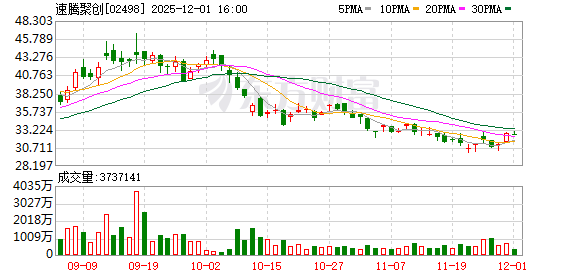
Core Viewpoint - Luminar's market value has plummeted from a peak of $5 billion to approximately $70 million in less than three years, revealing significant operational and financial challenges [2][3][14] Financial Situation - Luminar announced a 25% workforce reduction to mitigate losses, with only $72 million in cash and securities remaining, which may only last until Q1 of next year without new financing [3][6] - The company has also faced debt defaults, indicating severe financial distress [5][6] - The recent departure of the CFO, who was instrumental in Luminar's IPO, suggests a lack of confidence in the company's financial health [6][14] Business Operations - Despite initial success in securing partnerships with major automotive companies, Luminar has struggled to convert these into profitable business outcomes, with only a few models actually utilizing their lidar technology [12][14] - The company's strategy of selling lidar units below cost to gain market share has not proven sustainable, leading to further financial strain [14][16] Technological Challenges - Luminar's choice of technology, specifically the 1550nm wavelength and 2D scanning structure, has made it difficult to compete with other players in the market who have adopted more cost-effective solutions [18][21] - Competitors using the 905nm wavelength have gained significant market share, with companies like Hesai and RoboSense dominating the ADAS and Robotaxi markets [23][25] Market Position - The company faces a challenging environment in the U.S. market, where the perception of lidar technology has been diminished, particularly by industry leaders like Tesla [25] - The potential for new opportunities in the lidar market may be overshadowed by the advancements made by Chinese competitors, who are rapidly gaining ground [25]