动力电池

Search documents
GGII:1-10月全球动力电池装机867.4GWh
高工锂电· 2025-12-07 11:46
Core Insights - The article highlights the dominance of domestic power battery installations in the global market, accounting for 63.3% of the total, with six out of the top ten companies being Chinese [2][4]. Global Power Battery Installation Data - According to the Global Power Battery Installation Monthly Database by GGII, the significant decline in sales in the UK and the US in October led to a drop in their power battery installations by 53% and 52% respectively, resulting in a year-on-year growth rate of only 22% for global power battery installations in October, a noticeable decrease from the previous month [3]. - From January to October 2025, global cumulative sales of new energy vehicles reached 16.091 million units, a year-on-year increase of 24%, driving global power battery installations to approximately 867.4 GWh, which is a 34% year-on-year growth [3][9]. Market Share Analysis - The combined market share of the three major South Korean battery companies—LGES, SK On, and Samsung SDI—was 16.2% from January to October 2025, a decline of nearly 1 percentage point compared to the same period last year [5]. - Specifically, SK On dropped from sixth to seventh place, while Samsung SDI fell from eighth to ninth in the global rankings [6]. Installation and Sales Growth - The year-on-year growth rates for power battery installations and sales from January to October 2025 were 34% and 24% respectively [9]. - The top ten countries for power battery installations in GWh include China (549.0 GWh), the US (103.5 GWh), Germany (33.1 GWh), and the UK (30.8 GWh) [11].

刚刚买下星巴克中国,博裕又募新基金了
投中网· 2025-12-07 07:04
以下文章来源于LP波谱 ,作者黎曼 LP波谱 . 本账号专注LP市场报道。"波浪、谱系"是识别市场的维度,也是定义市场的坐标;此外,波谱(Pop Art)也意为放低意义与史诗的执念,认同商业的日常之美。 将投中网设为"星标⭐",第一时间收获最新推送 三家产业巨头的同时入局。 作者丨黎曼 来源丨LP波谱 宁德时代、洛阳钼业、伊泰煤炭三家产业巨头,各自将 5 亿元资金托付给一家刚刚接管星巴克中国 运营权的私募机构。 这家机构就是中国知名 PE ,博裕资本。博裕资本凭借其成功投资阿里巴巴、美团、小红书、蜜雪 冰城等企业的往绩,以及在消费领域收购星巴克中国和 SKP 的近期动作,进一步巩固了头部 PE 的 位置。 三大产业 LP 出手 博裕新基金将募集 80-100 亿元 博裕新基金的具体消息是: 公告明确,基金管理人为博裕陶然(上海)股权投资管理有限责任公司,普通合伙人为博裕天枢(宁 波)自有资金投资有限责任公司。 三家产业资本参与私募股权基金投资,反映出的动机和战略意图各有侧重。 次日,洛阳钼业发布关联交易公告,其全资子公司西藏施莫克商贸有限公司认购 5 亿元基金份额。 由于宁德时代间接持有洛阳钼业 24.91% ...

这里为何盛产院士
投资界· 2025-12-05 02:34
Core Viewpoint - The article emphasizes the importance of high-level talent, particularly academicians, in driving technological innovation and urban development in China, highlighting the role of cities like Guangzhou in attracting and nurturing such talent [3][21]. Group 1: Academicians and Talent Pool - In 2025, a total of 144 new academicians were elected, bringing the total number of academicians in China to 1,910, with Guangdong province contributing 9 new members, showcasing its status as a leading province in technological innovation [4][5]. - Guangzhou ranks sixth in the global research city rankings published by Nature magazine, reflecting its growing prominence in scientific research and innovation [5][6]. - The newly elected academicians in Guangzhou are closely linked to the Huangpu District and the Guangzhou Development Zone, indicating a strong local innovation ecosystem [6][8]. Group 2: Innovation Ecosystem - The Huangpu District and Guangzhou Development Zone have established a diverse and multi-layered technological innovation capability, with a significant number of academicians and high-level talent [9][10]. - The area has attracted 120 academic team projects and 958 A-class foreign high-end talents, ranking first in the city for high-level talent [9][10]. - The R&D intensity in Huangpu District reached 6.81% in 2024, significantly higher than the provincial and national averages, indicating a robust innovation environment [10][13]. Group 3: Industrial Strength and Future Prospects - Huangpu District is home to over 20,000 technology companies and more than 3,000 national high-tech enterprises, positioning it as a key player in China's industrial landscape [13][16]. - The district is developing five major trillion-level and three five-hundred-billion-level industrial clusters, aligning with national strategic directions in emerging industries [19][20]. - The focus on strategic emerging industries such as new energy and materials is expected to create significant economic opportunities in the coming decade [19][20]. Group 4: Talent Attraction and Retention - The article highlights the competitive landscape for talent, emphasizing the need for cities to not only attract but also retain high-level talent through favorable policies and a conducive environment [21][22]. - Guangzhou Development Zone and Huangpu District have implemented various talent development initiatives aimed at creating a high-level talent hub in the Guangdong-Hong Kong-Macao Greater Bay Area [22][23]. - The region's economic growth, with a GDP surpassing 4 trillion yuan, reflects its commitment to fostering an innovative and supportive ecosystem for both talent and businesses [22][23].


不止于车,宁德时代盯上了电动船舶
Di Yi Cai Jing· 2025-12-04 15:00
Group 1 - The core viewpoint of the news is that CATL's subsidiary, Times Electric Ship Technology Co., has launched a comprehensive "ship-shore-cloud" zero-carbon shipping and smart port integration solution, which integrates the entire chain from onboard power systems to shore-based energy replenishment networks and cloud-based intelligent management [1] - The "All-domain Increment" strategy proposed by CATL aims to expand its core capabilities in the power battery sector to all transportation scenarios, including land, sea, and air, with a current global market share of nearly 40% in power battery installations [1] - The electric ship sector is seen as a critical component of CATL's growth strategy, with significant potential for expansion as the market for decarbonizing shipping is projected to be a trillion-dollar opportunity [1] Group 2 - According to a recent report by Aijian Securities, the electric ship battery market is still in the exploratory phase, with substantial growth potential; global electric ship battery shipments are expected to reach 268.5 GWh by 2029, with a compound annual growth rate (CAGR) of approximately 125.7% from 2025 to 2029 [2] - The Chinese market for electric ship batteries is projected to reach 3.6 GWh in 2025 and 104.7 GWh by 2029, with a CAGR of 131.9% during the same period [2] - The electric ship industry faces challenges such as harsh operating environments and high initial costs, which CATL aims to address with its integrated solutions that include battery systems, power systems, and intelligent navigation systems [2] Group 3 - The market for lithium batteries in the electric ship industry is highly concentrated, with CATL, EVE Energy, and Guoxuan High-Tech together holding nearly 80% of the market share, despite 30 companies having CCS certification for marine lithium batteries [3]

【财闻联播】中国150家企业入选全球独角兽500强!宁德时代:三年内纯电船舶有望驶向远洋
券商中国· 2025-12-04 12:33
Macro Dynamics - The People's Bank of China will conduct a 10,000 billion yuan reverse repurchase operation on December 5, 2025, to maintain ample liquidity in the banking system, with a term of 3 months (91 days) [2] Bilateral Investment - The Chinese Ministry of Commerce and the French Ministry of Economy, Finance, and Industrial and Digital Sovereignty signed a memorandum to strengthen bilateral investment, encouraging enterprises from both countries to increase mutual investments and ensure a fair and predictable business environment [3] Automotive Industry - The "14th Five-Year Plan" emphasizes qualitative improvement, with domestic automobile sales expected to exceed 35 million units during this period, and the penetration rate of new energy vehicles projected to surpass 70% [4][5] Unicorn Enterprises - In the 2025 Global Unicorn Enterprises 500 list, China maintains its leading position with 150 companies, contributing significantly to the overall valuation of 39.14 trillion yuan, which has increased by over 30% compared to 2024 [6] Space Exploration - The Shenzhou 21 astronaut crew is set to conduct their first extravehicular activity soon, having completed various tasks since their arrival at the space station on November 1, 2025 [7] Financial Regulations - The U.S. SEC has postponed the deadline for hedge funds and large investors to comply with short-selling and related stock lending disclosure regulations to January 2, 2028, and September 28, 2028, respectively [8] A-Share Market Outlook - UBS Securities analyst Meng Lei forecasts that A-share earnings growth may rise to 8% in 2026, driven by improved nominal GDP growth, narrowing PPI declines, and supportive policies [9] Market Data - On December 4, the market rebounded, with the ChiNext Index rising over 1%, while the total trading volume in the Shanghai and Shenzhen markets was 1.55 trillion yuan, a decrease of 121 billion yuan from the previous trading day [11] Financing Trends - As of December 3, the financing balance in the two markets decreased by 3.685 billion yuan, with the Shanghai Stock Exchange reporting 1.24699 trillion yuan and the Shenzhen Stock Exchange reporting 1.210675 trillion yuan [12] Hong Kong Market Performance - On December 4, the Hang Seng Index rose by 0.68%, with the Hang Seng Tech Index increasing by 1.45%, led by gains in the innovative drug and robotics sectors [13] Company Developments - CATL aims to achieve ocean-going capabilities for pure electric vessels within three years, currently holding a 40% global market share in providing power solutions for various types of vessels [14] - Country Garden's debt restructuring plan for nine bonds totaling over 13.858 billion yuan has been approved by creditors [15] - Nezha Auto is recruiting impact bond investors, planning to raise up to 100 million yuan through this initiative [16][17]

宁德时代:三年内有望实现纯电船舶驶向远洋
Mei Ri Jing Ji Xin Wen· 2025-12-04 08:17
Core Viewpoint - Contemporary Amperex Technology Co., Ltd. (CATL) is advancing its maritime business and integrated "ship-shore-cloud" solutions, aiming to expand its applications to deep-sea operations within the next three years [1] Group 1: Company Developments - CATL's maritime business is currently utilized in various water bodies, including inland rivers, lakes, and coastal areas [1] - The company has established a subsidiary, CATL Electric Ship Technology Co., Ltd., in November 2022, leveraging its parent company's expertise in power battery technology [1] - As of now, CATL has provided power solutions for nearly 900 vessels, holding approximately 40% of the global market share in this sector [1]
宁德时代苏怡怡:三年内有望实现纯电船舶驶向远洋
Xin Lang Cai Jing· 2025-12-04 08:01
Core Viewpoint - Contemporary Amperex Technology Co., Ltd. (CATL) is expanding its maritime business and aims to achieve breakthroughs in ocean-going electric vessels within the next three years [1] Group 1: Company Overview - CATL's maritime subsidiary, CATL Electric Ship Technology Co., Ltd., was established in November 2022 and leverages the parent company's expertise in power battery technology to provide solutions for waterborne transportation systems [1] - As of now, CATL has provided power solutions for nearly 900 vessels across various categories, holding approximately 40% of the global market share in this sector [1]
引领“电动化”浪潮是必须抓住的战略机遇
Zheng Quan Ri Bao· 2025-12-03 16:13
Core Insights - CATL's subsidiary, Fei Aviation Technology, launched the world's first "sea and air integrated low-altitude economic solution," combining a zero-carbon water airport with eVTOL aircraft, marking a significant breakthrough in low-altitude infrastructure [1] - The penetration rate of new energy vehicles in China surpassed 60%, indicating a shift from policy-driven to consumer-driven automotive market [1] - The battery industry is expanding from land to water and low-altitude domains, representing a qualitative change in the industry [1] Group 1: Technological Development - The land scenario has established a mature battery technology path, while the water and aviation environments present new challenges due to high humidity, salinity, and safety requirements [2] - Companies like Jiangsu Zhengli New Energy Battery Technology have achieved mass delivery in aviation, and CATL has made safety breakthroughs in water scenarios, showcasing China's R&D capabilities in high-end batteries [2] - Custom R&D targeting core pain points of different scenarios is essential for the successful implementation of electrification technologies [2] Group 2: Market Potential and Innovation - The core value of "land, sea, and air electrification" lies in releasing incremental space through innovative applications, transforming technological advantages into market scale [2] - The land scenario is evolving towards heavy-duty and intelligent upgrades, while water and low-altitude scenarios are in the exploratory phase [3] - As of June 2025, 34.5% of electric vessels in China will be built or under construction in Fujian, with over 40% market share for core electric propulsion systems [3] Group 3: Ecosystem Collaboration - "Land, sea, and air electrification" is a cross-industry and cross-field system project, requiring collaboration among battery R&D, equipment manufacturing, infrastructure, and standard formulation [3] - The core of ecosystem construction is industrial chain collaboration among enterprises, supported by government guidance [4] - A robust standard system is necessary for the normative development of the industry, ensuring a solid foundation for growth [4]
喜娜AI速递:今日财经热点要闻回顾|2025年12月3日
Sou Hu Cai Jing· 2025-12-03 11:20
Group 1 - Morgan Stanley and UBS are optimistic about A-shares in 2026, with expected profit growth rising from 6% to 8% due to nominal GDP growth, narrowing PPI decline, and policy support [2] - The target for the CSI 300 index by Morgan Stanley is set at 5200 points by the end of 2026, with an upgraded rating to "overweight" for A-shares [2] - The U.S. stock market saw gains led by Bitcoin and tech stocks, with the Dow Jones up 0.39%, Nasdaq up 0.59%, and S&P 500 up 0.25%, as market expectations for a Federal Reserve rate cut increased [2] Group 2 - The launch of the Zhuque-3 rocket was successful, although the first-stage recovery test failed due to abnormal combustion, providing valuable data for future missions [3] - Abison's actual controller opposed his re-election as chairman, citing issues with corporate governance and compensation mechanisms, aiming to drive reform [3] - China Uranium Industry was listed on the Shenzhen Stock Exchange with a price-earnings ratio of 27.06, focusing on natural uranium resource mining and sales [3] Group 3 - The Federal Reserve is expected to cut rates by 25 basis points in December, with a probability of 89.2% according to CME data [4] - Various institutions are optimistic about the cross-year market, with 197 stocks included in the December "golden stock" list, primarily in the electronics sector [5] - Long-term procurement agreements worth 4.5 to 5.5 billion yuan were signed by Longpan Technology for lithium iron phosphate materials, indicating a recovery in the power battery industry [5] Group 4 - The storage market has seen significant price increases, impacting the supply chain and leading to potential price hikes in consumer electronics [5]
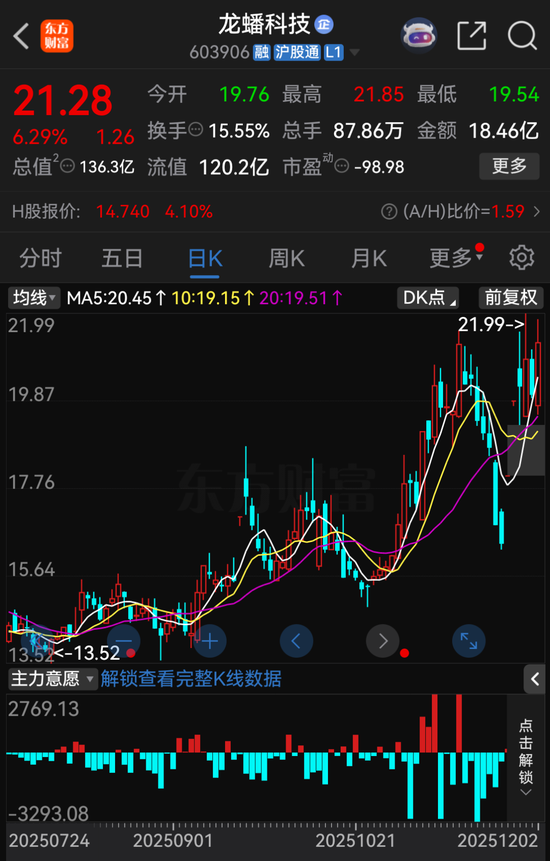
龙蟠科技,又签大单
Xin Lang Cai Jing· 2025-12-02 23:49
Core Viewpoint - Longpan Technology has signed a long-term procurement agreement with Sunwoda's subsidiary in Thailand, with an estimated sales amount of 4.5 billion to 5.5 billion yuan, which is expected to positively impact the company's future performance [1][5][6]. Group 1: Agreement Details - The agreement stipulates that from 2026 to 2030, Longpan's subsidiary LBM New Energy (AP) Pte. Ltd. will supply 106,800 tons of lithium iron phosphate cathode materials to Sunwoda Automotive Energy Technology (Thailand) Co., Ltd. [5][17]. - The total sales amount is estimated to be between 4.5 billion and 5.5 billion yuan, depending on actual sales orders [5][17]. Group 2: Company Performance - Longpan Technology's main business includes lithium iron phosphate cathode materials and automotive environmental fine chemicals, with the former's shipment volume ranking among the top in the industry [6][18]. - The company's losses in the lithium iron phosphate cathode materials business have been decreasing, with net losses for the first three quarters of 2025 reported at -110 million yuan and -172 million yuan for net profit attributable to the parent company [7][19]. Group 3: Industry Context - Major battery manufacturers, including CATL, have been frequently signing long-term supply agreements with upstream material suppliers to ensure supply chain stability as the lithium battery industry shows signs of recovery [10][21]. - In the domestic battery market, Sunwoda ranked 6th in installed capacity from January to October 2025, with a total of 19.29 GWh, representing a 3.34% market share [21][20].