
保险

Search documents
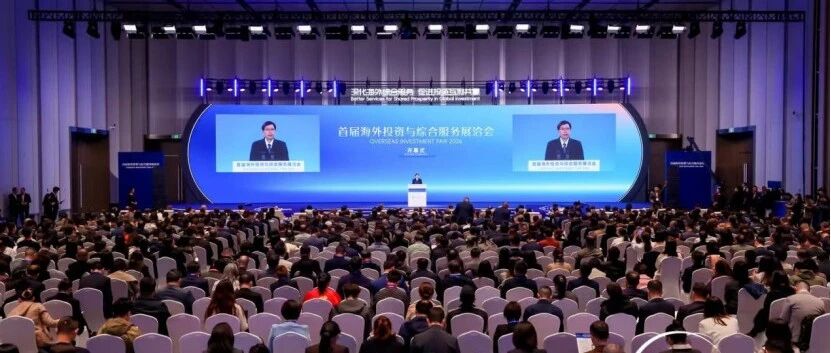
首届海外投资与综合服务展洽会在沪开幕
第一财经· 2026-03-26 09:36
Core Viewpoint - The first Overseas Investment and Comprehensive Service Expo (referred to as "Haiqiao Conference") was held in Shanghai, focusing on deepening overseas comprehensive services and promoting mutually beneficial investment opportunities [1][3]. Group 1: Conference Overview - The Haiqiao Conference gathered government officials, international organization representatives, industry experts, and business leaders from 58 countries and regions, creating a platform for international investment cooperation and exchange [3]. - The opening ceremony featured speeches discussing global investment trends, China's 14th Five-Year Plan, and compliance and risk prevention for enterprises going abroad [3][12]. Group 2: Key Insights from Leaders - The President of the China International Investment Promotion Association, Fang Ai Qing, emphasized the need for a comprehensive service system to support overseas investment, addressing the increasing demand for high-quality services amid new global challenges [5]. - The Deputy Director of the Shanghai Municipal People's Congress, Chen Jing, highlighted Shanghai's efforts to build a comprehensive service system for enterprises going abroad, aiming to enhance connections with global markets and resources [7]. Group 3: International Perspectives - International guests, including former leaders and representatives from various organizations, praised China's achievements in foreign investment and expressed a desire for deeper cooperation across multiple fields [10]. Group 4: Reports and Initiatives - The conference featured the release of significant reports, including the "China's Foreign Investment Cooperation Development Report" and the "China's Foreign Investment Trend Outlook," which provide insights into investment trends and opportunities [18][20]. - A "Cross-Border Financial Service Plan" was launched, offering integrated financial support for enterprises engaging in cross-border activities [24]. Group 5: Collaborative Efforts - The China International Investment Promotion Association signed cooperation memorandums with various organizations to enhance overseas investment cooperation [26][28]. - The establishment of strategic partnerships for an "Overseas Comprehensive Service System" was announced, aiming to connect local and global resources effectively [32].

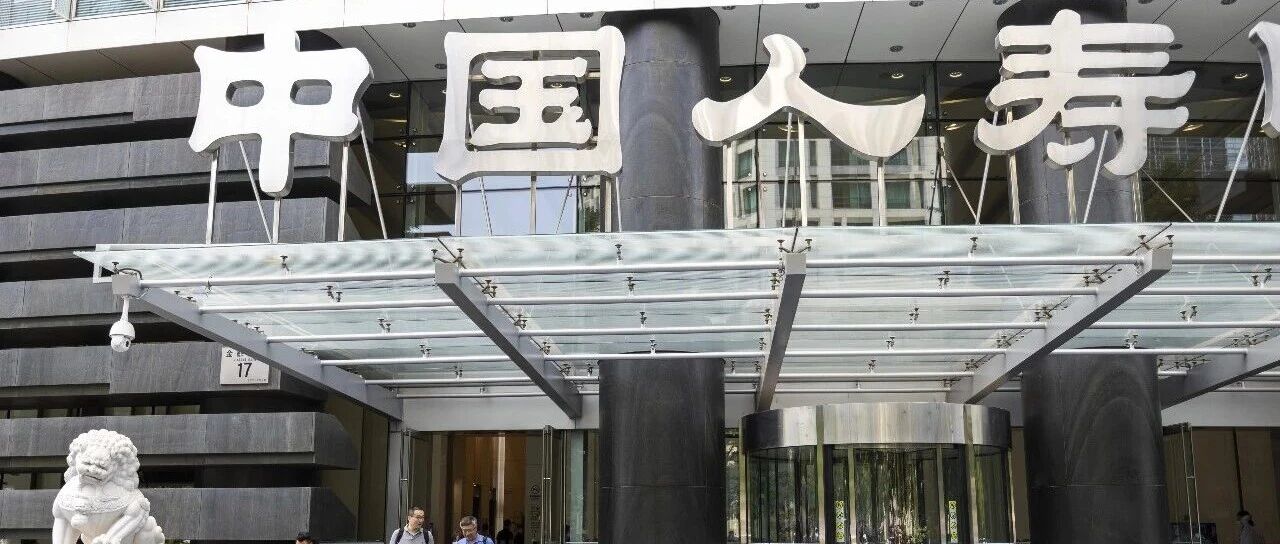
全年大赚1540亿背后,中国人寿四季度为何突现亏损?
第一财经· 2026-03-26 09:36
Core Viewpoint - China Life Insurance Company reported a net profit growth of 44.1% year-on-year for 2025, but experienced a net loss in the fourth quarter, attributed to structural adjustments in the capital market affecting its stock and fund holdings. The management emphasized that these fluctuations are mostly temporary and do not reflect the company's long-term operational trends [3][4]. Group 1: Financial Performance - For the first three quarters of 2025, China Life achieved a net profit attributable to shareholders of 167.8 billion yuan, a year-on-year increase of 60.5%. The total net profit for the year was 154.1 billion yuan, reflecting a growth of 44.1% [3]. - The total investment income for 2025 reached 387.7 billion yuan, an increase of 79.4 billion yuan compared to the same period in 2024. The total investment return rate was 6.09%, up by 59 basis points from the previous year [4]. Group 2: Investment Strategy - As of December 31, 2025, China Life's investment assets amounted to 7.42 trillion yuan, representing a growth of 12.3% from the end of 2024. The allocation ratio of stocks and funds (excluding money market funds) increased from 12.18% at the end of 2024 to 16.89%, indicating a strategic increase in equity investments [4]. - The company is closely monitoring global geopolitical risks, particularly those arising from the US-Iran conflict, although the impact on its overall assets is minimal due to the small scale of its overseas asset allocation. The company plans to leverage its long-term capital stability to dynamically adjust its asset allocation strategy [4].

中国平安(02318) - 2025 Q4 - 电话会议演示
2026-03-26 09:30
2025 Annual Results Value Growth and Service Innovation March 2026 Cautionary Statements Regarding Forward-Looking Statements To the extent any statements made in this Report contain information that is not historical, these statements are essentially forward-looking. These forward-looking statements include but are not limited to projections, targets, estimates and business plans that the Company expects or anticipates may or may not occur in the future. Words such as "potential", "estimates", "expects", " ...

A股市场2026年二季度投资策略报告:市场维稳预期明确,波动带来配置机会-20260326
BOHAI SECURITIES· 2026-03-26 08:27
Macro Economic Situation - The export growth in January-February 2026 was 21.8% year-on-year, significantly rebounding compared to 2025, supported by structural optimization and competitive advantages in new momentum sectors [8] - Fixed asset investment in January-February 2026 increased by 1.8% year-on-year, with infrastructure investment growing by 11.4%, indicating a positive start to the economy [10][12] - Social retail sales in January-February 2026 showed a year-on-year growth of 2.8%, indicating a need for further stimulation of consumer demand [14] Liquidity Environment - The Federal Reserve maintained the federal funds rate target range at 3.5% to 3.75% during the March meeting, reflecting a cautious approach amid geopolitical uncertainties [22][23] - Domestic monetary policy is expected to continue a moderately loose stance, with potential for rate cuts and reserve requirement ratio reductions in response to economic growth pressures [26][27] Capital Market Liquidity Environment - The capital market's primary task is stability, with mechanisms in place to support liquidity, including the expansion of public funds and the enhancement of ETF roles [31][32] - The balance between capital supply and stock supply is expected to improve, with both showing signs of growth, which may reduce the unilateral driving effect of capital inflows on the market [53] Market Strategy - The A-share market has experienced fluctuations, with external geopolitical risks impacting investor sentiment and market stability [56] - Long-term returns are anticipated to derive from asset allocation capabilities in a stable environment, while excess returns may come from timing opportunities in non-stable market conditions [58]
2026年信用债机构行为变化与展望:谁在稳定信用利差:信用债机构行为分析框架
GUOTAI HAITONG SECURITIES· 2026-03-26 08:23
1. Report Industry Investment Rating No information about the industry investment rating is provided in the report. 2. Core Viewpoints of the Report - The behavior of institutional investors has become a core variable influencing the short - to medium - term trends and operation rhythm of the credit bond market. The steepening of the yield curve, prominent structural market conditions, and intensified differentiation of credit spreads may be the core characteristics of the market [1][7]. - In 2026, the short - to medium - term trends and operation rhythm of the credit bond market will still be dominated by institutional behavior. The marginal behavioral changes of funds, wealth management, and insurance, the three core institutional investors, will reshape the market pattern in terms of term structure, spread trends, and variety differentiation [3][7][51]. 3. Summary According to the Table of Contents 3.1 Fund: Significant Behavioral Elasticity Driven by Liabilities, Further Deepening of Instrumental and Structural Features in 2026 3.1.1 Core Bond Allocation Features: Dominated by Liabilities, Focus on Duration and Leverage - The redemption pressure on the liability side directly determines the asset - side allocation, leading to pro - cyclical trading behavior. A positive feedback loop exists between fund net value and investor redemptions. In a rising bond market, funds increase leverage and duration to allocate more credit bonds; in a falling market, forced selling occurs due to redemption pressure [11]. - The leverage ratio is subject to regulatory constraints, and duration adjustment is highly correlated with market conditions and liability - side pressure. The regulatory upper limits for the leverage ratio of open - end and closed - end bond funds are 140% and 200% respectively. Duration adjustment varies with market conditions and the stability of the liability side [11][12]. - Policy changes and concentrated product maturities in 2025 directly triggered significant fluctuations in fund bond allocation behavior. After the release of the fund fee regulations in September 2025, funds sold off bonds in advance. In November, the net purchase of credit bonds increased due to the maturity of amortized cost - method bond funds [12]. 3.1.2 Instrumental Trend Prominent in 2026, Sustained Structural Impact - Under the new fee regulations, product substitution effects are evident. Short - term trading becomes more instrumental, and medium - to long - term allocation focuses on performance. Bond ETFs and inter - bank certificate of deposit funds have replaced traditional short - term bond funds, increasing short - term credit bond trading activity and volatility. Medium - to long - term pure bond funds focus on duration timing and variety selection [15]. - The opening rhythm of amortized cost - method bond funds in 2026 remains a key variable, driving the structural market of credit bonds. Concentrated openings will lead to increased demand for 3 - 5 - year high - grade ordinary credit bonds, while dispersed openings will have a milder impact. The concentrated maturity periods in 2026 are March, May, June, and July [17]. - Pay attention to potential policy benefits for credit bond and sci - tech innovation bond ETFs. Scale expansion will drive the valuation repair and liquidity improvement of constituent bonds. As of March 24, 2026, the scale of 24 sci - tech innovation bond ETFs decreased by 8.91 billion yuan compared to the end of 2025, but the relative value of constituent bonds is prominent [20][23]. 3.2 Wealth Management: Challenges of Full Net - Value Transformation 3.2.1 Core Bond Allocation Features: Focus on Allocation, Weakened Trading, and Significant Seasonal Bond Allocation Patterns - Wealth management's bond allocation strategy is mainly hold - to - maturity, with weakened trading attributes. The allocation willingness is positively correlated with credit spreads. After the net - value transformation in 2022, wealth management shifted from trading to hold - to - maturity due to investors' low tolerance for net - value fluctuations. The bond - buying and - selling rhythm is affected by bank's seasonal balance - sheet returns, liability - side stability, and primary - market bond issuance [26][28]. - Seasonal bond allocation patterns are clear, and there are opportunities for short - term spread compression in specific windows. At the beginning of each quarter (April, July, October), there are usually opportunities to compress the credit spreads of short - term high - grade credit bonds such as 1 - year AAA inter - bank certificates of deposit and 2 - year - or - less AAA bonds [29]. 3.2.2 In 2026, Stabilizing Net Value is the Core, and the Direction of Fund Flows is Key - Under full net - value transformation, the function of wealth management as a stabilizer in the bond market is weakened, and low - volatility and high - liquidity assets are preferred. In a rising bond market, wealth management will moderately increase credit bond allocation without excessive leverage and duration extension; in a falling market, it will shorten duration and increase low - volatility asset holdings. This will intensify the term differentiation in the credit bond market [30]. - The peak of high - interest deposit repricing maturity will affect the demand structure of credit bonds. If funds flow into wealth management after high - interest deposits mature, it will support short - term high - grade credit bonds; if funds flow into the equity market, it may cause short - term disturbances in the bond market [34]. 3.3 Insurance: Stock - Bond Rebalancing in 2026 3.3.1 Core Bond Allocation Features: Liability - Driven Long - Term Allocation, Bond Allocation Rhythm Affected by Multiple Factors - Insurance funds have long - term liabilities with rigid costs, and premium income shows seasonal characteristics with a slowdown in growth. Insurance funds need to allocate long - term assets to match asset - liability duration. Premium income is concentrated in January, and the proportion of dividend - paying insurance may increase [39]. - The bond allocation rhythm is driven by multiple factors, with a significant characteristic of timing allocation at interest - rate peaks. Insurance funds prefer to participate in primary - market bond subscriptions, especially for long - term local government bonds and credit bonds. They also consider deposit yields and market interest rates when allocating bonds [40]. - Asset - side allocation is diversified, with local government bonds as the core allocation. After the contraction of non - standard assets, insurance funds are actively seeking alternative assets such as ultra - long - term interest - rate bonds, local government bonds, fixed - income plus products, and overseas fixed - income assets. Insurance funds have significant pricing power for long - term credit bonds [44]. 3.3.2 Stock - Bond Rebalancing + New Accounting Standards in 2026, More Cautious Allocation Style - In a low - interest - rate environment, stock - bond rebalancing is initiated, increasing the proportion of equity asset allocation and restricting the incremental allocation of pure bonds. This may weaken the承接 force for long - term credit bonds, widen the spreads of long - term credit bonds, and intensify term differentiation in the credit bond market [47][49]. - After non - listed insurance companies fully implement the new accounting standards in 2026, the preference for Tier 2 and perpetual bonds may further shrink, and credit risk appetite will be more cautious. This will intensify the grade spread differentiation and liquidity stratification in the credit bond market [50]. 3.4 Outlook on the Core Trends of the Credit Bond Market with Institutional Behavior Reshaping the Landscape - The credit bond yield curve will continue to steepen, and the ability to absorb long - term bonds may be limited. Wealth management focuses on short - term high - grade low - volatility assets, funds focus on short - to medium - term trading, and insurance may reduce long - term bond positions, leading to a steeper yield curve and potential widening of long - term credit spreads [51]. - Product innovation and maturity rhythms will drive a structural market, which will be the mainstream feature in 2026. The maturity rhythm of amortized cost - method bond funds will determine the phased allocation opportunities for 3 - 5 - year high - grade ordinary credit bonds, and the scale expansion of credit bond and sci - tech innovation bond ETFs will drive the valuation repair of constituent bonds [51][52]. - Changes in insurance allocation preferences may put continuous pressure on Tier 2 and perpetual bonds and low - to medium - grade credit bonds. The new accounting standards will affect the preference for Tier 2 and perpetual bonds, and the credit risk appetite of insurance will be more cautious, intensifying the grade spread differentiation [52].
中国人寿(601628):2025年业绩点评:承保和投资双高增,权益占比大幅提升
GUOTAI HAITONG SECURITIES· 2026-03-26 07:49
Investment Rating - The report maintains a "Buy" rating for China Life Insurance (601628) with a target price of 53.41 CNY [6][13]. Core Insights - The company achieved a net profit growth of 44.1% year-on-year for 2025, with net assets increasing by 16.8% from the beginning of the year, driven by improvements in both insurance and investment performance [3][13]. - The report highlights a significant increase in the proportion of equity investments, with total investment assets reaching 7.4 trillion CNY, a 12.3% year-on-year increase, and the share of stocks and funds rising to 16.9%, up 4.7% [13]. - The new business value (NBV) grew by 35.7% in 2025, with individual insurance and bancassurance segments showing year-on-year increases of 25.5% and 169.3%, respectively [13]. Financial Summary - Revenue for 2025 is projected at 615.678 billion CNY, reflecting a 16% increase from 2024 [5]. - The net profit attributable to shareholders is expected to reach 154.078 billion CNY in 2025, marking a 44% increase compared to 2024 [5]. - Earnings per share (EPS) for 2025 is forecasted at 5.45 CNY, with a projected net asset return rate of 26% [5][14]. Business Performance - The report indicates that the company's insurance service revenue is expected to grow to 214.136 billion CNY in 2025, with a slight increase in insurance service expenses [14]. - The investment income is projected to rise to 198.457 billion CNY in 2025, benefiting from improved market conditions [14]. - The company’s solvency ratios are reported at 128.8% for core solvency and 174.0% for comprehensive solvency, although these figures have decreased year-on-year [13].
交银国际每日晨报-20260326
BOCOM International· 2026-03-26 07:27
Group 1: WuXi Biologics (2269 HK) - Significant improvement in profit margins expected in 2025, driven by new technologies and CMO [1] - Revenue for 2025 projected at RMB 21.8 billion, a 17% year-on-year increase, with gross margin rising by 5.0 percentage points to 46.0% [1] - Free cash flow expected to grow over 70% to RMB 2.3 billion, with capital expenditures around RMB 7.1 billion [1][2] - Target price raised to HKD 35.80, maintaining a neutral rating [2] Group 2: Gensun Pharmaceuticals (2595 HK) - Revenue for 2025 expected to reach RMB 130 million, a 24% year-on-year increase, with adjusted losses narrowing by 9% to RMB 227 million [3] - Cash reserves at year-end projected to exceed RMB 2 billion, supporting R&D and operations for the next 2-3 years [3] - Anticipated significant sales growth in 2026 following the inclusion of Fluorouracil in the medical insurance directory [3] Group 3: Hesai Technology (2525 HK) - Revenue for Q4 2025 reached RMB 1 billion, a 39% year-on-year increase, with a shipment volume of 631,000 units, up 184.2% [9] - Management raised 2026 shipment guidance to 3-3.5 million units, previously set at 2-3 million [9] - 2025 GAAP net profit expected at RMB 440 million, with a non-GAAP net profit of RMB 550 million [9][10] Group 4: Xiaomi Group (1810 HK) - Q4 2025 total revenue increased by 7% year-on-year to RMB 116.9 billion, with a gross margin of 20.8% [12] - Adjusted net profit decreased by 24% to RMB 6.35 billion, facing storage cost pressures [12][13] - Continued investment in AI expected to reach RMB 16 billion in 2026, with a cumulative investment of RMB 60 billion over three years [13] Group 5: ZhongAn Online (6060 HK) - Net profit for 2025 expected to increase by over 80% to RMB 1.102 billion, with a 198.3% increase when excluding one-time impairment losses [14][15] - Health insurance premium income projected to grow by 20% annually over the next three years [15] - Target price maintained at HKD 23, corresponding to a 1.40x 2026 target P/B ratio [16] Group 6: Henderson Land Development (12 HK) - Revenue for 2025 increased by 1.9% to HKD 25.74 billion, with net profit declining by approximately 10.2% to HKD 5.65 billion [17] - Contract sales in Hong Kong expected to reach HKD 19.271 billion, a 71% year-on-year increase [17] - Target price maintained at HKD 32.68, reflecting a significant discount to net asset value [18]

一月港股市场跟踪:交投热情维持高位,多重因素利好ADT抬升
East Money Securities· 2026-03-26 07:07
Investment Rating - The report maintains a "Strong Buy" rating for the non-bank financial sector, indicating a positive outlook for investment opportunities in this area [2]. Core Insights - The Hong Kong stock market is experiencing a significant increase in trading activity, with the average daily turnover (ADT) reaching 272.3 billion HKD in January 2026, marking a year-on-year increase of 89% and a quarter-on-quarter increase of 46.4% [5][15]. - The total market capitalization of Hong Kong stocks reached 50.8 trillion HKD by the end of January 2026, reflecting a year-on-year growth of 43.6% and a quarter-on-quarter growth of 7.1% [5][15]. - The price-to-earnings (PE) ratio of the Hang Seng Index stood at 11.77 times as of January 31, 2026, placing it in the 89.15th percentile over the past five years, indicating a gradual recovery from previous undervaluation [5][21]. - The influx of southbound capital has significantly increased, with net inflows reaching 1.4 trillion HKD in 2025 and over 150 billion HKD in 2026, enhancing the pricing power of mainland investors [5][41]. - The IPO market in Hong Kong is showing signs of recovery, with 119 IPOs in 2025 raising a total of 127.9 billion HKD, and 13 IPOs already completed in January 2026 [5][15]. Summary by Sections 1. ADT Performance Review - The Hong Kong stock market has seen a notable increase in trading activity, with ADT reaching 272.3 billion HKD in January 2026, a significant increase from previous periods [15]. - The growth in ADT is attributed to both an increase in total market capitalization and turnover rate, indicating a robust market environment [15]. 2. Valuation Improvement and Market Capitalization - The valuation of Hong Kong stocks is gradually recovering, with the Hang Seng Index's PE ratio improving significantly, reflecting a narrowing of the AH premium to near six-year lows [5][21]. - The overall profitability of Hong Kong stocks is expected to grow, with a projected 9.06% increase in net profit to 5.39 trillion HKD in 2024 [5][40]. 3. IPO Activity and Market Dynamics - The IPO market is revitalizing, with a substantial number of new listings and a diverse pipeline of companies awaiting listing, particularly in technology and new consumption sectors [5][15]. - The A+H listing model is gaining traction, with a notable increase in the number of companies pursuing dual listings [5][15]. 4. Southbound Capital Inflows - Southbound capital's share in the market is increasing, contributing to a higher turnover rate and overall market activity [5][41]. - The daily average turnover from southbound trading reached 1.2 billion HKD in January 2026, maintaining a significant proportion of the overall market activity [5][41]. 5. Derivatives Market Growth - The derivatives market is experiencing record trading volumes, with innovative products being introduced to meet market demands [6][15].

中国太平(00966):2025年年度业绩点评:资负经营稳健,派息超预期
GUOTAI HAITONG SECURITIES· 2026-03-26 06:54
资负经营稳健,派息超预期 中国太平(0966) ——中国太平 2025 年年度业绩点评 | [姓名table_Authors] | 电话 | 邮箱 | 登记编号 | [Table_Invest] 评级: | 增持 | | --- | --- | --- | --- | --- | --- | | 刘欣琦(分析师) | 021-38676647 | liuxinqi@gtht.com | S0880515050001 | | | | 李嘉木(分析师) | 021-38038619 | lijiamu@gtht.com | S0880524030003 | [当前价格 Table_CurPrice] (港元): | 21.18 | 本报告导读: 公司 25 年归母净利润同比 220.9%,主要由新企业所得税政策一次性影响导致;25 年 分红 1.23 港元/股,同比 251.4%; NBV 小幅增长,财险 COR改善,权益配置提升。 投资要点: | 请务必阅读正文之后的免责条款部分 | | --- | 研 究 股票研究 /[Table_Date] 2026.03.26 | | | [Table_Industry] ...

中国人寿(601628):业绩与价值齐飞,分红增速超预期
GF SECURITIES· 2026-03-26 06:47
Investment Rating - The report assigns a "Buy-A/Buy-H" rating for the company [3] Core Views - The company's performance and value are both strong, with dividend growth exceeding expectations [1] - The net profit for 2025 increased by 44.1% year-on-year, driven by market upturns and increased equity allocation [12][44] - The new business value (NBV) grew by 35.7% year-on-year, supported by a strong demand for savings products and improved distribution channels [30][46] Financial Forecast - Embedded Value (CNY million) is projected to grow from 1,401,146 in 2024 to 1,960,695 in 2028, with a growth rate of 11.2% in 2024 [2] - Net profit is expected to reach 106,935 million in 2024, with a significant increase of 131.56% year-on-year [2] - Earnings per share (EPS) is forecasted to be 3.78 in 2024, increasing to 6.01 by 2028 [2] Performance Analysis - The company's total investment assets reached 7.42 trillion, a 12.3% increase year-on-year, with a notable rise in equity investments [22] - The total investment return for 2025 was 6.1%, reflecting a 0.6 percentage point increase from the previous year [25] - The company’s net investment yield was 3% in 2025, supported by a higher allocation to high-dividend assets [25] Value Analysis - The NBV for 2025 is projected at 45,752 million, with a year-on-year increase of 35.7% [2][30] - The company's internal value (EV) increased by 4.8% year-on-year, despite negative market value adjustments due to rising interest rates [35][46] - The NBV margin improved to 19.5%, up 3.8 percentage points year-on-year, driven by better pricing and distribution strategies [30][34] Insurance Sector Insights - The company’s agent workforce decreased by 4.6% year-on-year to 587,000, but the quality of agents is improving [41][42] - The company is focusing on enhancing the quality of its sales force while expanding its market presence [41] Profitability Forecast and Investment Recommendations - The report anticipates significant net profit growth, with EPS expected to be 4.42, 5.93, and 6.01 for 2026, 2027, and 2028 respectively [2][44] - The fair value for A-shares is estimated at 56.53 CNY and for H-shares at 38.45 HKD, maintaining a "Buy" rating [44][46]