
建材

Search documents
今年“百展千企 沪连全球”海外展会推荐名单扩容50% 上海外贸企业提前集结出海亮相
Jie Fang Ri Bao· 2026-01-24 01:36
Group 1 - Shanghai Tongxin Trading Co., Ltd. is preparing to participate in the Paris Textile and Fabric Exhibition from February 2 to 4, with support from the Shanghai International Exhibition (Group) Co., Ltd. providing booth fee subsidies and organizing pre-exhibition meetings for 56 participating companies [1] - The Shanghai Municipal Commission of Commerce announced that in the first quarter of this year, 424 companies will participate in 136 overseas exhibitions through a dual-track model of government-led and market-driven organization [2] - The "Hundred Exhibitions, Thousand Enterprises" initiative aims to organize 5,725 enterprises for 1,149 overseas exhibitions in 2025, with a focus on both traditional markets in Europe and the U.S. and emerging markets [2] Group 2 - The recommended list of overseas exhibitions for 2026 has been expanded to 305 events, a 50% increase from the previous year, covering key export industries and regions [3] - The number of overseas exhibitions organized by the Shanghai International Exhibition Group is set to increase from 159 in 2025 to 219 in 2026, representing a 38% growth [5] - The focus for 2026 will include emerging markets in the Middle East, Central and Eastern Europe, and Africa, with new sectors such as energy storage and biomedicine being emphasized [5]
2026年1月中旬流通领域重要生产资料市场价格变动情况
Guo Jia Tong Ji Ju· 2026-01-24 01:32
Core Viewpoint - The monitoring of market prices for 50 important production materials across nine categories indicates a mixed trend in price changes, with 29 products experiencing price increases, 13 seeing declines, and 8 remaining stable in mid-January 2026 compared to early January 2026 [2][4]. Group 1: Price Changes in Major Categories - In the black metal category, rebar prices increased by 10.9 yuan per ton (0.3%), while seamless steel pipe prices decreased by 2.7 yuan per ton (-0.1%) [4]. - In the non-ferrous metal category, electrolytic copper rose by 85.9 yuan per ton (0.1%), while lead ingot prices fell by 107.1 yuan per ton (-0.6%) [4]. - Chemical products showed varied results, with pure benzene increasing by 231.3 yuan per ton (4.4%) and sulfuric acid decreasing by 3.2 yuan per ton (-0.3%) [4]. Group 2: Energy and Coal Prices - In the petroleum and natural gas sector, liquefied natural gas (LNG) prices rose by 121.7 yuan per ton (3.4%), while gasoline prices fell by 4.9 yuan per ton (-0.1%) [4]. - Coal prices also varied, with anthracite coal increasing by 41.2 yuan per ton (4.8%) and coking coal rising by 7.1 yuan per ton (0.5%) [4]. Group 3: Agricultural and Forestry Products - In agricultural products, soybean prices increased by 12.9 yuan per ton (0.3%), while white sugar prices decreased by 1.5 yuan per ton (0.0%) [5]. - In forestry products, natural rubber prices fell by 7.5 yuan per ton (0.0%), and pulp prices decreased by 99.7 yuan per ton (-1.8%) [5]. Group 4: Monitoring Methodology - The price monitoring includes data from over 2,000 wholesalers, agents, and distributors across more than 300 trading markets in 31 provinces [8][9]. - The methodology involves on-site price collection, as well as inquiries via phone and electronic communication [9].
零碳工厂建设进入快车道,2030年将纳入钢铁、有色金属等行业
Xin Lang Cai Jing· 2026-01-23 13:45
Core Insights - The Chinese government is actively promoting the construction of zero-carbon factories and parks, with a goal to select a batch of zero-carbon factories starting in 2026 and expand to various industries by 2030 [2][4]. Policy Development - The concept of zero-carbon parks was first introduced in the 2024 Central Economic Work Conference, with subsequent government reports and guidelines reinforcing the initiative [3]. - The first batch of national-level zero-carbon parks was announced on December 26, 2025, with 52 parks officially recognized [4]. Implementation Strategies - The construction of zero-carbon factories involves reducing carbon emissions through technological innovation, structural adjustments, and management optimization [4]. - Key strategies for building zero-carbon factories include establishing a carbon emission accounting system, transitioning to green energy sources, improving energy efficiency, analyzing carbon footprints, enhancing digital management, and implementing carbon offsetting measures [4]. Regional Distribution - The first batch of zero-carbon parks is distributed across various provinces, achieving nationwide coverage, with a focus on key regions [5]. - The construction of zero-carbon parks is seen as a strategic move to accelerate green transformation in the industry [5]. Industry Impact - Zero-carbon parks are expected to drive deep decarbonization in high-emission industries such as steel, construction materials, and chemicals, while also fostering the growth of new energy and smart manufacturing sectors [6]. - The construction of zero-carbon parks is viewed as a means to enhance the competitiveness of China's green industrial chain on a global scale [6]. Challenges and Lessons - Challenges in the construction of zero-carbon parks include weak carbon management capabilities, significant funding pressures, and the need for improved data monitoring and accounting systems [6]. - European examples, such as Berlin's EUREF-Campus and Denmark's Kalundborg eco-industrial park, provide valuable insights into effective energy system planning and digital management for zero-carbon initiatives [6][7].

新华鲜报丨第三个!山东GDP超10万亿元
Xin Hua Wang· 2026-01-23 12:26
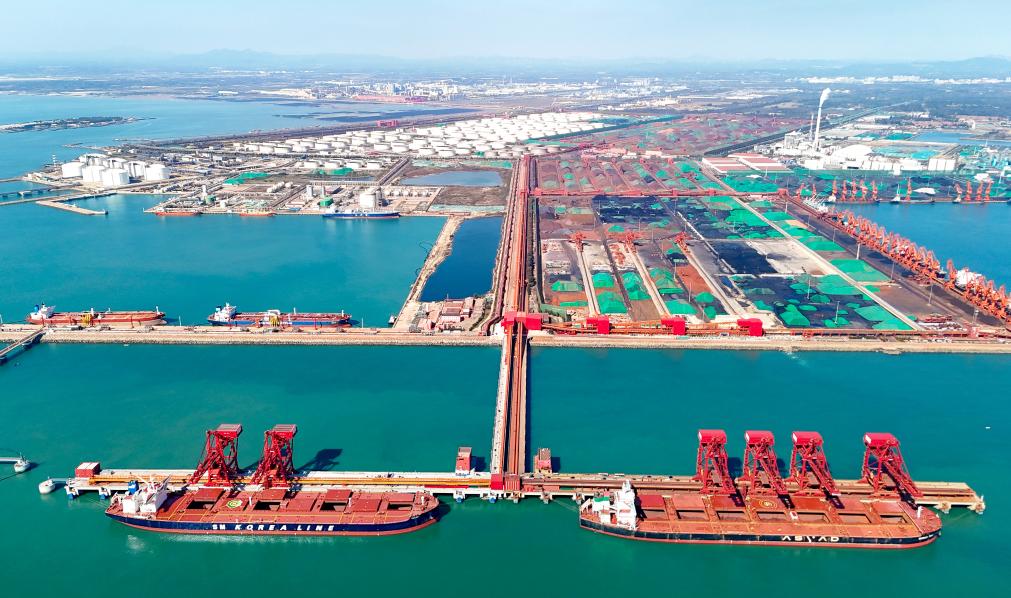
Group 1 - Shandong has become the third province in China, after Guangdong and Jiangsu, to achieve a GDP exceeding 10 trillion yuan, with a projected GDP of 10,319.7 billion yuan in 2025, representing a growth of 5.5% from the previous year [1] - The province is focusing on deepening the transformation of old and new growth drivers and promoting green, low-carbon, and high-quality development, overcoming the challenges of industrial structure transformation [3] - In 2025, Shandong's industrial technology investment is expected to grow by 5.3%, with the added value of the equipment manufacturing industry increasing by 11.4%, indicating a shift towards new production capabilities [6] Group 2 - Shandong's total import and export volume is projected to reach 35,303.3 billion yuan in 2025, growing by 4.5%, which accounts for 7.8% of the national total and contributes 9.1% to the national foreign trade growth [6] - The province is strategically positioned to become a significant economic growth pole in northern China, with advantages in connectivity and trade, including the operation of the China-Europe Railway Express and a strong coastal port throughput [8] - The service sector's added value growth rate is expected to exceed the national average by 0.7 percentage points, reflecting a robust performance in this area [6]
零碳工厂迎来“顶层设计”
Xin Jing Bao· 2026-01-23 09:52
Core Viewpoint - The construction of zero-carbon factories in China is being guided by a new policy framework aimed at promoting green transformation in the manufacturing sector, with specific targets set for 2027 and 2030 [1][2]. Group 1: Policy and Guidelines - The "Guiding Opinions" issued by multiple government bodies aim to cultivate a number of zero-carbon factories in key industries by 2027, expanding to additional sectors by 2030 [1][2]. - The transition from energy-saving to green factories and then to zero-carbon factories reflects a progressive evolution in China's manufacturing green transformation [2][3]. Group 2: Importance of Zero-Carbon Factories - Zero-carbon factories are essential for reducing carbon emissions in the industrial sector, which accounts for nearly 70% of China's total carbon emissions [2]. - The construction of zero-carbon factories is recognized as a critical step towards deep decarbonization in the industrial field [2][3]. Group 3: Implementation Challenges - The construction of zero-carbon factories involves complex and systemic challenges, including energy structure, technology, funding, and management, with varying implementation paths across different regions and industries [3][4]. - There are existing issues such as inconsistent evaluation requirements and a lack of robust carbon emission accounting frameworks that need to be addressed [3][4]. Group 4: Regional Initiatives and Standards - Several regions in China, including Tianjin, Shanghai, and Jiangsu, have initiated pilot projects for near-zero carbon factories, establishing a foundation for broader zero-carbon factory construction [4]. - Industry associations have developed over 30 technical standards to guide the construction and evaluation of zero-carbon factories based on international benchmarks [4]. Group 5: Opportunities in Digitalization and Green Energy - The push for zero-carbon factories is expected to create significant opportunities in digital technologies, particularly in areas like digital twin modeling and simulation for manufacturing processes [7]. - The "Guiding Opinions" encourage the development of integrated projects for green hydrogen and ammonia, aiming to establish a sustainable supply chain for clean energy [7].
万年青:收到江西证监局行政监管措施决定书及深圳证券交易所监管函
Xin Lang Cai Jing· 2026-01-23 09:13
万年青公告,公司存在违规事项,收到江西证监局行政监管措施决定书及深圳证券交易所监管函。一是 董事会秘书长期空缺。自2023年1月至今,一直由副总经理代行董事会秘书职责。二是贸易业务财务核 算不规范。公司对部分应按照净额法核算收入的贸易业务采用总额法核算,导致2024年年度报告中收入 成本披露不准确。三是主要客户情况披露不准确。四是货币资金权利受限信息披露不完整及现金流量表 披露不准确。 ...

“十四五”期间云浮市年产绿色钢铁600万吨
Zhong Guo Xin Wen Wang· 2026-01-23 08:59
Core Insights - During the "14th Five-Year Plan" period, Yunfu has significantly enhanced its geographical advantages and transportation infrastructure, completing over 35 billion yuan in transportation investments, leading to a comprehensive integration into the Greater Bay Area's one-hour city, economic, and living circles [1][2] Group 1: Economic Development - Yunfu's total economic output increased by 30% over five years, with local fiscal revenue rising by 40% [1] - The balance of loans and deposits grew by 50%, while the industrial output value of enterprises above designated size surged by 60% [1] Group 2: Industrial Growth - Yunfu is focusing on developing trillion-yuan industrial clusters, with modern agriculture achieving an annual output value exceeding 100 billion yuan and becoming the largest short-process steelmaking base in Guangdong, producing 600 million tons of green steel annually [2] - The establishment of five large green mining areas has resulted in an annual mining capacity of 170 million tons, making it the largest sand and gravel aggregate production base in the province [2] Group 3: Major Projects and Investments - Over the five-year period, 18 projects with investments exceeding 5 billion yuan have been implemented, with four projects reaching the 10 billion yuan mark [2] - Cumulative investment in key projects has surpassed 240 billion yuan, effectively doubling the previous figures [2] Group 4: County Development - The "Hundred Million Thousand Project" has been actively promoted, resulting in three counties (cities, districts) achieving an economic output exceeding 30 billion yuan [2] - The agricultural sector has seen the emergence of 54 types of local specialties, with the annual output value of the Yunan yellow skin industry alone reaching over 8 billion yuan [2]
中欧养老混合A:2025年第四季度利润2516.53万元 净值增长率1.61%
Sou Hu Cai Jing· 2026-01-23 08:24
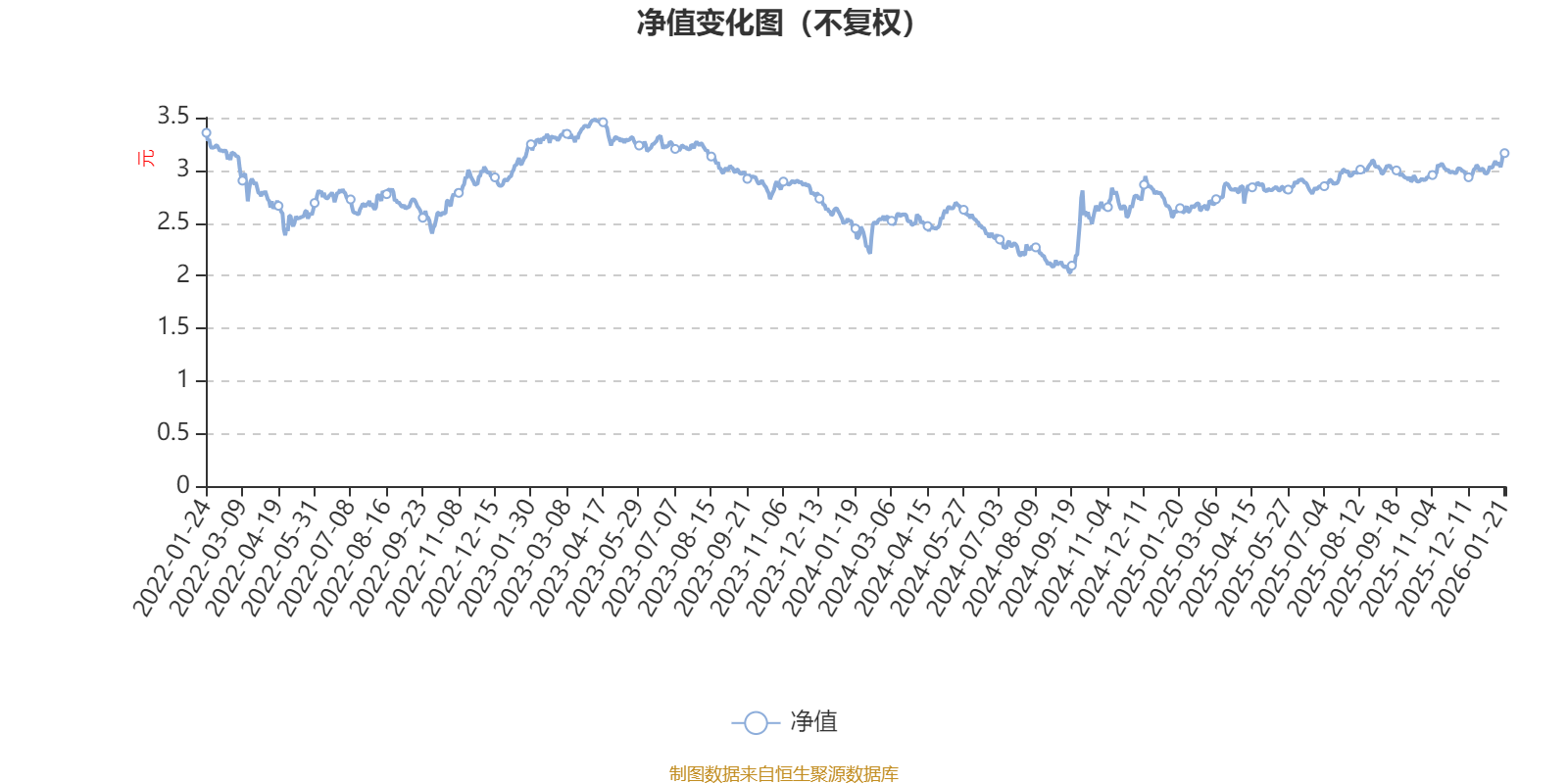
Core Viewpoint - The AI Fund, China Europe Pension Mixed A (001955), reported a profit of 25.1653 million yuan for Q4 2025, with a weighted average profit per fund share of 0.0497 yuan. The fund's net value growth rate was 1.61%, and its total size reached 1.364 billion yuan by the end of Q4 2025 [3][15]. Fund Performance - As of January 21, the unit net value was 3.163 yuan. The fund manager, Xu Wenxing, has managed five funds that have all yielded positive returns over the past year. The highest growth rate among these funds was 34.78% for China Europe Growth Enterprise Board Two-Year Mixed A, while the lowest was 19.56% for China Europe Pension Mixed A [3][4]. - The fund's net value growth rates over various periods are as follows: 9.28% over the last three months (ranked 82/185), 8.43% over the last six months (ranked 159/185), 19.55% over the last year (ranked 164/183), and -2.46% over the last three years (ranked 143/176) [4]. Investment Strategy - The fund's management plans to continue focusing on investments with a safety margin in valuation, emphasizing fundamentally sound assets with strong industry positions and potential for profit recovery related to domestic demand. The strategy includes avoiding overly optimistic sectors with unclear business models [3][4]. Sector Focus - Key areas of focus include: - Professional technical services benefiting from domestic industrial upgrades and standards enhancement - Modern service industries with increasing concentration and strong cash flow generation capabilities - Consumer goods sectors that, while related to real estate, are experiencing counter-cyclical growth and possess brand and channel advantages - Cyclical sub-industries that have undergone industry clearing, are at extreme low valuations, and are showing signs of fundamental improvement [4]. Fund Metrics - The fund's three-year Sharpe ratio is 0.3, ranking 141 out of 176 comparable funds. The maximum drawdown over the past three years was 41.7%, with the largest single-quarter drawdown occurring in Q1 2022 at 19.7% [9][11]. - The average stock position over the last three years was 87.6%, closely aligned with the industry average of 87.64%. The fund reached a peak stock position of 93.4% at the end of Q3 2025, with a low of 73.76% at the end of 2021 [14]. Concentration of Holdings - The fund has a high concentration of holdings, with the top ten stocks consistently representing over 60% of the portfolio for nearly two years. As of Q4 2025, the top ten holdings included China Automotive Research, Morning Light Co., China Merchants Jinling, Songcheng Performance, Anjuke Food, Beijing Human Resources, Beixin Building Materials, Gujia Home, Yili Group, and ShouLai Hotel [17].
港股异动|中国联塑涨超6%创逾两年半新高,今年迄今已累涨约25%
Ge Long Hui· 2026-01-23 06:59
Core Viewpoint - China Lesso (2128.HK) has seen a significant price increase, reaching a new high since May 2023, driven by positive real estate policies and improving market conditions [1] Company Summary - China Lesso's stock price rose over 6% during trading, peaking at 5.8 HKD, marking a year-to-date increase of approximately 25% [1] - The company is benefiting from an increase in domestic market share, expansion of overseas business, and diversification of product categories, which are starting to show signs of revenue improvement [1] Industry Summary - Huatai Securities has indicated that positive real estate policies are likely to accelerate the stabilization of the real estate market, which is reflected in the stock prices and valuations of building materials companies [1] - The report suggests a balanced investment strategy in the building materials sector, focusing on both traditional cyclical opportunities and emerging technology growth [1]

主动基金2025年四季度在加仓顺周期、AI与非银金融,明显下调港股配置
Ge Long Hui· 2026-01-23 06:04
Core Insights - The public fund quarterly report for Q4 2025 shows that both active and passive funds performed well, but there is a clear divergence in fund flows, with active equity funds experiencing a decline in scale while passive funds saw significant growth [1] Group 1: Fund Performance and Trends - Active equity funds have seen a decrease in scale, while passive funds have experienced a notable increase in net subscriptions, indicating a shift in investor preference [1][7] - Despite a market recovery, institutional funds are maintaining a cautious approach, as evidenced by a reduction in overall fund positions [1] - The concentration of holdings in active equity funds has increased, suggesting a focus on a few high-certainty directions rather than diversified allocations [1] Group 2: Active Fund Investment Strategies - Active funds have concentrated their investments in three main areas: cyclical sectors, AI, and non-bank financials, with a focus on cyclical and small-cap growth styles [2] - The cyclical sector has seen systematic increases in allocations, particularly in metals, chemicals, oil and gas, steel, and building materials, driven by a re-evaluation of resource pricing amid supply constraints and new demand from AI and renewable energy [3] - The AI industry chain is a key focus, with active funds investing in computing power and electricity sectors, as demand for high-performance chips and related hardware surges [4] - Non-bank financials, especially the insurance sector, are gaining traction due to favorable interest rate environments and improved investment returns, making them a significant area for active fund allocation [5] Group 3: Passive Fund Investment Strategies - Passive funds are reflecting a direct response to index weights and investor preferences, with increased allocations in telecommunications, metals, and banking, while reducing exposure to electronics, power equipment, and pharmaceuticals [6][7] - The structure of passive fund allocations shows a shift towards larger-cap stocks, with a decrease in the proportion of investments in smaller-cap indices [7] - There is a growing recognition of cyclical and value attributes among passive funds, as evidenced by increased allocations to value indices and a reduction in growth-oriented indices [7] Group 4: Market Signals and Strategic Adjustments - Active funds have significantly reduced their exposure to Hong Kong stocks, with the total value of heavy holdings dropping from 19.26% to 16.23% of total holdings, indicating a strategic repositioning [8] - The overall market environment in Q4 2025 did not exhibit extreme conditions, yet fund flows have shown a clear trend: passive funds are returning while active funds are consolidating, with a focus on cyclical and value investments alongside AI growth [8]