
智能硬件

Search documents
我们准备好让AI“看”世界了吗?
Xin Lang Cai Jing· 2025-12-19 12:14
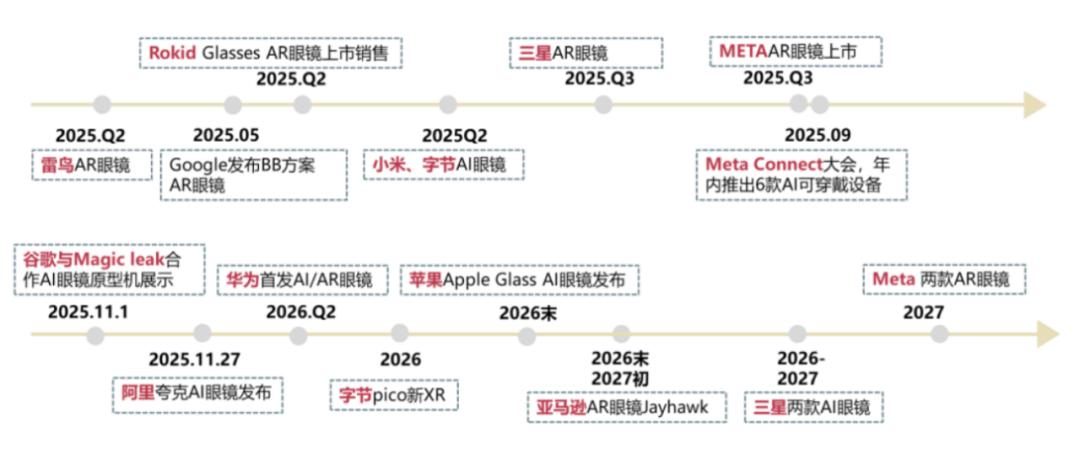
Core Insights - In 2025, AI glasses have emerged as a significant trend in the tech industry, with major companies like Meta, Google, and Apple making substantial advancements and product launches in this space [1][3] - Domestic companies in China, including Huawei, Xiaomi, Alibaba, and ByteDance, are also actively developing AI glasses, with notable products like Alibaba's Quark AI glasses experiencing high demand [1][3] - The competition landscape is diverse, with various types of AI glasses categorized into AI audio glasses, AI photography glasses, and AI+AR glasses, each with distinct functionalities [3][7] Industry Overview - The AI glasses market is driven by advancements in large model technology, with companies recognizing the necessity to invest in AI glasses to avoid falling behind in the AI race [3][21] - Meta's Ray-Ban smart glasses have set a successful precedent, selling over 1 million units and demonstrating the feasibility of integrating AI capabilities into eyewear [3][21] - The market is expected to see significant sales growth, with projections indicating that AI glasses could reach 7 million units sold, with Meta accounting for 5 million of that total [9] Competitive Landscape - Major competitors in the AI glasses market include: - Internet platform companies like Alibaba, Baidu, and ByteDance, leveraging their ecosystem advantages [8] - Hardware manufacturers such as Xiaomi and Huawei, utilizing their supply chain and user base [9] - New automotive entrants like Li Auto, which are creating niche products tailored to specific use cases [9] - Specialized XR/AR companies like Rokid and Thunderbird, focusing on optical display technology and lightweight designs [9] Market Dynamics - The pricing of AI glasses varies widely, from hundreds to thousands of yuan, reflecting the differentiation in product features and target markets [12] - The current market is characterized by a mix of established tech giants and agile startups, each pursuing different strategies to capture market share [10][20] - The demand for AI glasses is still being evaluated, with concerns about whether consumers truly need such devices compared to existing technologies like smartphones [13][19] Future Outlook - The AI glasses market is anticipated to evolve, with companies needing to address privacy concerns and enhance user experience to transition from novelty items to essential tools [17][24] - The exploration of AI glasses is seen as a stepping stone towards more advanced human-machine interactions, potentially leading to future innovations like implantable devices or brain-computer interfaces [24][22] - As the market matures, companies are expected to focus on validating the value of AI glasses in B2B applications while nurturing consumer interest in C2C scenarios [20][22]







华勤技术:公司持续聚焦智能硬件行业,在汽车电子领域积极布局座舱、显示屏、智驾三大产品方向
Zheng Quan Ri Bao Wang· 2025-12-19 11:43
Core Viewpoint - Company focuses on the smart hardware industry, particularly in the automotive electronics sector, with significant advancements in cockpit, display, and intelligent driving products [1] Group 1: Product Development - Company has achieved full-stack research, manufacturing, and mass production delivery of cockpit products [1] - Through software innovation, the company has designed a multi-platform, adaptive cockpit software system that has received high recognition from mainstream OEMs [1] - The company is actively developing intelligent connected products to meet new customer demands in automotive-grade smart hardware [1] Group 2: Industry Impact - The company aims to enhance efficient interaction between vehicles and external environments, contributing to the intelligent upgrade of the automotive industry [1] - Continuous research and innovation are prioritized to provide smarter, safer, and more comfortable automotive electronic products for users [1]

AI眼镜:便宜的华强北和尊贵的 Meta 到底差到哪里了?|锦秋AI实验室
锦秋集· 2025-12-19 10:02
Core Viewpoint - The article emphasizes the importance of comparing the highest and lowest priced AI glasses to understand the trade-offs in design, functionality, and consumer experience, ultimately revealing industry truths and guiding consumer choices [3][4][6]. Group 1: Product Comparison - The article discusses the differences between the high-end Meta smart glasses and a low-cost AI glasses model, focusing on aspects such as design, comfort, AI capabilities, and hidden costs [7]. - The high-end model is described as having a "techy" aesthetic but is noted for its strong presence, making it less discreet compared to the entry-level model, which appears more normal and less intrusive [8][9]. - Comfort levels are evaluated, with the high-end model rated as moderately comfortable but heavier, while the entry-level model is tighter and less comfortable due to cheaper materials [11][14][17]. Group 2: AI Capabilities - The high-end model can capture images and utilize AI to summarize content, but it faces limitations in accessing previously taken photos for summarization, which diminishes its utility for users expecting seamless integration [18][21][22]. - The entry-level model lacks photo and video capabilities, positioning itself more as an audio device with basic translation functions rather than a comprehensive AI assistant [26]. - The high-end model's live translation feature is highlighted as a significant advantage, allowing for real-time communication without needing a smartphone to process the language [28][30][31]. Group 3: User Experience and Limitations - The article points out that the high-end model requires users to invoke the AI with a command, which can disrupt the flow of conversation and interaction, making it feel less like a continuous assistant [46][49]. - The entry-level model's limitations are framed as inherent to its design, focusing on basic functionalities rather than advanced AI capabilities, which may not meet user expectations for a true AI experience [52][57]. - The article concludes that while the entry-level model serves basic needs, it does not fulfill the requirements for a fully functional AI glasses experience, which is better represented by the high-end model [58][61].

AI眼镜:我们准备好让AI“看”世界了吗?
3 6 Ke· 2025-12-19 08:46
Core Insights - In 2025, AI glasses have emerged as a significant trend in the tech industry, with Meta's Ray-Ban smart glasses selling over 2 million units by February and projected to reach 4-5 million units for the year [1][3] - Major companies like Google, Samsung, and Apple are re-entering the AI glasses market, while domestic firms such as Huawei, Xiaomi, Alibaba, and ByteDance are also making significant moves in this space [1][3] - The competition is driven by the need for companies to stay relevant in the AI race, with hardware becoming a new frontier for user engagement and data collection [3][20] Market Dynamics - AI glasses are categorized into three types: AI audio glasses, AI shooting glasses, and AI+AR glasses, with the latter being seen as an advanced form that integrates AR technology [4][6] - The market features a wide range of AI glasses with prices varying from hundreds to thousands of yuan, reflecting the differentiation in product positioning [6][10] - Key competitors in the domestic market include internet platform companies (Alibaba, Baidu, ByteDance), hardware manufacturers (Xiaomi, Huawei, OPPO), automotive newcomers (Li Auto), XR/AR specialists (Thunderbird Innovation, Rokid), and AI hardware startups [6][7][10] Competitive Landscape - Xiaomi is leveraging its supply chain and channel advantages to capture market share, with its AI glasses priced as low as 1,630 yuan [7][10] - Li Auto's AI glasses, Livis, are priced starting at 1,999 yuan and are designed to integrate with vehicle systems, targeting a specific user base [8][10] - Companies like Rokid and Thunderbird Innovation focus on optical display technology and have experience in specialized applications, although they face challenges in expanding to consumer markets [9][10] User Demand and Experience - The current AI glasses market is characterized by a lack of clear consumer demand, as many features offered are already available on smartphones [11][12] - Privacy concerns are significant, as AI glasses can record and capture data, raising issues similar to those faced by Google Glass [12][13][14] - For AI glasses to transition from novelty items to essential tools, they must address real-world needs and provide seamless integration into daily life [15][16][19] Future Outlook - The potential for AI glasses to become mainstream hinges on their ability to solve specific problems in B2B scenarios, such as in industries like energy and healthcare [16][18] - The evolution of AI glasses may lead to more advanced forms of human-computer interaction, with future devices potentially being embedded or non-intrusive [25][26] - The market for AI glasses is expected to grow significantly, with investments in related technologies and components reaching nearly 4 billion yuan [22][23]

协创数据:DreamworldAI(融梦AI)的新款人工智能眼镜正在按照原定计划推进过程中
Zheng Quan Ri Bao Zhi Sheng· 2025-12-19 08:24
证券日报网讯 12月18日,协创数据在互动平台回答投资者提问时表示,Dreamworld AI眼镜由公司参股 企业子公司深圳梦镜世界智能科技有限公司推出,目前DreamworldAI(融梦AI)的新款人工智能眼镜 正在按照原定计划推进过程中,预计2026年第一季度启动量产。公司一直以相关法律法规为原则,认真 并及时地履行信息披露义务。公司业务具体经营情况届时详见后续定期报告及相关公告。 (编辑 姚尧) ...
2025年的智能眼镜,一个能打的都没有?
投中网· 2025-12-19 04:36
Core Viewpoint - The article discusses the rapid growth and competitive landscape of the AI smart glasses market, highlighting the diverse range of products and the lack of standardization in the industry [5][6]. Group 1: Market Overview - By 2025, it is estimated that around 30-40 companies will release AI smart glasses, with some institutions reporting over a hundred [5]. - The sales of smart glasses are increasing rapidly, with a 2500% year-on-year growth in transaction volume during the 2025 Double Eleven shopping festival, making it one of the fastest-growing categories in the 3C digital industry [5]. Group 2: Product Classification - Smart glasses can be classified into five levels based on their intelligence: - L1: Non-interactive, video playback only - L2: Interactive via headphones, no object recognition - L3: Can capture video and recognize objects with AI interaction - L4: Includes AR functionality for real-time display of information - L5: Full-color display with advanced interaction capabilities [8][11]. Group 3: Current Product Landscape - Nearly half of the smart glasses from major manufacturers fall into L2 and L3 categories, priced generally under 2000 yuan, resembling smart headphones more than traditional smart glasses [11]. - Products priced above 3000 yuan typically target tech-savvy consumers, with limited offerings in the L4 category, such as the Thunderbird Innovation X3 Pro, which struggles with battery life and weight issues [12][13]. Group 4: Sales Data and Trends - In Q3 2025, the Chinese smart glasses market shipped 623,000 units, a 62.3% year-on-year increase, with audio-video capturing glasses accounting for 454,000 units and AR/VR glasses for 169,000 units [18]. - The market for consumer-grade AR/VR glasses saw a similar trend, with 169,000 units sold, but the exact sales figures for AR-enabled smart glasses remain unclear due to combined reporting with VR devices [19]. Group 5: Future Outlook - IDC predicts that by 2025, smart glasses shipments in China will exceed 2.9 million units, with a year-on-year growth rate of over 121% [22]. - Despite the optimistic projections, the industry is still maturing, and the actual demand for smart glasses has yet to be established, with many products still seen as luxury items rather than necessities [22][23]. Group 6: Target Markets and Strategies - Brands are advised to focus on specific user groups, such as car owners or content creators, to create more defined use cases for smart glasses [25]. - The current wave of smart glasses development is closely tied to the AI trend, with many companies seeking to leverage their AI capabilities through wearable technology [26].

小米集团-W(01810):——小米集团(1810.HK)2025人车家全生态合作伙伴大会点评:Mimo-V2-Flash大模型发布,小米AI战略是耐力赛而非单点冲刺
EBSCN· 2025-12-19 04:11
Investment Rating - The report maintains a "Buy" rating for Xiaomi Group (1810.HK) [5][7]. Core Insights - Xiaomi's AI strategy is characterized as a long-distance race rather than a sprint, with significant investments planned for the next five years, exceeding 200 billion RMB [5]. - The newly released Mimo-V2-Flash model demonstrates industry-leading performance with a lightweight design featuring 309 billion total parameters and 15 billion activation parameters, outperforming competitors in key metrics [2]. - Xiaomi has established the largest consumer hardware platform globally, with 1.8 billion connected devices, including 740 million active mobile users and over 1 billion IoT devices, which provides a robust foundation for AI technology deployment [3]. Summary by Sections AI Model Development - The Mimo-V2-Flash model achieves a 2.0 to 2.6 times increase in inference speed and has a throughput of 5000-15000 tokens per second, significantly enhancing efficiency and cost-effectiveness for large-scale AI applications [2]. - The model is fully open-sourced, with APIs and web experiences available, aiming to attract global developers and create a positive feedback loop for model iteration [2]. Hardware Ecosystem - Xiaomi's hardware ecosystem includes 1.8 billion connected devices, with a focus on personal, automotive, and home devices, which enhances the potential for AI technology applications [3]. Software Infrastructure - The upcoming release of the Pengpai OS 3 in August 2025 will enhance ecosystem collaboration, supporting over 60 applications and 70 scenarios, with a daily active user base of 410 million [4]. - The Vela lightweight system and MINT platform are designed to facilitate AI deployment across various devices, with over 100 open-source partners contributing to the ecosystem [4]. Financial Projections - Revenue projections for Xiaomi indicate a growth trajectory, with expected revenues of 270.97 billion RMB in 2023, increasing to 635.31 billion RMB by 2027, and Non-IFRS net profits projected to rise from 19.27 billion RMB in 2023 to 50.97 billion RMB in 2027 [6][26]. - The report anticipates a significant increase in Non-IFRS earnings per share, from 0.77 RMB in 2023 to 1.96 RMB in 2027, reflecting strong profitability growth [6][26].
安克创新冲刺港交所,两年召回230万产品
Sou Hu Cai Jing· 2025-12-18 14:33
Core Viewpoint - Anker Innovations, known as the "king of power banks," is preparing for a secondary listing on the Hong Kong Stock Exchange, expanding its business beyond power banks into smart home and audio sectors, despite facing challenges from product recalls and supply chain management issues [6][7][9]. Group 1: Business Overview - Anker Innovations was founded in 2011 and went public on the A-share market in 2020, achieving a market capitalization close to 600 billion yuan at that time [7]. - The company operates under three main brands: Anker, eufy, and soundcore, with a global user base exceeding 200 million [7]. - The core business remains smart charging, with revenue from smart charging storage expected to grow from 6.876 billion yuan in 2022 to 12.667 billion yuan in 2024, increasing its share of total revenue from 48.3% to 51.3% [9][10]. Group 2: Financial Performance - Anker's revenue grew from 9.353 billion yuan in 2020 to an estimated 24.71 billion yuan in 2024, with net profit rising from 856 million yuan to 2.114 billion yuan [15]. - For the first three quarters of 2025, revenue reached 21.019 billion yuan, a year-on-year increase of 27.79%, while net profit was 1.933 billion yuan, up 31.34% [15]. - Sales and distribution expenses increased from 2.938 billion yuan in 2022 to 5.57 billion yuan in 2024, reflecting a growth rate of 43.31% [12]. Group 3: Product Recalls - Anker has faced significant challenges with product recalls, having recalled nearly 2.3 million units over the past two years due to safety concerns, including a major recall of over 2.27 million power banks in June 2025 [16][20]. - The recalls have financial implications, with potential costs estimated between 106 million to 163 million yuan if all recalled products are refunded [23]. - The company reported a negative operating cash flow of 865 million yuan as of September 2025, indicating financial strain [26]. Group 4: Leadership and Shareholder Returns - The founder, Yang Meng, and his wife hold approximately 47.04% of the company, having received over 1.1 billion yuan in dividends from 2022 to 2024 [31][33]. - Anker's management team includes experienced professionals from major tech companies, enhancing its operational capabilities [33]. - The company has distributed dividends of 488 million yuan, 813 million yuan, and 1.116 billion yuan over the past three years, totaling over 2.4 billion yuan [31].
“狂人”俞浩,吹响追觅上市号角?
Xin Lang Cai Jing· 2025-12-18 14:24
俞浩"阳谋"藏不住了 12月16日晚,嘉美包装公告称,苏州逐越鸿智通过股权转让和发起要约收购的方式,共收购54.90%的股份,涉及交易总对价约22.82亿元,意味着交易完 成后,实控逐越鸿智的俞浩将成为上市公司新实控人。 公告一出,便引发了大量媒体的关注,坊间有关俞浩要借壳上市的声音更是此起彼伏。 通常只要收购方完成对上市公司的控制权变更,再将其资产注入上市公司,并在资产、营收、净利、净资产、股本等方面满足相应标准比如要求标的公司 最近两年净利润均为正且累计不低于5000万元后,就能完成借壳上市。 虽然嘉美包装公告中还提及"目前不存在未来12个月内改变上市公司主营业务或对上市公司主营业务进行重大调整的计划。"即目前未构成实质借壳,但是 控股股东变更,仍然带给资本市场强烈刺激,17日嘉美包装复牌"一字"涨停。 显然,对资本市场而言,俞浩这笔23亿的大买卖释放了重磅利好面。 据上海证券报报道,"老牌金属包装巨头迎来科技掌门人,科技赋能传统制造信号强烈。"有市场人士分析认为,随着俞浩入主,嘉美包装或将踏上由"制 造"向"智造"的转型之路。 曾放话造手机跟华为小米三分天下、造车对标布加迪威龙的科技"狂人"俞浩,最近又 ...

九联科技:公司不是开源鸿蒙具身智能PMC的首批共建单位
Mei Ri Jing Ji Xin Wen· 2025-12-18 10:01
Group 1 - The company, JiuLian Technology (688609.SH), confirmed that it is not one of the first co-construction units for the open-source HarmonyOS intelligent PMC [1] - The company encourages investors to follow its announcements on the Shanghai Stock Exchange and designated information disclosure media for updates on its R&D, products, and business directions [1]
