农产品贸易

Search documents
中国农业农村部:推动早日续签中国—东盟食品与农业合作谅解备忘录
Zhong Guo Xin Wen Wang· 2025-10-13 16:24
Core Points - The Chinese Ministry of Agriculture and Rural Affairs aims to renew the memorandum of understanding on food and agricultural cooperation with ASEAN to enhance bilateral agricultural collaboration [1][2] - The conference showcased achievements in food production, agricultural technology, and trade between Henan province and ASEAN countries, with multiple cooperation projects signed [1] - In 2024, the total agricultural trade volume between China and ASEAN reached $57.51 billion, with high-quality products like durian, bananas, and mangoes entering the Chinese market [1] Group 1 - The conference theme was "Digital Intelligence Empowering Agricultural Cooperation, Innovation Driving Regional Development," focusing on new achievements in agriculture [1] - China and ASEAN have strengthened their partnership, with deeper technological cooperation and increased personnel exchanges, leading to a prosperous agricultural economy [1][2] - Over ten agricultural technology demonstration projects are being implemented, including high-yield crop cultivation and disease prevention [1] Group 2 - China is committed to accelerating market openness and cooperation with ASEAN, aiming to create platforms for businesses and enhance the availability of quality ASEAN agricultural products in China [2] - The application of new information technologies such as IoT, big data, and cloud computing in agriculture is being promoted to improve production efficiency [2] - Pilot projects for smart farms initiated with Thailand and Cambodia have effectively increased agricultural productivity and output [2]
印度贸易代表团本周将访问美国,印美加速贸易谈判!印度放宽美国部分转基因玉米进口限制,购买更多美国产天然气
Ge Long Hui· 2025-10-13 09:48
Core Points - An Indian trade delegation is set to visit the United States this week, aiming to reach an agreement before the end of the autumn deadline [1] - As part of the trade negotiations, India seeks to purchase more natural gas from the U.S. [1] - The negotiations resumed last month after former President Trump imposed the highest tariffs in Asia on India due to trade barriers and its purchase of Russian oil, which strained bilateral relations [1] Summary by Categories Trade Negotiations - The trade talks were reignited following the imposition of tariffs by the U.S. on India, which were the highest in Asia [1] - The Indian delegation's visit is part of ongoing efforts to resolve trade issues and improve relations [1] Energy and Defense - India has proposed several concessions during the talks, including easing restrictions on the import of genetically modified corn [1] - The country is also looking to increase its purchases of U.S. defense and energy products [1]


河南东盟加大粮农合作
Xin Hua Cai Jing· 2025-10-13 08:08
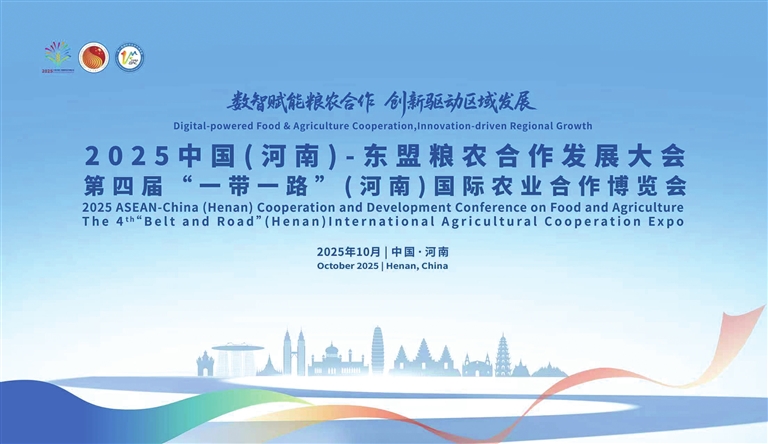
Group 1 - The 2025 China (Henan) - ASEAN Agricultural Cooperation Development Conference and the 4th "Belt and Road" (Henan) International Agricultural Cooperation Expo will be held from October 12 to 14, 2025, in Zhengzhou, focusing on "Digital Intelligence Empowering Agricultural Cooperation and Innovation-Driven Regional Development" [1] - The expo will feature nine exhibition areas, including international sections for ASEAN countries, global agricultural product trade, and international cooperation demonstration, as well as domestic sections for rural revitalization, smart agriculture, and agricultural technology innovation [1] - Henan province, as a major agricultural and grain-producing area, prioritizes food security and domestic supply while connecting with global markets, with ASEAN being its largest trading partner [1] Group 2 - In the first half of 2025, the trade volume between Henan and ASEAN reached 55.22 billion yuan, an increase of 9.9% [1] - In 2024, Henan's agricultural product exports to ASEAN countries amounted to 640 million USD, accounting for 30% of the province's total agricultural exports, with Malaysia, Indonesia, Vietnam, and Thailand being key markets [1] - Major agricultural exports from Henan include edible fungi, garlic, poultry, and chili peppers [1]
2025中国(河南)-东盟粮农合作发展大会暨第四届“一带一路”(河南)国际农业合作博览会在郑州启幕 数智赋能粮农合作 创新驱动区域发展
He Nan Ri Bao· 2025-10-12 23:36
Core Insights - The Central Plains region, particularly Henan, plays a crucial role in China's agricultural landscape, contributing over 65 million tons of grain annually, which accounts for 10% of the national total [2] - Henan is recognized as a "grain warehouse" and is a leading producer of wheat, oilseeds, mushrooms, and pork, with a total agricultural output value projected to reach 1.06 trillion yuan in 2024 [2] - The upcoming 2025 China (Henan)-ASEAN Agricultural Cooperation Development Conference aims to enhance international agricultural collaboration and promote digital agriculture [3][4] Agricultural Production and Economic Impact - Henan's agricultural production includes over 30 million tons of raw grain and processed products annually, reinforcing its status as a key player in ensuring national food security [2] - The province's agricultural exports have consistently ranked among the top ten in the country for five consecutive years, showcasing the global reach of "Yunong Superior Products" [2] - The total agricultural output value positions Henan as the second highest in China, highlighting its economic significance [2] Conference Overview - The conference will take place from October 12 to 14, 2025, in Zhengzhou, focusing on themes such as food security, agricultural modernization, and smart agriculture [3][4] - High-profile attendees, including government officials, experts, and industry leaders, will discuss major agricultural issues and share the latest developments [3][4] - The event will feature various activities, including signing agreements between Chinese and foreign enterprises, emphasizing the potential for deepened cooperation with ASEAN countries [4][5] Exhibition and Engagement - The exhibition will cover nearly 30,000 square meters, showcasing innovations across the agricultural supply chain, including smart agriculture and agricultural technology [5][6] - Attendees will have the opportunity to experience local cuisine and traditional crafts, fostering cultural exchange alongside agricultural discussions [6] - The event aims to create an interactive experience that combines agricultural technology with public engagement, enhancing understanding of modern agricultural practices [6] Strategic Importance - The conference is part of Henan's strategy to strengthen its position as a core agricultural production area and enhance international cooperation [7] - By sharing agricultural technology and promoting trade, Henan aims to solidify its role as a cornerstone of national food security and agricultural modernization [7] - The event is expected to facilitate collaboration between China and ASEAN countries, contributing to global agricultural development and food security [7]
河南与东盟的“双向奔赴”
He Nan Ri Bao· 2025-10-12 23:36
Core Viewpoint - The 2025 China (Henan) - ASEAN Agricultural Cooperation Development Conference and the 4th "Belt and Road" (Henan) International Agricultural Cooperation Expo will be held in Zhengzhou from October 12 to 14, 2025, focusing on "Digital Intelligence Empowering Agricultural Cooperation and Innovation Driving Regional Development" to enhance Henan's integration into the national market and the Belt and Road Initiative [1] Group 1: Transportation and Trade - Henan's geographical advantages facilitate significant transportation networks, including high-speed rail and new maritime routes, enhancing trade efficiency [2] - The Zhengzhou-Bangkok cargo charter enables rapid delivery of Thai shrimp to China, covering a 200-kilometer radius in just two hours [2] - The China-Europe Railway Express (Zhengzhou) extends south to Laos, connecting with the ASEAN railway network, promoting ongoing economic cooperation [2] Group 2: Agricultural Cooperation - The collaboration between Henan and ASEAN has led to a rich exchange of agricultural products, with tropical fruits from ASEAN entering Henan markets and Henan's agricultural products gaining access to ASEAN supermarkets [3] - In 2024, Henan's agricultural exports to ASEAN countries reached $640 million, accounting for 30% of the province's total agricultural exports, making ASEAN the largest export market for Henan [3] - The ongoing RCEP benefits and the complementary industrial structures between Henan and ASEAN position Henan as a crucial support for China's engagement with the ASEAN market [3]
豫宴东盟 一席和韵
He Nan Ri Bao· 2025-10-12 23:36
Core Insights - Henan province is committed to ensuring food security and connecting domestic supply with global markets, leveraging its status as a major agricultural and grain-producing region [3][4]. Group 1: Agricultural Production - Henan's grain production has consistently exceeded 130 billion jin (approximately 65 million tons) for eight consecutive years, with stable planting areas around 1.6 million acres [4]. - The province is transitioning from traditional agriculture to smart modern agriculture, with expectations that by the end of the 14th Five-Year Plan, the contribution rate of agricultural technology will surpass 67% and the coverage rate of quality seeds will remain above 97% [4]. Group 2: Agricultural Processing - Henan is focusing on enhancing its agricultural processing industry, aiming to transform grains, oils, and meat products into convenient and delicious food and beverages, targeting a trillion-yuan industry [5]. - The province has over 6,103 large-scale agricultural processing enterprises, ranking second nationally, with 119 national-level agricultural industrialization leading enterprises [5]. Group 3: International Trade and Cooperation - In 2024, Henan's trade with ASEAN countries is projected to reach 109.15 billion yuan, making ASEAN its largest trading partner, with a 9.9% increase in trade volume in the first half of the year [8]. - Henan's agricultural exports to ASEAN are expected to total 640 million USD in 2024, accounting for 30% of the province's total agricultural exports, with key products including edible fungi, garlic, poultry, and chili peppers [15]. Group 4: Agricultural Innovation and Events - The 2025 China (Henan) - ASEAN Grain and Agricultural Cooperation Development Conference will take place from October 12 to 14, focusing on "Smart Empowerment of Grain and Agricultural Cooperation" [8]. - The conference will feature nine major exhibition areas, including international and domestic sections, showcasing agricultural technology innovations and products [10].

成都市温江区国家农业科技园区携手企业共拓产品“出海”新通道
Sou Hu Cai Jing· 2025-10-12 13:40
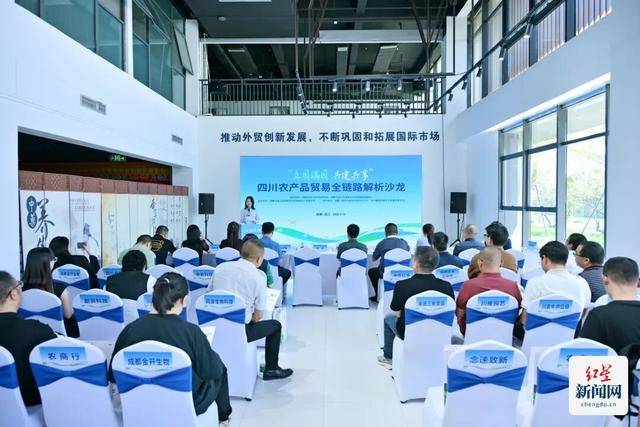
Core Insights - The event "Building Gardens Together" aims to explore new paths and opportunities for Sichuan agricultural product trade, facilitating market expansion and mutual benefits for enterprises [1] Group 1: Event Overview - The event was guided by the Chengdu Wenjiang District National Agricultural Science and Technology Park Management Committee and hosted by the Chengdu Wenjiang District National Agricultural Science and Technology Park Industry Association [1] - Participants visited modern facilities in the Sichuan Agricultural Products Import and Export Park, including the smart cold chain transfer area and cross-border product inspection area [3] Group 2: Strategic Collaborations - A signing ceremony for strategic cooperation agreements took place, involving Sichuan Longkang High-tech Agricultural Development Co., Sichuan Yangtze River Group's Renewal Division, and Alibaba International Station's service provider Shuxia Network [5] - The collaboration aims to develop three main channels: live e-commerce, digital foreign trade, and service empowerment for Sichuan agricultural enterprises [5] Group 3: Digital Trade Platform - The Sichuan Agricultural Products Trade Comprehensive Service Platform is highlighted as the first provincial-level digital platform for cross-border agricultural trade in China, providing comprehensive support for Sichuan products going abroad [3][7] - Experts from Alibaba International Station shared insights on using artificial intelligence to enhance foreign trade efficiency and provided practical guidance on logistics, customs, and tax refund processes [5]
青海瑞农商贸有限公司成立 注册资本20万人民币
Sou Hu Cai Jing· 2025-10-11 13:45
Core Insights - Qinghai Ruinong Commerce Co., Ltd. has been established with a registered capital of 200,000 RMB [1] - The legal representative of the company is Ma Guoquan [1] Business Scope - The company is engaged in food sales and livestock breeding, which requires approval from relevant authorities before operations can commence [1] - General projects include sales of agricultural and sideline products, wholesale of edible agricultural products, and retail of pre-packaged food [1] - The company also focuses on the initial processing of edible agricultural products, grain sales, livestock sales, and related services such as production, sales, processing, transportation, and storage of agricultural products [1]
58种热带水果批量进京,从采摘到上架新发地最快仅需72小时
Xin Jing Bao· 2025-10-11 07:47
Core Insights - The 2025 Smart Agriculture and Service Trade Conference and the 3rd Xinfadi Agricultural Products Expo took place in Beijing, showcasing the integration of digital technology with the agricultural industry [1][2] - The event featured approximately 200 participating companies and highlighted innovations in smart agriculture, including a cooking robot and smart planting solutions [1][2] Group 1: Event Overview - The conference was themed "Smart Leadership, Industry Integration" and included two professional promotion sessions and four themed exhibition areas [1] - Featured products included specialty agricultural products from eight provinces, such as Shanxi's Yulu fragrant pear and Hainan's coconut [1] Group 2: Technological Innovations - A cooking robot demonstrated the ability to prepare classic dishes from the Sichuan and Hunan cuisines in just five minutes using data-driven recipes [1] - The smart planting exhibition showcased a "smart hydroponic planting cabin" that allows for soil-free cultivation and automatic lighting and watering, providing innovative solutions for urban agriculture [1] Group 3: Logistics and Supply Chain - The event established a temperature-controlled logistics system from production to market, enabling the rapid delivery of tropical fruits like Thai mangosteen and Vietnamese durian to Beijing [2] - The logistics improvements resulted in a 15% price reduction compared to traditional channels, enhancing the freshness and affordability of imported fruits for consumers [2] Group 4: Strategic Partnerships - Multiple strategic cooperation agreements were signed during the event, including partnerships with Beijing's seed industry, insurance companies, and restaurant associations [2] - A total of 37 industry chain collaborations were established, with a total investment exceeding 1.2 billion yuan, focusing on areas such as smart planting and digital warehousing [2]
如何看待有消息称美国不准备降低对华关税税率
Sou Hu Cai Jing· 2025-10-10 15:01
Core Viewpoint - The U.S. government, under President Trump, is maintaining a hardline stance on tariffs against China, indicating a desire for a long-term compromise without significant concessions [2][3][4] Group 1: Tariff Strategy - The U.S. plans to keep the 55% tariff on China as part of the trade agreement, with no intention to remove the tariffs imposed earlier this year [2][3] - The U.S. aims to persuade China to increase purchases of American goods, such as agricultural products and LNG, while maintaining restrictions on high-tech exports to China [3][4] Group 2: Negotiation Principles - Trump's negotiation strategy is characterized by "extreme pressure" and "high demands," with the recent statements reflecting these principles [4][5] - The focus of future negotiations will shift from whether to engage in a trade war to the conditions under which a trade war can be avoided [5] Group 3: Long-term Trade Relations - The U.S. seeks to normalize the "Fentanyl tariff" to maintain a lower tariff rate on Chinese goods compared to U.S. goods, while China aims to counter this by challenging the U.S. on its tariff practices [5][6] - The broader context of U.S.-China trade relations includes non-tariff barriers and technology restrictions, which are seen as significant obstacles beyond just tariff levels [6]