
脑机接口

Search documents
六大部委释放四大关键信号 这些产业要飞
2 1 Shi Ji Jing Ji Bao Dao· 2026-01-13 15:42
Core Viewpoint - The Chinese government is focusing on stabilizing economic growth and expanding domestic demand in 2026, marking the beginning of the "14th Five-Year Plan" period, with key policies aimed at supporting technological innovation and stabilizing the real estate and stock markets [1] Group 1: Economic Policy Signals - Key ministries, including the National Development and Reform Commission, Ministry of Finance, and others, have released four major policy signals for 2026: stabilizing growth, expanding domestic demand, supporting technological innovation, and stabilizing the real estate and stock markets [1] - The year 2026 is seen as crucial for achieving a good start to the "14th Five-Year Plan" [1] Group 2: Investment in Emerging Industries - The National Venture Capital Guidance Fund is set to officially operate by December 26, 2025, with an expected investment scale exceeding 1 trillion yuan, focusing on "hard technology" sectors such as integrated circuits, quantum technology, biomedicine, brain-computer interfaces, and aerospace [1] - The Ministry of Industry and Information Technology plans to implement actions to develop and strengthen emerging industries, targeting key areas like integrated circuits, new displays, new materials, aerospace, low-altitude economy, and biomedicine [1] Group 3: Artificial Intelligence Initiatives - The Beijing Municipal Development and Reform Commission has announced an action plan for building an artificial intelligence innovation hub, aiming to add over 10 listed companies and more than 20 unicorns in the AI sector within two years [1]
城市24小时 | 坐标中部大省,脑机“超级工厂”落地
Mei Ri Jing Ji Xin Wen· 2026-01-13 15:30
每经记者|杨欢 每经编辑|刘艳美 据文汇报消息,1月13日,国内植入式柔性脑机接口领军企业上海脑虎科技有限公司的"超级工厂"项目在江西省赣江新区正式动 工,预计于2026年下半年建成并投入运营。这标志着我国在这一前沿科技领域从实验室向规模化量产迈出了关键一步。 上海脑虎科技有限公司成立于2021年,是目前全球唯一同时拥有实时汉语及运动解码技术的脑机接口企业,目前已完成了从柔 性电极、脑电芯片、植入体、手术机器人到脑机操作系统的全链条自主研发,是除了埃隆·马斯克的美国神经联接公司 (Neuralink)以外,国内首家、国际第二家有脑机接口全链条量产能力的企业。此前,脑虎研发的国内首款、全球第二款"全植 入、全无线、全功能"脑机接口已成功完成首例临床试验,计划于今年开展多中心临床研究。 解读:2025年被称为"脑机接口元年"。工业和信息化部等七部委联合印发《关于推动脑机接口产业创新发展的实施意见》,在 国家层面首次系统性规划脑机接口产业发展路径。此后在国家"十五五"规划建议中也提出,前瞻布局未来产业,将"脑机接 口"列为新的经济增长点之一。 从地方政策来看,早在2023年,脑机接口就被纳入江西省未来产业规划;20 ...

坐标中部大省,脑机“超级工厂”落地
Mei Ri Jing Ji Xin Wen· 2026-01-13 15:30
"超级工厂"之所以落地江西,除了当地较低的人力与土地成本、丰富的原材料资源外,也得益于其集成 电路、医疗器械、生物医药等完善的制造业体系——如吉安合力泰(002217)的精密传感器、赣州同兴 达(002845)的嵌入式系统、南昌晶能光电的光电子器件等,为脑机接口设备提供了关键配套支持。 江西地处长江中下游,与长三角地区相邻,是长三角一体化发展的腹地。此前江西就曾提出,要促进更 多科技成果在江西转化落地。最新公布的江西"十五五"规划建议还提出,主动对接和服务长三角一体化 发展,搭建跨区域产业转移合作平台,健全利益共享机制。 以此次脑虎科技"超级工厂"为例,作为"强磁核",其将联动上下游供应链企业,在赣江新区打造覆盖核 心部件、研发服务与临床应用的完整产业矩阵,加速形成具有全球竞争力的脑机接口产业集群。 从地方政策来看,早在2023年,脑机接口就被纳入江西省未来产业规划;2025年11月,《江西省加快脑 机接口技术和产业发展若干措施》出台,提出了11条具体举措,要拥抱这个"超级风口",抢抓未来产业 机遇。 从企业落地来看,江西的布局还可以继续倒推——2019年,国内侵入式脑机接口领域尚处冷门时,时任 中国科学院上 ...
优刻得:脑虎科技是公司多年战略合作伙伴
Zheng Quan Ri Bao Zhi Sheng· 2026-01-13 13:10
Core Viewpoint - The collaboration between Youke De and Brain Tiger Technology is highlighted, focusing on their strategic partnership in advancing cloud processing of brain data and exploring applications of brain-computer interface technology in medical rehabilitation [1] Group 1: Strategic Partnership - Youke De has established a strategic partnership with Brain Tiger Technology since 2022, aimed at promoting the cloud processing of brain data [1] - In 2023, both companies, along with Fudan University Huashan Hospital, were selected as members of the Shanghai Future Industry Brain-Computer Interface Expert Committee [1] Group 2: Research and Development - In 2024, Youke De and Brain Tiger Technology deepened their collaboration by participating in significant research project applications in the brain-computer interface field in Shanghai [1] - The joint development of an "implantable speech synthesis brain-computer interface product" aims to assist patients with aphasia in regaining some language functions [1] Group 3: Technological Infrastructure - Youke De has successfully built a GPU computing platform and a corpus data management system, leveraging its high-performance computing and reliable data storage capabilities [1] - As a leading neutral third-party cloud computing service provider in China, Youke De efficiently provides intelligent computing power to various industries while exploring AI application scenarios and commercial pathways [1]

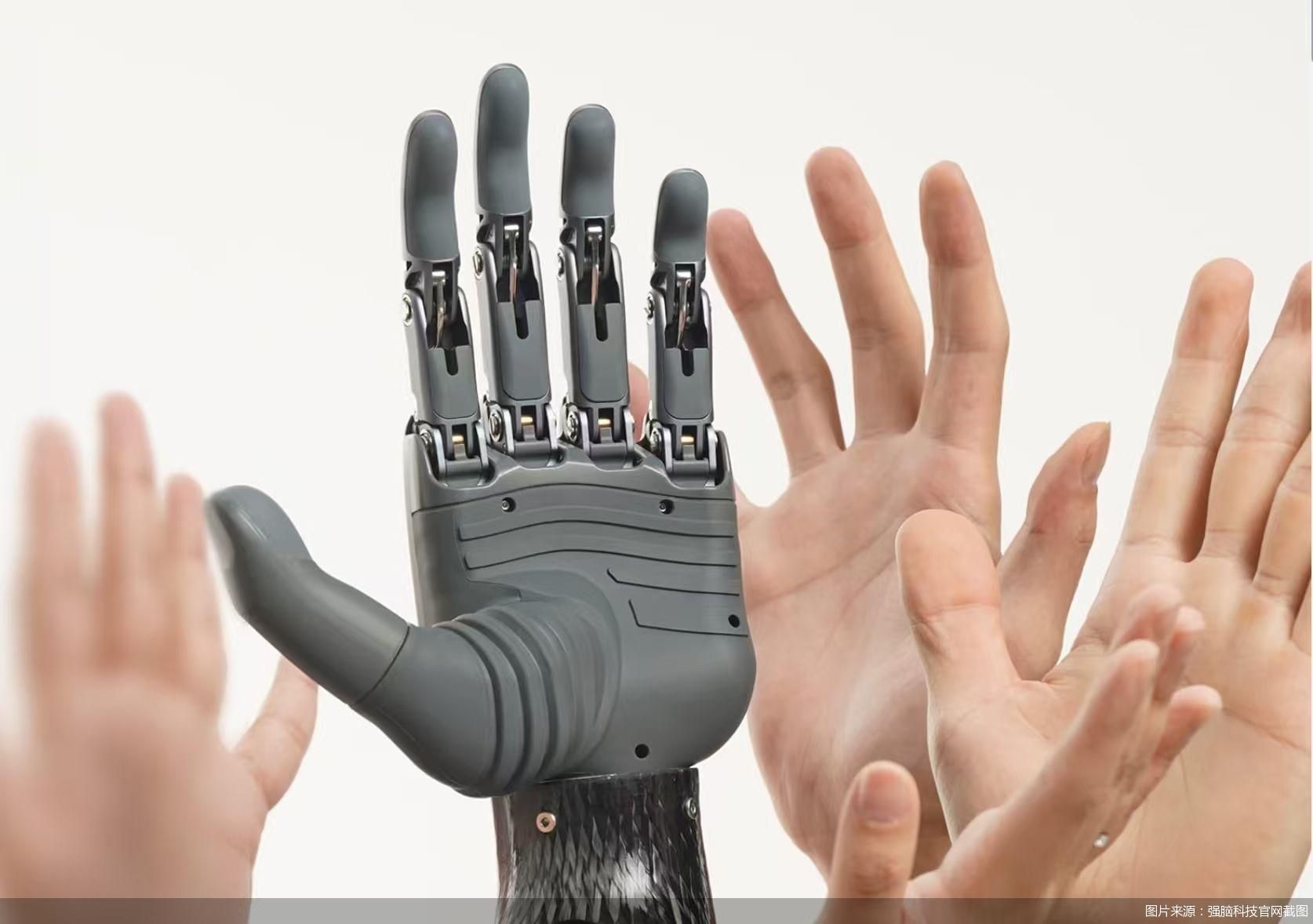
脑机接口走出实验室,强脑科技递表港交所
Bei Jing Shang Bao· 2026-01-13 12:15
Group 1 - Strong Brain Technology has submitted a confidential IPO application to the Hong Kong Stock Exchange, with expectations that its listing is only a matter of time [2] - The company recently completed approximately 2 billion yuan in Pre-IPO financing, achieving a post-investment valuation of over 1.3 billion USD [2] - The global brain-computer interface (BCI) market is experiencing significant growth, with a compound annual growth rate (CAGR) of over 13% from 2019 to 2023, and is projected to reach 7.63 billion USD by 2029 [4] Group 2 - The funds raised from the recent financing will be used to accelerate core technology research and development, extreme engineering breakthroughs, and product scaling [3] - Strong Brain Technology aims to help 1 million physically disabled individuals regain daily life through neural-controlled prosthetics and improve the conditions of 10 million patients suffering from brain-related disorders [3] - The company differentiates itself from competitors like Neuralink by focusing on non-invasive solutions and developing super sensors to detect human neural signals [4] Group 3 - The Chinese government has included brain-computer interfaces in its national strategic planning, indicating a shift from laboratory research to a national priority [4] - The stock market has reacted to the BCI concept, with companies like Innovation Medical and Rock Mountain Technology experiencing consecutive trading gains [4] - Recent inquiries from the Shanghai Stock Exchange regarding partnerships in the BCI space highlight the regulatory scrutiny and market interest surrounding this technology [5]
新型储能纳入政府投资基金投向!国家首次作出系统规范
中关村储能产业技术联盟· 2026-01-13 12:15
Core Viewpoint - The article discusses the implementation of a new regulatory framework for government investment funds in China, aimed at optimizing their layout and guiding investment directions to support national strategies and industrial upgrades [2][3][4]. Group 1: Government Investment Fund Overview - Government investment funds are established by various levels of government to guide social capital in supporting industry development and innovation through market-oriented methods such as equity investment [2][12]. - The new framework includes a systematic approach to fund layout and investment direction, marking the first national-level regulation of government investment funds [2][4]. Group 2: Supported Investment Areas - The framework identifies key investment areas, including: - Emerging and future industries such as information technology, new energy, advanced manufacturing, and artificial intelligence [2][3]. - Upgrading traditional industries and supporting high-quality development in manufacturing [3][4]. - Promoting the digital economy through initiatives like "AI+" and the application of 5G technology [3][4]. Group 3: Policy Measures - The framework outlines 14 policy measures focusing on three main aspects: where to invest, how to invest, and who manages the funds [3][4]. - It emphasizes early, small, long-term investments in hard technology and aims to prevent homogeneous competition and crowding out of social capital [11][12]. Group 4: Evaluation Management - An evaluation management method has been established to assess the investment direction of government funds, focusing on compliance with national planning and industry directories [4][5]. - The evaluation system includes three main indicators: policy compliance (60% weight), optimization of productivity layout (30% weight), and policy execution capability (10% weight) [6][7]. Group 5: Specific Evaluation Indicators - The evaluation indicators cover aspects such as support for new productivity, technology innovation, green development, and the promotion of private investment [29][33]. - Specific metrics include the proportion of investments in encouraged industries, the effectiveness of fund management, and the impact on social welfare [29][33][40].
马斯克科技生态链系列之国内深度绑定解码
Xin Lang Cai Jing· 2026-01-13 11:54
Core Insights - Elon Musk's technological ecosystem is rapidly evolving, integrating six key industries: commercial space (SpaceX), brain-machine interfaces (Neuralink), humanoid robots (Optimus), autonomous driving (FSD), artificial intelligence (X AI), and hyperloop (The Boring Company) [1][19] - The technological advancements and mass production efforts are reshaping the global tech industry landscape and presenting certain investment opportunities for domestic companies in related sectors [1][19] Group 1: Deep Binding from Components to System Integration - The production of Tesla's Optimus robot is set to begin, with a target of 100,000 units by 2026, but the localization rate of core components is still below 30%, leaving significant market penetration opportunities for domestic high-barrier companies [21] - Top Group is a core supplier for Tesla's vehicle chassis and has entered the testing phase for Optimus's rotating joints, showcasing strong system integration capabilities [21] - Greentech Harmonic is a leading global harmonic reducer supplier, with its Y series products passing Tesla's extreme conditions test and set to deliver 10,000 units by 2025 [21] - Sanhua Intelligent Control is leveraging its experience in automotive thermal management to quickly enter the robot electromechanical actuator and thermal management systems market [21] - Mingzhi Electric is one of the few companies capable of mass-producing hollow cup motors, which are critical for achieving human-like dexterity in robotic hands [21] Group 2: L5 Autonomous Driving - Hardware and Software Integration - Tesla's Full Self-Driving (FSD) is accelerating its rollout, with deep participation from the Chinese supply chain in hardware iteration and software adaptation [22] - Desay SV is supplying the autonomous driving domain controller to Tesla's North American supply chain, with FSD-related orders expected to reach 1.2 billion yuan by 2025 [22] - Lianchuang Electronics is the main supplier of vehicle-mounted lenses for Tesla's HW4.0, holding approximately 60% market share [22] - Zhongke Chuangda, as a leading vehicle operating system provider, is continuously optimizing AI model efficiency on Tesla's platform to support smooth FSD software deployment [22] Group 3: Technical Collaboration - Patent Sharing and Capability Building - Some companies, while not supplying on a large scale, are building long-term barriers through technical cooperation [23] - Changying Precision has reached a cross-licensing agreement with Tesla regarding flexible sensors, enhancing its technological moat in robot perception [23] - Sanhua Intelligent Control is jointly developing actuator efficiency optimization solutions to enhance Optimus's operational endurance [24] - Yanshan Technology's pure vision autonomous driving solution aligns closely with FSD technology, currently supporting Tesla indirectly through international Tier 1 suppliers [24] Group 4: Potential Tracks - From Benchmarking to Entry - In commercial space, Chinese companies are gaining certification in key areas as SpaceX's Starlink accelerates deployment [25] - Tongyu Communication has developed a microwifi antenna module that has passed SpaceX interface certification, expected to supply 60% of Starlink's dedicated modules starting Q3 2025 [25] - Xinyi Communication's subsidiary is the exclusive supplier of high-frequency connectors for Starlink ground terminals, with annual revenue projected to exceed 1.5 billion yuan [25] - Blue Arrow Aerospace is the only domestic company mastering reusable liquid oxygen-methane rocket technology, establishing a significant barrier in low-cost, high-frequency launches [25] Group 5: Brain-Machine Interfaces - Complementary Paths for Cooperation - Neuralink focuses on invasive methods, while Chinese companies are exploring non-invasive and clinical translation paths [30] - Yanshan Technology's non-invasive BCI technology complements Neuralink's approach, indicating clear cooperation potential if Neuralink expands into consumer products [30] - Hanwei Technology's subsidiary has developed ultra-flexible sensors that are cost-competitive and have entered the international supply chain [30] - Sanbo Brain Science is the only private hospital in China with clinical implantation qualifications for brain-machine interfaces, performing over 30,000 surgeries annually [30] Group 6: Indirect Competition and Strategic Value - Some companies, while not directly collaborating with Musk's ecosystem, play a crucial role in national projects, fulfilling "domestic substitution" responsibilities [31] - China Satellite and China Satcom are leading the "Star Network Project," competing with Starlink in satellite manufacturing and operations [31] - Cambrian is developing AI chips that meet xAI's computational needs, presenting potential entry points if Tesla or xAI expands their supply chains [32] - Four-dimensional Map has over 60% market share in high-precision mapping, providing core positioning services for Tesla in China [33] Group 7: Selection Logic for "Invisible Champions" - Companies that meet the criteria of "technological leadership, low public recognition, high industry relevance, and sustained innovation barriers" have emerged as key players [34] - Mingzhi Electric is a global leader in hollow cup motors, essential for dexterous robotic hands [34] - Sanhua Intelligent Control is a dual leader in thermal management and actuators, validated by Tesla [34] - Top Group excels in system integration from chassis to joint assembly, showcasing deep binding [34] - Industrial Fulian is the largest server manufacturer globally, benefiting directly from xAI's computational expansion [34] - Blue Arrow Aerospace is the only player in liquid oxygen-methane reusable rockets, shaping the future of China's commercial space industry [34]

强脑科技或已秘密递交香港上市申请,与中金、瑞银合作,有望成“杭州六小龙”首家上市公司
机器人圈· 2026-01-13 09:41
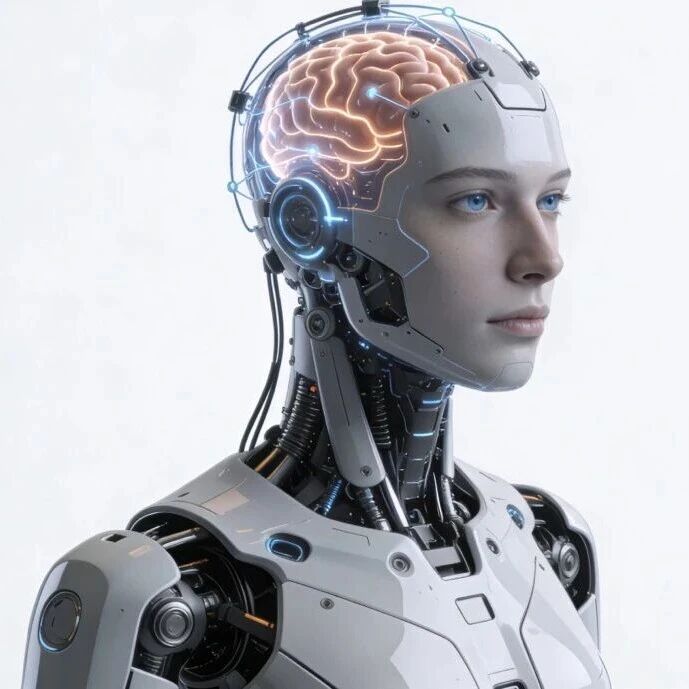
Core Viewpoint - Strong Brain Technology is preparing for an IPO in Hong Kong, potentially raising hundreds of millions of dollars, collaborating with China International Capital Corporation and UBS for the issuance [1][3]. Group 1: Company Overview - Strong Brain Technology is expected to be the first company listed among the "Six Little Dragons of Hangzhou" [2]. - The company recently completed approximately 2 billion yuan in financing, marking the second-largest funding round globally in the brain-computer interface sector, following Neuralink [2]. - The investor lineup includes prominent institutions such as IDG, Huaden International, and major companies like Lens Technology and Lingyi iTech [2]. Group 2: Product and Technology - Strong Brain Technology focuses on breakthroughs in brain-computer interface technology, aiming to establish communication pathways between the brain and external devices to assist individuals with disabilities [3][5]. - The company has received FDA and CE certifications, making it one of the largest investors in brain-computer interface R&D globally [2]. - Its core product, a super sensor, can detect weak signals from the brain without invasive procedures, enabling the development of neuro-controlled prosthetics for individuals with limb disabilities [5]. Group 3: Future Prospects - The company plans to continue its focus on non-invasive brain-computer interfaces, targeting solutions for conditions such as depression and Alzheimer's disease [6]. - Strong Brain Technology aims to help 1 million individuals with limb disabilities regain mobility and assist 10 million patients suffering from brain-related conditions like Alzheimer's and autism over the next 5 to 10 years [5].
哈佛学霸创办的杭州六小龙,要IPO了
Xin Lang Cai Jing· 2026-01-13 09:38
Core Viewpoint - Qiangnao Technology is reportedly preparing for an IPO in Hong Kong, aiming to raise a significant amount of capital, following a recent financing round that set a record in the brain-computer interface sector, second only to Neuralink [1][10]. Company Overview - Qiangnao Technology is recognized as China's first unicorn in the brain-computer interface space, focusing on enabling users to control machines through thought [11][12]. - The company adopts a non-invasive approach, contrasting with Neuralink's invasive method, which involves surgical implantation of chips in the brain [12][22]. Financial Projections - Following a recent financing round, Qiangnao's valuation exceeded $1.3 billion (approximately 9.2 billion RMB), with analysts estimating a potential market capitalization of 100 billion RMB upon IPO, and possibly reaching 200-300 billion RMB under high demand [3][13]. - Revenue projections for 2025 suggest Qiangnao could surpass 800 million RMB, with a net profit of approximately 120 million RMB, indicating a year-on-year growth rate exceeding 100% [3][13]. Founder Background - The founder, Han Bicheng, is a 1987-born entrepreneur from Heilongjiang, who studied at the Korea Advanced Institute of Science and Technology and later pursued a PhD at Harvard University [14][17]. - Han's early experiences in a medical research center influenced his vision of redefining human interaction with technology through brain-computer interfaces [15][18]. Market Position and Competition - Qiangnao Technology and Neuralink are the two highest-funded companies in the global brain-computer interface sector, representing distinct technological paths and commercialization strategies [9][22]. - The company is positioned to potentially become the first among the "Hangzhou Six" to go public, leveraging a shorter review process in Hong Kong compared to A-share listings [21][22]. Vision and Future Outlook - Qiangnao has articulated a vision for brain-computer interface technology to become as transformative as electricity in the modern era, suggesting it could revolutionize various industries once fully developed [22].

杨德龙:2026年市场行情开局良好
Xin Lang Cai Jing· 2026-01-13 09:32
Core Viewpoint - The market in 2026 is expected to continue the trends of 2025, with a more diversified performance across various sectors, moving away from the "barbell" strategy observed in 2025, where low-valuation, high-dividend sectors like banks and high-performing tech stocks dominated [1][10]. Group 1: Market Trends and Investor Behavior - In 2025, the market exhibited a "barbell" characteristic, with significant gains in low-valuation sectors and standout performance in tech stocks, while traditional sectors showed lackluster performance [1][10]. - Many investors did not achieve satisfactory returns in 2025 due to inadequate allocation towards the two main investment themes, leading to lower overall returns and even losses [1][10]. - The strong performance of the market in 2026 is anticipated to enhance investor confidence and improve the overall market sentiment [1][8]. Group 2: Capital Market Dynamics - A significant shift in resident savings is expected, with a large influx of funds into the capital market, driven by declining savings rates and limited investment opportunities in traditional sectors [2][11]. - In 2025, new fund issuance exceeded 1 trillion yuan, primarily in equity funds, marking a notable shift where equity fund sales surpassed fixed-income products for the first time [2][11]. - The number of new stock accounts opened in 2025 reached over 27 million, indicating strong investor interest and engagement in the capital market [2][11]. Group 3: Economic Impact and Consumer Behavior - The capital market's recovery is seen as a crucial mechanism for boosting consumer spending, as families recover from significant wealth losses due to declining real estate values [3][12]. - The market's performance is expected to help stabilize the real estate sector, particularly in core areas of first-tier cities, while many regions still face oversupply issues [3][12]. - The ongoing bull market is viewed as a vital tool for enhancing household financial health and increasing disposable income, thereby stimulating consumption [3][12]. Group 4: Technological Innovation and Investment Opportunities - The strengthening of the stock market is projected to facilitate a resurgence in IPOs, allowing more tech innovation companies to access capital [4][13]. - The focus of the "14th Five-Year Plan" aligns with sectors that performed well in 2025, such as semiconductors and quantum technology, indicating significant opportunities for growth in these areas [4][13]. - The AI technology sector is still in its early stages, with substantial potential for growth as it moves towards large-scale commercialization [5][14]. Group 5: Investment Strategy and Sector Differentiation - Investment in tech stocks in 2026 will require a more differentiated approach, focusing on companies with core technologies and real application potential, as opposed to those that are merely conceptual [6][15]. - The human-robotics sector is expected to shift from a phase of expectation to one of actual order fulfillment, with companies securing contracts from leading manufacturers likely to see greater growth [6][15]. - Other tech sectors are anticipated to follow a similar trajectory, with software companies and data-related enterprises poised for growth as the industry evolves [7][15]. Group 6: Overall Market Sentiment - The market is expected to see an increase in profitability and investor satisfaction, contributing to a sustained recovery in market confidence [8][16].