中式餐饮

Search documents
贾国龙,认错了
商业洞察· 2026-01-02 09:21
以下文章来源于华商韬略 ,作者华商韬略 冬至那天,他终于卸下所有企业家的包袱,在接受《南方周末》的专访时,开诚布公地道歉:"我 认错,我向顾客认错,向员工认错,也向我自己认错。" 华商韬略 . 聚焦标杆与热点、解构趋势与韬略 作者: 张静波 来源:华商韬略 58岁的贾国龙,应该已经发自内心地意识到: 自己不再天然站在"正确"的一边。 ------------------------------ 这个行业、这代消费者、这套商业规则,乃至正确与错误的底层逻辑,都已经: 悄然换挡! 01 翻车 贾国龙用了100天沉默,不是思考如何反驳,而是在时代的耳光下被迫复盘。 在一个习惯用胜负、成败、对错来定义企业家的环境里,这句话并不讨巧。 但恰恰是这句看似"示弱"的话,让一场发酵数月的舆情危机,从单纯的品牌公关事故,转向了一次 值得被认真讨论的商业样本。 如果只看履历,贾国龙几乎是中国餐饮创业的标准成功模板。 1988年,他从大学退学,揣着5500元,在内蒙古临河的街头,开出第一家小饭馆。 此后,他勇闯北京,在竞争惨烈的京城餐饮市场上,打磨菜品、跑通了单店模式。 再用近三十年时间,将一家地方小馆子,做成在全国拥有360多家 ...


下一个湘菜?不,江西菜正进化成“超级物种”
3 6 Ke· 2025-12-31 03:23
Core Viewpoint - Jiangxi cuisine is evolving into a "super species," blending traditional elements with modern dining trends, appealing to younger consumers and creating a unique market presence [1][11]. Group 1: Evolution of Jiangxi Cuisine - Jiangxi cuisine is transitioning from street-side small eateries to upscale dining experiences, with restaurants like Hu Cha attracting long queues in urban centers [1][8]. - The integration of local culture, such as Jingdezhen ceramics, with contemporary aesthetics enhances the dining experience, making it visually appealing for social media sharing [1][3]. - The emergence of "mountain wild" Jiangxi cuisine, which emphasizes natural ingredients like wild vegetables and mushrooms, represents a new niche within the market [5][9]. Group 2: Market Trends and Consumer Preferences - The popularity of spicy flavors in Jiangxi cuisine is becoming a significant talking point among consumers, with many restaurants capitalizing on this trend [5][11]. - The number of Jiangxi small fry restaurants has surged, with over 27,000 establishments projected by August 2025, indicating a robust growth trajectory in the sector [11]. - The evolution of Jiangxi cuisine is marked by a diversification of branding strategies, with new concepts like "mountain wild" and "beautiful rice" emerging alongside traditional offerings [9][11]. Group 3: Challenges and Comparisons - Despite the growth, Jiangxi cuisine faces challenges in establishing a strong brand identity compared to other regional cuisines like Hunan, which has successfully leveraged signature dishes to build recognition [13][15]. - The lack of a standout dish in Jiangxi cuisine hampers its ability to create a strong consumer connection, unlike Hunan cuisine, which has popularized specific items that resonate with diners [13][15]. - The future of Jiangxi cuisine's market presence hinges on its ability to solidify consumer recognition and develop a compelling brand narrative [15].

上市加持,出海提速:遇见小面新加坡首店启幕,剑指全球500店后的新征程
Sou Hu Cai Jing· 2025-12-30 14:46
Core Insights - The global restaurant market is expanding, and Chinese cuisine is transitioning from "single-point breakthroughs" to "systematic competition" in its international expansion strategy [1][10] - The opening of the 500th store of "Yujian Xiaomian" in Singapore marks a significant step in its globalization strategy post-Hong Kong listing, providing a new model for the global development of Chinese restaurant chains [1][10] Market Opportunities - The international restaurant service market is projected to reach $3.8 trillion by 2026, with Chinese cuisine gaining increasing market share due to its unique flavors and cultural appeal [3] - The acceptance and popularity of Chinese cuisine among local consumers in Southeast Asia are rising, creating a favorable market foundation for brands to expand internationally [3] Market Challenges - The Singapore restaurant market presents three main challenges: high labor costs, stringent regulatory frameworks, and diverse consumer demands [4] - Cross-border supply chain issues, including high logistics costs and sourcing difficulties for quality local ingredients, pose significant hurdles for brands like "Yujian Xiaomian" in their international ventures [4] Systematic Approach to Expansion - "Yujian Xiaomian" has developed a "systematic overseas expansion" solution, leveraging its digital and supply chain capabilities rather than traditional franchise models [6] - The brand has implemented a comprehensive digital empowerment system in overseas stores, enhancing operational efficiency through features like digital ordering, smart scheduling, and real-time data visualization [6][10] Supply Chain Strategy - The brand's supply chain strategy involves deep partnerships with large-scale suppliers to ensure efficient procurement and distribution of ingredients [7] - This approach allows for cost-effective sourcing, reduced transportation times, and the ability to support future expansion in other Southeast Asian markets [8] Conclusion - The systematic overseas expansion practices of "Yujian Xiaomian" provide valuable insights for the global development of Chinese cuisine, demonstrating that success can be achieved through a combination of digital operations, scalable supply chains, and localized management [10]
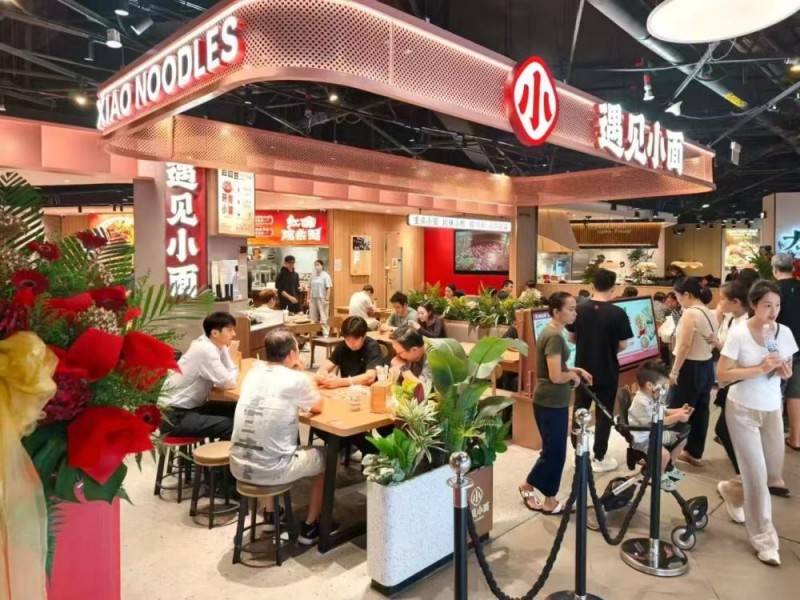
遇见小面大涨14% 海外首店登陆新加坡 中餐出海迈出关键步伐
Ge Long Hui· 2025-12-30 09:08
Core Viewpoint - The Chinese restaurant chain "Yujian Xiaomian" (2408.HK) has successfully opened its 500th store in Singapore, marking its entry into the international market and enhancing the global presence of Chinese cuisine [1]. Group 1: Company Developments - Yujian Xiaomian's stock surged by 14.12% to HKD 4.85, with a market capitalization of HKD 3.45 billion following the announcement of its first overseas store [1]. - The opening of the Singapore store is seen as a significant step in the company's global expansion strategy, aiming to promote Sichuan and Chongqing-style noodles on the world culinary stage [1]. - The company went public on the Hong Kong Stock Exchange on December 5, 2025, which has provided capital support and enhanced brand credibility for its international endeavors [1]. Group 2: Industry Impact - Yujian Xiaomian is positioned as the "first Chinese noodle restaurant stock" in Hong Kong, aiming to transform the industry from "product export" to "system export" as part of its global strategy [1]. - The chairman of Yujian Xiaomian, Song Qi, emphasized that the opening of the first store in Singapore reflects the company's commitment to internationalization [1].

港股“中式面馆第一股”再落子:遇见小面(02408)海外首店登陆新加坡 剑指全球500店规模
智通财经网· 2025-12-29 08:13
Core Insights - The opening of the 500th store of the Chinese restaurant chain "Yujian Xiaomian" in Singapore marks a significant step in its global expansion strategy following its successful listing on the Hong Kong Stock Exchange on December 5, 2025 [1][7] - Singapore is chosen as the first overseas location due to its diverse market environment and strategic position in Southeast Asia, aiming to establish a successful local model for international operations [2][3] Expansion Strategy - The first store is located on Orchard Road, a prime commercial area in Singapore, which is expected to attract a high volume of both local and international customers, particularly from the 74% Chinese population [1][2] - The company plans to leverage Singapore as a launchpad for further expansion into Southeast Asia and globally, focusing on building a comprehensive operational capability that includes supply chain, management, and marketing [2][4] Market Potential - The global restaurant market is projected to reach $3.8 trillion by 2026, with Chinese cuisine's market share increasing annually, indicating a favorable environment for expansion [3] - The demand for high-quality Chinese dining in Singapore, combined with the expected customer traffic from Orchard Road, positions the first store for rapid success in both customer flow and revenue [2][3] Operational Innovation - Yujian Xiaomian is implementing a fully digitalized operational system in its overseas stores, covering aspects from digital ordering to intelligent kitchen management, which aims to enhance operational efficiency and align with domestic standards [3][4] - The company is addressing supply chain challenges by partnering with large-scale suppliers, which will support its expansion in both domestic and international markets [4] Cultural Integration - The brand is capitalizing on global food trends by offering noodle dishes with spicy flavors, which resonate with international consumers, while also adapting its menu to include local preferences in Singapore [6] - The strategy includes transparent pricing and customizable dining experiences, enhancing customer satisfaction and trust [6] Vision for Globalization - The CEO of Yujian Xiaomian emphasized that the opening of the 500th store represents a new beginning, with confidence in the ability of Chinese culinary culture and operational models to succeed internationally [7] - The company aims to establish Chongqing noodles as a mainstream global food category, contributing to the international presence of Chinese culinary culture [7]
贾国龙,认错了
Xin Lang Cai Jing· 2025-12-28 07:03
Core Viewpoint - The article discusses the transformation of Jia Guolong, the founder of Xibei, in response to a public relations crisis, highlighting the shift in consumer expectations and the need for businesses to adapt to a changing environment [2][36]. Group 1: Background and Success of Xibei - Jia Guolong, at 58, has been a prominent figure in the Chinese restaurant industry, building Xibei into a leading brand with over 360 stores and an annual revenue of 6.2 billion yuan [5][6]. - The success of Xibei is attributed to a strong focus on ingredients and processes, long-term investment in standardization and central kitchens, and a commitment to a replicable chain model [6][7]. Group 2: Crisis and Response - A tweet from Luo Yonghao on September 10, 2025, triggered a public relations crisis for Xibei, leading Jia to initially respond with traditional crisis management tactics [9][10]. - Jia's approach included endorsing industry standards, opening kitchens for transparency, and confronting critics directly, which were effective in previous contexts but failed in the current environment [11][12]. Group 3: Recognition of Change - Jia acknowledged that the new generation of consumers values personal respect and their own standards over traditional industry benchmarks, leading to a realization of his past mistakes, particularly in ignoring customer feedback [13][14]. - He described his previous pride as a significant barrier to understanding the evolving market dynamics, emphasizing the need for humility and adaptability [16][20]. Group 4: Strategic Adjustments - Following the crisis, Xibei implemented several strategic changes, including a 20% price reduction while avoiding a low-cost strategy, increasing labor costs to enhance service quality, and moving more food preparation to stores to restore the dining experience [28][29][30]. - These adjustments reflect a broader industry trend shifting focus from efficiency to customer experience, indicating a significant change in operational priorities [31][36]. Group 5: Future Outlook - Jia expressed a commitment to continue investing in human resources and aims to expand Xibei's international presence, highlighting the importance of adaptability in uncertain times [39][40]. - The crisis has underscored the necessity for businesses to develop a decision-making framework that prioritizes consumer feedback and organizational rationality over individual authority [25][26].
江西小炒发展报告
Hong Can Chan Ye Yan Jiu Yuan· 2025-12-26 08:11
Investment Rating - The report indicates a positive investment outlook for the Jiangxi Xiaochao industry, highlighting its transition towards standardization and industrialization with over 20,000 stores nationwide as of December 2025 [5][31]. Core Insights - Jiangxi Xiaochao has evolved from informal dining represented by family-run restaurants to a more structured chain restaurant model, with significant growth potential in chain development as 97.5% of stores have five or fewer locations [3][31]. - The distribution of Jiangxi Xiaochao stores is heavily concentrated in the East China region, with over 80% of stores located there, particularly in Zhejiang province, which leads in store numbers outside Jiangxi [3][34]. - The industry faces challenges such as low efficiency in fresh cooking, talent shortages, and insufficient brand recognition, which can be addressed through efficiency optimization, talent development, and brand building [3][4]. Summary by Sections Industry Overview - Jiangxi Xiaochao has surpassed 20,000 stores nationwide, marking a new phase of standardized and industrialized development [5][11]. - The popularity of Jiangxi Xiaochao continues to rise, driven by online and offline synergy, with significant engagement on social media platforms [10][18]. Store Distribution - Over 80% of Jiangxi Xiaochao stores are located in East China, with Zhejiang province having the highest number of stores outside Jiangxi [34][36]. - The brand shows strong penetration in lower-tier cities, with 26.5% of stores in second-tier cities and over 20% in third-tier cities [40]. Development Characteristics - The industry is characterized by a shift towards standardization and efficiency in chain brands, while family-run shops maintain flexible product strategies [48][56]. - Brands are increasingly drawing inspiration from various regional cuisines in Jiangxi to create differentiated positioning [49]. Future Trends - The industry is expected to see differentiated expansion paths, the emergence of diversified business models, and multi-dimensional competition [3][4]. - Government policies and brand building efforts are facilitating the transition of Jiangxi Xiaochao from a local delicacy to a nationally recognized dining category [21][28]. Consumer Behavior - Consumer preferences are shifting towards dining experiences that emphasize freshness, affordability, and local flavors, aligning with the characteristics of Jiangxi Xiaochao [20][66]. - The pricing strategy is primarily focused on affordability, with a significant portion of menu items priced between 15 to 30 yuan [68]. Brand Evolution - The Jiangxi Xiaochao sector is witnessing the emergence of multiple brands with distinct styles, including "market-style," "fast fashion," and "beautiful meals," each targeting different consumer segments [75]. - The industry is moving towards a more structured and recognizable brand identity, supported by government initiatives and consumer engagement strategies [30][66].
贾国龙后悔正面硬刚罗永浩|首席资讯日报
首席商业评论· 2025-12-26 03:34
Group 1 - JD Logistics has officially launched its first overseas automated warehouse, the "Smart Wolf Warehouse," in the UK, covering over 3,000 square meters and deploying nearly 200 robots, achieving a fourfold increase in picking and outbound efficiency [2] - Counterpoint Research forecasts that global spending on generative AI will grow from $225 billion in 2023 to $699 billion by 2030, with a compound annual growth rate (CAGR) of 21%, particularly highlighting the rapid growth of AI dialogue platforms [3] - The Jiangsu Province held a meeting to promote the embodied intelligent robotics industry, emphasizing a long-term and systematic approach to establish a nurturing mechanism for the industry, including planning, cultivating leading enterprises, and creating functional parks [5][6] Group 2 - The rental market for robots has seen significant price reductions, with daily rental rates for basic embodied intelligent robots dropping to around 200 yuan, while more advanced models range from 2,000 to 5,000 yuan [11] - The State Grid of China is expected to exceed 650 billion yuan in fixed asset investment in 2025, marking a historical high, with a projected total investment of over 2.85 trillion yuan during the 14th Five-Year Plan period [10] - The South Korean central bank has indicated the possibility of further interest rate cuts in 2026, while remaining vigilant about risks associated with a weak currency and rising housing prices [13]


太二“告别”酸菜鱼,开新餐厅主打鲜料川菜
Xin Lang Cai Jing· 2025-12-25 03:53
Core Viewpoint - The company "Tai Er" is undergoing a brand upgrade to "New Tai Er · Fresh Ingredient Sichuan Cuisine," focusing on fresh ingredients and expanding its menu offerings in response to market changes and performance pressures [1][2][3] Group 1: Brand Upgrade and New Offerings - The new branding emphasizes the use of fresh ingredients, with a slogan change from "Sour Cabbage is Better than Fish" to "Using Fresh Ingredients to Make Fresh Ingredient Sichuan Cuisine" [1] - The upgraded stores have introduced over 20 new dishes, including fresh beef and chicken options, expanding the total menu to over 40 items [1][2] - The new store design features a wooden color scheme and an open kitchen concept, allowing customers to see the cooking process [2] Group 2: Market Response and Consumer Feedback - Initial consumer feedback on social media indicates that many new dishes are well-received, although some long-time customers miss previous menu items [2] - The average consumer spending in the new stores remains consistent with previous locations, with per capita consumption around 70-80 yuan and couple meal packages priced between 155-165 yuan [2] Group 3: Financial Performance and Challenges - The parent company, Jiu Mao Jiu, reported a revenue decline of 10.14% year-on-year, with Tai Er's revenue specifically dropping by 13.3% to 19.48 billion yuan [3] - The number of self-operated Tai Er restaurants decreased from 612 to 547, contributing to the decline in same-store sales [3]
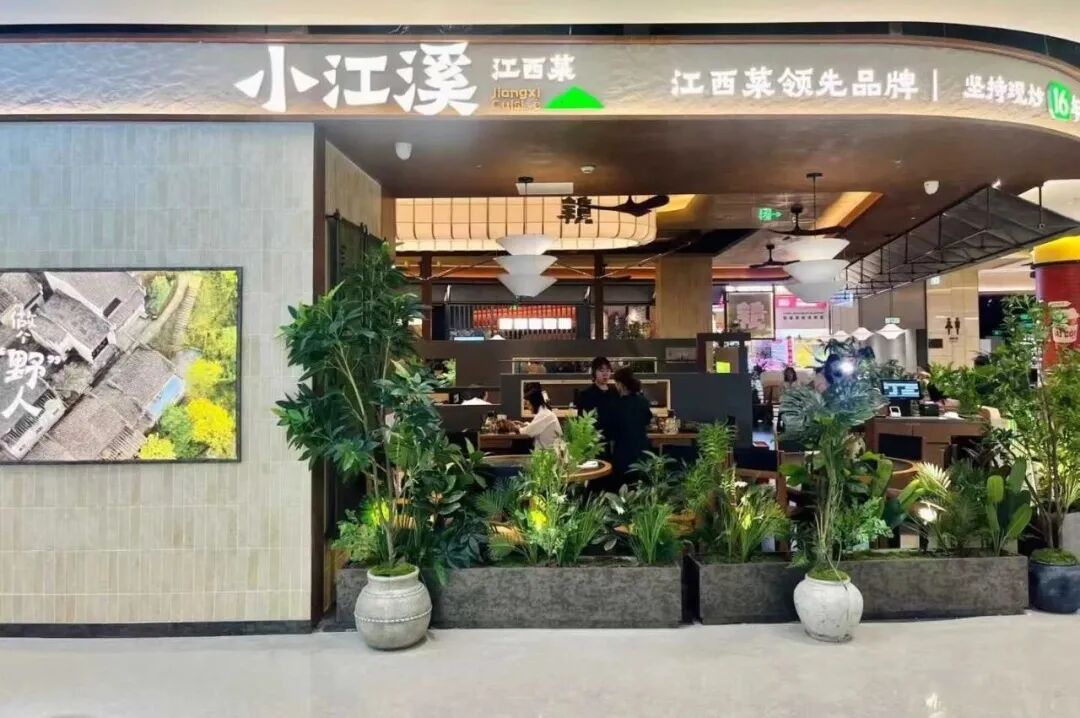
江西小炒“逆袭”,赣菜涌入购物中心
3 6 Ke· 2025-12-22 02:37
Core Viewpoint - The rise of Jiangxi stir-fry cuisine is marked by the establishment of standards and the rapid expansion of brands, leading to a shift towards standardization and branding in the industry [1][11]. Group 1: Industry Overview - Jiangxi stir-fry cuisine has gained popularity due to its fresh ingredients, quick cooking methods, and spicy flavors, with over 46,000 restaurants nationwide [2][11]. - The brand "Xiao Jiangxi Jiangxi Stir-fry" has expanded rapidly, opening over 160 stores across 82 cities in 26 provinces, with more than 60% located in shopping malls [2][4]. - Other brands like "Ou Ji Da Pai Dang" and "Gan Xiang Ye" are also expanding, with the former opening over 10 stores in major cities and the latter reaching over 80 locations [4][11]. Group 2: Brand Innovations - "Hu Qia" focuses on innovative dishes and a unique dining atmosphere, having opened 23 stores in 21 cities within a year [7][8]. - "Yang Youxi" integrates a mountain and wild environment into its dining experience, with 10 locations in the Jiangsu-Zhejiang-Shanghai area [10]. - "Zhuo Chun Ni" and "Xiao Jiangxi" are also enhancing their offerings by introducing new store formats that cater to social dining experiences [10][11]. Group 3: Market Trends - The popularity of Jiangxi cuisine is driven by consumer demand for flavorful dishes and high-value stir-fried meals, with a 42% year-on-year increase in orders for Jiangxi cuisine [12]. - The rise of "beautiful rice" concepts among Jiangxi brands is appealing to younger consumers, enhancing the dining experience through atmosphere and cultural elements [5][11]. - Despite the growth, challenges remain in brand recognition and maintaining the essence of traditional cooking methods during expansion [12].