大健康

Search documents
主业承压 仲景食品卖起西洋参
Bei Jing Shang Bao· 2025-12-24 16:03
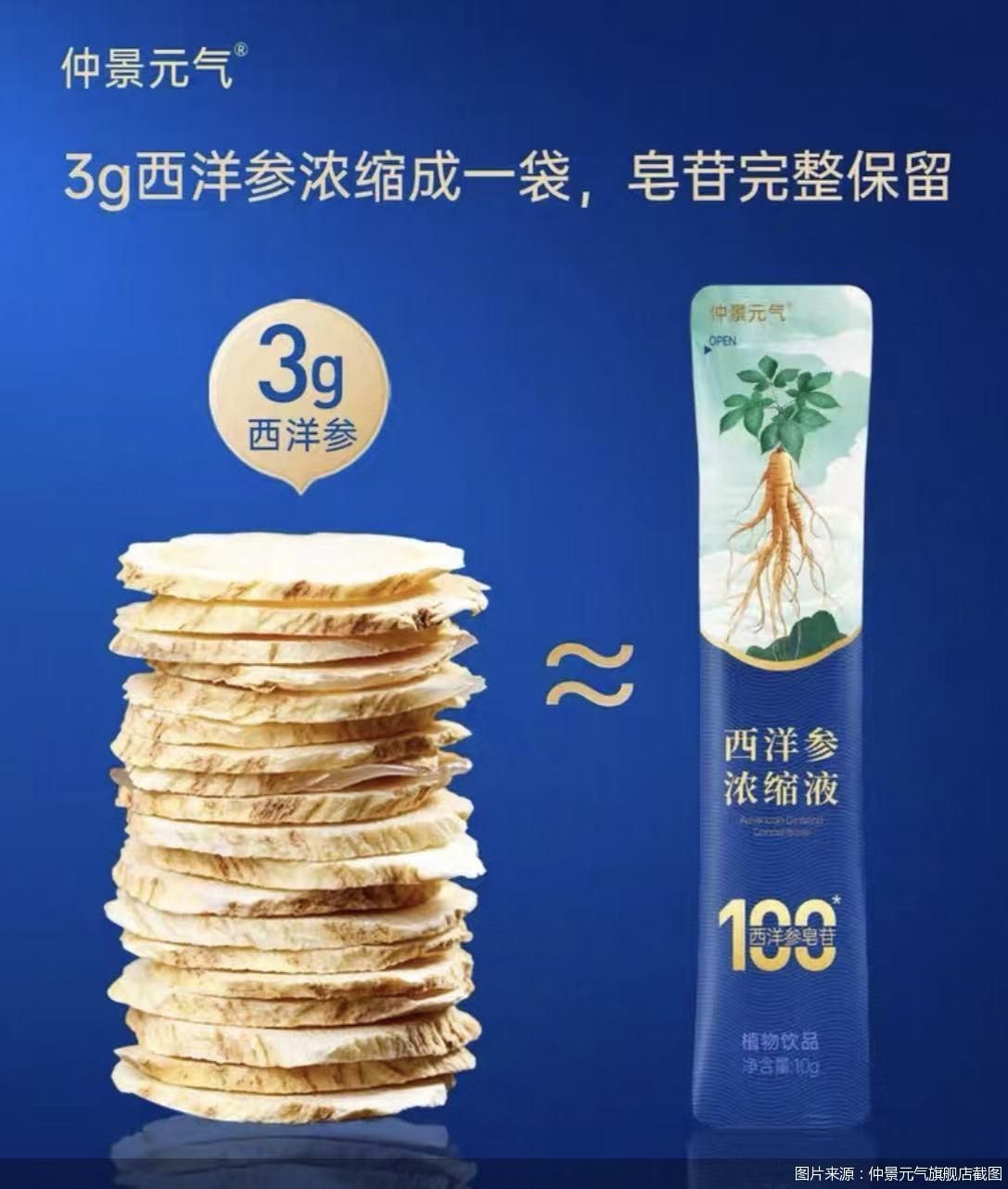
Core Insights - Zhongjing Foods has officially launched new products featuring American ginseng, including concentrated liquid and tea, marking its entry into the health food sector with a clear focus on core nutritional content [1][3] - The company aims to explore strategic expansion into the health food market, leveraging its traditional Chinese medicine background while facing challenges such as market acceptance and competition in the health food category [1][3] Product Launch - The new American ginseng products are designed to provide a reliable modern health solution, with each product containing 100 milligrams of ginsenosides [3] - The products are currently available online at promotional prices of 9.9 yuan, with regular prices ranging from 79 to 199 yuan [3] - Initial sales data indicates low consumer engagement, with multiple product links showing "0 purchases" on platforms like Tmall and JD [3] Market Trends - Over 70% of consumers aged 18-35 are willing to pay a premium for foods with specific health benefits, driving rapid growth in the health food market [4] - The Chinese health food market is projected to reach 1.2 trillion yuan by 2025, with a year-on-year growth rate of 16.8% [4] - The American ginseng market has surpassed 28 billion yuan in 2023, but faces challenges such as a low average repurchase rate of 12% and high marketing costs accounting for 35% of sales [4] Company Performance - Zhongjing Foods' core condiment business is under pressure, with 2022 sales of its flagship mushroom sauce reaching 324 million yuan, maintaining the top position in its category [5] - The company has experienced a slowdown in revenue growth, with projected revenues of 994 million yuan and 1.098 billion yuan for 2023 and 2024, respectively, reflecting a decline in growth rates [6] - The company is facing a dilemma of increasing revenue without corresponding profit growth, with a reported revenue decline of 1.56% in the first three quarters of the year [6] Strategic Recommendations - Experts suggest that Zhongjing Foods should adopt a "single focus, multiple brands" strategy to solidify its market position while exploring new health food categories [6] - The company is encouraged to leverage its "Chinese medicine gene" and technological capabilities to differentiate its products from competitors [7] - Emphasizing the unique features of the new American ginseng products and utilizing online marketing strategies could help improve brand awareness and consumer perception [8]



主业承压,仲景食品押注西洋参
Bei Jing Shang Bao· 2025-12-24 14:01
Core Viewpoint - Zhongjing Food has officially announced the launch of its new American ginseng products, marking its entry into the health food sector amidst challenges in its core condiment business [1][3]. Product Launch - The company has introduced two new products: American ginseng concentrated liquid and American ginseng tea, each containing 100mg of ginsenosides, making them the first health drinks with clearly defined core nutritional components [3][5]. - These products are currently available on online platforms, with a promotional price of 9.9 yuan and regular prices ranging from 79 to 199 yuan [4]. Market Context - The health food market in China is projected to reach 1.2 trillion yuan by 2025, with a year-on-year growth rate of 16.8%, driven by consumer willingness to pay a premium for health-functional foods [5]. - American ginseng has gained popularity as a health ingredient, with the National Health Commission including it in the food-medicine homology directory [5]. Consumer Acceptance - The acceptance of the new ready-to-drink concentrated liquid and tea forms of American ginseng may require time, as traditional forms like slices and powders dominate the market [6]. - Some consumers express concerns about the authenticity of heavily processed products compared to more traditional forms [6]. Business Performance - Zhongjing Food's core condiment business is facing growth pressure, with revenue growth slowing from 12.77% to 10.4% between 2023 and 2024 [8]. - The company reported revenues of 9.94 billion yuan and 10.98 billion yuan for 2023 and 2024, respectively, with net profits showing a significant decline in growth rate [8]. Strategic Recommendations - Experts suggest that Zhongjing Food should adopt a "single focus, multiple brands" strategy to solidify its market position in condiments while expanding into health food [9]. - The company is encouraged to leverage its "Chinese medicine gene" and technological expertise to differentiate its products in the health food market [10]. Marketing Strategy - To enhance the visibility and reputation of the new American ginseng products, the company should emphasize their clear nutritional benefits and convenience [11]. - Utilizing online marketing and offline experiential activities can help shift consumer perceptions and expand market reach [11].
智者勇进•接续奋进新江苏|丹阳:为建设现代化“智造名城、运河明珠”接续奋斗
Xin Lang Cai Jing· 2025-12-21 15:33
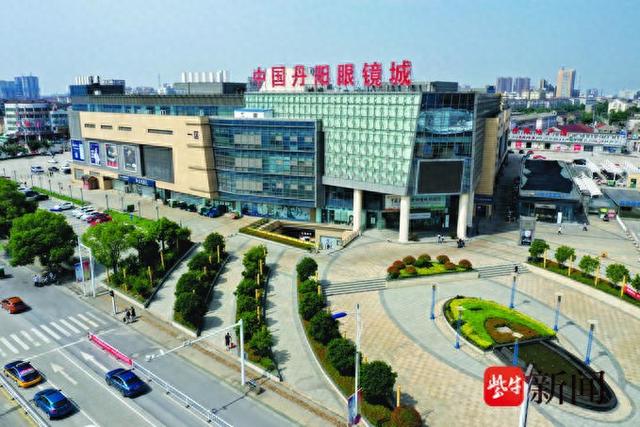
转自:扬子晚报 丹阳,千年凤飞地、齐梁帝王乡,一座产业发达、推崇科技、民生殷实、美丽宜居的"运河明珠"。 近年来,丹阳始终锚定"镇江一流、全省进位"目标,坚定不移推动高质量发展,改革动能、创新势能、 开放活力不断释放,宜居宜业、民生幸福成为高质量发展生动注脚,中国式现代化丹阳新实践迈出了坚 实步伐。 丹阳眼镜城 科技赋能产业升级。作为全国创新型县(市)建设试点,丹阳创新特色鲜明,拥有北京人才工作站、上 海飞地孵化器,以及各类创新平台超100家。丹阳把众多高层次平台优势与眼镜、汽车零部件、大健 康、新材料、高端装备制造等产业优势充分融合,全方位助力产业转型升级。要素赋能企业壮大。丹阳 竭尽所能为企业创新做好支撑保障,根据企业现实需要,制定紧缺人才支持计划,精准引进产业创新发 展急需的高层次人才。积极探索人工智能大模型更好服务产业转型发展,深化专精特新中小企业培育工 程。截至目前,丹阳高新技术企业突破437家,专精特新中小企业达170家。 尊商重企 谱写民营经济新篇章 丹阳是一座产业发达、特色鲜明的工贸名城,民营企业超4.5万户,民营企业数量占经营主体比重达 99%。近年来,丹阳坚持让企业家站"C位",用心用情服 ...
智者勇进 接续奋进新江苏|丹阳:为建设现代化“智造名城、运河明珠”接续奋斗
Yang Zi Wan Bao Wang· 2025-12-21 14:28
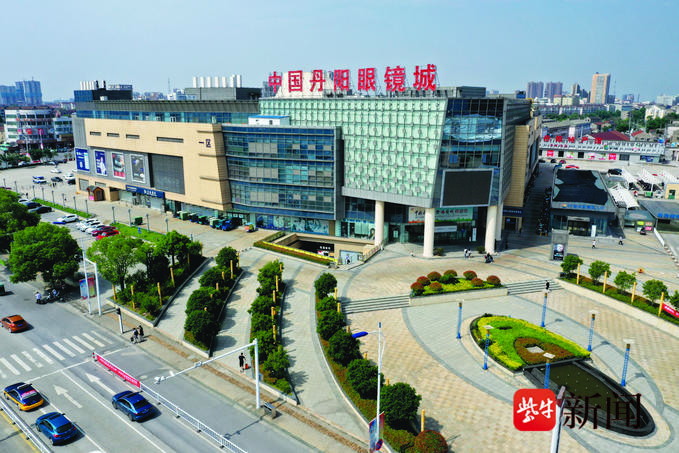
丹阳,千年凤飞地、齐梁帝王乡,一座产业发达、推崇科技、民生殷实、美丽宜居的"运河明珠"。 近年来,丹阳始终锚定"镇江一流、全省进位"目标,坚定不移推动高质量发展,改革动能、创新势能、 开放活力不断释放,宜居宜业、民生幸福成为高质量发展生动注脚,中国式现代化丹阳新实践迈出了坚 实步伐。 丹阳眼镜城 科技创新是丹阳发展的一大特色,也是核心动力。在加快打造现代化"智造名城、运河明珠"的高质量发 展之路上,丹阳提出推动科技创新和产业创新深度融合。 科技赋能产业升级。作为全国创新型县(市)建设试点,丹阳创新特色鲜明,拥有北京人才工作站、上海 飞地孵化器,以及各类创新平台超100家。丹阳把众多高层次平台优势与眼镜、汽车零部件、大健康、 新材料、高端装备制造等产业优势充分融合,全方位助力产业转型升级。要素赋能企业壮大。丹阳竭尽 所能为企业创新做好支撑保障,根据企业现实需要,制定紧缺人才支持计划,精准引进产业创新发展急 需的高层次人才。积极探索人工智能大模型更好服务产业转型发展,深化专精特新中小企业培育工程。 截至目前,丹阳高新技术企业突破437家,专精特新中小企业达170家。 尊商重企谱写民营经济新篇章 丹阳是一座产业发达 ...
大鹏新区:坝光片区面临3大挑战
Nan Fang Du Shi Bao· 2025-12-18 07:02
Core Insights - Dapeng New District has not included any enterprises in the latest list of specialized and innovative "little giant" companies, contrasting sharply with Shenzhen's 347 entries, highlighting a significant gap in industrial development [1][2]. Current Situation - Dapeng New District's industrial development shows some positive trends, with the "4+1" industrial cluster projected to reach 92.73 billion yuan in 2024, a year-on-year growth of 5.7%. However, GDP growth rates for 2023 and 2024 are 4.5% and 4.8%, respectively, both below Shenzhen's average of 6.0% and 5.8% [2]. - The district currently has only 6 "little giant" enterprises, primarily in the biomedicine sector, indicating a lag in cultivating specialized and innovative companies [2][3]. Challenges - Dapeng New District faces three main challenges in developing the Bagang area: 1. Weak initial infrastructure and high upfront costs due to its remote location and lack of essential services [5]. 2. Long internal cultivation cycles as the area focuses on high-tech industries like biomedicine, which require significant time and resources for development [5]. 3. Ecological constraints limit industrial density and development, as the area is designated for low-density, high-ecological projects [5]. Future Plans - Dapeng New District aims to transform the Bagang area into a platform for new strategic industries, focusing on marine economy, biomedicine, and low-altitude economy. The goal is to create a synergistic development system that integrates these sectors [7][8]. - Specific initiatives include establishing a marine economy hub, a medical tourism demonstration area, and a low-altitude and aerospace application base, all aimed at enhancing the region's industrial capabilities [8].
余渭恒:海南封关是“整体跃升”,澳门当好“小而精的高能平台”
2 1 Shi Ji Jing Ji Bao Dao· 2025-12-17 14:39
Core Viewpoint - The official launch of the Hainan Free Trade Port's customs closure marks a significant leap in China's open economic system, reshaping the regional economic landscape and providing new opportunities for Macau under the "One Country, Two Systems" framework [1][2]. Group 1: Strategic Significance - Hainan's customs closure is not merely a technical adjustment but signifies a comprehensive upgrade in the national open economic system, aiming to create a "zero tariff, low tax rate, and simplified tax system" [2]. - Hainan serves as a testing ground for high-level international openness, comparable to Dubai and Singapore, and aims to provide a "Hainan plan" for China's participation in global trade rule-making [2][3]. - The collaboration between Hainan and the Guangdong-Hong Kong-Macau Greater Bay Area will create a "dual engine" for economic growth, with Hainan focusing on trade, shipping, tourism, and modern services [3][4]. Group 2: Collaborative Pathways - The concept of "dislocated development" emphasizes that Hainan and Macau should leverage their unique strengths rather than compete for the same resources [5]. - Hainan's tourism and consumption can be linked with Macau's high-end cultural and event industries, creating a multi-node tourism consumption network [5][6]. - The health and modern service industries can benefit from a collaborative model where Hainan focuses on resource cultivation and initial processing, while Macau handles research and branding [6]. Group 3: Institutional Innovations - Hainan's Free Trade Port will continue to innovate in areas like data cross-border flow and offshore finance, while Macau can provide legal and financial services, creating a synergistic effect [6][7]. - Macau's experience in high openness and strong regulation can serve as a reference for Hainan in managing risks while promoting capital project openness [7][8]. - The establishment of a "Qiong-Ao Cross-Border Financial Service Center" could facilitate a one-stop cross-border financial service for enterprises [6]. Group 4: Talent Mobility - The development of attractive youth and student exchange programs can enhance talent mobility between Hainan and Macau, fostering a shared living and development space [13][14]. - Joint training and mutual recognition of professional qualifications in key industries can lower barriers for talent movement between the two regions [13][14]. - A "two places, one ecology" approach for high-level talent can enhance collaboration and project implementation between Hainan and Macau [14][15]. Group 5: Future Role of Macau - Macau is envisioned as a "small but powerful high-energy platform" that serves as a bridge for institutional and cultural exchanges [15][16]. - The city can act as a command center for tourism and exhibition networks, as well as a center for new industries like health, green finance, and digital trade [15][16]. - By leveraging its unique position, Macau can attract international brands and services, enhancing its role as a showcase platform for the region [12][15].
企业招商:找准方法,成功近在咫尺
Sou Hu Cai Jing· 2025-12-17 06:40
Group 1 - The core issue of招商 (franchise recruitment) often lies in unclear strategy, as demonstrated by a restaurant chain that spent 8 million on recruitment without a clear product positioning, leading to confusion among potential franchisees [3] - Successful招商 requires a systematic approach, including strategic brand and product positioning to create a sustainable cooperation model, shifting from passive waiting to active selection of partners [3] - The traditional model of "selling products for profit" has become ineffective post-pandemic; innovative models like "free mode + blockbuster strategy" can significantly enhance recruitment success, as seen in an education institution that achieved over 30 million in contract value from a single event [3] Group 2 - Effective招商会 (recruitment events) can be transformed into profit-generating machines through meticulous planning, as evidenced by a health company that achieved a 42% signing rate using a standardized process of data screening and private domain cultivation [4] - Successful招商 requires three levels of preparation: precise customer profiling to ensure quality invitations, compelling case data to build trust, and tiered policy designs to encourage on-site decision-making [4] - Building an ecosystem for招商 is crucial; a retail chain linked over 5,000 franchisees through a points management system and achieved a compound annual growth rate of 68% by creating standardized operations, digital management tools, and ongoing training mechanisms [4]

中国将为世界带来更大发展机遇
人民网-国际频道 原创稿· 2025-12-16 08:32
Group 1 - The core viewpoint of the news is that China's 15th Five-Year Plan emphasizes high-quality development, positioning China as a leader in high-tech development and application globally, which presents new cooperation opportunities for other countries, including developing nations like Pakistan [1][2] - The 15th Five-Year Plan suggests a significant shift towards improving development quality through technological advancement, moving from "Made in China" to "Intelligent Manufacturing in China," which will enhance the technological content of the manufacturing sector and supply chains [1][2] - The plan is expected to drive breakthroughs in key industries such as robotics and healthcare, with China's robotics technology already leading globally and being applied in various fields, indicating a transformative impact on the global economy and society [2][3] Group 2 - The health industry in China is projected to continue its growth and expand into overseas markets, addressing global public health challenges and improving health standards [2] - Chinese technological products, including electric vehicles, solar batteries, and aerospace satellites, are already making significant contributions to global markets, enhancing local industries and driving economic development in other countries [2][3] - The 15th Five-Year Plan is anticipated to create greater development opportunities for the world, with China's growth being a major driver of global development, emphasizing the importance of leveraging the benefits of China's development for future prospects [3]
我国首个以发展新质生产力为主题的综保区开关运作
Zhong Guo Xin Wen Wang· 2025-12-16 03:27
Core Viewpoint - The Beijing E-Town Comprehensive Bonded Zone has officially commenced operations, marking it as China's first bonded zone focused on developing new quality productivity [1] Group 1: Operational Highlights - The first batch of bonded goods, consisting of imported valve equipment, was transported using an unmanned vehicle, showcasing the application of autonomous driving technology in the logistics of bonded goods in Beijing [1] - The bonded zone covers an area of 0.61 square kilometers and is strategically located near two airports in Beijing and the Tianjin port, serving the North China region [1] Group 2: Development Focus - The first phase of the bonded zone has established approximately 100,000 square meters of high-standard industrial space, focusing on four leading industries: next-generation information technology, high-end automobiles and new energy smart vehicles, biotechnology and health, and robotics and smart manufacturing [1] - The bonded zone integrates data systems related to autonomous driving and smart city infrastructure, enabling a visualized presentation of the entire logistics process from the port to the bonded zone [1] Group 3: Logistics and Supply Chain - The zone aims to provide seamless connectivity between internal and external logistics, offering enterprises traceable and dynamically adjustable smart logistics services, thereby enhancing supply chain responsiveness and operational resilience [1]
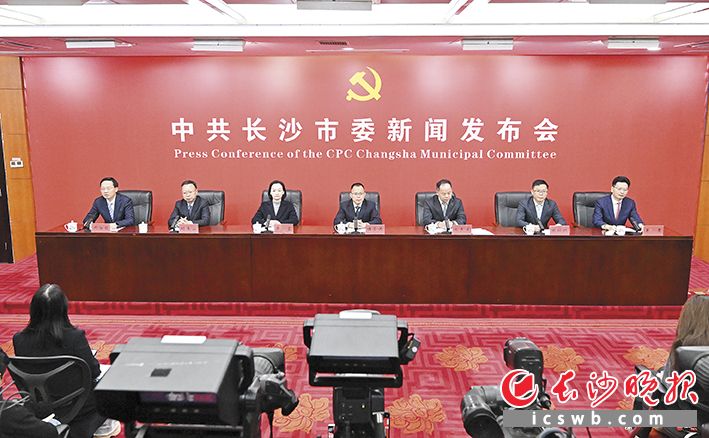
为加快推进高质量发展和现代化建设提供有力指引——市委举行新闻发布会介绍和解读市委十四届十次全会精神
Chang Sha Wan Bao· 2025-12-16 02:52
Core Viewpoint - The 14th Committee of the Communist Party of China in Changsha held its 10th plenary session, approving the "Suggestions for Formulating the 15th Five-Year Plan for National Economic and Social Development in Changsha," which aims to accelerate high-quality development and modernization in the city [1][2]. Group 1: Development Blueprint and Planning Process - The city has established a leadership group for the planning process and formed specialized teams for drafting the document, which underwent five stages: preliminary research, initial draft, soliciting opinions, benchmarking, and revisions [3][4]. - The drafting process incorporated nearly 1,000 valuable suggestions from various stakeholders, including city leaders and experts, ensuring a comprehensive approach to the planning [4][5]. Group 2: Key Principles and Objectives - The plan emphasizes five principles: high positioning, goal-oriented planning, problem-solving focus, reform-driven development, and systematic prioritization of key tasks [5]. - The overall goal is to achieve a "three highs and four new" vision by 2035, addressing challenges and opportunities in the next five years [5]. Group 3: Major Sections of the Suggestions - The document consists of three main sections: achievements during the 14th Five-Year Plan, key tasks for the 15th Five-Year Plan across various sectors, and mechanisms to ensure the implementation of the plan [6]. Group 4: Focus on "Three High Grounds" - The plan aims to build three high grounds: an advanced manufacturing hub, a technology innovation center, and a reform and opening-up high ground, with specific strategies for each area [7][9]. - Emphasis is placed on developing a modern industrial system, enhancing innovation capabilities, and improving the business environment to attract investment [8][9]. Group 5: Cultural and Tourism Development - The plan highlights the importance of cultural and tourism integration, aiming to enhance the city's cultural identity and promote tourism as a key economic driver [10][11]. - Initiatives include showcasing historical and revolutionary culture, developing immersive tourism experiences, and fostering modern cultural industries [10][11]. Group 6: Regional Integration and Collaboration - The plan prioritizes the integration of Changsha, Zhuzhou, and Xiangtan, focusing on collaborative development in planning, industry, and public services [12][13]. - Specific mechanisms for cooperation and resource sharing among the three cities are outlined to enhance regional competitiveness [12][13]. Group 7: Enhancing Public Welfare - The plan aims to improve public welfare through employment initiatives, social security enhancements, and educational reforms, ensuring a higher quality of life for residents [15][16]. - Key actions include promoting job creation, expanding social insurance coverage, and improving healthcare services [15][16]. Group 8: Innovation and Technology Development - The plan outlines a vision for Changsha to become a global research and development center by 2030, focusing on high-quality innovation spaces and advanced research institutions [17][18]. - Strategies include fostering collaboration between industry and academia, enhancing technology transfer, and supporting the development of cutting-edge technologies [17][18]. Group 9: Artificial Intelligence and Industrial Integration - The plan emphasizes the dual empowerment of artificial intelligence and manufacturing, aiming to create a national demonstration zone for new industrialization [19][20]. - Specific initiatives include promoting AI applications across various industries and enhancing the capabilities of local enterprises in AI technology [19][20].