
汽车维修

Search documents
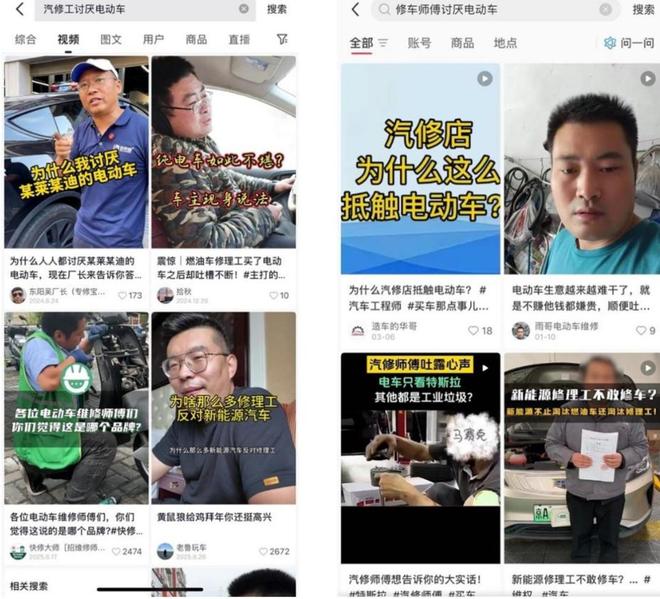
汽修师傅痛恨新能源
Tai Mei Ti A P P· 2025-09-10 06:51
Core Viewpoint - The penetration rate of new energy passenger vehicles has surpassed 55%, making them the primary choice for consumers when purchasing cars, despite a vocal opposition from some automotive repair workers on social media platforms [1][25]. Group 1: Industry Transformation - The automotive repair industry is facing significant challenges due to the shift from traditional fuel vehicles to new energy vehicles, which have different core components and maintenance requirements [3][4]. - The core components of electric vehicles, namely the battery, motor, and electronic control systems, account for nearly 70% of the vehicle's value, leading to a reduction in the number of parts that require maintenance compared to traditional vehicles [13][27]. - The increasing number of new energy vehicles is reshaping the automotive aftermarket, with repair workers feeling threatened by the decline of the fuel vehicle industry [4][26]. Group 2: Legal and Ethical Issues - A notable case involves a repair blogger being sued by three domestic car manufacturers for 7 million yuan, highlighting the conflict between automotive manufacturers and repair shops [5][8]. - Two repair workers were sentenced for illegally modifying the data of a new energy vehicle's battery system, which raises concerns about safety and the legal implications of unauthorized repairs [8][10]. Group 3: Consumer Rights and Control - The shift to "software-defined vehicles" has created a new dynamic where manufacturers can control vehicle functions remotely, leading to a separation of ownership and control rights for consumers [16][19]. - Consumers face challenges when seeking repairs from non-authorized service centers, as doing so may void warranties and service rights, effectively limiting their choices [24][28]. Group 4: Skills and Workforce Development - The transition to new energy vehicles necessitates a significant upgrade in skills for automotive repair workers, who must now combine mechanical knowledge with software expertise [30]. - There is a substantial shortage of qualified repair technicians for new energy vehicles, with estimates indicating a need for at least 20,000 more skilled workers in the Shenzhen area alone [30].




反内卷的风终于吹到汽车后市场
Zhong Guo Qi Che Bao Wang· 2025-09-01 01:03
Core Viewpoint - The automotive repair industry in China is facing severe "involution" challenges, prompting industry associations in cities like Beijing and Changsha to issue initiatives to combat irrational competition and restore fair market order [3][4][9]. Group 1: Industry Response to Involution - The Beijing Automotive Maintenance Industry Association issued a proposal to all member companies to resist "involution-style" competition, highlighting issues such as malicious price wars and quality neglect [4][5]. - The Changsha Automotive Maintenance Industry Association expressed strong support for the initiative and called for more industry peers to join in resisting involution [4][6]. - Both associations emphasized the need for companies to avoid irrational competition, such as undercutting prices below cost and imposing unnecessary services on customers [4][5]. Group 2: Impact of Involution on the Industry - The automotive repair industry has seen a rise in malicious competition, leading to a decline in revenue and profit, with an average of over 20 maintenance businesses closing daily [10][11]. - The prevalence of low-cost bidding has resulted in a race to the bottom, where companies offer services at unsustainable prices, compromising quality and safety [11][12]. - The industry is experiencing a talent drain, with younger workers reluctant to enter the field, exacerbating the skills gap and hindering innovation [10][11]. Group 3: Government and Regulatory Actions - The central government has emphasized the need to combat involution through policy measures aimed at promoting fair competition and enhancing product quality [9][18]. - Local associations are taking proactive steps to reshape bidding rules and advocate for quality over price in public procurement processes [13][15]. - The government is encouraged to implement a combination of hard and soft measures to address the issues of involution and promote a shift towards high-quality service competition [18][19]. Group 4: Successful Strategies and Innovations - Some companies are adopting innovative business models, such as community-based services and technology integration, to differentiate themselves and reduce costs [19][20]. - Successful examples include a chain that optimizes costs through standardization and community engagement, and a tire alliance that shares technicians to lower labor costs [19][20]. - These cases illustrate that successful companies focus on compliance and quality rather than merely cutting costs, transforming regulatory pressures into opportunities for growth [20].

呼吁走出恶性循环,“反内卷”之风刮到汽车维修行业
Zhong Guo Qi Che Bao Wang· 2025-08-29 00:43
Core Viewpoint - The article discusses the negative impacts of price wars and "involution" in various industries, particularly in the automotive repair sector, emphasizing that low prices do not always equate to value for consumers and can lead to detrimental practices within the industry [2][4][5]. Group 1: Industry Challenges - The automotive repair industry is experiencing severe "involution," leading to reduced profit margins and increased use of substandard parts, which compromises customer safety and trust [4][6]. - The rise of low-cost services, such as 9.9 yuan car washes, exemplifies the detrimental effects of price competition, resulting in hidden costs and potential vehicle damage for consumers [4][5]. - The influx of market participants has created an imbalance in supply and demand, further exacerbating the competitive landscape and leading to a decline in service quality [8][9]. Group 2: Recommendations for Improvement - The "Initiative" suggests that companies should focus on value creation and innovation rather than engaging in price wars, advocating for a shift towards technology development and service quality enhancement [10][11]. - Companies are encouraged to adopt differentiated competition strategies, such as targeting specific customer segments and offering unique services, to build customer loyalty and avoid price-based competition [10][13]. - Emphasizing the importance of digital transformation, the article highlights that businesses must leverage technology to improve operational efficiency and customer experience [13][14]. Group 3: Market Dynamics - The article notes that the increasing prevalence of electric vehicles is changing the maintenance landscape, requiring specialized skills and equipment that many traditional repair shops lack [9][8]. - Economic downturns and changing consumer behaviors are leading to more rational spending on vehicle maintenance, with customers opting for longer intervals between services [9]. - The relationship between insurance companies and repair shops is also affecting the market, as binding agreements limit the opportunities for independent repair businesses [9].

海南自贸港首票发动机变速箱保税维修业务落地
Hai Nan Ri Bao· 2025-08-24 01:24
Group 1 - The first batch of duty-free maintenance services for engine gearboxes in Hainan Free Trade Port has been successfully implemented, marking a significant development in the high-end automotive industry in the region [1] - The service is provided by CRRC International Vehicle Industry (Hainan) Co., Ltd., which is a subsidiary of China General Technology (Group) Holding Limited, and focuses on duty-free maintenance as its core business [1] - The special regulatory policies in the comprehensive bonded zone allow the company to enjoy benefits such as "domestic maintenance + no guarantee," significantly reducing the financial pressure on enterprises [1] Group 2 - The company expects to complete the maintenance of 2,000 to 3,000 automotive gearboxes in the second half of the year, expanding its business footprint and promoting the "China Maintenance" brand internationally [2] - The implementation of this business is a strong measure by customs to support the development of the new business model of "duty-free maintenance remanufacturing" as outlined in the overall plan for Hainan Free Trade Port [2] - The Haikou Comprehensive Bonded Zone has attracted four companies in the automotive and electronics sectors to establish duty-free maintenance operations, with total import and export value exceeding 100 million yuan from January to July [2]
案例发布 | 广东发布六起侵犯企业商业秘密的典型案例
Sou Hu Cai Jing· 2025-08-19 07:30
Group 1 - The core theme of the third "Enterprise Trade Secret Protection Capability Improvement Service Month" is to build protection systems and serve innovative development, focusing on enhancing awareness and capabilities in trade secret protection among enterprises [2] - The Guangdong Provincial Market Supervision Administration has implemented a three-year action plan for the "Golden Inner Bay Trade Secret Protection Innovation Project," establishing 24 innovation pilot areas and over 1200 grassroots service points across the province [3] - The initiative targets over 1500 key enterprises, including "chain master" enterprises and "specialized, refined, and new" small giants, to help them establish a comprehensive trade secret protection system [3] Group 2 - Guangzhou has introduced a "health check + diagnosis" service model for enterprises, completing in-depth assessments for over 300 companies and issuing 226 trade secret protection diagnosis reports [4] - Shenzhen has developed over 10 standard guidelines for trade secret protection, including the first national guidelines for research institutions and overseas risk prevention [4] - Zhuhai is advancing the legislative work for the "Zhuhai Special Economic Zone Trade Secret Protection Regulations," aiming to complete the draft by September 2025 [5] Group 3 - Foshan has created 53 government-enterprise WeChat groups to provide comprehensive trade secret services to 9882 large-scale enterprises and has introduced a new model for trade secret pledge financing, issuing the first 30 million yuan financing [5] - Jiangmen is establishing a trade secret protection base linked to local industries, forming alliances to provide legal consulting services [6] Group 4 - Several cases of trade secret infringement have been reported, including a case involving a Guangzhou automotive products company that paid 130,000 yuan for trade secret data, leading to a fine of 130,000 yuan for violating the Anti-Unfair Competition Law [7] - Another case involved a Guangzhou automotive repair company that unlawfully used customer information, resulting in a fine of 100,000 yuan [8] - Shenzhen's market supervision bureau penalized a laser company for retaining trade secret files after an employee's departure, imposing a fine of 100,000 yuan [9]

新车销量再攀新高,难掩汽修需求疲软
Zhong Guo Qi Che Bao Wang· 2025-08-11 06:15
Core Insights - The automotive repair industry is experiencing a significant decline in demand, with a 5% drop in market value and a 4% decrease in service visits in the first half of 2025, despite a growing vehicle ownership rate in China [8][10]. - The automotive repair industry's prosperity index has shown a downward trend, particularly in May and June, indicating a seasonal decline exacerbated by structural changes in consumer behavior and market dynamics [3][4][10]. Vehicle Ownership and New Energy Vehicles - As of June 30, the total number of motor vehicles in China reached 460 million, with 359 million being cars. The number of new energy vehicles (NEVs) reached 36.89 million, accounting for 10.27% of total cars, with pure electric vehicles making up 69.23% of NEVs [1]. - In the first half of 2025, new registrations of NEVs totaled 5.62 million, marking a year-on-year increase of 27.86%, setting a historical record for the same period [1]. Repair Industry Performance - The automotive repair industry's prosperity index for the first half of 2025 was below the 50% threshold, indicating a contraction in the market. The index fluctuated significantly, with January and March showing lower figures compared to the previous year [2][3]. - The index for the repair industry in April was notably high due to promotional activities from major e-commerce platforms, but it fell sharply in May, reflecting the traditional seasonal decline [3][4]. New Energy Vehicle Repair Market - The prosperity index for the NEV repair sector showed a similar trend to the overall repair industry, with April's index at 59.1%, but declining in May and June [4]. - The shift from fuel to electric vehicles has led to longer maintenance cycles, with electric vehicles requiring maintenance 40% less frequently than traditional fuel vehicles, contributing to the overall decline in repair demand [4][10]. Market Dynamics and Challenges - The automotive repair industry is facing dual pressures from the transition to new energy vehicles and changes in consumer behavior, leading to a significant reduction in service frequency and demand [6][10]. - The competition within the industry is intensifying, with larger firms maintaining stability while smaller businesses struggle, leading to a wave of closures among repair shops [10][11]. Structural Changes in Supply and Demand - The automotive repair market is undergoing structural changes, with a notable decline in the number of 4S dealerships and a shift towards independent repair shops [14]. - The demand for specialized services, such as micro-repairs and NEV-specific maintenance, is increasing, indicating a potential area for growth despite overall market contraction [15][19]. Future Outlook and Strategies - The industry must adapt to the changing landscape by focusing on specialized services, enhancing operational efficiency, and leveraging digital marketing strategies to attract customers [20][21]. - The next three years are critical for the NEV tire replacement market, as early models enter their replacement cycles, presenting opportunities for businesses that can effectively meet this demand [20].

新能源汽车“脱保”潮将至 “三电”难题何时破?
Xi Niu Cai Jing· 2025-08-05 08:21
Core Insights - The after-sales maintenance market for new energy vehicles in China is projected to reach 300 billion yuan by 2025, with the maintenance of the "three electric" systems (battery, motor, and electronic control) accounting for over 15%, approximately 45 billion yuan [2] - The number of vehicles with expired warranties for the "three electric" systems is expected to surge, with nearly 20 million power batteries reaching warranty expiration in the next eight years [2] - There is a significant talent gap in the new energy vehicle after-sales service sector, with an estimated shortage of 824,000 professionals by 2025, while currently, there are fewer than 100,000 technicians with qualifications for "three electric" maintenance [2] Industry Actions - Battery manufacturers, such as CATL, are expanding their services from B-end supply chains to C-end services, launching repair chains like "Ningjia Service" to address technical challenges in battery maintenance [2] - Automakers like Tesla and Li Auto are providing services through direct mechanical and electrical repair centers, while BYD has established a closed-loop independent maintenance system for "three electric" components [3] - Insurance companies are also developing or leading repair networks, such as the "Zhongbao Zhixiu" chain by China Pacific Insurance, which offers comprehensive services including "three electric" repairs [3] Challenges in the Market - The development of the after-sales market for new energy vehicles faces challenges, including the complexity of technology and parts, which makes it difficult for third-party repair shops to provide maintenance [4] - After-sales service providers may refuse warranty services if they find non-official maintenance records, limiting consumer choice [4] - There is currently no unified assessment standard for "three electric" systems, leading to high repair costs determined solely by brand owners [4] Future Outlook - The maintenance market for "three electric" systems is expected to experience unprecedented growth opportunities alongside challenges as the number of new energy vehicles continues to rise and more vehicles go out of warranty [5] - This presents a new blue ocean for industry players, offering vast business opportunities, while consumers hope to alleviate issues related to high repair costs and difficulties in finding service [5]
Icahn Enterprises(IEP) - 2025 Q2 - Earnings Call Transcript
2025-08-04 15:02
Financial Data and Key Metrics Changes - The net asset value (NAV) increased by $252 million from the first quarter, primarily driven by positive performance in CVI, offset by decreases in auto service [5] - The investment funds ended down approximately 0.5% for the quarter, primarily driven by gains in the consumer cyclical sector, offset by broad market and refining hedges [6] - The holding company ended the quarter with $1.1 billion in cash and cash equivalents, and an additional $700 million of cash at the funds [10] Business Line Data and Key Metrics Changes - The Energy segment's consolidated EBITDA was negative $24 million for Q2 2025, compared to $103 million in Q2 2024, negatively impacted by unfavorable RINs valuation and reduced throughput volumes [14] - The auto service division saw revenues decrease by $8 million compared to the prior year quarter, but same-store revenues were relatively flat, improving from a 5% decline in the previous quarter [15] - The pharma segment initiated a pivotal trial for a new drug aimed at treating pulmonary arterial hypertension, with expectations for updates in 12 to 18 months [9][10] Market Data and Key Metrics Changes - CVI's share price increased by 38%, contributing to a $561 million increase in NAV from the first quarter [5] - The digital business at Caesars grew revenue by 24% and EBITDA by 100% in the second quarter, indicating strong market performance [12] Company Strategy and Development Direction - The company is focusing on maintaining liquidity to capitalize on opportunities within and outside existing operating segments, with a total liquidity of $3.5 billion at the holding company and $1.1 billion at subsidiaries [20] - The company plans to redeploy capital from the sale of a country club to replicate successful strategies in newly acquired properties [18] Management's Comments on Operating Environment and Future Outlook - Management expressed optimism regarding the resolution of outstanding litigation related to small refinery exemptions, which could remove a $548 million liability [6] - The company sees considerable value creation potential in its portfolio, particularly in electric utilities and gas utilities, driven by AI-related demand [11] Other Important Information - The Board maintained the quarterly distribution at $0.50 per depositary unit [10] - The company closed 22 underperforming auto service locations, bringing the total to 44 for 2025, while planning to add 16 new locations by year-end [16] Q&A Session Summary Question: Regarding the decrease in cash balance at the holding company level - The decrease was primarily due to interest payments and LP distributions, with some impact from the CVR repurchase of about $32 million [22]

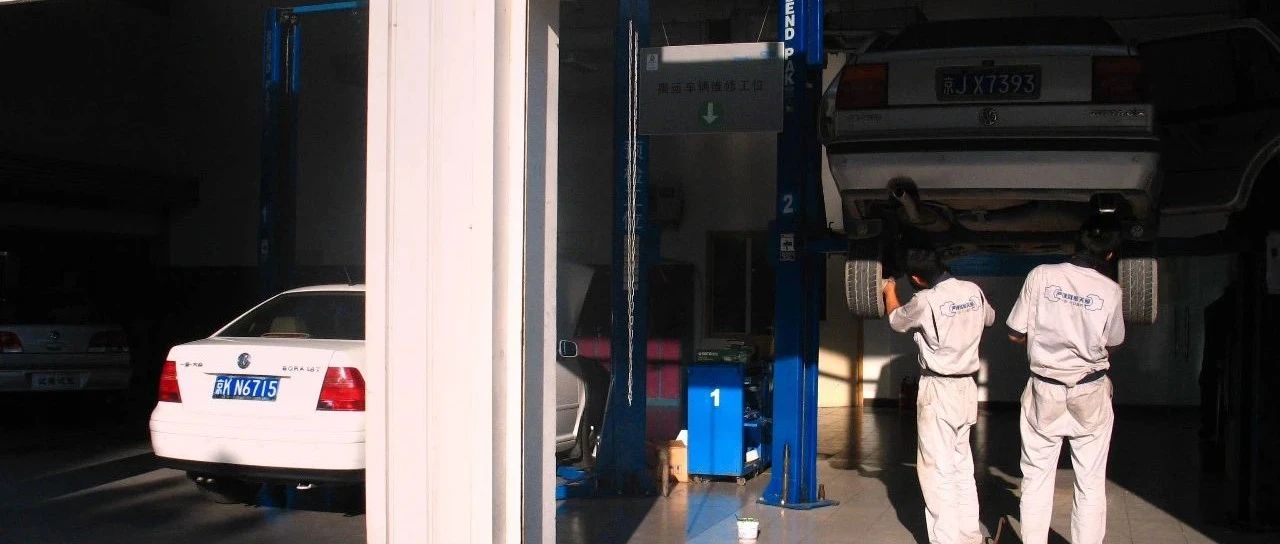
“汽车越来越多,生意越来越少”:谁在冲击传统汽修店?
第一财经· 2025-07-07 13:53
Core Viewpoint - The traditional auto repair industry in China is undergoing significant transformation due to the rapid growth of the electric vehicle (EV) market, leading to a decline in maintenance demand for internal combustion engine (ICE) vehicles and increased competition from online platforms [2][6][8]. Group 1: Industry Changes - The number of traditional auto repair shops in China decreased by 18.7% from 2023 to 2025, dropping from 423,000 to 344,000 [6]. - In major cities with high EV penetration, traditional repair shops saw a reduction of over 25% [6]. - The average monthly revenue for a repair shop has plummeted from 137,000 yuan in 2023 to 16,000 yuan in 2024, a decline of over 750% [6]. Group 2: Impact of Electric Vehicles - The maintenance demand for EVs is significantly lower than for ICE vehicles, with five EVs requiring maintenance equivalent to just one ICE vehicle [8][9]. - The average annual maintenance value per vehicle remains stable at 2,500 to 2,600 yuan, but consumer willingness to spend is declining, with the percentage of customers opting for only one service item increasing from 62% in 2021 to 66% in 2024 [8] [9]. Group 3: Competitive Landscape - The entry of internet companies like Tuhu and JD into the auto repair market has increased transparency and competition, leading to lower profit margins for traditional repair shops [5][8]. - Insurance revenue, which used to contribute 30% to 40% of profits for repair shops, has now dropped to less than 10% due to insurance companies reducing repair costs [9]. Group 4: Transformation Strategies - Many repair shop owners are turning to social media to attract customers by sharing repair knowledge and success stories [11]. - Some shops are focusing on community services and reducing operational costs to achieve growth, with monthly revenues of 50,000 to 100,000 yuan and net profits of around 20,000 yuan [11]. - The industry is encouraged to invest in EV maintenance training, establish partnerships with EV manufacturers, and enhance digital capabilities to adapt to the changing market [12].
“汽车越来越多,生意越来越少”:传统汽修店的起落与转型
Di Yi Cai Jing· 2025-07-07 11:01
Core Insights - The Chinese automotive aftermarket is undergoing a profound transformation, with traditional repair shops facing significant challenges due to the rapid growth of the electric vehicle (EV) market and increased competition from online platforms [1][2][4] Group 1: Market Dynamics - The number of traditional repair shops in China is projected to decrease by 18.7% from 2023 to 2025, dropping from 423,000 to 344,000 [3] - In major cities with high EV penetration, such as Beijing and Shanghai, the reduction in traditional repair shops exceeds 25% [3] - The average monthly cash revenue for a repair shop has plummeted from 137,000 yuan in 2023 to 16,000 yuan in 2024, a decline of over 750% [3] Group 2: Impact of Electric Vehicles - The maintenance demand for traditional fuel vehicles is declining, with the average annual maintenance value per vehicle stabilizing at 2,500 to 2,600 yuan, while consumer spending willingness is decreasing [4][5] - The maintenance needs for EVs are significantly lower, with five EVs requiring maintenance equivalent to that of one fuel vehicle, leading to a shrinkage in core services like maintenance and repair for traditional shops [5] Group 3: Competitive Landscape - The entry of internet companies like Tuhu and JD into the automotive repair market has increased transparency, intensifying competition and reducing profit margins for traditional repair shops [2][4] - Promotions for basic maintenance services, such as 199 yuan or 299 yuan offers, have further eroded profit margins, with some shops reporting monthly net profits of only 20,000 yuan [2][4] Group 4: Adaptation Strategies - Traditional repair shops are increasingly turning to social media and short video platforms to attract customers and share repair knowledge, indicating a shift towards digital engagement [6] - Some shops are focusing on community services and reducing operational costs to achieve growth, with certain "couple-run" shops transitioning to "studios" that cater to familiar customers [6] - The industry is encouraged to invest in EV maintenance training, establish partnerships with EV manufacturers, and enhance digital capabilities to adapt to the changing market [7]