
油气勘探开发

Search documents
海南矿业:油气业务是海南矿业着力打造的第二增长曲线
Zheng Quan Ri Bao Wang· 2026-01-29 12:43
证券日报网讯1月29日,海南矿业(601969)在互动平台回答投资者提问时表示,油气业务是海南矿业 着力打造的第二增长曲线,业务主体为公司全资子公司洛克石油。洛克石油通过以外资独立油气开发商 的身份与中国石油、中国海油(600938)、马国油等大型国家石油公司及独立石油公司合作的方式开展 油气勘探、评价及开发业务,目前主要油气项目位于中国四川、中国南海北部湾、中国南海珠江口、马 来西亚及阿曼苏丹国,所有油气项目的合作方式均为产品分成(PSC)合同模式。 ...

支持更多民营企业入场能源建设 释放什么信号?
Jing Ji Ri Bao· 2026-01-26 09:12
Group 1 - The energy sector in China is undergoing significant transformation, shifting from a reliance on coal and traditional energy sources to a diverse mix including renewables like wind, solar, and hydrogen, with increasing participation from private enterprises [1][2] - The Chinese government is actively encouraging private enterprises to engage in energy development, particularly in oil and gas exploration, nuclear power projects, and renewable energy, which presents substantial market opportunities [2][3] - The introduction of the Energy Law on January 1, 2025, aims to create a legal environment that supports private investment in energy infrastructure and development, promoting equal protection for various market participants [3] Group 2 - Private enterprises are becoming increasingly prominent in the energy sector, with approximately 60% of wind turbine manufacturers and a majority of solar equipment manufacturers being privately owned [3] - In the energy storage sector, nine out of the top ten companies by shipment volume in 2023 are private enterprises, and over 80% of large-scale charging service operators are also private [3] - The opening of the energy sector to more private companies is seen as a strategic move to enhance national competitiveness and foster a more dynamic market economy [4]
股票行情快报:洲际油气(600759)1月23日主力资金净卖出6.25亿元
Sou Hu Cai Jing· 2026-01-23 12:19
Core Viewpoint - The stock of Zhongjie Oil and Gas (600759) has shown a price increase of 3.53% as of January 23, 2026, closing at 4.4 yuan, despite a significant decline in its financial performance over the past year [1]. Financial Performance - For the first three quarters of 2025, Zhongjie Oil and Gas reported a total revenue of 1.537 billion yuan, representing a year-on-year decrease of 19.94% [2]. - The net profit attributable to shareholders for the same period was 83.08 million yuan, down 46.61% year-on-year [2]. - The company's net profit after deducting non-recurring items was 96.97 million yuan, reflecting a decline of 43.74% year-on-year [2]. - In Q3 2025 alone, the company generated a revenue of 481 million yuan, which is an 18.45% decrease compared to the same quarter last year [2]. - The net profit for Q3 2025 was 33.31 million yuan, down 28.39% year-on-year [2]. - The company's debt ratio stands at 28.74%, with investment income reported at -7.21 million yuan and financial expenses at 54.13 million yuan [2]. - The gross profit margin for the company is 56.44% [2]. Market Activity - On January 23, 2026, the stock experienced a trading volume of 9.7622 million shares, with a total transaction value of 4.329 billion yuan [1]. - The net outflow of main funds was 625 million yuan, accounting for 14.44% of the total transaction value, while retail investors saw a net inflow of 383 million yuan, representing 8.84% of the total [1].


中国科技再迎“丰收年” ——2025科技工作新亮点之一
Ke Ji Ri Bao· 2026-01-21 06:50
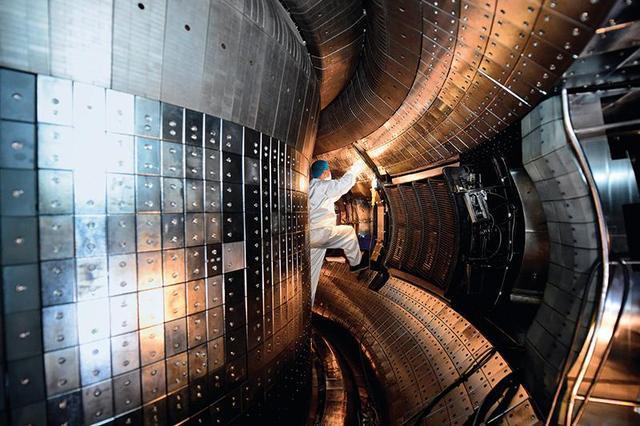
Group 1 - China's fusion energy research has made a significant leap from basic science to engineering practice, supported by a new type of national system that has enabled breakthroughs in superconducting magnet design and manufacturing [1] - The successful drilling of the deep exploration well in Sichuan, reaching a depth of over 10,000 meters, marks another important milestone for China National Petroleum Corporation (CNPC) in deep earth exploration [1] - A collaborative innovation consortium formed by nine state-owned enterprises, including CNPC and China National Petroleum Corporation, is driving technological advancements in deep oil and gas exploration [1] Group 2 - The new type of national system has demonstrated its advantages in major technological breakthroughs across various fields, including the Beidou system and lunar exploration, showcasing the effectiveness of coordinated efforts [2] - The 14th Five-Year Plan emphasizes the need for a new type of national system to achieve decisive breakthroughs in key core technologies across critical sectors [2] - The transition from quantitative accumulation to qualitative leaps in technology reflects the strengths of the new type of national system in addressing external technological blockades and fostering new productive forces [2] Group 3 - The rapid development of emerging industries such as artificial intelligence, industrial robotics, and clean energy is evident, with significant advancements in smart manufacturing and container operations at Tianjin Port [3] - By 2025, China's production and sales of new energy vehicles are expected to exceed 16 million units, maintaining its position as the global leader for 11 consecutive years [3] - The low-altitude economy is projected to surpass a market scale of 1.5 trillion yuan, indicating the formation of a new strategic emerging industry cluster [3] Group 4 - The successful clinical trial of a brain-machine interface for precise tumor boundary localization represents a key step in the clinical application and industrialization of this technology [5] - By 2025, China is expected to approve 76 innovative drugs, leading the world in the number of new drug approvals, with a total transaction value of over 130 billion USD for innovative drug licensing [5] - Technological advancements are increasingly integrated into daily life, enhancing various sectors such as smart agriculture and digital cultural heritage [5] Group 5 - The Ministry of Science and Technology emphasizes the importance of independent innovation in advancing high-quality development and enhancing the overall effectiveness of the national innovation system [6] - The focus for 2026 will be on strengthening strategic planning and resource allocation to foster new driving forces and lead the development of new productive forces [6]


中国科技再迎“丰收年”
Huan Qiu Wang Zi Xun· 2026-01-21 01:30
Core Insights - In 2025, China is experiencing a significant year of technological achievements, showcasing advancements in various fields such as nuclear fusion, artificial intelligence, and innovative pharmaceuticals, positioning itself as one of the fastest-growing economies in terms of innovation [1][4][9]. Group 1: Breakthroughs in Technology - The "artificial sun" project achieved a world record by maintaining plasma operation at 1 million degrees Celsius for 1066 seconds, marking a significant leap in fusion energy research [2][4]. - China Petroleum successfully drilled over 10,000 meters deep in the Sichuan Basin, demonstrating advancements in deep-earth exploration technologies through collaborative efforts among enterprises, universities, and research institutions [4][5]. Group 2: Innovation Mechanisms - The new type of national system has proven effective in overcoming technological barriers, enabling breakthroughs in critical areas such as superconducting magnets and deep-earth drilling technologies [4][5]. - The integration of resources and collaborative efforts across various sectors has been emphasized as a key strategy for achieving decisive breakthroughs in core technologies [5][9]. Group 3: Economic Transformation - The rapid expansion of 5G-A networks across over 300 cities has facilitated advancements in smart manufacturing and large-scale event support, contributing to economic growth [6][8]. - In 2025, China's production and sales of new energy vehicles exceeded 16 million units, maintaining its position as the world's largest market for such vehicles [8][9]. Group 4: Healthcare Innovations - A groundbreaking clinical trial using a domestically developed microelectrode array for precise tumor boundary localization during surgery was successfully completed, marking a significant advancement in brain-computer interface technology [10][12]. - In 2025, China approved 76 innovative drugs, leading the world in the number of new drug approvals, with total authorized transactions exceeding $130 billion [12]. Group 5: Future Directions - The Ministry of Science and Technology plans to enhance the national innovation system's overall efficiency and promote high-quality technological supply to foster new economic drivers [13].
PTTEP将在阿提特气田建CCS设施
Zhong Guo Hua Gong Bao· 2026-01-20 02:49
Core Viewpoint - Thailand's PTT Exploration and Production Company (PTTEP) is advancing its carbon neutrality goals by initiating a carbon capture and storage (CCS) project at the Aitit gas field, with a total investment of approximately 10 billion Thai Baht (around 317.8 million USD) over five years, aiming for operational status by 2028 [1] Group 1: Project Details - The CCS project is expected to be approved by September 2025 and will not affect the normal production of natural gas at the Aitit gas field, which supplies about 8% of Thailand's domestic natural gas demand [1] - PTTEP plans to invest 1.18 million USD in 2026 specifically for emissions reduction initiatives, including expenditures related to the CCS project [1] Group 2: Partnerships and Collaborations - In October 2025, Japan's Mitsui & Co., through its wholly-owned subsidiary Mitsui Oil Exploration Co., will participate in the CCS project, with its subsidiary holding a 4% stake in the Aitit gas field [1]
中国石油天然气集团董事长戴厚良:大力推动国内油气勘探开发和增储上产 加快推动页岩油气革命
Ge Long Hui A P P· 2026-01-16 04:24
Core Viewpoint - China National Petroleum Corporation (CNPC) aims to complete the Tarim 1.2 million tons/year ethylene project by 2026, emphasizing domestic equipment localization and green production methods [1] Group 1: Project Development - The Tarim ethylene project will achieve over 98% localization of equipment, with significant advancements in fully electric drives and the first domestic production of major equipment [1] - The project will utilize a "blue hydrogen to blue ammonia + carbon dioxide to urea" model for green production, aiming to create a zero-carbon petrochemical park [1] Group 2: Energy Security and Supply - CNPC is committed to being a "pillar" for energy supply security, focusing on domestic oil and gas exploration and production to ensure national energy security [1] - The company plans to deepen international energy cooperation and enhance overseas energy production and supply bases, improving trade security and cross-border energy channels [1] Group 3: Industry Transformation - CNPC is accelerating the restructuring and upgrading of refining and chemical sectors, optimizing product and industrial structures to enhance the supply of high-quality energy and chemical products [1] - The company aims to play a key role in building a strong energy nation and ensuring the stability of the oil and gas industry supply chain [1]
海南矿业1月15日获融资买入4037.33万元,融资余额4.23亿元
Xin Lang Cai Jing· 2026-01-16 01:42
Group 1 - Hainan Mining's stock price decreased by 0.62% on January 15, with a trading volume of 407 million yuan, and a net financing purchase of 5.05 million yuan for the day [1] - The company's financing balance reached 425 million yuan, accounting for 1.89% of its market capitalization, indicating a high level compared to the past year [1] - Hainan Mining's main business includes iron ore mining, oil and gas exploration, and commodity trading, with revenue contributions of 40.82% from oil and gas and 28.72% from minerals [1] Group 2 - As of September 30, Hainan Mining had 50,600 shareholders, an increase of 8.38%, while the average circulating shares per person decreased by 7.74% [2] - For the period from January to September 2025, Hainan Mining reported a revenue of 3.36 billion yuan, a year-on-year increase of 5.93%, but a net profit of 312 million yuan, a decrease of 42.84% [2] - The company has distributed a total of 993 million yuan in dividends since its A-share listing, with 657 million yuan distributed in the last three years [3]
AI赋能油气勘探开发
Ren Min Ri Bao Hai Wai Ban· 2026-01-14 08:13
Core Viewpoint - The oil and gas industry must transition from a hypothesis-driven approach to a data-driven approach, especially in the context of advancements in artificial intelligence (AI) which is seen as a transformative force in the industry [1][9]. Group 1: Hypothesis-Driven vs. Data-Driven Approaches - Hypothesis-driven methodology relies on existing knowledge and theories to formulate assumptions, which are then tested through various forms of data collection and analysis [2]. - The advantages of hypothesis-driven approaches include clear direction and focus on specific problems, while the disadvantages involve potential biases from initial assumptions [2]. - Data-driven approaches emphasize the use of data to uncover patterns and insights, utilizing statistical analysis and machine learning, which can lead to more objective findings [3]. - The integration of AI technologies enhances the data-driven approach, allowing for significant advancements in the oil and gas sector [3]. Group 2: Historical Context and Evolution - Early oil and gas discoveries were primarily based on intuition and experience, with significant historical examples such as the first commercial oil well drilled by Edwin Drake in 1859 [5]. - The development of geological theories in the mid-19th century laid the groundwork for large-scale oil discoveries, demonstrating the effectiveness of hypothesis-driven exploration [6]. - Recent advancements in data-driven methodologies, such as the GeoGPT model, signify a shift towards integrating AI in geological research, enhancing the efficiency of oil and gas exploration [7]. Group 3: Future Implications and Industry Transformation - The oil and gas industry is witnessing a paradigm shift towards data-driven management, which is expected to significantly improve operational efficiency and decision-making processes [9]. - The potential for AI to revolutionize the industry includes enhancing resource discovery, increasing recovery rates, and integrating with renewable energy sources [10]. - Companies are encouraged to embrace the "AI + oil and gas" era, adapting to new technologies and methodologies to remain competitive and sustainable [10].
“十四五”时期,中国首口超万米科探井完钻,成为亚洲第一、世界第二垂直深度井——掘进地下万米
Ren Min Ri Bao Hai Wai Ban· 2026-01-14 08:13
Core Viewpoint - The successful completion of China's first 10,000-meter scientific exploration well, the Deep Taka 1 Well, marks a significant milestone in deep earth engineering, enhancing national energy security and showcasing advancements in drilling technology and geological understanding [1][6][12]. Group 1: Drilling Achievements - The Deep Taka 1 Well reached a depth of 10,910 meters, setting five drilling records, including the fastest completion of a 10,000-meter well on land and the deepest tailpipe cementing [2][5]. - The well is located in the Tarim Basin, where depths exceeding 9,000 meters are classified as ultra-deep wells, presenting significant challenges akin to standing atop Mount Everest and looking down at the Yarlung Tsangpo River [3][4]. Group 2: Technical Challenges - The drilling faced extreme environmental conditions, with temperatures ranging from over 50 degrees Celsius in summer to nearly -30 degrees Celsius in winter, complicating operations [3]. - The well encountered complex geological formations, requiring frequent adjustments to drilling techniques and equipment due to rapid changes in rock properties at depth [4][8]. Group 3: Technological Innovations - The project utilized a self-developed 12,000-meter automated drilling rig capable of lifting 900 tons, significantly enhancing operational efficiency and reducing manual labor by over 80% [8][9]. - Advanced drilling technologies, including high-temperature resistant drilling fluids and specialized drill bits, were developed to meet the unique challenges of ultra-deep drilling [8][9]. Group 4: Geological Insights - The successful drilling provided valuable geological data from depths previously unexplored, confirming the potential for oil and gas resources in the Tarim Basin, which is recognized as a major oil and gas reservoir in China [6][10]. - The exploration of deep geological formations will contribute to understanding ancient environmental conditions and the evolution of sedimentary basins, aiding in broader scientific research [11]. Group 5: Strategic Importance - The advancement in deep drilling technology is crucial for China's energy security, as the country relies heavily on oil and gas imports, with significant resources located in deeper geological layers [10]. - The successful completion of the well signifies a shift from occasional breakthroughs in deep drilling to more routine operations, reflecting China's commitment to enhancing its capabilities in this critical area [12][13].