软件

Search documents
黄金白银,集体下跌!
中国能源报· 2026-03-14 06:22
Group 1: Precious Metals - International gold and silver prices continued to decline due to the cooling of interest rate cut expectations from the Federal Reserve and the rise of the US dollar index. As of the close, April gold futures were priced at $5061.70 per ounce, down 1.25%, while May silver futures were priced at $81.343 per ounce, down 4.43%. For the week, international gold prices fell by 1.88% and silver prices by 3.52% [3][5]. Group 2: US Stock Market - On Friday, the three major US stock indices collectively declined, with the Dow Jones down 0.26%, the S&P 500 down 0.61%, and the Nasdaq down 0.93%. Major tech stocks mostly fell, with Meta down nearly 4%, Apple down over 2%, and Adobe down over 7%. Despite Adobe's latest earnings report exceeding market expectations, the long-serving CEO decided to resign due to disruptive changes in the AI sector, leading several brokerages to lower their target prices. For the week, the Dow fell by 1.99%, the Nasdaq by 1.26%, and the S&P 500 by 1.60% [5]. Group 3: Economic Data - The US Department of Commerce revised the fourth quarter GDP growth for 2025 to an annualized rate of 0.7%, significantly lower than the previous estimate of 1.4% and a sharp decline from the 4.4% growth in the third quarter. For the entire year, the GDP growth for 2025 is projected at 2.1%, down from 2.8% in 2024 [7]. Group 4: Inflation Indicators - The preferred inflation indicator of the Federal Reserve, the Personal Consumption Expenditures (PCE) price index, rose by 0.3% month-on-month in January and by 2.8% year-on-year. The core PCE increased by 0.4% month-on-month and 3.1% year-on-year, which aligns with market expectations but remains above the Fed's 2% inflation target. In the context of persistent inflation, investors are betting that the Fed will be more cautious regarding interest rate cuts this year [8]. Group 5: European Stock Market - In the European market, all three major indices fell, with the UK FTSE 100 down 0.43%, the French CAC 40 down 0.91%, and the German DAX down 0.60% [10]. Group 6: Oil Market - On Friday, US oil prices rose over 3% amid concerns over rising oil prices potentially leading to increased inflation and economic slowdown. The price of light crude oil futures for April delivery closed at $98.71 per barrel, up 3.11%, while Brent crude for May delivery closed at $103.14 per barrel, up 2.67%. For the week, US oil prices increased by 8.59%, and Brent prices surged by 11.27% [11].


美股收跌,标普500指数周线三连跌,美四季度GDP遭大幅下修
第一财经· 2026-03-14 00:09
2026.03. 14 本文字数:1932,阅读时长大约3分钟 作者 | 第一财经 胡弋杰 当地时间周五,随着中东局势持续升级、原油价格大幅波动,投资者正评估伊朗冲突对全球石油供应及通胀前景的影响,三大股指当日及本周均录得跌 幅。 截至收盘,道琼斯工业平均指数下跌119.38点,收于46558.47点,跌幅为0.26%;标普500指数下跌40.43点,收于6632.19点,跌幅为0.61%;纳斯达克 综合指数下跌206.62点,收于22105.36点,跌幅为0.93%。罗素2000小型股指数下跌8.94点,跌幅0.36%,报2480.05点,收于年内低点。 从周线表现看,标普500指数本周累计下跌1.6%,纳斯达克指数下跌1.26%,道琼斯工业指数下跌1.98%。标普500指数周线三连阴,录得自2025年3月 以来最长周线连跌。 标普500指数11个主要板块中科技股跌幅最大,公用事业板块涨幅居前。 大型科技股普遍走低。苹果跌2.21%,苹果公司13日宣布,从2026年3月15日起,中国内地App Store的iOS及iPadOS佣金率将正式下调。 Meta下跌3.83%,有报道称该公司已将人工智能模型"Avo ...
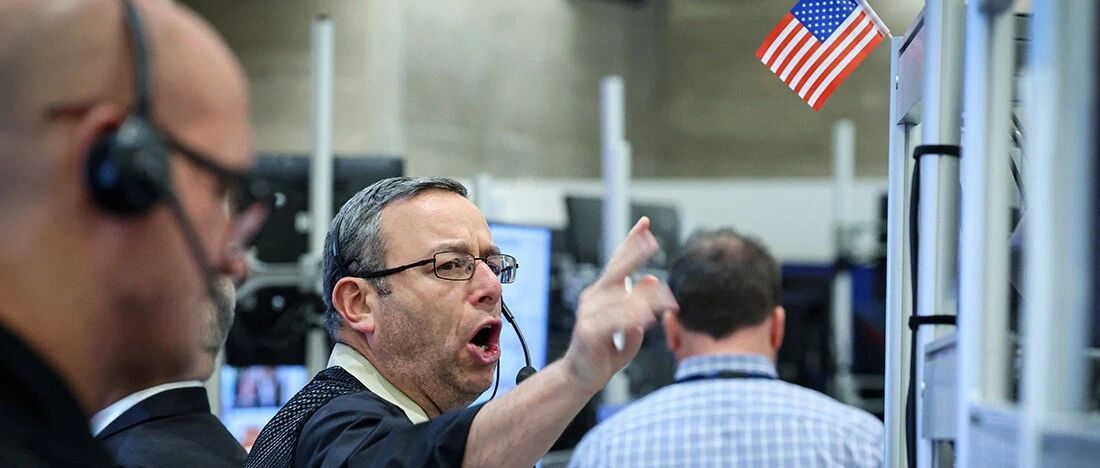
霍尔木兹海峡持续关闭,但市场为何稳得住?
华尔街见闻· 2026-03-13 09:25
Core Viewpoint - Despite the closure of the Strait of Hormuz and escalating tensions in the Middle East, oil prices and the U.S. stock market have not experienced expected volatility, with current oil prices around $100 per barrel, significantly lower than historical crisis levels [3][4]. Oil Price Dynamics - The primary reasons for the restrained oil price increase include: 1. Low starting prices and ample inventory, with global oil stocks at a five-year high before the conflict, keeping prices manageable despite a nearly 40% surge in nine trading days [7]. 2. Market expectations of a quick resolution to the conflict, as indicated by futures market data showing that traders anticipate supply disruptions to last only a few weeks [7]. 3. Macro interventions, such as the release of 400 million barrels from reserves by the IEA and its member countries, which help stabilize oil prices despite a daily loss of 15 million barrels in shipping capacity [7]. Historical Context of Oil Crises - Historical oil crises have seen higher absolute prices, and current major economies have significantly reduced their dependence on oil for heating and power generation [11]. - Estimates suggest that oil futures may need to rise by an additional $40 to $50 to trigger an economic recession comparable to past crises, indicating a macroeconomic buffer that allows conflict parties to maintain their positions [12]. Impact on Global Economies - The price increase is causing more severe disruptions in developing economies, particularly in Asia, which face compounded risks from soaring oil prices and fuel shortages [14]. U.S. Stock Market Behavior - The U.S. stock market has shown resilience, largely due to the country's status as the largest oil producer, which insulates it from direct impacts of the energy crisis [15]. - An unusual market phenomenon has emerged where defensive sectors, typically seen as safe havens during geopolitical conflicts, have underperformed, with healthcare and consumer staples ETFs declining by approximately 5% and 6%, respectively [17]. Sector Rotation Insights - The rotation within the stock market is influenced by geographic exposure, with companies generating a higher percentage of revenue from North America showing better resilience against geopolitical shocks [22]. - Investors are shifting focus towards companies with strong growth potential rather than merely low valuations, favoring firms in the pharmaceutical sector that demonstrate solid earnings growth [22]. Cautionary Notes - Analysts warn that the current stability in asset prices relies on the fragile assumption that all parties desire a swift end to the conflict, with potential disruptions from unforeseen events capable of drastically altering market conditions [23][24].

微软市值5个月内蒸发1万亿美元
第一财经· 2026-03-13 05:55
Core Viewpoint - Microsoft's stock has been on a downward trend, with a significant market value loss of $1 trillion in less than five months, raising concerns among investors and analysts about its future performance [3][4]. Group 1: Stock Performance and Analyst Ratings - As of March 12, Microsoft's stock price closed at $401.86, down 0.75%, with a market capitalization of $2.98 trillion [3]. - The stock peaked at approximately $540 in late October, leading to a substantial decline in value [4]. - Analysts from Melius Research and Stifel have downgraded Microsoft's stock ratings from "Buy" to "Hold," citing concerns over competition and capital expenditures [4]. Group 2: Competitive Landscape and AI Impact - The introduction of AI tools like Anthropic's Claude Cowork has raised concerns about the software industry's growth, potentially acting as a long-term obstacle [5]. - Microsoft is responding to competitive pressures by integrating AI technology into its products, such as the launch of Copilot Cowork for Microsoft 365 [5]. Group 3: Capital Expenditures and Financial Performance - Microsoft's capital expenditures reached $37.5 billion in Q2 of FY2026, a 66% year-over-year increase, raising investor anxiety about cash flow risks [5][6]. - The gross margin for the second quarter was reported at 68%, showing a slight decline attributed to ongoing investments in AI infrastructure [6]. - Despite the increase in capital spending, investors are concerned about the timing of returns on these investments, as evidenced by a post-earnings drop in stock price [6].


美国软件NDR要点总结:关注客户端增量价值创
Zhao Yin Guo Ji· 2026-03-13 02:45
Investment Rating - The industry is rated as "Outperform" indicating that the sector is expected to perform better than the market benchmark over the next 12 months [16]. Core Insights - The report emphasizes the importance of client incremental value creation in the software and IT services sector, particularly in response to competitive pressures from AI models [2][4]. - Leading companies in application software have established competitive barriers based on deep understanding and utilization of customer data, mature workflow products, and reliable AI systems [2][9]. - The transition to a hybrid pricing model is seen as a key driver for long-term revenue growth, with companies like Salesforce and ServiceNow successfully implementing such models [2][11]. - The report highlights the ongoing internal application of AI to enhance operational efficiency, which is expected to support profit margins across various companies [2][4]. Summary by Relevant Sections Application Software - Leading companies are focusing on enhancing client value through reliable workflows and understanding of data, which helps mitigate AI-related competition [2][4]. - Salesforce has established four competitive barriers, including deep data understanding and a robust AI system, while ServiceNow emphasizes cross-departmental integration capabilities [2][9]. Hybrid Pricing Model - Salesforce has developed a hybrid pricing model that includes per-user and usage-based fees, receiving positive feedback from clients [2][10]. - ServiceNow is also transitioning to a hybrid model, which balances budget predictability for clients with revenue opportunities for the company [11][12]. AI Integration and Efficiency - Companies are leveraging AI to improve internal operations, with Salesforce reporting significant efficiency gains in customer service and sales [2][4]. - ServiceNow has noted that AI allows for a high percentage of IT requests to be resolved independently, leading to substantial cost savings [2][4]. Company Recommendations - The report recommends focusing on companies capable of transitioning to hybrid pricing models and benefiting from AI-driven revenue growth, specifically highlighting Palo Alto Networks and Datadog as key investment opportunities [2][4][8].


未知机构:美国股市动态震荡加剧标普500指数收跌152个-20260313
未知机构· 2026-03-13 02:30
美国股市动态:震荡加剧 标普 500 指数收跌 152 个基点,报 6673 点,尾盘竞价(MOC)有 5.6 亿美元买盘。 纳斯达克 100 指数收跌 173 个基点,报 24534 点。 罗素 2000 指数收跌 212 个基点,报 2489 点。 道琼斯工业平均指数收跌 156 个基点,报 46678 点。 美国股市动态:震荡加剧 标普 500 指数收跌 152 个基点,报 6673 点,尾盘竞价(MOC)有 5.6 亿美元买盘。 纳斯达克 100 指数收跌 173 个基点,报 24534 点。 罗素 2000 指数收跌 212 个基点,报 2489 点。 道琼斯工业平均指数收跌 156 个基点,报 46678 点。 美国所有股票交易所全天成交量为 200 亿股,今年以来日均成交量为 196.5 亿股。 恐慌指数(VIX)上涨 12.65%,报 27.29。 WTI 原油期货上涨 10.15%,报 96.13 美元 / 桶。 美国 10 年期国债收益率上涨 3 个基点,报 4.26%。 黄金期货下跌 171 个基点,报 5088 美元 / 盎司。 美元指数(DXY)上涨 50 个基点,报 99.73。 ...
股市维持适度乐观,债市表现疲软
Zhong Xin Qi Huo· 2026-03-12 02:18
1. Report Industry Investment Rating - Not provided in the content 2. Core View of the Report - The stock market maintains a moderately optimistic outlook, while the bond market shows weakness. Specifically, for stock index futures, maintain a moderately optimistic stance; for stock index options, continue to hold call options for defense; for treasury bond futures, the bond market is weak [2][3]. 3. Summary by Relevant Catalogs 3.1 Market Outlook 3.1.1 Stock Index Futures - **View**: Maintain a moderately optimistic outlook. Yesterday, the equity market rose and then fell, with the ChiNext Index leading the gain by 1.31% and the CSI 300 rising by 0.64%. The large - cap style was generally strong. The new energy sectors such as photovoltaic and lithium - battery took turns to make up for the gains, while the technology sector declined. Due to the stalemate in the geopolitical conflict and the failure of energy mitigation measures, market risk appetite was suppressed, and funds quickly gathered towards certain themes. The negative public opinion caused by the OpenClaw security issue led to the adjustment of software and semiconductor sectors. The annual report performance of new energy and automobile stocks exceeded market expectations, indicating strong downstream demand, and institutions revealed price - increase expectations for lithium mines and photovoltaics, which catalyzed the industry switch of funds. Although the seesaw effect between short - term energy, the US dollar index, and the stock market is still obvious, both domestic and international markets are relatively restrained, suggesting the expectation of TACO and mitigation measures still exists. In operation, temporarily maintain a moderately optimistic attitude, hold half - position IM long positions, and wait for the risks to materialize before making a right - side attack [3][9]. - **Operation Suggestion**: Hold IM [9]. 3.1.2 Stock Index Options - **View**: Continue to hold call options for defense. Yesterday, the equity index fluctuated strongly. The overall form of option indicators was similar to that of the previous day. The trading volume of the varieties decreased slightly, and the option sentiment indicator, the position PCR, strengthened mainly. Combined with the natural decline of implied volatility, it shows that the market sentiment is relatively warm. However, considering the large recent market fluctuations, the trend - following effect of option - end indicators is stronger than the guiding effect, and the current option market is trading on volatility rather than simply on direction. Therefore, the option strategy will cautiously maintain the weekly report view, still suggesting to continue to hold call options for defense to protect the systematic risks of the overall position [4][9]. - **Operation Suggestion**: Continue to hold call options for defense [9]. 3.1.3 Treasury Bond Futures - **View**: The bond market is weak. Treasury bond futures fell across the board. The inter - bank bond market was generally weak yesterday, with the yields of most major interest - rate bonds rising slightly. The 30 - year main contract led the decline, pushing the yield curve to steepen. The inter - bank market funds were stable but slightly tightened. Although the overall market fund supply remained stable and the difficulty of institutional lending was limited, as the mid - month tax - payment time approached, the market funds might face certain phased pressure, but it was expected not to cause large - scale liquidity tension. The widening of the spread between 30 - year and 10 - year treasury bonds was a significant feature of the bond market yesterday. The market was still worried about the possible inflation increase caused by the rising oil price. Coupled with the strong export data at the beginning of the year, the 30Y treasury bond performed worse than the 10Y treasury bond. In the short term, the situation in the Middle East is still very changeable, and the impact on inflation needs to be continuously observed. Inflation concerns may continue to disturb the bond market, and the bond market may continue the volatile market in the short term [5][9][10]. - **Operation Suggestion**: Trend strategy: volatile. Hedging strategy: pay attention to short - hedging at the low basis. Basis strategy: pay attention to the long - end positive arbitrage opportunity. Curve strategy: pay attention to the flattening of the 30Y - 10Y in the short term [10].
中金 | 宏观探市3月报:AI,地缘与A股韧性
中金点睛· 2026-03-11 23:36
Core Viewpoint - In February, global market volatility increased, with emerging markets outperforming developed markets, and non-US markets performing better than the US market. Value and small-cap styles led the gains, while risk appetite declined, leading to increases in US Treasuries, the US dollar, and gold prices [1][2]. Group 1: Market Performance - The MSCI Emerging Markets Index rose by 5.4% in February, with the Korean Kospi Index surging by 19.5%. European markets also performed well, with the UK FTSE 100 Index up by 6.7% and the German DAX Index up by 3% [1]. - In contrast, US markets weakened due to tight liquidity and concerns over the macroeconomic impact of AI, with the Nasdaq Index falling by 3.4% and the S&P 500 down by 0.9%. The Dow Jones Index saw a slight increase of 0.2% [1][2]. - Market style rotation occurred, with small-cap and value styles leading, as evidenced by the Russell 2000 Index rising by 0.7% and the S&P Value Index increasing by 2.1%, while growth stocks declined by 3.5% [1]. Group 2: Liquidity and Economic Factors - The US market's weakness is attributed to two main factors: persistent tight liquidity and negative macroeconomic sentiment regarding AI. Future monetary and fiscal easing in the US is likely, suggesting a trend towards increased global liquidity [2][3]. - Since June 2022, the Federal Reserve has reduced its balance sheet by approximately $2.3 trillion, leading to a decline in narrow liquidity below the "ample liquidity" threshold. Although liquidity is expected to improve marginally, it remains tight compared to pre-pandemic levels [3][4]. Group 3: AI Impact on Labor Market - Current data indicates that AI has not yet shown a significant overall negative impact on the US labor market. There is a weak U-shaped relationship between AI exposure and employment across industries, with some sectors experiencing job declines while others, like software development, show stronger hiring [5][6]. - Academic research highlights that AI's impact on the labor market includes both displacement and enhancement effects, with lower-level jobs being more susceptible to replacement, while higher-level jobs may benefit from AI advancements [6]. Group 4: Geopolitical Risks - Rising geopolitical risks in the Middle East, particularly following military actions involving Israel and Iran, have heightened global market volatility, leading to increased prices for gold, oil, and the US dollar. The market's response has been characterized by a flight to safety [7][8]. - The ongoing geopolitical tensions are expected to influence asset classes significantly, with potential implications for inflation and economic stability in the US [7].

深夜,利好突袭!科技巨头,暴涨!特朗普:对伊朗军事行动即将结束!
券商中国· 2026-03-11 15:00
Core Viewpoint - The article highlights the significant surge in Oracle's stock price following the release of its latest earnings report, which exceeded market expectations and included an upward revision of revenue guidance for fiscal year 2027. This has alleviated concerns regarding the "SaaS apocalypse" narrative in the market [1][3][5]. Group 1: Oracle's Financial Performance - Oracle's Q3 FY2026 revenue reached $17.19 billion, a 22% year-over-year increase, surpassing market expectations of $16.91 billion [3]. - The company's net profit for the same period was $3.72 billion, reflecting a 27% year-over-year growth [3]. - The adjusted EPS was reported at $1.79, exceeding the anticipated $1.70 [3]. - For Q4 FY2026, Oracle expects adjusted EPS between $1.92 and $1.96, significantly higher than the analyst consensus of $1.70 [3]. - Oracle has raised its revenue forecast for FY2027 by $1 billion to $90 billion, compared to the previous expectation of $86.6 billion [3]. Group 2: Operational Highlights - Oracle's co-CEO Clay Magouyrk announced that the company has secured over 10 GW of power and data center capacity for the next three years, with over 90% of the funding provided by partners [4]. - In Q3, Oracle signed new contracts worth over $29 billion, with remaining performance obligations (RPO) reaching $553 billion at the end of the last fiscal quarter [4]. - The company delivered over 400 MW of capacity to customers in Q3, with 90% delivered on time or ahead of schedule, and the time from rack delivery to revenue generation has been shortened by 60% [4]. Group 3: Market Context and Economic Indicators - The U.S. Consumer Price Index (CPI) for February showed a year-over-year increase of 2.4%, aligning with expectations, while the core CPI remained at 2.5%, indicating a slowdown in inflationary pressures [6][7]. - Analysts expect the Federal Reserve to maintain interest rates in the upcoming meeting, with a 99.4% probability of no change [1][6]. - The article notes concerns about rising energy prices due to geopolitical tensions, which could impact future inflation [8][9].

中信证券研究:海外宏观|HALO会是持续主线吗?
Xin Lang Cai Jing· 2026-03-11 01:49
Core Viewpoint - The narrative around AI has shifted from "AI Bubble" to "AI Disruption" and "HALO," indicating a transition from systemic bubble pricing to structural differentiation pricing in the market [1][2]. Group 1: Market Transition - The core logic of the initial phase of AI narrative was driven by computing power expansion and AI capital expenditure, characterized by a highly concentrated structure dominated by Mega Cap companies in the US [3][8]. - As of 2026, the market is reassessing which entities will benefit from resource bottlenecks, which will face substitution risks, and which possess survival certainty, leading to a differentiation into Winners, Survivors, and Losers [3][8]. Group 2: Winners, Survivors, and Losers - Within the US market, before the outbreak of the US-Iran conflict in 2026, sectors such as AI infrastructure, energy, and semiconductor equipment are expected to strengthen, becoming Winners; while software assets with high substitution risks are under pressure, becoming Losers [3][8]. - On a country level, driven by a surge in demand for storage chips, the South Korean stock market is expected to outperform other major markets, becoming a Winner; the European market is viewed as a phase Survivor (HALO) due to its industry structure; while the Indian market, characterized by labor-intensive services and outsourcing, has recently lagged, becoming a phase Loser [3][8]. Group 3: HALO Concept - HALO represents a one-time survival premium revaluation for low substitution risk assets, emerging after Losers have been priced in; it is not equivalent to structural winners [4][9]. - The HALO trade is seen as a reflection of phase-style rotation rather than a new long-term growth paradigm; true assets with sustained excess return potential should be closely tied to key nodes in the AI expansion path and resource bottlenecks or technological upgrades [4][9].