高科技

Search documents
精准滴灌实体经济 助企业转型升级
Nan Fang Du Shi Bao· 2025-12-02 23:21
Core Viewpoint - The article emphasizes the role of招商银行东莞分行 in supporting the high-quality development of enterprises in Dongguan through financial services, particularly focusing on technology and innovation-driven companies. Group 1: Financial Support for High-Tech Enterprises - 招商银行东莞分行 provides precise financing support for specialized and innovative high-tech enterprises, with a manufacturing loan balance of 23.665 billion and a technology loan balance of 14.669 billion as of October 2025, serving 3,970 technology enterprises [5][6]. - 广东鼎泰高科技术股份有限公司 has leveraged the bank's financial support to expand production capacity and enhance business development [6]. Group 2: Inclusive Finance and Customized Products - 招商银行东莞分行 has developed customized financing products for innovative small and medium-sized enterprises, including "Innovation Points Loan" and "Industry Points Loan," which have reached 725 enterprises and disbursed over 600 million since May 2024 [6][8]. - The "莞招码上测" product system allows enterprises to easily access financing options through a simple scan, reducing barriers for inclusive finance [8]. Group 3: Digital Financial Services - The bank has facilitated digital transformation for enterprises like 东莞徐福记食品有限公司 by integrating financial management systems, enhancing efficiency in payroll and expense management [8][9]. - The CBS system launched in August 2021 has enabled 6,353 enterprises to manage their financial operations more effectively, contributing to cost reduction and efficiency [8]. Group 4: Cross-Border Financial Services - 招商银行东莞分行 has established a comprehensive cross-border financial service model, supporting enterprises in managing cross-border funds, global accounts, and currency risk [10]. - 佳禾智能科技股份有限公司 has benefited from the bank's international business expertise and flexible financial solutions, facilitating its international expansion [10][11].




国潮崛起(下)
Jing Ji Ri Bao· 2025-12-02 22:22
Core Insights - The rise of "Guochao" (national trend) reflects the improvement in Chinese consumer spending power and cultural confidence, showcasing the ascent of Chinese manufacturing and brands [1][11] - The transformation of Chinese manufacturing from low-end to high-quality production is a fundamental aspect of the Guochao phenomenon [3][11] Group 1: Manufacturing Evolution - Chinese manufacturing has evolved from "unable to produce" to "able to produce" and now to "able to produce well," marking a significant upgrade in quality and capability [1][3] - The diversification of product offerings and improvement in quality are key foundations for the rise of Guochao, meeting the personalized and experiential consumption needs of younger consumers [2][8] Group 2: Brand Development - The shift from OEM (Original Equipment Manufacturer) to creating independent brands is crucial for enhancing the emotional and cultural value of products, allowing consumers to connect with the brand on a deeper level [5][8] - The establishment of "China Brand Day" and the recognition of Guochao as a cultural movement have contributed to the growth of brand value and market presence for Chinese companies [6][8] Group 3: Quality and Design - The focus on high-quality manufacturing and innovative design has allowed Chinese brands to compete effectively with international counterparts, providing products that are not only functional but also aesthetically appealing [4][5] - The integration of traditional cultural elements with modern aesthetics has transformed products from being merely functional to being culturally resonant and visually attractive [5][6] Group 4: International Standards and Globalization - Participation in the formulation of international standards is a critical step for Chinese brands to gain global recognition and assert their influence in the global market [9][10] - The ability to set and adhere to international standards enhances the competitiveness of Chinese manufacturing, facilitating smoother entry into global markets [10][11] Group 5: Market Dynamics - The collaboration between manufacturing enterprises and e-commerce platforms has created a robust ecosystem for promoting Guochao brands, enabling them to reach younger consumers effectively [7][8] - The emphasis on quality and innovation, combined with effective storytelling, has allowed Chinese brands to resonate with consumers and establish a strong market presence [8][11]
负增长!日本央行行长发声
证券时报· 2025-12-01 04:20
2025年12月1日,日本央行行长植田和男在名古屋与东海地区商界领袖举行会谈并发表演讲,全面阐述当前日本经济形势、物价走势及日本央行的货币政 策思路。 他明确表示,尽管日本经济在2025年7—9月出现六个季度以来首次负增长,但这属于暂时性回调,经济整体温和复苏态势未变;若经济与物价符合预期,央行将 逐步提高政策利率、调整货币宽松程度,而2026年春季劳资谈判将成为政策调整的关键观察点。 海外经济:整体温和增长,美国AI投资与消费成重要支撑 植田和男指出,当前海外经济整体呈现"温和增长、局部疲软"态势,主要受各国贸易政策影响,但关税对全球经济的压制效应未如预期显著。国际货币基金组织 (IMF)最新《世界经济展望》显示,2025年全球经济增速预测已从4月的2.8%上调至3.0%,2026年预计进一步升至3.1%,这一调整得益于三大关键因素: 其一,自2024年夏季起,多国与美国达成贸易谈判协议,显著降低了全球贸易前景的不确定性;其二,美国关税成本向消费端的传导"仅温和",叠加高股价带来 的财富效应,私人消费保持稳健,未出现大幅下滑;其三,全球范围内AI相关数字领域投资升温,叠加疫情期间热销的智能手机、个人电脑进入 ...

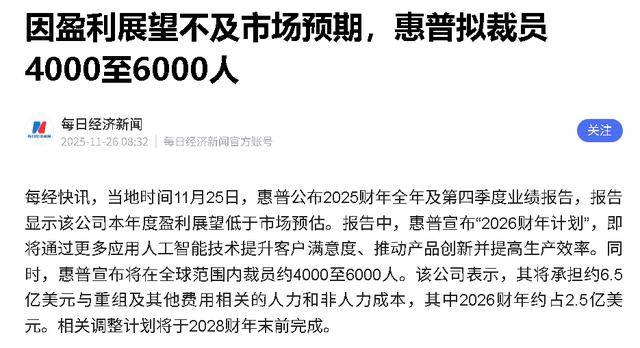
惠普盈利却裁员,6000人被淘汰,机器人上岗潮来临,员工前路难测
Sou Hu Cai Jing· 2025-11-29 23:16
Core Insights - HP announced significant layoffs of 4,000 to 6,000 employees despite reporting increased revenue and strong sales in personal computers, highlighting a disconnect between profitability and workforce stability [1][4] - The trend of layoffs is not isolated to HP; other tech giants like Amazon, Microsoft, and Intel are also reducing their workforce despite good financial performance, indicating a broader industry shift [4][5] - The drive for efficiency and cost-cutting is being fueled by investor pressure, leading companies to prioritize productivity over headcount [7][9] Group 1: Layoff Trends - HP's decision to cut jobs comes after previous layoffs, reflecting a growing trend in the tech industry where companies are downsizing even when they are financially healthy [1][4] - The layoffs are particularly affecting older employees who may find it challenging to adapt to the changing job market [1][2] Group 2: Impact of Technology - The rise of AI and automation is replacing many traditional roles, allowing companies to operate with fewer employees while maintaining or increasing efficiency [9][11] - Companies are increasingly relying on technology to handle tasks that previously required human labor, leading to a significant reduction in the workforce [9][11] Group 3: Employment Landscape - The job market is becoming increasingly competitive, with many individuals forced into freelance work as traditional job security diminishes [11][13] - There is a growing need for workers to acquire new skills to remain employable, as the demand for high-skilled positions rises [11][13] Group 4: Societal Implications - The rapid changes in the job market due to technological advancements are creating significant pressure on individuals and families, necessitating a collective response from government and businesses to support workforce retraining [13][16] - The challenge lies in ensuring that technology serves to enhance human capabilities rather than replace them, which is crucial for future employment stability [16]


越南与欧洲自由贸易联盟(EFTA)第18轮自由贸易协定谈判在岘港举行
Shang Wu Bu Wang Zhan· 2025-11-29 04:47
Core Points - The 18th round of Free Trade Agreement (FTA) negotiations between Vietnam and the European Free Trade Association (EFTA) took place in Da Nang, Vietnam from November 25 to 28 [1] - The goal of both parties is to make every effort to complete consultations in this round and to adopt necessary flexible measures to ensure a balanced agreement beneficial to both sides [1] - The negotiations are progressing smoothly, with efforts to narrow remaining differences highlighted by the Vietnamese delegation [1] Trade Relations - As of the end of 2024, trade between Vietnam and EFTA is expected to exceed $3.5 billion, maintaining stable growth over the years [1] - Major exports from Vietnam to EFTA member countries include footwear, textiles and garments, machinery and equipment, mobile phones and components, as well as agricultural products like coffee and cashews [1] - In return, Vietnam primarily imports high-tech and high-value-added products from EFTA member countries, such as pharmaceuticals, precision machinery, medical devices, and chemical products [1]
固高科技11月27日现1笔大宗交易 总成交金额200.07万元 溢价率为-10.60%
Xin Lang Cai Jing· 2025-11-27 09:28
Group 1 - The stock of Guhigh Technology increased by 4.10%, closing at 30.20 yuan on November 27 [1] - A block trade occurred with a total volume of 74,100 shares and a transaction amount of 2,000,700 yuan, with a transaction price of 27.00 yuan, reflecting a premium rate of -10.60% [1] - The buyer was Huatai Securities Co., Ltd. Guangdong Branch, and the seller was CITIC Securities Co., Ltd. Shenzhen Branch [1] Group 2 - Over the past three months, there has been one block trade for this stock, totaling 2,000,700 yuan [1] - In the last five trading days, the stock has seen a cumulative increase of 3.00%, with a net inflow of main funds amounting to 21,832,200 yuan [1]
日经平均股指重返5万点
日经中文网· 2025-11-27 08:00
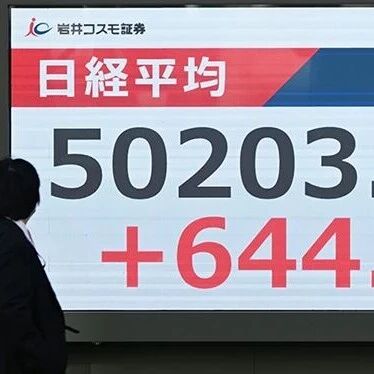
Core Viewpoint - The Nikkei average stock index has shown significant upward movement, driven by strong performance in U.S. tech stocks and rising expectations for interest rate hikes in Japan, leading to gains in banking stocks [2][4]. Group 1: Market Performance - On November 27, the Nikkei average stock price rose for three consecutive trading days, closing at 50,167.10 points, an increase of 608.03 points (1.23%) from the previous day [2]. - The opening price on November 27 was approximately 300 points higher than the previous trading day, with the index briefly surpassing 50,300 points and reaching a maximum intraday gain of over 700 points [4]. Group 2: Sector Highlights - AI-related stocks surged due to the strong performance of U.S. tech stocks, indicating a positive sentiment towards technology investments [2]. - Toyota Tsusho, involved in new-generation transportation development, showed outstanding stock performance, reflecting investor interest in innovative sectors [2]. Group 3: Economic Indicators - The market's anticipation of interest rate hikes by the Bank of Japan has led to a sustained rise in banking stocks, contributing to the overall market rally [2]. - The Tokyo Stock Exchange's TOPIX index briefly broke its historical high, signaling strong market momentum [2].
怕失业的你,在AI狂飙的时代该这么想
经济观察报· 2025-11-26 15:16
Core Insights - The article emphasizes the importance of optimism and long-term thinking in the age of AI, using the construction of the Sagrada Familia as a metaphor for enduring creativity and collaboration across generations [2][3][4][5]. Group 1: Historical Context and Long-term Vision - The Sagrada Familia, designed by Antoni Gaudí, represents a long-term vision that transcends individual lifetimes, showcasing the spirit of optimism and creativity [2][3]. - Gaudí's modular design approach allowed for independent progress on different parts of the church, ensuring that the project could adapt to future technologies and funding sources [3]. - The completion of the Sagrada Familia is projected for 2026, marking a significant milestone in a project that has spanned over 144 years [3]. Group 2: Optimism in Uncertain Times - The article argues that maintaining optimism is crucial in uncertain times, as most significant human achievements have been made by optimists [4][6]. - It highlights the need for a flexible mindset to envision multiple possibilities for the future, especially in the context of AI and global challenges [8][9]. Group 3: AI and Creativity - AI is positioned as a partner that enhances human creativity rather than replacing it, enabling individuals to focus on imaginative and meaningful tasks [12][16]. - The evolution of AI is expected to lead to a surge in creativity, as it frees up time for individuals to explore interests and engage in non-utilitarian pursuits [16][17]. Group 4: Challenges and Collaboration with AI - The article discusses the limitations of AI, emphasizing the need for human guidance in training AI models to ensure they align with real-world complexities [17][18]. - It points out the gap between theoretical knowledge and practical application in AI, suggesting that human experience is essential for effective collaboration [18][19]. Group 5: Future Implications - The potential for AI to reshape work dynamics is explored, with the possibility of reduced working hours as AI takes over routine tasks [16]. - The article concludes by stressing the importance of understanding change and embracing unexpected possibilities brought about by AI advancements [23].

2026年度展望:中国宏观
2025-11-26 14:15
Summary of Conference Call Notes Industry Overview - **Macro Economic Outlook for China**: The actual GDP growth target for 2026 is expected to be around 5%, reflecting government confidence and policy strength. Over the next decade, GDP growth must not be lower than 3.5% to reach the level of moderately developed countries [1][4] - **Fiscal Policy**: The fiscal policy is expected to remain expansionary, with a fiscal deficit rate maintained at around 4%. Special government bonds may increase to 2 trillion, and special bonds could reach 4.6 trillion [1][5][6] - **Investment and Consumption**: Investment is anticipated to achieve positive growth in 2026, while export growth is expected to remain strong but slightly decrease to 3.5%-4%. Consumption is influenced by subsidy uncertainties and needs further analysis [1][7] Key Points - **New Economy Contribution**: The new economy's share of GDP has risen to approximately 18%, with high-tech investment accounting for 12% of total investment. The new economy has surpassed the traditional economy in scale, significantly driving economic growth [1][12] - **Impact of Artificial Intelligence**: AI significantly affects energy demand, with data centers' electricity consumption continuously increasing, driving demand for energy storage and raw materials like copper, aluminum, silicon, and rare earths [1][13] - **Consumer Market Performance**: In 2025, consumer growth reached its best level in 20 years, but sales of subsidized goods have declined. Internal consumption momentum is rising, with significant contributions from daily necessities, services, and cultural education products [1][14] Additional Insights - **Real Estate Market Trends**: Although the real estate market is still experiencing negative growth, the rate of decline is slowing, indicating stabilization. Policy support is crucial, and adjustments to mortgage rates are necessary to stabilize housing demand [2][21][23] - **Price Trends**: CPI is expected to return to around 0.5% in 2026, while PPI may also recover but is projected to remain negative. This indicates potential improvements in industrial profit margins and boosts confidence in listed companies' earnings [2][24][26] - **Future of Capital Markets**: The outlook for the capital market is optimistic, with expectations that the technology sector will continue to lead. The market performance will be influenced more by industry highlights and mid-level performance rather than macroeconomic fluctuations [1][29]
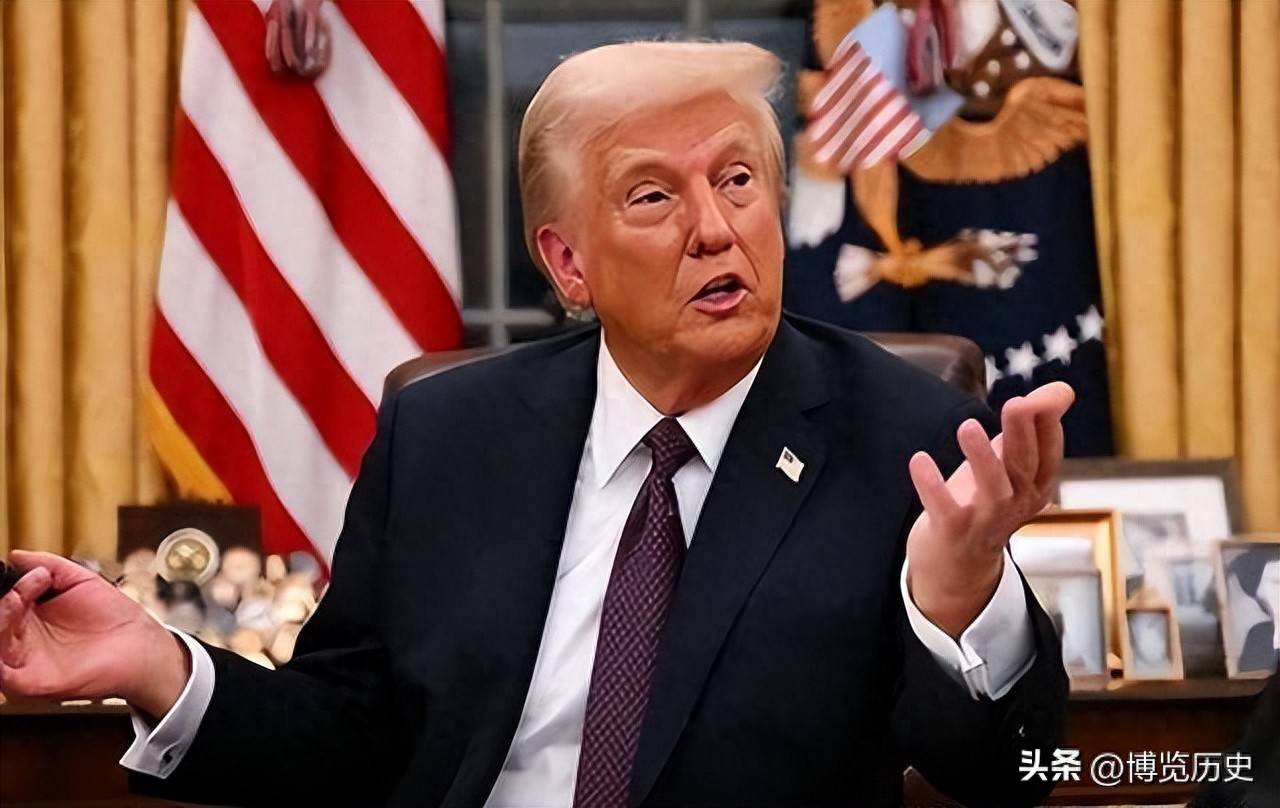
特朗普发现世纪漏洞,只要不招惹中国,其他国家都不是美国的对手
Sou Hu Cai Jing· 2025-11-25 06:14
Group 1 - The core strategy of the Trump administration shifted from targeting China with tariffs to focusing on allies and other economies after realizing the ineffectiveness of pressure tactics against China [1][2] - The U.S. imposed tariffs on allies like Japan, South Korea, and the EU, leading to significant concessions, including Japan's agreement to invest $550 billion in U.S. infrastructure and accept a 15% tariff rate [4][5] - The response from countries like Vietnam and Cambodia highlighted their economic dependence on the U.S. market, leading them to agree to trade concessions to avoid punitive tariffs [3][7] Group 2 - The success of the U.S. strategy in extracting investments and orders from allies raised concerns about the trust crisis in U.S. alliances, as allies felt vulnerable to U.S. economic coercion [9][10] - The approach accelerated the process of de-dollarization globally, as countries began to recognize the risks of over-reliance on the U.S. dollar system [12] - The unpredictable trade policies of the Trump administration risked destabilizing global supply chains, prompting multinational companies to develop contingency plans to mitigate political risks [14]