
啤酒

Search documents
重庆啤酒:2025年净利润12.31亿元,同比增长10.43%
Xin Lang Cai Jing· 2026-02-04 07:41
重庆啤酒公告,2025年度公司实现营业总收入147.22亿元,同比增长0.53%;净利润为12.31亿元,同比 增长10.43%。2025年,公司在"嘉速扬帆"战略指引下,积极应对外部环境变化,通过持续推进优化产品 结构,加速新品布局,积极拓展非现饮渠道,不断深耕"大城市"计划等重点业务举措,展现出良好的经 营韧性。2025年,公司销量实现同比增长0.68%,优于行业表现,营业总收入同步保持稳健增长。同 时,受益于大宗原材料成本的下降和供应网络优化项目带来了成本节约,毛利率有所提升。此外,为巩 固和拓展市场份额,公司加大市场投入力度,广告及市场营销费用较2024年增长。 ...

重庆啤酒:2025年净利润同比增长10.43%
2 1 Shi Ji Jing Ji Bao Dao· 2026-02-04 07:41
南财智讯2月4日电,重庆啤酒发布2025年度业绩快报,报告期内公司实现营业收入147.22亿元,同比增 长0.53%;归属于上市公司股东的净利润12.31亿元,同比增长10.43%;基本每股收益2.54元,同比增长 10.43%。 ...
海外看中国:消费恢复呈结构性分化
HTSC· 2026-02-04 01:21
Investment Rating - The report maintains an "Overweight" rating for the food and beverage industry [9] Core Insights - The report highlights a structural differentiation in consumer recovery across various segments, with high-end consumption showing signs of recovery while mid-range and mass-market segments lag behind [1] - Foreign brands are facing challenges due to weak demand and a trend towards "de-branding," which has led to overall performance pressure [1] - Companies achieving growth are primarily relying on their own brand strength and channel strategies [1] Alcoholic Beverages - The overseas spirits giants are experiencing performance pressure in China, with Pernod Ricard and Diageo reporting significant declines in sales [2][13] - Diageo's management remains cautious, expecting continued challenges in the market, particularly in the white liquor segment [2][14] - Rémy Cointreau's sales in China have stabilized, but internal performance shows structural differentiation [2][15] Dairy Products - Foreign brands in the dairy sector, particularly in milk beverages and nutritional products, are performing well due to strong brand management and product innovation [3][22] - The market for dairy products is expected to continue growing, especially in segments like low-temperature fresh milk and cheese [3][32] - The high import dependency in certain dairy categories presents opportunities for domestic alternatives [3][32] Soft Drinks - The soft drink industry is experiencing varied performance across segments, with carbonated drinks under pressure while energy drinks and sugar-free tea are expanding [4][33] - Coca-Cola and PepsiCo maintain high market shares in carbonated drinks but face increasing competition from local brands [4][33] - Monster's sales in China are growing rapidly, indicating a positive outlook for the energy drink segment [4][44] Beer - The beer market is under pressure due to weakened dining demand, with Budweiser experiencing a significant decline in sales [5] - Carlsberg has stabilized its performance through product adjustments, while Heineken benefits from partnerships with local brands [5] Snacks - The snack sector is seeing a weak recovery, with foreign brands struggling against local competitors [6] - Mondelez has managed to maintain steady growth in China through localized marketing strategies [6] Condiments - Foreign condiment brands are focusing on improving product value and adapting to changing consumer preferences [7] - The market is shifting towards value-oriented consumption, prompting companies to adjust their strategies [7]





国信证券晨会纪要-20260204
Guoxin Securities· 2026-02-04 01:06
Macro and Strategy - The report focuses on the fiscal "four accounts" system in China, detailing its operational framework and interconnections, emphasizing the general public budget as the core of the fiscal budget system [6][7] - The general public budget is the largest, with over 80% of its revenue coming from tax income, while the government fund budget primarily relies on land use rights [6][7] - The report highlights the mismatch between fiscal rights and responsibilities at the local level, leading to increased central government transfers to local governments [6] Industry and Company - In the mechanical industry, Meta's projected capital expenditure for 2026 is between $115 billion and $135 billion, nearly double that of the previous year [10] - Figure has released the Helix02 humanoid robot, achieving significant technological breakthroughs in autonomous control [10][11] - The commercial aerospace sector is seeing increased competition for orbital resources, with SpaceX applying to deploy a satellite constellation of up to 1 million satellites [11] - The report suggests a long-term investment opportunity in commercial aerospace, particularly in the rocket segment and related supply chains [11] - The humanoid robot sector is expected to unlock applications in household scenarios, with a focus on companies with strong supply chains and market positions [12] - AI infrastructure remains robust, with Meta's capital expenditures indicating high demand for AI-related technologies [12][13] Food and Beverage - The food and beverage sector saw a cumulative increase of 1.68%, with A-share food and beverage indices outperforming the broader market [16][17] - The report identifies a divergence in the performance of different categories, with liquor outperforming food and beverages [17] - Recommendations include leading liquor brands like Kweichow Moutai and Shanxi Fenjiu, as well as strong dairy companies like Yili [17][18] Retail and Commerce - The report notes significant fluctuations in gold prices, with a year-to-date increase of 12.28% as of January 29, 2026, followed by a single-day drop of 8.35% [20] - The long-term growth logic for leading jewelry brands remains intact despite short-term price volatility, with a focus on brand building and innovation [20] - AI applications in retail are expected to enhance business growth, particularly through partnerships with major e-commerce platforms [21] Media and Internet - The media sector has shown resilience, with a 0.32% increase, outperforming broader indices [22][23] - New AI applications and products, such as the Clawdbot and DeepSeek-OCR2, are gaining traction, indicating a growing market for AI-driven solutions [23][25] - The report suggests investment opportunities in gaming and IP-driven products, particularly in companies that can leverage AI for marketing and content creation [25] Financial Engineering - The report discusses the rise of small-cap stocks in the current market, highlighting their performance during bull markets [26][27] - The Zhongzheng 360 Internet + Big Data 100 Index has shown significant outperformance compared to broader indices, with a focus on TMT sectors [27][28] - The Dachen Internet + Big Data fund, which tracks this index, has demonstrated competitive returns and low management fees, making it an attractive investment option [28]
俄罗斯为全球啤酒消费和供应大国 中国为其重要进口来源
Sou Hu Cai Jing· 2026-02-03 15:44
俄罗斯是全球主要的啤酒消费市场,这主要是受当地气候、历史文化、社会习惯等多种因素共同影响 的。自2000年以来,啤酒已成为俄罗斯民众最受欢迎的酒精饮料之一。根据NCR统计的数据显示,截 至2022年,俄罗斯的人均啤酒消费量达到52.2升;虽然在最近两年,啤酒的整体消费量有所下降,但仍 在俄罗斯酒精饮料市场中占据着主导地位。 啤酒,是以大麦芽、水为主要原料,加啤酒花(包括啤酒花制品),经酵母发酵作用酿制而成的,含有 二氧化碳并可形成泡沫的一种低酒精度酒,其酒精含量通常在3%-8%之间。 啤酒的种类繁多,可以根据颜色、原麦汁浓度、发酵工艺等标准来划分。根据颜色的不同,啤酒可分为 淡色啤酒、浓色啤酒、黑啤等;根据原麦汁浓度的高低,啤酒可分为低浓度啤酒、中浓度啤酒、高浓度 啤酒等;根据发酵工艺的不同,啤酒可分为艾尔啤酒、拉格啤酒、自然发酵啤酒等。 啤酒含有多种氨基酸、维生素、低分子糖和各种酶,非常容易被人体吸收利用。近年来,随着全球部分 经济体人均可支配收入的增加,消费者在休闲娱乐及酒精饮品上的支出大幅增长,进而带动了啤酒市场 的发展势头。具体来看,在2025年,全球啤酒市场规模达到8857.9亿美元;并且预计在20 ...


中国必选消费26年2月投资策略:震荡市场方显消费价值
Haitong Securities International· 2026-02-03 12:57
Investment Focus - The report highlights the value of consumer stocks in a volatile market, recommending a focus on companies like Guizhou Moutai, Eastroc Beverage, and Yili Group, all rated as "Outperform" [1]. Industry Overview - In January 2026, four out of eight tracked essential consumer sectors showed positive growth, including condiments, frozen foods, soft drinks, and dining, while four sectors, such as mid-to-high-end baijiu, dairy products, and beer, experienced declines [3][9]. - The overall consumer industry is characterized by a recovery in basic demand while hedonic consumption remains under pressure, indicating a shift in consumer spending towards essential goods [9]. Revenue and Growth Analysis - The revenue for the mid-to-high-end baijiu sector in January was 470 billion yuan, down 14.0% year-on-year, while the revenue for the mass-market baijiu sector was 229 billion yuan, down 3.0% year-on-year [10][11]. - The soft drink sector reported a revenue of 962 billion yuan in January, with a year-on-year growth of 1.1%, indicating a cautious recovery in demand [17]. - The frozen food sector saw a revenue of 150 billion yuan, with a year-on-year increase of 8.0%, driven by pre-Spring Festival stocking and low temperatures [16]. Price Trends - The report notes that the wholesale prices of major baijiu brands like Guizhou Moutai remained stable, while some brands faced downward price pressures due to high inventory levels [4][21]. - The average discount rates for liquid milk and condiments increased compared to the previous month, reflecting intensified market competition [35][37]. Market Dynamics - The report identifies four favorable funding factors for the essential consumer sector, including significant volatility in global capital markets, declining risk-free interest rates, increased foreign capital allocation to China, and low institutional allocation levels [6]. - The report suggests focusing on companies that align with both domestic and foreign institutional preferences, as well as those showing improvements in fundamentals and dividend yields [6].






骏马载福来,鸿运迎新春!青啤马年生肖产品解锁忙年新体验
Jin Rong Jie· 2026-02-03 10:47
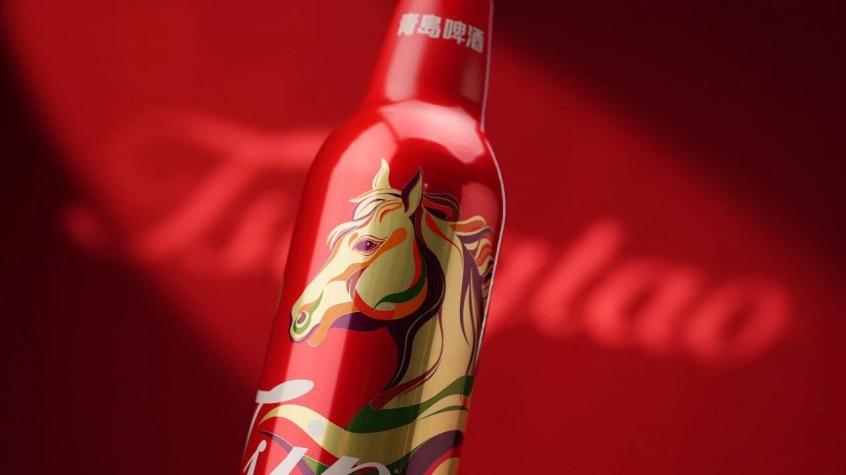
Core Viewpoint - Qingdao Beer has launched the "Hongyun Dantou" Year of the Horse Zodiac Edition, which combines cultural significance, quality, and versatility, making it a popular choice for the New Year celebrations across households [1][5]. Group 1: Product Features - The "Hongyun Dantou" Year of the Horse Zodiac Edition is prominently displayed in major supermarkets, featuring a red and gold aluminum bottle design that symbolizes joy and good fortune [2]. - The product is available in multiple specifications, including a 355ml single bottle for casual drinking, a 12-bottle box for family stocking, and a 473ml gift box designed for festive occasions, catering to various consumer needs [5]. - The design incorporates traditional Chinese cultural elements, with the horse symbolizing auspiciousness and progress, aligning with the New Year’s themes of success and striving [5][6]. Group 2: Cultural Significance - The product is positioned as a symbol of reunion and celebration during the New Year, enhancing the festive atmosphere with its rich flavors and cultural messages [6]. - Qingdao Beer has also introduced a creative gift box called "Huacong Xianrui," which integrates traditional elements with modern design, appealing to consumers looking for meaningful gifts during the busy New Year season [9]. - The Year of the Horse edition serves as a cultural bridge, connecting overseas Chinese communities with their heritage, allowing them to celebrate the New Year with a taste of home [12][14]. Group 3: Market Strategy - Qingdao Beer has maintained a commitment to cultural representation through its Zodiac editions since 2014, evolving its offerings to meet contemporary consumer preferences while honoring traditional values [16]. - The brand's strategy includes not only domestic sales but also international outreach, promoting the Year of the Horse edition in markets like South Korea, emphasizing its cultural significance and appeal [12][14]. - The marketing approach highlights the emotional connections fostered by the product, positioning it as more than just a beverage but as a means of connecting individuals, families, and cultures [16].
非白酒板块2月3日跌0.46%,*ST椰岛领跌,主力资金净流出1.31亿元
Zheng Xing Xing Ye Ri Bao· 2026-02-03 09:03
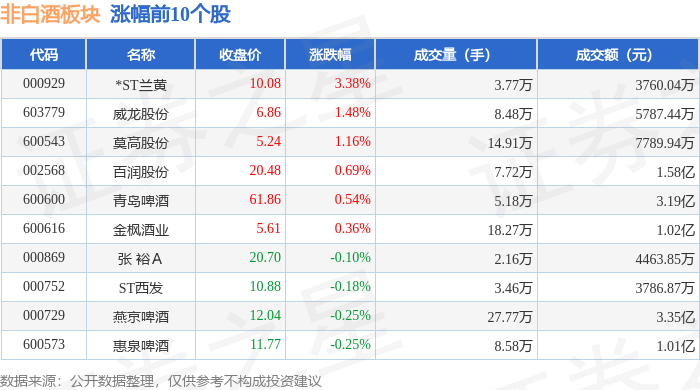
Core Viewpoint - The non-white liquor sector experienced a decline of 0.46% on February 3, with *ST Yedao leading the drop, while the Shanghai Composite Index rose by 1.29% and the Shenzhen Component Index increased by 2.19% [1][2]. Group 1: Market Performance - The closing price of *ST Yedao was 5.87, reflecting a decrease of 5.02% with a trading volume of 99,200 shares and a transaction value of 58.61 million yuan [2]. - The non-white liquor sector saw a net outflow of 131 million yuan from major funds, while retail investors contributed a net inflow of 106 million yuan [2][3]. Group 2: Individual Stock Performance - *ST Lanhua closed at 10.08, with an increase of 3.38% and a trading volume of 37,700 shares, resulting in a transaction value of 37.60 million yuan [1]. - The stock of Weilang Co. closed at 6.86, up by 1.48%, with a trading volume of 84,800 shares and a transaction value of 57.87 million yuan [1]. - The stock of Ziyun Co. closed at 20.48, with a slight increase of 0.69% and a transaction value of 158 million yuan [1]. Group 3: Fund Flow Analysis - Major funds saw a net inflow of 931.78 million yuan in Zhongxin Niya, while retail investors had a net outflow of 910.36 million yuan [3]. - In the case of *ST Lanhua, major funds experienced a net outflow of 85.99 million yuan, while retail investors had a net inflow of 137.59 million yuan [3]. - The stock of ST Xifa had a significant net outflow of 637.88 million yuan from major funds, but a net inflow of 447.99 million yuan from retail investors [3].


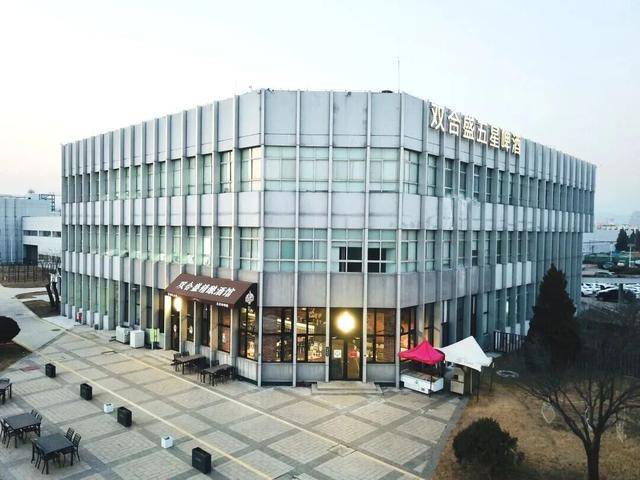
老字号焕新出海!双合盛首批5000箱啤酒顺利出口马来西亚
Sou Hu Cai Jing· 2026-02-03 06:26
"在海关对接沟通上给了我们很大支持,海外参展也提供了政策扶持,极大提升了品牌在海外的曝光 度。"韩晴坦言,品牌出海已成为公司"十五五"期间的重要战略,政府的有力支持让他们能更自信、更 快速地布局国际市场。 近日,双合盛五星啤酒有限公司首批5000箱啤酒顺利发往马来西亚,迈出了拓展国际市场的重要一步。 对于这次出海,双合盛五星啤酒有限公司选择了一款经典产品、一款创新口味产品作为"先遣军",在展 现老字号守正创新经营理念的同时,也希望"怀柔好味道"飘香海外。 "产品在马来西亚市场获得了非常好的评价,"双合盛市场总监韩晴表示,"市场反响给了我们很大信 心,首批货物发出后不到一周,我们就接到了第二笔订单。"快速的市场正向反馈,为这家老字号后续 深化渠道精耕、逐步辐射东南亚市场的计划,注入了强劲动力。 从怀柔的厂房到海外的货架,这条出海之路之所以高效顺畅,离不开我区持续优化的营商环境与主动靠 前的服务。从政策咨询、海关对接,到参展支持、资源嫁接,全流程服务精准破解企业"走出去"的初期 发展难题。 双合盛的出海之旅,是我区推动企业国际化发展的一个缩影。目前,我区正积极推动更多优质本土企业 拥抱全球市场。御食园、富亿农、绿 ...
五粮液开展股东优惠购酒活动;金沙回沙酒官宣金沙为品牌挚友;茅台数科公司成立
Sou Hu Cai Jing· 2026-02-03 04:52
Group 1 - Wuliangye will launch a "Shareholder Discount Wine Purchase Activity" from February 2 to February 28, 2026, exclusively for shareholders registered by December 17, 2025 [1] - Jinsha Huashao has officially announced singer Jinsha as its brand ambassador and is promoting the new Jinsha Huashao Wine from the 1950s [2] - Guizhou Moutai Digital Technology Co., Ltd. was inaugurated, with a focus on enhancing platform operations and supporting the company's high-quality development [2] Group 2 - Li Qiangqing has been appointed as the General Manager of Guizhou Moutai Sales Co., Ltd., bringing extensive experience from various leadership roles within the Moutai Group [3] - Shanxi Fenjiu participated in the 2026 Shanxi Old Brand Carnival, showcasing its products and engaging consumers through interactive experiences [4] - Meituan Flash Purchase is collaborating with Shede Liquor for a comprehensive marketing campaign during the 2026 Spring Festival, emphasizing online and offline integration [5] Group 3 - The National Standardization Administration has released a new national standard for beer quality (GB/T4927-2025), set to be implemented on January 1, 2027, introducing significant changes in product classification [6][7] - Wan Guodong has resigned as General Manager of Qinghai Huzhu Tianyoude Qinkui Wine Co., Ltd., effective immediately, due to personal reasons [8]

