信息技术

Search documents
60项青年科创成果齐亮相,创新场景挑战赛汇集“金点子”
Xin Lang Cai Jing· 2025-12-26 12:55
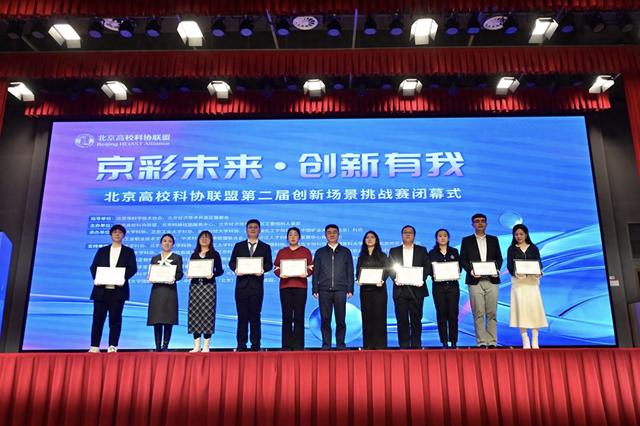
Core Insights - The "Beijing Future · Innovation is Me" second Innovation Scenario Challenge concluded on December 26, showcasing 60 innovative research ideas from six professional tracks, including future information, health, manufacturing, energy, materials, and creativity [1][3]. Group 1: Event Overview - The challenge gathered nearly 400 innovative results from 30 universities and research institutions, with a professional jury evaluating 10 outstanding achievements in each track based on industrial needs and technological strength [3]. - The event featured five matchmaking sessions, allowing participating teams to engage with representatives from relevant enterprises, industry authorities, and investment institutions for potential collaboration and application of their innovations [5]. Group 2: Notable Innovations - In the future manufacturing track, a "network-computing-control integrated intelligent open industrial control system" was highlighted, which integrates advanced technologies to achieve interconnectivity among equipment, systems, and data [3]. - The "Beidou Smart Measurement - Low-Cost Beidou Multi-Information Water Level Monitoring System" from China University of Mining and Technology (Beijing) demonstrated significant potential in hydrological monitoring, featuring a complete system architecture including hardware, software, and data processing algorithms [5].

创业板指本周实现日线5连阳,创业板ETF(159915)等产品助力布局“春季躁动”行情
Sou Hu Cai Jing· 2025-12-26 10:17
Group 1 - The ChiNext Growth Index rose by 4.4%, the ChiNext Mid-Cap 200 Index increased by 4.2%, and the ChiNext Index gained 3.9%, achieving five consecutive days of gains [1][3] - China Galaxy Securities indicates that the A-share market is entering a critical window for cross-year layout as 2026 approaches, with expectations for a small rally around New Year's [1] - The year 2026 marks the beginning of the "14th Five-Year Plan," with anticipated policy benefits being released earlier, leading to structural opportunities concentrated in sectors aligned with policy direction and industry prosperity [1] Group 2 - The strategic emerging industries account for a significant portion, with the power equipment, communication, and electronics sectors collectively representing nearly 60% of the ChiNext Mid-Cap 200 Index [5] - The ChiNext Mid-Cap 200 Index consists of 200 stocks with medium market capitalization and good liquidity, reflecting the overall performance of representative companies in the ChiNext market, with over 40% of the index comprised of the information technology sector [5] - The ChiNext Growth Index is made up of 50 stocks that exhibit strong growth characteristics and good liquidity, with the power equipment, pharmaceutical, and communication sectors accounting for approximately 60% [5] Group 3 - As of December 26, 2025, the rolling price-to-earnings (P/E) ratios for the ChiNext Index, ChiNext Mid-Cap 200 Index, and ChiNext Growth Index are 41.2x, 105.0x, and 40.9x respectively [3][6] - The cumulative performance of the indices shows a year-to-date increase of 51.5% for the ChiNext Index, 29.1% for the ChiNext Mid-Cap 200 Index, and 72.4% for the ChiNext Growth Index [8] - The historical cumulative performance over the past year indicates a rise of 47.1% for the ChiNext Index, 23.6% for the ChiNext Mid-Cap 200 Index, and 66.1% for the ChiNext Growth Index [8]


西安电子科技大学与陕西电子共建未来信息产业研究院并签署深化战略协议
Xin Lang Cai Jing· 2025-12-26 08:49
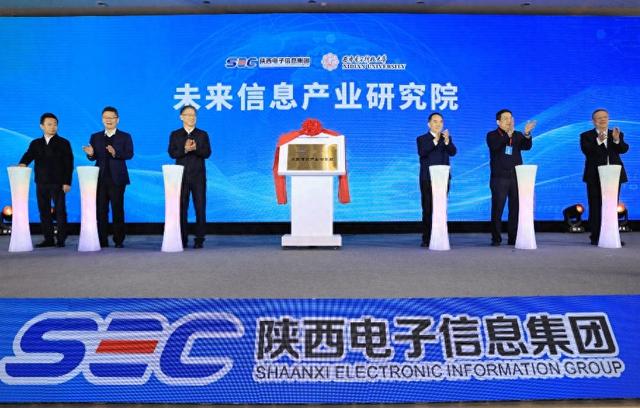
Core Viewpoint - The establishment of the "Future Information Industry Research Institute" aims to enhance collaboration between Xi'an University of Electronic Science and Technology and Shaanxi Electronic Information Group, focusing on key technological advancements and strategic industry development [1][3]. Group 1: Strategic Collaboration - The collaboration is supported by the Shaanxi Provincial State-owned Assets Supervision and Administration Commission, emphasizing a focus on national strategic services [3]. - The research institute will serve as a platform for organized research and industry integration, addressing critical technology challenges and fostering emerging strategic industries [3]. Group 2: Areas of Focus - The partnership will concentrate on new-generation information technology, semiconductors, integrated circuits, and intelligent equipment [5]. - A collaborative innovation mechanism will be established, involving joint problem-solving, talent cultivation, and regular communication [5].
20cm速递|创业板50ETF国泰(159375)涨超0.7%,科技成长赛道盈利弹性受关注
Mei Ri Jing Ji Xin Wen· 2025-12-26 06:23
Core Insights - The main focus of the article is on the growth potential of the ChiNext 50 Index, which is primarily composed of stocks in the technology and emerging industries, such as artificial intelligence, semiconductors, and new energy [1] Group 1: Industry Trends - The ChiNext 50 Index constituents are mainly distributed in technology growth sectors, including AI, semiconductors, and new energy, driven by the "14th Five-Year Plan" for technological advancement and the global AI industry wave [1] - The electronic industry is expected to see a revenue growth of 18.8% year-on-year and a net profit growth of 37% for the first three quarters of 2025, marking it as a strong theme throughout the year [1] - The integration of "AI+" into various industries is entering a deeper phase, with the potential for blockbuster applications in AI terminals [1] Group 2: Sector-Specific Developments - The semiconductor industry is accelerating domestic substitution, benefiting from a price increase cycle in memory chips [1] - The humanoid robot industry is transitioning from research exploration to engineering breakthroughs, with potential applications in manufacturing and logistics [1] Group 3: Investment Vehicle - The Guotai ChiNext 50 ETF (159375) tracks the ChiNext 50 Index (399673), which has a daily price fluctuation limit of 20% and selects 50 securities with good liquidity and large market capitalization from the ChiNext market [1] - The ChiNext 50 Index covers high-tech and emerging industries such as new energy, pharmaceuticals, and information technology, reflecting the characteristics of innovation-driven and industrial upgrading [1]
瑞得信息科技取得基于动态兴趣衰减分析的智能推送方法及系统专利
Sou Hu Cai Jing· 2025-12-26 04:55
Group 1 - The core point of the article is the acquisition of a patent titled "Intelligent Push Method and System Based on Dynamic Interest Decay Analysis" by Shenzhen Ruid Information Technology Co., Ltd. and Shenzhen Shuyou Technology Co., Ltd. The patent was granted with announcement number CN120711235B, with an application date of August 2025 [1]. Group 2 - Shenzhen Ruid Information Technology Co., Ltd. was established in 2015 and is located in Shenzhen. The company primarily engages in professional technical services and has a registered capital of 10 million RMB. It has invested in one company, participated in three bidding projects, and holds nine patents and nine administrative licenses [1]. - Shenzhen Shuyou Technology Co., Ltd. was founded in 2016 and is also based in Shenzhen, focusing on wholesale activities. The company has a registered capital of 10 million RMB, participated in one bidding project, and possesses one trademark, five patents, and ten administrative licenses [1].
A股企业:2025年111家上市募资1253.24亿
Sou Hu Cai Jing· 2025-12-26 00:30
Group 1 - The core point of the article highlights that by December 25, 2025, 111 companies have entered the A-share market, raising a total of 125.324 billion yuan [1] - Among these, 102 companies belong to strategic emerging industries, covering fields such as next-generation information technology, new materials, and high-end manufacturing [1] - Additionally, there have been over 200 significant asset restructuring disclosures by listed companies in Shanghai and Shenzhen, with a focus on key sectors like semiconductors and information technology [1]
再融资改革赋能实体经济高质量发展
Zhong Guo Zheng Quan Bao· 2025-12-25 21:11
Group 1 - The refinancing market in Shanghai has seen significant growth in 2025, with over 800 billion yuan raised through equity financing, involving more than 100 companies, marking a substantial increase compared to the same period in 2024 [1][2] - The approval process for refinancing has accelerated, with nearly 40 new refinancing projects approved in the fourth quarter of 2025, reducing the average review period to about two months [1][2] - The funds raised through refinancing are primarily directed towards expanding production capacity and strengthening supply chains, aligning with national strategic priorities [2][3] Group 2 - The simplified procedures for refinancing have enhanced efficiency, allowing companies to raise funds quickly, especially for amounts not exceeding 300 million yuan or 20% of net assets [3][4] - The introduction of the "light asset, high R&D investment" standard has enabled companies to better allocate resources towards research and development, fostering innovation and competitiveness [5][6] - A total of 14 companies have submitted refinancing applications under the new standard, with a combined intended financing amount of 35.12 billion yuan, indicating a positive market response [5]
锚定新质生产力 资本市场“含科量”迈上新台阶
Zheng Quan Ri Bao· 2025-12-25 16:07
据Wind资讯数据统计,2025年以来截至12月25日,共有111家企业成功登陆A股市场,首发募集资金合计达1253.24亿元。 其中,102家企业隶属于战略性新兴产业,覆盖新一代信息技术、新材料、高端装备制造等领域。同时,年内沪深上市公司累 计披露重大资产重组超200单,标的集中分布于半导体、信息技术、高端装备制造等关键赛道。 展望2026年,接受《证券日报》记者采访的专家普遍认为,一方面,需构建多层次资本市场互联互通新格局,打造覆盖企 业全生命周期的"金字塔"式服务体系,为创新主体提供精准金融支持;另一方面,需进一步深化注册制改革,锚定信息披露核 心环节,压实各方主体责任,完善IPO定价与二级市场估值联动的市场化约束机制,充分发挥市场在资源配置中的决定性作 用。 纵深推进差异化改革 今年以来,在中国证监会领导下,沪深北交易所紧扣高质量发展主线,通过明晰板块定位、纵深推进差异化改革,筑牢多 层次市场根基。 科创板"1+6"改革举措落地见效,科创板科创成长层成功设立并迎来首批企业,未盈利"硬科技"企业适用第五套标准上市 通道重启,为处于成长期、研发投入高的科创企业提供了专属融资通道;创业板同步发力,正式启用第 ...
科创综指运行近一年:涨幅超48%,撬动中长线资金抢滩硬科技
第一财经· 2025-12-25 15:58
Core Viewpoint - The Sci-Tech Innovation Board Composite Index (Sci-Tech Index) has shown significant growth since its launch, reflecting the overall development of China's technology innovation sector and attracting substantial investment [3][4][6]. Group 1: Performance and Coverage - The Sci-Tech Index has increased by 48.35% since its launch on January 20, 2025, outperforming major market indices [3][8]. - The index currently includes 576 stocks, covering 96% of the Sci-Tech Board companies, with a market capitalization coverage of over 91% [7][9]. - The total market capitalization of the Sci-Tech Board reached 11.14 trillion yuan, with the 576 stocks in the index accounting for 10.18 trillion yuan, or 91.38% of the total [7][9]. Group 2: Industry Composition - The index includes stocks from various sectors, with the largest representation from information technology (54.86%), followed by industrial (23.14%) and healthcare (13.50%) [7][9]. - The top ten stocks in the index represent 27.5% of its total market capitalization, with ten stocks exceeding 100 billion yuan in market value [7][9]. Group 3: Investment Products and Ecosystem - As of December 24, 2025, 45 fund managers have launched 77 index funds related to the Sci-Tech Index, with a total scale of 27 billion yuan [10][11]. - The average return of these products since their launch has been 42%, indicating strong investor interest [11]. - The index has facilitated a one-stop investment tool for investors, enhancing the accessibility of "hard technology" investments [11][12]. Group 4: Future Development and Optimization - Experts suggest that the Sci-Tech Index should continuously optimize its dynamic adjustment and maintenance mechanisms to reflect the latest developments in the hard technology sector [5][13]. - There is a need to enhance the scientific and representative nature of the index, focusing on key indicators such as R&D investment intensity and technology transfer capabilities [12][13]. - The index is expected to play a crucial role in guiding long-term capital allocation and enhancing recognition of China's technological strength among domestic and foreign investors [16][17].

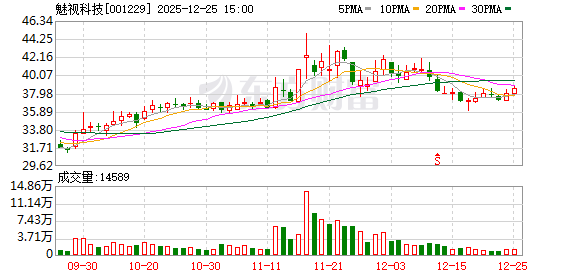
魅视科技:公司为中国载人航天工程和探月工程的指挥控制中心提供了“光纤KVMS解决方案”
Zheng Quan Ri Bao· 2025-12-25 13:17
Core Viewpoint - Meishijia Technology has provided a "fiber optic KVMS solution" for China's manned space program and lunar exploration, contributing to the successful launch of the Tianwen-1 Mars probe and other rocket projects like Chang'e 5 [2] Group 1 - The fiber optic KVMS solution is scalable, low-latency (less than 2ms), features a dual backup mechanism, high security, and high intelligence [2] - This solution enables visual scheduling, seamless splicing, KVMS seat collaboration, and fiber optic interconnectivity, making it suitable for applications with high demands on latency, image quality, and security [2]