炼油

Search documents
俄罗斯一炼油厂遭袭!
证券时报· 2025-09-16 11:02
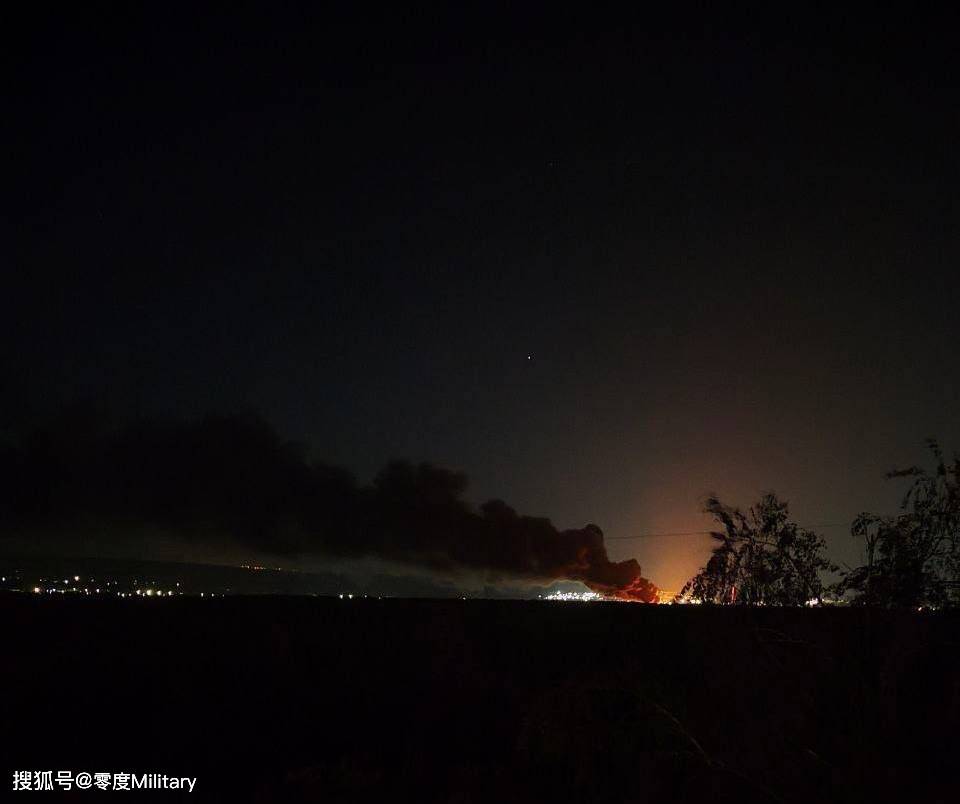
Core Viewpoint - The article discusses recent military actions between Ukraine and Russia, highlighting Ukraine's attack on a key Russian oil facility and ongoing battles in various regions, as well as the geopolitical implications involving NATO and diplomatic efforts. Group 1: Military Actions - Ukrainian armed forces conducted a coordinated attack on the Russian oil refinery in Saratov, which is crucial for supplying fuel to the Russian military [1][3] - The Russian Defense Ministry reported control over the Oligovskoye settlement in the Zaporizhzhia region, while Ukraine claimed to have repelled multiple Russian attacks in various directions [5][7][9] Group 2: Geopolitical Context - Russian presidential spokesperson Peskov stated that NATO is effectively engaged in combat with Russia by providing support to Ukraine, indicating a significant escalation in the conflict [10][12] - Peskov also mentioned that there has been no progress in the trilateral talks involving Russia, the U.S., and Ukraine, emphasizing Russia's willingness for diplomatic resolution despite perceived obstacles from Ukraine and European nations [12][13]

中东催生炼油业新型定价机制
Zhong Guo Hua Gong Bao· 2025-09-15 06:11
Group 1 - The Gulf Cooperation Council (GCC) member countries are expanding refining capacity to derive more value from fossil fuel resources, with refining capacity increasing by one-third since 2017, reaching 10.5 million barrels per day [1] - Gasoline production in the Gulf region has risen significantly from 1.7 million barrels per day to nearly 2.4 million barrels per day, with gasoline exports doubling to 654,000 barrels per day [1] - The traditional pricing mechanism based on Singapore market prices is becoming less relevant as Singapore now accounts for only 7% of the Gulf's gasoline exports, prompting the need for a new pricing mechanism to better reflect local market fundamentals [1] Group 2 - The new pricing mechanism called "MEBOB" has been introduced, which corresponds to the European "EBOB" and the American "RBOB," positioning the Middle East as a new oil trading hub [2] - MEBOB aims to reflect the value of Gulf refined products and is seen as a recognition of the structural changes in the global energy market [2] Group 3 - The UAE has initiated the Murban crude oil trading to compete with Brent and WTI, launching Murban crude futures contracts to establish an alternative benchmark for Middle Eastern crude [3] - Murban crude is characterized by its low sulfur content of 0.78% and an API gravity of 39.9 degrees, with a significant infrastructure project underway to enhance its export capabilities [3] - A large underground storage facility is being constructed in Fujairah, with a total capacity of 42 million barrels, representing the largest of its kind globally, and is expected to be operational after delays due to the pandemic [3] Group 4 - The trading volume of Murban crude futures has surged, with the second quarter of 2024 seeing a record trading volume of 1.5 billion barrels, more than double the growth rate from the beginning of the year [4] - June 2024 set new trading records with an average daily trading volume of 31 million barrels and a single-day peak of 573,000 contracts, indicating Murban crude's emergence as a globally influential pricing benchmark [4]
俄方称击落超300架乌无人机 乌方称对俄罗斯大型炼油厂发动袭击
Yang Guang Wang· 2025-09-15 00:27
Group 1 - The Russian Ministry of Defense reported that its air defense systems shot down 361 drones in the past 24 hours [1] - Ukrainian armed forces conducted an attack on the Kirishi oil refinery in Leningrad Oblast, indicating a systematic effort to weaken Russia's military economic capabilities [1] - The Kirishi refinery is one of Russia's largest, capable of refining over 80 types of petroleum products, including gasoline, diesel, and aviation fuel, which are essential for the Russian armed forces [1]
乌消息人士称打击俄彼尔姆边疆区一化工厂
Zhong Guo Xin Wen Wang· 2025-09-14 23:23
Group 1 - Ukrainian drones targeted a chemical plant in Russia's Perm Krai on September 13, according to sources from the Ukrainian Defense Ministry's intelligence agency [1] - Preliminary reports indicate that production equipment at the chemical plant has been damaged [2] - On September 14, Ukrainian forces also attacked the "Kirishi" oil refinery in Russia's Leningrad region, which is one of the largest refineries in Russia [2] Group 2 - The governor of Leningrad region, Drozdienko, stated that Russian air defense forces intercepted three drones, with one drone's wreckage causing a fire at the refinery [2] - The fire at the refinery has been extinguished, and there were no casualties reported [2]
乌军方称对俄罗斯大型炼油厂发动袭击
Xin Hua She· 2025-09-14 17:03
Core Viewpoint - Ukrainian armed forces conducted an attack on the Kirishi oil refinery in Leningrad Oblast, Russia, aiming to weaken Russia's military economic capabilities by targeting energy, weapons, and ammunition production facilities [1] Group 1: Attack Details - The attack was carried out by Ukrainian unmanned systems and special forces, resulting in an explosion and fire at the Kirishi oil refinery [1] - The situation regarding the attack is currently being verified by the Ukrainian armed forces [1] Group 2: Strategic Importance - The Kirishi oil refinery is one of Russia's largest refineries, capable of refining over 80 types of petroleum products, including gasoline, diesel, and aviation fuel [1] - The products from this refinery are essential for meeting the needs of the Russian armed forces [1]
燃料油LU暴跌2.58%背后的原因?
对冲研投· 2025-09-12 12:05
Core Viewpoint - Recent fluctuations in low-sulfur fuel oil futures prices are primarily influenced by supply-side factors, with increased low-sulfur supply and high inventory levels leading to downward pressure on prices [6][24]. Supply Analysis - The Dangote refinery has delayed the restart of its RFCC unit, which was originally scheduled for September 20, extending the shutdown by at least three months. This is expected to double the weekly export volume of low-sulfur fuel oil to around 180,000 tons over the next three months [7]. - Other Middle Eastern refineries are maintaining stable low-sulfur supply levels without significant changes [7]. - The total low-sulfur fuel oil tendered by Dangote for September amounts to 390,000 tons, with no corresponding shipping dates observed yet [9]. Demand Analysis - The demand for low-sulfur fuel oil is under pressure due to the end of the summer peak and the decline in power generation needs in the Middle East. The current demand for low-sulfur fuel oil lacks substantial support [6][24]. - In July, Singapore's marine fuel demand showed stability and slight improvement, with total marine fuel sales reaching 4.92 million tons, a month-on-month increase of 7% and a year-on-year increase of 5.7%. However, low-sulfur fuel oil sales decreased by 3% month-on-month [15]. Inventory Levels - As of September 10, 2025, Singapore's fuel oil inventory reached approximately 4.18 million tons, a slight decrease of 160,000 tons but still at a historical high. Zhoushan Port's fuel oil inventory stands at 1.18 million tons [23][24]. Price Dynamics - The price difference between low-sulfur and high-sulfur fuel oils has widened to historical highs, prompting some shipowners to switch to high-sulfur fuel. The recent price fluctuations are mainly driven by supply changes, with the low-sulfur fuel oil market facing downward pressure due to high inventory and weak demand [15][24].

韩石化“集体崩溃”,美巨头高调注资,美企欲趁机插手韩“经济命脉”?
Huan Qiu Shi Bao· 2025-09-11 23:14
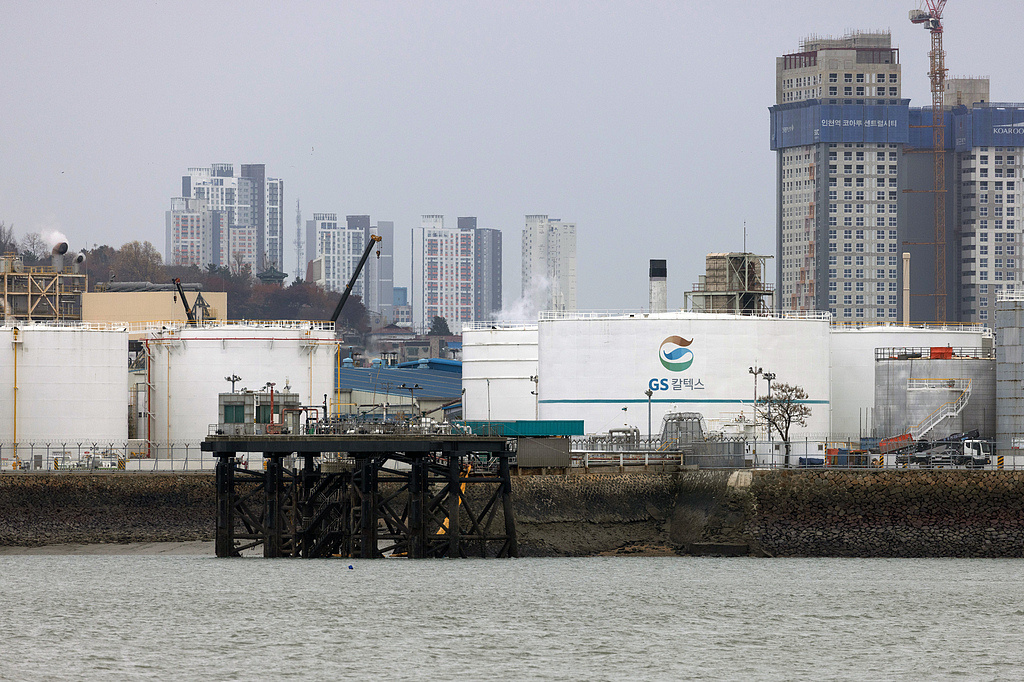
Core Viewpoint - The South Korean petrochemical industry is facing severe challenges, with major companies experiencing significant losses and the government pushing for structural reforms amid a crisis that threatens the industry's survival [1][2][3]. Industry Overview - The petrochemical sector, South Korea's fourth-largest export industry, has seen sales decline by 7.8% year-on-year, marking four consecutive quarters of negative growth since Q3 2024 [2]. - The "big four" petrochemical companies in South Korea reported a shift from profit to a loss of 878.4 billion KRW in 2024 and an additional loss of nearly 500 billion KRW in the first half of 2025 [2]. Financial Performance - Major petrochemical companies in South Korea reported an average sales cost rate of 98.6% in the first half of 2025, significantly up from 87.6% in 2021, with some companies exceeding 100% [3]. - The total deficit for ten major petrochemical companies in the first half of 2025 exceeded 18 trillion KRW [3]. Market Dynamics - The price difference between ethylene product sales and raw material costs is insufficient for profitability, with the breakeven point at 300 USD per ton, while the second-quarter price was only 220 USD [4]. - The South Korean refining industry, traditionally strong, is now facing a downturn, with major companies transitioning from a profit of 10.4 trillion KRW in 2022 to a loss of 1.9 trillion KRW in 2024 [4]. Structural Challenges - The industry is heavily reliant on imported naphtha cracking facilities, which has exposed cost disadvantages amid rising international oil prices [3]. - The traditional model of "scale investment and high-end facilities" is becoming unsustainable due to global demand weakness [6]. Employment and Economic Impact - The petrochemical and refining sectors are crucial for local economies, with significant employment and value creation in regions like Ulsan and Yeosu [6]. - The ongoing crisis is expected to increase employment pressure and could lead to severe local economic impacts if prolonged [7]. Government Response - The South Korean government has set three restructuring goals: reducing excess capacity, shifting to high-value products, and improving financial conditions [8]. - A self-regulatory agreement was signed by ten major petrochemical companies to cut national ethylene capacity by 25% (approximately 3.7 million tons) [8]. Foreign Investment Dynamics - Chevron's announcement of significant investment in South Korea's refining and petrochemical sectors has raised concerns about potential control over the industry [10][12]. - The financial deterioration of GS Caltex, a key player in the sector, has led to questions about the motivations behind foreign investments [11]. Future Outlook - The success of the restructuring efforts will depend on the government's ability to implement strong support measures and regulatory frameworks [12]. - The potential for increased foreign control over the petrochemical industry could impact South Korea's economic autonomy and the development of related sectors [12].

甘肃庆阳石化:从老区窑洞到城市型精品炼厂
Sou Hu Cai Jing· 2025-09-10 15:26
Core Viewpoint - The article highlights the exemplary tax compliance practices of Qingyang Petrochemical, a subsidiary of China National Petroleum Corporation, showcasing its transformation from a traditional enterprise to a modern, compliant, and environmentally responsible refinery [1][2][4]. Group 1: Tax Compliance and Value Creation - Qingyang Petrochemical has established "integrity in tax payment" as a fundamental principle, ensuring accurate tax calculations, timely declarations, and full payments, achieving an A-level credit rating for tax payments for several consecutive years [2] - From 2022 to 2024, the company has paid over 22 billion yuan in various taxes and fees, benefiting from tax incentives totaling over 160 million yuan [2] - The company has implemented a robust tax internal control system since 2006, including a dedicated tax management team to conduct regular tax risk assessments [2] Group 2: Chain Compliance and Ecological Co-construction - Qingyang Petrochemical has introduced the concept of "chain compliance," establishing a tax credit evaluation system for suppliers, making tax compliance a key criterion for supplier admission [3] - The company actively engages with tax authorities to provide tax compliance guidance to local SMEs, aiming to foster a healthy industry environment [3] - Regular tax training sessions are conducted for suppliers to help them manage invoices and prevent tax evasion risks [3] Group 3: Green Transformation and Environmental Responsibility - The company has paid environmental taxes of 41.98 million yuan in 2022, 49.20 million yuan in 2023, and 49.09 million yuan in 2024, receiving local financial rewards for its excellent environmental performance [4] - Qingyang Petrochemical is investing billions in upgrading environmental facilities to ensure compliance with pollution discharge standards [4] - The company is advancing clean energy projects, including a hydrogen purification project expected to produce 1,600 tons of gray hydrogen annually, meeting local market demands [5]

供应过剩压力未解整体疲软 燃料油下行压力较大
Jin Tou Wang· 2025-09-10 06:15
Group 1 - The main contract for fuel oil futures experienced a rapid increase, reaching a peak of 2807.00 yuan, with a current price of 2794.00 yuan, reflecting a rise of 1.38% [1] - Southwest Futures indicates that there is significant downward pressure on fuel oil prices due to high inventories in Singapore and a lack of momentum in the Asian fuel oil market [1] - The ARA refining storage center reported a fuel oil inventory of 1 million tons, a decrease of 4.4% week-on-week, indicating some supply adjustments [1] Group 2 - Ruida Futures expects short-term fluctuations in fuel oil prices to be weak, influenced by OPEC+ production increases and weak demand, while geopolitical risks and interest rate cut expectations provide some support [2] - Domestic refining capacity is recovering as major refineries complete maintenance, although the overall fuel oil supply remains high compared to the year [2] - The shipping market shows signs of recovery, but high inventories in Singapore continue to exert pressure on domestic supply, leading to overall weakness in fuel oil prices [2]
双线开花!乌军确认袭击梁赞炼油厂和卢甘斯克油库,再次重创俄罗斯能源命脉
Sou Hu Cai Jing· 2025-09-05 13:57
Group 1 - Ukrainian armed forces confirmed attacks on one of Russia's four major oil refineries and a fuel depot supplying the Russian military, marking a continuation of systematic attacks on energy infrastructure since the beginning of 2024 [1][11] - The attack on the Ryazan refinery involved the 14th drone brigade, special forces, and other defense units, indicating a coordinated military effort [5] - Reports indicate that a fire broke out at the Ryazan refinery following the drone strike, with local authorities claiming that eight drones were shot down during the incident [7] Group 2 - The attack on the occupied Luhansk region targeted a significant fuel depot for the Russian military, further demonstrating Ukraine's strategy to disrupt Russian supply lines [9] - Ukrainian military leadership has confirmed most of the attacks, stating that the defense forces are systematically working to weaken the operational capabilities of the Russian occupying forces [13] - Since early 2024, Ukrainian drones have regularly targeted Russian refineries, with some facilities suffering damage to key oil processing equipment that requires repairs [11]