
穆尔班原油

Search documents
极为罕见,一艘油轮冒险穿越霍尔木兹海峡前往阿联酋装油
凤凰网财经· 2026-03-04 13:16
Core Insights - The article highlights the significant disruption in shipping routes in the Middle East due to ongoing geopolitical conflicts, particularly the impact on oil tanker movements [2][3] - A specific oil tanker named "Pola" has drawn attention for successfully navigating the Strait of Hormuz to load crude oil in the UAE, which is unusual given the current conflict [2] Group 1: Shipping Disruptions - The number of oil tankers passing through the Strait of Hormuz has drastically decreased, with only 4 tankers recorded on March 1, compared to an average of 24 tankers per day since January [3] - The geopolitical tensions, particularly between the US, Israel, and Iran, have led to military actions that have disrupted normal shipping operations in the Gulf region [2] Group 2: Specific Case of the "Pola" Tanker - The "Pola" tanker turned off its Automatic Identification System (AIS) while approaching the Strait of Hormuz on March 2, only reappearing near Abu Dhabi on March 3 [2] - The tanker is currently heading to Jebel Dhanna port to load Murban crude oil, with its final destination being Thailand [2]

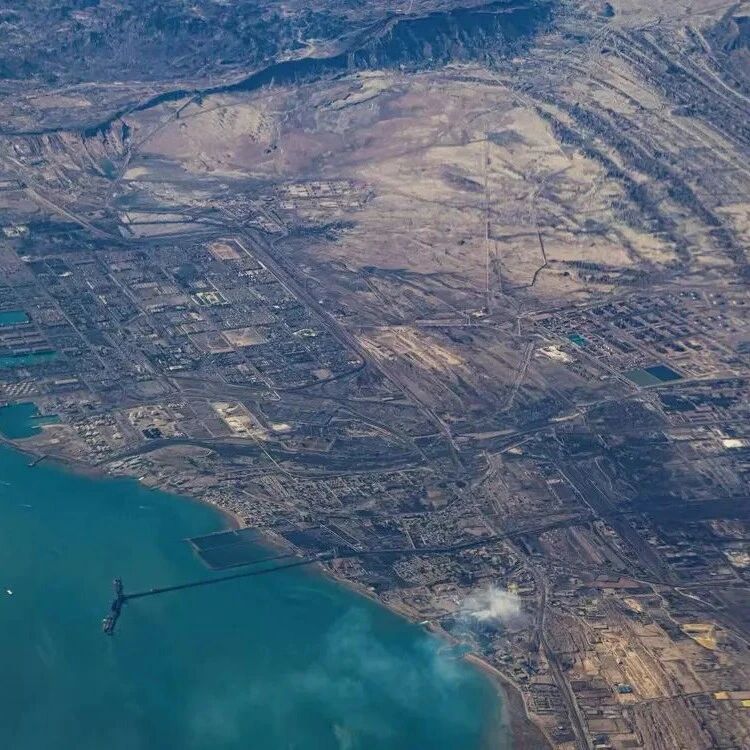
美伊紧张局势加剧之际,阿联酋和沙特趁机扩大石油出口
Xin Lang Cai Jing· 2026-02-27 15:50
Core Viewpoint - Oil prices are trading above $72 per barrel, nearing the highest level since July of the previous year, amid concerns over potential disruptions in oil supply from the Middle East due to U.S. actions against Iran [1][3][4]. Group 1: Oil Supply and Production - ADNOC plans to increase exports of its flagship Murban crude oil in April, indicating a response from major Middle Eastern exporters to market concerns about U.S. strikes potentially disrupting regional oil supplies [1][4]. - ADNOC has provided additional quantities of crude oil to its partners in the onshore oil fields, although the exact increase in Murban crude supply remains unclear [4]. - Two onshore oil fields are expected to shut down in May for maintenance, which will affect export supply during that period [4]. Group 2: Geopolitical Context - U.S. President Donald Trump is considering military action against Iran to compel its leaders to negotiate limits on Tehran's nuclear program, with significant military forces recently gathered in the Middle East [1][3]. - Indirect talks between the U.S. and Iran took place in Geneva, with analysts noting that geopolitical risk premiums have accumulated in oil prices due to fears of conflict disrupting oil supplies through the Strait of Hormuz [1][3]. Group 3: Market Reactions and OPEC+ - The increase in Murban crude supply has put pressure on spot crude oil premiums, with the premium for April shipments dropping to less than $2 per barrel above Dubai quotes [5]. - Key members of the OPEC+ alliance, including Saudi Arabia and the UAE, are set to meet, with indications that they may consider a slight increase in oil production by 137,000 barrels per day in April after pausing their production increase plans in the first quarter [5].
中东供应回升信号渐强 阿布扎比拟于4月增加旗舰原油出口
智通财经网· 2026-02-27 09:13
Group 1 - The core point of the news is that Abu Dhabi's Murban crude oil is set to increase export volumes in April, indicating a strengthening oil supply from the key producing region [1] - Abu Dhabi National Oil Company (Adnoc) has provided additional shares to its partners in the UAE onshore concession, which have already sold some of the incremental volumes to the spot market [1] - Recent weeks have shown signs of a rebound in Middle Eastern oil supply, with Saudi Arabia and Iran accelerating shipments amid concerns over U.S.-Iran tensions potentially disrupting exports [1] Group 2 - The price of Murban crude has decreased relative to global benchmarks Brent and Dubai crude due to the listing of additional crude for sale [2] - Brent crude futures reached $72.61 per barrel, the highest intraday price since July of the previous year [2] - Adnoc has previously adjusted supply volumes to the market, and OPEC+ representatives expect the organization to agree on moderate supply increases in the upcoming meeting [2]
印度炼油商调整原油进口策略
Zhong Guo Hua Gong Bao· 2026-01-28 02:55
Core Viewpoint - Indian refiners are restructuring their crude oil import strategy to reduce dependence on Russia and increase procurement from the Middle East, potentially facilitating a trade agreement with the United States to lower tariffs [1] Group 1: Changes in Oil Import Strategy - Indian refiners have begun to cut back on Russian oil purchases following discussions in government meetings aimed at accelerating the India-US trade agreement [1] - In December of last year, India's imports of Russian oil fell to a two-year low, while the share of crude oil from OPEC countries reached an 11-month high [1] Group 2: Specific Adjustments by Indian Refiners - Bharat Petroleum, a state-owned refiner, has awarded a one-year contract to Trafigura for the purchase of Iraqi Basra and Omani crude oil and is seeking to buy Murban crude from the UAE [1] - Indian refiners are also increasing purchases of US oil to partially replace Russian oil and reduce the trade deficit with the US, while exploring opportunities for Venezuelan crude [1] Group 3: Market Analysis - Market analysts suggest that the increased production quotas from OPEC member countries are maintaining sufficient global market supply, alongside the US doubling import tariffs on Indian goods last year as a penalty for significant Russian oil purchases, driving the diversification of India's supply chain [1]
综合晨报-20251208
Guo Tou Qi Huo· 2025-12-08 03:00
1. Report Industry Investment Ratings No relevant content provided. 2. Core Views of the Report - The short - term market for oil is dominated by bullish news, with oil prices maintaining a volatile and slightly stronger trend, but there is still pressure from inventory accumulation in the medium - and long - term fundamentals [1]. - Before gold breaks through the previous high resistance, it is not advisable to chase after precious metals [2]. - There is a probability that the upward trend of Shanghai copper will pause this week, and it may experience a high - level correction under certain conditions [3]. - The upward trend of Shanghai aluminum may continue to a certain extent, but be cautious when chasing high [4]. - The casting aluminum alloy has limited ability to follow the upward trend under the background of over - supply, and attention should be paid to the possible narrowing space at the end of the year [5]. - Alumina is in a weak operation and continues to explore the bottom [6]. - Zinc is not suitable for short - selling configuration, and there is a possibility that Shanghai zinc will break through the annual line and continue to rise [7]. - Shanghai lead is expected to fluctuate within the range of 17,000 - 17,500 yuan/ton [8]. - Tin prices are approaching the adjustment point, and attention can be paid to the far - month out - of - the - money put option strategy [9]. - The expected production restriction in Xinjiang may drive up the price of industrial silicon in the short term [10]. - The short - term market for polysilicon is digesting the negative impact of rule changes, and subsequent attention should be paid to the actual warehouse receipt registration speed [11]. - The steel price is expected to continue the low - level range - bound pattern, and attention should be paid to the continuity of environmental protection production restrictions in Tangshan and other places [12]. - Coke and coking coal are affected by factors such as downstream demand and supply, and their prices show different trends [13][14]. - For manganese silicon and silicon iron, observe the support strength at the bottom [14][15]. - The short - term upward space for the freight rate of the SCFI European route in December is limited, and the far - month contract is suppressed by the resumption of navigation expectation [16]. - The fuel oil market shows a weak and volatile pattern, and the low - sulfur fuel oil market presents a volatile trend [17]. - The BU of asphalt is under pressure [18]. - The upward resistance of urea prices increases, and the market oscillates and declines [19]. - The short - term market for methanol may oscillate and correct [20]. - The sentiment in the pure benzene market has slightly improved [21]. - Styrene is expected to be range - bound in the short term [22]. - Polypropylene, plastic, and propylene face different supply and demand situations, and their prices are under different pressures [23]. - PVC is expected to operate in a low - level range, and caustic soda is in a weak operation [24]. - PX is expected to be stronger in the medium term, and the processing margin of PTA is expected to be repaired [25]. - Ethylene glycol is under supply pressure, and its medium - term weakness is difficult to change [26]. - Short - fiber and bottle - chip follow different market trends, and their investment strategies vary [27]. - Glass is recommended to be observed temporarily, waiting for further cold - repair to drive up the price [28]. - For natural rubber and synthetic rubber, pay attention to cross - variety arbitrage opportunities [29]. - For soda ash, adopt the idea of shorting on rebounds [30]. - For soybeans and soybean meal, observe whether the 05 contract can break through upward and look for subsequent long - buying opportunities [31]. - Soybean oil and palm oil are expected to fluctuate within a range, and short - term attention should be paid to the guidance of the fundamentals of oils and fats [32]. - Rapeseed meal and rapeseed oil are expected to be weakly volatile in the short term [33]. - For soybeans, short - term attention should be paid to the performance of domestic policies and the spot market [34]. - For corn, pay attention to the sales progress of new grain in the Northeast and the auction of overdue wheat, and be cautious about the 01 contract [35]. - For pigs, the industry is in a de - stocking process, and there is a high probability of a second bottom - testing in the first half of next year [36]. - For eggs, adopt a short - selling strategy for the near - month contract [37]. - For cotton, temporarily adopt a wait - and - see strategy [38]. - For sugar, pay attention to the subsequent production situation at home and abroad [39]. - For apples, pay attention to the inventory reduction situation [40]. - For wood, temporarily adopt a wait - and - see strategy [41]. - For pulp, the medium - term trend may be range - bound, and temporarily observe or conduct short - term operations [42]. - For stock indices, after the interest - rate meetings of major central banks this month, consider increasing positions slightly on dips [43]. - For treasury bonds, after the 12 - month political bureau meeting and the central economic work conference, there may be a turning point, and participate in the game of oversold rebounds of some varieties [44]. 3. Summaries by Related Catalogs Energy - **Crude Oil**: UAE set the official selling price of Murban crude oil for January next year at $65.53/barrel. The progress of the Russia - Ukraine peace plan has stalled, and OPEC's November oil supply was further below the target. The short - term market is bullish, but there is inventory pressure in the medium - and long - term [1]. - **Fuel Oil & Low - Sulfur Fuel Oil**: The market shows a weak and volatile pattern. High - sulfur fuel oil has some support from coking profit, and low - sulfur fuel oil is affected by refinery device fluctuations [17]. - **Asphalt**: Supply has slightly increased, while the weekly shipment volume has decreased, and the commercial inventory de - stocking rhythm has slowed down, with the BU under pressure [18]. Metals - **Precious Metals**: Gold prices fluctuated greatly on Friday, and silver was relatively strong. Focus on the Fed meeting this week, and it is not advisable to chase high before gold breaks through the previous high [2]. - **Base Metals**: - **Copper**: Prices hit record highs last week. There is a probability that the upward trend will pause this week, and it may correct under certain conditions [3]. - **Aluminum**: Shanghai aluminum slightly declined on Friday night. It may continue the upward trend, but be cautious when chasing high [4]. - **Zinc**: Supported by supply constraints and market sentiment, there is a possibility of breaking through the annual line and rising [7]. - **Lead**: It continued to rebound, and is expected to fluctuate within the range of 17,000 - 17,500 yuan/ton [8]. - **Tin**: Prices were pushed up by funds last week, and are approaching the adjustment point [9]. - **Industrial Silicon**: The expected production restriction in Xinjiang may drive up the price in the short term [10]. - **Polysilicon**: The rule change may lead to some funds leaving the market, and the fundamental pressure still exists [11]. - **Ferroalloys**: - **Manganese Silicon**: The price oscillated. Pay attention to the impact of reduced shipments from Ghana, and observe the bottom support strength [14]. - **Silicon Iron**: The price oscillated. The demand has some resilience, and observe the bottom support strength [15]. Chemicals - **Urea**: The upward resistance increased, and the market oscillated and declined due to high daily production and weak downstream chasing sentiment [19]. - **Methanol**: The port inventory decreased slightly, but the short - term market may oscillate and correct due to high coastal inventory and weak demand [20]. - **Pure Benzene**: The price was slightly pushed up. Although there is pressure in reality, the market sentiment has slightly improved [21]. - **Styrene**: It is expected to be range - bound in the short term, and attention should be paid to the impact of crude oil fluctuations [22]. - **Polypropylene, Plastic & Propylene**: They face different supply and demand situations, with polyethylene under pressure and polypropylene's supply support weakening [23]. - **PVC & Caustic Soda**: PVC is expected to operate in a low - level range, and caustic soda is in a weak operation [24]. - **PX & PTA**: Prices fluctuated last week. PX is expected to be stronger in the medium term, and the processing margin of PTA is expected to be repaired [25]. - **Ethylene Glycol**: Supply pressure exists, and the medium - term weakness is difficult to change [26]. - **Short - Fiber & Bottle - Chip**: Short - fiber follows the raw material price, and bottle - chip is affected by demand and cost [27]. Agricultural Products - **Grains and Oilseeds**: - **Soybeans & Soybean Meal**: Pay attention to the USDA report and the export and weather conditions of US soybeans, and observe the breakthrough of the 05 contract [31]. - **Soybean Oil & Palm Oil**: They are expected to fluctuate within a range, and short - term attention should be paid to the fundamentals [32]. - **Rapeseed Meal & Rapeseed Oil**: They are expected to be weakly volatile in the short term [33]. - **Soybeans**: Short - term attention should be paid to the performance of domestic policies and the spot market [34]. - **Corn**: The futures price declined, and attention should be paid to the sales progress of new grain in the Northeast and the auction of overdue wheat [35]. - **Livestock and Poultry**: - **Pigs**: The inventory is being reduced, and there is a high probability of a second bottom - testing in the first half of next year [36]. - **Eggs**: Adopt a short - selling strategy for the near - month contract [37]. - **Cash Crops**: - **Cotton**: Temporarily adopt a wait - and - see strategy, and pay attention to the export sales and supply - demand report [38]. - **Sugar**: Pay attention to the subsequent production situation at home and abroad [39]. - **Apples**: The futures price is in a high - level oscillation, and pay attention to the inventory reduction situation [40]. - **Wood**: Temporarily adopt a wait - and - see strategy due to low inventory and weak demand [41]. - **Pulp**: The medium - term trend may be range - bound, and temporarily observe or conduct short - term operations [42]. Others - **Shipping**: The short - term upward space for the freight rate of the SCFI European route in December is limited, and the far - month contract is suppressed by the resumption of navigation expectation [16]. - **Financial Instruments**: - **Stock Indices**: The stock market shows a volatile and slightly stronger trend. After the interest - rate meetings of major central banks this month, consider increasing positions slightly on dips [43]. - **Treasury Bonds**: The bond market is oscillating, and after the 12 - month political bureau meeting and the central economic work conference, there may be a turning point, and participate in the game of oversold rebounds of some varieties [44].
VLCC日租破7万美元 美油赴亚洲之路遭遇“运费墙”
Zhi Tong Cai Jing· 2025-09-26 08:53
Group 1 - The core viewpoint of the articles highlights the increasing demand for oil from China, which is driving up tanker freight rates, while the attractiveness of U.S. crude oil to Asian buyers is gradually declining [1][4] - Chinese refining companies are rapidly placing orders for crude oil to utilize government-import quotas before the end of the year, leading to a higher utilization rate of Very Large Crude Carriers (VLCCs) [1] - The daily rental rate for VLCCs on the U.S. to China route has exceeded $70,000, which, although lower than the $90,000 rate for the Middle East to China route, results in significantly higher overall transportation costs due to longer shipping times [1] Group 2 - The "arbitrage trade" from the U.S. to Asia has become a notable feature in the spot market, although this trend may not be sustainable in the long term [1] - As OPEC gradually eases production quotas, crude oil shipping volumes in the region east of the Suez Canal are increasing, with shipowners optimistic about the market outlook [1] - There are signs of tightening supply in the U.S. domestic crude oil market, with government data indicating that crude oil inventories have decreased for two consecutive weeks, reaching the lowest level since January [4]
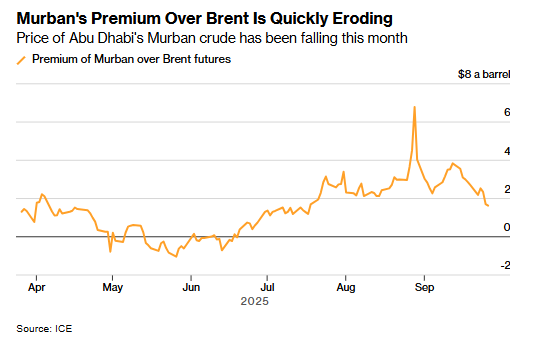
中东催生炼油业新型定价机制
Zhong Guo Hua Gong Bao· 2025-09-15 06:11
Group 1 - The Gulf Cooperation Council (GCC) member countries are expanding refining capacity to derive more value from fossil fuel resources, with refining capacity increasing by one-third since 2017, reaching 10.5 million barrels per day [1] - Gasoline production in the Gulf region has risen significantly from 1.7 million barrels per day to nearly 2.4 million barrels per day, with gasoline exports doubling to 654,000 barrels per day [1] - The traditional pricing mechanism based on Singapore market prices is becoming less relevant as Singapore now accounts for only 7% of the Gulf's gasoline exports, prompting the need for a new pricing mechanism to better reflect local market fundamentals [1] Group 2 - The new pricing mechanism called "MEBOB" has been introduced, which corresponds to the European "EBOB" and the American "RBOB," positioning the Middle East as a new oil trading hub [2] - MEBOB aims to reflect the value of Gulf refined products and is seen as a recognition of the structural changes in the global energy market [2] Group 3 - The UAE has initiated the Murban crude oil trading to compete with Brent and WTI, launching Murban crude futures contracts to establish an alternative benchmark for Middle Eastern crude [3] - Murban crude is characterized by its low sulfur content of 0.78% and an API gravity of 39.9 degrees, with a significant infrastructure project underway to enhance its export capabilities [3] - A large underground storage facility is being constructed in Fujairah, with a total capacity of 42 million barrels, representing the largest of its kind globally, and is expected to be operational after delays due to the pandemic [3] Group 4 - The trading volume of Murban crude futures has surged, with the second quarter of 2024 seeing a record trading volume of 1.5 billion barrels, more than double the growth rate from the beginning of the year [4] - June 2024 set new trading records with an average daily trading volume of 31 million barrels and a single-day peak of 573,000 contracts, indicating Murban crude's emergence as a globally influential pricing benchmark [4]
原油日报:纳亚拉炼厂因制裁无法进口中东原油-20250902
Hua Tai Qi Huo· 2025-09-02 07:52
Group 1: Market News and Important Data - SC crude oil's main contract closed up 1.10%, at 489 yuan per barrel [1] - In June, US crude oil production hit a record high, and the supply of crude oil and petroleum products rose to the highest level since October 2024. US LNG production increased by 12,000 barrels per day, reaching 748,400 barrels per day [1] - Saudi Aramco and Iraq's SOMO suspended oil sales to Nayara Energy. Nayara's August crude imports rely entirely on Russia due to payment difficulties caused by sanctions [1] - Oil traders expect OPEC+ to keep oil production unchanged this weekend, halting previous production increases. IEA warns of significant supply surplus by year - end [1] - Indian refiners are buying more US crude oil, which may help reduce India's trade surplus with the US [1] - ONGC executives say they'll keep buying Russian oil if prices are right [1] Group 2: Investment Logic - Saudi Arabia is artificially controlling oil shipments. Despite Dubai prices being strong, eastern refiners have more options due to increased Latin American supply and open arbitrage windows [2] Group 3: Strategy - Short - term, oil prices will trade in a range; medium - term, bearish allocation is recommended [3] Group 4: Risks - Downside risks include US relaxing sanctions on Russian oil and macro black - swan events [4] - Upside risks include US tightening sanctions on Russian oil and large - scale supply disruptions from Middle East conflicts [4]
南华原油市场周报:8月OPEC+会议符合预期,本周关注宏观情绪-20250804
Nan Hua Qi Huo· 2025-08-04 03:57
Report Industry Investment Rating - Not provided in the content Core Viewpoints - Last week, crude oil showed a trend of rising first and then falling. Trump's extreme pressure on Russia triggered supply concerns and pushed up the geopolitical premium, but the implementation of subsequent measures remains to be observed. In the second half, due to the over - rise correction of the market, the non - farm payrolls data in the US falling short of expectations and the downward revision of the previous value, the fear of economic recession reignited, the VIX index soared, and the capital flight impacted the market, leading to the decline of crude oil. The result of the OPEC+ meeting was in line with expectations. It will increase production by 547,000 barrels per day in September and end the first - stage production restoration ahead of schedule. The subsequent policy will be discussed at the meeting on September 7. Recently, attention should be paid to the macro - sentiment, tracking the VIX index and the US stocks [4] Market Trends - OPEC+ agreed to continue significant production increases in September and exit the current round of production cuts one year ahead of schedule. Eight member countries of OPEC+ reached a resolution to increase production by 548,000 barrels per day in September through a video conference, marking that the organization completed the current - stage supply restoration plan one year ahead of schedule and fully exited the 2.2 million barrels per day production cut agreement implemented by eight member countries since 2023, including the UAE's additional phased production increase quota. Another voluntary production cut agreement of about 1.66 million barrels per day will be re - evaluated by the end of December. This production increase marks a strategic shift of OPEC and its partners from defending oil prices to releasing production capacity, effectively suppressing the impact of geopolitical tensions and seasonal demand peaks on oil prices [4] - As the oil prices in the Middle East rise, Asia will increase its imports of US WTI crude oil in the fourth quarter. Due to the strong demand for high - sulfur crude oil in Asia, the prices of Dubai crude oil and Murban crude oil, the benchmark prices of Middle Eastern crude oil, have risen this month, narrowing the price difference with the low - sulfur light US WTI crude oil. The WTI arbitrage window for Asia has been wide open in the past week, especially for ships arriving in early November. US crude oil producer Occidental Petroleum has sold WTI crude oil to Japanese refiner Taiyo Oil at a premium of about $3.50 per barrel over the October Dubai crude oil quote for delivery in October [5] - The Iranian foreign minister stated that the US needs to compensate for the losses in the conflict before the nuclear negotiations can restart. Iran has set new conditions for restarting the nuclear negotiations with the Trump administration. The US must compensate Iran for the losses caused during the Iran - Israel conflict last month. Iran will not agree to resume negotiations without addressing these issues [5] - The annual rate of the US core PCE price index in June was 2.8%, higher than the expected 2.70%, and the previous value was revised from 2.70% to 2.8%. The monthly rate of the core PCE price index in June was 0.3%, in line with expectations and higher than the previous value of 0.20%. The overall PCE index including food and energy rose 0.3% month - on - month and 2.6% year - on - year, respectively higher than the market expectations of 0.23% and 2.5%. The personal consumption expenditure price index rose 0.3% month - on - month, pushing the annual rate to 2.6%, the highest level since February. Weak spending is due to the cooling of the labor market. Real disposable income remained flat after falling in May, and wages and salaries hardly increased. The July employment report is expected to show a continued slowdown in recruitment and a slight rise in the unemployment rate. The savings rate remained at 4.5%. After the data was released, the spot gold fluctuated slightly in the short term, and the US dollar index rose slightly in the short term [6] - The total number of US oil rigs in the week ending August 1 was 410, compared with 415 in the previous week. As of the week ending July 29, speculators' net long positions in Brent crude oil on the Intercontinental Exchange increased by 33,959 lots to 261,352 lots. In the week ending July 29, speculators' net long positions in NYMEX WTI crude oil increased by 1,752 lots to 87,840 lots [7] EIA Weekly Inventory - As of the week ending July 25, the total US crude oil inventory including strategic reserves was 829.432 million barrels, an increase of 7.94 million barrels from the previous week; the US commercial crude oil inventory was 426.691 million barrels, an increase of 7.7 million barrels from the previous week; the total US gasoline inventory was 228.405 million barrels, a decrease of 2.73 million barrels from the previous week; the distillate oil inventory was 113.536 million barrels, an increase of 3.64 million barrels from the previous week. The crude oil inventory in Cushing, Oklahoma, was 22.553 million barrels, an increase of 0.69 million barrels. The US strategic petroleum reserve was 402.741 million barrels, an increase of 0.24 million barrels. The crude oil inventory was 1.47% lower than the same period last year and 6% lower than the average of the past five years; the gasoline inventory was 2.08% higher than the same period last year and 1% lower than the average of the past five years; the distillate oil inventory was 10.49% lower than the same period last year and 16% lower than the average of the past five years [8] - As of the week ending July 25, the US daily crude oil production was 13.314 million barrels, an increase of 41,000 barrels from the previous week and an increase of 14,000 barrels from the same period last year; the total processing volume of US refineries was 16.911 million barrels per day on average, a decrease of 25,000 barrels from the previous week; the refinery utilization rate was 95.4%, a decrease of 0.1 percentage points from the previous week [8] - The increase in the US EIA crude oil inventory in the week ending July 25 was the largest since the week ending January 31, 2025. The decrease in the US EIA gasoline inventory in the week ending July 25 was the largest since the week ending April 25, 2025. The increase in domestic crude oil production in the week ending July 25 was the largest since the week ending March 7, 2025 [9]

原油日报:随着夏季发电需求回落,中东原油出口将逐步增长-20250801
Hua Tai Qi Huo· 2025-08-01 05:55
Industry Investment Rating - The short - term oil price is expected to fluctuate within a range, and a medium - term short - position allocation is recommended [3] Core View - As the summer power generation demand declines, Middle - East crude oil exports will gradually increase. With the end of summer, the power generation demand in the Middle East and the peak travel season in the Northern Hemisphere will decline. Starting from September, due to Saudi Arabia's production increase and reduced direct - burning of crude oil for power generation, the growth of Middle - East crude oil exports will be more obvious. The current export volume has exceeded 17 million barrels per day and is expected to increase to 18 million barrels per day before October [2] Summary by Related Catalogs Market News and Important Data - The price of light crude oil futures for September delivery on the New York Mercantile Exchange fell 74 cents to $69.26 per barrel, a decline of 1.06%. The price of Brent crude oil futures for September delivery fell 71 cents to $72.53 per barrel, a decline of 0.97%. The main SC crude oil contract closed down 0.71% at 528 yuan per barrel [1] - Iran has set new conditions for restarting nuclear talks with the Trump administration. The Iranian Foreign Minister said the US must compensate for the losses during the Iran - Israel conflict last month, explain its attack during the talks, and guarantee no similar attacks in the future [1] - Indian state - owned refiners stopped buying Russian oil last week due to reduced discounts and Trump's tariff threats [1] - President Trump said the fastest way to end the Gaza humanitarian crisis is for Hamas to surrender and release hostages [1] - In the fourth quarter, Asia is expected to increase imports of US WTI crude oil because the price increase of Middle - East crude oil has opened an arbitrage window. Western Oil has sold WTI crude oil to Japan's Taiyo Oil at a premium of about $3.50 per barrel over the October Dubai crude oil quote for October delivery [1] Investment Logic - As the end of summer approaches, the power generation demand in the Middle East and the peak travel season in the Northern Hemisphere will decline. Starting from September, due to Saudi Arabia's production increase and reduced direct - burning of crude oil for power generation, the growth of Middle - East crude oil exports will be more obvious. The current export volume has exceeded 17 million barrels per day and is expected to increase to 18 million barrels per day before October, unless Saudi Arabia deliberately controls exports. The impact of the maintenance of the Upper Zakum oil field in the UAE is limited [2] Strategy - The short - term oil price is expected to fluctuate within a range, and a medium - term short - position allocation is recommended [3] Risks - Downside risks include the US relaxing sanctions on Iranian oil and macro black - swan events [3] - Upside risks include the US tightening sanctions on Russian oil and large - scale supply disruptions caused by Middle - East conflicts [3]