
高端装备

Search documents
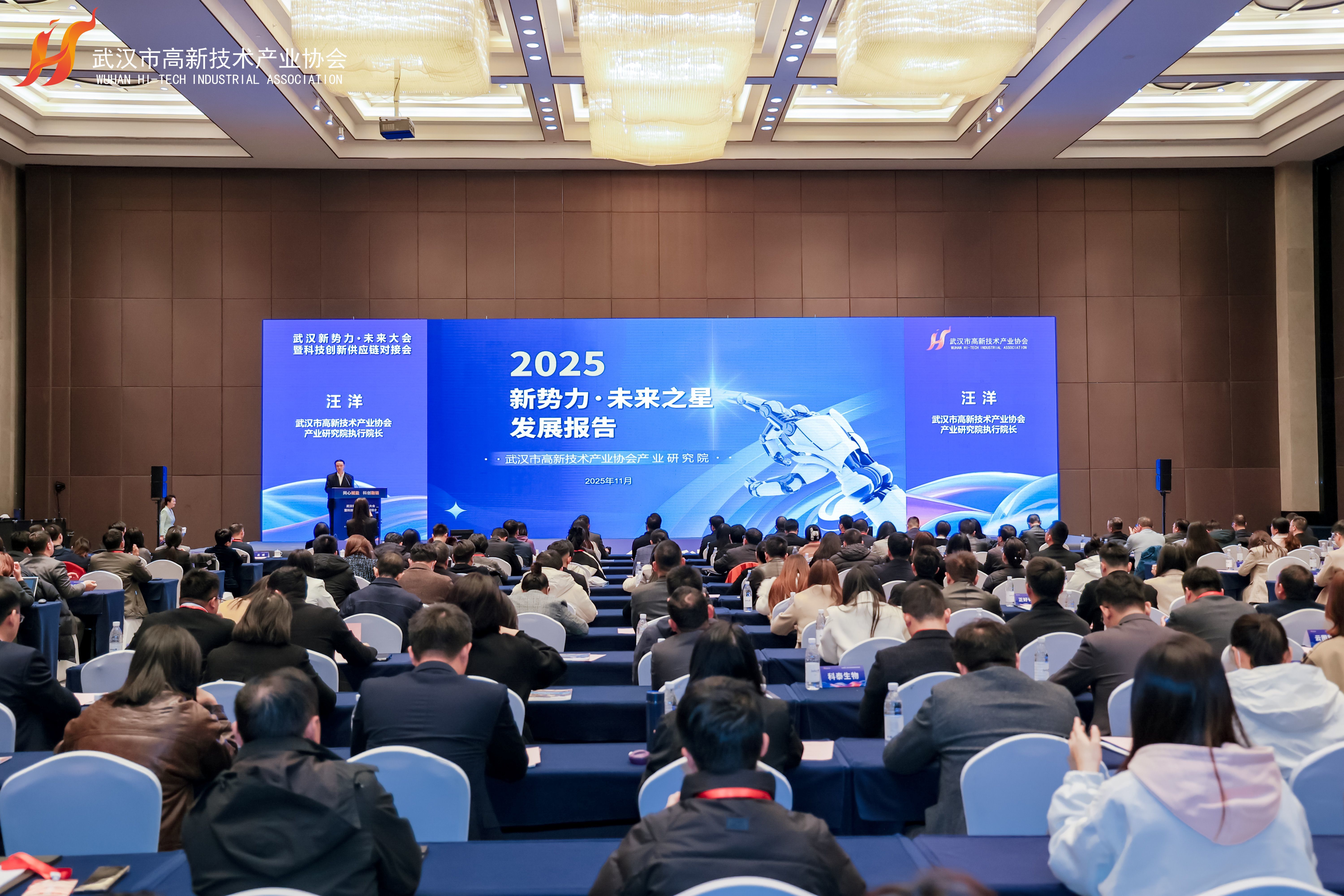
武汉首次发布“未来之星”,国家专精特新“小巨人”企业占比超四分之一
Chang Jiang Ri Bao· 2025-11-17 12:20
Core Insights - The "Future Stars" report highlights the strength and pioneering role of Wuhan's future industries, with over 25% of the selected 100 companies being recognized as national specialized and innovative "little giant" enterprises [1][4]. Group 1: Report Overview - The report was compiled by the Wuhan High-tech Industry Association's Industrial Research Institute based on self-reported data and field research, resulting in the selection of 100 "Future Stars" and 10 "New Rising Stars" [4]. - The total asset scale of the "Future Stars" companies is approximately 21.7 billion, with projected total revenue of about 13.1 billion for 2024, reflecting an average revenue growth rate of 67.85% [4]. Group 2: Innovation and R&D - High-tech enterprises constitute 80% of the "Future Stars," with an average R&D investment intensity of 52.96%, which is six times the national average for high-tech enterprises, indicating strong innovation momentum [4]. - Among the founders of these "New Forces" companies, 32% hold doctoral degrees, many of whom have backgrounds in prestigious universities or medical institutions, combining deep technical expertise with industry insight [4]. Group 3: Industry Coverage - The "Future Stars" span nine industrial chains, including optoelectronic information, health care, high-end equipment, artificial intelligence, and Beidou, with a focus on future manufacturing, materials, energy, and health [4]. - The report emphasizes that these "New Forces" are addressing market challenges through technological innovation and model breakthroughs, positioning themselves as core drivers of new productive forces [4]. Group 4: Event and Collaboration - The event was co-hosted by the Wuhan Municipal Committee of the Communist Party of China and the Wuhan Federation of Industry and Commerce, attracting over a hundred key enterprises, universities, research institutions, and financial investment organizations [5].

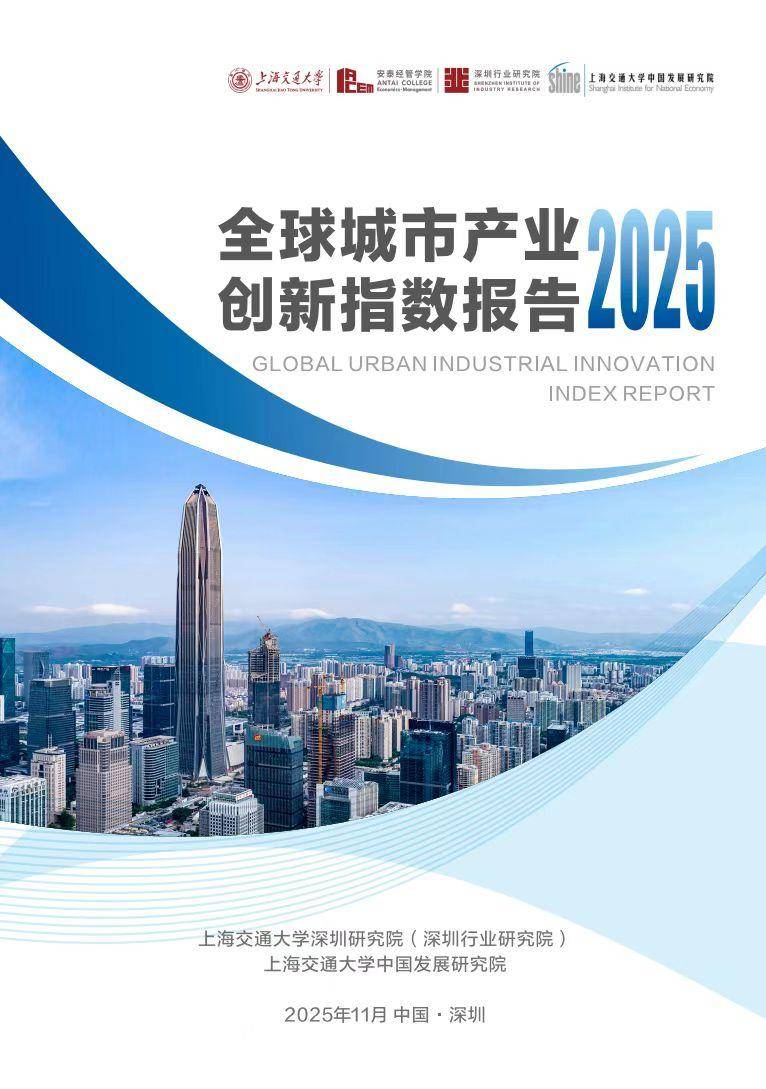
重磅报告!深圳又一指标全球第二!
Sou Hu Cai Jing· 2025-11-15 16:51
Core Insights - The report reveals a significant shift in the global industrial innovation focus towards Asia, with Tokyo, Shenzhen, New York, and San Francisco forming the "first tier" of global innovation cities [1][5][34] - Six Asian cities occupy the top ten positions in the global industrial innovation rankings, indicating a collective breakthrough in innovation within the region [8][11] Group 1: Ranking and Competition - Tokyo ranks first with a score of 46.84, followed closely by Shenzhen at 46.79, New York at 46.72, and San Francisco at 46.11, highlighting the intense competition among these leading cities [5][32] - The first tier consists of six cities scoring between 40 and 50, including Beijing and Seoul, while the second tier includes 13 cities scoring between 20 and 40 [6][32] Group 2: Asian Cities' Performance - Asian cities, particularly Tokyo and Shenzhen, demonstrate strong capabilities in transforming technological innovations into competitive products and services, with Shenzhen leading in ICT product exports at 41.3% [7][11] - The report indicates that the rise of Asian cities is not merely about economic growth but also reflects a qualitative change in innovation capabilities [11][19] Group 3: Innovation Models - Tokyo's success is attributed to its robust industrial foundation and continuous innovation investment, while Shenzhen exemplifies market-driven innovation [13][14] - The report identifies three successful innovation paradigms represented by Tokyo, Shenzhen, and New York, emphasizing the importance of collaboration and competition in shaping the future of global innovation [16][34] Group 4: Recommendations for Shenzhen - The report suggests that Shenzhen should focus on deep integration of technological and industrial innovation, enhancing its innovation ecosystem through strategic positioning and talent attraction [22][23] - Specific recommendations include establishing a collaborative mechanism between enterprises and research institutions, optimizing capital support, and upgrading industrial spaces to foster innovation [24][25][28]
最新报告:亚洲城市正成为全球产业创新重心 前十强里中国城市占三席
Mei Ri Jing Ji Xin Wen· 2025-11-15 05:43
《报告》课题组认为,前四名城市得分差距在毫厘之间,表明全球产业创新的顶峰已形成一个实力极为 接近、竞争异常激烈的"第一梯队"。 其中,深圳的卓越表现,代表了中国城市在应用创新和成果产业化上的全球领先水平。作为市场牵引型 创新的典范,深圳在"ICT(信息与通信技术)产品出口占比"(41.3%,全球第一)"PCT(专利合作条 约)专利申请量"(6463件,全球第二)"劳动力年龄人口占比"(79.53%,全球第一)等方面表现抢 眼。深圳与东京的对比,在某种程度上来说也是两种创新模式的对话:一种是基于长期技术积累,另一 种是基于市场反应的效率。 创新成为经济高质量发展的底层逻辑 《报告》另一个核心结论是,亚洲城市在产业创新领域的集体性突破。在全球产业创新前十强中,亚洲 城市占据六席,除了东京和深圳,还有北京(第5)、首尔(第6)、新加坡(第8)和上海(第9)。 11月14日,上海交通大学深圳研究院(深圳行业研究院)与中国发展研究院联合编制的《全球城市产业 创新指数报告2025》(以下简称《报告》)在第二十七届中国国际高新技术成果交易会上正式发布。这 份追踪研究揭示了一个正在显现并强化的趋势:全球产业创新重心正在向亚洲 ...
四载风华向阳开——北交所厚植创新型中小企业成长沃土
Shang Hai Zheng Quan Bao· 2025-11-14 18:39
Group 1 - The Beijing Stock Exchange (BSE) has 282 listed companies, with nearly 80% being small and medium-sized enterprises (SMEs), and over half classified as national-level specialized and innovative "little giant" enterprises [3][4] - Since its inception, the BSE has raised over 60 billion yuan, averaging 2 billion yuan per company, and the total market capitalization of listed companies has exceeded 900 billion yuan [3][4] - The BSE has distributed dividends totaling 19.86 billion yuan, with 16 companies having distributed more than their total IPO fundraising amount [3][7] Group 2 - The BSE 50 Index has increased by over 50% this year, reflecting strong market confidence in the growth potential of China's SMEs [4][7] - The BSE has implemented continuous institutional innovations, including flexible listing standards and diverse financing mechanisms, to support the growth of innovative enterprises [4][5] - The introduction of targeted convertible bonds has provided SMEs with precise financing options, enhancing their growth potential [5][7] Group 3 - The BSE has formed five major industrial clusters, supporting technological innovation across various sectors, including new energy materials and biomedicine [6] - The market supply continues to expand, with the median profit of companies queued for listing in 2024 exceeding 8 million yuan, indicating growing recognition of the BSE platform [7][8] - A comprehensive regulatory system has been established to protect investors and ensure the sound operation of listed companies [7][8] Group 4 - Collaborative efforts among intermediary institutions, long-term funds, and government departments are creating a supportive ecosystem for innovative SMEs [8] - Over 60 securities firms are actively involved in BSE listing sponsorship, transitioning from traditional models to comprehensive financial support [8] - The BSE is advancing reforms to enhance market functions, institutional foundations, service systems, and open ecosystems, including the expedited launch of the BSE 50 ETF [9]

黄奇帆:十五五期间,民营企业最重要的赛道
Sou Hu Cai Jing· 2025-11-14 17:24
Core Viewpoint - China's manufacturing industry has achieved "five leading and five parallel" sectors, with significant global presence in various fields [2] Group 1: Manufacturing Industry Achievements - The automotive, shipbuilding, power equipment, high-speed rail equipment, and new energy equipment sectors are leading globally [2] - New materials, biomedicine, high-end equipment, aerospace, and artificial intelligence sectors are on par with developed countries [2] - The global share of China's manufacturing industry has reached 32% [2] Group 2: Productive Service Industry - The productive service industry includes ten categories: R&D, logistics, inspection and testing, finance, green low-carbon, digitalization, trade, intellectual property, professional consulting, and human resources [2] - This sector is a key driver for GDP growth, unicorn cultivation, service trade enhancement, and total factor productivity [2] - There is a call for private enterprises to expand into the productive service industry to alleviate manufacturing competition, create job opportunities for graduates, and revitalize office resources [2]

亚洲城市引领产业创新发展趋势,深圳、北京、上海上榜全球前十强
Sou Hu Cai Jing· 2025-11-14 15:22
Core Insights - The "Global City Industry Innovation Index Report 2025" indicates a significant shift of global industrial innovation focus towards Asia, with six out of the top ten cities for industrial innovation located in Asia [1][3][8] Group 1: Global Industrial Innovation Landscape - The report evaluates 27 major innovative cities globally, assessing them across four dimensions: environment, investment, output, and performance [3] - Industrial innovation, rather than mere technological innovation, is identified as the core engine driving economic rise and sustainable development for cities and nations [3][8] Group 2: Top Performing Cities - Tokyo, Shenzhen, New York, and San Francisco form the "first tier" of global industrial innovation, with very close overall scores: Tokyo at 46.84, Shenzhen at 46.79, New York at 46.72, and San Francisco at 46.11 [4][6] - Tokyo's top position is attributed to its strong industrial foundation and continuous innovation investment, leading in PCT international patent applications (11,664), high-tech product export ratio (67.4%), and number of Forbes Global 2000 companies (82) [6][8] - Shenzhen exemplifies China's leading position in application innovation and industrialization, with notable metrics such as ICT product export ratio (41.3%, the highest globally), PCT patent applications (6,463, second globally), and a labor force age population ratio (79.53%, the highest globally) [6][7] Group 3: Asian Cities' Collective Breakthrough - Six Asian cities occupy the top ten positions in industrial innovation, including Beijing (5th), Seoul (6th), Singapore (8th), and Shanghai (9th), indicating a clear shift of the global innovation balance towards the East [7][8] - Asian cities demonstrate significant advantages in electronic information and high-end equipment sectors, rapidly converting technological innovations into globally competitive products and services [7][8] Group 4: Comparative Analysis with Western Cities - While European cities like London (7th) and Paris (10th) and North American cities like New York and San Francisco maintain some advantages in innovation environment and performance, they face strong challenges from Asian cities in terms of innovation output scale and speed [8] - Traditional innovation strongholds such as Seattle and Boston have been pushed out of the top ten, highlighting the competitive dynamics in the global innovation landscape [8]
北交所开市四周年:上市公司增逾200家 下阶段改革任务明确
Di Yi Cai Jing· 2025-11-14 08:36
Core Insights - The Beijing Stock Exchange (BSE) has achieved significant growth in its four years of operation, with the number of listed companies increasing from 81 to 282, representing a growth of approximately 248% [2][3] - The BSE has successfully attracted a large number of innovative small and medium-sized enterprises (SMEs), with over 80% of listed companies being SMEs and nearly 90% being privately owned [1][2] - The BSE's market performance has improved, with a notable increase in IPOs and new stock listings, leading to enhanced market liquidity [1][4] Market Performance - As of November 14, the BSE has 282 listed companies, with over 200 new listings in four years, significantly outpacing other A-share segments [2][3] - The average revenue of BSE companies reached 520 million yuan, with over 80% of companies reporting profitability [2][3] - The North Star 50 Index has shown strong performance, with a cumulative increase of over 40% since September 24, 2023 [4][5] Liquidity and Market Structure - The BSE has focused on improving liquidity, which has been a challenge due to the smaller size of listed companies [3][6] - Recent policy measures, including the accelerated launch of the North Star 50 ETF and optimization of market-making systems, are expected to enhance liquidity [6][7] - The introduction of new trading mechanisms and the encouragement of long-term institutional investment are key strategies for improving market liquidity [7][8] Future Development Plans - The BSE aims to enhance its market functions by refining listing standards, improving merger and acquisition regulations, and expanding its bond market product offerings [8][9] - The exchange plans to promote the establishment of more public funds focused on small and medium-sized stocks to facilitate investment [8][10] - The BSE is also looking to deepen international cooperation and increase its market's internationalization [10][11]
中试平台加快布局 助力创新成果推向产业化应用
Zheng Quan Ri Bao Wang· 2025-11-14 06:36
Core Viewpoint - The Ministry of Industry and Information Technology of China has issued a notice to accelerate the systematic layout and high-level construction of pilot testing platforms in the manufacturing sector, emphasizing the importance of these platforms in bridging the gap between laboratory research and large-scale industrial production [1][2]. Group 1: Importance of Pilot Testing Platforms - Pilot testing platforms serve as the core carrier for manufacturing pilot services, enabling the verification of innovative results from the laboratory stage through small-scale trial production [1]. - These platforms are crucial for transitioning technologies from the prototype stage to stable market-ready products, thereby reducing research and development cycles and lowering trial and error costs for enterprises [2][3]. Group 2: Goals and Strategies - The notice outlines three main tasks: strengthening existing platforms, activating dormant ones, and filling gaps in key industry areas where pilot testing supply is lacking [1][2]. - Strengthening involves upgrading and expanding the service capacity of well-utilized platforms, while activating dormant platforms focuses on improving operational efficiency and increasing external service ratios [1][2]. Group 3: Broader Implications - The development of pilot testing platforms is expected to enhance technological innovation, support the transformation of traditional industries, and improve China's position in the global value chain [2][3]. - A well-structured pilot testing network can lead to the growth of related professional services such as testing, certification, and engineering services, creating a new business model of "pilot testing + services" [3][4]. Group 4: Implementation and Collaboration - Successful implementation requires a combination of government guidance and market operations, with public service platforms reducing barriers for small and medium-sized enterprises [3][4]. - Collaboration among local governments, leading enterprises, and research institutions is essential to create a comprehensive support system from basic research to mass production [4].
增强资本市场包容性 当好科技创新“助推器”
Jin Rong Shi Bao· 2025-11-14 01:37
"十五五"规划建议提出"高质量发展取得显著成效""科技自立自强水平大幅提高"的发展目标,在重 点工作任务中将"建设现代化产业体系""加快高水平科技自立自强,引领发展新质生产力"放在核心位 置。 资本市场作为创新生态体系的重要一环,对科技创新具有重要意义与影响。创新始于科技、兴于产 业、成于资本。资本市场不仅是资源配置的平台,更是科技创新的"助推器",其具有独特的价值发现、 风险共担、利益共享机制,更加契合科技创新企业"迭代快、前景广、风险高、轻资产"的特征,能够有 效促进创新资本形成,促进创新资源优化配置,赋能科技成果转化,推动科技创新和产业创新深度融 合,在畅通"科技—产业—金融"良性循环等方面发挥关键作用。值得一提的是,就科技企业而言,登陆 资本市场不仅是为了获得资金,更需要通过市场资源整合、商业模式创新、公司治理优化等服务,推动 科技成果加速转化,跨越"死亡之谷"。 证监会主席吴清在2025金融街论坛年会上表示,在全球格局和科技创新趋势深刻变化的今天,无论 是融资端还是投资端,都对资本市场发展和功能发挥提出了新要求、新期待,只有不失时机深化改革, 不断增强市场制度的包容性、适应性,提升市场吸引力和竞争力 ...

上交所:投资科创板就是投资中国科技产业的未来
Huan Qiu Wang· 2025-11-14 01:06
另据数据显示,科创板公司上市后成长性良好,以2019年为基数,近5年科创板公司营业收入和归母净利润复合增长 率分别达18%和9%;截至目前,科创板汇聚592家上市公司,总市值超10万亿人民币,累计融资超1.1万亿人民币。在 集成电路、生物医药、人工智能、高端装备等领域形成了完整的"链群式"产业格局。 【环球网财经综合报道】日前,上交所副总经理傅浩在2025年上海证券交易所国际投资者大会上指出,科创板已成为 中国优质科技企业的首选上市平台,"投资科创板就是投资中国科技创新,就是投资中国科技产业的未来,是分享中 国科创企业发展红利的最好途径。" 《联合早报》援引路透社报道,中国资产管理公司今年已发行了3930亿份股票型公募基金,已超过2024年全年的发行 总量,有望录得自2020年以来的最佳年度表现;中国投资者对股票基金的需求正在回升,显示市场信心增强。 同时,科创板公司研发投入强度居A股首位。2025年上半年,科创板整体研发投入占比接近13%,超净利润2.8倍。 ...
