
纺织业

Search documents
恒辉安防:拟以债转股方式对恒尚新材料进行增资
Sou Hu Cai Jing· 2025-12-12 08:32
免责声明:本文内容与数据仅供参考,不构成投资建议,使用前请核实。据此操作,风险自担。 每日经济新闻 截至发稿,恒辉安防市值为58亿元。 每经头条(nbdtoutiao)——专访管涛:美国政府经济贸易政策正逐渐动摇美元本位国际货币体系,利 多因素下人民币汇率有可能破7 (记者 曾健辉) 每经AI快讯,恒辉安防(SZ 300952,收盘价:33.45元)12月12日晚间发布公告称,为了优化全资子公 司恒尚新材料的资产负债结构,支持其业务快速发展,公司拟以债转股方式对恒尚新材料进行增资,即 以公司持有的对恒尚新材料部分债权3亿元转为对恒尚新材料的股权投资。本次增资金额为3亿元,增资 金额全部计入资本公积。本次增资完成后,恒尚新材料的注册资本保持不变,仍为2.45亿元,公司仍持 有其100%股权。 2025年1至6月份,恒辉安防的营业收入构成为:纺织业-制造业占比100.0%。 ...
聚杰微纤:截至2025年12月10日公司股东人数为10975户
Zheng Quan Ri Bao Wang· 2025-12-12 08:13
证券日报网讯12月12日,聚杰微纤(300819)在互动平台回答投资者提问时表示,截至2025年12月10 日,公司股东人数为10975户。 ...
华孚时尚:公司生产经营正常
Mei Ri Jing Ji Xin Wen· 2025-12-12 08:00
Group 1 - The company, Huafu Fashion (002042.SZ), confirmed that its production and operational activities are normal [1] - The company will continue to adhere to its strategic direction and focus on daily operations to enhance long-term value [1] - The company expressed gratitude for investor attention and support [1]

巩固壮大实体经济根基|为推进强国建设提供坚实物质支撑
Zhong Guo Jing Ji Wang· 2025-12-12 07:31
Core Viewpoint - The modernization of the industrial system is the material and technical foundation of Chinese-style modernization, emphasizing the importance of strengthening the real economy and optimizing traditional industries while fostering emerging and future industries [1][2]. Group 1: Traditional Industries - Traditional industries account for approximately 80% of the value added in manufacturing, highlighting their foundational role in the industrial system [2]. - The "14th Five-Year Plan" emphasizes the need to optimize and upgrade traditional industries, which will support the development of new and future industries by providing diverse application scenarios and market space [2][3]. - Significant advancements have been made in traditional manufacturing, with over 230 exemplary smart factories and 1,260 5G factories established since the "14th Five-Year Plan" began, and the comprehensive energy consumption of products like steel and cement reaching world-leading levels [2]. Group 2: Emerging and Future Industries - The National Development and Reform Commission estimates that approximately 10 trillion yuan of market space will be added in the next five years, indicating strong growth potential for traditional industries [3]. - Emerging industries, such as new energy vehicles and biomanufacturing, have shown remarkable growth, with the production scale of the biomanufacturing industry nearing 1 trillion yuan [5]. - The "14th Five-Year Plan" aims to cultivate and strengthen emerging and future industries, which are crucial for maintaining economic stability and fostering new productive forces [6][7]. Group 3: Service Industry - The service industry is a vital component of the national economy, with its value added increasing from 24.5 trillion yuan in 2012 to 76.6 trillion yuan in 2024, contributing 60.7% to national economic growth [8][9]. - Despite significant growth, challenges remain in the service sector, particularly in specialized and high-end services, which require further development to meet diverse consumer needs [9][10]. - The focus on high-quality and efficient development in the service industry is essential for building a modern industrial system and meeting the evolving expectations of the population [10]. Group 4: Infrastructure Development - The modernization of infrastructure is crucial for economic and social development, with significant advancements made in transportation, energy, and communication systems since the "14th Five-Year Plan" [11][12]. - The comprehensive transportation network has exceeded 6 million kilometers, and the modern information communication system is the largest globally, facilitating efficient resource allocation [11]. - Future infrastructure development must address existing shortcomings, such as regional coordination and intelligent integration, to support high-quality industrial development [12][13].
美元退潮,资产大变局!美联储降息后,留学生、股民和黄金投资者必须看清的三个真相
Sou Hu Cai Jing· 2025-12-12 04:29
Group 1 - The Federal Reserve's decision to cut interest rates from a target range of 4.25-4.5% to 4.0-4.25% is a "risk management" move focused on the employment market [1] - The shift in U.S. monetary policy from aggressive anti-inflation measures to a more cautious approach aimed at preventing recession is evident [3] - Global market reactions to the rate cut were mixed, with U.S. stock indices showing varied performance and concerns about the pace of future rate cuts [3] Group 2 - The rate cut has opened the channel for global financial conditions to ease, leading to a decrease in borrowing costs for the U.S. dollar, which is the primary global financing currency [5] - Japanese and South Korean stock indices rose over 1% on the day of the rate cut, indicating early positive effects on these markets [5] Group 3 - For China, the external changes present more opportunities than challenges, particularly in reducing depreciation pressure on the yuan against the dollar [7] - The stabilization and appreciation of the yuan provide cost relief for Chinese importers, especially in energy and raw materials [7] - The People's Bank of China gains more monetary policy flexibility, allowing for potential rate cuts or reserve requirement reductions to support economic growth [7] Group 4 - China's capital markets are expected to benefit directly from increased global risk appetite and capital inflows into emerging markets [9] - Historical data suggests that during the Fed's preemptive rate cuts, growth sectors in A-shares and Hong Kong stocks tend to perform well [9] - However, a weaker dollar may increase input inflation pressures for China, and rapid yuan appreciation could challenge the competitiveness of export-oriented industries [9] Group 5 - China's response strategy is clear, focusing on a self-directed regulatory approach rather than simply following the Fed's lead [11] - Monetary policy will remain flexible and appropriate, directing financial resources towards key areas such as technological innovation, green transformation, and small and medium enterprises [11]


华升股份6.62亿重组获国资2亿支持 标的半年赚1289万承诺三年扣非1.62亿
Chang Jiang Shang Bao· 2025-12-11 23:41
Core Viewpoint - Huasheng Co., Ltd. is transforming from a traditional textile company to the emerging AIDC (Automatic Identification and Data Capture) sector through the acquisition of a 97.40% stake in Yixin Technology for 662 million yuan, aiming to enhance its business fundamentals and enter the new information infrastructure and intelligent computing service industry [2][4][5]. Group 1: Acquisition Details - The acquisition involves issuing shares and cash payments, with Yixin Technology's overall valuation at 681 million yuan, reflecting a 42.14% appraisal increase [4]. - The controlling stake acquisition will allow Huasheng to gain control over Yixin Technology, which specializes in AIDC services and intelligent computing solutions [4][6]. - The deal is supported by Hunan Guozi Xingxiang Group, which will invest 200 million yuan in the company to facilitate the transaction [7]. Group 2: Financial Performance - Huasheng has faced continuous losses in net profit since 2008, while Yixin Technology has shown rapid revenue growth, achieving 131 million yuan in revenue and a net profit of 12.88 million yuan in the first half of 2025 [2][8]. - Yixin Technology's gross profit margin has improved to 32.5%, indicating a strong upward trend in profitability [8][9]. - The performance commitment from Yixin Technology includes a promise to achieve a cumulative net profit of no less than 162 million yuan from 2026 to 2028 [3][10]. Group 3: Strategic Implications - The acquisition represents a significant strategic shift for Huasheng, moving from a focus on traditional textile products to high-tech infrastructure services, supported by local state-owned enterprises [5][6]. - Huasheng aims to leverage Yixin Technology's expertise in high-performance computing centers and green energy technology to enhance its competitive position in the national computing infrastructure landscape [6][8]. - The company plans to utilize its geographical advantages in central Hunan to serve high-demand sectors such as low-altitude economy, artificial intelligence, and financial technology [6].

281票赞成通过法案,墨西哥将对华加税50%,辛鲍姆挽尊:不是因为美国
Sou Hu Cai Jing· 2025-12-11 12:36
Core Viewpoint - Mexico's recent decision to impose punitive tariffs on Chinese goods is a direct response to U.S. trade pressures, aiming to secure recognition from the U.S. for its bilateral trade relationship and pave the way for the renewal of the USMCA agreement [1][3]. Group 1: Tariff Implementation - The Mexican Congress approved a bill to impose tariffs of up to 50% on Chinese products starting January 1, 2026, affecting key categories such as automobiles, parts, and textiles [1]. - The Mexican automotive industry warns that these tariffs could increase production costs by at least 30%, leading to potential price hikes of over 40% for vehicles once existing inventories are depleted [3]. Group 2: Economic Dependence on China - Mexico's economy is heavily reliant on external manufacturing, with nearly 40% of essential components for its automotive and textile industries sourced from China [3]. - China is a crucial market for Mexican agricultural exports, with over $1 billion in annual exports of products like avocados and tequila, accounting for more than 35% of related industry exports [3]. Group 3: U.S. Strategic Interests - The U.S. aims to reshape North American supply chains to reduce dependence on China, which may lead to more stringent market access conditions and labor standards for Mexico [5]. - The trade relationship is characterized by asymmetry, with the U.S. absorbing 80% of Mexico's exports while Mexico accounts for only 15% of U.S. exports, limiting Mexico's bargaining power [5]. Group 4: International Reactions and Future Outlook - Mexico's unilateral actions have drawn little support from other Latin American countries, while nations like Brazil and Argentina are accelerating trade cooperation with China [7]. - The EU has expressed opposition to trade restrictions that disrupt global supply chains, indicating a continued commitment to deepening economic ties with China [7]. - Mexico is encouraged to pursue a more pragmatic trade policy, recognizing that its economic interests may not align with U.S. strategic goals, and to re-engage in trade discussions with China to avoid escalating trade tensions [7].

互太纺织12月11日斥资406.12万港元回购325.5万股
Zhi Tong Cai Jing· 2025-12-11 11:00
Group 1 - The company, Intertextile (01382), announced a share buyback plan on December 11, 2025, involving an expenditure of HKD 4.0612 million [1] - The company will repurchase a total of 3.255 million shares at a price range of HKD 1.23 to HKD 1.25 per share [1]
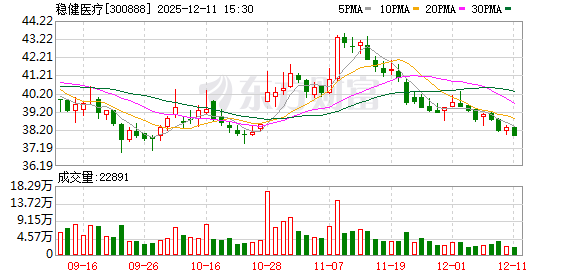
稳健医疗:目前荆门工厂尚无毛绒玩具生产线
Mei Ri Jing Ji Xin Wen· 2025-12-11 10:59
Group 1 - The company is continuously optimizing its production capacity layout to support business development and product innovation [1] - Currently, the Jingmen factory does not have a plush toy production line [1] - If the company launches new toy products, it will officially announce the launch plans and sales arrangements through official channels [1]

互太纺织(01382)12月11日斥资406.12万港元回购325.5万股
智通财经网· 2025-12-11 10:56
Group 1 - The company, Intertextile (01382), announced a share buyback plan, committing to repurchase 3.255 million shares at a total cost of HKD 4.0612 million [1] - The buyback price per share is set between HKD 1.23 and HKD 1.25 [1]