
外卖

Search documents
美团、京东外卖发布声明
Xin Lang Cai Jing· 2025-12-05 03:45
Core Viewpoint - Meituan and JD.com have announced their voluntary commitment to implement the newly released national standard "Basic Requirements for Delivery Platform Service Management" (GB/T 46862—2025), aiming to enhance service quality and protect the rights of consumers, delivery personnel, and merchants [5][6]. Group 1: Company Statements - Meituan, as one of the standard's drafting units, actively participated in its development and endorses the core principles of fair competition, food safety, service quality enhancement, and coordination of stakeholder rights [5]. - JD.com, also a drafting unit, similarly engaged in the standard's formulation and supports its key concepts, including fair competition and service quality improvement [6]. Group 2: Implementation Goals - Both companies will integrate the standard's requirements into their operational management and service processes to continuously optimize platform rules and improve service management for merchants and delivery personnel [5][6]. - The implementation of this standard is seen as an opportunity to promote regulated management, quality service, rational competition, and ecological win-win scenarios within the food delivery industry [5][6].



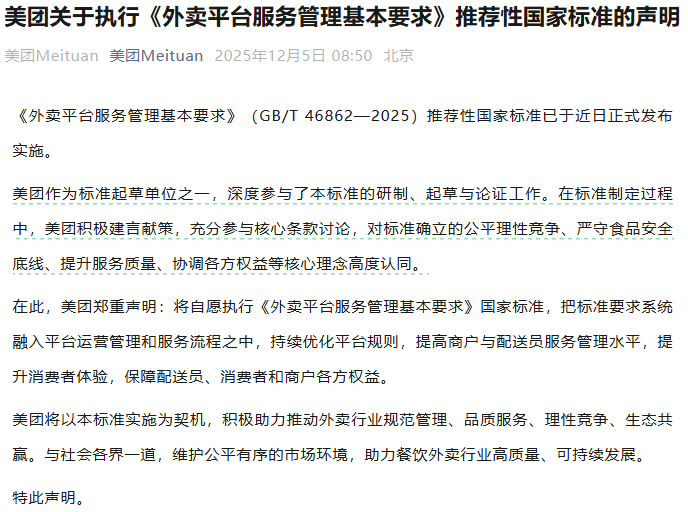
外卖服务管理新国标发布 美团京东表态:自愿执行
Feng Huang Wang· 2025-12-05 03:36
Core Viewpoint - The release and implementation of the national standard "Basic Requirements for Service Management of Takeaway Platforms" (GB/T46862—2025) marks a significant milestone in the standardization process of the takeaway industry, with major platforms like Meituan and JD Takeaway committing to comply with the new regulations [1] Group 1: Industry Response - Major platforms Meituan and JD Takeaway have publicly announced their commitment to implement the new national standard, confirming their deep involvement in its formulation and discussion [1] - Both platforms expressed agreement with the principles established in the standard, which emphasize fair competition and strict adherence to food safety [1] Group 2: Implementation and Future Outlook - Meituan and JD Takeaway plan to integrate the standard's requirements into their existing operational management and service processes, aiming to enhance the management of merchants and delivery personnel [1] - The commitment from these platforms indicates a shift towards a more regulated and rational competitive environment in the takeaway industry, promoting high-quality and sustainable development while ensuring a fair market [1]
外卖新规聚焦“幽灵外卖”“爆单”等问题,淘宝闪购、美团、京东回应
Xin Lang Cai Jing· 2025-12-05 03:17
上述三大平台在声明中称,其各自作为标准起草单位之一,深度参与了本标准的研制、起草与论证工作。在标准制定过 程中,平台积极建言献策,充分参与核心条款讨论,对标准确立的公平理性竞争、严守食品安全底线、提升服务质量、 协调各方权益等核心理念高度认同。 在此,三平台声明:将自愿执行《外卖平台服务管理基本要求》国家标准,把标准要求系统融入平台运营管理和服务流 程之中,持续优化平台规则,提高商户与配送员服务管理水平,提升消费者体验,保障配送员、消费者和商户各方权 益。将以本标准实施为契机,积极助力推动外卖行业规范管理、品质服务、理性竞争、生态共赢。与社会各界一道,维 护公平有序的市场环境,助力餐饮外卖行业高质量、可持续发展。 12月5日,淘宝闪购、美团、京东三大外卖平台相继通过官方渠道发布声明,宣布自愿执行市场监管总局近日实施的 《外卖平台服务管理基本要求》(GB/T 46862-2025)推荐性国家标准。此举呼应了监管层规范行业发展的导向,为外 卖市场划定合规底线。 对于外界颇为关注的配送员权益保障不足问题,新规要求平台应合理限定配送员接单时长,建立连续接单后的疲劳提示 与强制休息机制,强调平台不得通过算法、冲单奖励方 ...

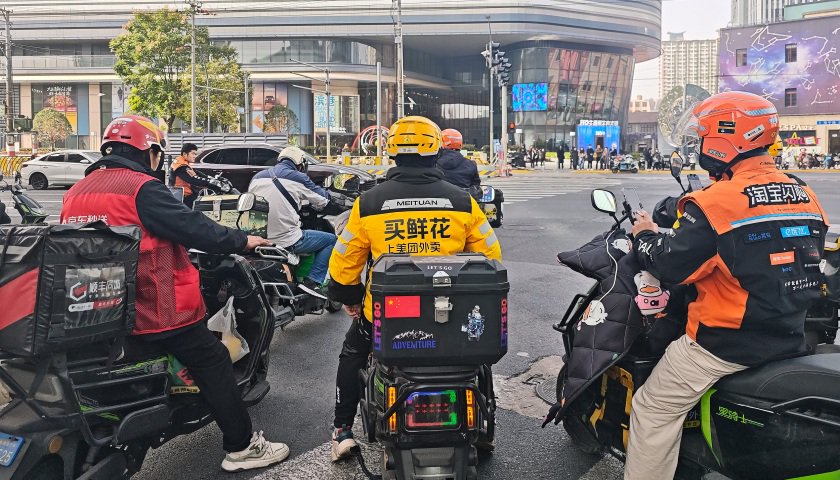
美团宣布执行外卖平台国标,优化商户与配送员服务
Xin Lang Ke Ji· 2025-12-05 03:04
Core Viewpoint - Meituan has announced its commitment to continuously optimize platform rules and improve service management levels for merchants and delivery personnel following the implementation of the national standard "Basic Requirements for Delivery Platform Service Management" (GB/T 46862—2025) [1] Group 1: Standard Participation - Meituan was one of the drafting units for the new national standard and actively contributed to its development, including discussions on core clauses [2] - The company highly agrees with the core principles established by the standard, which include fair and rational competition, strict adherence to food safety, enhancement of service quality, and coordination of interests among all parties [2] Group 2: Implementation Commitment - Meituan has pledged to voluntarily implement the national standard and integrate its requirements into platform operations and service processes [1] - The company aims to continuously optimize platform rules to enhance the management of merchants and delivery personnel, improve consumer experience, and safeguard the rights and interests of delivery personnel, consumers, and merchants [1]
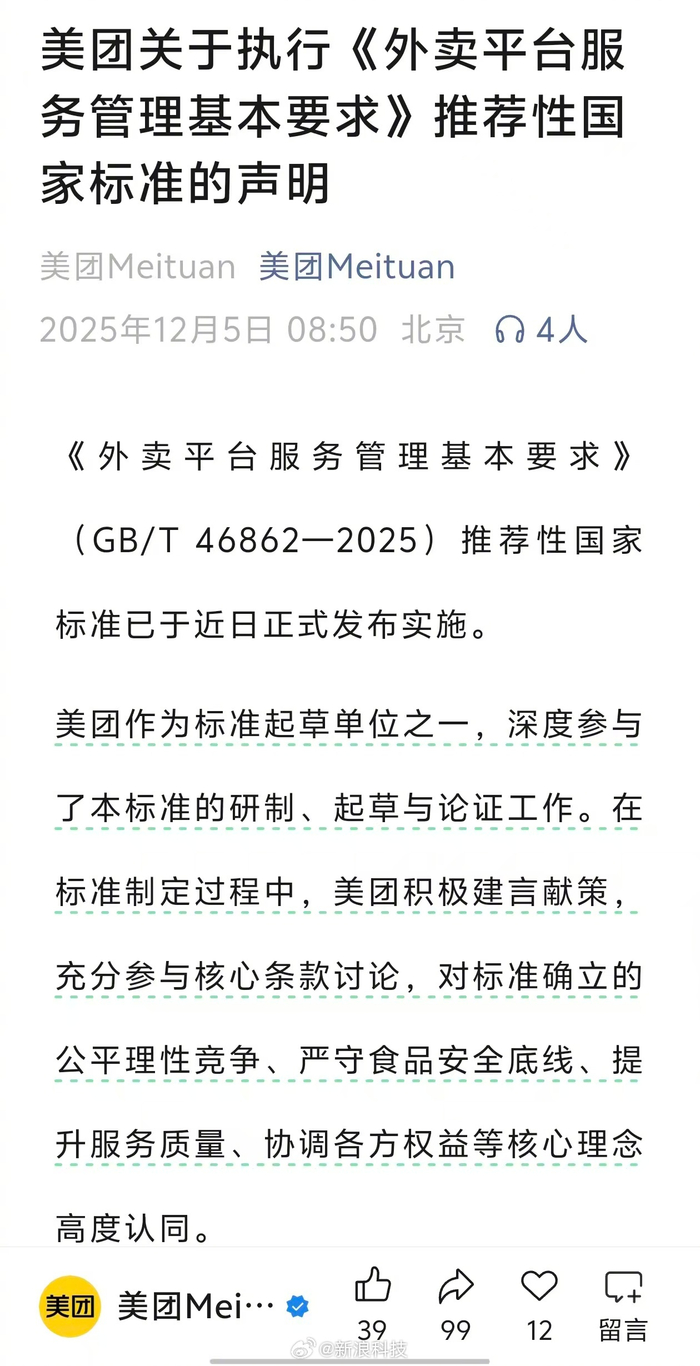
美团、京东外卖、淘宝闪购发布声明
第一财经· 2025-12-05 02:44
美团关于执行《外卖平台服务管理基本要求》推荐性国家标准的声明 近日 ,美团、京东外卖、 淘宝闪购 分别发布关于执行《外卖平台服务管理基本要求》推荐性国家标 准的声明: 将自愿执行《外卖平台服务管理基本要求》国家标准,把标准要求系统融入平台运营管理和服务流程 之中,持续优化平台规则,提高商户与配送员服务管理水平,提升消费者体验,保障配送员、消费者 和商户各方权益。 在此,京东外卖郑重声明:将自愿执行《外卖平台服务管理基本要求》国家标准, 把标准要求系统融入平台运营管理和服务流程之中,持续优化平台规则,提高商户与配 送员服务管理水平,提升消费者体验,保障配送员、消费者和商户各方权益。 美团Meituan 美团Meituan 2025年12月5日 08:50 北京 《外卖平台服务管理基本要求》 (GB/T 46862—2025) 推荐性国家标准已于近日正式发布 实施。 美团作为标准起草单位之一,深度参与了本标准的研制、起草与论证工作。在标准制定过程 中,美团积极建言献策,充分参与核心条款讨论,对标准确立的公平理性竞争、严守食品安全 底线、提升服务质量、协调各方权益等核心理念高度认同。 在此,美团郑重声明:将自愿执行 ...

饿了么正式更名为“淘宝闪购”
证券时报· 2025-12-05 02:12
Group 1 - The "Ele.me" app has officially rebranded to "Taobao Flash Purchase" as of December 5, with updates rolling out to reflect this change across all related scenarios [1] - The State Administration for Market Regulation has implemented a recommended national standard for food delivery platforms, aiming to enhance service management and promote high-quality industry development [3] - The new standards focus on various aspects including merchant management, platform fees and promotions, labor management for delivery personnel, and dispute resolution mechanisms [3] Group 2 - The standards emphasize the importance of merchant responsibility, encouraging platforms to ensure food safety and transparency in service management [3] - There is a push for fair competition by clarifying fee structures and promoting reasonable promotional practices [3] - The guidelines also aim to protect the rights of delivery workers by addressing labor conditions and social security [3]

美团将执行《外卖平台服务管理基本要求》
Di Yi Cai Jing· 2025-12-05 02:12
Core Viewpoint - The market regulatory authority has approved the release of a recommended national standard for food delivery platform service management, focusing on platform fees, promotional activities, competition order regulation, and delivery personnel rights protection [1] Group 1 - The new national standard titled "Basic Requirements for Food Delivery Platform Service Management" has been officially approved [1] - The standard emphasizes the regulation of platform fees and promotional behaviors to enhance competition order [1] - The standard also aims to strengthen the protection of delivery personnel's rights [1] Group 2 - Meituan, as one of the drafting units, has announced its commitment to implement the national standard [1] - Meituan has been deeply involved in the research, drafting, and validation of this standard [1]
美团、京东外卖、淘宝闪购发布声明
财联社· 2025-12-05 02:11
Core Viewpoint - The article discusses the voluntary implementation of the "Basic Requirements for Delivery Platform Service Management" national standard by major players in the food delivery industry, including Meituan, JD.com, and Taobao Flash Purchase, aiming to enhance service quality and protect the rights of all stakeholders involved [1][4]. Group 1: Implementation of National Standard - JD.com, as one of the drafters of the national standard, has committed to integrating the standard into its platform operations and service processes [4]. - The standard emphasizes fair competition, food safety, service quality improvement, and coordination of stakeholder rights [4]. - The implementation of this standard is seen as an opportunity to promote regulated management, quality service, rational competition, and ecological win-win scenarios in the food delivery industry [4].
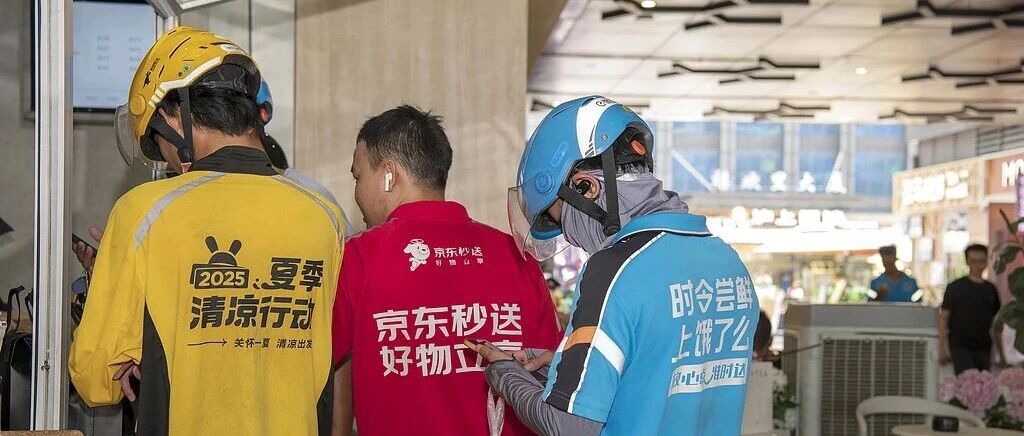
饿了么App正式焕新为淘宝闪购
Xin Lang Ke Ji· 2025-12-05 01:34
Group 1 - The core message is that the "Ele.me" app has been rebranded to "Taobao Flash Purchase" as of December 5, following updates to its name and icon [1] - The latest version of the app has not undergone functional changes, but visual elements have been updated to an orange theme [1] - Alibaba's management highlighted during a recent earnings call that Taobao Flash Purchase has successfully completed its initial phase of rapid expansion and is now focusing on optimizing economic benefits, which supports the long-term sustainable development of its food delivery business [1]
外卖“新国标”,立下了哪些“新规矩”?
Yang Shi Xin Wen· 2025-12-05 01:08
Core Viewpoint - The newly implemented "New National Standard" for food delivery platforms aims to address various issues related to the rights of delivery riders and small restaurant businesses, while enhancing the overall governance of the food delivery market [1][2][4][5]. Group 1: Focus Areas of the New Standard - The standard emphasizes the need for platforms to take responsibility for the qualification review of merchants and to protect the fair trading rights of merchants, as well as the rights of delivery riders [1][2]. - It aims to fill gaps in existing regulations by providing detailed guidelines for service management in the food delivery sector, thus promoting better governance [1][3]. Group 2: Platform Responsibilities and Governance - The standard highlights that the responsibility for market governance should not rest solely on the platforms, but requires collaboration from various societal forces [2]. - Platforms are required to implement their responsibilities actively, and regulatory bodies must ensure compliance with the new standards, rewarding compliant platforms and addressing those that fail to meet requirements [2]. Group 3: Technology and Future Directions - The standard sets a baseline for platform responsibilities and encourages the use of technology, such as big data and artificial intelligence, to develop risk identification models for better governance [3]. - It suggests that successful practices from the implementation of the standard could eventually evolve into mandatory legal requirements, contributing to a dynamic regulatory framework [3]. Group 4: Protection of Delivery Riders' Rights - The standard plays a crucial role in enhancing the protection of delivery riders' rights, addressing issues such as income security, rest time, and safety [4]. - Specific provisions include prohibiting excessive fines for delays and ensuring that riders are not pressured into unsafe behaviors, such as running red lights [4]. Group 5: Safeguarding Small Restaurant Businesses - The standard responds to concerns regarding the rights of small restaurant businesses, which often face disadvantages when negotiating with larger platforms [5]. - It prohibits platforms from coercing small merchants into financial contributions for promotional battles and mandates transparency in fee structures, thereby balancing power dynamics [5].