
茶业

Search documents
从智能窖藏到东方纳帕,解码传统茶业的破局新生
第一财经· 2025-07-28 06:01
Core Viewpoint - The article emphasizes the cultural significance of tea, particularly from the Jingmai Mountain region, as a bridge for global dialogue and peace, highlighting its historical and contemporary relevance in fostering international connections and understanding [1][10][29]. Group 1: Historical and Cultural Significance - Jingmai Mountain serves as a pivotal point in the evolution of tea culture, historically facilitating trade and cultural exchange through the "tea-horse road" and the maritime Silk Road [2][6]. - The region is home to the world's largest contiguous ancient tea forest, showcasing the deep-rooted relationship between local ethnic groups and tea cultivation, which has become a cultural symbol [9][10]. - The establishment of the "Tea Horse Ancient Cellar" in 2019 marks a significant step in the preservation and promotion of Eastern tea culture [2][13]. Group 2: Current Challenges and Opportunities - The global tea market faces an imbalance, with China being a major producer but lacking internationally recognized tea brands, as evidenced by a significant drop in domestic tea sales growth to 0.3% in 2023 [10][11]. - The article highlights the potential of Pu'er tea, with its unique aging value and standardization prospects, to enhance China's international tea brand presence [10][11]. Group 3: Technological Innovations - The "Tea Horse Ancient Cellar" employs AI and blockchain technology to create a traceable system for Pu'er tea, addressing issues of trust and authenticity in the market [14][18]. - The project aims to establish a reliable value assessment system for aged Pu'er tea, transitioning from traditional methods to data-driven approaches [18][21]. Group 4: Economic and Ecological Development - Jingmai Mountain is positioned to become a world-class ecological and cultural landmark, akin to Napa Valley, by integrating tea culture with tourism, health, and wellness [20][22]. - The region's development strategy includes creating a sustainable tea economy through a multi-dimensional approach that combines production, culture, tourism, and health [22][24]. Group 5: Global Cultural Exchange - The "World Tea Conference" held in Jingmai Mountain brought together participants from over 60 countries to discuss the unique value of tea in global sustainable development [10][26]. - The article underscores the role of tea as a medium for cultural dialogue, promoting understanding and cooperation among diverse cultures [29][30].


利川茶产业有了“信用身份证” 53家茶企结盟共筑诚信防线
Zhong Guo Fa Zhan Wang· 2025-07-28 03:51
Group 1 - The establishment of the "Integrity Tea Enterprise" plaque ceremony involved 21 tea companies, marking the formation of the Lichuan Tea Industry Credit Alliance with 53 companies signing a credit commitment [1] - The "Tea Credit Code" system allows consumers to scan a QR code to access pesticide residue reports, production processes, and company credit ratings, enhancing transparency and trust in the tea industry [2] - The credit rating system has led to a 20% increase in orders for "Lichuan Red" tea in cities like Wuhan and Chongqing, demonstrating the positive impact of credit ratings on sales [2] Group 2 - The credit alliance has implemented a "red and black list" system to monitor compliance, ensuring that companies adhere to commitments such as not using banned pesticides and not engaging in false advertising [3] - The introduction of the "Tea Industry Credit Compliance Management Guidelines" serves as a comprehensive standard for quality control and compliance within the tea industry [4] - The implementation of these standards has resulted in an increase in tea quality inspection pass rates from 92% to 98.6% and a 40% reduction in complaints over six months [4] Group 3 - The Lichuan city government plans to integrate the "Tea Credit Code" with tourism and e-commerce, aiming to enhance consumer engagement and promote the integrity of Lichuan tea as a key brand [4]
中国抹茶迎来labubu时刻
3 6 Ke· 2025-07-28 00:09
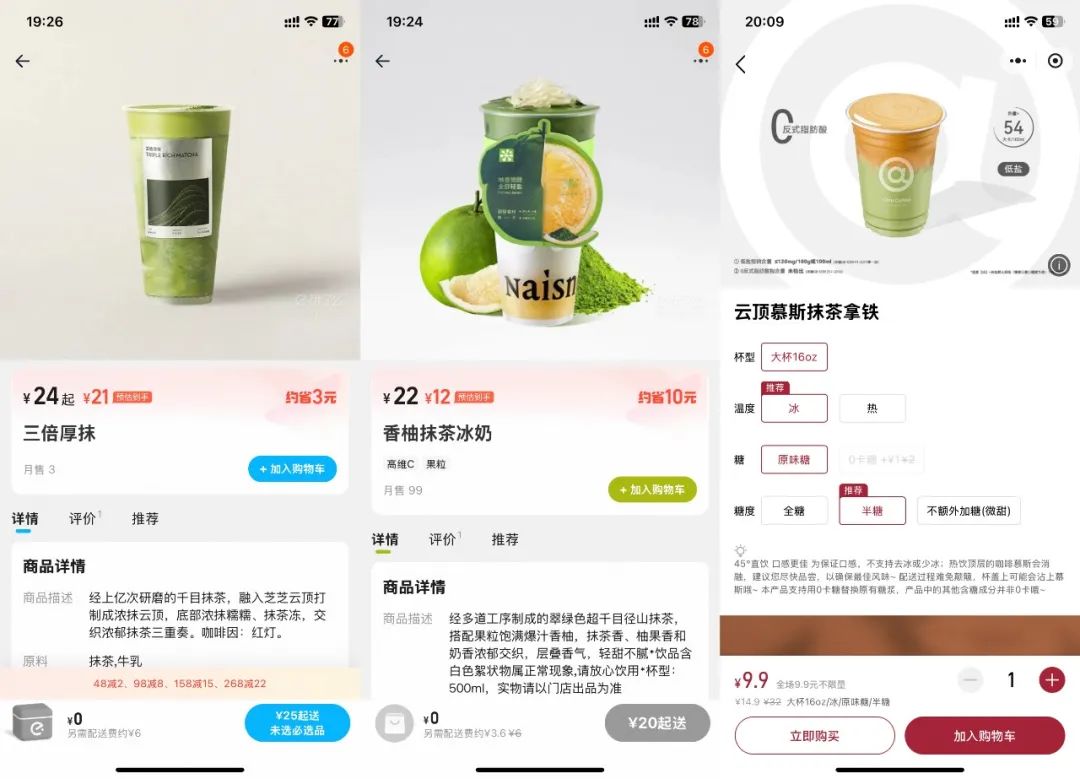
Core Insights - The Chinese matcha industry is at a critical turning point, with increasing global demand and opportunities for growth [1][10] - Matcha is gaining popularity among younger generations in Europe and America, being recognized as a "superfood" [1][10] - Chinese matcha production has surpassed Japan, with expectations to produce over 5,000 tons by 2025, making China the largest producer and consumer of matcha globally [10][11] Industry Trends - Major tea brands in China, such as Heytea and Nayuki, have launched new matcha products, emphasizing their Chinese origins [2][4] - The rise of matcha products in the beverage and dessert sectors reflects a shift in consumer preferences towards this flavor [4][11] - The matcha market is seeing a surge in product innovation, with various brands creating unique offerings to attract consumers [4][10] Production and Supply Chain - The production of high-quality matcha requires a complex supply chain, including specific cultivation and processing methods [6][7] - Key players like Guizhou Guicha Group and Zhejiang Tea Group are leading the establishment of matcha production bases in China [7][9] - The production process involves multiple steps, including shading, harvesting, and low-temperature grinding to preserve nutrients [6][9] Market Dynamics - The global demand for matcha is strong, with significant price increases observed in auction markets [12][14] - Matcha is positioned as a competitor to coffee and chocolate, with potential for capturing market share in these established sectors [12][15] - The Chinese market's unique preferences may allow for the development of matcha products that cater specifically to local tastes [10][19] Future Outlook - The combination of local production capabilities and a large consumer base positions the Chinese matcha industry for significant growth [10][19] - Companies are encouraged to leverage their advantages in production and market access to create popular consumer products [19] - The industry is at a pivotal moment, with the potential for rapid expansion and innovation in matcha offerings [1][11]
科技特派员组团下沉,助力涧头茶产业高质量发展
Nan Fang Nong Cun Bao· 2025-07-25 10:33
Core Viewpoint - The article discusses the efforts of a technology team from South China Agricultural University to enhance the quality and efficiency of the tea industry in Jiantou Town through innovative agricultural practices and technology integration [2][4][20]. Group 1: Technology Integration in Tea Cultivation - The technology team focuses on improving green low-carbon ecological tea gardens by implementing integrated techniques for quality enhancement and efficiency [3][4]. - They explore new models for ecological tea garden construction, such as using cover crops like white clover and purple vetch to suppress weed growth while applying compound microbial fertilizers to significantly increase soil organic matter content [8][9][10]. - Regular water and fertilizer monitoring provides scientific data for precise management of tea gardens, leading to improved ecosystem health and biodiversity, which creates an ideal environment for tea tree growth [10][11]. Group 2: Advancements in Tea Processing - In the tea processing segment, the team emphasizes key procedures like green tea killing and red tea fermentation, introducing advanced processing and quality control technologies [12][14]. - The use of mechanization and digital methods promotes standardized and refined processing techniques, advocating for comprehensive quality control that greatly enhances the stability of tea quality [13][14]. - These improvements not only increase the added value of tea but also strengthen brand competitiveness in the market, laying a solid foundation for farmers' income growth [14][15]. Group 3: Training and Capacity Building - The technology team adopts a training model that combines classroom learning with practical fieldwork, providing comprehensive technical guidance to tea farmers [17][18]. - Training covers various aspects, including selection of quality tea tree varieties, ecological cultivation, and processing techniques, allowing farmers to quickly master advanced skills through hands-on practice [19][20]. - The team plans to continue its efforts in Jiantou Town, aiming to create a full-chain service system that integrates ecological planting, low-carbon processing, and brand value enhancement [21].

福建三兄弟卖茶,要IPO了
创业家· 2025-07-25 10:04
Core Viewpoint - Baima Tea Industry is preparing for an IPO on the Hong Kong Stock Exchange, marking a significant step after multiple attempts to list on the A-share market. The company aims to leverage its extensive retail network and brand positioning to attract investors in a competitive market [4][24][29]. Group 1: Company Background - Baima Tea Industry was founded by three brothers from a century-old tea family in Anxi, Fujian, and has grown to over 3,500 stores, primarily through a franchise model [4][16]. - The company initially struggled with sales but pivoted to offer individually packaged tea bags to cater to younger consumers' preferences for convenience [9][10]. - By 2012, Baima Tea had nearly 1,000 stores and began to attract significant investment, leading to its listing on the New Third Board [10][21]. Group 2: Financial Performance - Baima Tea's revenue reached RMB 18.18 billion in 2022, RMB 21.22 billion in 2023, and RMB 16.47 billion in the first three quarters of 2024, with net profits of RMB 1.66 billion, RMB 2.06 billion, and RMB 2.08 billion respectively [18]. - The company relies heavily on marketing, with sales and marketing expenses accounting for over 30% of revenue, while R&D spending remains low [19]. Group 3: Market Position and Challenges - The tea industry in China faces challenges, including a lack of standardized quality and a predominance of small family-run businesses, which limits brand recognition and pricing power [27]. - Baima Tea's IPO journey reflects broader trends in the industry, as many traditional tea companies have struggled to go public, prompting a shift towards the Hong Kong market [24][26]. - The recent success of new tea beverage brands in the IPO market highlights a growing interest in innovative consumer companies, contrasting with the struggles of traditional tea brands [28].

科技特派员开展技术培训,助力紫金县上义镇茶产业升级
Nan Fang Nong Cun Bao· 2025-07-24 10:30
Core Viewpoint - The article highlights the efforts of a technology support team from South China Agricultural University in enhancing the tea industry in Shangyi Town, Zijin County, through targeted training and expert guidance [2][22]. Group 1: Training and Support Activities - The technology support team organized training sessions focusing on tea production techniques, tourism planning, land reclamation, and brand promotion to assist local tea farmers and enterprises [4][5]. - A specialized training session was conducted for tea farmers and enterprises in Shangyi Town, addressing cultivation and processing techniques for both black and green tea [7][8]. - The training emphasized practical techniques such as applying fertilizers at appropriate times to increase tea yield and using ground cover to reduce labor costs [9][10]. Group 2: Industry Development and Economic Impact - The tea industry in Shangyi Town is a crucial pillar of the local agricultural economy, with a current planting area of nearly 1,500 acres and an expected annual production of approximately 40,000 pounds of finished tea in 2024, generating an estimated annual output value of around 8 million yuan [22][24]. - The town's tea industry has evolved from traditional planting to a comprehensive system integrating large-scale cultivation, brand operation, and the fusion of agriculture with culture and tourism [23][24]. - There are currently 42 professional tea cooperatives and 13 family farms operating in the region, contributing to the local economy [28][30].
八马茶业转战港交所:加盟边际效应减弱、高端品牌形象不稳 递表前低价转让股权
Xin Lang Cai Jing· 2025-07-23 09:15
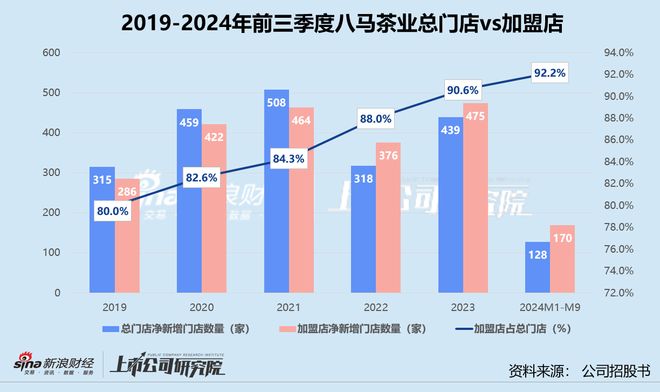
Core Viewpoint - Baima Tea Industry Co., Ltd. is attempting to list on the Hong Kong Stock Exchange after several unsuccessful attempts in the A-share market, facing challenges in maintaining growth and profitability amid a high-cost marketing strategy [1][2]. Company Overview - Baima Tea has submitted its prospectus to the Hong Kong Stock Exchange on January 17, seeking a main board listing, with Huatai International, Agricultural Bank of China International, and Tianfeng International as joint sponsors [1]. - The company has a history of failed listings, including attempts in 2013, 2015, 2021, and 2022, with various regulatory hurdles and market conditions impacting its progress [1]. Business Model and Expansion - Baima Tea operates a franchise model, selling directly to consumers through franchise stores rather than through distributors, with 3,370 stores as of 2023, the highest among Chinese tea companies [3]. - The number of stores has been growing at an average rate of around 25% from 2019 to 2021, with a significant increase in franchise stores, which accounted for 92.2% of total stores by 2024 [3][5]. Financial Performance - From 2019 to 2023, total revenue grew from 1.023 billion yuan to 2.122 billion yuan, with a compound annual growth rate (CAGR) of approximately 20%, while net profit increased from 90.88 million yuan to 206 million yuan, with a CAGR of about 19.8% [5]. - In the first nine months of 2024, total revenue and net profit were 1.647 billion yuan and 208 million yuan, respectively, showing minimal growth compared to the same period in 2023 [5][6]. Consumer Behavior and Market Challenges - The average purchase frequency for Baima Tea's customers is low, with 80% of members buying only 1-2 times a year, limiting sales growth potential [6]. - The company's franchise model has shown diminishing returns, with average monthly sales per franchise store dropping to a historical low of 28,200 yuan in 2024 [6]. Product Strategy and Market Position - Baima Tea focuses on high-end tea products, with premium items priced significantly higher than average market rates, contributing to over 81% of total revenue from 2022 to 2024 [8][10]. - The company holds a 1.7% market share in the high-end tea market, which is projected to reach 140.4 billion yuan by 2028, growing at a CAGR of 6% [10]. Supply Chain and Quality Control - A significant portion of Baima Tea's products is sourced from third-party manufacturers, raising concerns about product quality and consistency [11]. - The company has faced consumer complaints regarding product quality, with a low response and resolution rate for complaints [11]. Investment and Valuation - Baima Tea has attracted external investors, with a valuation increase from 7.28 billion yuan in 2012 to approximately 2.299 billion yuan before the current listing attempt, indicating a modest growth of only 2 billion yuan over four years [15][16]. - The company’s valuation is significantly lower compared to competitors, with concerns about potential undervaluation in the current market environment [16].
福建三兄弟卖茶,要IPO了
投资界· 2025-07-22 07:45
Core Viewpoint - Baima Tea is preparing for an IPO on the Hong Kong Stock Exchange, marking a significant step after multiple unsuccessful attempts to list in A-shares. The company aims to capitalize on the growing trend of new tea beverages among younger consumers [1][15][17]. Company Background - Baima Tea originates from a century-old tea family in Anxi, Fujian, and has expanded to over 3,500 stores, primarily through a franchise model [1][9]. - The company was founded by three brothers, who initially struggled to attract customers until they introduced individually packaged tea bags for convenience [3][5]. Business Model and Revenue - Baima Tea's product offerings include a wide range of tea types, tea utensils, and tea-related snacks, with a significant portion of revenue generated from offline stores, accounting for over 60% of sales [9][10]. - As of September 30, 2024, Baima Tea had opened 3,498 stores, with over 90% being franchise locations [9][10]. Financial Performance - The company reported revenues of RMB 1.818 billion, RMB 2.122 billion, and RMB 1.647 billion for the years 2022, 2023, and the first nine months of 2024, respectively. Net profits for the same periods were RMB 166 million, RMB 206 million, and RMB 208 million, indicating a net profit margin increase from 9.1% to 12.6% [11][12]. - Marketing expenses have raised concerns, as they accounted for approximately 33.9% of revenue in 2022, with total advertising costs exceeding RMB 600 million [12]. Market Context - The tea industry in China is characterized by a predominance of small enterprises, with a lack of standardized quality and branding, which poses challenges for larger companies like Baima Tea [18]. - The recent surge in IPOs for new tea beverage companies highlights a shift in consumer preferences, prompting traditional tea companies to seek listings in Hong Kong as an alternative to A-shares [19][20].

中央汇金,大手笔增持2000亿元;成都出台房产新政策;八马茶业,赴港上市获放行→
新华网财经· 2025-07-22 00:28
Core Viewpoint - The article discusses various economic and market developments in China, highlighting significant investments, regulatory changes, and industry performance metrics. Group 1: Investment and Market Activity - In Q2, Central Huijin invested approximately 200 billion yuan in ETFs, including significant purchases of various blue-chip style ETFs [1][12] - The People's Bank of China announced the loan market quotation rate (LPR) for July 21, 2025, with a 1-year LPR at 3.0% and a 5-year LPR at 3.5% [10] Group 2: Real Estate and Housing Policies - Chengdu's housing and urban-rural development bureau, along with six other departments, released 17 measures to promote stable and healthy development in the real estate market, effective from July 21, 2025 [2][9] - The newly published Housing Rental Regulations aim to standardize rental activities and promote high-quality development in the housing rental market, effective from September 15, 2025 [5] Group 3: Industry Performance Metrics - In June, China's total electricity consumption reached 867 billion kWh, a year-on-year increase of 5.4%, with significant growth in residential electricity consumption [8] - The express delivery business in China has maintained its position as the world's largest for 11 consecutive years, with over 500 million packages collected daily [6] Group 4: Corporate Developments - Eight Horse Tea Co. has completed the filing process for its overseas listing in Hong Kong, planning to issue up to 29.13 million shares [3][17] - Guangzhou Light Industry Group is involved in a legal dispute regarding equity transfer with Ningbo Hanyi, which may affect the control of the listed company, Good Products [18][22]

广东职工文体汇——2025年广东省地方特色茶文化交流暨茶旅融合助力“五大百亿”活动在清远英德举办
Nan Fang Nong Cun Bao· 2025-07-20 13:06
Group 1 - The event "2025 Guangdong Provincial Local Characteristic Tea Culture Exchange and Tea Tourism Integration" was successfully held in Qingyuan, aimed at promoting the integration of tea culture and worker culture through various activities [5][6][76] - The event featured tea art competitions, exhibitions, tea parties, and tea garden experiences, creating a platform for deep integration of worker culture and tea culture [6][7][76] - The tea industry is expected to combine economic benefits with ecological and cultural values, supporting Qingyuan's "Five Major Billion" agricultural industry initiative [7][76] Group 2 - Qingyuan's Yingde is recognized as the "Hometown of World Black Tea," with the "Yingde Black Tea" brand valued at the top of the national black tea rankings, and the tea industry output value expected to exceed 9 billion yuan in 2024, aiming to break the 10 billion yuan target this year [20][21] - The event is part of the "Hundred Million Project" and aims to stimulate worker enthusiasm and gather wisdom to explore new models for the tea industry [22][76] - The event also included a tea culture sharing session where participants could learn about the characteristics and brewing techniques of representative Guangdong teas [55][56] Group 3 - The event showcased the achievements of Yingde tea enterprises in "inheritance + innovation" dual-track development, and highlighted the integration of local agricultural products from Qingyuan [45][51] - A total of 38 representatives from various cities participated in the tea art performance, demonstrating Guangdong's tea culture through skilled techniques and immersive presentations [38][40] - The awards ceremony recognized outstanding participants, with one first prize, two second prizes, three third prizes, and ten excellence awards presented [57][66] Group 4 - The event is seen as a vibrant practice of the "Guangdong Workers' Cultural Exchange" brand, promoting cultural construction and local industry development through a "cultural + sports" integration model [76][80] - Future initiatives will focus on continuous promotion of tea culture and tea tourism integration, establishing platforms for production and sales connections, and cultivating a core team of tea culture workers [80][87]