
量子科技

Search documents
巩固壮大实体经济根基,构建以先进制造业为骨干的现代化产业体系
Jing Ji Ri Bao· 2025-11-03 05:02
Group 1 - The core viewpoint emphasizes the importance of the real economy as the foundation of national economic stability and high-quality development, highlighting its priority in strategic tasks [1] - The real economy is identified as the fundamental source of wealth creation, contributing significantly to economic growth and employment, absorbing over 400 million jobs, and serving as a stabilizer for people's livelihoods [1] - The real economy is crucial for international competition, with a complete industrial system enhancing economic resilience against external shocks [1] Group 2 - The real economy currently faces multiple pressures, including weak global economic recovery, rising trade protectionism, geopolitical risks, and increased costs for raw materials and logistics [2] - Internally, there is insufficient effective demand, rising labor and raw material costs, severe market competition, and low profitability among small and medium-sized enterprises [2] - The transition from old to new economic drivers is experiencing challenges, with insufficient private investment and financing difficulties for some enterprises [2] Group 3 - Strengthening the real economy requires building a modern industrial system centered on advanced manufacturing, which is the most innovative and high-value-added sector of the manufacturing industry [2] - The focus should be on integrating technological innovation with industrial innovation to enhance the effectiveness of industrial technological innovation [2] Group 4 - Key directions for development include intelligentization, greening, and integration, which can enhance efficiency, reduce costs, and promote sustainable development [3] - Intelligentization leverages digital technology across production processes, while greening addresses resource consumption and environmental pressures, creating new growth points in green industries [3] - Integration breaks down industry boundaries, promoting synergy between various sectors and creating new value [3] Group 5 - Consolidating and strengthening the real economy involves optimizing traditional industries while nurturing emerging and future industries [4] - Traditional industries account for about 80% of the added value in manufacturing and are essential for economic stability [4] - Upgrading traditional industries requires focusing on key sectors and enhancing competitiveness through technological improvements [4] - Emerging industries such as new energy, new materials, and aerospace should be developed, alongside future industries like quantum technology and hydrogen energy, to create new growth points [4]
海南板块,集体爆发
财联社· 2025-11-03 03:48
Market Overview - The A-share market showed mixed performance with the Shanghai Composite Index turning positive while the ChiNext Index fell over 1% [1] - Trading volume significantly decreased, with the total transaction amount in the Shanghai and Shenzhen markets reaching 1.38 trillion, a reduction of 175.5 billion compared to the previous trading day [1] Sector Performance - The thorium-based molten salt concept stocks surged, with Baose Co. and Hailu Heavy Industry hitting the daily limit [1] - AI application stocks remained active, with Jishi Media and 37 Interactive Entertainment also reaching the daily limit [3] - The coal sector strengthened again, with Antai Group achieving 7 limit-ups in 13 days [3] - The Hainan Free Trade Zone sector continued its strong performance, with multiple stocks like Roniu Mountain hitting the daily limit [3] - Quantum technology concept stocks experienced fluctuations, with Shenzhou Information reaching the daily limit [3] - Conversely, battery concept stocks collectively declined, with Haike Xinyuan dropping over 15% and Shanghai Washba hitting the daily limit down [3] - Gold concept stocks showed weak performance, with Chaohongji hitting the daily limit down [3] Closing Summary - At the market close, the Shanghai Composite Index rose by 0.05%, while the Shenzhen Component Index fell by 1.06% and the ChiNext Index dropped by 1.37% [3]


午评:创业板指半日跌超1% 电池概念股集体下挫
Mei Ri Jing Ji Xin Wen· 2025-11-03 03:39
Market Overview - The three major indices showed mixed results, with the Shanghai Composite Index turning positive while the ChiNext Index fell over 1% [1] - Trading volume significantly decreased, with the Shanghai and Shenzhen markets recording a half-day turnover of 1.38 trillion yuan, down 175.5 billion yuan from the previous trading day [1] Sector Performance - The thorium-based molten salt concept stocks surged, with Baose Co. and Hailu Heavy Industry hitting the daily limit [1] - AI application stocks remained active, with Jishi Media and 37 Interactive Entertainment also reaching the daily limit [1] - The coal sector strengthened again, highlighted by Antai Group achieving 7 limit-ups in 13 days [1] - The Hainan Free Trade Zone sector continued its strong performance, with multiple stocks like Roniu Mountain hitting the daily limit [1] - Quantum technology concept stocks experienced fluctuations, with Shenzhou Information reaching the daily limit [1] Declining Sectors - Battery concept stocks collectively declined, with Haike Xinyuan dropping over 15% and Shanghai Washba hitting the daily limit down [1] - Gold concept stocks showed weak performance, with Chaohongji hitting the daily limit down [1] - Sectors with the highest gains included Hainan Free Trade Zone, coal, and gaming, while battery, non-ferrous metals, precious metals, and semiconductors faced the largest declines [1] Closing Summary - At the close, the Shanghai Composite Index rose by 0.05%, while the Shenzhen Component Index fell by 1.06% and the ChiNext Index dropped by 1.37% [1]

量子科技专题解读
2025-11-03 02:35
Summary of Quantum Technology Conference Call Industry Overview - The global quantum computing technology landscape shows differentiation, with the US pursuing multiple technology routes while China focuses on superconducting and photonic quantum research. However, China lags in error correction technology and ecosystem development, particularly in mature commercial alliances [1][2][4][5]. Key Insights and Arguments - The early application scaling phase of the quantum computing market is expected to continue until around 2028. Although China's market size is smaller than that of the US, superconducting processors are projected to be the main growth driver over the next five years, with the market size potentially reaching 30-50 billion RMB by 2030 [1][7]. - Including the quantum communication sector, China's quantum technology market could be significantly larger, conservatively estimated to be twice that of the computing sector, and optimistically up to 3-5 times, depending on investment willingness from large enterprises [1][8]. - The total cost for a single superconducting quantum computer and related projects (including hardware, algorithm development, and maintenance) could reach up to 200 million RMB, with additional R&D and operational costs ranging from several million to tens of millions for applications like financial fraud prevention [1][12]. Market Dynamics - The demand for quantum computing education and training services among enterprise users is high, but it will take three to five years to cultivate sufficient professional talent. Training courses cover algorithms, hardware maintenance, chip research, and measurement control [1][14][13]. - The quantum communication network in China adopts an integrated space-ground model, connecting major economic regions and gradually achieving seamless connections among provincial capitals and key cities. Key clients include banks, event organizers, and energy grids [3][17]. Technological Disparities - The US employs various technology routes, including superconducting, ion trap, and neutral atom technologies, while China primarily focuses on superconducting and photonic research, with limited development in ion trap and neutral atom technologies [4][5]. - The professional ecosystem in the US is more developed, with various "quantum alliances" initiated by companies like IBM, while China lacks a similar mature ecosystem, relying more on government and academic institutions for development [5]. Future Market Projections - By 2030, the quantum computing market is expected to reach a size of 300-500 billion RMB, assuming error correction technologies mature. If policy support and R&D funding are considered, the industry solutions will further drive market growth [7][9]. - The overall quantum computing market is projected to reach 300 billion USD by 2035, with the global market potentially reaching 800 billion USD [9]. Cost and Deployment - The cost of a single quantum key distribution (QKD) system node is approximately 2 million RMB, with overall costs for a complete quantum secure communication network node ranging from 5 to 8 million RMB [18]. - Each quantum encryption terminal needs to be deployed approximately every 10 kilometers, with the core component being the single-photon detector, which is sensitive to environmental conditions [19][21]. C-End Products and Market Potential - Current C-end products include "quantum secret talk" with around 600,000 users, requiring both parties to possess quantum identity cards. Other products like "quantum seals" and "U-disks" are less related to true quantum technology [23]. - The future of the cryptography field is promising, with potential market sizes in the hundreds of billions, especially if legal policies support the development of post-quantum cryptography standards [24]. This summary encapsulates the key points from the conference call, highlighting the current state and future potential of the quantum technology industry.
国盾量子20251102
2025-11-03 02:35
Summary of GuoDun Quantum Conference Call Company Overview - GuoDun Quantum is one of the few companies globally capable of designing, supplying, and deploying large-scale quantum secure communication networks, originating from the University of Science and Technology of China [2][6] - The company has been in a loss-making state for the past five years but is projected to generate approximately 253 million CNY in revenue in 2024, with 146 million CNY from the information security and communication integration sector, marking a 70% year-on-year growth [2][10] - China Telecom holds a 21.86% stake in GuoDun, making it the controlling shareholder, with significant backing from national institutions like the University of Science and Technology of China and the Chinese Academy of Sciences [2][8] Industry Insights - The Quantum Key Distribution (QKD) industry is expected to maintain a compound annual growth rate (CAGR) of 64% from 2022 to 2030, with demand expanding from government to enterprise and consumer sectors [2][14] - The QKD industry chain consists of upstream components (chips, single-photon sources), midstream devices (quantum gateways, switches), and downstream services (communication and data services) [12] - China holds a leading position in the global quantum communication market, with GuoDun Quantum being the largest domestic player due to its technological advantages [13] Key Business Segments - GuoDun's main business areas include quantum communication, quantum computing, and quantum precision measurement, with significant revenue from quantum communication products [4][15] - The company has achieved at least 500 qubits in superconducting technology and delivered 504 qubit superconducting chips, indicating a strong position in the superconducting route [5][19] - The Hefei metropolitan network project, one of the largest in the country, has been implemented in over 500 government agencies, showcasing the company's technical strength and market influence [2][17] Financial Performance and Projections - Despite past losses, GuoDun expects revenue to reach at least 300 million CNY in 2025, driven by rapid growth in network deployment and precision measurement sectors [5][24] - The company faces risks such as technological development delays, increased market competition, and industry demand fluctuations, but potential technological advancements and policy support could enhance revenue prospects [24] Future Plans and Market Trends - China Telecom plans to expand its metropolitan network to 40 cities by 2025, which will significantly boost GuoDun's business growth [3][18] - The precision measurement business, utilizing quantum mechanics for higher accuracy, has substantial market potential, particularly in earthquake monitoring and geographic surveying [23] Conclusion - GuoDun Quantum is positioned for significant growth in the quantum technology sector, supported by strong national backing and a robust technological foundation, with promising revenue projections and market opportunities ahead [2][24]

量子信息技术前景广阔 政策加速产业化落地
Zheng Quan Shi Bao· 2025-11-03 01:53
Core Insights - Quantum technology has significant advantages over classical information tools in addressing specific problems, with applications in computing, communication, and measurement [1] - The industry is expected to see rapid development in quantum computing between 2028 and 2030, indicating a strong growth potential [1] Industry Developments - In October 2025, quantum technology is anticipated to receive recognition with a Nobel Prize and a feature in Nature magazine [1] - Google launched the quantum chip "Willow" in November 2024, which boasts 105 physical qubits and has achieved multiple performance breakthroughs [1] - China introduced the "Zu Chongzhi No. 3" in March 2025, which is positioned to compete with Willow in terms of performance [1] Strategic Importance - CITIC Securities highlights that quantum technology is prioritized in China's "14th Five-Year Plan" for future industrial layout, reflecting the government's emphasis on its industrialization [1] - Quantum communication has already seen successful industrialization, with leading companies driving the industry forward [1]
量子科技,“从1到10”
财联社· 2025-11-03 01:35
Core Insights - The article emphasizes the elevation of quantum technology to a national strategic level in China's 14th Five-Year Plan, indicating unprecedented development opportunities for the next five years [2] - Quantum technology is identified as a key area for future industrial layout, with a focus on achieving breakthroughs in technology, industrial implementation, and ecosystem development during the 14th Five-Year Plan [1][2] Quantum Technology Overview - Quantum technology is categorized into three main areas: quantum computing, quantum communication, and quantum precision measurement [3] - Quantum computing aims to solve specialized machine breakthroughs, with applications in financial modeling, drug development, logistics optimization, and AI computing power [4] - Quantum communication is in the early stages of large-scale application, crucial for secure communications in defense, government, and finance [4] - Quantum precision measurement is currently in the scenario validation phase, with potential applications in healthcare, resource exploration, power grid monitoring, and gravity surveying [5] Industry Development and Challenges - The quantum technology industry is still in its early development stage, requiring ongoing innovation, core technology breakthroughs, and self-controllable core components [6] - There is a need for improved integration with IoT, AI, and big data technologies to accelerate upstream and downstream collaboration in the industry [6] - Current challenges include a lack of significant application scenarios, high technical barriers, and insufficient public understanding of quantum technology [7] - The industry is seen as a forward-looking sector, with a focus on establishing a solid innovation system and technological foundation for future opportunities [7] Investment Perspective - From an investment standpoint, it is crucial to recognize the current maturity level and engineering stage of quantum technology, as significant scientific challenges remain before practical applications can be realized [11] - The industry chain needs to be enhanced, particularly in core materials and high-end equipment [8] - There is a structural gap in funding and talent, requiring professionals who understand both physics and engineering applications [9] - The competitive landscape includes intense international competition and the need for establishing standards and discourse power in quantum technology [10]

机构:持续关注量子科技行业
Zheng Quan Shi Bao Wang· 2025-11-03 00:54
Core Insights - Sichuan Province is implementing a "Quantum Technology Industry Breakthrough Development Action Plan" to enhance innovation and support policies in quantum technology sectors [1] - The quantum technology industry in China is expected to experience significant growth, particularly in quantum communication, which has already seen initial commercialization [1][2] - Quantum computing is recognized as a disruptive technology, with ongoing advancements in various technical routes and a projected substantial progress in the next 5 to 10 years [2] Group 1: Sichuan Province Initiatives - The "Action Plan" will focus on technology innovation, industry innovation, enterprise cultivation, application promotion, and resource assurance [1] - Specific support policies will be developed to drive the growth of the quantum technology industry in Sichuan [1] Group 2: Market Potential and Trends - Quantum communication is leading the way in commercialization, with key players dominating the industry [1] - The quantum computing market is anticipated to experience rapid development between 2028 and 2030, warranting ongoing attention to the sector [1] - The quantum technology sector is currently in its early development stage, with a focus on critical components like lasers and dilution refrigerators [2] Group 3: Technological Advancements - Quantum computing is seen as one of the most disruptive frontier technologies, with diverse technical routes such as superconducting, ion traps, neutral atoms, photonic, and silicon semiconductors [2] - The industry is gradually forming a development pattern that integrates basic research, engineering development, application exploration, and industrial cultivation [2] - Reports indicate that quantum computing is still in the early stages of technological breakthroughs, with potential for significant advancements in the coming years [2]
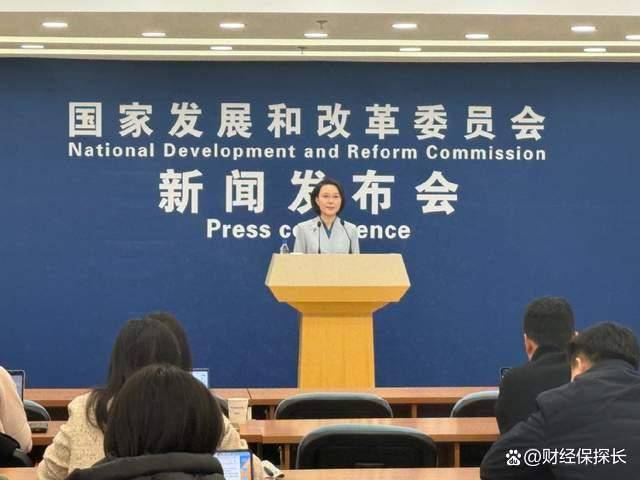
定调:六大未来产业发令枪响!万亿级城市之争,开始了
Sou Hu Cai Jing· 2025-11-01 19:39
Core Insights - The recent press conference by the National Development and Reform Commission indicates a shift in the engine of China's economic development [1] - Emerging fields such as quantum technology, brain-computer interfaces, and nuclear fusion energy are identified as "new economic growth points," emphasizing their transformation into economic benefits [3][5] - The inclusion of hydrogen energy and nuclear fusion energy in the latest recommendations signals their critical roles in energy transition [10] Quantum Technology - Hefei ranks second globally in quantum industry, with three-quarters of leading companies located there, supported by the University of Science and Technology of China [7] - Key applications for quantum computing include financial modeling, drug development, and materials design, with Beijing and Shanghai focusing on practical applications [9] - Beijing aims for a complete industrial chain in hydrogen energy, while Shanghai leads in practical applications with significant data on fuel cell vehicles [11] Hydrogen Energy - Hydrogen energy is positioned as a future clean energy source, though its technology is not fully mature, presenting challenges for large-scale application [10] - Beijing's strategy involves a comprehensive approach to the hydrogen industry, while Shanghai demonstrates practical applications with substantial mileage data [11] - Cities like Guangzhou and Shenzhen are also making significant investments and advancements in hydrogen energy projects [11] Brain-Computer Interfaces - Brain-computer interface technology has rapidly developed, with Shanghai covering all technical routes and Beijing focusing on non-invasive applications [12][13] - Shenzhen is targeting commercial applications, with major companies planning to launch multiple application scenarios by 2026 [13] - The overall market for brain-computer interfaces remains in its early stages, with uncertain future developments [13] Humanoid Robots - The development of humanoid robots in China has gained attention, with significant contributions from institutions like Tsinghua University and Peking University [14] - Shenzhen leads in the number of industry chain enterprises, with a total output value of 170 billion yuan, while Shanghai aims to create a complete ecosystem for humanoid robots [14] - The success of companies like the one in Hangzhou is attributed to long-term technological accumulation [14] 6G Technology - Although not yet commercialized, countries are actively laying the groundwork for 6G technology, with Beijing focusing on standardization and Shenzhen on practical applications [15] - Nanjing's achievements in terahertz communication demonstrate significant technological capabilities [15] - Cities like Chengdu and Wuhan are developing 6G technology but lag behind Beijing and Shanghai [15] Interconnected Technologies - Technologies such as quantum technology, bio-manufacturing, hydrogen and nuclear fusion energy, brain-computer interfaces, and 6G are interconnected, forming the underlying logic of future economies [16] - Cities that strategically invest in these fields are positioned to become leaders in the next era of competition [16][17]
盯紧!量子科技风口来袭,神州信息6天3板成A股“人气王”
Hua Xia Shi Bao· 2025-11-01 10:27
Core Viewpoint - The quantum technology sector is experiencing significant growth driven by favorable policies and technological advancements, attracting substantial attention from the capital market [1][2][8]. Industry Overview - Quantum technology has been included in China's "14th Five-Year Plan" as a key development area, alongside other emerging industries like biomanufacturing and 6G mobile communication, indicating its strategic importance for economic growth [2][8]. - Recent international collaborations, such as NVIDIA's efforts to connect quantum computing with traditional GPU systems, are enhancing the technological landscape and fostering industry growth [2]. Company Performance - Shenzhou Information (000555) has seen a remarkable stock price increase, achieving three trading limit-ups within six days, reflecting strong market interest in the quantum technology sector [1][3]. - The company reported a significant drop in revenue and a projected loss for 2024, attributed to a more than 40% decline in system integration revenue and a goodwill impairment of 365 million yuan [4]. - Despite the challenges, Shenzhou Information's stock has risen approximately 34% in October and over 60% year-to-date, indicating strong market performance amidst the sector's growth [6]. Future Prospects - Analysts believe that quantum computing is at a critical stage of technological breakthroughs and application exploration, with substantial potential for future development [7][8]. - The synergy between quantum technology and AI is expected to drive innovation and open new pathways for industry growth [7].
