储能

Search documents
科创新能源ETF(588830)涨超1.1%,北美光伏储能需求激增,成分股普涨带动指数上扬
Xin Lang Cai Jing· 2026-02-25 02:24
Group 1 - North American power supply tightness is driving Tesla and SolarCity to accelerate their deployment of photovoltaic and energy storage solutions, with Tesla planning to increase solar panel production capacity to 1GW, and a projected 30% growth in distributed photovoltaic deployment in 2023, leading to a North American installed photovoltaic capacity of 40GW by 2025 [1] - Analysis of the OBBB Act's energy storage details indicates that projects starting before August 2025 will not be assessed for non-PFE ratios, while MACR requirements for energy storage stations/systems will gradually increase to 55%-85% after 2026, suggesting that Chinese energy storage companies may need to expand their supply chains to include non-PFE battery suppliers [1] - As of February 25, 2026, the Shanghai Stock Exchange Sci-Tech Innovation Board New Energy Index (000692) rose by 1.24%, with constituent stocks such as Gaoce Co., Ltd. up 11.01%, Wenkang New Energy up 9.67%, and Jiayuan Technology up 5.23%, indicating strong market performance [1] Group 2 - Dongwu Securities highlights that photovoltaic installation growth in the Middle East will remain robust, with MESIA forecasting new installations in the region to increase from 5GW in 2024 to 35GW by 2030, prompting domestic Chinese photovoltaic leaders like JinkoSolar and TCL Zhonghuan to accelerate local production [2] - HJT technology is noted to have a cost advantage in the U.S. due to its simpler production process compared to TOPCon, resulting in lower overall costs suitable for the U.S. production environment; Tesla plans to deploy approximately 100GW of ground-mounted solar by 2028 to support AI computing power expansion and to promote integrated production from silicon wafers to modules to mitigate high tariff risks [2] - The Sci-Tech Innovation New Energy ETF closely tracks the Shanghai Stock Exchange Sci-Tech Innovation Board New Energy Index, which selects 50 large-cap stocks in photovoltaic, wind power, and new energy vehicles to reflect the overall performance of representative new energy companies in the Sci-Tech Innovation Board market [2]
卢玉珊的投资哲学:在波动中追寻长期价值
Zhong Guo Jing Ji Wang· 2026-02-25 02:17
Core Viewpoint - The investment approach of Southern Fund's Lu Yushan emphasizes a balanced and sustainable style, focusing on building a system that adapts to various scenarios to address future uncertainties, with a core emphasis on identifying trends, selecting companies, and diversifying risks [1] Group 1: Investment Strategy - Lu Yushan seeks to identify "main channels" in the market, focusing on sectors with long-term trends driven by economic structure changes, technological evolution, and social development, rather than short-term hotspots [2] - In the Q3 2025 report of the Southern Core Competitive Mixed Securities Investment Fund, Lu noted that the growth style had become extreme and adjusted the strategy to favor balanced allocation, focusing on undervalued cyclical industries for potential absolute returns [2] - In the Q4 2025 report, she continued this balanced approach, highlighting opportunities in AI computing power, commercial aerospace, energy storage, and sectors related to external demand, while adjusting the fund's allocations accordingly [2] Group 2: Company Selection - Lu Yushan employs frameworks to assess companies, placing importance on the actual impact of innovation, such as whether it improves user experience or optimizes costs, and emphasizes buying at reasonable prices [3] - She tends to focus on solid fundamental manufacturing companies that are not yet fully recognized by the market, rather than overvalued popular stocks [3] Group 3: Risk Management - The investment method includes a strong focus on risk management alongside the pursuit of returns, characterized by a "balanced growth" style [4] - Maintaining industry diversification is crucial, as high concentration in a single industry is avoided to reduce dependency on any one sector [4] - Lu Yushan dynamically assesses the cost-effectiveness of stocks and bonds, adjusting positions based on market conditions [5] - A key goal of her approach is to control drawdowns, aiming for smoother net value fluctuations during market adjustments [6] Group 4: Overall Investment Philosophy - Overall, Lu Yushan's investment method can be viewed as a framework for building long-term stability, relying on understanding trend directions, focusing on corporate value, and effective risk management to create a sustainable value growth strategy [7]
告别"单腿走路" 分布式储能盈利模式向多元化演进
Ke Ji Ri Bao· 2026-02-25 02:09
Core Insights - The distributed energy storage sector is expected to enter a golden development period by 2025, with cumulative installed capacity in China increasing over fivefold from 570 MW in 2019 to 3,638 MW by the third quarter of 2025 [1] - The growth is driven by declining costs, extensive development of distributed energy, and supportive policies, although challenges such as limited application scenarios and immature business models remain [1][4] Group 1: Market Trends and Applications - Distributed energy storage systems are small-scale systems located on the user side, such as homes and factories, and are crucial for addressing the challenges of renewable energy consumption [2] - The six major application scenarios for distributed energy storage include industrial and commercial storage, distributed photovoltaic storage, green electricity direct connection, area storage, virtual power plants, and charging stations [2] - As of September 2025, industrial and commercial storage accounts for 68.7% of the cumulative installed capacity in China, making it the most mature application scenario [2] Group 2: Green Electricity Direct Connection - Green electricity direct connection projects, which supply renewable energy directly to users without going through the public grid, are a significant application of distributed energy storage [3] - Over 50 green electricity direct connection projects have been approved across more than 20 provinces, enhancing renewable energy consumption efficiency and reducing electricity costs [3] - These projects can be categorized into grid-connected and off-grid types, with distributed energy storage playing roles in reducing waste and ensuring power supply [3] Group 3: Business Model Challenges - The business model for distributed energy storage is still in the exploratory phase, facing challenges such as insufficient policy continuity, limited revenue sources, and inadequate safety standards [4] - Current revenue sources primarily include peak-valley price arbitrage, capacity fee savings, demand response, and participation in electricity markets, with significant reliance on peak-valley price differences [4] - Changes in pricing policies can drastically affect the economic viability of distributed energy storage, particularly in regions with low price differentials [4] Group 4: Policy and Technological Support - The future of distributed energy storage's business model hinges on policy and technological advancements, with expectations for clearer market mechanisms and continued cost reductions [5] - Recent policies from the National Development and Reform Commission aim to regulate electricity market transactions and support the development of distributed energy storage [5] - By the end of 2025, various local policies will further promote the commercial operation of distributed energy storage [5] Group 5: Evolving Profit Models - The profitability of distributed energy storage is shifting from a single price arbitrage model to a more interactive model involving market transactions and auxiliary services [6] - The industry anticipates that with improvements in technology and safety, distributed energy storage will see widespread application during the 14th Five-Year Plan period [6] - Recommendations for enhancing profitability include diversifying revenue sources and leveraging market mechanisms effectively [7] Group 6: Future Outlook - The industry believes that the simplistic models based solely on peak-valley price arbitrage will be replaced by more sophisticated models that reflect the true value of energy [8]
油气概念股全线爆发 行业板块多数收涨 复工首日A股迎开门红
Jing Ji Guan Cha Bao· 2026-02-25 01:49
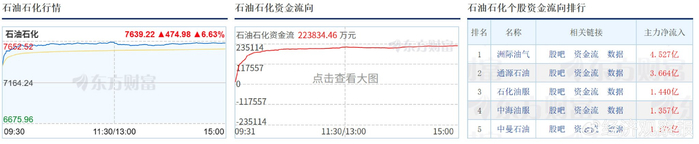
经观能源 2月24日,A股三大股指高开高走、放量上行,市场交投活跃度提升,石油化工、有色金属、贵黄金多 数板块表现强势,多只个股实现涨停或大幅上涨,展现出较强的市场活力。 贵金属板块全线暴涨,成为当日市场一大亮点。晓程科技领涨板块,涨幅高达15.19%;四川黄金涨 停,涨幅9.99%;中国黄金、西部黄金、招金黄金、赤峰黄金、中金黄金涨幅均超5%,分别为8.71%、 6.37%、5.88%、5.44%、5.39%;紫金矿业、湖南黄金、山东黄金也均有不错表现,涨幅分别达4.08%、 4.03%、3.61%,板块内个股全线飘红,无一下跌。 储能板块震荡上行,整体呈现涨多跌少格局,多只个股实现涨停或大幅上涨。新锦动力以20.07%的涨 幅实现20cm领涨;明阳电气、瑞可达、铜冠铜箔涨幅均超14%,其中明阳电气上涨17.48%、瑞可达上 涨16.63%、铜冠铜箔上涨14.49%;安靠智电、中油工程、通鼎互联、白云电器、风华高科等个股涨幅 超10%,豫能控股、协鑫集成、嘉泽新能涨幅接近10%,潍柴动力上涨8.62%,板块整体涨幅中等,龙 头个股表现突出。 石油化工板块表现突出,全线爆发领跑市场,板块内多只个股强势涨停。其 ...

分布式储能盈利模式向多元化演进
Ke Ji Ri Bao· 2026-02-25 01:00
Core Insights - The distributed energy storage sector in China is expected to experience significant growth, with installed capacity projected to increase from 570 MW in 2019 to 3,638 MW by the third quarter of 2025, representing over a fivefold increase [1] - The development of distributed energy storage is accelerating due to declining construction and operational costs, extensive development of distributed energy, and supportive policies [1][2] - Despite rapid growth, challenges such as limited application scenarios, imperfect market mechanisms, and immature business models hinder the large-scale development of distributed energy storage [1][4] Industry Trends - Distributed energy storage is transitioning from demonstration projects to large-scale applications, becoming a crucial element in energy transition and enhancing grid flexibility [2] - The six major application scenarios for distributed energy storage include industrial and commercial energy storage, distributed photovoltaic energy storage, green electricity direct connection, area storage, virtual power plants, and charging and swapping stations [2] - Industrial and commercial energy storage is the most mature application scenario, accounting for 68.7% of the cumulative installed capacity by September 2025 [2] Policy and Market Dynamics - Recent green electricity direct connection projects are vital for improving renewable energy consumption efficiency and reducing electricity costs [3] - The commercial model for distributed energy storage is still in the exploratory phase, facing challenges such as insufficient policy continuity and a lack of diverse revenue sources [4] - The profitability of industrial and commercial energy storage largely depends on peak and valley price differences, with regions like Zhejiang and Guangdong benefiting from higher price differentials [4] Future Outlook - The commercial viability of distributed energy storage is expected to improve with clearer market mechanisms and ongoing technological advancements that will lower storage costs [5] - Policies such as the 2024 guidelines for electricity market operations and various local initiatives are laying the groundwork for the high-quality development of distributed energy storage [5] - The revenue model is anticipated to evolve from a single price arbitrage approach to a more interactive model that includes market trading and auxiliary services [6] Recommendations - The report suggests that in the industrial and commercial energy storage scenario, short-term revenue can be generated through fixed peak and valley price differences, while long-term strategies should focus on dynamic pricing and capacity fee reductions [7] - For green electricity direct connection projects, short-term savings can be achieved through self-consumption, while long-term strategies should involve participation in grid balancing and exploring carbon reduction benefits [7] - Recommendations for other scenarios include enhancing fiscal and tax support, encouraging technological innovation, and improving mechanisms for market participation [7]
告别“单腿走路” 分布式储能盈利模式向多元化演进
Ke Ji Ri Bao· 2026-02-25 00:24
Core Viewpoint - The distributed energy storage sector in China is expected to enter a golden development period by 2025, with cumulative installed capacity projected to grow over five times from 570 MW in 2019 to 3,638 MW by the third quarter of 2025, driven by declining costs, extensive development of distributed energy, and supportive policies [1]. Group 1: Development Trends - The rapid growth of distributed energy storage is attributed to the decrease in construction and operational costs, extensive development of distributed energy, and various policy supports [1]. - Distributed energy storage is transitioning from demonstration projects to large-scale applications, becoming a crucial element in energy transition and enhancing grid flexibility [2]. - As of September 2025, commercial and industrial energy storage applications account for 68.7% of the cumulative installed capacity in China, indicating a mature application scenario [2]. Group 2: Application Scenarios - Six major application scenarios for distributed energy storage have been identified: commercial and industrial energy storage, distributed photovoltaic storage, green electricity direct connection, area storage, virtual power plants, and charging and swapping stations [2]. - Green electricity direct connection projects, which allow renewable energy to supply power directly to users without going through the public grid, have been approved in over 50 projects across more than 20 provinces [3]. Group 3: Challenges and Recommendations - The commercial model for distributed energy storage is still in the exploratory phase, facing challenges such as insufficient policy continuity, limited revenue sources, and inadequate safety standards [4]. - The report suggests that provinces with lower peak-valley price differences should adjust their pricing strategies to enhance the economic viability of distributed energy storage [7]. - Recommendations include improving fiscal and tax support, encouraging technological advancements, and refining market participation mechanisms for various application scenarios [7]. Group 4: Future Outlook - The commercial model of distributed energy storage is expected to evolve from a single arbitrage model to a more interactive model that includes market trading, auxiliary services, and local subsidies [6]. - The implementation of new policies, such as the basic rules for electricity market operations, is anticipated to provide a solid foundation for the high-quality development of distributed energy storage [5]. - Experts believe that the future will see a shift from simple peak-valley price arbitrage to a model that reflects the true energy value of distributed energy storage [8].
全省重点项目建设奋力冲刺一季度目标任务擂响“奋进鼓” 护航“开门红”
Xin Hua Ri Bao· 2026-02-25 00:14
Core Viewpoint - Jiangsu province is experiencing a surge in construction activity for major projects, aiming to boost high-quality development in the new year through diligent efforts and timely execution of tasks [1] Group 1: Major Projects and Developments - The Huaneng Jintan Salt Cave Compressed Air Energy Storage Project is under construction, featuring two 350 MW non-reburning compressed air storage units, expected to start operation mid-year, capable of storing 2.8 million kWh of electricity and reducing CO2 emissions by 520,000 tons annually [2] - The Huaneng Nantong Gas Turbine Innovation Development Demonstration Project is progressing, with two 745 MW gas-steam combined cycle units projected to generate 5.2 billion kWh annually, reducing coal consumption by approximately 1.37 million tons [3] - The Delijia Phase III Wind Power Key Component Project is nearing completion, with production expected to start in March, contributing to the renewable energy sector [3] Group 2: Transportation Infrastructure - The Zhang Jinggao Yangtze River Bridge is actively under construction, with safety training and checks being conducted to ensure a smooth continuation of work [4] - The Nanjing North Station project, a key high-speed rail hub, is in full swing, with management and workers quickly transitioning to a focused work mode post-holiday [4] - The Suzhou Heshan Bridge reconstruction project is enhancing capacity by widening the bridge and increasing clearance, aimed at improving navigation on the Suzhou section of the Grand Canal [5] Group 3: Government Support and Workforce Management - Local government initiatives are in place to support the resumption of work, including transportation for returning workers and job fairs to address labor shortages [7] - Measures such as optimizing logistics, enhancing labor guarantees, and streamlining approval processes are being implemented to facilitate project construction and ensure a stable start to the year [7]
容量电价的下一站:不止保底,更要择优
Xin Lang Cai Jing· 2026-02-24 22:23
Core Viewpoint - The recent issuance of the "Implementation Opinions on Improving the National Unified Electricity Market System" emphasizes the importance of capacity pricing in electricity market reform, aiming to ensure long-term reliable capacity through market mechanisms [3][4]. Group 1: Capacity Pricing Mechanism - The "114 Document" categorizes and improves capacity pricing mechanisms for coal, natural gas, pumped storage, and new energy storage, establishing a reliable capacity compensation mechanism based on peak capacity [3][4][5]. - The introduction of an independent new energy storage capacity pricing mechanism is significant for the independent storage industry, providing a stable revenue expectation and addressing previous profitability challenges [5][6]. Group 2: Industry Development Trends - By the end of 2025, the cumulative installed capacity of new energy storage in China is expected to reach 136 million kilowatts, with independent storage accounting for 51.2%, highlighting its critical role in power system regulation [5]. - The maximum discharge power of new energy storage in the State Grid area is projected to reach 44.53 million kilowatts, demonstrating its reliability during peak demand periods [5]. Group 3: Challenges and Opportunities - Despite positive growth, independent storage faces challenges such as reduced revenue from capacity leasing and increased system operation costs, which may squeeze profit margins [6][11]. - The "114 Document" establishes a framework for a predictable and sustainable business model for independent storage projects, enhancing revenue stability and risk resilience [6][10]. Group 4: Future Directions - The transition from a categorized capacity pricing approach to a unified standard is a key development in capacity pricing policy, aiming for a market-driven reliable capacity compensation mechanism [7][12]. - The potential inclusion of other reliable capacity sources, such as solar thermal power, in the compensation mechanism indicates a broader scope for capacity pricing reforms [8][9].
券商分析师新春一线观察:服务消费领跑 新质生产力活力迸发
Shang Hai Zheng Quan Bao· 2026-02-24 17:49
Group 1: Consumer Trends - The core theme of consumer behavior during the Spring Festival is service-oriented consumption, with a noticeable trend towards rational spending [1][2] - Analysts observed that while dining and entertainment venues were busy, consumers preferred more affordable price points, indicating a shift towards rational decision-making in spending [2] - In Jiangsu's consumer market, there was a notable increase in both prices and consumption volume for service-related activities, reflecting a structural upgrade in consumer preferences [3] Group 2: Industrial Development - Analysts noted a surge in new productive forces, with traditional industries accelerating their transformation and upgrade [4] - In Hainan, the integration of commercial aerospace initiatives has led to a thriving local economy, with significant growth in tourism and hospitality linked to the aerospace sector [4] - In Shandong, advancements in energy storage technology and the establishment of a large-scale sodium-ion battery production line highlight the region's industrial evolution [5] Group 3: Overseas Opportunities - Analysts conducted field research overseas, providing valuable insights for Chinese companies looking to expand internationally [6] - In Australia, rising property prices driven by low interest rates and high immigration have become a significant social issue, impacting housing affordability [6] - In Indonesia, local market adaptation is crucial for success, with companies needing to navigate economic and cultural differences to establish a foothold [6]

递表前突击分红 德兰明海冲刺港交所
Bei Jing Shang Bao· 2026-02-24 17:03
Core Viewpoint - Shenzhen Delan Minghai New Energy Co., Ltd. is seeking to go public on the Hong Kong Stock Exchange, despite ongoing net losses, with a focus on expanding its overseas market presence [1][3]. Group 1: Financial Performance - Delan Minghai's revenue for 2023 and 2024 is projected to be approximately 1.777 billion yuan and 2.174 billion yuan, respectively, with net losses of about 184 million yuan and 46.62 million yuan [3]. - The company's revenue for the first three quarters of last year was approximately 1.572 billion yuan, reflecting a year-on-year growth of 3.3%, while the net loss narrowed to about 29.85 million yuan from 35.02 million yuan in the same period the previous year [3][4]. - The company has indicated that it may continue to incur net losses as it is still in the business expansion phase [4]. Group 2: Market Dependency - Over 90% of Delan Minghai's revenue comes from overseas markets, with 98.8%, 99.4%, and 97.9% of total revenue from international sales in 2023, 2024, and the first three quarters of last year, respectively [5]. - The majority of revenue is derived from the Americas and Europe, with approximately 816 million yuan and 451 million yuan from these regions in the first three quarters of last year, accounting for 51.9% and 28.7% of total revenue [5]. Group 3: Dividend Distribution - Prior to its IPO application, Delan Minghai declared a significant dividend of 87.4 million yuan to shareholders on January 15, which was fully paid by February 10, along with a previous dividend of 37.1 million yuan for the last fiscal year [6]. - The total dividends declared amount to approximately 125 million yuan, raising concerns among regulators due to the company's ongoing losses and the intention to raise funds through the IPO [6]. Group 4: Product Segmentation - In the first three quarters of last year, 88.4% of Delan Minghai's revenue came from energy storage products, with portable energy storage products, home energy storage products, and other revenues accounting for approximately 67.4%, 21%, and 11.6%, respectively [4]. Group 5: Company Background - Established in 2013, Delan Minghai is a supplier and innovator of user-side energy storage solutions, launching the BLUETTI brand in 2020, with over 35 million energy storage products shipped globally by the end of last year [3]. - The company ranks fourth among global portable energy storage device manufacturers in 2024, with a market share of 6.6% by revenue and 7.5% by shipment volume [3].