
茶业

Search documents
柏柳村:白茶飘香的故乡
Zhong Guo Huan Jing Bao· 2025-06-18 01:10
Core Viewpoint - Fuding white tea, recognized as a geographical indication product of China, has gained international acclaim and is deeply rooted in the unique culture and values of its origin, Fuding City, particularly in Bai Liu Village, known as the "First Village of Chinese White Tea" [1][3]. Group 1: Historical Significance - Fuding white tea was officially recognized as a protected geographical product by the former National Quality Supervision and Inspection Administration in June 2004 [1]. - Bai Liu Village has been a significant contributor to the white tea industry, with over 3 million acres of white tea seedlings planted nationwide, 70% to 80% of which originate from this village [1]. - The village was designated as the "First Village of Chinese White Tea" in 2009 after expert evaluation by the China International Tea Culture Research Association [1]. Group 2: Cultural Heritage - The legacy of white tea production in Bai Liu Village is attributed to generations of tea artisans, including Mei Xiangjing, a master of white tea making and a national intangible cultural heritage inheritor [3][4]. - Mei Xiangjing's grandfather, Mei Bozhen, played a pivotal role in promoting Fuding white tea, winning a gold medal at the Panama-Pacific International Exposition in 1915 [3][4]. - The family has a rich history in the tea business, with Mei Bozhen establishing a tea business that gained recognition across China and beyond [3][4]. Group 3: Modern Developments - The current tea production area in Bai Liu Village is approximately 5,400 acres, with 16 tea factories operating in the village [1]. - Mei Fusheng, a descendant of the Mei family, is committed to preserving traditional charcoal baking techniques in tea production, emphasizing quality control and the natural properties of white tea [7][8]. - The white tea industry in Fuding City is thriving, with 350,000 out of a population of 600,000 engaged in the white tea sector, supported by 300,000 acres of tea plantations [9].


“茉莉之乡”广西横州借力数字智能 产业升级香飘海外
Zhong Guo Chan Ye Jing Ji Xin Xi Wang· 2025-06-17 07:15
Group 1 - The jasmine flower picking season has begun in Hengxiu, Guangxi, known as the "Hometown of Jasmine in China," where digital technology is enhancing industry upgrades and integrating the "finger economy" with the "flower sea economy" [1] - The introduction of the "Digital Jasmine" platform allows farmers to monitor soil conditions and receive tailored agricultural advice, significantly increasing productivity through smart management [1] - The jasmine flower market in Shijing Village has become more transparent with real-time price updates accessible via mobile phones, enabling farmers to make informed decisions [2] Group 2 - Guangxi Zhongken Tea Industry Co., Ltd. has developed a second-generation fully automated production line for jasmine tea, improving flower fragrance utilization from under 50% to over 80% [2] - The jasmine tea produced by local companies has reached over 20 countries and regions, with plans to develop products that cater to international tastes [3] - The comprehensive brand value of "Heng County Jasmine Tea" is projected to reach 16.456 billion yuan by 2025, with the "Heng County Jasmine" brand valued at 6.213 billion yuan, totaling 22.669 billion yuan [3]
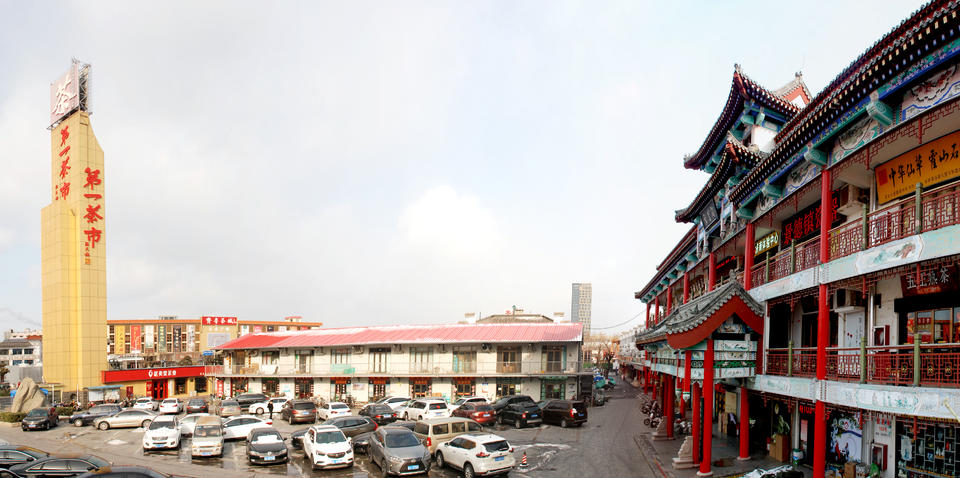
不是茶叶主产区的济南,何以造就“江北第一茶市”
Qi Lu Wan Bao Wang· 2025-06-16 07:10
Core Insights - The article highlights the significance of tea in Chinese culture and the rise of Jinan as a major tea market, known as "the first tea market in northern China" [1][3][5] - The upcoming 19th International Tea Industry Expo and the 13th Tea Culture Festival in Jinan is set to showcase the evolution of tea culture and industry [1][11] Group 1: Market Development - The Jinan tea market was established in 1996 after the government ended the monopoly of state-owned enterprises in the tea industry, leading to a market-oriented operation [3] - Initially starting from a few warehouses, the market has grown to become the largest tea distribution center north of the Yangtze River, facilitating the sale of southern tea in northern regions [3][5] - The market has attracted numerous tea merchants from across the country, with a significant increase in the number of vendors, particularly from Anxi, which has seen around 400 wholesale merchants by 2008 [5][6] Group 2: Brand Development and Innovation - Companies like Quande Li Tea Industry have evolved from simple wholesale operations to establishing their own brands, with over 100 agents nationwide [6][8] - The market has seen a shift towards brand-oriented operations, with a focus on product innovation and catering to younger consumers through new tea flavors and collaborations with dessert brands [6][8] - The presence of diverse tea merchants has fostered a competitive environment that encourages innovation and adaptation to market trends [8][11] Group 3: Cultural and Economic Impact - The Jinan tea market has become a cultural hub, hosting events like the annual tea expo that connects traditional tea culture with modern consumer experiences [11][12] - The tea expo has grown significantly, with the 2024 event expected to feature over 800 brands and generate substantial trade volumes, reflecting the market's importance in promoting tea culture [11][12][13] - The development of the tea market has positively impacted the local economy, creating jobs and stimulating growth in related sectors such as logistics and hospitality [13]
农耕智慧 历久弥新(新时代画卷)
Ren Min Ri Bao· 2025-06-11 08:19
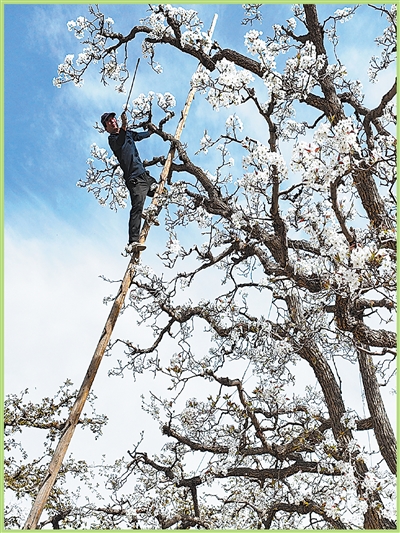
Core Points - The Gansu Gaolan Shichuan Ancient Pear Garden System, Zhejiang Deqing Freshwater Pearl Composite Breeding System, and Fujian Fuding White Tea Culture System have been recognized as Globally Important Agricultural Heritage Systems by the Food and Agriculture Organization (FAO) [15][16] - China now has a total of 25 Globally Important Agricultural Heritage Systems, maintaining the highest number in the world [15][16] - The recognition emphasizes the importance of protecting agricultural cultural heritage as a shared responsibility of humanity [15][16] Gansu Gaolan Shichuan Ancient Pear Garden System - Located in Gansu Province, this system features unique agricultural practices such as "Tianbashi" high-altitude operations and ecological methods like integrated farming and traditional preservation techniques [2][10] - The system reflects the wisdom of harmonious coexistence between humans and nature, showcasing sustainable agricultural practices [15][16] Zhejiang Deqing Freshwater Pearl Composite Breeding System - Situated in Zhejiang Province, this system is based on the mutualistic relationship between fish and mussels, utilizing local pearl farming techniques [6][10] - It encompasses a diverse range of aquatic biological resources, promoting ecological balance and sustainability [6][10] Fujian Fuding White Tea Culture System - Located in Fujian Province, this system is characterized by unique tea varieties and traditional tea-making techniques, supported by favorable geographical and climatic conditions [10][11] - The tea industry in Fuding has significant economic value, with a total tea garden area of 319,100 acres and a comprehensive industry output value of approximately 15.52 billion yuan [11][15] Economic and Cultural Value - Agricultural cultural heritage systems not only provide production and ecological functions but also contribute to economic, social, cultural, and technological values [16] - Research indicates that the brand value of agricultural products from these heritage systems can increase by 10% to 30%, with local residents benefiting significantly from protection and utilization efforts [16]
定制化金融“擦亮”特色产业“金字招牌”
Xin Hua She· 2025-06-11 08:00
Group 1 - The core viewpoint highlights the importance of financial support in enhancing the competitiveness of the tea industry, particularly through customized loans that enable companies to upgrade their production capabilities [1][2] - Ouyang Huai'en, a tea farmer, reported a 40% increase in processing efficiency and a 30% year-on-year growth in order volume after receiving a 1 million yuan loan from Postal Savings Bank [1] - The Postal Savings Bank of Jiangxi Province has developed a multi-layered financial service system tailored to support key agricultural industries, including tea, rice, oilseeds, fruits, vegetables, livestock, and aquaculture [1] Group 2 - The bank has implemented a "offline + online" rural financial service channel system, allowing farmers to conduct basic financial transactions without leaving their villages [2] - The introduction of products like "Express Loan" utilizes big data technology to streamline the loan application process, enhancing the integration of finance with the real economy [2] - Future plans include further innovation in financial products to strengthen agricultural development in Jiangxi Province [2]

(走进中国乡村)“茉莉之乡”广西横州借力数字智能 产业升级香飘海外
Zhong Guo Xin Wen Wang· 2025-06-10 15:35
Group 1 - The article highlights the integration of digital technology in the jasmine flower industry in Guangxi's Hengzhou, enhancing productivity and market transparency [1][3] - The introduction of the "Digital Jasmine" platform allows farmers to monitor soil conditions and receive tailored agricultural advice, significantly improving farming efficiency [3] - The automated production line developed by Guangxi Zhongken Tea Co., Ltd. increases the utilization rate of jasmine fragrance from below 50% to over 80%, while also improving storage space efficiency by 50% and product cleanliness by 40% [5] Group 2 - The jasmine tea products from Guangxi Zhongken Tea Co., Ltd. have been exported to over 20 countries and regions, indicating a successful international market penetration [5] - Guangxi Longshengyuan Tea Co., Ltd. is also expanding its market presence in Europe, North America, and Southeast Asia by developing products that cater to international tastes [5] - The comprehensive brand value of "Heng County Jasmine Tea" is projected to reach 16.456 billion RMB by 2025, with the "Heng County Jasmine" brand valued at 6.213 billion RMB, totaling a combined brand value of 22.669 billion RMB [5]
“乡野茶”走向国际舞台
Jing Ji Ri Bao· 2025-06-09 21:45
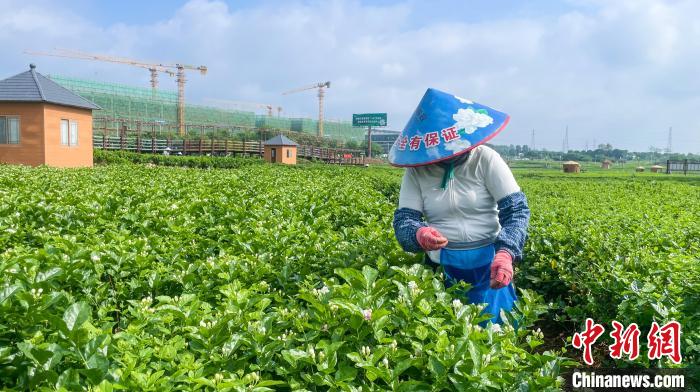
Group 1 - The core viewpoint highlights the development of the tea industry in Malipo County, Yunnan, driven by modernization and support from the Ministry of Foreign Affairs, leading to improved product quality and market reach [1][2] - The establishment of a tea processing factory in Mengnong Township has introduced industrialized and standardized processing methods, resulting in the development of over 10 mid-to-high-end tea products for domestic and international markets [1] - The "Laoshan Tea" brand is being promoted through international tea festivals and participation in national exhibitions, significantly expanding the scale of tea plantations from 500 acres to 3000 acres, benefiting over 2000 local tea farmers [1][2] Group 2 - The tea industry in Malipo has accelerated with the establishment of a tea street, the issuance of group standards for "Laoshan Tea," and the creation of a research center for ancient tea tree protection and development [2] - By 2024, the total tea planting area is projected to reach 35,000 acres, with ancient tea tree areas at 21,600 acres, generating an industry-wide output value of 220 million yuan and an average income increase of 4,700 yuan per tea farmer [2] - The county aims to pursue green, ecological, and brand-oriented development, exploring the integration of tea and tourism to enhance the tea industry's quality and contribute to rural revitalization [2]
姚高员专题调研“为企办实事”推进工作
Hang Zhou Ri Bao· 2025-06-09 03:06
Group 1 - The mayor emphasizes the importance of implementing high-quality measures to support enterprises, focusing on creating an optimal business environment in Hangzhou [1] - Zhejiang Maierke Technology Company is actively expanding into international markets such as Europe, South America, and Southeast Asia, positioning itself as a new emerging brand in sports technology [1] - Yifutang Tea Company collaborates with Zhejiang Agricultural and Forestry University to achieve breakthroughs in tea industry digitalization and smart upgrades, enhancing product preservation and pest control [1] Group 2 - The mayor calls for the integration of enterprise-related policies and services into a comprehensive platform, enhancing resource sharing and collaboration among departments to improve service efficiency for businesses [2] - The "Qihu Wo Ying" platform is highlighted as a key tool for improving the business environment and ensuring effective service delivery to enterprises in Hangzhou [2] - Continuous optimization of service levels for enterprises is emphasized, with a focus on maintaining updated problem and responsibility lists to support business growth [2]
华祥苑董事长肖文华:二十余载茶香路,可持续发展进行时
Sou Hu Cai Jing· 2025-06-09 02:51
Core Viewpoint - The article discusses the sustainable development of the Huaxiangyuan brand, emphasizing the integration of tea culture with modern business practices and international outreach, as articulated by Chairman Xiao Wenhua in a recent interview [1][8]. Group 1: Cultural Heritage and Brand Vitality - Tea culture is highlighted as a vital part of Chinese civilization, embodying values such as humility, harmony, respect, and etiquette, and is positioned as a key element in the cultural export of China [3]. - Huaxiangyuan has established a cultural foundation for its tea business since 2003, conducting numerous global tea events annually to enhance brand cultural influence [8][12]. - The brand's recognition as a national gift tea is attributed to its dual focus on quality and culture from its inception, which has led to various accolades and participation in significant international events [6][8]. Group 2: Revitalization of the Ancient Tea Road - Since 2017, Huaxiangyuan has been working on revitalizing the Ancient Tea Road, establishing nine key cities in China to create a complete cultural route [11]. - The company plans to launch exhibitions and cultural activities in collaboration with various organizations, aiming to transform ecological tea gardens into immersive cultural experience spaces [12]. - Huaxiangyuan's products, such as Guobing tea, are positioned to enhance China's diplomatic tea gatherings, showcasing the essence of Chinese tea culture on global platforms [12][14]. Group 3: International Expansion Strategies - The brand's international market entry faces cultural differences, requiring a nuanced understanding of global tea culture [14]. - Three pathways for international expansion are identified: traditional export, leveraging new tea-drink business models, and comprehensive communication strategies to convey Chinese lifestyle and philosophy [14]. - Huaxiangyuan aims to create a recognizable Chinese tea brand that embodies cultural confidence and serves as a diplomatic tool [17]. Group 4: Sustainable Development and Social Responsibility - As a leading player in the tea industry, Huaxiangyuan focuses on quality, cultural transmission, and social responsibility, contributing to rural economic development [22][24]. - The company implements a "tea tourism + agricultural products" model, allowing visitors to engage in tea picking and purchase local products, thus enhancing economic benefits and social responsibility [22]. - Huaxiangyuan emphasizes long-term strategic vision over short-term trends, aiming to build a strong brand and expand the tea industry through international cultural dissemination [24].

科技赋能古巷镇,驻镇帮扶工作队 开展林茶共生试验
Nan Fang Nong Cun Bao· 2025-06-06 12:03
Core Viewpoint - The article discusses the launch of a co-cultivation experiment of tea and agarwood in Guxiang Town, aiming to innovate traditional planting methods and promote ecological and economic development in the region [12][15][20]. Group 1: Project Overview - The co-cultivation experiment of wild tea and agarwood is initiated by the Guxiang Town Rural Technology Special Commissioner team in collaboration with local village revitalization teams [2][3]. - The project involves the donation of 300 high-quality wild tea plants, including varieties like Wuye Dancong and Baiyun tea, to enhance local tea industry innovation [4][6][8]. Group 2: Objectives and Benefits - The experiment aims to optimize the ecological environment while providing new pathways for specialty tea products, contributing to the cooperative's development [12][13]. - It is part of a broader initiative to implement high-quality development projects in rural areas, focusing on ecological and distinctive transformations in the tea industry [15][17]. Group 3: Methodology and Sustainability - The wild tea has been selected through long-term research to adapt to local ecosystems, enhancing tea quality through ecological complementarity in the co-cultivation model [19][20]. - This initiative embodies the principle that "lucid waters and lush mountains are invaluable assets," promoting sustainable development by integrating natural resource protection with specialty industry cultivation [21][22][23].
