
动力电池

Search documents
视频丨十大创新成果 八大发展趋势 我国动力电池产业交出“亮眼答卷”
Yang Shi Xin Wen Ke Hu Duan· 2025-11-13 07:07
Core Insights - The 2025 World Power Battery Conference opened in Yibin, Sichuan, showcasing significant advancements in the battery industry, including ten innovative achievements and eight development trends [1][5]. Group 1: Innovative Achievements - The ten innovative achievements highlight a comprehensive breakthrough in the power battery industry, focusing on stable global supply chains for key materials like cathodes and anodes, the establishment of zero-carbon factories, and improved recycling systems for low-carbon development throughout the entire lifecycle [1]. - A regulatory framework covering the entire lifecycle of batteries has been established, promoting mutual recognition of standards domestically and internationally, and enhancing international trust through tools like battery passports [1]. Group 2: Development Trends - The eight development trends indicate that material innovation will drive power batteries towards higher energy density and cost-effectiveness, with solid-liquid hybrid batteries transitioning from small-scale applications to market commercialization [5]. - All-solid-state batteries are achieving technological breakthroughs and are beginning industrial demonstration [5]. Group 3: Industry Positioning - The Chinese battery industry has transitioned from a position of catching up with foreign counterparts to leading the global market, supported by hundreds of achievements and thousands of foreign patents [3]. - The lithium battery industry is expected to expand significantly into sectors such as energy storage, shipping, AI, and low-altitude economy, indicating a broad future outlook [3].

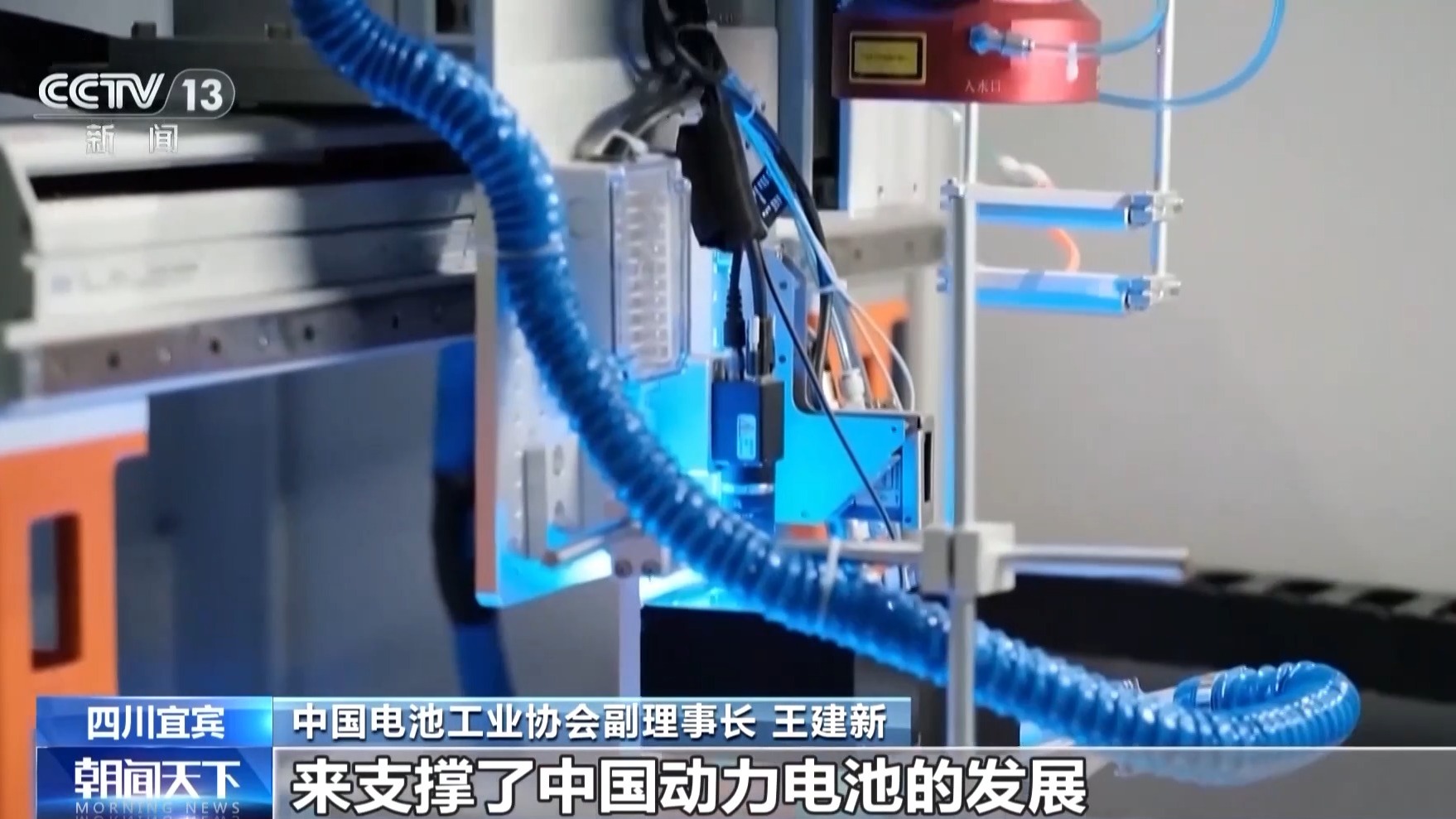
锂电产业链全线大涨!创业板ETF天弘(159977)连续4日获资金净流入,2025世界动力电池大会发布重大成果
2 1 Shi Ji Jing Ji Bao Dao· 2025-11-13 06:30
Group 1 - The core viewpoint of the articles highlights the significant growth in China's power battery industry, which has maintained its position as the world's largest for eight consecutive years, with sales reaching 786 GWh and exports exceeding 129 GWh in the first three quarters of this year, reflecting year-on-year growth of 48.9% and 32.75% respectively [2] - The recent surge in the ChiNext Index, which rose over 2%, is attributed to the collective rally in the lithium battery supply chain, with leading stocks like CATL and EVE Energy showing notable gains [1] - The Tianhong ChiNext ETF (159977) has seen a net inflow of over 56 million yuan in the past four days, indicating strong investor interest in technology sectors, particularly in electric power equipment, electronics, pharmaceuticals, and communications, which together account for over 65% of its holdings [1] Group 2 - The 2025 World Power Battery Conference held in Yibin, Sichuan, showcased significant advancements in battery technology and outlined the future development outlook for global power batteries, emphasizing innovations in material systems, battery performance, and smart manufacturing [1] - According to research from Cinda Securities, the energy storage sector is expected to drive a new lithium battery cycle, with demand growth projected to reach 50% by 2026, influenced by overseas energy transitions and domestic energy storage policy support [2] - Orient Securities notes that the technology growth sector is currently experiencing internal shifts, with the electric power equipment industry gaining relative strength, suggesting ongoing rotation within high and low segments of the technology sector [2]

2025动力电池应用生态展览会启幕 将持续至15日
Zhong Guo Xin Wen Wang· 2025-11-13 06:13
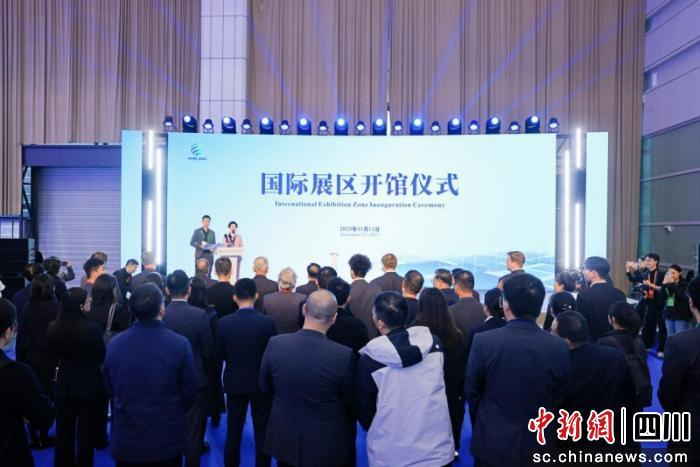
Core Insights - The 2025 World Power Battery Conference, hosted by the Sichuan Provincial Government, commenced on November 12 in Yibin, featuring a concurrent Power Battery Application Ecological Exhibition running until November 15 [1][2] Industry Overview - The exhibition focuses on the entire value chain of power batteries, emphasizing "material innovation, intelligent manufacturing, scenario reconstruction, and recycling," aiming to create a closed-loop ecosystem from laboratory to commercialization [2][4] - The exhibition covers a total area of 50,000 square meters, with over 230 participating companies and institutions from various countries, including the USA, UK, Germany, France, Switzerland, and Singapore [4][5] Exhibition Highlights - The exhibition features ten major zones, including areas for "14th Five-Year Plan" achievements, international exhibits, power battery and materials, energy storage, new energy vehicles, recycling and material regeneration, electric ship technology, and artificial intelligence [4][6] - Notable companies in attendance include industry leaders such as CATL, Tianyuan Group, and various international brands like Tesla, Mercedes-Benz, and BMW, showcasing cutting-edge technologies and applications in the power battery sector [5][6] Application Scenarios - Four major new application scenarios are highlighted, including electric ships and low-altitude economy, showcasing a complete industrial chain from manufacturing to service [6] - The solid-state battery exhibition area features top institutions demonstrating innovations from material breakthroughs to engineering applications [6] Engagement and Activities - The event includes a variety of interactive activities aimed at enhancing public engagement and understanding of the power battery industry [7][8] - A supply-demand matching conference is scheduled to facilitate collaboration among over 100 industry representatives, focusing on material innovation, sustainable development, and safety [7] - The "Yimao Global Trade" salon will address topics related to the international expansion of Chinese brands and compliance with EU regulations [8]

2025世界动力电池大会发布十大创新成果 八大发展趋势
Guo Ji Jin Rong Bao· 2025-11-13 05:32
Core Insights - The 2025 World Power Battery Conference opened in Yibin, Sichuan, highlighting significant advancements in the battery industry [1] - The China Battery Industry Association and the China Society of Automotive Engineers released ten innovative achievements and eight development trends [1] Group 1: Innovative Achievements - The ten innovative achievements cover breakthroughs across the entire power battery supply chain, including stable global supply chains for cathode and anode materials [1] - The establishment of zero-carbon factories and improved recycling systems are emphasized, along with a regulatory framework that encompasses the entire battery lifecycle [1] - The push for mutual recognition of standards between domestic and international markets is a key focus [1] Group 2: Development Trends - The eight development trends indicate that material innovation is driving power batteries towards higher energy density and cost-effectiveness [1] - The marketization of hybrid solid-liquid batteries is accelerating, while all-solid-state batteries have achieved technological breakthroughs and are moving towards industrial demonstration [1] - The lithium battery industry is expected to expand into various applications, including energy storage, shipping, AI, and low-altitude economy [1]
璀璨盛典,荣耀见证!2025新财富杂志上市公司可持续发展年会暨最佳董秘颁奖典礼在广州南沙成功举办
证券时报· 2025-11-13 04:16
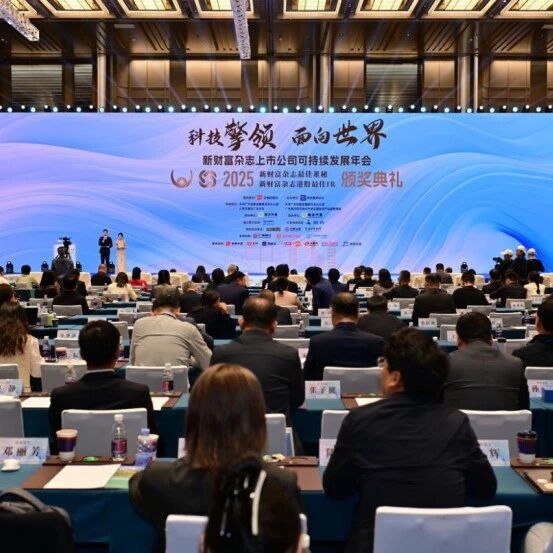
Core Viewpoint - The conference emphasized the importance of sustainable development and high-quality growth in the capital market, focusing on technology-driven innovation and transparent governance as key factors for listed companies to thrive in a changing global landscape [2][3]. Group 1: Conference Overview - The "2025 New Wealth Magazine Sustainable Development Annual Conference" was held in Guangzhou Nansha, gathering over 400 industry elites, including regulatory officials, top industry experts, and executives from listed companies [1]. - The event featured awards for over 300 "Best Secretaries," 50 "Best Representatives," and more than 100 "Best IR" teams, highlighting excellence in corporate governance and investor relations [26][28]. Group 2: Key Themes and Discussions - The conference focused on three critical areas for listed companies: innovation-driven strategies, enhanced corporate governance, and leveraging regional strategies to seize opportunities in the Greater Bay Area [3]. - Discussions included the integration of artificial intelligence, emerging industries, green development, and international expansion, providing a platform for exploring new growth paths in the current economic cycle [17][21]. Group 3: Economic Insights - Guangzhou's financial sector achieved a value-added of 304.9 billion yuan in 2024, with a year-on-year growth of 3.9%, positioning it as the fourth city in China to surpass 300 billion yuan in financial value [10]. - The Greater Bay Area's economy reached 14 trillion yuan, marking significant progress in building a world-class city cluster [13]. Group 4: Future Initiatives - The "New Wealth Magazine Hong Kong Star Plan" was launched to create a comprehensive platform for value dissemination and research collaboration for companies listed in Hong Kong [29]. - The second edition of the Best Hong Kong Company Awards will commence, aimed at promoting high-quality development among Chinese companies listed in Hong Kong [31]. Group 5: Environmental Responsibility - The conference adhered to low-carbon principles and achieved carbon neutrality, reflecting a commitment to sustainable development and responsible practices within the capital market [33].
第一创业晨会纪要-20251113
First Capital Securities· 2025-11-13 04:15
Group 1: Industry Overview - Cisco raised its fiscal year 2026 revenue outlook to over $61 billion, exceeding previous guidance by approximately $1 billion and surpassing Wall Street analysts' expectations. The expected earnings per share, excluding certain items, is projected at $4.14, higher than the analysts' average estimate of $4.05. This growth is primarily driven by increased demand for AI in secure networking [2] - AMD's CFO also raised long-term revenue growth expectations due to AI business demand, forecasting an overall revenue growth rate of approximately 35% over the next 3-5 years, with AI chip business growth potentially reaching 80% annually. The acceleration of AI computing infrastructure in the U.S. is confirmed, and domestic AI industry chain stocks may benefit from this news after recent price corrections [2] Group 2: Advanced Manufacturing - In October, China's battery sales reached 166.0 GWh, a year-on-year increase of 50.8%. Among these, power battery sales were 124.3 GWh, up 56.6%, while other battery sales were 41.7 GWh, increasing by 35.7%. The domestic power battery installation volume in October was 84.1 GWh, a 42.1% year-on-year growth, with ternary battery installations at 16.5 GWh (up 35.8%) and lithium iron phosphate battery installations at 67.5 GWh (up 43.7%). Lithium iron phosphate batteries accounted for 80.3% of the total, maintaining a dominant position. The overall strength in production, sales, and installation in October suggests that November and December will likely be peak periods for the industry chain, with high demand in energy storage also driving power installations [6] Group 3: Consumer Sector - According to data from the online retail analysis platform Star Map, the total e-commerce sales during the 2025 "Double Eleven" shopping festival reached 1,695 billion yuan, a year-on-year increase of 14.2%. However, due to the extended promotional period of 28 days this year compared to 19 days last year, the adjusted year-on-year growth appears modest, indicating lower enthusiasm than in 2024. Overall, the domestic consumption growth rate is likely to remain low due to the diminishing effects of policies like trade-in programs [8]
2025动力电池产业发展指数:中国装机量全球占比超60%,广东江苏四川三省规模居前
Jing Ji Guan Cha Wang· 2025-11-13 03:55
Core Insights - The 2025 World Power Battery Conference held in Yibin, Sichuan, revealed that China's power battery installation volume is expected to exceed 60% of the global total in 2024, highlighting China's leading position in the industry [1] Global Index - The Global Index indicates that Asian countries, particularly China and Japan, have a significant advantage in the power battery industry, with China leading in scale and market size for new energy vehicles [1] - China continues to lead globally in innovation capability and the completeness of the industrial chain [1] China Index - The top five provinces in China for power battery industry development remain consistent: Guangdong, Jiangsu, Sichuan, Fujian, and Hubei [2] - Guangdong benefits from its geographical advantages and policy support, while Sichuan is transitioning from scale expansion to high-quality development, focusing on creating a world-class industrial cluster [2] Enterprise Index - Leading companies such as CATL, BYD, and LG Energy have strong competitiveness in enterprise scale, innovation capability, and sustainable development, ranking in the top three [2] Industry Trends - Industry leaders discussed the core technologies and future layouts of the power battery industry, emphasizing the need for high-quality development amid global energy transition challenges [2] - CATL's chairman noted that lithium battery exports contributed nearly 400 billion yuan to China's foreign trade in the first three quarters of 2025 [2] Material Innovation - The chairman of GCL Group emphasized the importance of breakthroughs in source materials for the new quality development of the power battery industry [3] - The integration of power batteries, energy storage, and AI is expected to reshape the future of energy [3] Storage Technology - The chairman of China Huadian Group highlighted the need for advancements in long-duration storage and hybrid storage technologies to enhance the application level of energy storage stations [3] Solid-State Battery Development - Experts indicated that solid-state batteries are still several years away from mass production, with commercialization expected around 2032-2033 [4] - The timeline for semi-solid batteries is estimated to be 5-7 years for commercial application [4] Next-Generation Battery Focus - The vice president of Changan Automobile stated that the industry should not solely focus on solid-state batteries, as Changan is exploring multiple technological pathways, including liquid battery improvements [5]

2025世界动力电池大会召开!创业板ETF博时(159908)今日大涨超2%
Xin Lang Cai Jing· 2025-11-13 03:29
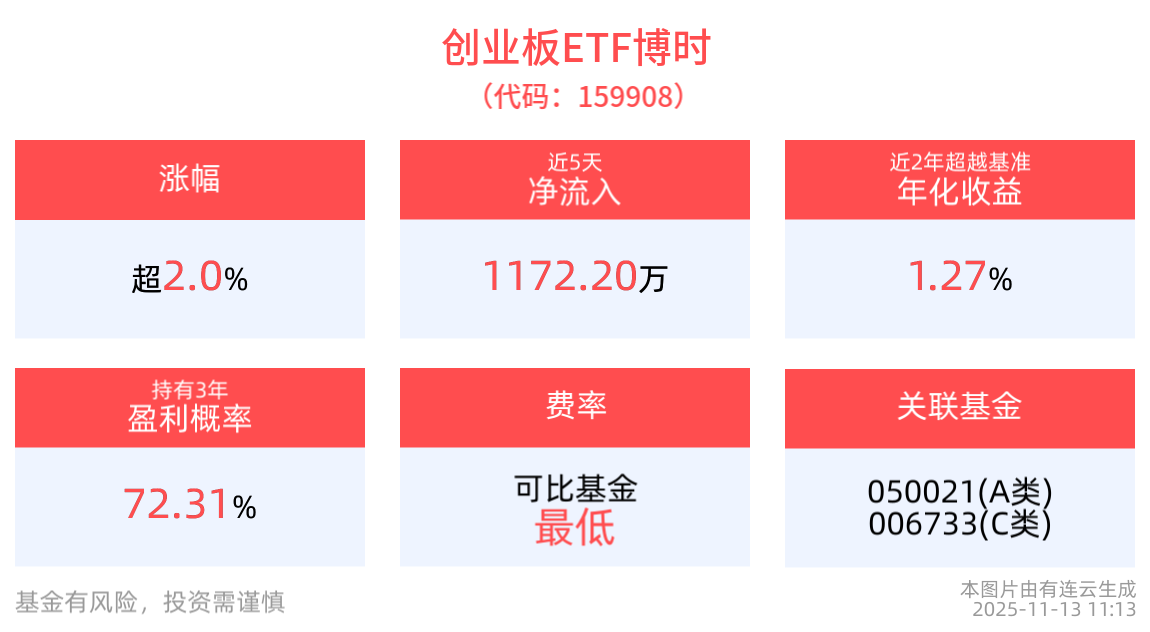
Group 1 - The ChiNext Index has risen by 2.16% as of November 13, 2025, with notable increases in stocks such as Tianhua New Energy (up 17.49%) and Xinzhou Bang (up 17.36%) [3] - The ChiNext ETF by Bosera has seen a 29.70% increase over the past three months, with a current price of 2.96 yuan [3] - The trading volume for the ChiNext ETF reached 10.48 million yuan, with a turnover rate of 0.85% [3] Group 2 - The 2025 World Power Battery Conference opened in Yibin, Sichuan, focusing on technological innovation and the development of the power battery industry [3] - Guojin Securities indicates that the industry is transitioning to solid-state battery production, with a clear technology route and supply chain emerging [3] - The solid-state battery market is expected to benefit from the growing demand in the energy storage sector, providing funding for technological development [3] Group 3 - The lithium battery industry achieved a revenue of 636.19 billion yuan in Q1-Q3 2025, a year-on-year increase of 16.12%, with net profit rising by 40.37% [4] - The battery and cathode material segments showed significant performance, with battery segment net profit increasing by 53.61% year-on-year in Q3 [4] - The latest scale of the ChiNext ETF by Bosera is 1.226 billion yuan, with a net inflow of 2.8852 million yuan recently [4] Group 4 - The top ten weighted stocks in the ChiNext Index account for 58.2% of the index, including major companies like CATL and Zhongji Xuchuang [4]
全固态电池2030年商用?这些大咖这样说
第一财经· 2025-11-13 03:15
Core Viewpoint - The article discusses the cautious outlook of industry experts and entrepreneurs regarding the rapidly hyped all-solid-state battery concept, emphasizing the need for significant technological breakthroughs and long-term development before commercialization can occur [3][6]. Industry Overview - China's power battery industry has maintained its position as the world's largest for eight consecutive years, with sales reaching 786 GWh and exports exceeding 129 GWh in the first three quarters of this year, reflecting year-on-year growth of 48.9% and 32.75% respectively [5]. - The industry is experiencing accelerated technological iterations, with all-solid-state batteries being a focal point of attention, particularly in capital markets [6]. Expert Opinions - Industry leaders express skepticism about the timeline for all-solid-state battery commercialization, with estimates ranging from 2030 to as late as 2035 for large-scale deployment [7]. - There is a consensus that while all-solid-state batteries are promising, they face significant scientific, engineering, and cost challenges that require time to overcome [7][8]. Alternative Technologies - Experts suggest that consumers planning to purchase vehicles in the next 3-5 years should not wait for all-solid-state batteries, as current liquid and semi-solid batteries are already effective [8]. - The industry is encouraged to focus on next-generation batteries rather than solely on all-solid-state technology, as the ultimate form of battery technology remains uncertain [8][9]. Future Trends - A report presented at the conference outlines seven major trends in battery development, highlighting the rapid market adoption of semi-solid batteries and the ongoing research into all-solid-state batteries [9]. - The report anticipates that by 2030, semi-solid batteries will achieve a capacity density of over 450 Wh/kg, while all-solid-state batteries are expected to complete pilot testing and small-scale applications around the same time [9]. Conference Highlights - The 2025 World Power Battery Conference featured discussions on various industry topics, including battery recycling, quality enhancement, and international supply chain development, showcasing the event's role in promoting global collaboration [10]. - A total of 180 projects were signed at the conference, amounting to 861.3 billion yuan, indicating strong industrial momentum and development potential in key green energy sectors [10].
宜宾三江新区:以“优”汇聚行业翘楚 以“链”引资近248亿元
Huan Qiu Wang· 2025-11-13 03:08
来源:环球网 11月12日下午,以"链聚产业生态 绿动澎湃三江"为主题的2025宜宾三江新区产业投资推介会在四川宜 宾成功举办。本次推介会成果丰硕,共签约项目84个,总投资额达247.38亿元,涵盖新能源、新材料等 多个前沿领域,为区域经济高质量发展注入强劲新动能。 推介会汇聚了行业翘楚与资本力量,吸引了包括浙江软控智能科技股份有限公司、时代长安动力电池有 限公司、宁德时代新能源科技股份有限公司在内的100家知名企业及18家基金机构参与。会上,三江新 区(临港经开区)管委会发布了极具吸引力的基金矩阵机会清单,围绕存量与增量基金群进行统筹布 局,拟构建总规模超265.5亿元的投资发展基金矩阵,为产业发展提供强有力的金融支撑。同时,该新 区三江集团还推出了国有企业场景机会清单,共释放47个优质合作项目,总投资额超120亿元,并配套 提供96万平方米成熟产业承接空间,为各类市场主体搭建了广阔的发展平台与合作机遇。 作为宜宾市发展的"动力之芯与核心引擎",宜宾三江新区近年来积极抢抓成渝地区双城经济圈建设、科 技革命与产业变革等重大机遇,发展能级持续提升。在全国城市新区潜力50强评比中,新区已跃升至第 15位;其核心区 ...
