
玩具

Search documents
提前大涨!002348,拟易主
中国基金报· 2025-11-25 05:02
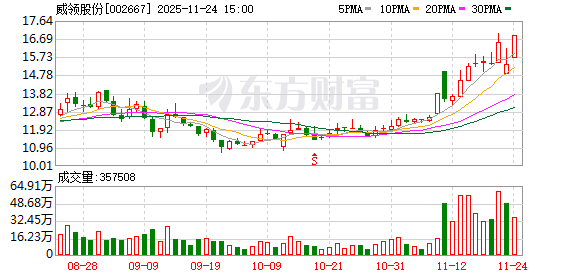
Core Viewpoint - The largest shareholder of Gaole Co., Ltd. is planning to transfer its shares or delegate voting rights, which may lead to a change in control of the company [2]. Group 1: Shareholder Changes - On January 24, Gaole Co., Ltd. announced that its largest shareholder, Huadong Group, is planning to transfer its shares or delegate voting rights, potentially resulting in a change of control [2]. - The company's stock was suspended from trading starting November 25, 2025, due to this significant announcement, with an expected suspension period of no more than two trading days [3]. Group 2: Stock Performance - Prior to the suspension, on November 24, Gaole Co., Ltd. saw its stock price hit the daily limit up, closing at 4.81 yuan per share, reflecting a 10.07% increase, with a market capitalization of 4.556 billion yuan [5]. Group 3: Historical Context - Huadong Group became the controlling shareholder of Gaole Co., Ltd. in November 2022 through a share transfer and voting rights delegation, acquiring 133 million shares (14% of total shares) and additional voting rights for 73.31 million shares (7.74% of total shares), totaling 21.74% voting rights [8][11]. - The group had previously planned to increase its stake to 33.85% through a private placement, but this plan was not executed [11]. Group 4: Business Transformation Challenges - Huadong Group, established in 2003, has a background in the feed industry and has expanded into a full industry chain covering pig farming, slaughtering, and meat processing. In contrast, Gaole Co., Ltd. primarily operates in the toy and internet education sectors [13]. - The company had announced plans to leverage Huadong Group's technology to transform its business, including a strategic cooperation agreement to invest approximately 2 billion yuan in a 2GWh solid-state battery project in Yiwu [13]. - However, as of September this year, there has been no substantial progress on the battery project, and the company has not generated any revenue from this sector [14]. Group 5: Financial Performance - Gaole Co., Ltd. has faced ongoing financial difficulties, reporting a net loss for six consecutive years since 2019. In the first three quarters of this year, the company achieved a revenue of 226 million yuan, a year-on-year increase of 10.06%, but still reported a net loss of 11.67 million yuan [15].



中国银河证券:轻工细分板块存在投资机会 建议关注国补恢复对需求修复效果
智通财经网· 2025-11-25 02:35
Core Viewpoint - The light industry in China is expected to benefit from favorable policies since 2025, providing solid support for healthy industry development. The home furnishing sector is particularly focused on the catalytic effect of national subsidies on company performance, while the overall industry demand is under pressure during the downturn cycle, leading to historically low valuations, although there are investment opportunities in specific segments [1]. Home Furnishing - The home furnishing sector has been impacted by the reduction of national subsidies in Q3, resulting in overall performance pressure. However, the soft home furnishing industry shows greater resilience compared to custom home furnishing. Looking ahead, the return of national subsidies in Q4 is expected to further stimulate downstream demand [2]. - Custom home furnishing companies are actively seeking self-rescue strategies amid demand pressure, while the soft home furnishing sector is accelerating AI product development, with the smart mattress market projected to reach nearly 60 billion yuan by 2030, growing at a compound annual growth rate of 15% from 2020 to 2030 [2]. Packaging - The competitive landscape in the packaging industry is improving, with the acquisition of COFCO Packaging by Orijin leading to a near 80% market share among the top three players in the two-piece can packaging sector. Historical data shows that after the last round of industry consolidation (2017-2019), the industry's gross profit margin rebounded to over 10% [3]. - The industry is expected to see a recovery in average prices by 2026, which will enhance the profitability of leading companies. In the flexible packaging segment, leading companies are expanding their client base and diversifying their business to include higher-margin products, thus creating a second growth curve [3]. Toys - The toy market in China is projected to reach 165.5 billion yuan by 2028, capturing 16.7% of the global toy market share. The rise of Generation Z and the growing "self-pleasure" culture are driving the expansion of artistic IPs, such as the Pop Mart The Monster series, which are gaining international influence [4]. - In the first half of 2025, overseas revenues for Pop Mart and Blokus increased by 440% and 895% year-on-year, respectively, with strong performance in Southeast Asian markets, indicating a rapid acceleration in cultural export and new opportunities in the trendy toy industry [4].

双双涨停!两公司紧急筹划“易主”,今日起停牌
Shang Hai Zheng Quan Bao· 2025-11-24 23:23
Core Viewpoint - Both Weiling Co., Ltd. and Gaole Co., Ltd. announced plans for a change in control, leading to a trading suspension on November 25, 2025, after both companies' stocks hit the daily limit up on November 24, 2025. The market is closely watching whether these changes can improve the companies' poor financial performance over the past two years [1]. Weiling Co., Ltd. - Weiling Co., Ltd. announced that its controlling shareholder, Shanghai Lingyi New Materials Co., Ltd., and actual controller Huang Da are planning to transfer 7.76% of the company's shares, totaling 2,023,800 shares [2]. - Following the share transfer, the acquirer will become the largest shareholder, potentially leading to a change in control or a situation with no actual controller [3]. - The company primarily focuses on the new energy lithium battery materials industry, including lithium ore selection, lithium salt processing, and smelting. In the first three quarters of 2025, it reported total revenue of 213 million yuan, a decrease of 53.88% year-on-year, and a net profit attributable to shareholders of -13.05 million yuan, a reduction in losses of 99.78 million yuan compared to the same period last year [3]. Gaole Co., Ltd. - Gaole Co., Ltd. announced that its largest shareholder, Huadong Group Co., Ltd., is planning to transfer its shares or delegate voting rights, which may lead to a change in control. The stock will be suspended from trading starting November 25, 2025, with an expected suspension period of no more than two trading days [5]. - The company operates in two main business segments: toys and internet education. The toy segment includes the "GOLDLOK" brand and a complete industrial system covering R&D, design, mold manufacturing, production, and sales. The internet education segment focuses on promoting educational informationization and smart campus construction [7]. - In the first three quarters of 2025, Gaole Co., Ltd. achieved total revenue of 226 million yuan, a year-on-year increase of 10.06%, and a net profit attributable to shareholders of -11.67 million yuan, a reduction in losses of 22.57 million yuan compared to the same period last year [7].


双双涨停!两公司紧急停牌筹划“易主”
Shang Hai Zheng Quan Bao· 2025-11-24 16:08
Core Insights - Both Weiling Co., Ltd. and Gaole Co., Ltd. announced potential changes in control on November 24, leading to a trading halt on November 25 [2][11] - The market is closely watching whether the change in ownership can improve the struggling business performance of both companies [4] Weiling Co., Ltd. - Weiling Co., Ltd. plans to transfer 7.76% of its shares, amounting to 2,023,380 shares, from its controlling shareholder Shanghai Lingyi New Materials Co., Ltd. [5][6] - The company reported a total revenue of 213 million yuan for the first three quarters of 2025, a decrease of 53.88% year-on-year, with a net loss of 13.05 million yuan, which is a reduction in losses compared to the previous year [9] - Due to a pledge default, the controlling shareholder's stake was reduced from 18.52% to 13.01% after a judicial auction in 2024 [9] Gaole Co., Ltd. - Gaole Co., Ltd.'s major shareholder, Huadong Group Co., Ltd., is planning to transfer its shares or delegate voting rights, which may lead to a change in control [10][11] - The company reported a total revenue of 226 million yuan for the first three quarters of 2025, an increase of 10.06% year-on-year, with a net loss of 11.67 million yuan, which is a reduction in losses compared to the previous year [13] - The company has experienced significant management turnover, with several executives resigning in recent months, indicating potential instability [13]
中国真的“消费不足”吗?主要还是太卷
Hua Er Jie Jian Wen· 2025-11-24 12:02
Core Insights - The long-held belief of "insufficient consumption" in China is fundamentally misinterpreted, as actual consumption levels are comparable to or exceed those of developed economies in key categories [1][2] - The primary constraint on China's consumption performance is not the absolute consumption volume but rather the extremely low price levels and structural competitive pressures [1][3] Consumption Quantity - Quantitative research indicates that China's consumption is not inferior when compared to developed markets, challenging the perception of a significant gap [2] Price Dynamics - Despite adequate consumption volume, nominal consumption totals remain low due to pricing issues, with Chinese goods and services priced significantly below global averages, often less than 40% of U.S. prices [3][4] - Factors contributing to low pricing include declining inflation, weak income expectations, efficient supply chains from China's "world factory" status, excessive industry competition, and price controls in service sectors [3][6] Macro Consumption Disparity - The commonly cited metric of household consumption as a percentage of GDP shows China at approximately 40%, significantly lower than the U.S. at 68%, Japan at 54%, and South Korea at 48% [4] Impressive Consumption Volumes - Data from organizations like FAO indicates that per capita consumption in essential goods, particularly protein, eggs, seafood, and vegetables, has surpassed global averages, even exceeding that of the U.S., Japan, and South Korea [5] - In housing, the per capita living space in China reached 49 square meters in 2021, surpassing the UK and France, though still below the U.S. [5] Structural Factors - China's dominant position as a global manufacturer in sectors like electric vehicles and home appliances provides significant cost advantages, resulting in lower consumer prices [6] - Intense competition and disruptive innovation, driven by industry policies and rapid technological advancements, have led to aggressive pricing strategies [6] - Price controls in critical service sectors, such as healthcare and education, ensure affordability but contribute to lower nominal consumption figures [6] Misinterpretation of Consumption Gaps - The perceived macro consumption gap is overstated, with potential for consumption upgrades focusing on higher quality and experiential goods and services [7] Investment Opportunities - The coexistence of high consumption volumes and low prices suggests that companies must enhance operational capabilities to achieve superior returns, leading to the introduction of the E2SG investment framework to identify competitive winners [8] Comparative Analysis - Comparing China to culturally and economically similar East Asian economies like Japan and South Korea may provide a more accurate perspective on consumption dynamics [10] - Adjusting for the inclusion of "social transfers" in GDP calculations could significantly improve China's consumption-to-GDP ratio, narrowing the gap with South Korea and Japan [10] Strategic Focus Areas - Companies should focus on efficiency through cost control and operational speed to capture market share in a low-price environment [11] - Enhancing consumer experience through unique products and emotional value can drive premium pricing and market share growth [11] - Seizing opportunities in service sectors with high demand and low supply can lead to significant growth [11] - Global expansion may be a viable strategy for companies facing intense domestic competition, as seen with successful cases like Geely and Midea [11]
【环球财经】泡沫、壁垒、裁员——从跨国企业季报看世界经济风险与挑战
Xin Hua She· 2025-11-24 06:37
Group 1: Core Insights - The earnings reports from major companies in developed economies show mixed results, with rising concerns over the AI bubble and tariff barriers impacting profitability [1][2][4] - Major tech companies like Nvidia, Amazon, Alphabet, and Microsoft reported strong third-quarter earnings, but there are growing worries about the sustainability of AI investments [2][3] Group 2: AI Bubble Concerns - Over half of fund managers surveyed believe that AI stocks are in a bubble, with excessive investment in major tech firms leading to concentrated market risks [3] - The S&P 500's cyclically adjusted price-to-earnings ratio has reached its highest level since the dot-com bubble, raising fears of a potential economic downturn if the AI bubble bursts [3] Group 3: Impact of Tariff Barriers - U.S. tariff policies have significantly affected the earnings of export-oriented companies in Europe and Japan, with many firms facing increased costs [4][5] - European luxury brands like LVMH and Kering reported substantial revenue declines due to high tariffs, with LVMH's fashion and leather goods revenue down approximately 8% and Kering's Gucci brand down about 22% [4] Group 4: Consumer Sentiment and Layoffs - U.S. consumer sentiment is notably low, with significant layoffs occurring across various sectors, contributing to economic uncertainty [7] - Major companies, including Amazon and Target, have announced layoffs totaling around 80,000 employees, reflecting a stagnating job market and potential recession risks [7]
数读中国|6.2%!我国出口动能向优向新
Ren Min Wang· 2025-11-24 06:15
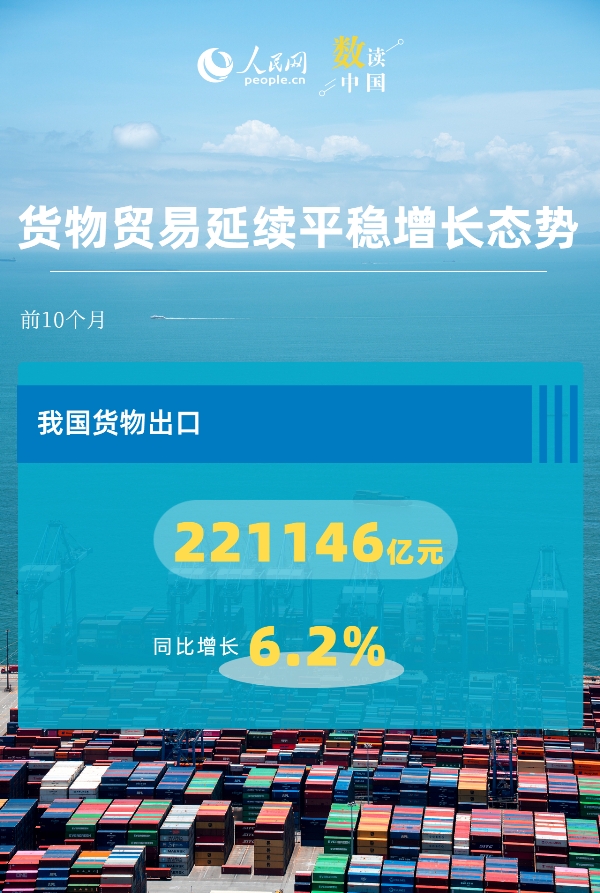
Group 1 - The core viewpoint of the articles highlights the steady growth of China's goods trade, driven by industrial upgrades and enhanced competitiveness of export products, particularly in the machinery and high-tech sectors [1][3][10] Group 2 - In the first ten months, the export value of machinery and electrical products increased by 27%, reaching 60.7% of the total export value [3] - Integrated circuit exports grew by 24.7%, while automobile exports also saw significant growth [3][10] Group 3 - High-tech product exports showed a remarkable increase of 73%, outpacing the overall export growth rate [7][8] Group 4 - The trade structure is continuously optimizing, with cross-border e-commerce exports reaching approximately 1.65 trillion yuan, marking a 66% increase [12][13] - The transition from traditional foreign trade to digital foreign trade is enhancing competitiveness [15] Group 5 - In the first three quarters, China exported holiday goods, dolls, and animal-shaped toys worth over 50 billion yuan to more than 200 countries and regions [17]
2025年中国潮玩经济行业研究报告
Sou Hu Cai Jing· 2025-11-24 05:46
Core Insights - The Chinese潮玩 (trendy toy) market is rapidly growing, projected to reach 100 billion yuan by 2024, with a year-on-year growth of 26% to 727 billion yuan in 2024, driven by the emotional consumption needs of Generation Z [1][3][15] -潮玩 differs significantly from traditional toys in terms of target audience, functionality, and value, focusing on artistic design and collectibility, primarily appealing to consumers aged 14 and above [1][19][24] Market Overview - The潮玩 market is characterized by a strong presence of brands like泡泡玛特, which leads the industry with its original IPs such as Labubu and Molly, leveraging social media for viral marketing and community engagement [2][3] - The潮玩 industry is integrating new technologies like XR, AI, and NFC to create interactive products, expanding the functionality and user engagement of潮玩 [2] Industry Structure - The潮玩 industry has established a complete value chain from IP rights holders to manufacturers and retailers, with IP being a core driver of consumer demand [2][3] - Notable IPs such as Disney and Pokémon continue to empower潮玩 products through licensing agreements, while domestic IPs like米哈游 are also emerging [2] Segment Analysis - Various潮玩 segments, including blind boxes, cards, and figurines, are experiencing rapid growth, with the "谷子经济" (secondary market) reaching a market size of 168.9 billion yuan in 2024, primarily targeting the post-2000 generation [2][3] International Expansion - Chinese潮玩 brands are expanding into Southeast Asia and North America, with泡泡玛特's overseas revenue growing by 375.2% year-on-year in 2024, indicating increasing global competitiveness [3] Future Outlook - The潮玩 economy reflects a shift in the Chinese toy industry from manufacturing to creativity, with expectations for higher quality growth as technology integration and IP content continue to evolve [3]


重新养自己,这七种“幼稚经济”俘获年轻人
Xin Lang Cai Jing· 2025-11-24 05:37
Core Insights - The "childish economy" is emerging as a significant market trend, appealing to adults seeking emotional comfort and nostalgia through products traditionally aimed at children [1][21][30] - This trend reflects a broader shift in consumer behavior, where emotional value and self-compensation are prioritized over mere functionality [6][10][27] Group 1: Miniature Models - Miniature models have gained popularity among adults as a form of emotional expression and stress relief, providing a sense of control and accomplishment [2][5] - The market for miniature models is diverse, with products ranging from affordable to high-end, catering to both beginners and experienced hobbyists [3][5] Group 2: Companion Dolls - Companion dolls have become a central emotional outlet for adults, with over 80% of surveyed individuals owning small toys, indicating a strong demand for emotional value [6][8] - Brands like Jellycat have successfully tapped into this market, achieving significant revenue growth and creating a "companion economy" [6][8] Group 3: Adult Pacifiers - Adult pacifiers are designed to address anxiety and stress, with a growing market presence as consumers seek emotional tools to cope with modern pressures [10][12] - The product's design has evolved to appeal to adults, transforming it into a fashionable accessory rather than a mere child’s item [10][12] Group 4: Retro Gaming Consoles - Retro gaming consoles are experiencing a resurgence, providing adults with a nostalgic escape from the complexities of modern gaming [14][15] - These consoles offer a straightforward gaming experience, allowing players to enjoy simple yet engaging gameplay without distractions [14][15] Group 5: Children's Meal Toys - Children's meal toys have transcended their original market, becoming popular among adults who seek to relive childhood experiences [16][21] - Collaborations between fast-food brands and popular characters have led to significant sales and a vibrant secondary market for these toys [18][21] Group 6: Doll Clothing Economy - The "doll clothing economy" is emerging as a new market, driven by young consumers who seek to express themselves through doll fashion [22][25] - This trend reflects a shift towards emotional consumption, where the act of dressing dolls serves as a form of self-expression and relaxation [26][27] Group 7: "Baby Products" for Adults - The rise of "baby products" for adults indicates a growing trend where consumers prioritize safety and emotional value in their purchases [27][28] - Brands are adapting to this trend by modifying products to appeal to adult consumers, blurring the lines between traditional age-based marketing [27][28] Group 8: Future of the "Childish Economy" - The sustainability of the "childish economy" will depend on brands' ability to understand consumer psychology and create products that balance emotional value with practicality [31][32] - The challenge lies in ensuring that the pursuit of emotional comfort does not lead to further anxiety, emphasizing the need for a thoughtful approach to product development [30][31]



泡沫、壁垒、裁员——从跨国企业季报看世界经济风险与挑战
Xin Hua Wang· 2025-11-24 03:40
Group 1: AI Bubble Concerns - The performance of major companies in the AI sector has been strong, with firms like Nvidia exceeding revenue and profit expectations, but concerns about an AI bubble are growing [2][3] - Major tech companies, including Amazon, Alphabet, and Microsoft, are increasing capital expenditures in AI infrastructure, with a total expected to exceed $380 billion this year, yet market reactions to these investments vary [2] - A survey by Bank of America indicates that over half of fund managers believe AI stocks are in a bubble, with high valuations raising concerns about potential market impacts if AI development underperforms [3] Group 2: Impact of Tariff Barriers - The impact of U.S. tariff policies has become more pronounced, negatively affecting the earnings of export-oriented companies in Europe and Japan, as well as U.S. firms facing additional costs [4][5] - European luxury goods companies are experiencing significant revenue declines, with LVMH's fashion and leather goods revenue down approximately 8% and Kering's Gucci brand down about 22% year-over-year [4] - Japanese automakers are also suffering, with estimates suggesting that U.S. tariffs could lead to losses of approximately 1.5 trillion yen for seven major car manufacturers [4] Group 3: Consumer Sentiment and Layoffs - U.S. consumer sentiment is notably low, with major companies announcing significant layoffs, contributing to economic uncertainty [7] - The disparity in consumer spending is evident, as affluent consumers maintain or increase spending while lower-income consumers are forced to cut back [7] - Layoffs in the U.S. have reached nearly 1 million in the first nine months of the year, the highest for that period since 2020, raising concerns about future consumer spending [7]