
电信

Search documents
大有期货:美联储内部分歧公开化 沪金短期陷震荡
Jin Tou Wang· 2025-10-30 07:10
【黄金期货行情表现】 美国加强了对被视为国家安全风险的中国公司所生产电信设备的管制,这是美国对华持续施压行动中的 最新举措。 由于对短期就业机会的担忧,美国消费者信心在10月降至六个月低点94.6,为美联储周三再次降息提供 了更多依据。 【机构观点】 美联储如期宣布降息25个基点,这是年内第二次降息,符合市场预期。然而,会议释放的信号对贵金属 市场构成压力。此次决议暴露出美联储内部巨大的政策分歧,出现了一位委员主张降息50个基点、另一 位委员反对降息的局面,显示其未来政策路径的不确定性急剧升高。更为关键的是,美联储主席鲍威尔 在会后表态偏鹰,明确警告12月是否继续降息"远非定局",这直接扭转了市场对年内将连续降息的乐观 预期。对贵金属而言,符合预期的降息已被市场消化,提振作用有限。而内部的分歧与鲍威尔的鹰派言 论共同强化了"更高利率维持更久"的预期,导致实际利率下行空间受限,压制了无息资产黄金的吸引 力。在多空因素交织下——长期降息周期提供支撑,但短期政策或暂停形成压制——贵金属价格难以形 成单边趋势。预计短期内将转入震荡格局。 10月30日,沪金主力暂报909.92元/克,涨幅达0.57%,今日沪金主力开盘 ...
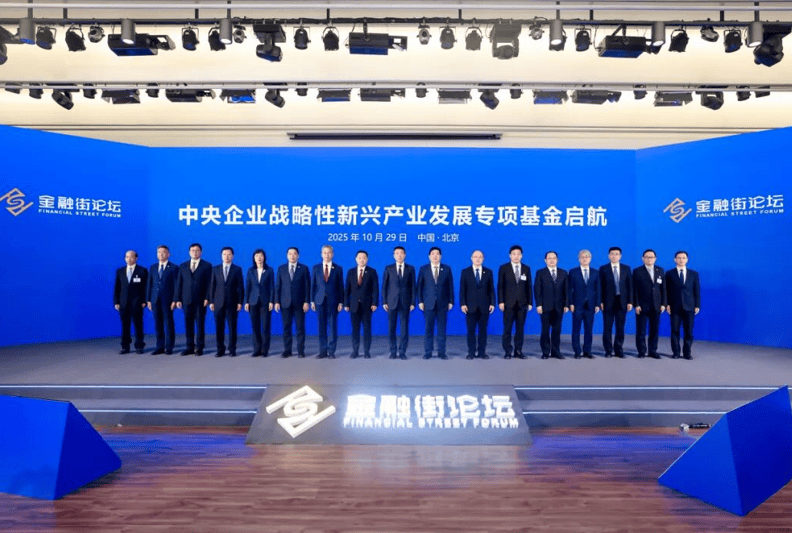
510亿元!央企战新基金来了
Sou Hu Cai Jing· 2025-10-29 23:21
Core Insights - The Central Enterprise Strategic Emerging Industry Development Special Fund (referred to as the Central Enterprise Emerging Fund) was launched in Beijing on October 29, with a total initial fundraising of 51 billion yuan [1][3] - The fund aims to support state-owned enterprises in addressing industrial weaknesses and enhancing innovation in cutting-edge sectors [3] Group 1 - The first phase of the Central Enterprise Emerging Fund raised 51 billion yuan, with contributions from major state-owned enterprises such as China Mobile, Sinopec, CNOOC, China National Petroleum, China Telecom, China Unicom, China Electronics Technology Group, State Power Investment Corporation, China Baowu Steel Group, China Merchants Group, China Resources Group, China Coal Group, China Logistics, and Beijing's Xicheng District [3] - The fund is positioned as a strategic initiative by the State-owned Assets Supervision and Administration Commission (SASAC) to accelerate the development of central enterprises in emerging industries [3]

阿联酋综合电信公司“du”今年前九个月净利润显著增长
Shang Wu Bu Wang Zhan· 2025-10-29 16:03
Core Insights - The core viewpoint of the article highlights the significant growth in net profit and revenue for the UAE telecommunications company "du" in the first nine months of the year [1] Financial Performance - Net profit for the first nine months reached 2.181 billion dirhams, representing a year-on-year increase of 14.6% [1] - Total revenue amounted to 11.622 billion dirhams, reflecting an 8% growth [1] - Revenue for the third quarter was 3.872 billion dirhams, with a profit margin of 47.8% [1] Customer Base - The number of mobile users increased to 9.2 million [1] - The number of fixed-line telephone users rose to 718,000 [1]
Verizon (VZ) Q3 Earnings: Taking a Look at Key Metrics Versus Estimates
ZACKS· 2025-10-29 16:01
Financial Performance - Verizon Communications reported revenue of $33.82 billion for the quarter ended September 2025, reflecting a year-over-year increase of 1.5% [1] - The earnings per share (EPS) was $1.21, up from $1.19 in the same quarter last year, indicating a positive change [1] - The reported revenue was below the Zacks Consensus Estimate of $34.18 billion by 1.04%, while the EPS exceeded the consensus estimate of $1.19 by 1.68% [1] Key Metrics - Verizon's stock has returned -10.5% over the past month, contrasting with the Zacks S&P 500 composite's increase of +3.8% [3] - The company currently holds a Zacks Rank 4 (Sell), suggesting potential underperformance relative to the broader market in the near term [3] Subscriber and Revenue Breakdown - Consumer Wireline net subscriber additions for broadband were 47 thousand, surpassing the average estimate of 36.36 thousand [4] - Fios video net subscriber losses were 70 thousand, slightly worse than the average estimate of -67.91 thousand [4] - Business Fios Internet connections were reported at 411 thousand, aligning closely with the average estimate of 411.53 thousand [4] - Business operating revenues totaled $7.14 billion, below the average estimate of $7.28 billion, representing a year-over-year decline of 2.8% [4] - Consumer operating revenues were reported at $26.11 billion, slightly below the average estimate of $26.22 billion, reflecting a year-over-year increase of 2.9% [4]


美股三大指数高开,英伟达市值突破5万亿美元!
Ge Long Hui· 2025-10-29 13:37
Core Insights - The market is anticipating a 25 basis point rate cut by the Federal Reserve, which seems to be a foregone conclusion [1] - Major U.S. stock indices opened higher, with the Nasdaq up 0.67%, S&P 500 up 0.28%, and Dow Jones up 0.3% [1] Company Performance - Nvidia's stock rose over 3.4%, making it the first company to surpass a market capitalization of $5 trillion, following CEO Jensen Huang's rebuttal of AI bubble concerns [1] - Caterpillar's stock increased by more than 7.8% after Q3 earnings exceeded expectations, driven by strong performance in its energy and transportation sectors [1] - Verizon's stock climbed over 4.8% as the company reported solid Q3 results, with the CEO promising actions to drive transformation [1] - GlaxoSmithKline's stock rose over 5.5% after reporting Q3 earnings that surpassed expectations and raising its 2025 earnings guidance [1]


美股前瞻 | 三大股指期货齐涨,美联储利率决议来袭,微软、谷歌、Meta盘后公布财报
智通财经网· 2025-10-29 12:14
Market Overview - US stock index futures are all up, with Dow futures rising by 0.25%, S&P 500 futures up by 0.31%, and Nasdaq futures increasing by 0.47% [1] - European indices show mixed results, with Germany's DAX down by 0.02%, UK's FTSE 100 up by 0.80%, France's CAC40 up by 0.04%, and Europe's Stoxx 50 up by 0.43% [2] - WTI crude oil prices increased by 0.42% to $60.40 per barrel, while Brent crude rose by 0.38% to $64.07 per barrel [2] Federal Reserve Insights - The Federal Reserve is expected to lower interest rates by 25 basis points, with Chairman Powell likely to provide limited forward guidance due to increasing divisions among policymakers [3] - Recent CPI data indicated weaker-than-expected inflation, which may temporarily suppress hawkish sentiments within the Fed [3] Semiconductor Industry - SK Hynix reported a 62% increase in profits for Q3, achieving a record operating profit of 11.4 trillion KRW (approximately $8 billion), driven by surging demand for AI infrastructure [4] - The company has sold out its entire range of memory chip orders for next year, indicating a significant boost in industry demand [4] AI and Technology Sector - Concerns about a potential bubble in AI-driven stock market gains are alleviated by stronger-than-expected earnings from companies like SK Hynix and Advanced Micro Devices [5] - Major US tech giants, including Microsoft, Amazon, Apple, Alphabet, and Meta, are set to report earnings this week, which will provide insights into the capital expenditure trends in the AI sector [5] Inflation-Linked Securities - The US government shutdown has created a "data vacuum," affecting the pricing of inflation-linked securities as there is a lack of consumer price index (CPI) data [6] - Traders are resorting to emergency mechanisms embedded in legal documents for inflation-linked bonds and derivatives due to the absence of critical economic data [6] Banking Sector Performance - Deutsche Bank reported a 7% increase in Q3 profits, driven by strong performance in its investment banking division, with total revenue reaching €8.04 billion [14] - UBS also saw a 74% increase in net profit for Q3, attributed to significant growth in investment banking and stock trading revenues [14] Chip Equipment Manufacturing - ASM International's Q3 orders fell short of expectations, with a 17% year-over-year decline to €636.8 million (approximately $743 million), primarily due to decreased demand from advanced chip manufacturers and reduced orders from China [15] Healthcare Sector - GlaxoSmithKline raised its full-year earnings guidance due to strong demand for its HIV and immunology drugs, reporting Q3 revenue of £8.55 billion, a 4.9% year-over-year increase [13] Consumer Spending and Financial Services - Visa's Q4 revenue grew nearly 12% year-over-year to $10.7 billion, exceeding market expectations, with strong consumer spending noted in both luxury and essential goods [11] - Booking Holdings reported a 13% increase in sales for the quarter, reaching $9.01 billion, with an optimistic outlook for room night growth [12]

英伟达10亿美元投资诺基亚:围绕无线领域AI创新及向6G演进展开战略合作
Sou Hu Cai Jing· 2025-10-29 08:32
Core Insights - Nvidia and Nokia have formed a strategic partnership to integrate Nvidia's commercial-grade AI-RAN products into Nokia's RAN portfolio, enabling telecom operators to launch native AI 5G-Advanced and 6G networks [1][2] - Nvidia will invest $1 billion in Nokia at a subscription price of $6.01 per share, subject to customary closing conditions [1] - The collaboration marks the beginning of a native AI wireless era, laying the groundwork for AI-enabled consumer experiences and enterprise services [1] Market Opportunity - The AI-RAN market is expected to be a significant opportunity, with the RAN market projected to exceed $200 billion by 2030 according to Omdia [1] - The partnership aims to build the necessary strategic infrastructure for telecom operators through large-scale deployment of distributed edge AI inference technology [1] Technological Advancements - The AI-RAN system will significantly enhance system performance and efficiency, ensuring seamless network experiences for consumers using generative, agent-based, and physical AI applications [2][3] - Nvidia's Aerial RAN Computer Pro (ARC-Pro) is introduced as a 6G acceleration computing platform, allowing telecom operators to upgrade from 5G-Advanced to 6G through software [4] Collaboration with T-Mobile - T-Mobile will collaborate with Nokia and Nvidia to drive and test AI-RAN technology as part of its 6G innovation and development process, with trials expected to begin in 2026 [1][8] - This partnership reinforces T-Mobile's leadership in advancing wireless innovation [8] Infrastructure and Integration - Nokia will enhance its 5G and 6G RAN software availability on the Nvidia CUDA platform, facilitating a seamless transition for mobile network customers to future AI-RAN networks [5] - Dell Technologies will support Nokia's AI-RAN solutions with its advanced Dell PowerEdge servers, designed for seamless scaling and low-maintenance upgrades [6] Future Developments - The AI-RAN platform integrates AI and wireless access workloads into a software-defined accelerated infrastructure, improving performance, efficiency, and profitability while providing a smooth transition to 6G [7] - Nvidia and Nokia will also collaborate on developing AI network solutions, including equipping Nvidia's Spectrum-X Ethernet network platform with Nokia's SR Linux software [9]

给诺基亚 10 亿,黄仁勋想赚 2000 亿
3 6 Ke· 2025-10-29 03:47
Group 1 - Nvidia announced a $1 billion investment in Nokia to accelerate the transition of telecom networks to AI-native systems, focusing on the development of a 6G AI platform [1] - Nvidia will purchase approximately 166 million new shares of Nokia at $6.01 per share, resulting in a 2.9% ownership stake in Nokia [1] - Following the announcement, Nokia's stock price surged by 21%, marking its largest increase since 2013 [1] Group 2 - AI-RAN integrates AI computing capabilities directly into wireless base stations, enhancing traditional RAN systems with edge computing and intelligent processing [2] - The AI-RAN architecture aims to optimize spectrum utilization and energy efficiency, improving overall network performance and creating new revenue streams for operators [2] - Omdia predicts that the RAN market will exceed $200 billion by 2030, with AI-RAN being the fastest-growing segment [2] Group 3 - Nokia's CEO highlighted the partnership's goal to fundamentally redesign networks from 5G to 6G, with T-Mobile as a key partner for real-world AI-RAN testing starting in 2026 [3] - Nvidia introduced the Aerial RAN Computer Pro (ARC-Pro), a computing platform designed for 6G, featuring Nvidia's Grace CPU and Blackwell GPU [3][5] - ARC-Pro will run RAN software embedded in the CUDA technology stack, allowing it to handle both traditional RAN functions and mainstream AI applications [5] Group 4 - The ARC-Pro platform is designed for edge deployment, enabling real-time AI processing at base stations, thus reducing network load [5][6] - The platform includes the Nvidia AI Aerial platform, which features a complete software stack for high-performance AI applications [8] - Nvidia's collaboration with Nokia aims to create intelligent, adaptive networks that define the next generation of global connectivity [8] Group 5 - Nvidia is also investing $100 billion in OpenAI to accelerate infrastructure development, with a focus on both hardware and software optimization [9] - The company plans to invest $50 billion in Intel, acquiring approximately 4% of its shares, establishing a strategic partnership [14] - Nvidia's investments and collaborations are aimed at solidifying its position in AI computing across various sectors, including telecommunications and autonomous driving [17][20]
美联邦通信委员会又发作了,“中国老想打击美国弱点”
Guan Cha Zhe Wang· 2025-10-29 03:39
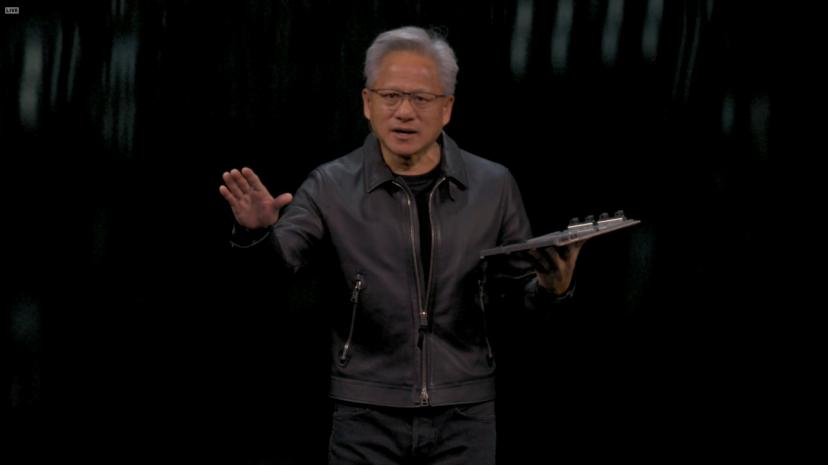
Core Viewpoint - The U.S. Federal Communications Commission (FCC) continues to implement measures against Chinese electronic products under the guise of national security, including banning new licenses for devices containing components from a "covered list" and disabling previously approved devices [1][3]. Group 1: FCC Actions - On October 28, the FCC voted 3-0 to prohibit new licenses for devices with components from the "covered list" and to disable previously approved devices in certain cases [1][3]. - Earlier in October, the FCC announced further tightening of restrictions on telecommunications equipment manufactured by Chinese companies deemed to pose national security risks [3]. - The FCC has previously mandated major e-commerce platforms to remove millions of "prohibited" Chinese electronic products, including home security cameras and smartwatches [3][4]. Group 2: Responses from Chinese Companies - Hikvision opposed the FCC's actions, arguing that the restrictions extend beyond its authority and lack evidence against specific products, which could harm U.S. communities and small businesses relying on compliant security systems [3][5]. - The Chinese government has repeatedly criticized the U.S. for politicizing and weaponizing national security, claiming it undermines market rules and international trade order, and has vowed to protect the legitimate rights of Chinese enterprises [5]. Group 3: Historical Context - The FCC has a history of actions against Chinese technology firms, including the 2019 legislation requiring U.S. telecom operators to remove Chinese equipment from their networks and the 2020 identification of Huawei and ZTE as national security threats [4]. - In 2021, the Biden administration signed the Secure Equipment Act, which further restricted the FCC from reviewing or issuing new equipment licenses for companies like Huawei and ZTE [4].

黄仁勋最新演讲称将大举投资AI基础设施确保美国领先地位,英伟达股价再创新高
Tai Mei Ti A P P· 2025-10-29 01:40
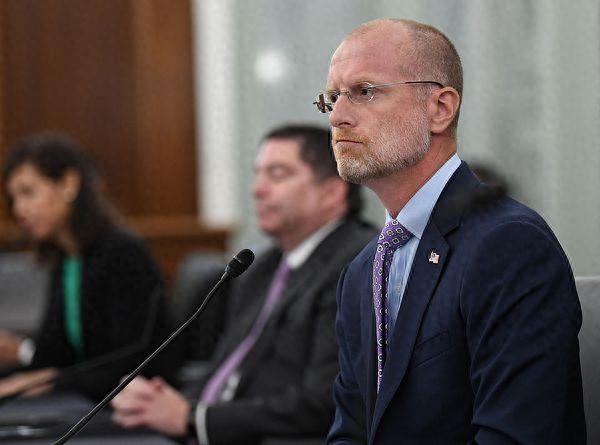
Core Insights - The increasing prominence of artificial intelligence (AI) is highlighted by the hosting of two "AI Spring Festivals" annually, with the recent GTC conference in Washington D.C. focusing on AI policy and government roles [1] - CEO Jensen Huang's keynote emphasized the need for the U.S. to maintain its competitive edge in AI, alongside significant announcements regarding partnerships and technological advancements [1][2] Group 1: AI and Industry Developments - NVIDIA announced a $1 billion investment in Nokia to develop a 6G AI platform, aiming to restore U.S. leadership in telecommunications [2] - The introduction of NVQLink, a system architecture designed to connect quantum processors with GPU computing systems, was presented as a pivotal advancement for future computing [2][3] - Huang discussed the importance of AI in reshaping industries and infrastructure, asserting that the U.S. must lead in AI development to ensure a prosperous future [3] Group 2: Strategic Partnerships and Collaborations - The collaboration with the U.S. Department of Energy to build seven new AI supercomputers was announced, marking a significant step in advancing scientific research [2][23] - The partnership with Nokia will integrate NVIDIA's new Arc technology into future base stations, enhancing wireless communication capabilities through AI [16][17] Group 3: Market Position and Financial Performance - NVIDIA's stock price reached a historic high, surpassing $203, with a market capitalization nearing $5 trillion, reflecting strong investor confidence [4] - The company reported a significant decline in market share in China, dropping from 95% to zero due to regulatory challenges, impacting its sales in the region [4] Group 4: Future Outlook and Innovations - Huang emphasized the transformative potential of AI, stating that it will define the future of every industry and country, and highlighted the need for advanced AI infrastructure [3][25] - The concept of an "AI factory" was introduced, indicating a shift towards dedicated systems designed specifically for AI operations, which will enhance productivity and efficiency [37][38]