零售

Search documents
一财社论:营造更好环境促成“消费大年”
Di Yi Cai Jing· 2026-02-23 12:41
Core Viewpoint - The article emphasizes the need for continuous policy support, the creation of new consumption scenarios, and the provision of a solid financial and time foundation to stimulate consumer spending and drive economic growth. Group 1: Policy Support - Continuous enhancement of policy support is essential to further stimulate consumption potential [3] - The Ministry of Commerce, the People's Bank of China, and the Financial Regulatory Bureau jointly issued a notification to boost consumption through a combination of fiscal and financial tools [3] - A special "Happy Shopping Spring Festival" campaign was launched, with 2.05 billion yuan allocated for consumer vouchers and subsidies to ignite market enthusiasm [3] Group 2: New Consumption Scenarios - The Spring Festival holiday showcased new consumption highlights beyond traditional sectors, such as the rising popularity of ice and snow sports and the integration of technology with traditional customs [5] - The focus is shifting from mere availability of products to the quality and experience of services, indicating a growing demand for personalized and diverse consumption options [5] Group 3: Financial and Time Foundation - The "14th Five-Year Plan" aims for high-quality employment, synchronized growth of income and economy, and an optimized distribution structure to support consumption [6] - Increasing income and reducing expenses are crucial for promoting consumption, with recommendations for fiscal investments in essential public services to alleviate residents' burdens [6] - The current mortgage interest rate remains high at 4.2%, suggesting the need for appropriate interest subsidies to ease financial burdens and encourage consumer spending [6] Group 4: Consumer Behavior Trends - The 9-day Spring Festival holiday has popularized "segmented celebrations," allowing for more thoughtful arrangements for family gatherings and travel, leading to a rise in quality consumption [7] - The booming tourism market during the Spring Festival reflects the commitment to domestic demand and the construction of a robust domestic market [7]
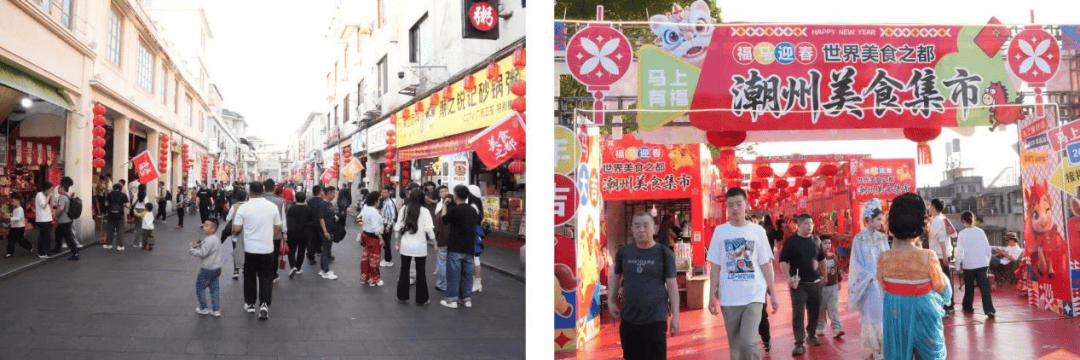
烟火气升腾,潮州古城节日消费热度持续攀升
Sou Hu Cai Jing· 2026-02-23 12:40
Group 1 - The ancient city of Chaozhou is experiencing a vibrant commercial atmosphere during the Spring Festival, with increased consumer activity from morning to night, highlighted by festive decorations and a bustling crowd [1] - The "Min Su +" model, which combines traditional accommodation with coffee and tea culture, is gaining popularity, leading to high booking rates for these unique lodgings during the holiday period [4] - The night economy is thriving, supported by attractions like the Guangji Bridge light show and drone performances, effectively extending visitor stay times [4] Group 2 - Chaozhou's culinary scene, recognized as a "World Food Capital," is seeing long queues at local eateries, with significant increases in revenue since the start of the holiday [5] - Specialty tea products and beautifully packaged local gifts are becoming popular among tourists, with sales of these items significantly higher than usual [5] - The integration of intangible cultural heritage experiences and Hanfu photography is attracting visitors, creating a complete consumption chain that emphasizes cultural memory [5] Group 3 - The successful blend of traditional and emerging business models in Chaozhou is creating new hotspots for cultural tourism consumption, showcasing a harmonious coexistence of tradition and modernity [6]

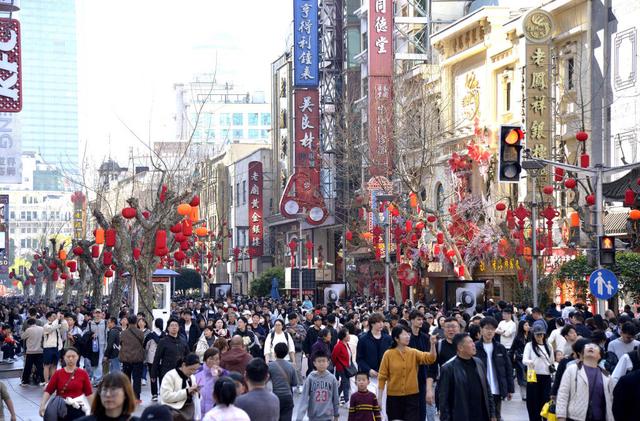
春节假期上海市线上线下消费603.5亿元,同比增长12.8%
Xin Lang Cai Jing· 2026-02-23 12:30
Core Insights - Shanghai's online and offline consumption reached 60.35 billion yuan from February 15 to 22, marking a 12.8% year-on-year increase [1] - Offline consumption accounted for 36.55 billion yuan, up 15.4%, while online consumption was 23.8 billion yuan, increasing by 8.9% [1] Consumption Trends - Major commercial districts in Shanghai organized various events to stimulate consumer activity, resulting in a total consumption of 4.78 billion yuan across 19 monitored districts, a 12.0% increase [1] - Daily foot traffic averaged 3.19 million, reflecting a 15.8% year-on-year growth [1] Specific District Performance - Nanjing East Road saw a 30% increase in sales due to its "Welcoming the New Year" activities [2] - The Yuyuan district's sales grew by 22.1% with its new spring lantern festival [2] - Huaihai Middle Road's sales rose by 23.7% through its themed events [2] - The Lujiazui area reported a 27.8% increase in sales with its "Modern Journey" activities [2] - The North Bund achieved a remarkable 36.0% sales growth through its large-scale light art installations [2] Restaurant and Food Sector - Restaurant consumption in Shanghai increased by 15.2%, with 567 merchants offering 1,136 preferred meal sets, leading to significant revenue growth for 80% of participating merchants [3] - Online food maps contributed to a 36.7% increase in dine-in revenue for 1,194 participating merchants [3] Consumer Electronics and Automotive - Sales in home appliances and digital products reached 299 million yuan due to new subsidy measures [3] - The automotive sector saw 13,000 participants in purchase subsidy programs, with individual subsidies ranging from 3,000 to 20,000 yuan [3] Tax Refunds and External Consumption - Tax refunds for outbound tourists reached over 80 million yuan, a 150% increase year-on-year, with significant contributions from tourists from Hong Kong, Macau, Taiwan, Russia, South Korea, and the USA [3][4] Regional Consumer Incentives - Various districts issued consumer vouchers, with over 110 million yuan distributed since January, leading to over 500 million yuan in retail and dining consumption [4] - Huangpu district's promotional activities generated 125 million yuan in sales [5] - Pudong district's 20 million yuan in consumer vouchers led to 86 million yuan in sales [5]

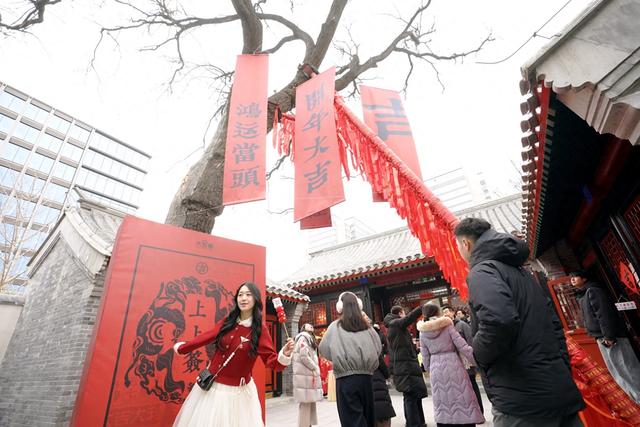
传统文化破圈 春节期间北京商圈客流与销售额双增长
Bei Jing Shang Bao· 2026-02-23 12:18
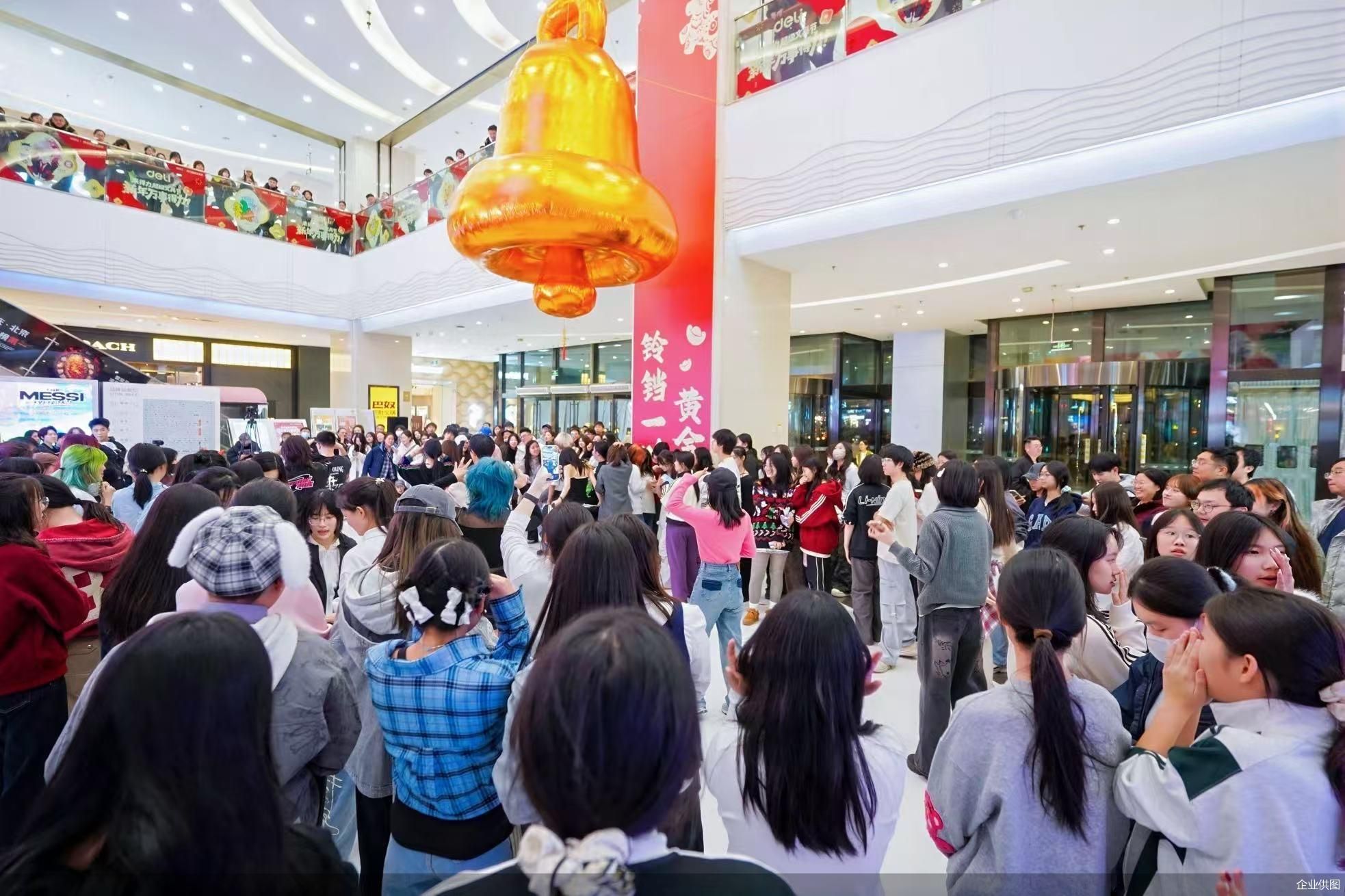
Core Insights - The Spring Festival holiday in Beijing, lasting 9 days, combined with over 460 promotional activities, significantly boosted consumer activity in physical retail spaces, with a total of 51.09 million visitors and a consumption amount of 15.43 billion yuan, marking a year-on-year increase of 5.8% and 2.2% respectively [1] Group 1: Consumer Activity and Trends - Key commercial districts in Beijing, such as Qianmen, Wangfujing, and Sanlitun, successfully integrated traditional culture with modern consumer experiences, leading to growth in both foot traffic and sales [1] - The Longfu Temple area saw a remarkable 4.2 times increase in visitor numbers, driven by a unique Spring Festival market showcasing intangible cultural heritage and local delicacies [3] - The overall foot traffic in commercial complexes increased by 75% compared to the previous year, with sales rising by 20% during the Spring Festival period [3] Group 2: Cultural Integration and Thematic Activities - Chaoyang Joy City created a vibrant Spring Festival experience by incorporating traditional cultural activities, resulting in increased foot traffic and sales across various sectors [4] - Wangfujing WellTown launched six themed activities to attract visitors, leading to a 2.2 times increase in foot traffic in the Universal City area [4] - The Shougang Park integrated diverse festive activities, resulting in a 23.6% increase in consumption compared to the previous year [4] Group 3: Innovation and Technology in Retail - The Chongwenmen area showcased 16 new products that combined national trends and technology, leading to an 11.1% increase in consumption [5] - The Blue Harbor area experienced a 31.1% increase in holiday consumption due to the launch of new products and artistic events [5] - The Haidian District's New Year Technology Fair featured interactive tech experiences, resulting in an 86.3% increase in foot traffic in the Zhongguancun area [5] Group 4: Government Initiatives and Support - The Beijing government implemented a strategy combining consumer vouchers and promotional activities to stimulate holiday spending, distributing 83 million yuan in vouchers [6] - The "Prize Invoice" pilot program across Beijing, Tianjin, and Hebei aimed to further enhance regional consumption, with participation reaching 4.489 million people during the Spring Festival [6]
春节假期上海线上线下消费603.5亿元,同比增长12.8%
Xin Lang Cai Jing· 2026-02-23 12:16
Core Insights - Shanghai's online and offline consumption reached 60.35 billion yuan during the Spring Festival period, marking a 12.8% year-on-year increase [1] - Offline consumption accounted for 36.55 billion yuan, up 15.4%, while online consumption was 23.8 billion yuan, increasing by 8.9% [1] Consumption Trends - The "New Year Consumption Season" featured over 300 daily activities, enhancing consumer engagement and driving sales [1] - Major shopping districts saw a total consumption of 4.78 billion yuan, a 12.0% increase, with daily foot traffic averaging 3.19 million, up 15.8% [1] District Performance - Nanjing Road's sales grew by 30%, while the Yuyuan district saw a 22.1% increase [3] - Huaihai Road's sales rose by 23.7%, and the Lujiazui area reported a 27.8% increase [3] - The North Bund district achieved a remarkable 36.0% growth in sales [3] Dining and Food Sector - Restaurant consumption in Shanghai increased by 15.2%, with 567 merchants offering 1,136 curated meal sets [4] - In-store dining revenue surged by 36.7%, with order volume rising by 47.4% [5] Consumer Incentives - The "old for new" program for home appliances and digital products generated 299 million yuan in sales, with 815 participating companies [6] - Car purchase subsidies were introduced, with individual subsidies ranging from 3,000 to 20,000 yuan [6] Tourist Spending - Tax refund sales exceeded 80 million yuan, a 150% increase, with significant contributions from tourists from Hong Kong, Macau, Taiwan, and several countries [7] - External consumer spending reached 17.39 billion yuan, up 5.4%, with Jiangsu, Anhui, and Zhejiang tourists making up the largest shares [7] Promotional Activities - A lottery for invoices attracted 3.904 million participants, with over 11.32 million invoices submitted [9] - Various districts distributed over 110 million yuan in consumer vouchers, significantly boosting retail and dining sales [9][10]
【广发宏观王丹】春节期间国内宏观九大线索
郭磊宏观茶座· 2026-02-23 10:57
Group 1 - During the Spring Festival, the total number of cross-regional personnel flow reached 5.08 billion, a year-on-year increase of 5.5%, with an average of 250 million people per day, setting a historical record for the same period [1][6] - The transportation volume increased across various modes: railway, road, waterway, and civil aviation saw year-on-year growth of 5.5%, 5.0%, 21.8%, and 5.4% respectively [1][6] Group 2 - Retail and catering sales accelerated during the Spring Festival, with key retail and catering enterprises reporting an average daily sales increase of 8.6% compared to the same period in 2025, up from 4.1% in 2025 [7][8] - The "old for new" policy significantly boosted sales in categories like smart products, with double-digit growth in smart wearables, smart glasses, and smart blood glucose meters [7][8] - Duty-free sales in Hainan increased by 15.8% during the holiday [7][8] Group 3 - In the service consumption sector, car rental orders increased by 26% in the first three days of the holiday, indicating early activation and high growth [9][10] - The first day of the holiday saw a surge in New Year's Eve dinner reservations, with an increase of 80.7% on key platforms [9][10] - Domestic tourism consumption grew by 4.5% in the first three days, with a projected daily average of over 2.05 million inbound and outbound travelers during the holiday, a 14.1% increase year-on-year [11][10] Group 4 - The total box office for the Spring Festival reached 5.4 billion, with several popular films released simultaneously overseas [12][11] - The real estate market showed signs of recovery, with an average daily transaction area of 16,000 square meters in 30 major cities during the holiday, a 10.4% increase compared to the same period in 2025 [12][13] Group 5 - The first week after the holiday saw a significant amount of reverse repos and MLF maturing, indicating potential liquidity tightening in the market [13] - Key technological advancements were highlighted during the holiday, including the release of models like Seedance 2.0 and Qwen3.5-Plus, which were showcased during the Spring Festival Gala [13][14] Group 6 - The Chinese yuan continued to appreciate, with the offshore yuan against the US dollar rising by 0.06% and the Hang Seng Index increasing by 1.94% as of February 23 [5][16][17]

可选消费W07周度趋势解析:通胀降温信号带动海外消费类资产估值修复,美国政界跨党派联手推动信用卡利率上限立法
海通国际· 2026-02-23 10:50
Market Overview - Cooling inflation signals have led to a valuation recovery in overseas consumer assets, with the U.S. bipartisan push for credit card interest rate cap legislation creating uncertainty in the credit card sector[1] - Weekly performance of sectors shows U.S. hotels leading with a 3.1% increase, followed by overseas sportswear at 2.5% and luxury goods at 2.2%[11] Sector Performance - The U.S. hotel sector's strong performance is attributed to Marriott and Hilton, with Marriott's Q4 2025 adjusted EBITDA exceeding market expectations, reaching $5.84 billion to $5.93 billion[6] - Overseas sportswear saw a 2.5% increase, driven by a lower-than-expected January CPI of 2.4%, enhancing Fed rate cut expectations[13] - Luxury goods increased by 2.2%, with Hermès up 4.5% due to better-than-expected FY2025 results, while LVMH fell by 4.1% due to disappointing performance in key segments[8] Consumer Trends - The jewelry sector has shown resilience, with a year-to-date increase of 13.7%, outperforming other sectors[11] - Domestic sportswear increased by 0.3%, with Anta Sports rising 4.6% following the acquisition of a stake in PUMA[13] Challenges - The credit card sector faced a significant decline of 5.5%, influenced by proposed legislation to cap interest rates, which could severely impact profitability[14] - The snack sector dropped by 4.6%, with companies like Three Squirrels experiencing a 6.2% decline due to substantial drops in e-commerce sales across major platforms[14] Valuation Insights - Valuations across various sectors remain below the historical five-year averages, with overseas sportswear expected PE at 30.1x, only 57% of the past average[9] - The luxury sector's expected PE is 26.2x, representing 49% of its historical average, indicating potential for future growth as market conditions stabilize[9]
2025年Q4美国GDP数据点评:“K 型分化”的边际收敛
GUOTAI HAITONG SECURITIES· 2026-02-23 10:50
Economic Overview - The US GDP for Q4 2025 showed a quarter-on-quarter annualized growth of 1.4%, down from 4.4% in the previous quarter, primarily impacted by the government shutdown and weakened consumer spending[8] - The government shutdown from October 1 to November 12 is estimated to have reduced GDP by approximately 1% due to decreased government consumption and forced furloughs of federal employees[8][21] Core GDP Insights - The "core GDP," which excludes trade, inventory changes, and government spending, slightly declined to a quarter-on-quarter annualized rate of 2.4% from 2.9%[10] - Service consumption remained resilient with a growth rate of 3.4%, while investment growth surged to 3.8%, significantly driven by AI-related investments contributing about 0.16% to GDP growth[12][9] K-Shaped Divergence - The report indicates signs of convergence in the "K-shaped divergence" within the economy, with residential investment stabilizing and AI-driven non-residential investment growth showing signs of convergence[26] - Consumer confidence has stabilized and begun to recover, despite a high-level decline in consumption growth due to stock market fluctuations[26][27] Inflation and Re-inflation Risks - The convergence of the K-shaped divergence increases the probability of re-inflation, driven by lower real interest rates potentially boosting real estate demand and prices[33] - Companies may start passing tariff costs to consumers as consumer confidence improves, impacting PPI and CPI inflation rates[33] Investment and Employment Trends - Investment in information processing equipment grew by 36.1%, while R&D investment increased by 9.4%, indicating strong growth in technology sectors[12] - Employment in interest-sensitive sectors such as mining, construction, and retail has stabilized, narrowing the gap in overall non-farm employment growth[27] Risks and Uncertainties - The uncertainty surrounding the White House's alternative tariff policies and potential escalation of geopolitical conflicts pose risks to economic stability[36]
消费温和复苏,悦己型春节消费崭露头角
Zhong Guo Yin He Zheng Quan· 2026-02-23 10:45
Investment Rating - The report does not explicitly state an investment rating for the industry Core Insights - The consumption sector is experiencing a mild recovery, with notable changes in consumption structure and patterns, particularly during the Spring Festival period. The government has initiated special activities to stimulate consumption and promote reasonable price increases [1][2] - There is a significant increase in consumer traffic and spending in key retail and dining sectors, although the market remains skeptical about a full recovery. For instance, the essential and non-essential consumption indices in Hong Kong saw declines during the Spring Festival [1][2] - New consumption trends are emerging, driven by smaller family structures and increased car ownership, leading to a rise in self-driving travel and experiential consumption [1][2] Summary by Sections 1. Spring Festival Consumption Monitoring - During the Spring Festival from February 2 to 20, 2026, cross-regional mobility increased by 5.1% compared to the same period in 2025, with significant growth in railway (4.1%), waterway (21.2%), and civil aviation (5.9%) passenger volumes [6][7] - The average ticket price for flights rose by 1.6% compared to 2025 and by 5.9% compared to pre-pandemic levels in 2019 [6] 2. Cultural and Tourism Consumption - The increase in car ownership and changes in population structure have led to a shift towards "self-pleasing" consumption during the Spring Festival, with a notable rise in self-driving trips and experiential activities [11] - The trend of "reverse New Year" is growing, where young people invite their parents to cities for celebrations, reflecting a shift away from traditional family gatherings [11] - The tourism sector saw a surge in hotel bookings in regions like Chaoshan, with Shantou experiencing a 186% increase in bookings compared to the previous year [11] 3. Hainan Duty-Free Consumption - Hainan's duty-free sales reached 9.7 billion yuan during the first four days of the Spring Festival, marking a 15.8% increase year-on-year [15][17] - Sales in Sanya's duty-free shops on the first day of the Lunar New Year hit 2.04 billion yuan, setting a record for the day [15] 4. Spring Festival Movie Box Office - The box office for the 2026 Spring Festival period reached 4.858 billion yuan, with a significant drop compared to the previous year, attributed to fewer blockbuster films [18][21] 5. Consumer Price Index (CPI) - The CPI showed signs of recovery, with year-on-year increases of 0.2%, 0.7%, and 0.8% in October, November, and December 2025, respectively. The growth was driven by rising prices in fresh produce and household goods [25]
北京全市60个重点商圈,假期客流量超5100万人次
Bei Jing Ri Bao Ke Hu Duan· 2026-02-23 10:41
Core Insights - The article highlights the vibrant atmosphere and consumer engagement in Beijing's Dajixiang area during the Spring Festival, showcasing a blend of traditional and modern elements in the shopping experience [2][3]. Group 1: Consumer Engagement and Activities - Dajixiang has become a popular destination for families during the Spring Festival, with various attractions such as a hundred-meter-long lantern corridor and handmade crafts from remote regions, driving significant foot traffic [2]. - The "Dajizhi Heart" light installation in the underground level has attracted visitors, enhancing the festive ambiance and encouraging social media sharing [3]. - The city organized over 460 themed activities under "Le Gou New Spring · Jing Cai Four Seasons," resulting in a collective surge in consumer activity across multiple shopping districts [3]. Group 2: Sales and Consumer Trends - During the Spring Festival, monitored retail sectors, including department stores and restaurants, achieved a total sales revenue of 8.45 billion yuan, reflecting a year-on-year growth of 12.4% [4]. - The total foot traffic in 60 key shopping districts reached approximately 51.09 million, marking a 5.8% increase compared to the previous year, with total consumption amounting to 15.43 billion yuan, up by 2.2% [4]. - The influx of inbound tourists contributed significantly to consumer spending, with a reported 73.2% increase in purchase-related expenditures [4].