
宠物

Search documents
台青逐梦宠物经济:与“毛孩子”共同成长
Zhong Guo Xin Wen Wang· 2025-10-02 05:34
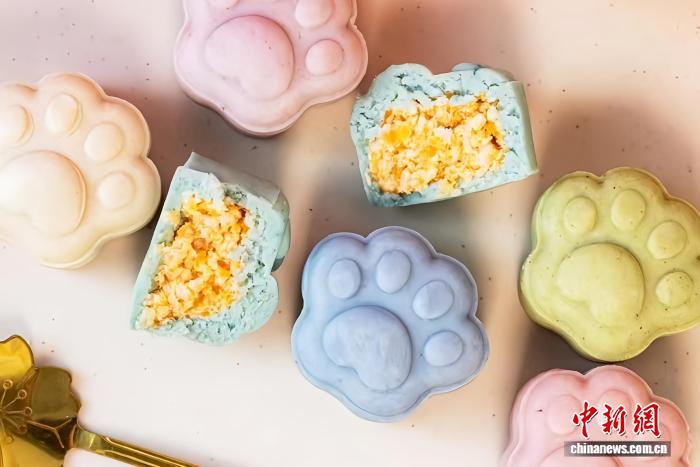
Core Insights - The article highlights the growing pet economy in mainland China, particularly in Taizhou, where young entrepreneurs from Taiwan are seizing opportunities in the pet care industry [1][2]. Company Overview - "RICH DOG Pet Space" in Yuhuan City, Taizhou, offers various services including pet daycare, grooming, and baking pet treats, indicating a diversified business model [1][4]. - The company has introduced unique products like pet mooncakes made from rice flour, yam, and chicken breast, which have seen strong sales [1][2]. Market Trends - The pet consumption market in mainland China is expanding, with more people treating pets as family members and valuing the emotional support they provide [2]. - There is a noticeable trend towards differentiated services in the pet care industry, as many pet stores are emerging, making it essential for businesses to stand out [2][4]. Entrepreneurial Insights - The entrepreneur, Lu Ziyi, emphasizes the importance of responsibility in pet care, highlighting the need for attention to detail in grooming and food preparation [4]. - Lu Ziyi encourages young people from Taiwan to explore opportunities in mainland China, suggesting that they may find new directions in their careers [5].

高铁托运不够用,多家航司推“宠物进客舱” 花2万元带毛孩子看世界,正催生下一个百亿市场 | 聚焦宠物经济
Mei Ri Jing Ji Xin Wen· 2025-09-30 13:35
Core Insights - The pet economy in China is experiencing significant growth, with the urban pet consumption market expected to exceed 300 billion yuan in 2024 and potentially surpass 400 billion yuan by 2027, reflecting a shift in pets' roles from functional companions to family members [1][12] - The demand for pet travel services is rising, with a notable increase in pet owners choosing to travel with their pets, indicating a new market opportunity in the pet tourism sector [6][12] Market Growth - The pet population in China is projected to exceed the number of children under four years old for the first time in 2024, with estimates suggesting it could reach double that number by 2030 [6] - The pet travel market is emerging as a significant segment, with high-end pet travel packages priced between 3,000 to 20,000 yuan, attracting a growing number of consumers willing to spend on pet-related experiences [6][11] Consumer Behavior - The primary consumer demographic for pet travel services consists of millennials and Gen Z, who are increasingly seeking to include their pets in travel experiences [12] - Companies in the pet tourism sector are reporting rapid growth in customer acquisition and profitability, with some businesses seeing revenue increases of five to six times year-on-year [8][11] Supply Challenges - Despite the growing demand for pet travel, the supply side faces challenges such as transportation limitations, accommodation difficulties, and inconsistent standards for pet-friendly services [7][15] - The pet tourism industry is primarily composed of small, startup companies that are still developing stable service offerings, indicating that the market is not yet fully mature [13][14] Infrastructure and Regulation - Recent improvements in transportation services, such as the introduction of pet transport options by rail and airlines, are seen as steps towards creating a more pet-friendly travel environment, although significant barriers remain [15][21] - The lack of comprehensive pet insurance products for travel-related incidents presents another challenge for the industry, as current offerings are mostly limited to pet health insurance [19] Investment Landscape - The pet industry has faced a decline in investment activity since 2021, with a notable drop in financing events, particularly in the pet tourism segment, which has received minimal investment compared to pet food and healthcare sectors [20][21] - Experts suggest that while the pet market will continue to grow, service-oriented sectors like pet tourism may be better suited for smaller, sustainable business models rather than large-scale capital-driven expansions [20][21]
高铁托运不够用,多家航司推“宠物进客舱” 花2万元带毛孩子看世界,正催生下一个百亿市场 | 聚焦宠物经济①
Mei Ri Jing Ji Xin Wen· 2025-09-30 13:23
Core Insights - The pet economy in China is experiencing significant growth, with the urban pet consumption market expected to exceed 300 billion yuan in 2024 and potentially surpass 400 billion yuan by 2027, reflecting a shift in pets' roles from functional companions to family members [1][14] - The demand for pet travel services is rising, with a notable increase in pet owners choosing to travel with their pets, indicating a new market opportunity in the pet tourism sector [7][9] Market Growth - The pet population in China is projected to surpass the number of children under four years old for the first time in 2024, with estimates suggesting it could reach double that number by 2030 [7] - The pet tourism market is emerging as a significant segment, with high-end pet travel packages priced between 3,000 to 20,000 yuan, attracting a growing number of consumers willing to spend on pet-friendly experiences [7][10] Supply Challenges - Despite the booming demand for pet travel, the supply side faces challenges such as transportation limitations, accommodation difficulties, and inconsistent standards for pet-friendly services [8][17] - The pet tourism industry is primarily composed of startups that are still developing stable service offerings, indicating that the market is not yet mature [15] Infrastructure and Regulations - Recent improvements in transportation services, such as the introduction of pet transport options by rail and airlines, are steps toward making travel more pet-friendly, but significant barriers remain [17][23] - The lack of dedicated pet insurance products for travel-related incidents presents another challenge for the industry, as most existing products focus on pet healthcare [21] Investment Landscape - The pet industry has seen a decline in investment activity since 2021, with a notable drop in financing events, particularly in the pet tourism sector, which has received minimal investment compared to pet food and healthcare [22][23] - Experts suggest that while the pet market will continue to grow, sectors like pet tourism may be better suited for smaller, sustainable business models rather than large-scale capital-driven expansions [22][23]
国庆假期,它去哪儿?
3 6 Ke· 2025-09-30 10:13
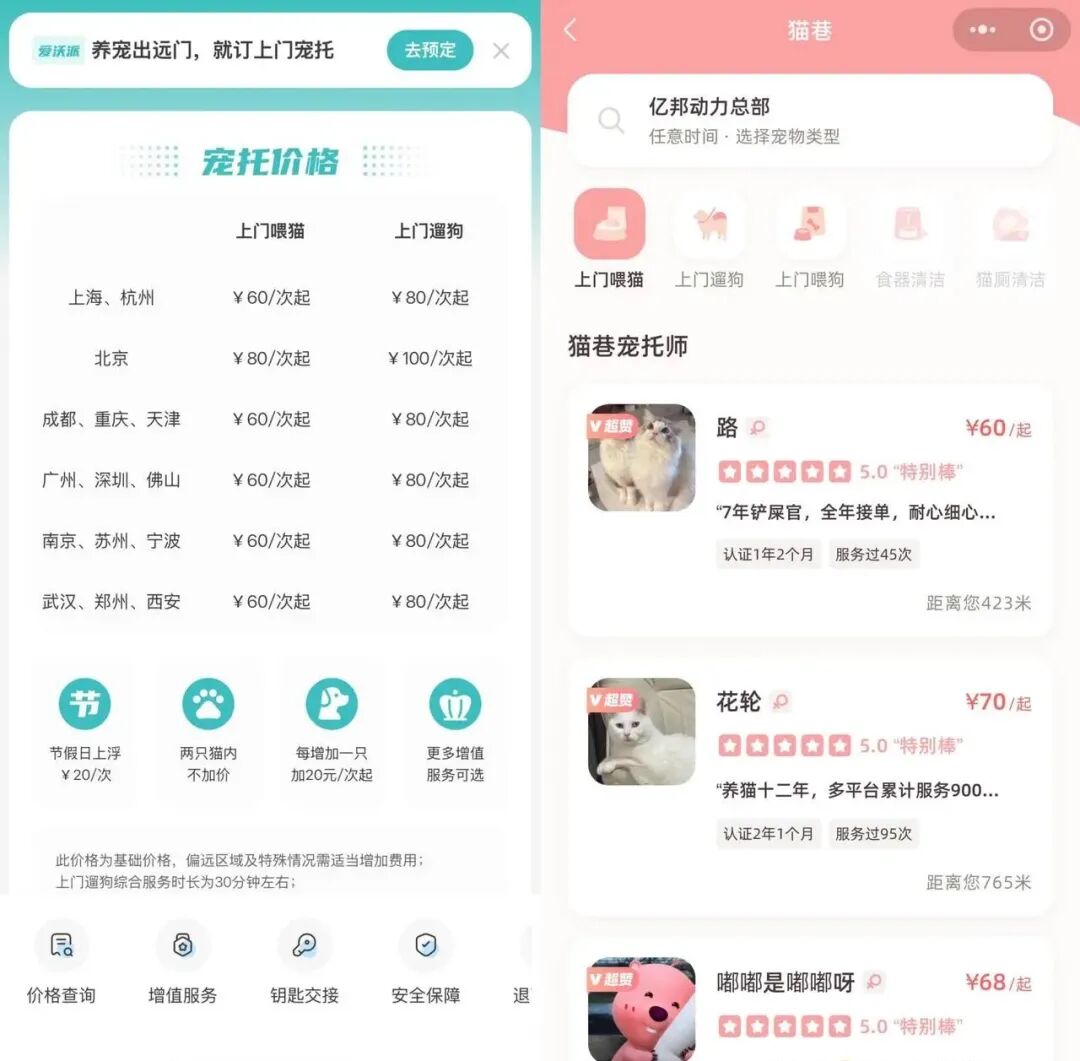
Core Insights - The traditional pet boarding model is being challenged as pet owners increasingly view their pets as family members, leading to a demand for higher-quality pet care services [1][3][4] - The rise of on-demand pet care services, such as home feeding and pet-friendly travel options, reflects a shift in consumer preferences towards personalized and quality services [1][5][8] Pet Care Services - Many pet owners are opting for home feeding services instead of traditional boarding due to concerns about the quality of care and the environment in boarding facilities [3][4] - The market for home pet care services is growing, with platforms like Aiwopai and Cat Alley offering various packages during peak seasons like National Day [5][7] - The pricing for home feeding services varies, with costs ranging from 40 to 100 yuan per visit depending on the service and location [5] Pet-Friendly Trends - The concept of "pet-friendly" is becoming a new consumer trend, with more businesses catering to pet owners by allowing pets in their establishments [8][9] - Pet-friendly hotels are increasingly popular, with a nearly 20% year-on-year increase in the number of such hotels listed on major booking platforms [8][9] - Travel agencies are also creating pet-friendly travel packages, allowing pet owners to travel with their pets while ensuring their care and safety [11] Market Growth and Dynamics - The Chinese pet industry is experiencing rapid growth, with the number of pet-related businesses increasing from 380,000 in 2019 to nearly 4 million in 2025 [14] - The market for pet products and services is projected to exceed 400 billion yuan by 2027, with pet food accounting for over 40% of the market share [14] - The demand for quality and personalized pet care is driving innovation and competition within the industry, leading to a diversification of services offered [14][17] Challenges and Issues - The pet care industry faces challenges such as product standardization, quality control, and consumer trust due to issues like misleading marketing and inconsistent product quality [17][19] - There is a growing need for regulatory frameworks and quality standards to address these challenges and rebuild consumer confidence in pet products and services [19]
新华网财经观察丨宠物产业发展呈现四大趋势
Xin Hua Wang· 2025-09-30 09:57
Core Insights - The pet industry is experiencing rapid growth globally, with significant market expansion and diversification in China, projected to exceed 300 billion yuan by 2024 [2][4] - Key trends in the pet industry include brandization of pet food, smart pet products, cluster development of the industry, and internationalization of domestic brands [4][5][18] Pet Food Brandization - The pet food sector is the core of the pet industry, with a continuous market expansion, evidenced by a 36% year-on-year increase in sales during the 2025 Tmall "6·18" event, reaching 7.5 billion yuan [5][7] - Domestic brands are gaining market share, with five out of the top ten online pet food sales in 2024 being local brands, indicating a shift from being OEMs for foreign brands to developing strong independent brands [7][8] Smart Pet Products - Technological advancements are reshaping pet care, leading to the emergence of smart feeding devices and health management apps, enhancing the interaction between pets and their owners [8][9] - Innovations such as smart litter boxes and AI monitoring systems are becoming prevalent, reflecting a shift towards high-value pet products [11][13] Cluster Development of the Industry - The establishment of pet industry parks is crucial for the growth and upgrading of the pet economy, with significant government investment in regional planning and construction [14][16] - Key regions like Shandong and Hebei account for nearly 70% of national pet food production, with emerging areas also accelerating their development [16][17] Internationalization of Domestic Brands - China's pet food exports have shown steady growth, particularly to Japan and South Korea, with exports doubling for certain product categories since 2015 [18][20] - Companies like Zhongchong Co. are achieving significant international sales, with overseas revenue constituting 68.33% of their total income in 2024 [20][21] High-Quality Development Challenges - The pet industry faces challenges such as reliance on low-end products, lack of core technology investment, and market disruptions from misleading information [22][24] - To achieve high-quality development, companies are encouraged to establish stricter standards than national ones and focus on product innovation and brand value [24][25]


无锡梁溪区加快推进生活性服务业发展 多措并举激发消费活力
Xin Hua Ri Bao· 2025-09-29 21:27
Core Insights - Liangxi District has effectively implemented national and provincial policies to promote consumption, focusing on key areas such as emerging economies and large-scale consumption, resulting in a steady growth in the consumption market with a retail sales total of 632.07 billion yuan from January to August, marking a 4.9% year-on-year increase and maintaining the top position in the city [1] Group 1: Quality Supply Meets New Consumer Demands - The district is enhancing the quality of consumption supply to meet the personalized, experiential, and quality-oriented demands of current consumer groups, with 25 new provincial-level flagship stores established this year, including high-profile brands [2] - New consumption formats are being developed, such as the introduction of over 20 brands in the "二次元" economy and the establishment of a nationwide first "pet-friendly" street, enhancing the interactive experience for consumers [2] - Luxury brands like Louis Vuitton, Hermes, Dior, and Gucci have opened double-decker flagship stores in the district, highlighting the increasing consumption capacity and influence [2] Group 2: Cultural and Tourism Integration - Liangxi District is leveraging cultural IP to stimulate consumer flow, with projects like the "今夜梁宵" immersive night tour attracting 4.965 million visitors since its opening in April, showcasing the successful integration of culture and tourism [3] - The district has created unique cultural experiences, such as the "阿炳映月里" project, which combines traditional music with modern art installations, appealing to younger demographics [3] Group 3: Sports Events Driving Consumption Growth - The district has successfully hosted the "奇妙夜梁溪" event, attracting over 3,500 participants and generating an average daily consumption of over 3 million yuan, with 43% of attendees being from outside the area [4] - Initiatives like the "苏超有礼" series of promotional activities are designed to enhance consumer engagement through immersive experiences in various commercial areas [4] Group 4: Space Renewal and New Consumption Scenarios - The district is expanding consumption spaces through the renovation of an 8.5-kilometer slow-moving system along the ancient canal, connecting 19 cultural landmarks and creating new consumption scenarios [5] - The "运河汇街区" has been developed as a new cultural and tourism landmark, attracting over 2.3 million visitors in its first year after transformation [6] Group 5: Policy Support for Consumption Potential - Liangxi District is implementing policies to stimulate large-scale consumption in sectors like automobiles and home appliances, resulting in a retail sales increase of 28.52 billion yuan across four major categories [7] - The district aims to enhance service quality and brand value while diversifying the development of the service industry to meet the evolving consumer demands [7]

农业重点数据跟踪周报:供应压力释放猪价下行,持续推荐生猪养殖-20250929
CAITONG SECURITIES· 2025-09-29 13:13
Core Insights - The report maintains a positive outlook on the pig farming industry, recommending continued investment in pig farming despite recent price declines due to supply pressures [1][7][21] - The report highlights a significant drop in pig prices, with the average price for market pigs at 12.67 yuan/kg, down 3.65% week-on-week [7][32][33] - The report indicates ongoing losses in pig farming, with self-breeding and purchased pig farming yielding losses of 74.11 yuan/head and 236.57 yuan/head respectively [7][37] Industry Overview - The agricultural sector index has decreased by 1.97% week-on-week, while the Shanghai and Shenzhen 300 index increased by 1.07% [11] - Since January 2, 2025, the agricultural sector has seen a total increase of 16.95%, compared to a 15.63% increase in the Shanghai and Shenzhen 300 index [12][11] - The report notes that the pig farming sector is currently in a downward cycle, with supply pressures gradually being released [21] Pig Farming Data Tracking - The number of breeding sows has slightly decreased by 0.80% month-on-month in August, indicating a potential reduction in future supply [22][7] - The average weight of market pigs at the time of sale is reported at 128.55 kg [22][8] - The report emphasizes that the current breeding and purchasing sentiment is declining due to stricter environmental regulations and market conditions [17][21] Poultry Farming Data Tracking - The average price for white feathered chickens is reported at 6.90 yuan/kg, with a slight increase of 0.29% week-on-week [38][41] - The report notes that the poultry industry is facing uncertainties due to ongoing outbreaks of avian influenza in overseas markets [38][39] Animal Health Data Tracking - The demand for animal health products is expected to rebound, with significant growth in vaccine approvals and product launches [46] - The report highlights that the industry is seeing a recovery in sales, with some vaccines showing substantial year-on-year growth [46] Seed Industry Data Tracking - The average prices for wheat, soybean meal, and corn have shown slight increases, indicating a potential upward trend in agricultural input costs [50] - The report emphasizes the importance of food security and the need for advancements in agricultural biotechnology [50] Pet Industry Data Tracking - Pet food exports have decreased by 15.5% year-on-year, with a total export value of 834 million yuan in August 2025 [55][56] - Domestic sales of pet food continue to grow, with significant increases reported on e-commerce platforms [57] - The report suggests that companies with strong domestic sales and innovative product offerings are likely to gain market share [59]


“它经济”崛起冲刺万亿规模 年轻群体驱动从“喂饱”到“宠好”变革
Zheng Quan Shi Bao Wang· 2025-09-29 11:18
Core Insights - The Chinese pet economy is projected to reach 1.15 trillion yuan by 2028, driven by emotional consumption and innovative pet products [1][5] - The pet ownership demographic is shifting, with younger generations (post-90s and post-00s) making up 66.8% of pet owners, indicating a significant change in consumer behavior and spending patterns [3][5] Market Size and Growth - The pet market for dogs and cats is expected to exceed 300 billion yuan in 2024, with a year-on-year growth of 7.5% [3] - The cat consumption market is growing at a rate of 10.7%, significantly outpacing the dog market's growth of 4.6% [3] Consumer Behavior - Younger pet owners are willing to spend more on their pets than on themselves, with monthly expenses averaging around 500 yuan for cat owners [2] - The average annual cost of pet ownership exceeds 10,000 yuan, with significant spending on grooming and food [2] Industry Trends - The pet economy is evolving from a focus on basic needs to emotional companionship and quality of life, with new service demands emerging [4][5] - High-end pet services, such as luxury hotels and on-demand care, are in high demand, reflecting a shift towards premium offerings [4][5] Product and Service Innovations - There is a notable increase in demand for functional pet food and smart pet products, with growth rates exceeding 100% in certain categories [4][6] - The market is seeing a rise in niche brands that cater to specific consumer needs, moving away from traditional mass-market approaches [5] Future Outlook - The pet economy is expected to grow by 18.3% in 2024, with cross-industry collaborations in areas like tourism and health projected to drive further growth [5] - The trend towards sustainable and eco-friendly products is gaining traction, with biodegradable cat litter and environmentally friendly toys becoming popular [5]
宠物专题深度
2025-09-28 14:57
Summary of Pet Industry Conference Call Industry Overview - The pet food industry is benefiting from an increase in pet ownership and rising spending per pet, particularly among young people who have a strong demand for pets. The market is consolidating towards leading companies, with the top 10 brands (CR10) capturing nearly 40% of the online market share, indicating that leading companies are likely to increase their market share [2][5]. Key Insights and Arguments - **Policy Direction**: Government policies are driving structural upgrades in the pet food industry. The State Council has proposed nurturing service consumption brands, while the Ministry of Culture and Tourism is promoting the integration of business, travel, and culture. The central bank is supporting technological innovation through re-loans, facilitating the industry's transition towards smart and digital solutions, such as AI-enabled pet products [2][6]. - **Company Performance**: - Guai Bao Co. experienced fluctuations in overseas exports but maintained a growth rate exceeding 30% in its brand segment, enhancing its market share [2]. - Zhong Chong Co. is focusing on building its own brand and developing a high-end product matrix, leading to continuous market share growth [2]. - **Global Capacity Expansion**: The company has made unexpected progress in its global capacity layout, with a new factory in Mexico marking the first entry of a Chinese pet company into the North American nearshore market. This, along with existing factories in the U.S. and Canada, creates a unique capacity layout that is expected to further enhance net profits after the second phase of the U.S. factory begins operations [2][12]. - **Product Performance**: The company's self-branded product, the "Wang Pi" series, achieved sales of 10 million yuan in Q1, with expectations to exceed 100 million yuan for the year, indicating a successful second growth curve for the company [2][13]. Additional Important Insights - **Market Trends**: The overall growth of the pet industry slowed in Q2 2025, with revenue growth for pet supplies companies decreasing from 23% in Q1 to around 19% in Q2. Profit growth also fell from 22% to 10%, influenced by tariffs, currency appreciation, and rising costs. However, the domestic market remains robust, and leading companies are continuously increasing their market share [3][15]. - **Investment Logic**: The pet food sector has long-term stable growth potential, driven by the increasing number of young pet owners and rising spending per pet. The top brands are expected to maintain growth rates of 20% to 30% over the next two years, with potential mergers and acquisitions among leading companies [4][15]. - **E-commerce Performance**: In August, Tmall's GMV decreased by approximately 1.7%, while JD.com and Douyin saw increases of 36% and 17%, respectively. Overall, the sector experienced an 8% year-on-year growth, with Zhong Chong's "Wang Pi" brand growing by 33% [2][14]. - **Pet Medical Market**: The pet medical market is seen as having significant growth potential, driven by the trend of pet humanization and longer pet lifespans, which necessitate a shift from traditional treatment to preventive health care [21]. - **Technological Innovations**: The introduction of smart products, such as AI-enabled automatic cat litter boxes and wet food dispensers, is reshaping the pet health landscape and addressing consumer needs [7][8]. - **Regional Development**: The Chengdu International Pet Expo held in September 2025 attracted around 120,000 visitors, reflecting the regional development and government support for the pet industry [9]. - **Challenges and Opportunities**: The industry faces short-term challenges due to market disruptions and customer order rhythms, but long-term value remains intact. Companies are expected to stabilize growth through reduced tariff uncertainties and expanded overseas customer bases [19][20].
源飞宠物20250928
2025-09-28 14:57
Summary of Yuanfei Pet's Conference Call Industry and Company Overview - **Company**: Yuanfei Pet - **Industry**: Pet Products, focusing on pet food and cleaning supplies - **Key Business Segments**: - Foreign trade OEM (Original Equipment Manufacturer) - Agency brands - Self-owned brands Core Points and Arguments - **Strong Online Performance**: In 2024, Yuanfei Pet's online operations showed outstanding performance with a year-on-year growth rate doubling, launching three self-owned brands in March targeting different price segments in the dog snack market [2][3] - **Revenue Growth**: Overall revenue increased by approximately 45% year-on-year in the first half of the year, with foreign trade OEM revenue growing about 30% and pet snacks growing at 50% [2][3] - **Profitability**: While profits remained flat in the first half, the second quarter saw a significant profit growth of 31% year-on-year. The company expects continued strong performance in the third quarter with profit margins similar to the second quarter [2][4] - **Production Capacity**: The company reported a high order saturation in foreign trade with a production capacity utilization rate of 120%-130%. New production capacity in Cambodia is expected to be operational by mid-next year [2][4] - **Stock Incentive Plan**: A stock incentive plan was introduced covering the self-owned brand team in Hangzhou and mid-level managers in the Cambodia factory, reflecting confidence in revenue performance [4] Additional Important Insights - **Business Structure**: Foreign trade OEM accounted for about 86% of total revenue last year, serving overseas retailers with pet snacks and cleaning supplies. The company has strategically positioned production in Cambodia to mitigate tariff impacts [5][6] - **Market Strategy**: The company is leveraging Douyin (TikTok) for brand promotion and aims to enhance its self-owned brand's market presence, targeting a revenue of 30 million yuan in 2024 and 100 million yuan in 2025 [3][7] - **Future Growth Potential**: Yuanfei Pet views its self-owned brands as a crucial growth engine, with a mid-term goal of reaching 500 million yuan in three years. The company plans to enhance brand image through platform operations and private domain management [8][9] - **Valuation Outlook**: The company is expected to have significant upside potential in its valuation, with a solid business structure and stable profitability. The foreign trade OEM and agency brands are valued at 15-20 times PE, while self-owned brands are evaluated on a PS basis [9]