
通信

Search documents
利好来了!刚刚,五部门重磅发布!
券商中国· 2026-02-10 10:30
Core Viewpoint - The article discusses the implementation opinions released by five departments in China regarding the development of low-altitude infrastructure, emphasizing the importance of information and communication technology in supporting the low-altitude economy [1][2]. Group 1: Implementation Opinions Overview - The implementation opinions highlight that low-altitude infrastructure is a crucial foundation for the development of the low-altitude economy, with the information and communication industry possessing rich network resources and comprehensive information service capabilities [2]. - The opinions outline ten key tasks aimed at enhancing the construction of information-based infrastructure to support low-altitude applications and services [7]. Group 2: Key Tasks - The ten key tasks include advancing communication network coverage for low-altitude scenarios, exploring multi-source detection and collaborative service capabilities, and enhancing navigation precision service levels [7]. - Specific measures include utilizing existing 5G networks to improve coverage in low-altitude flight routes and hotspots, and encouraging telecom companies to collaborate with relevant departments to meet the demands of low-altitude applications [7][8]. Group 3: Goals and Standards - By 2027, the goal is to achieve a ground mobile communication network coverage rate of no less than 90% for low-altitude public air routes, with further improvements in multi-source perception solutions and navigation service levels [6]. - The implementation opinions also call for the development of at least ten standards for information-based infrastructure, targeting urban governance, logistics, and cultural tourism sectors [6]. Group 4: Technological Integration - The opinions stress the importance of integrating new technologies such as IoT, AI, cloud computing, and big data to build a low-altitude intelligent network system [8]. - There is a focus on enhancing the supply capacity of the industry by promoting the development of 5G-A technology and reducing equipment costs through innovation [8]. Group 5: Frequency Resource Planning - The implementation opinions propose conducting research on low-altitude radio frequency resource planning and developing guidelines for the utilization and technological innovation of these frequencies [9]. - It emphasizes the need for regulatory compliance in the management of low-altitude infrastructure-related radio frequencies and monitoring [9].


五部门联合印发!利好低空经济
Qi Huo Ri Bao· 2026-02-10 10:29
Core Viewpoint - The implementation opinion aims to enhance the capabilities of the information and communication industry to support the development of low-altitude infrastructure, focusing on technology, industry supply, network support, and security assurance [1][2]. Group 1: Infrastructure Development - The opinion emphasizes the need to improve technical capabilities, industry supply capacity, network support, and security assurance in the information and communication sector [1]. - It advocates for a collaborative development of information infrastructure and low-altitude applications, focusing on areas with specific needs for low-altitude flight activities [2]. - By 2027, the goal is to achieve a ground mobile communication network coverage rate of no less than 90% for low-altitude public air routes [2]. Group 2: Technology and Innovation - The implementation opinion calls for the use of existing 5G mobile communication infrastructure to enhance low-altitude communication network coverage, particularly in areas below 300 meters [3]. - It encourages the integration of new information technologies such as IoT, AI, cloud computing, and big data to provide solutions for low-altitude intelligent network construction [3]. - The development of 5G-A industry is prioritized to upgrade existing ground station functionalities and reduce equipment costs [3]. Group 3: Organizational Support - The opinion stresses the importance of inter-departmental collaboration and provincial coordination to ensure the effective implementation of network deployment, technical capability enhancement, and application scenario cultivation [4]. - It highlights the need for diverse funding channels to support key technology breakthroughs, equipment development, and application growth in information infrastructure [4]. - Local governments are encouraged to increase support for the construction of information infrastructure, industry development, application promotion, and security assurance [4].
申万金工ETF组合202602
Shenwan Hongyuan Securities· 2026-02-10 09:43
1. Report Industry Investment Rating - Not provided in the given content 2. Core Viewpoints of the Report - The report focuses on constructing multiple ETF portfolios, including macro industry, macro + momentum industry, core - satellite, and trinity style rotation portfolios, aiming to find better investment opportunities by combining macro factors, momentum factors, and style rotation [4][5]. - Different industries have different sensitivities to economic, liquidity, and credit factors. For example, traditional cycle industries are sensitive to the economy, TMT is sensitive to liquidity, and consumption is sensitive to credit [4]. 3. Summary According to Relevant Catalogs 3.1 ETF Portfolio Construction Methods 3.1.1 Based on Macro Method - Calculate macro - sensitivities of broad - based, industry - themed, and Smart Beta ETFs based on economic, liquidity, and credit variables. Combine with momentum indicators for complementary analysis [4]. - Traditional cycle industries are suitable for economic up - periods, TMT for weak - economy but loose - liquidity periods, and consumption for credit - expansion periods. State - owned enterprises and ESG - related themes have low sensitivities to liquidity and credit [4]. - Construct three ETF portfolios (macro industry, macro + momentum industry, and core - satellite) and adjust positions monthly [4]. 3.1.2 Trinity Style Rotation ETF Portfolio Construction - Build a medium - to - long - term style rotation model centered on macro - liquidity, and compare it with the CSI 300 index [5]. - Construct three types of models (growth/value rotation, market - cap, and quality models) by screening macro, fundamental, and market - sentiment factors. The model has 8 style - preference results [5]. - Select ETFs with high exposure to the target style, control industry exposure, and set allocation limits to get the final ETF allocation model [5]. 3.2 Macro Industry Portfolio - Select industry - themed ETFs with over 1 - year establishment and over 200 million current scale. Calculate sensitivity scores of economic, liquidity, and credit factors monthly, adjust scores according to the latest indicators, and sum them up. If liquidity and credit deviate significantly, remove the liquidity score. Select the top 6 industry - themed indices and corresponding largest - scale ETFs for equal - weight allocation [6][7]. - Currently, with falling economic leading indicators, loose liquidity, and tightened credit, the portfolio is biased towards TMT and consumption. The February positions are shown in Table 1 [8]. - The portfolio has large fluctuations and outperformed the benchmark significantly in January [11]. 3.3 Macro + Momentum Industry Portfolio - Combine macro and momentum methods to address the left - side nature of macro - based strategies (low win - rate but high odds). Use clustering to group industry - themed indices and select the highest - rising product in each group in the past 6 months for equal - weight allocation [12]. - The momentum - selected industries still have a high proportion of cyclical industries. The February positions are shown in Table 3 [16]. - The portfolio has performed well this year and outperformed the CSI 300 significantly in January [17]. 3.4 Core - Satellite Portfolio - Design a "core - satellite" portfolio with the CSI 300 as the core to address the high volatility and rapid industry rotation of industry - themed ETFs [19]. - Calculate macro - sensitivities for broad - based, industry - themed, and Smart Beta ETFs, construct three stock portfolios, and weight them at 50%, 30%, and 20% respectively [19]. - The current allocation of broad - based ETFs is biased towards the Sci - tech Innovation Board and the ChiNext. The portfolio has performed stably, outperforming the benchmark in most months except December, and had significant excess returns in January 2026 [23][24]. 3.5 Trinity Style Rotation ETF Portfolio - The model currently favors the small - cap growth - high - quality segment. The factor exposures and historical performance are shown in Table 7 [26]. - The February positions are shown in Table 9 [31]. - The portfolio has achieved certain excess returns, especially in some months such as August 2025 and January 2026 [29].
低空经济迎利好!五部门联合印发
证券时报· 2026-02-10 08:07
Core Viewpoint - The article discusses the implementation opinions released by the Ministry of Industry and Information Technology and other departments to strengthen the information and communication industry's capacity to support the development of low-altitude infrastructure, which is crucial for the growth of the low-altitude economy [2][4]. Summary by Sections Overall Requirements - The initiative aims to enhance the technical foundation, industrial supply capacity, network support capability, and security assurance of the information and communication industry, facilitating the construction of low-altitude communication networks and intelligent network systems [7][8]. Key Tasks - The implementation opinions outline several key tasks, including: - Promoting low-altitude communication network coverage based on demand, particularly in areas below 300 meters, utilizing existing 5G infrastructure and optimizing network capabilities [9]. - Exploring multi-source detection capabilities for monitoring critical areas and enhancing navigation precision using the Beidou system and 5G networks [10]. - Supporting the construction of low-altitude intelligent network systems by leveraging new information technologies such as IoT, AI, and big data [10]. - Conducting experimental validations to improve low-altitude communication technologies and develop replicable solutions [11]. - Enhancing industrial supply capabilities by advancing 5G-A technology and reducing equipment costs [11]. - Promoting collaborative and standardized construction of low-altitude infrastructure [11]. - Establishing regulatory frameworks for telecommunications services and ensuring data security [12]. Organizational Support - The implementation opinions emphasize the need for inter-departmental collaboration and local government involvement to ensure the effective deployment of networks, technology enhancement, and safety measures [13].

康希通信(688653.SH):目前已布局多款具备市场前景的超宽带产品
Ge Long Hui A P P· 2026-02-10 07:53
Core Viewpoint - The company is actively involved in the development and promotion of Ultra-Wideband (UWB) technology, which is expected to significantly contribute to its revenue by 2026 due to the rapid growth of the UWB market in China [1] Industry Summary - UWB technology is characterized by its nanosecond-level narrow pulse wireless communication capabilities, offering centimeter-level positioning accuracy, high-speed data transmission, low power consumption, and strong anti-interference abilities [1] - The UWB market in China is projected to grow rapidly, with an expected market value exceeding 10 billion yuan by 2026 and potentially reaching around 20 billion yuan by 2028, indicating a strong growth trend and significant industry development potential [1] Company Summary - The company has laid out multiple UWB products with promising market prospects and is collaborating with invested enterprises to advance the research and development of UWB-related products, with steady progress in market promotion [1]
低空经济利好!五部门发布
Xin Lang Cai Jing· 2026-02-10 07:34
Core Viewpoint - The implementation opinion released by the Ministry of Industry and Information Technology and other departments aims to strengthen the capacity of the information and communication industry to support the development of low-altitude infrastructure, emphasizing the importance of enhancing industrial supply capabilities and promoting the development of 5G-A technology [1][10]. Overall Requirements - The initiative is guided by Xi Jinping's thoughts and aims to enhance the technical foundation, industrial supply capacity, network support capability, and security assurance of the information and communication industry while promoting the construction of low-altitude communication networks [3][12]. - By 2027, the goal is to achieve a ground mobile communication network coverage rate of no less than 90% for low-altitude public air routes, improve multi-sensor integration solutions, and enhance navigation service levels [4][13]. Key Tasks - **Low-altitude Communication Network Coverage**: Focus on areas below 300 meters, utilizing existing 5G infrastructure and optimizing network coverage through various methods [5][14]. - **Multi-Detection Collaborative Service Capability**: Enhance detection and monitoring capabilities in key areas such as military facilities and large events, improving the ability to track low-altitude aircraft [6][15]. - **Navigation Precision Services**: Utilize the BeiDou ground enhancement system to improve the positioning speed and accuracy of low-altitude aircraft [6][15]. - **Low-altitude Intelligent Network System**: Leverage new information technologies like IoT and AI to support the development of low-altitude traffic management systems [7][16]. - **Trial Verification**: Conduct research and validation on key technologies for low-altitude communication, aiming to develop replicable solutions [7][16]. Industry Supply Capacity - The initiative promotes the development of the 5G-A industry, upgrades existing ground station functionalities, and accelerates the maturity of sensor fusion technologies while gradually reducing equipment costs [7][16]. Collaborative and Standardization Efforts - The plan encourages the sharing and collaborative construction of low-altitude infrastructure, supporting the establishment of a standard system for low-altitude technology industry development [8][17]. Regulatory Management - The initiative includes research on regulatory frameworks for telecommunications business access, equipment management, and emergency communication, aiming to enhance the management of drone communication resources [8][17]. Network and Data Security - A security assurance system for information infrastructure will be explored, focusing on network security and data protection measures [8][17]. Frequency Supply Optimization - Research will be conducted on low-altitude radio frequency resource planning to support the development of low-altitude communication and aircraft operations [8][17]. Organizational Assurance - Strengthening inter-departmental collaboration and local government coordination is essential for the successful implementation of the initiative, with a focus on funding and support for infrastructure development [9][18].
202602保险客户资产配置月报:A股关注中盘蓝筹,中债阶段性对冲配置
Orient Securities· 2026-02-10 07:20
Asset Allocation Insights - A-shares are focusing on mid-cap blue chips, with a neutral stance on bonds and US stocks, and a cautious outlook on gold in the short term[2] - The risk appetite in A-shares is shifting, with structural opportunities being the main focus amid overall market fluctuations[2] - Bond performance in February is expected to follow risk appetite trends, serving as a hedge against risk assets[2] Market Sentiment and Risk Assessment - Regulatory measures in January have led to a more balanced risk preference, with high-risk investors showing decreased appetite while low-risk investors gain confidence[9] - Trading sentiment across large, mid, and small-cap stocks has cooled, but medium-term uncertainty remains relatively stable[9] Industry and Sector Recommendations - Current price increases in cyclical goods are key indicators for asset allocation, with a positive outlook on sectors like chemicals, agriculture, and non-ferrous metals[30] - The report highlights two main drivers for price increases: industrialization in emerging economies and geopolitical tensions affecting import prices[30] Model and Strategy Suggestions - The recommendation includes increasing positions in mid-term bonds and focusing on sectors such as non-ferrous metals, chemicals, and military technology for February[5] - The multi-asset allocation strategy suggests a combination of passive and active enhancements, with a focus on risk parity models for stock and bond allocations[48] Performance Metrics - The low-volatility strategy has achieved an annualized return of 11.8%, while the high-volatility strategy has reached 18.1% since 2025[9] - The industry rotation strategy has outperformed benchmarks with an annualized return of 44.8% since 2025[9]
工信部等五部门办公厅:积极推进5G-A产业发展 加强低空装备与低空信息通信的融合创新与设备研发
智通财经网· 2026-02-10 07:11
Core Viewpoint - The implementation opinions released by the Ministry of Industry and Information Technology and other departments aim to strengthen the capacity building of the information and communication industry to support the development of low-altitude infrastructure, emphasizing the importance of enhancing industrial supply capacity and promoting the development of 5G-A technology [1][2]. Group 1: Overall Requirements - The initiative is guided by Xi Jinping's thoughts and aims to enhance the technical foundation, industrial supply capacity, network support capacity, and security assurance capacity of the information and communication industry [2]. - The focus is on orderly advancing the construction of low-altitude communication networks and improving navigation accuracy to support the development of the low-altitude economy [2][3]. Group 2: Key Tasks - The plan emphasizes the need to advance low-altitude communication network coverage based on demand, particularly in areas below 300 meters, utilizing existing 5G infrastructure and exploring dedicated low-altitude networks [4]. - It aims to enhance detection capabilities for low-altitude aircraft through the integration of various sensing technologies and improve navigation services using the BeiDou navigation system [4][5]. - The initiative includes the construction of a low-altitude intelligent network system leveraging IoT, AI, and big data technologies to support low-altitude traffic management [5]. Group 3: Industry Supply Capacity - The plan promotes the development of the 5G-A industry, upgrading existing ground station functionalities, and reducing equipment costs while enhancing the integration of low-altitude equipment with communication technologies [6]. - It encourages collaboration among telecom enterprises and the establishment of shared infrastructure to support low-altitude applications [6]. Group 4: Safety and Regulation - The initiative outlines the need for a robust network and data security framework, emphasizing the importance of compliance with security standards and the protection of critical information infrastructure [7]. - It also highlights the necessity of optimizing frequency supply for low-altitude communication and ensuring proper management of radio frequency resources [7][8]. Group 5: Organizational Support - The plan calls for enhanced departmental collaboration and local government involvement to ensure the effective implementation of infrastructure construction, standard formulation, and safety measures [8]. - It encourages the use of various funding channels to support key technology breakthroughs and equipment development in the information infrastructure sector [8].
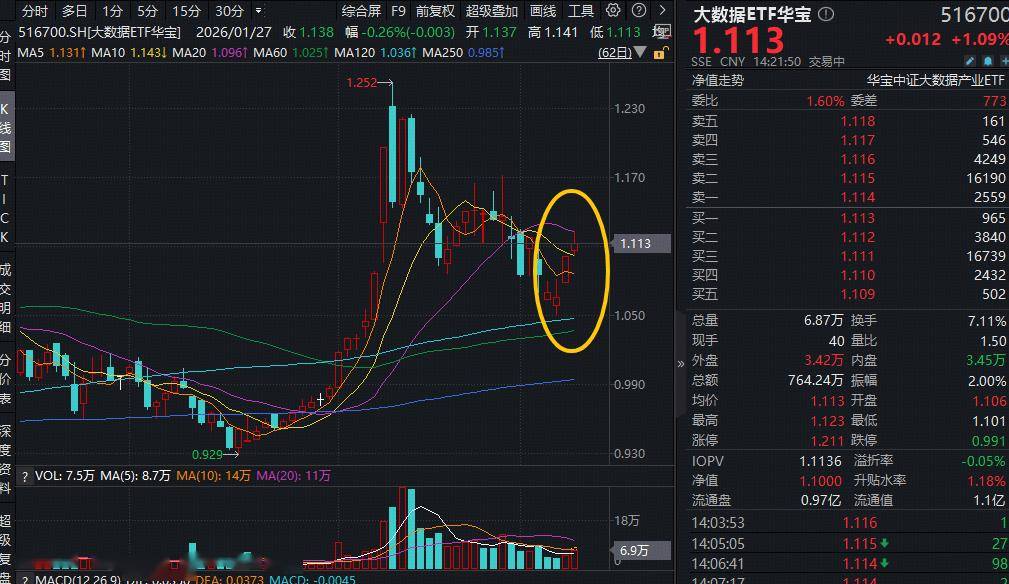
ETF盘中资讯|Seedance概念活跃,国投智能领涨超9%!大数据ETF(516700)盘中拉升1.8%,冲击4连阳!
Sou Hu Cai Jing· 2026-02-10 06:57
Group 1 - The core focus of the news is the significant rise in the Seedance concept, particularly in the domestic computing and AI application sectors, with the Huabao Big Data ETF (516700) experiencing a price increase of over 1.8% at one point, currently up by 1.09% [1] - The Seedance 2.0 AI video generation model from ByteDance has gained attention for its ability to create high-quality videos from text and images, supporting video segments of 5 to 15 seconds with advanced features like multi-angle shooting and subtitles [2] - The domestic video generation field is becoming increasingly competitive, similar to the state of large language models in 2025, with companies expected to differentiate based on specific application scenarios [3] Group 2 - The Huabao Big Data ETF's index composition shows that the computing concept accounts for 40.91% and AI application concept for 37.43% as of the end of 2025 [4] - The ETF focuses on domestic computing (IDC, servers) and AI applications, tracking the CSI Big Data Industry Index, with major holdings in leading companies such as Inspur, iFlytek, and China Software [5] - The current market environment is favorable for technology self-reliance, with government initiatives aimed at enhancing digital productivity and accelerating the domestic substitution process [6][7]

202602保险客户资产配置月报:A股关注中盘蓝筹,中债阶段性对冲配置-20260210
Orient Securities· 2026-02-10 06:52
Market Outlook - A-shares are focusing on mid-cap blue chips, with a neutral stance on bonds and US stocks, and a cautious outlook on gold in the short term[2] - Risk appetite in A-shares is shifting, with structural opportunities being the main focus amid overall market fluctuations[2] - The bond market is expected to continue following risk appetite trends, serving as a hedge against risk assets[2] Investment Strategy - The report recommends increasing allocations to mid-cap blue chips and sectors such as non-ferrous metals, chemicals, new energy, military, communication, and electronics[5] - A dual strategy of passive and active enhancement is suggested for stock-bond allocation, with a focus on increasing positions in mid-term bonds[48] Industry Insights - Price increases in cyclical goods are highlighted as key investment clues, particularly in the chemical, agricultural, and non-ferrous sectors[30] - Geopolitical tensions are raising global economic risk assessments, which is a fundamental driver for commodity price increases[30] Performance Metrics - The low-volatility strategy has achieved an annualized return of 11.8%, while the high-volatility strategy has reached 18.1% since 2025[9] - The industry rotation strategy has outperformed benchmarks with an annualized return of 44.8% since 2025[9] Risk Considerations - Extreme risk events could disrupt market expectations, and there is a risk of quantitative models failing to predict future trends[6]