
共享经济

Search documents
消费维权指南:五大正规投诉渠道全解析
Xin Lang Cai Jing· 2025-11-06 03:35
Core Viewpoint - The article emphasizes the importance of effective complaint channels and consumer rights protection methods in addressing various consumer disputes and ensuring fair market competition [2][5]. Group 1: Common Consumer Disputes and Necessity of Complaints - Common consumer disputes include issues with electronic products, food quality, and discrepancies in online purchases, which can lead to economic losses and affect quality of life [2]. - Active complaints are essential to restrain unethical business practices and maintain market order [2]. Group 2: Complaint Platforms and Channels - The National 12315 platform serves as a national authority for consumer complaints, providing a structured process for addressing grievances [3][5]. - Industry associations can mediate disputes within specific sectors, such as the China Architectural Decoration Association for home renovation issues [3]. - Media supervision can amplify consumer complaints when traditional channels fail, leveraging local newspapers and TV programs to exert public pressure on businesses [3][4]. - Black Cat Complaint platform is particularly effective for e-commerce, tourism, and finance-related issues, facilitating quick communication between consumers and businesses [3][5]. - Consumer Protection offers a comprehensive service for emerging internet sectors, addressing issues like shared economy and live shopping disputes [3][5]. Group 3: Additional Complaint Avenues - Legal avenues are available for significant disputes, allowing consumers to file lawsuits when necessary, with local lawyer associations providing support [6]. - Consumer rights protection committees can also offer consultation and mediation services [6]. Group 4: Efficient Complaint Handling by Companies - Companies typically have official customer service channels for initial complaint handling, but platforms like Black Cat Complaint are noted for their higher efficiency in resolving issues due to the impact on corporate reputation [7]. - Consumers are encouraged to retain evidence such as receipts and communication records to support their complaints effectively [7].
北京4家共享充电宝企业未合理退费被处罚
Xin Jing Bao· 2025-10-29 04:23
Group 1 - The Beijing Municipal Market Supervision Administration has penalized four shared charging treasure companies for infringing on consumer rights, highlighting the importance of transparency in service agreements and transaction rules [1] - The regulatory actions were prompted by consumer complaints regarding difficulties in refunds and rights protection, leading to fines and commitments from the companies to improve pricing models and reduce vacancy rates [1] - Additional cases included false advertising targeting the elderly and violations related to electric bicycle sales and trademark infringement, indicating a broader crackdown on illegal activities in the consumer sector [1] Group 2 - A commercial company in Beijing was found selling 110 electric bicycles without proper labeling and certification, along with counterfeit license plates, leading to a criminal referral due to the significant value of the goods involved [2] - Another case involved trademark infringement by a trading company that altered existing trademarks to create a new one, resulting in fines for selling products under false branding on e-commerce platforms [2]
“共享充电宝第一股”怪兽充电低价私有化,谁最受伤?
凤凰网财经· 2025-10-10 13:05
Core Viewpoint - Monster Charging has officially rejected Hillhouse Capital's privatization offer and is proceeding with its original privatization plan in collaboration with CICC Capital and the management team [2][4]. Group 1: Privatization Proposal - Hillhouse Capital made a non-binding privatization proposal on August 15, offering $1.77 per ADS, which is approximately 40% higher than the $1.25 per ADS proposed by the management team and CICC Capital [4]. - Following the announcement of Hillhouse's proposal, Monster Charging's stock price surged over 22% on the first trading day [5]. - The management's initial privatization offer of $1.25 per ADS is significantly lower than the company's cash asset value of approximately $1.63 per ADS, as disclosed in the 2024 annual report [5][7]. Group 2: Market Reactions and Concerns - Investors have expressed concerns that the $1.25 per ADS privatization price does not reflect the company's intrinsic value, given its strong fundamentals and cash flow [7]. - The overall valuation corresponding to the $1.25 offer is only $324 million, while the company's cash value is reported at $413 million [7]. - The management's decision to pursue a low-price privatization has raised questions about whether it aligns with the interests of all shareholders [8]. Group 3: Governance and Voting Rights - The management holds 16.9% of the shares but controls 64% of the super voting rights, which has led to concerns about the potential abuse of these rights [11]. - The super voting rights were intended to empower founders to make strategic decisions, but the current actions of the management have drawn criticism from minority shareholders [12]. - There are fears that the management's actions may undermine investor trust and could lead to potential legal actions from shareholders [12]. Group 4: Background and Legal Issues - The founder of Monster Charging, Cai Guangyuan, has faced legal disputes that have raised concerns about his credibility, which is critical in the tech and internet sectors [14][15]. - Prior to the company's IPO, Cai was sued by angel investors for failing to honor a verbal agreement to grant them equity in the company [16][18]. - These issues have contributed to a perception of integrity concerns surrounding the founder, which could impact investor confidence [19].

阿里已建立机器人和具身智能的小型团队;京东物流收购京东旗下业务涉资 2.7 亿美元 早资道
Qi Lu Wan Bao· 2025-10-09 09:07
Group 1 - Alibaba's Tongyi Qianwen model leader Lin Junyang announced the establishment of a small team focused on robotics and embodied intelligence, emphasizing the transition of multimodal foundational models into foundational agents capable of long-horizon reasoning through reinforcement learning [2] - Alibaba has completed an exchange offer for its outstanding US dollar-denominated senior unsecured notes due in November 2024, initiating the exchange offer on September 4, 2025, to swap for equivalent principal amounts of corresponding outstanding notes maturing in 2030, 2035, and 2054 [3] Group 2 - JD Logistics announced the acquisition of a business from its parent company JD.com for a total consideration of approximately $270 million, with the transaction classified as a related party transaction due to JD.com being its controlling shareholder [4] Group 3 - Tencent's Hunyuan-Vision-1.5-Thinking model ranked third globally and first in China in the latest visual model rankings released by LMArena, showcasing advanced multilingual and multimodal understanding and reasoning capabilities [5] Group 4 - Monster Charging's board has officially rejected a premium privatization offer from Hillhouse Capital and decided to proceed with the original privatization plan involving a consortium with CITIC Capital and management [6]

共享充电宝不宰你才有鬼了
半佛仙人· 2025-10-08 03:50
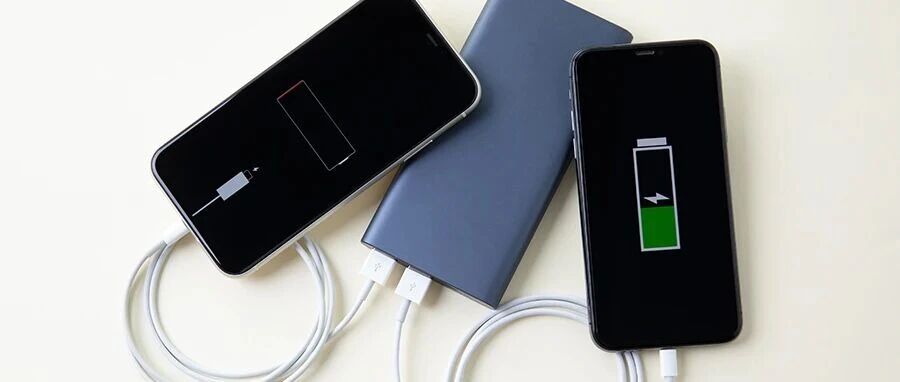
Core Viewpoint - The article discusses the business model of shared charging banks, arguing that they operate as a "punishment" business rather than a "service" business, profiting from users' emergencies rather than providing genuine convenience [2][3]. Group 1: Business Model Analysis - Shared charging banks are characterized as a "punishment" business, where users face penalties for forgetting their chargers, leading to a lack of choice and a forced reliance on these services [3][6]. - The initial strategy of shared charging banks involved subsidizing users to capture the secondary market, but this approach has become unsustainable, leading to increased prices and a focus on extracting money from users directly [6][11]. - The pricing of shared charging banks is determined by users' urgency rather than the actual cost of the service, as users are often left with no alternative when their devices run out of battery [7][11]. Group 2: Market Dynamics - The article highlights the challenges of regulating shared charging banks, comparing them to overpriced umbrellas sold on rainy days, emphasizing that demand drives their existence [11]. - The underlying issue of battery life and the lack of replaceable batteries in smartphones is identified as a broader industry problem, not solely attributable to shared charging banks [11]. - The potential for alternative solutions, such as free or low-cost charging services provided by tourist attractions, is mentioned, but the logistical challenges and costs associated with such models are acknowledged [11].
24小时自助式共享琴房来了
Jing Ji Guan Cha Wang· 2025-09-30 08:55
Core Insights - The opening of the "Sutian Bar Jinhu Garden" shared piano rooms caters to music enthusiasts by providing 24-hour self-service practice rooms for instrument training [1] Pricing and Services - The current booking price for the shared piano rooms is set at 45 yuan per hour [1] - Additionally, there are free public trial sessions available for reservation each day [1]
10000mAh手机将至,共享充电宝“掘墓人”来了
3 6 Ke· 2025-09-01 00:32
Core Viewpoint - The shared power bank industry is facing significant challenges as smartphone manufacturers are set to release devices with battery capacities exceeding 10,000mAh, potentially diminishing the need for shared charging solutions [1][3][9]. Group 1: Industry Trends - Major smartphone manufacturers are expected to launch at least two new models with 10,000mAh batteries next year, driven by advancements in silicon-carbon anode battery technology [1][3]. - The commercialization of silicon-carbon battery technology has already led to smartphone battery capacities reaching around 7,000mAh, making the 10,000mAh milestone almost inevitable [3][9]. Group 2: Consumer Behavior - The rise of shared power banks in 2019 was largely due to consumer "battery anxiety," exacerbated by the increased power consumption of 5G smartphones compared to 4G devices [3][5]. - Shared power banks initially offered a cost-effective solution at approximately 1 yuan per hour, but prices have since increased, leading to consumer dissatisfaction regarding issues like difficult returns and unexpected charges [5][6]. Group 3: Business Model - The shared power bank business model capitalizes on consumer anxiety about losing internet connectivity, positioning itself as a necessary service rather than a convenience [5][6]. - The high pricing and slow charging speeds of shared power banks are strategic, as they maximize revenue by extending user engagement time [6][9]. Group 4: Future Outlook - The potential widespread adoption of silicon-carbon batteries could render shared power banks obsolete, as smartphones may soon provide sufficient battery life to eliminate the need for external charging solutions [9][11]. - Despite the inevitability of this shift, the transition to silicon-carbon batteries will take time due to technical challenges, delaying the decline of the shared power bank industry [11].

充电宝按分钟收费反而贵了?
Bei Jing Wan Bao· 2025-08-23 07:51
Core Viewpoint - The charging rules for shared power banks in Beijing have shifted from hourly billing to per-minute billing, leading to increased costs for some consumers despite the intention to provide more precise billing [1][2][3] Group 1: Changes in Billing Structure - The new billing method charges consumers 0.05 yuan per minute, which can result in higher costs compared to the previous model that charged 1 yuan for every 30 minutes [1] - For example, a consumer using a power bank for 120 minutes now pays 6 yuan, while the previous cost for 148 minutes was only 5 yuan [1] - The majority of shared power bank brands, including Street Electric, Come Electric, and Meituan, have adopted this per-minute billing model, with rates typically ranging from 0.08 yuan to 0.12 yuan per minute [1] Group 2: Consumer Reactions and Perceptions - Some consumers feel that the new per-minute pricing is not beneficial, especially for those who frequently exceed the previous 30-minute threshold, resulting in higher overall costs [2] - A commuter noted that while the new pricing may seem cheaper for longer usage, it can lead to increased expenses for shorter usage periods [2] - Consumers have expressed confusion over the varying pricing structures, with different locations and brands offering inconsistent rates, complicating the rental process [3] Group 3: Industry Response and Future Considerations - Meituan's customer service indicated that the change was made to cater to diverse consumer needs, but the implementation has led to a chaotic pricing environment [3] - The industry is facing challenges with inconsistent pricing even within the same brand at different locations, highlighting the need for further standardization and optimization of billing practices [3]
21社论丨破除消费堵点,释放内需潜能
21世纪经济报道· 2025-08-21 00:20
Core Viewpoint - The recent State Council meeting emphasizes strengthening domestic circulation by removing restrictive measures in the consumption sector, which is crucial for unleashing domestic demand and promoting high-quality economic development [1]. Group 1: Consumer Potential and Market Dynamics - Systematic removal of restrictive measures in the consumption sector will empower consumers with more autonomy, allowing them to make consumption decisions based on their needs and economic capabilities, thereby enhancing quality of life [1]. - The removal of restrictions will break down market barriers, attract more market participants, stimulate competition, and encourage companies to innovate, optimize products and services, reduce costs, and improve quality, leading to industry innovation and transformation [1]. Group 2: Specific Sector Policies - Optimizing automobile purchase restrictions is essential as the automotive industry is a pillar of the national economy, and normal consumption will benefit both automotive manufacturers and their supply chains, facilitating industry transformation [2]. - Adjusting real estate market policies to release improvement housing demand is critical; removing housing-related restrictions can enhance market circulation and invigorate related industries, thus boosting economic growth [2]. - Accelerating the development of service consumption and new consumption models, such as online education and shared economy, by lowering market entry barriers will better meet the public's needs for a better life and represent a significant growth potential [2]. Group 3: Implementation Principles - The process of removing consumption restrictions should follow scientific, orderly, and coordinated principles, avoiding a one-size-fits-all approach and ensuring a stable and transparent market environment [3]. - In the automotive sector, shifting from purchase management to usage management through improved transportation systems can alleviate traffic pressure and meet consumer demand [3]. - In real estate, comprehensive cancellation of purchase, sale, and price restrictions is necessary to establish a new mechanism for the interaction of housing, land, and finance, promoting reasonable circulation and moderate consumption [3]. Group 4: Service and New Consumption Areas - In the service consumption sector, breaking down hidden market entry barriers and promoting diverse high-quality services in health, elderly care, and tourism will meet the growing demands of residents and create job opportunities [4]. - For new consumption areas, creating a favorable environment for the development of digital economy and green consumption will accelerate the application of new technologies and business models, fostering new economic growth points [4]. Group 5: Market Regulation and System Construction - Strengthening market regulation and building a fair competitive environment is essential to protect consumer rights and ensure market order while promoting consumption [5]. - Different government departments should adopt a systematic approach to dismantle consumption restrictions and continuously release consumption potential, supporting steady progress in high-quality economic development [5].

氪星晚报 |泡泡玛特涨超8%,股价突破300港元;百度:二季度净利润74亿元,同比增长35%;老铺黄金:上半年营业收入为123.54亿元,同比增长251%
3 6 Ke· 2025-08-20 09:24
Group 1: Company Financials - iQIYI reported total revenue of 6.63 billion RMB for Q2 2025, with membership service revenue at 4.09 billion RMB, online advertising revenue at 1.27 billion RMB, content distribution revenue at 440 million RMB, and other revenue at 830 million RMB. The company maintained a Non-GAAP operating profit of 58.7 million RMB for the 14th consecutive quarter [1] - Baidu achieved revenue of 32.7 billion RMB in Q2 2025, with a net profit of 7.4 billion RMB, representing a year-on-year growth of 35% [2] - Lao Pu Gold reported a revenue of approximately 12.354 billion RMB for the first half of 2025, marking a year-on-year increase of 251%. The adjusted net profit was 2.35 billion RMB, up 290.6% [5] - Pop Mart's stock price surged over 8%, surpassing 300 HKD, with a market capitalization exceeding 400 billion HKD [6] Group 2: New Developments - XGIMI's first projector from its Vietnam factory officially rolled off the production line, as part of its strategy to expand globally. The overseas revenue for XGIMI reached 1.086 billion RMB in 2024, growing by 18.94% and accounting for 31.89% of total revenue [3] - WeChat Work 5.0 was launched, introducing new AI capabilities including smart search, smart summarization, and smart bots to enhance office productivity [8] Group 3: Partnerships and Collaborations - Weimai signed a cooperation agreement with Alibaba Cloud, focusing on the integration of AI technology with comprehensive disease management to enhance healthcare services [4]
