智能家居

Search documents
嘉兴智造家居好物出海闯世界
Xin Lang Cai Jing· 2026-02-09 23:28
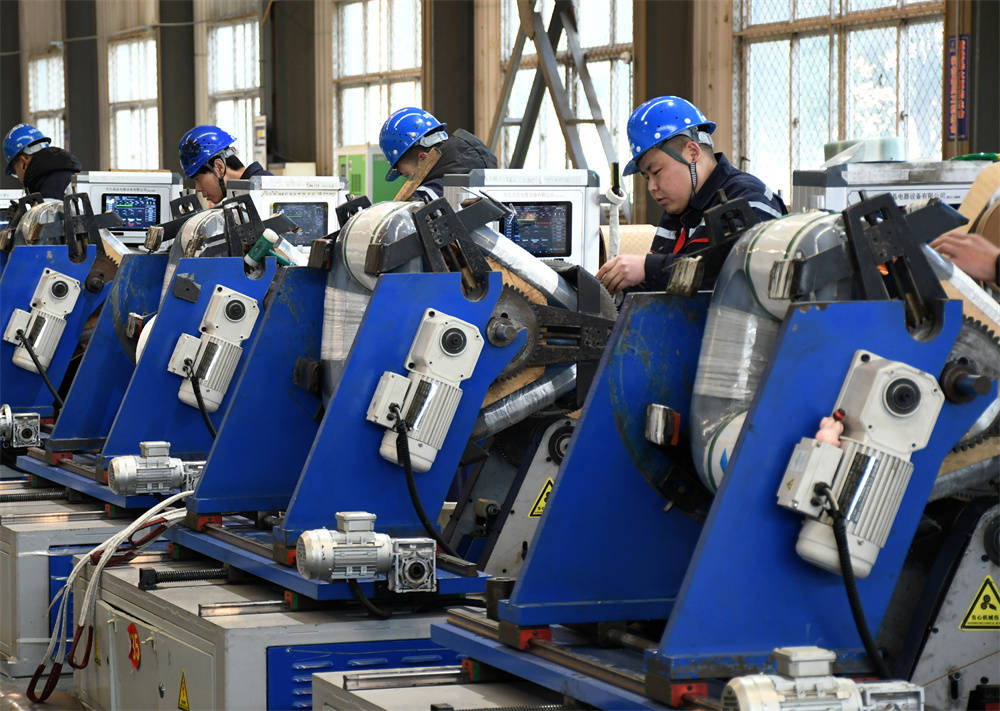
Core Insights - The company Zhejiang Hongqi Intelligent Home Furnishing Co., Ltd. is experiencing a busy production period as it prepares to ship smart sofas to the European market before the Chinese New Year [1][2] - The company has expanded its product line from electric sofas to a full range of home furnishings, with significant export growth driven by increased orders from overseas clients [2][3] Production and Shipping - The factory is currently operating at full capacity, with around 50 to 60 workers on-site to ensure timely shipment of goods [1] - The company is set to ship 8 container trucks, each capable of carrying over 200 sofas, amounting to over 1,000 sofas shipped in a single day during peak times [2] - The estimated order value for the current shipment is approximately $200,000, reflecting the company's robust demand and operational efficiency [2] Product Development and Market Demand - The company has developed around 300 different products to meet diverse overseas market demands, focusing on personalized designs and high-quality craftsmanship [2] - Recent expansion includes securing a new client in Italy for high-end smart home products aimed at elderly and mobility-impaired customers, with plans for continued shipments in the coming months [3] Domestic Sales and Future Plans - The domestic market for customized home furnishings is also experiencing a peak, with increased demand leading to daily deliveries to local customers [3] - After the Chinese New Year, the company plans to participate in trade exhibitions in Southeast Asia and the UK to further expand its international market presence [4]
更好理解投资于物和投资于人紧密结合
Sou Hu Cai Jing· 2026-02-09 05:42
Core Viewpoint - The development of fixed asset investment in China has reached an advanced stage, leading to an urgent demand for high-level human capital, emphasizing the need for a synergy between investment in physical and human capital to overcome current investment growth bottlenecks [1] Group 1: Constraints on Investment Growth - Insufficient accumulation of human capital has become a significant bottleneck for enhancing the effectiveness of fixed asset investment, as the increasing technological and knowledge intensity of investments requires high-quality human capital [2] - The technical content of assets formed by fixed asset investment has significantly increased, necessitating higher professional capabilities from users, which is evident in advanced projects like the Shanghai Tesla Gigafactory [2] - The demand for professional talent is critical in maintaining the operational efficiency of high-tech assets, as a lack of skilled personnel can lead to resource wastage and hinder investment effectiveness [2] Group 2: Consumer Technology Literacy - The technological attributes of end products and services from fixed asset investments are increasing, which raises the requirement for consumer technology literacy [3] - In 2025, China's sales of new energy vehicles reached 14.78 million units, indicating that consumer understanding of smart technologies is essential for fully realizing the benefits of high-tech products [3] - Insufficient consumer technology literacy can suppress demand for high-tech products, affecting the efficiency of fixed asset investment cycles and limiting domestic demand potential [3] Group 3: Human Capital Demand in Investment Activities - Investment activities, especially in emerging and future industries, require deep involvement from specialized technical talent at every stage, from planning to operation management [4] - New fixed assets that incorporate new technologies have a higher relative demand for skilled labor, and a lack of high-quality professionals can significantly reduce the quality and long-term returns of fixed asset investments [4] Group 4: Pathways to Overcome Human Capital Constraints - The synergy between investment in physical and human capital is essential for breaking through development bottlenecks and maximizing investment effectiveness [5] - Investment in human capital should focus on enhancing professional capabilities to match the high demands of technological assets, ensuring that labor force skills align with investment needs [5] Group 5: Key Tasks for Investing in Human Capital - The strategy for investing in human capital should focus on education, employment, and industrial policies to promote deep integration between human and physical capital [9] - In the education sector, fostering cultural and scientific literacy among youth is crucial, with initiatives like industry-education integration proving effective in addressing human capital gaps [9] - In the employment sector, reforming research systems to release innovation potential and aligning talent with industry needs is vital for enhancing investment quality [10] - Industrial policies should facilitate the alignment of human capital supply with industry demand, promoting a virtuous cycle of investment in human capital leading to industrial upgrades and enhanced investment returns [10]

鹿客科技递表港交所
Zhi Tong Cai Jing· 2026-02-09 05:28
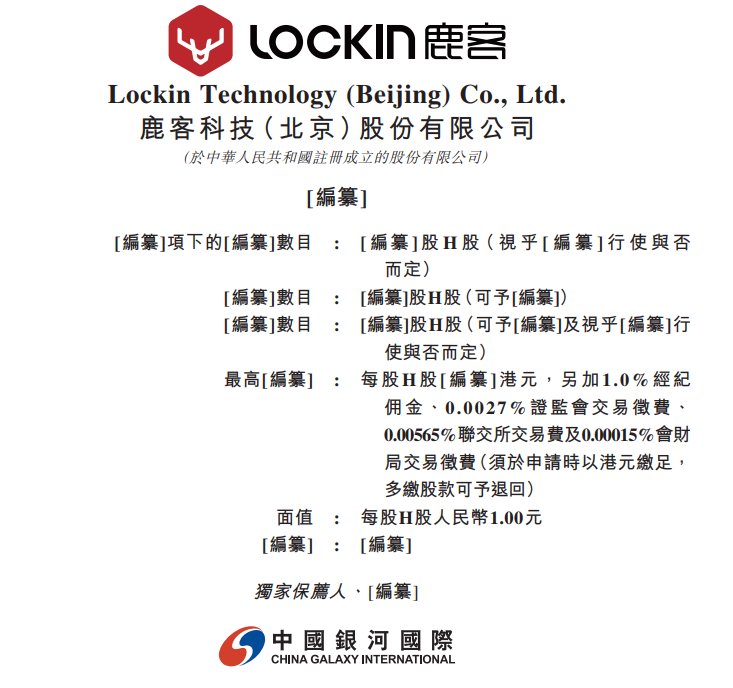
Group 1 - The core viewpoint of the article is that Locket Technology (Beijing) Co., Ltd. has submitted its listing application to the Hong Kong Stock Exchange, aiming to leverage its innovative AI-powered home security solutions [1] - Locket Technology is recognized as the pioneer in the global market for AI home security systems, integrating hardware, software, and AI to provide comprehensive safety and management solutions for homes and communities [1] - The company is backed by China Galaxy International as the sole sponsor for its IPO [1] Group 2 - According to Frost & Sullivan, Locket Technology is the first company globally to achieve large-scale production of vein recognition smart locks, representing the future direction of smart locks and serving as a core foundation for home security [5] - In 2024, Locket Technology's shipment volume of vein recognition smart locks is projected to rank first globally, with a market share of 10.5% [5] - The company's overall smart lock shipment volume ranks fourth globally, with a market share of 2.6%, and in mainland China, it is expected to reach 1.2 million units shipped, ranking third with a market share of 5.8% [5]
不必臧否追觅俞浩
Xin Lang Cai Jing· 2026-02-09 04:05
Core Viewpoint - The article discusses the mixed perceptions of Yu Hao, the CEO of the company, emphasizing that while his achievements are commendable, they should not be overstated or misinterpreted as surpassing other major players in the industry. Group 1: Company Achievements - The company has achieved over 50% market share in the overseas vacuum cleaner market and has distributed over 1 billion yuan to employees, including gold bonuses for each employee [1][4] - The revenue of the company may be higher than competitors like Ecovacs and Roborock, but the difference is not as significant as portrayed [1][4] Group 2: Public Perception and Marketing - There is a debate on whether to encourage Yu Hao's boldness and spirit, as it is seen as rare today, but caution is advised against misleading external perceptions of the company's financial status [1][2] - Yu Hao's ambitious statements about the company's future, including plans for 200,000 employees and a market value of 100 trillion yuan in 20 years, could benefit employees and society if even a fraction of these goals are achieved [2][6] Group 3: Communication Strategy - The company’s public relations strategy currently emphasizes dialogue but lacks strong narrative elements that would compel consumers to purchase its products [3][7] - A recommendation is made for Yu Hao to study successful marketing strategies used by figures like Elon Musk to effectively communicate the company's vision and product stories [3][7]
广货进京的“前世今生”
Xin Lang Cai Jing· 2026-02-08 23:41
Group 1 - The historical trade relationship between Guangdong and Beijing dates back to the Ming and Qing dynasties, with over 100 Guangdong guilds established in Beijing during their peak, serving as hubs for merchants and students [2] - The development of Guangdong products in Beijing has evolved from mere sales to brand cultivation and industrial innovation, exemplified by the high-end positioning of products like the North Garden green lychee, which is expected to generate sales of 2.152 billion yuan by 2025 [3] - The integration of traditional business wisdom with modern technology has allowed Guangdong products to adapt to consumer demands, with a focus on quality and cost-effectiveness, particularly in sectors like smart home and health consumption [4] Group 2 - The future of Guangdong products in the Beijing market is optimistic, with expectations that they will not only win over consumers through quality but also resonate emotionally, becoming a significant part of Beijing's international consumer center development [5] - The collaboration between Guangdong enterprises and Beijing's research institutions and cultural units is increasing, moving from traditional sectors to high-tech and service industries, reflecting a shift in brand strategy towards storytelling and value transmission [4] - The recognition of Guangdong products among Beijing consumers is expanding beyond traditional goods to include innovative categories like smart home devices and health management, indicating a growing appreciation for their role in lifestyle changes [4]
鹿客科技递表港交所;港股1月IPO集资金额较去年同期上升555%丨港交所早参
Mei Ri Jing Ji Xin Wen· 2026-02-08 17:08
Group 1: Company Developments - LuKe Technology has submitted its listing application to the Hong Kong Stock Exchange, with China Galaxy International as the exclusive sponsor. The company is a pioneer in AI home security solutions, focusing on smart locks and comprehensive safety solutions for homes and communities. In 2024, LuKe's shipment of vein recognition smart locks is expected to rank first globally, with a market share of 10.5%, while its overall smart lock shipments are projected to be fourth globally, with a market share of 2.6% [1] - Jiaxin International Resources has issued a positive profit forecast, expecting to turn a loss of 173 million HKD for the year ending December 31, 2024, into a profit of approximately 300 to 340 million HKD for the year ending December 31, 2025. This turnaround is attributed to the commencement of commercial production in April 2025, which will generate revenue [3] - Poly Property Group reported a 22.92% year-on-year decrease in contract sales amounting to approximately 3.7 billion HKD in January 2026, with a sales area of about 151,000 square meters and an average contract sales price of 24,774 HKD per square meter. The company faces pressure on sales during the market adjustment period [4] Group 2: Market Trends - The Hong Kong stock market saw a significant increase in IPO fundraising, with January 2026's total IPO amount reaching 39.3 billion HKD, a 555% increase from 6 billion HKD in the same month last year. The total fundraising amount for January 2026 was 53.1 billion HKD, up 318% from 12.7 billion HKD year-on-year. This surge is attributed to capital inflow, favorable policies, and a wave of hard technology listings [2]
工业机器人连续六年产量全国第一!广东晒“十四五”产业成绩
Nan Fang Du Shi Bao· 2026-02-06 14:32
2月6日,"'十四五'广东成就"系列主题新闻发布会第31场在广州举行。 广东省发展和改革委员会、省科技厅、省工业和信息化厅、省住房城乡建设厅、省农业农村厅、省商务 厅相关负责人出席发布会,介绍情况并答记者问,聚焦"现代化产业体系建设",全面展示了广东在过去 五年中构建具有国际竞争力的现代化产业体系的丰硕成果。 广东省发展和改革委员会副主任、省大湾区办常务副主任朱伟在总体情况介绍中指出:"'十四五'时 期,广东坚持实体经济为本、制造业当家,不断推动产业智能化、绿色化、融合化发展,着力增强产业 体系完整性、先进性、安全性。" 2025年,广东地区生产总值达14.58万亿元,三次产业结构优化为 4.0:37.7:58.3,加快形成基础雄厚、门类齐全、体系完整的现代化产业体系。 制造业当家"五大行动"筑牢根基 战略性新兴产业攀高向新 广东省工业和信息化厅副厅长吴红表示:"'十四五'时期广东省制造业格局更优、家底更厚、企业更 强!"对此,她详细介绍了五大成效: 一是"大产业"攀高向新。全省规上工业企业营业收入规模保持全国第一,年均增加约1万亿元。战略性 新兴产业集群营业收入完成"年均增速10%"的目标,累计培育8个国家 ...

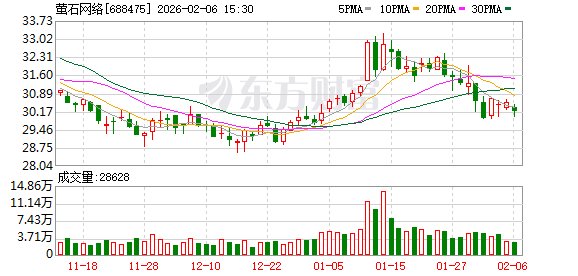
萤石网络:公司在海外主要通过线上和线下渠道进行销售
Zheng Quan Ri Bao· 2026-02-06 12:13
证券日报网讯 2月6日,萤石网络在互动平台回答投资者提问时表示,公司在全球140多个国家和地区开 展业务,销售相关产品并提供服务。公司在海外主要通过线上和线下渠道进行销售。线上渠道方面,公 司通过亚马逊等跨境电商以及所在国本地电商进行销售。线下渠道方面,公司会选择区域代理商作为核 心经销商,根据不同区域和国家的特点,通过本地化营销团队,拓展经销商、街边店、电工五金等分销 渠道;同时对于连锁零售业发达的地区和国家,有侧重地发展线下连锁KA零售渠道。 (文章来源:证券日报) ...

未来10年,最挣钱的凭什么一定是这群人?
创业家· 2026-02-06 10:34
Core Insights - Amazon's report serves as a guide for merchants to identify product opportunities and market trends in e-commerce [2] Group 1: AI Quality Space - The home is evolving into a space that interacts emotionally with users, with over 65% of consumers in Europe and the U.S. willing to spend more on smart home products [4][6] - The market for personalized customization, emotional interaction, and privacy is significant, focusing on how technology can meet emotional needs [7] Group 2: Sleep Economy - 37% of American adults reported a decline in sleep quality in 2023, indicating a growing market for sleep-related products and services [10][11] - Consumers are willing to invest in sleep solutions, prioritizing health and quality of life [12] Group 3: Happy Office - There is a rising expectation for workspaces to enhance comfort and productivity, with ergonomic furniture and technology gaining importance [13][14] Group 4: Subtle Technology - Consumers are seeking technology that seamlessly integrates into their lives, enhancing quality without being intrusive, exemplified by brands like Apple [15] Group 5: Pet Economy - The global pet industry is projected to grow by 45% over the next six years, with 55% of pet owners in Europe and Japan willing to spend more on pet health and insurance [16][17] - Pets are increasingly viewed as family members, creating demand for health-focused pet products and services [19] Group 6: Outdoor Cooking - The trend of outdoor cooking is growing, driven by a desire for social experiences and connection with nature [20][22] Group 7: Mobile Treasure Chest - Vehicles are transforming into multifunctional spaces, serving as homes, entertainment areas, and offices, with a focus on comfort and efficiency [23][27] Group 8: Generation Z Consumers - Generation Z, as digital natives, prioritize values-driven consumption, personalization, and unique experiences, emphasizing the need for brands to communicate authentically [28][30] Group 9: Fitness Pioneers - The health and fitness sector is evolving towards more scientific, efficient, and personalized approaches, with technology playing a crucial role [31][34] Group 10: E-sports Enthusiasts - Emerging markets are witnessing rapid growth in e-sports, with consumers seeking high-performance equipment and immersive experiences [35][37] Summary of Trends - The key drivers of these trends are technological acceleration, emotional shifts, and lifestyle changes, reflecting the complex needs of modern consumers [39] - New opportunities often lie within fundamental human desires for a better life [40]

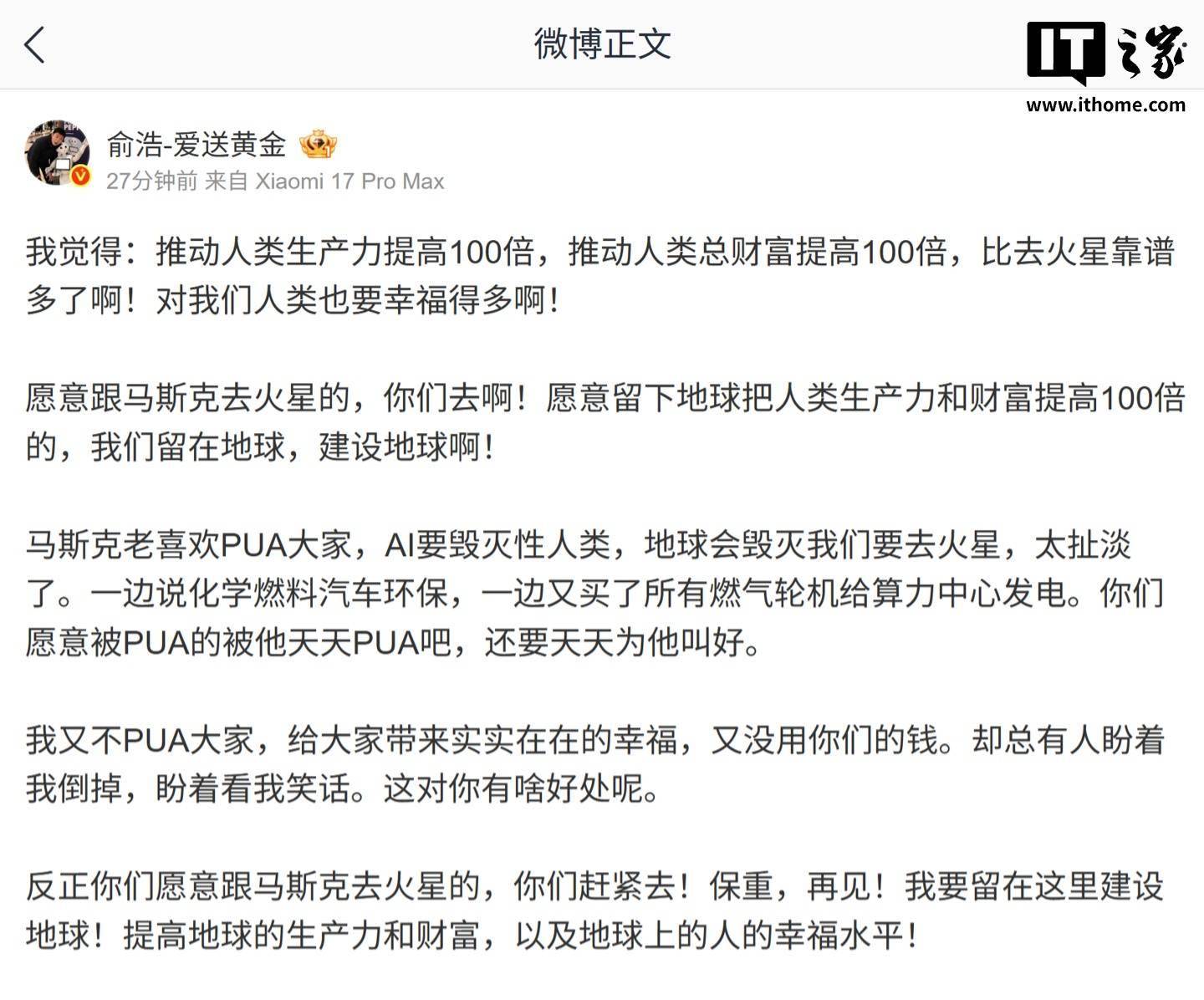
追觅CEO俞浩呛声马斯克:提高地球生产力比移民火星更实际
Sou Hu Cai Jing· 2026-02-06 04:11
Group 1 - The founder and CEO of Chasing Technology, Yu Hao, expressed his views on Elon Musk, criticizing his approach and suggesting that improving human productivity and wealth on Earth is more valuable than space exploration [1] - Yu Hao emphasized that he does not manipulate or control others, contrasting his intentions with Musk's rhetoric about AI and space travel, which he deems unrealistic [1] - The company aims to focus on enhancing productivity and happiness on Earth rather than pursuing ventures like colonizing Mars, indicating a commitment to terrestrial development [1] Group 2 - Since the second half of last year, Chasing Technology has diversified its product offerings, entering various markets including toothbrushes, monitors, automobiles, washing machines, refrigerators, and more [2] - The company has expanded into a wide range of consumer electronics and home appliances, showcasing its ambition to become a significant player in multiple sectors [2]