
智能网联汽车

Search documents
六成工业产值增量看福城 硬核实力赋能北中心战略
Nan Fang Du Shi Bao· 2026-02-08 12:48
Investment Overview - Fixed asset investment in Fucheng Street has accumulated nearly 110 billion yuan over five years, with industrial investment consistently leading the district [2][3] - In 2025, Fucheng Street completed fixed asset investment of 17.9 billion yuan, ranking second in the district [6] Industrial Growth - The total industrial output value of above-scale enterprises reached 197.4 billion yuan in 2025, a year-on-year increase of 6.9%, contributing over 60% of the district's industrial output growth [5][6] - The digital economy's share of total output value increased to 86.3% [6] - The smart connected vehicle industry contributed 46.8 billion yuan in output, growing by 72.2% year-on-year [6] Strategic Development Goals - The 2026 Fucheng Street Party Committee work meeting outlined key tasks for the "14th Five-Year Plan" period, focusing on urban quality improvement and industrial capacity enhancement [2][8] - Fucheng aims to build a modern industrial system by seizing major strategic opportunities, such as the development of a world-class semiconductor technology city [8][10] Urban and Infrastructure Development - Fucheng has transformed into a livable and business-friendly area, with significant infrastructure improvements including the opening of the first large-scale comprehensive sports venue and a national-level library [4] - A total of 31 new or expanded roads were constructed, adding 18.45 kilometers of road length [4] Business Environment and Innovation - The "LONG Enterprise Service" model was established to enhance the business environment, achieving a 95.4% completion rate for over 400 enterprise requests [7] - The number of national high-tech enterprises increased to 129, with 14 national "little giant" enterprises established [7] Future Development Plans - Fucheng aims to achieve an industrial output value of 240 billion yuan in 2026, with a growth target of over 10% [9] - The focus will be on optimizing traditional industries and nurturing emerging sectors, with a goal of exceeding 20 billion yuan in fixed asset investment [9]

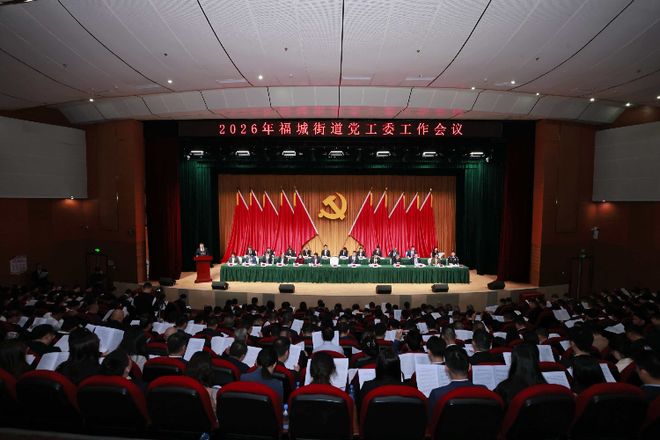
今年要让创新动能充分释放
Xin Lang Cai Jing· 2026-02-07 22:52
Core Insights - The Tianjin Zhongguancun Science City, an important platform for the coordinated development of Beijing-Tianjin-Hebei, has entered its ninth year of substantial construction, with 32 national high-tech enterprises and over 2,000 market entities established [1] - The Science City aims to accelerate the transformation of technological achievements and enhance the integration of industry, city, talent, landscape, and culture during the 14th Five-Year Plan period [1] Group 1 - The construction site of the Tianjin Zhongguancun Science City is bustling, with significant projects like the SANY Renewable Energy Investment Company's factory nearing completion, expected to start production by May [1] - A "running alongside" mechanism was introduced in 2020 to assist enterprises with land acquisition, approvals, and construction, which has been upgraded to include a "chief runner" mechanism to streamline 22 approval items [2] - The collaboration between Baodi District and Beijing Zhongguancun has deepened over the past five years, leading to a more mature "Zhongguancun-like" ecosystem [1][2] Group 2 - Baodi District has integrated a comprehensive service package from Beijing Zhongguancun, implementing 22 policy measures to support high-quality development in the Science City, including innovative service models [2] - Notable innovation platforms such as Peking University Science Park and Beijing University of Technology's drone innovation center are expanding in the Science City, which has also launched Tianjin's first intelligent connected vehicle demonstration application line [2] - In 2023, the Science City plans to attract 120 new enterprises, including 20 manufacturing firms, and expedite the construction of key projects to fully unleash innovation potential [2] Group 3 - The first phase of the Science City, covering 4.19 square kilometers, has been completed with essential infrastructure, including 25 kilometers of municipal roads and various parks, enhancing the living environment for young professionals [3] - Educational facilities such as the Nankai Middle School Science City branch are set to open in the summer, providing quality education for employees' children [3] - Baodi District is working on a construction plan for the Science City aimed at 2035, focusing on innovation in systems and mechanisms, and strengthening connections with high-quality scientific resources from Beijing [3]

智能网联新能源汽车领域场景对接会举办
Xin Lang Cai Jing· 2026-02-05 17:12
会上,北京汽车研究总院有限公司、重庆长安汽车股份有限公司发布了"多域融合的智能底盘控制技 术""下一代高集成高性能车用增程器系统"及"基于多模态交互技术的智能座舱""基于多模态健康感知大 模型的智能健康座舱"四项场景需求。北京轻凌电动有限公司、爱动超越人工智能科技(北京)有限责 任公司等多家企业现场路演发布五项科技新场景能力项目。 (来源:劳动午报) 活动聚焦智能网联汽车领域新技术与应用场景的精准对接,通过"科技新场景需求项目""科技新场景能 力项目"和"科技新场景示范项目"三大板块,为供需双方提供了"面对面"的交流平台,有效促进了创新 链与产业链的深度融合,让场景真正成为驱动产业发展的核心引擎。 转自:劳动午报 本报讯 (记者 王路曼) 近日,"向新而行"场景赋能新质生产力系列活动——智能网联新能源汽车领域 场景发布及供需对接会在顺义区环普国际科创园举办。"汽车座舱材料关键技术创新项目""数字孪生与 智能体仿真技术平台项目"两项合作项目签约落地,标志着产业链与创新链深度融合步入新阶段。 本次活动由北京市科学技术委员会、中关村科技园区管理委员会、北京市顺义区人民政府联合主办,旨 在为支持关键核心技术、底层技术 ...

低空经济+智能网联概念联动2连板!兴民智通9:49再度涨停,背后逻辑揭晓
Sou Hu Cai Jing· 2026-02-05 02:07
Group 1 - The core viewpoint of the article highlights that Xingmin Zhitong has achieved a consecutive two-day limit-up in trading, indicating strong market interest and performance [1] - The stock reached a trading limit at 9:49 AM with a transaction volume of 589 million yuan and a turnover rate of 13.12% [1] - The company has recently formed strategic partnerships in the low-altitude economy and intelligent connected vehicle sectors, focusing on the development of cutting-edge technologies such as 5G/6G communication and domain control integration [1] Group 2 - Local policies are expanding the operational areas for autonomous public transportation, which is likely to enhance the testing and demonstration applications of intelligent connected vehicles [1] - The related concept sectors are gaining market attention due to these developments and strategic collaborations [1]

紧扣发展脉搏 精准建言献策
Xin Lang Cai Jing· 2026-02-04 23:41
Group 1 - The proposals reflect the aspirations for high-quality development and convey the voices of the people, focusing on the integration of AI with the real economy and enhancing urban quality [1] - A total of 501 proposals were received since the 12th session of the Municipal Political Consultative Conference, with 412 officially registered, and 207 proposals were actually assigned for handling [1] - The proposals aim to align with the central government's priorities and address the urgent needs of the public, emphasizing the importance of quality over quantity in proposal submissions [5] Group 2 - Suggestions for promoting the AI industry include enhancing application scenarios, industrial collaboration, and technical support, which have been positively received by relevant departments [2] - The development of smart connected vehicles and the establishment of a new high ground for the new energy vehicle industry have gained attention and support from municipal departments [2] - Proposals to improve cultural prosperity and tourism consumption have been incorporated into government measures, showcasing the integration of cultural and economic development [3] Group 3 - Proposals aimed at improving community services and urban infrastructure have led to the allocation of 10 million yuan for community embedded service facilities [3] - The focus on resource utilization from organic waste and enhancing urban quality reflects a commitment to sustainable development and community welfare [4] - The quality of proposals is emphasized as a lifeline for effective governance, with a focus on precise topic selection and comprehensive pre-review mechanisms [5][6] Group 4 - The reduction of proposal handling workload by 50% through the consolidation of similar proposals has improved efficiency for the responsible units [6] - The implementation of a comprehensive tracking service for proposal handling aims to enhance the effectiveness of the proposals and ensure satisfactory outcomes for the proposers [6][7] - The establishment of a regular visiting system to understand and address challenges in proposal handling is part of the efforts to improve service levels [7]
智能网联汽车自动泊车性能计量测试规范发布
Xin Lang Cai Jing· 2026-02-04 16:26
近期,市场监管总局发布多项国家计量技术规范,涉及智能网联汽车、生命健康、智能电表、物理化学 等多个领域。《心电图机检定规程》统一了模拟与数字心电图机计量检定框架,通过规范心电图机计量 性能要求,为精准诊断疾病,保障患者生命健康提供准确可靠的计量数据支撑。《安装式交流电能表检 定规程》《预付费交流电能表检定规程》等5项计量技术规范,有效保障在网运行电能表计量数据的准 确、可靠和统一,切实保障群众利益。 来源:新华社 记者2月4日从市场监管总局了解到,我国首部针对智能网联汽车自动泊车性能的专业计量测试规范《智 能网联汽车自动泊车性能计量测试规范》近期发布。 据介绍,这一规范明确了智能网联汽车自动泊车模块计量测试内容和方法,填补了行业技术空白,助力 智能网联汽车自动泊车技术的研发和升级,保障司乘安全,促进行业健康发展。 ...
广东:拓展无人驾驶公共交通运营区域 扩大智能网联汽车道路测试与示范应用范围
Di Yi Cai Jing· 2026-02-04 08:32
广东印发加快数字社会高质量建设实施意见的通知。其中提到,完善美好智能的数字生活服务。扩大数 字消费多元化供给,创新和丰富数字消费场景,促进数字消费更高水平供需动态平衡。推进民生服务数 字化新模式、新业态健康发展,构建社区智慧物流网络、新能源设施终端等数字生活"新基建"。支持数 智技术在赛事场馆应用,推动体育场馆智慧互联。鼓励旅游景区和旅游服务企业升级智慧旅游服务,运 用数智技术提升旅游服务水平。拓展无人驾驶公共交通运营区域,扩大智能网联汽车道路测试与示范应 用范围,鼓励导航、网约车、智慧停车等数字交通服务平台提供智慧融合交通服务。 (文章来源:第一财经) ...
广东:拓展无人驾驶公共交通运营区域,扩大智能网联汽车道路测试与示范应用范围
Jin Rong Jie· 2026-02-04 08:31
Group 1 - The core viewpoint of the article emphasizes the promotion of high-quality digital social construction in Guangdong Province, focusing on enhancing tourism services through smart technology [1] - The implementation plan encourages tourism attractions and service enterprises to upgrade their smart tourism services, utilizing digital technology to improve service levels [1] - There is an initiative to expand the operational areas for autonomous public transportation and to broaden the testing and demonstration applications of intelligent connected vehicles [1] Group 2 - The plan promotes the integration of digital transportation services, encouraging platforms for navigation, ride-hailing, and smart parking to provide intelligent and integrated transportation solutions [1]
“十五五”期间道路交通强制性标准研制将持续发力
Xin Lang Cai Jing· 2026-02-04 08:12
记者今天(4日)在市场监管总局联合工业和信息化部、公安部、交通运输部联合召开的专题新闻发布 会上了解到,"十五五"期间,市场监管总局将会同相关部门打好协同配合"组合拳",以标准为抓手筑牢 道路交通出行安全防线。重点聚焦三方面工作: 一是以"快"提效,跑出标准建设加速度。将立足标准全生命周期管理,持续优化完善工作机制,全面提 升标准研制、实施评估、复审迭代全链条运行效率。在加快急需急用标准研制方面,按照急用优先原 则,进一步畅通重要标准研制绿色通道。 根据行业发展实际适时缩短评估周期,做好现行标准的"全面 体检",推动机动车运行安全技术条件等重要标准快速修订更新,让标准更实用、更好用、更管用。 二是以"优"增质,加大标准有效供给。在提量增容方面,围绕智能网联汽车、智能交通基础设施、交通 安全治理等重点领域,加快关键急需标准研制出台,以精准高效的标准供给牵引道路交通技术创新,推 动道路交通安全保障水平再升级。 三是以"强"立规,筑牢安全发展底线。未来五年将在强制性标准研制上持续下功夫,按照"能强则强, 应强尽强"的原则,推动组合驾驶辅助系统等一系列重要强制性国家标准发布实施,适配新技术、新场 景、新需求的同时,明 ...
32项国家计量技术规范发布 涉及智能网联汽车、生命健康等领域
Yang Shi Wang· 2026-02-04 07:25
Group 1 - The State Administration for Market Regulation has released 32 national metrology technical standards covering various fields including intelligent connected vehicles, health, and smart meters [1][2] - In the field of intelligent connected vehicles, the "Measurement Testing Specification for Automatic Parking Performance of Intelligent Connected Vehicles" is the first professional standard in China, filling a technical gap and promoting the unified and comparable results of automatic parking parameter testing [1] - In the health sector, the "Calibration Procedure for Electrocardiogram Machines" standardizes the metrology performance requirements for both analog and digital ECG machines, ensuring accurate diagnostic data for patient health [1] Group 2 - In the field of electric energy metering, the "Calibration Procedure for Installed AC Energy Meters" consolidates five previous standards, enhancing technical requirements and operational feasibility, while addressing public concerns regarding measurement errors [2] - The new standards include guidelines for determining calibration cycles for measuring instruments and performance evaluation for instruments with additional functions, laying the foundation for upgrading metrology technical standards [2]