
海洋生物医药

Search documents
青岛崂山:海洋生物医药产业聚势起航
Zhong Guo Jing Ji Wang· 2025-11-07 07:51
Group 1: Industry Overview - Qingdao's Laoshan District has developed a comprehensive biopharmaceutical industry system focusing on marine biomedicine, innovative drugs, high-end medical devices, and modern pharmaceutical services [1] - The marine biopharmaceutical industry in Laoshan has over 130 related enterprises, achieving a scale of 12.3 billion yuan with an 18% year-on-year growth [1] - Laoshan District has been recognized as a national pilot for "Quality Certification Service Strong Enterprises, Strong Chains, Strong Counties," being the only county-level industry to receive this honor in the marine biomedicine sector [1] Group 2: Company Innovations - Qingdao Chenlan Health Industry Group has developed a unique small molecule ClamBPTM peptide using directional enzymatic hydrolysis technology and established the world's first production line for oligopeptides using this technology [1] - Qingdao Chaolan Chuangzhi Information Technology Co., Ltd. has created a differentiated technological barrier in AI-driven drug discovery, applying for 10 invention patents related to AIDD models [1] - Shandong Zhuoye Medical Technology Co., Ltd. has integrated AI medical models with minimally invasive treatment, creating the world's first AI + 3D structured light percutaneous puncture surgical robot [1] Group 3: Future Developments - Qingdao Chenlan Health Industry Group plans to deepen research in high-value utilization of marine active substances and modernization of traditional Chinese medicine, focusing on telomere biology and cellular aging intervention [1] - In the innovative drug sector, Laoshan is accelerating the establishment of leading enterprises like Qiqiao Pharmaceutical, focusing on the development and market launch of new drugs for stroke treatment [1] - Qingdao Huanghai Pharmaceutical Co., Ltd. has established a joint venture for marine innovative drug research and has received clinical approval for several marine new drugs, with plans to continue investing in controlled-release technology and marine innovative drug development [2]
青岛加快构建“4+4+2”现代海洋产业体系
Xin Hua Wang· 2025-11-05 01:46
Group 1: Company Developments - The collaboration between Qingdao Ocean Technology Co., Ltd. and China Pharmaceutical University has led to the successful screening of six active peptide drugs derived from Antarctic krill, with ongoing research into their anti-aging and anti-tumor properties [2] - Qingdao Ocean Technology is focusing on the medicinal value of Antarctic krill, targeting areas such as lipid reduction, fatty liver, gout, and osteoporosis, while also developing targeted drugs for brain diseases and expanding into marine traditional medicine [2] Group 2: Industry Trends - Qingdao has established a marine biomedicine industrial park, with a focus on marine drugs, functional foods, and biological products, resulting in several leading domestic and international achievements [3] - The city is accelerating the construction of a modern marine industry system, promoting high-end, intelligent, green, and clustered development of the marine economy [3][4] - Qingdao's government has outlined a clear path for marine economic development through the "4+4+2" modern marine industry system, emphasizing the integration of new and traditional industries [3][4] Group 3: Economic Impact - In 2023, Qingdao has seen significant advancements in traditional industries, including the launch of large-scale smart fishing vessels and an increase in port cargo and container throughput, ranking fourth nationally [5] - The city has initiated 170 key marine projects with a total investment of 240 billion yuan, achieving an 80.59% construction rate for ongoing projects and injecting strong momentum into marine economic development [5]

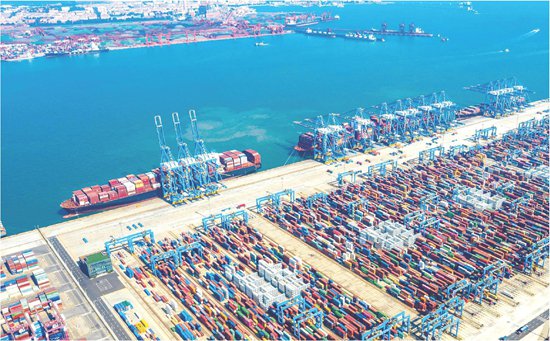
自然资源部:加快提升国家级海洋综合试验场能力水平
Di Yi Cai Jing· 2025-11-04 04:51
Core Viewpoint - The establishment of national marine comprehensive experimental zones is crucial for advancing marine technology innovation, supporting the development of emerging marine industries, and enhancing the overall quality of China's marine economy [1][4][6] Group 1: National Marine Comprehensive Experimental Zones - Four national marine comprehensive experimental zones have been planned in Weihai, Zhoushan, Zhuhai, and deep sea, focusing on integrating industry and technology, development and safety, and multi-disciplinary collaboration [1][2] - The Weihai experimental zone is the first jointly built by the Ministry of Natural Resources and local authorities, facilitating various marine experiments and providing consultation and services to domestic research institutions [2] - The Zhoushan experimental zone is advancing under a "one zone, two areas" model, creating a comprehensive testing system that includes shallow and deep sea, energy, perception, materials, and equipment [2][4] Group 2: Economic Impact and Growth - The national marine economy is projected to reach a total production value of 10.5438 trillion yuan in 2024, reflecting a growth rate of 5.9%, which is 0.9 percentage points higher than the national GDP growth [4] - In the first three quarters of the current year, the marine production value was 7.9 trillion yuan, showing a year-on-year increase of 5.6% [4] Group 3: Emerging Marine Industries - China's emerging marine industries are accelerating, with significant advancements in marine equipment and technology, including the delivery of 24 sets of 2000-meter deep-sea equipment and the application of the first deep-water underwater robot [5] - The development of marine pharmaceuticals has also made progress, with the first marine small molecule drug approved for clinical trials, indicating potential growth in the marine biomedicine sector [5] Group 4: Challenges and Opportunities - Despite the growth in emerging marine industries, traditional industries still dominate, necessitating structural optimization through industrial transformation and upgrading [5] - Issues such as short industrial chains and low technological added value persist, particularly in sectors like marine biomedicine and seawater utilization, which have significant development potential [5]
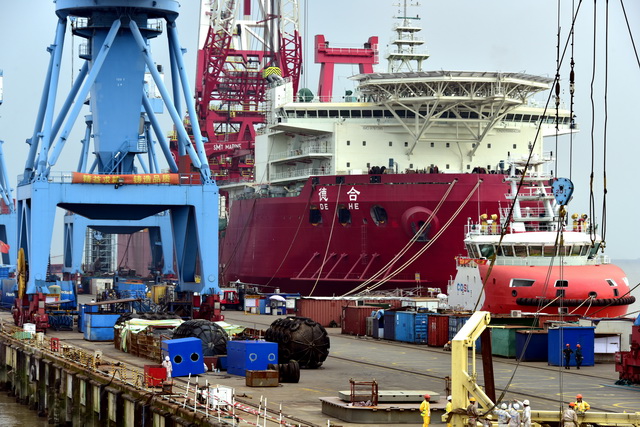
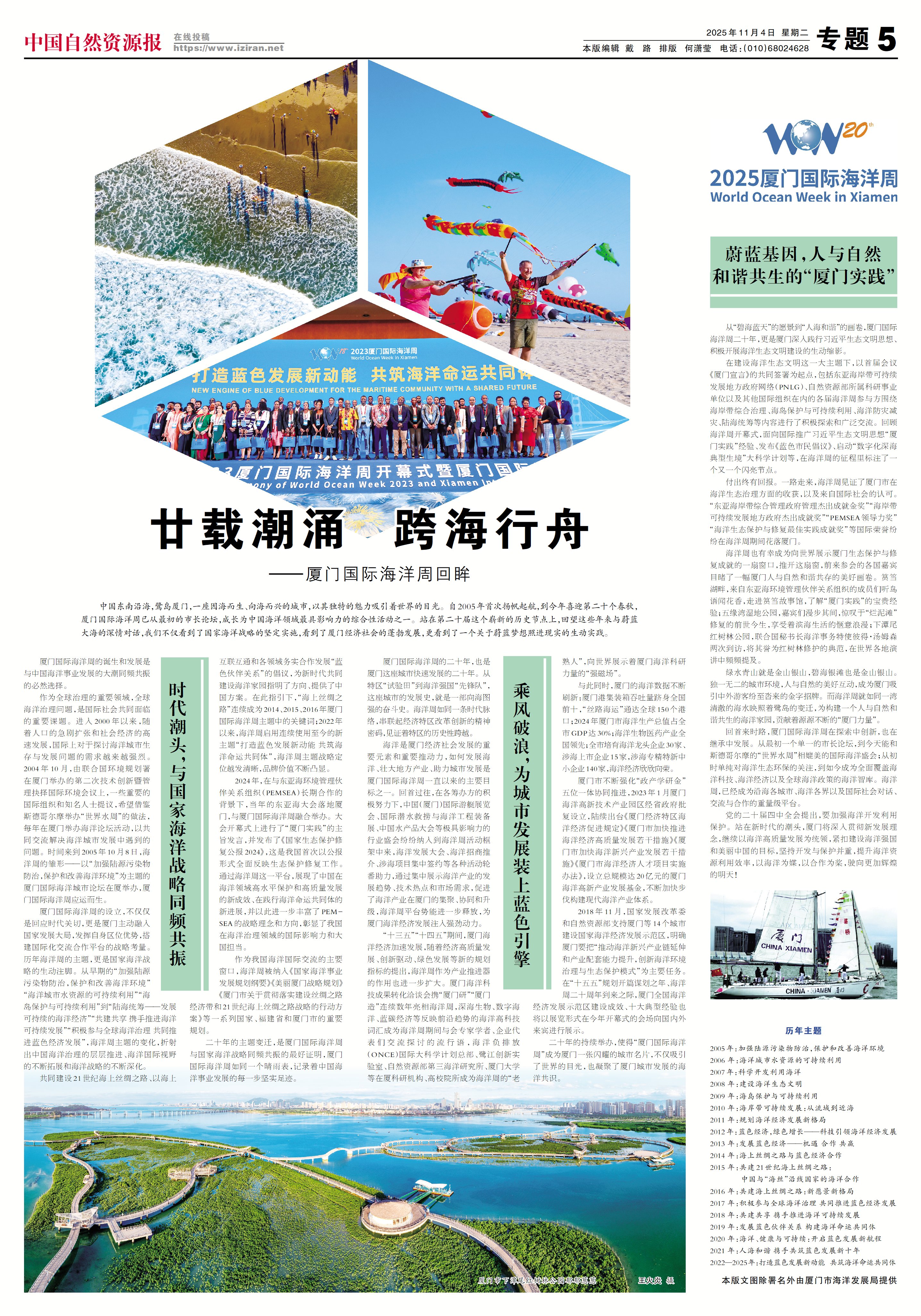
廿载潮涌 跨海行舟——厦门国际海洋周回眸
Zhong Guo Zi Ran Zi Yuan Bao· 2025-11-04 02:15
Core Viewpoint - The Xiamen International Ocean Week has evolved into a significant platform for marine governance and development in China, reflecting the country's commitment to marine strategy and sustainable development over the past two decades [4][8][11]. Group 1: Historical Development - The Xiamen International Ocean Week began in 2005 as a response to the growing need for discussions on marine urban development, inspired by international initiatives like the "World Water Week" in Stockholm [11][12]. - The event has grown from a mayoral forum to one of the most influential marine events in China, marking its 20th anniversary in 2024 [8][19]. Group 2: Strategic Importance - The establishment of the Ocean Week aligns with national development goals, leveraging Xiamen's geographical advantages to create an international cooperation platform [5][12]. - Themes of the Ocean Week have evolved to reflect national marine strategies, with recent themes focusing on sustainable marine economic development and international cooperation [12][30][31]. Group 3: Economic Impact - The Ocean Week has facilitated significant events such as the China (Xiamen) International Yacht Exhibition and various marine industry conferences, promoting the growth of the marine economy in Xiamen [16][17]. - Xiamen's marine economy has seen rapid growth, with projections indicating that marine production value will account for 30% of the city's GDP by 2024 [17]. Group 4: Environmental Initiatives - The Ocean Week serves as a platform for showcasing China's achievements in marine ecological protection and restoration, including the release of the "National Ecological Protection and Restoration Bulletin 2024" [13][25]. - The event has garnered international recognition for Xiamen's efforts in marine ecological governance, receiving various awards for excellence in coastal management and sustainable development [25][26]. Group 5: Future Directions - Moving forward, Xiamen aims to enhance its role in marine high-quality development, focusing on balancing marine resource utilization and environmental protection [27]. - The city is committed to continuing its efforts in building a modern marine industry system, supported by various government initiatives and funding [18].
广西海洋实验室在北海揭牌
Guang Xi Ri Bao· 2025-11-03 03:49
Core Viewpoint - The establishment of the Guangxi Marine Laboratory in Beihai aims to create an innovative ecosystem integrating research, industry, and talent, serving the region and extending its influence nationwide and to ASEAN countries [1] Group 1: Laboratory Overview - The laboratory is the sixth provincial-level marine laboratory in China and the highest-level marine laboratory in Guangxi [1] - It is supported by the Beihai municipal government and leverages the research strengths of the Fourth Institute of Oceanography and Guangxi Academy of Sciences [1] Group 2: Strategic Goals - The laboratory focuses on strategic, forward-looking, and disruptive basic research and applied technology breakthroughs in marine science [1] - It aims to promote the development of marine industries such as marine fisheries, marine biomedicine, marine new materials, and high-end equipment manufacturing towards high-end, clustered, and green development [1] Group 3: Regional Significance - Beihai was chosen for its unique geographical advantages and marine resource endowments, along with a solid industrial foundation [1] - The laboratory is tasked with serving national strategic missions and aims to build a marine technology cooperation hub that supports the Belt and Road Initiative and fosters a China-ASEAN marine community [1]
“蓝色药库”不断丰富,厦门国际海洋周将共商建设路径
Di Yi Cai Jing· 2025-10-31 13:51
Core Viewpoint - The construction of China's "Blue Pharmacy" is supported by rich marine biological resources, strong research capabilities, and relatively mature results transformation, aiming to promote the high-quality development of marine drugs and biological products industry [1][5][6] Group 1: Event Overview - The 2025 Xiamen International Marine Week will be held from November 6 to 12, focusing on "creating new momentum for blue development and building a community of marine destiny" [1] - The event will integrate resources and expand dimensions, emphasizing new productive forces and promoting the upgrade of the marine economy [1] Group 2: Industry Focus - The event will focus on key areas such as marine drugs, deep-sea equipment, blue carbon sinks, and coastal tourism, facilitating industry connections through a full chain from academic discussions to project implementation [1] - A symposium on the high-quality development of marine drugs and biological products will be held to discuss the construction path of the "Blue Pharmacy" [1][5] Group 3: Research and Development - China has a vast marine area with diverse marine biological species, providing a rich resource base for drug development [2] - Institutions like the Third Institute of Oceanography and Ocean University of China have invested significantly in marine drug research, creating a comprehensive industrial technology development platform [2] Group 4: Achievements and Collaborations - In the past five years, nearly 50 achievements from the Third Institute of Oceanography have been transformed into applications, adding value of 3 billion yuan to enterprises [2] - The national policy emphasizes the development of the marine biological pharmaceutical industry, providing strong support for the "Blue Pharmacy" construction [5] Group 5: Future Outlook - During the 14th Five-Year Plan period, the marine drug and biological products industry is expected to expand significantly, contributing to the high-quality development of the marine economy [6]
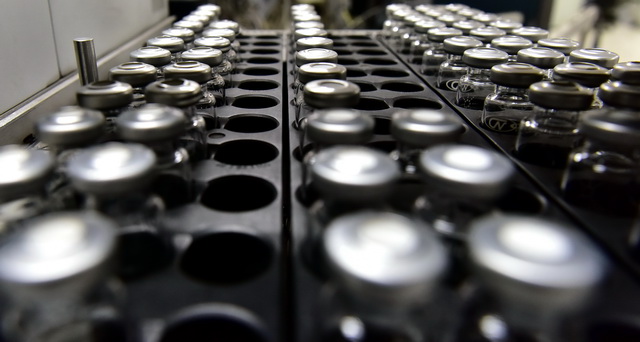
“海洋废料”变身“营养黄金”!这家厦企又被点赞了!
Sou Hu Cai Jing· 2025-10-30 13:51
Core Insights - Xiamen Blue Bay Technology Co., Ltd. has emerged as a leader in the special food and marine biomedicine sectors through its unique strategy of "Asking the Sea for Medicine" and outstanding innovative achievements [1][4] Group 1: Company Overview - Founded in 2005, Xiamen Blue Bay Technology focuses on marine biomedicine, viewing the ocean as a strategic area for high-quality development and technological innovation [4] - The company is recognized as a national high-tech enterprise specializing in the development of marine polysaccharide raw materials, formulations, health foods, and pharmaceuticals [4] - Blue Bay Technology has successfully transitioned from "Made in China" to "Created in China," converting marine waste into valuable nutritional products worth millions [4] Group 2: Technological Advancements - The company has developed a proprietary "one-step sulfate" process combined with "multi-stage membrane separation" technology, reducing raw material costs to one-tenth of traditional methods while achieving a purity of 99% [6] - This technological breakthrough allows for the production of 100 tons at a time, significantly increasing the value of each ton of raw material to the million-dollar level [6] - Blue Bay Technology is among the few countries globally that have mastered the large-scale production technology of high-purity glucosamine sulfate [6] Group 3: Product Development - The company has expanded its product matrix with clinical validations for raw materials like chitosan oligosaccharides and selenized carrageenan, which have new functional research for inhibiting Helicobacter pylori and improving fatty liver [6] - Selenized carrageenan has an annual production capacity of 100 tons, establishing itself as a new benchmark in the antioxidant field [6] - The company has achieved a full industry chain layout, with five intelligent production lines ensuring controllability from chitosan extraction to formulation production, and an annual capsule production capacity exceeding 600 million, certified by GMP [6] Group 4: Future Plans - Blue Bay Technology is constructing a marine biomedicine innovation center that integrates six functional modules, including molecular design, intelligent production, and clinical evaluation [8] - The center aims to attract top global research teams to enhance technological breakthroughs and expand the application of marine sugars in joint and cardiovascular health, promoting a sustainable cycle from the ocean to health [8]
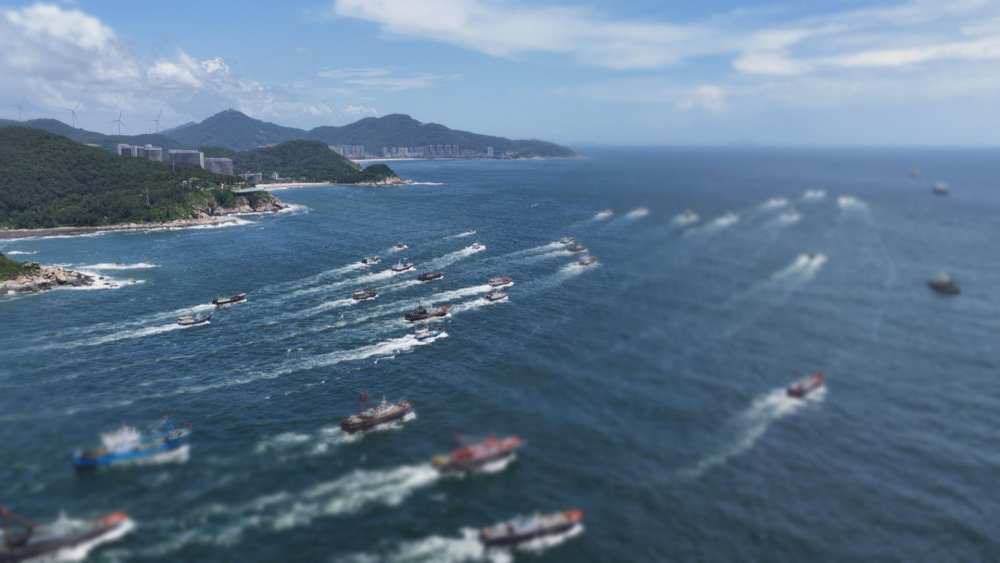
海洋高质量发展与高水平保护的辩证统一
Zhong Guo Zi Ran Zi Yuan Bao· 2025-10-30 08:07
Core Viewpoint - The development of the marine economy and the protection of the marine ecological environment are interdependent and should be pursued simultaneously, with high-level protection serving as the foundation for high-quality development [1][8]. Marine Economic Growth - The marine production value in Guangxi is projected to grow from 189.9 billion yuan in 2020 to 258.09 billion yuan in 2024, representing an average annual growth rate of 8.0%. The marine production value's share of the regional GDP is expected to increase from 8.6% in 2020 to 9.0% [1]. Ecological Protection Measures - Guangxi has established strict ecological protection red lines to balance development and conservation, ensuring the protection of important marine ecological function areas and sensitive zones. This includes implementing stringent coastal management and restoration projects, which have helped protect species like the Chinese white dolphin and the Bryde's whale [3][8]. Innovation-Driven Development - The region is focusing on innovation to drive the transformation of the blue economy, promoting strategic emerging industries such as marine high-end equipment manufacturing and marine renewable energy. This includes projects like offshore wind power and the development of modern marine ranches to enhance resource recovery and reduce pollution [5][8]. Long-term Governance Mechanism - A stable and efficient long-term governance mechanism is essential for achieving a balance between high-quality development and high-level protection. Guangxi is exploring integrated governance mechanisms that include improving regulatory frameworks, establishing cross-departmental coordination, and encouraging public participation in marine protection [7][8].
“十五五”首次单列海洋为重点任务,“陆海统筹”内涵深化
2 1 Shi Ji Jing Ji Bao Dao· 2025-10-30 05:13
Core Viewpoint - The "15th Five-Year Plan" emphasizes the importance of marine development and protection, marking a shift towards a more structured and measurable approach to becoming a "maritime power" [3][4]. Group 1: Marine Economic Development - The plan aims for China's marine GDP to reach 10.5 trillion yuan by 2024, indicating a continuous expansion of the marine economy [3]. - The focus will shift from merely increasing the scale of the marine economy to optimizing its structure and enhancing efficiency, particularly in emerging industries like marine equipment manufacturing, marine new energy, and marine biomedicine [3][4]. Group 2: Technological Innovation and Industry Growth - The plan highlights the need for strengthening marine technological innovation and consolidating the advantages of the marine equipment manufacturing industry [4][5]. - It aims to develop modern shipping services and enhance the marine economy's contribution to overall economic growth [5]. Group 3: Ecological Protection and Resource Management - The plan calls for the implementation of marine surveys and monitoring, as well as the development and protection of marine resources and ecosystems [5][6]. - It emphasizes the establishment of a comprehensive environmental governance system that integrates land and sea, aiming to control pollution and protect marine ecology [7]. Group 4: Strategic Importance of Marine Resources - The development of marine resources is seen as a solution to land-based resource constraints, providing alternative sources of minerals, new energy, and food [4][5]. - The plan is expected to create new growth points for China's economy by enhancing supply chain security through marine resource development [4].
宏观点评20251024:“创新牛”进入蓄势期,行业风格如何轮动?-20251024
Soochow Securities· 2025-10-24 12:59
Market Overview - The market has entered a wedge-shaped fluctuation since September, accumulating risks due to uncertainties in US-China relations, the release of Q3 earnings, and increasing valuation bubble risks[1] - The "Innovation Bull" market is currently in a consolidation phase, with a high probability of narrow index fluctuations and wide fluctuations in the technology sector from October to November[1] Industry Rotation - Leading sectors have shown signs of adjustment, with insufficient momentum for growth styles to digest valuations; defensive sectors are currently favored[2] - Within growth sectors, electronics remain strong but show weakening trends, while communication is experiencing a weak rebound; cyclical sectors like coal and petrochemicals are improving[2] Thematic and Industrial Opportunities - The marine economy is highlighted as a key area for development, with policies emphasizing "strengthening marine development and protection," which may lead to thematic market opportunities in October-November[3] - Emerging industries related to marine economy, such as offshore wind power and marine biomedicine, are expected to gain traction due to policy support[3] Long-term Trends of the "Innovation Bull" - Market liquidity and valuations have improved, with a significant portion of public fund net values exceeding 1, indicating potential for accelerated fund issuance[4] - The proportion of public funds with net values above 1 has surpassed 80%, suggesting that public funds will be a major source of incremental capital in the next phase[4] Risk Factors - Potential risks include Q3 earnings falling short of expectations, unexpected changes in US-China relations, and extreme structural market conditions[4]