
航天航空

Search documents
SpaceX将在10年内建月球城市
Bei Jing Shang Bao· 2026-02-09 17:07
Core Viewpoint - SpaceX is shifting its focus to building a self-sustaining city on the Moon within the next 10 years, while Mars colonization is projected to take over 20 years [1][3]. Group 1: Moon City Development - Elon Musk announced that SpaceX aims to construct a self-expanding city on the Moon, with a potential timeline of 10 years for initial development [1]. - The frequency of lunar missions can be every 10 days, compared to Mars missions which are limited to every 26 months [1]. - The concept of a self-developing lunar city involves self-sufficiency and continuous expansion through automation, akin to cellular growth [4]. Group 2: Mars City Plans - Despite the focus on lunar development, SpaceX plans to initiate work on Mars city projects within 5 to 7 years [2]. - The company has postponed its Mars mission originally planned for this year to concentrate on NASA's lunar missions [3]. Group 3: NASA Collaboration - SpaceX is committed to NASA's Artemis program, which aims to establish a long-term human presence on the Moon and prepare for future Mars missions [3]. - The Artemis 3 mission, which aims to land astronauts on the Moon, has been delayed to 2027, while Artemis 2 is postponed to April 2026 [4]. - SpaceX won a $4 billion contract to develop a lunar lander for NASA, which is crucial for the Artemis 3 mission [3]. Group 4: Technical Challenges - NASA's recent rehearsal for the Artemis 2 mission faced issues, including a hydrogen leak, leading to a postponement of the launch window from February to March [5]. - The rehearsal aimed to identify and resolve potential issues to ensure a successful launch [5].
英大证券晨会纪要-20260209
British Securities· 2026-02-09 03:13
Core Insights - The report indicates a cautious market sentiment ahead of the Spring Festival, with a focus on individual stock plays and structural rotations, suggesting that opportunities will arise from quick stock trading and sector rotations rather than a clear trend [1][13][14] - The market is expected to exhibit a "seek stability before the festival, rebound after" rhythm, with defensive sectors like consumption and dividend stocks likely to attract attention before the holiday, while post-holiday focus may shift to small-cap growth stocks and sectors with clear industrial catalysts [1][13][14] Market Overview - Last Friday, the three major indices in the A-share market opened lower but rebounded to close in the green during the morning session, only to fall back in the afternoon, continuing the recent adjustment trend [4][5] - The chemical, battery, and mining sectors showed strength, while consumer and AI-related stocks experienced a collective pullback, indicating a structural rotation in the market [1][4][13] Sector Performance - The report highlights that cyclical sectors like chemicals and energy metals have been active, driven by ongoing domestic policies aimed at stabilizing growth and improving economic supply-demand dynamics [7][8] - The new energy sector, particularly battery and photovoltaic stocks, has shown resilience, supported by global trends towards carbon neutrality and domestic policy reforms aimed at reducing competition in these fields [8][9] - Consumer stocks have also been active, with government policies aimed at stimulating consumption creating structural investment opportunities, particularly in sectors catering to demographic trends and service consumption upgrades [10][11] Investment Strategy - Investors are advised to balance stability and flexibility in their strategies, focusing on consumption and dividend stocks before the festival while preparing for potential growth opportunities post-festival [2][14] - The report emphasizes the importance of timing in the current volatile market, suggesting that investors should be ready to adapt to changing market rhythms [2][14]
影响市场重大事件:我国成功发射可重复使用试验航天器;美“猎鹰9”火箭获准复飞;上海市经信委:瞄准商业航天等新赛道,再造万亿级产业新增量
Mei Ri Jing Ji Xin Wen· 2026-02-08 23:31
Group 1 - China successfully launched a reusable experimental spacecraft on February 7, 2026, using the Long March 2F rocket, aimed at validating reusable spacecraft technology for peaceful space utilization [1] - Shanghai aims to build 500 advanced intelligent factories and achieve an industrial robot application density of 600 units per 10,000 people during the 14th Five-Year Plan, targeting new sectors like commercial aerospace and low-altitude economy to create a trillion-level industry increment [2] - Tesla is reportedly evaluating multiple sites in the U.S. to expand its solar battery manufacturing, with a goal to achieve an annual production capacity of 100 gigawatts within three years, including plans to increase the capacity of its Buffalo, New York factory to 10 gigawatts [3] Group 2 - The U.S. Federal Aviation Administration has approved the Falcon 9 rocket to resume flights after concluding an investigation into a previous anomaly, allowing it to proceed with the upcoming crewed Dragon spacecraft launch [4] - China's "undersea space station" has successfully applied new technology for shield tunneling in high-pressure environments, marking a breakthrough in domestic shield tunneling technology with a depth of 75 meters [5] - A domestic high-performance GPU application solution for medical AI was released, significantly lowering the barriers for the adoption of medical AI technologies, developed by Fudan University’s affiliated Zhongshan Hospital [6] Group 3 - The National Data Bureau and the Ministry of Industry and Information Technology have jointly issued opinions to cultivate three types of data circulation service institutions, aiming to promote the marketization and valuation of data elements [7][8] - Fujian province has issued implementation opinions to enhance urban infrastructure, including the construction of metro projects and the optimization of urban road networks, while promoting the integration of computing power and IoT sensing facilities [9] - The Ministry of Water Resources and the National Development and Reform Commission have issued opinions to improve the construction and management mechanisms for major water conservancy projects, focusing on a comprehensive, safe, and efficient national water network [10] Group 4 - Shanghai's Economic and Information Commission highlighted the city's advantages in the AI sector, including industrial cluster collaboration, talent supply, and a complete production-finance system, with plans to strengthen the industrial chain and enhance AI capabilities [11]


神舟二十一号乘组"太空出差"已超三个月 各项任务有序推进
Yang Shi Wang· 2026-02-08 19:31
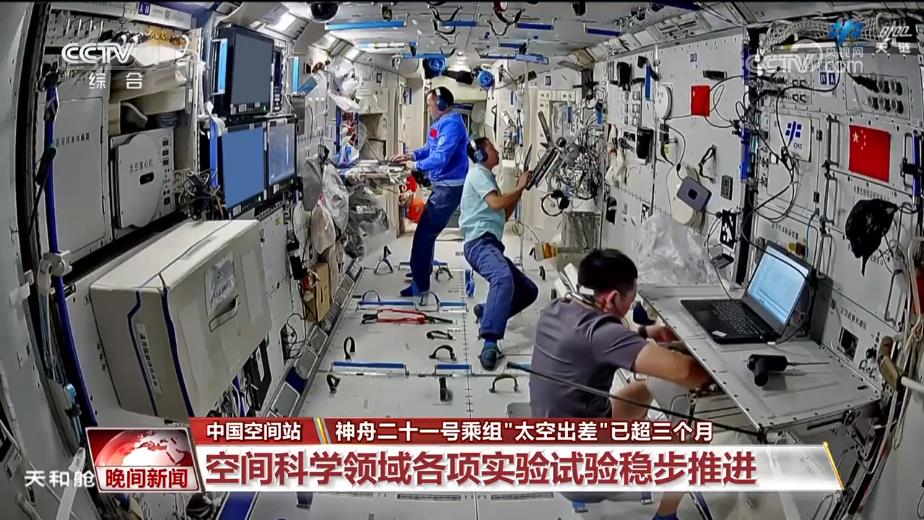
Core Viewpoint - The Shenzhou-21 crew, consisting of astronauts Zhang Lu, Wu Fei, and Zhang Hongzhang, has been on a space mission for over three months, continuing various experiments and environmental monitoring aboard the Chinese space station [1]. Group 1: Space Science Experiments - In the field of space medicine, the crew has completed blood sample collection and processing, which will be used to study the physiological changes and adaptation mechanisms of astronauts' skeletal, neural, and cerebrovascular systems during long-duration flights [2]. - The crew is conducting experiments on the effects of microgravity on visual asymmetry and its cognitive neural mechanisms using a laptop [4]. - Ongoing experiments in the field of microgravity physical sciences are being carried out [4]. Group 2: Environmental Monitoring - The crew is monitoring the thermal environment inside the station and conducting air cleanliness tests using equipment such as dew point meters [5]. Group 3: Health Management - Health management includes the use of an adhesive device to stimulate lower limb flexor muscles during exercise in a weightless environment, fulfilling exercise requirements [6]. - The crew has completed multiple medical checks, including intraocular pressure and fundus examinations, as well as overall visual function measurements and orbital B-scan measurements [6].

周末影响市场消息集锦!央行连续第15个月增持黄金,我国成功发射可重复使用试验航天器,SpaceX推迟今年的火星探测任务
Jin Rong Jie· 2026-02-08 11:40
Domestic Finance - The People's Bank of China and seven other departments issued a notice to further prevent and address risks related to virtual currencies, stating that any losses incurred by individuals or entities investing in virtual currencies and related financial products will be borne by themselves [2][3] - As of January 2026, China's gold reserves reached 74.19 million ounces, marking a continuous increase for the 15th month [7] - The total scale of ETFs in China reached $860 billion, maintaining its position as the largest ETF market in Asia [8] Capital Market - The Shanghai Gold Exchange adjusted the margin levels and price limits for certain contracts, increasing the margin for Au (T+D) contracts from 17% to 18% and for Ag (T+D) contracts from 23% to 24% [9] - Guotou Ruijin Fund established a working group to address investor concerns regarding the silver LOF fund, emphasizing a commitment to investor rights [10] International Finance - Tesla is reportedly evaluating multiple sites in the U.S. to expand its solar battery manufacturing capabilities, aiming for an annual production capacity of 100 gigawatts within three years [11] - SpaceX has postponed its Mars exploration mission originally scheduled for this year, prioritizing a lunar landing by March 2027 [12]
2月载人绕月飞船发射被喊停!马斯克态度反转:助力NASA载人登月
Sou Hu Cai Jing· 2026-02-08 06:24
Core Viewpoint - The Artemis 2 mission, initially scheduled for launch on February 6, has been postponed to March due to a fuel leak incident during a wet dress rehearsal on February 2, highlighting ongoing technical challenges in NASA's lunar program [1][4]. Group 1: Mission Details - The Artemis 2 mission aims to send four astronauts to lunar orbit, marking a significant step compared to the uncrewed Artemis 1 mission [4]. - The wet dress rehearsal was intended to integrate and test all systems on the Space Launch System (SLS) rocket, but a fuel leak occurred during propellant loading [3][4]. - NASA has emphasized the importance of resolving the fuel leak issue before proceeding with the launch, prioritizing astronaut safety [4][5]. Group 2: Technical Challenges - The fuel leak issue is not new, as similar problems were encountered during the Artemis 1 mission's wet dress rehearsal, which led to significant delays [3][4]. - NASA's current launch window extends from February to April, and further delays could result in missing this critical opportunity [5]. - If the March launch does not occur, the SLS rocket may require additional repairs, including battery replacements, complicating the timeline further [5]. Group 3: Role of SpaceX - SpaceX is playing a crucial role in the Artemis program by providing the lunar lander, while Boeing and Lockheed Martin are responsible for the rocket and spacecraft, respectively [5][7]. - Despite SpaceX's successes with other missions, the development of the lunar lander is reportedly facing delays, which could impact the overall timeline for returning astronauts to the Moon [5][7]. - SpaceX has prioritized the lunar lander project over its Mars mission, indicating the significance of the lunar objectives for both NASA and SpaceX [7][14]. Group 4: Broader Implications - The delays in the Artemis program raise concerns about the feasibility of achieving the goal of returning humans to the Moon by 2024, reflecting the complexities and challenges of the U.S. space program [8]. - The potential shift in focus from lunar missions to Mars, as suggested by previous statements from political figures, could jeopardize the technological advancements made for lunar exploration [10]. - Achieving a manned Mars landing remains a formidable challenge, with the need to overcome significant technical hurdles and environmental risks [11][13].
中国成功发射可重复使用试验航天器,它究竟是什么?
Xin Lang Cai Jing· 2026-02-08 03:09
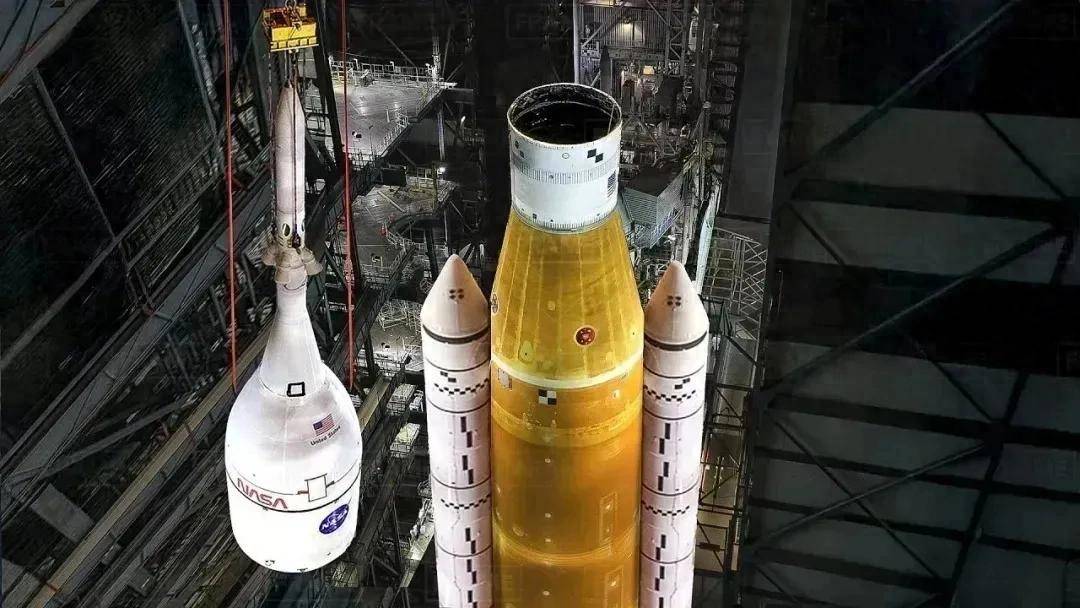
Core Insights - China has made significant advancements in the aerospace sector, particularly in reusable spacecraft technology, with recent successful launches and ongoing developments aimed at enhancing space exploration capabilities [1][12]. Group 1: Recent Developments - On February 7, China successfully launched a reusable experimental spacecraft using the Long March 2F rocket from the Jiuquan Satellite Launch Center, aimed at validating reusable spacecraft technology [1]. - The Long March 2F rocket is primarily used for launching crewed Shenzhou spacecraft and large target vehicles into low Earth orbit [1]. - Previous successful tests include a reusable spacecraft that flew for 276 days before returning on May 8, 2023, marking a significant breakthrough in China's reusable spacecraft technology [12]. Group 2: Technical Characteristics - Reusable spacecraft can include crewed ships, cargo ships, propulsion vehicles, planetary landers, and space shuttles, designed for rapid atmospheric re-entry and return to Earth [13]. - The ability to reuse spacecraft is crucial for reducing operational costs and shortening development cycles, making it a focal point in current aerospace research [14]. Group 3: International Comparisons - China's reusable spacecraft have achieved impressive in-orbit durations, with a record of 276 days, surpassing the U.S. X-37B's 224 days [15]. - The U.S. SpaceX has developed reusable systems like the Dragon cargo and crew spacecraft, which have significantly reduced costs for space missions [14]. Group 4: Future Plans and Innovations - The "Haolong" cargo spaceplane, designed by the Aviation Industry Corporation of China, is set to be a low-cost reusable vehicle for transporting goods to the Chinese space station [16]. - The new generation of crewed reusable spacecraft, "Mengzhou," is planned for its first flight in 2026 [17]. - Private companies like Ziwei Technology and ChuanYueZhe are also developing reusable spacecraft, with plans for various missions and commercial space operations by 2026 [18][19].

微醺的马斯克聊嗨了:盛赞中国、预言天上的 AI
程序员的那些事· 2026-02-08 01:36
Core Viewpoint - The discussion highlights Elon Musk's vision for space as the future hub for AI infrastructure, predicting that within 30 to 36 months, space will become the most economically attractive location for deploying artificial intelligence capabilities [4][17]. Group 1: Space as AI Infrastructure - Musk argues that the primary reason for establishing data centers in space is the efficiency of solar energy generation, which can be five times more effective in space compared to Earth [13][29]. - He predicts that in five years, the annual AI computing power launched and operated in space will exceed the cumulative total on Earth, potentially reaching 1 terawatt of power generation [37][59]. - The challenges of energy supply on Earth, including the slow pace of utility companies and the difficulties in scaling up power generation, make space a more viable option for large-scale AI operations [7][18]. Group 2: Energy and Chip Production - Musk emphasizes that the current bottleneck for AI deployment is energy supply, which is stagnant outside of China, while chip production is rapidly increasing [8][57]. - He notes that the average power consumption in the U.S. is about 500 gigawatts, and achieving 1 terawatt of power generation in space would require significant advancements in energy production and chip manufacturing [18][59]. - The manufacturing of solar panels for space is expected to be cheaper and easier due to the absence of weather-related constraints, which would reduce costs significantly [31][63]. Group 3: Challenges in Scaling Production - Musk highlights the difficulties in building power plants and the long lead times for turbine manufacturing, which can take years due to high demand and limited suppliers [25][34]. - He mentions that the production of chips is also constrained by existing semiconductor manufacturing capabilities, which are insufficient to meet future demands [49][56]. - The need for a new approach to chip manufacturing, potentially through unconventional methods, is crucial for achieving the required scale for AI operations [50][52]. Group 4: Competitive Landscape and Future Outlook - Musk warns that without breakthrough innovations in the U.S., China is poised to dominate the AI and manufacturing sectors due to its advanced capabilities and larger workforce [96][97]. - He believes that the future of companies will be dominated by those fully utilizing AI and robotics, which will outperform any human-involved enterprises [81][82]. - The discussion also touches on the potential for SpaceX to become a super-scale cloud service provider, with AI computing power surpassing all terrestrial capabilities [41][42].

“公司终局是纯 AI、纯机器人!”马斯克酒后激进预言:让机器人造机器人,未来要靠AI留着人类智能
AI前线· 2026-02-07 05:33
Core Insights - The core argument presented is that relocating computational power to space is not primarily about cost savings on electricity, but rather about addressing the limitations of terrestrial energy production, which cannot keep pace with the exponential growth of chip computing power [2][5][6]. Group 1: Space Data Centers and Energy Challenges - Musk emphasizes that the main issue is energy supply, as global electricity generation outside of China is stagnating, while chip computing power is growing exponentially [6][10]. - He argues that building solar power plants on Earth faces significant regulatory hurdles, making space a more viable option for energy generation [8][10]. - In space, solar energy efficiency is projected to be five times greater than on Earth, eliminating the need for battery storage, thus making it a more cost-effective solution for AI deployment [8][9][16]. Group 2: AI Deployment and Future Predictions - Musk predicts that within five years, the amount of AI deployed and operational in space will exceed the cumulative total on Earth, with annual AI capacity in space potentially reaching hundreds of gigawatts [24][26]. - He asserts that the future of the strongest companies will be a closed loop of pure AI and robotics, minimizing human involvement in processes to enhance efficiency [3][24]. Group 3: Manufacturing and Supply Chain Bottlenecks - The discussion highlights that manufacturing capabilities, particularly for critical components like turbine blades, are significant bottlenecks in scaling energy production [12][13][20]. - Musk indicates that SpaceX and Tesla are working towards achieving a solar power capacity of 100 gigawatts, emphasizing the need for a complete supply chain from silicon to solar panels [14][15][16]. Group 4: SpaceX's Business Model and IPO Considerations - Musk discusses the potential for SpaceX to become a major supplier of computational power in space, likening it to a cloud service provider [25][29]. - He notes that the public market offers significantly more capital than private markets, which may necessitate an IPO to fund future expansions [31][32][36]. Group 5: AI and Human Interaction - Musk expresses concerns about the future relationship between humans and AI, suggesting that as AI intelligence surpasses human intelligence, the focus should be on ensuring AI values support the continuation of human civilization [54][55][61]. - He argues that the ultimate goal should be to maximize the range and longevity of consciousness and intelligence, which includes the preservation of human civilization [55][60].
SpaceX推迟火星计划,转而侧重于登月任务
智通财经网· 2026-02-07 01:30
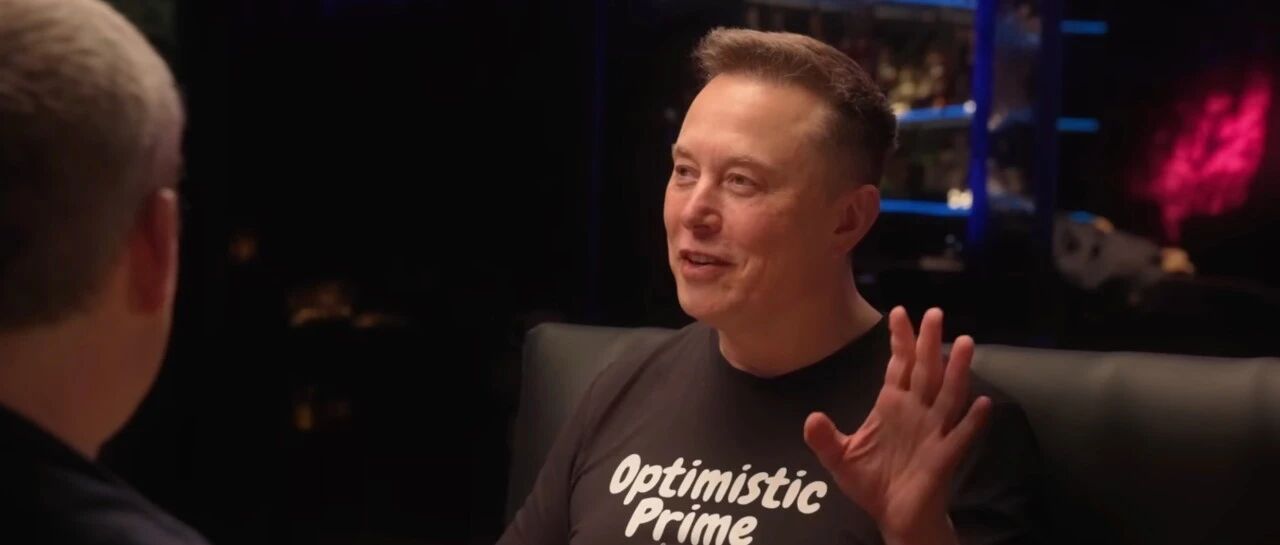
Group 1 - SpaceX has postponed its Mars mission originally scheduled for this year, shifting focus to a long-term commitment to NASA's lunar mission [1][2] - The company aims to achieve an unmanned lunar landing by March 2027, as part of its strategic adjustment [1] - SpaceX is also advancing plans to launch AI data centers into space, following the acquisition of Elon Musk's startup xAI, which has led to a combined company valuation of $1.25 trillion [1] Group 2 - SpaceX is utilizing billions of dollars in funding from NASA to develop the Starship rocket, which is over 400 feet tall and designed to be fully reusable [2] - The company faces significant challenges to meet the March 2027 lunar timeline, requiring frequent Starship launches and the ability to refuel spacecraft in orbit [2] - NASA has previously pressured SpaceX to prioritize the lunar mission, indicating that the company's progress has been lagging [2] Group 3 - SpaceX has proposed a "simplified" crewed lunar landing path to NASA, amid competition from Blue Origin, which is also focusing on lunar landing systems [3] - NASA plans to execute the Artemis II manned lunar flyby mission soon, which will lay the groundwork for potential crewed lunar landings by SpaceX or Blue Origin in 2028 [3]