
茶饮料

Search documents
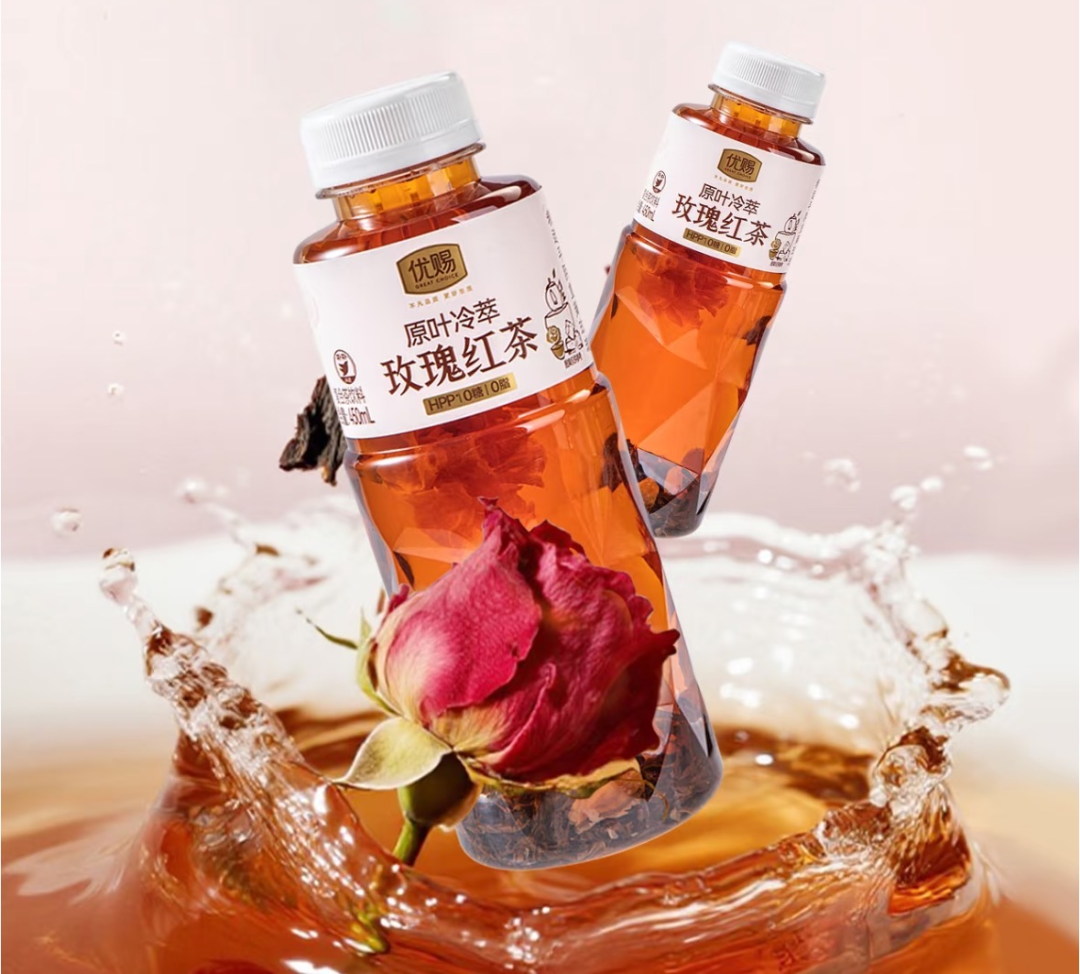
谁在押注HPP冷萃茶?盒马、胖东来、Olé入场
Xin Lang Cai Jing· 2025-10-27 05:49
Core Insights - HPP cold brew tea is emerging as a new product category in refrigerated shelves, traditionally dominated by milk, yogurt, and juice, leveraging high-pressure processing (HPP) technology to extend shelf life to 90 days while maintaining freshness [1][5][20] - The product has gained significant consumer acceptance, with high ratings on platforms like Hema and Pupu, indicating a strong market demand [1][3] - The cold brew tea market is projected to see explosive growth, with sales expected to increase by 261% and volume by 68% from 2024 to 2025 [3][20] Product Characteristics - HPP cold brew tea combines visible tea leaves with a filter to prevent ingestion, and its ingredient list is minimal, consisting only of water and tea leaves, which appeals to health-conscious consumers [1][10] - The product requires refrigeration at 0-8°C and has a shelf life of 90 days, contrasting with traditional teas that often have longer shelf lives [1][10] - HPP technology effectively eliminates harmful microorganisms, allowing the tea to be marketed as safe for consumption even after extended periods [5][7] Market Dynamics - Major retailers like Hema, Pupu, and others are introducing their own HPP cold brew tea products, indicating a growing trend in the beverage industry [12][16] - The pricing strategy positions HPP cold brew tea as a premium product, with prices ranging from 5 to 9 yuan per bottle, which is significantly higher than traditional unsweetened teas [10][23] - The target demographic for HPP cold brew tea is primarily Gen Z consumers, who are more open to trying innovative products [25][26] Challenges and Opportunities - The HPP cold brew tea segment faces challenges such as high production costs and the need for a fully industrialized production process, which currently involves manual labor [21][23] - Despite the challenges, the product represents a shift towards fresher, more natural beverage options, aligning with consumer trends favoring quality and health [26]

如何防止ESG表演与漂绿?专家:需要能力建设而非表面功夫
Nan Fang Du Shi Bao· 2025-10-24 10:28
Core Viewpoint - The rapid development of ESG (Environmental, Social, and Governance) in China highlights its increasing importance for businesses to maintain competitive advantages and achieve sustainable growth, especially under the "dual carbon" goals. Companies must balance their development with "dual carbon" practices and convert the pressures of these goals into business opportunities [2][4][10]. Group 1: Challenges for SMEs - SMEs face significant challenges in communicating with the government and understanding future development directions and policy trends, often being at a disadvantage compared to large enterprises that can hire international consulting firms for comprehensive dual carbon strategies [2][4]. - The Hong Kong Productivity Council has launched an ESG platform that allows SMEs to diagnose their positioning and weaknesses through a free questionnaire, serving as a secretariat for various government funding applications [4]. Group 2: Business Model Transformation - The balance between "dual carbon" practices and business development is seen as an opportunity to reshape business models rather than merely a cost consideration. For instance, BYD leveraged the "dual carbon" policy to become a leader in China's electric vehicle market [4][6]. - Companies should adopt strategies that align with their specific stages of development, focusing on ESG growth while balancing profitability and market expansion [6]. Group 3: ESG as a Competitive Advantage - Companies can differentiate their brands through effective ESG practices, enhancing consumer emotional connection and loyalty. A well-designed top-level strategy can lead to natural and successful outcomes [9]. - The implementation of ESG initiatives can drive cost reduction and efficiency improvements, as demonstrated by companies like Betaini, which utilized solar power and energy-saving technologies to enhance operational quality [9][10]. Group 4: ESG Investment Perspective - Companies should view ESG not as a compliance cost but as a core competitive investment for the future. This perspective allows them to transform ESG from a cost item into a revenue-generating aspect by aligning with consumer values, particularly among younger generations [10][12]. - Effective ESG management can mitigate future costs related to environmental compliance and supply chain disruptions, thus serving as a risk management tool [12]. Group 5: Identifying "Greenwashing" - There is a need for companies, especially SMEs, to focus on genuine capability building rather than superficial efforts in ESG. Establishing a Chief Sustainability Officer (CSO) can help ensure accountability and effective implementation of ESG strategies [13]. - Common forms of "greenwashing" include selective disclosure and setting vague long-term goals without clear implementation paths [13][14]. Group 6: Regional ESG Development - The Greater Bay Area's production-focused enterprises can benefit from enhanced cooperation to accelerate their "dual carbon" processes, with the Hong Kong government supporting mainland enterprises in carbon accounting services [17]. - A robust ESG system and certification can serve as a "hard currency" in procurement, supply chains, and capital markets, establishing a unified trust metric that reduces communication and verification costs [17][18].

这样的无糖饮品还挺“甜”
Ren Min Ri Bao Hai Wai Ban· 2025-10-23 00:05
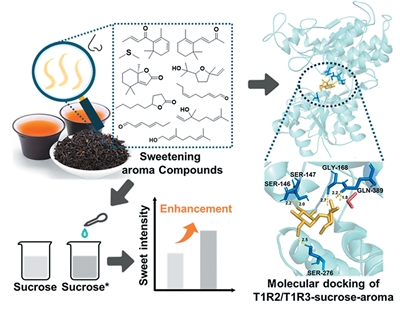
Core Insights - Recent advancements in tea flavor research by the Chinese Academy of Agricultural Sciences reveal that aroma components in tea not only influence fragrance but also significantly enhance the perception of natural sweetness [2][3] - The study provides a theoretical basis for developing natural sweetness enhancers, which holds substantial application value for sugar-free and low-sugar tea beverages and other food products [2][6] Research Findings - The research team identified a phenomenon where the perception of sweetness in tea diminishes when consumed while pinching the nose, suggesting that aroma components may play a synergistic role in enhancing sweetness perception [3][4] - A three-step research approach was employed to identify key aroma molecules, leading to the selection of 18 volatile compounds that are highly associated with sweetness [4][5] - Specific aroma components, such as linalool and geraniol, were found to increase the sweetness intensity of tea by over 15% when added to sucrose solutions [5] Industry Implications - The findings provide a new sensory modulation approach for the food industry, enhancing flavor experiences at the molecular level without solely relying on sugar or artificial sweeteners [5][6] - The research supports the trend of reducing sugar intake in beverages and foods, offering a solution for achieving "less sugar without sacrificing sweetness" [6] - Collaborations with companies are underway to validate the feasibility of aroma-enhanced sweetness technology in product development, showcasing a modern research direction for traditional beverages [6]
新茶饮赚疯了,卖茶叶的为啥挣不到钱?
Hu Xiu· 2025-10-22 08:35
Core Insights - The traditional tea industry in China is facing significant challenges, with many businesses experiencing a sharp decline in sales and closures, while new tea beverage brands are thriving and expanding rapidly [1][3][6] Industry Overview - The tea industry in China is vast, with a total production value projected to reach approximately 330 billion yuan by 2025, and the entire industry chain exceeding one trillion yuan [1] - The market is characterized by a large number of small and medium-sized enterprises, with a few leading companies shaping the industry dynamics [2] Market Trends - New tea beverages account for about 10% of tea sales and are seen as a potential savior for the traditional tea industry, driving significant growth and providing a new revenue stream for upstream tea producers [6][7] - The new tea beverage sector has shown impressive performance, with total revenue exceeding 300 billion yuan in the first half of the year, and individual brands like Mixue Ice City achieving over 10 billion yuan in revenue [6][7] Capitalization Challenges - Traditional tea companies, such as Baima Tea, have faced numerous challenges in their attempts to go public, highlighting the difficulties in capitalizing the tea industry [3][4][5] - The lack of successful listings for traditional tea companies on the A-share market reflects a broader trend of capital disinterest in the sector [3][4] Brand and Product Differentiation - The tea industry struggles with brand recognition and standardization, making it difficult for companies to establish strong market positions [9][10][11] - The non-standard nature of tea products complicates consumer decision-making, as quality and value are often subjective [9][10] Consumer Behavior Shifts - The younger generation, particularly Generation Z, is driving changes in tea consumption preferences, favoring convenience and diverse flavors, which has led to the rise of new brands that leverage social media for marketing [21][22] - Online sales channels are flourishing, but they also present challenges, including issues of quality and trust among consumers [22] Future Outlook - The tea industry must find a balance between industrial efficiency and the cultural significance of tea, as it navigates the complexities of modernization and consumer expectations [22]

这样的无糖饮品还挺“甜”(科技瞭望)
Ren Min Ri Bao Hai Wai Ban· 2025-10-21 23:02
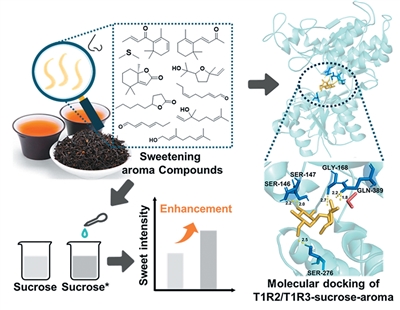
Core Insights - The research conducted by the Chinese Academy of Agricultural Sciences has made significant progress in understanding the flavor of tea, revealing that aroma components not only influence the tea's fragrance but also enhance the perception of natural sweetness [4][5] - This discovery provides a theoretical basis for developing natural sweeteners, which is particularly valuable for the development of sugar-free and low-sugar tea beverages and other food products [4][8] Research Findings - The research team identified that the aroma compounds in tea can play a synergistic role in enhancing sweetness perception, challenging the traditional focus on sugar and sweet amino acids as the primary contributors to sweetness [5][6] - A "blind test" experiment demonstrated that specific aroma compounds significantly increased the sweetness of tea samples, with certain compounds like linalool and geraniol enhancing sweetness by over 15% when added to sugar solutions [7][8] Industry Implications - The findings suggest a new sensory regulation approach for the food industry, allowing for flavor enhancement through the synergy of aroma and taste rather than relying solely on sugar or artificial sweeteners [8] - The research indicates that adding trace amounts of sweet aroma compounds can increase the sweetness perception of low-sugar tea drinks by over 7.5%, equivalent to reducing sugar content by approximately 30% [8] - The methodology developed could be applied to other food systems, such as yogurt and fruit juices, to maintain sweetness while reducing caloric content [8]
八马茶业(06980) - 全球发售
2025-10-19 22:16
八馬茶業股份有限公司 Bama Tea Co., Ltd. (於中華人民共和國註冊成立的股份有限公司) 股份代號 : 6980 全球發售 聯席保薦人、整體協調人、聯席全球協調人、聯席賬簿管理人及聯席牽頭經辦人 重要提示 閣下對本招股章程任何內容如有任何疑問,應尋求獨立專業意見。 Bama Tea Co., Ltd. 八馬茶業股份有限公司 (於中華人民共和國註冊成立的股份有限公司) 全球發售 本招股章程連同本招股章程附錄七「送呈公司註冊處處長及展示文件」一段所述文件,已按香港法例第32章公司(清盤及雜項條文)條例第342C條規定,送交香 港公司註冊處處長登記。香港證券及期貨事務監察委員會及香港公司註冊處處長對本招股章程或上文所提及任何其他文件內容概不負責。 預期發售價將由整體協調人(為其本身及代表包銷商)與本公司於定價日協議釐定。預期定價日為2025年10月24日(星期五)(香港時間)或前後,且無論如何不 遲於2025年10月24日(星期五)中午十二時正(香港時間)。發售價將不高於每股發售股份50.00港元,且目前預期不低於每股發售股份45.00港元。香港發售股 份的申請人可能須於申請時(視乎申請渠道而定)就每 ...
45%消费者在晚安助眠茶价格上涨后保持忠诚!2025中国晚安助眠茶市场研究报告
Sou Hu Cai Jing· 2025-10-19 03:26
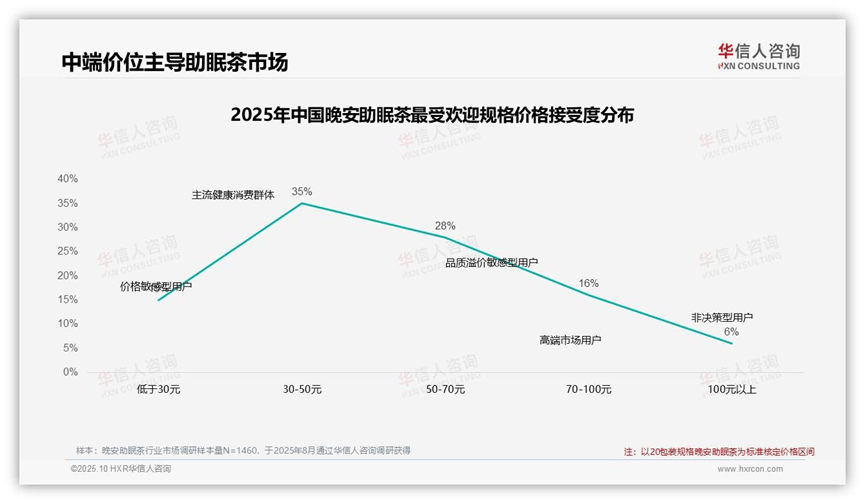
Core Insights - The research by HXR Consulting indicates that even with a 10% price increase for sleep tea, 45% of consumers continue to purchase, reflecting high brand loyalty [1][3] - The study, part of the "Insights 2025" series, surveyed 1,460 respondents, providing reliable and representative data for market dynamics and consumer behavior [1] Price Acceptance - The survey shows that the price range of 30-50 yuan dominates the market, accounting for 35% of consumer preferences, indicating a tendency towards mid-to-low priced products [1] - The 50-70 yuan range follows closely with 28%, while products priced below 30 yuan only represent 15% of the market [1] - High-end price segments (70-100 yuan and above 100 yuan) account for 16% and 6% respectively, suggesting limited acceptance for premium pricing among consumers [1] Price Sensitivity and Promotion Dependency - Despite the price increase, 32% of consumers would reduce their purchase frequency, and 23% would switch to other brands, highlighting the presence of price-sensitive consumers [3] - In terms of promotional dependency, 30% of consumers are lightly dependent on promotions, 27% moderately, and 18% highly dependent, totaling 75% influenced by promotional activities [3] - Conversely, 20% of consumers do not rely on promotions, and 5% have a negative attitude towards them, indicating the need for brands to carefully strategize their promotional efforts to avoid adverse effects [3] Summary - The sleep tea market is primarily driven by mid-range pricing, with consumers showing a strong focus on product value for money and notable brand loyalty amidst price fluctuations [5] - The insights derived from the data provide substantial support for industry decision-making, emphasizing the importance of understanding consumer purchasing preferences and behaviors [5]
终端冰茶战打了半年:康师傅“血厚”也难扛,农夫山泉、娃哈哈抢食,统一坐收渔利
3 6 Ke· 2025-09-22 03:49
Core Insights - The iced tea market is experiencing intense competition in 2025, with major brands like Nongfu Spring, JDB, Wahaha, and Dongpeng Beverage increasing their investments, while established players like Master Kong and Uni-President are also preparing for battle [1][2]. Market Dynamics - Master Kong, as the market leader, is facing significant competition but is actively launching new low-sugar flavors and leveraging celebrity endorsements to maintain its market position [2][3]. - Despite Master Kong's strong brand presence, its market share has been declining, with figures showing a drop from 22.82% in July 2024 to 22.01% in August 2025 [3][4]. - The company's revenue from beverage sales decreased by 2.6% year-on-year in the first half of 2025, attributed to price increases that have pressured retailers and reduced profit margins [4][5]. Competitive Landscape - Uni-President has benefited from Master Kong's challenges, with its market share rising from 5.68% to 7.26% between January 2024 and August 2025, alongside a 7.6% increase in beverage revenue [10][11]. - New entrants like Nongfu Spring and Wahaha are employing differentiated strategies to capture market share, with Nongfu Spring launching a carbonated iced tea and investing 2 billion yuan in R&D [12][15]. - The competitive landscape is shifting, with brands like Wahaha and Dongpeng gaining traction, as evidenced by increased sales and market share [13][15]. Promotional Strategies - Brands are engaging in aggressive promotional activities, such as discounts and giveaways, to attract consumers, with Master Kong and Uni-President also participating in these marketing tactics [17][18]. - The "1 yuan enjoyment" campaign has proven effective in boosting sales for brands like Dongpeng, which reported a 36.37% increase in revenue in the first half of 2025 [18]. Future Outlook - The iced tea market is expected to continue evolving with ongoing competition among established and new brands, potentially leading to significant changes in market dynamics [18].


茶的传人“东方美人”爆红:无糖茶的第二增长曲线?
Zhong Guo Shi Pin Wang· 2025-09-21 06:17
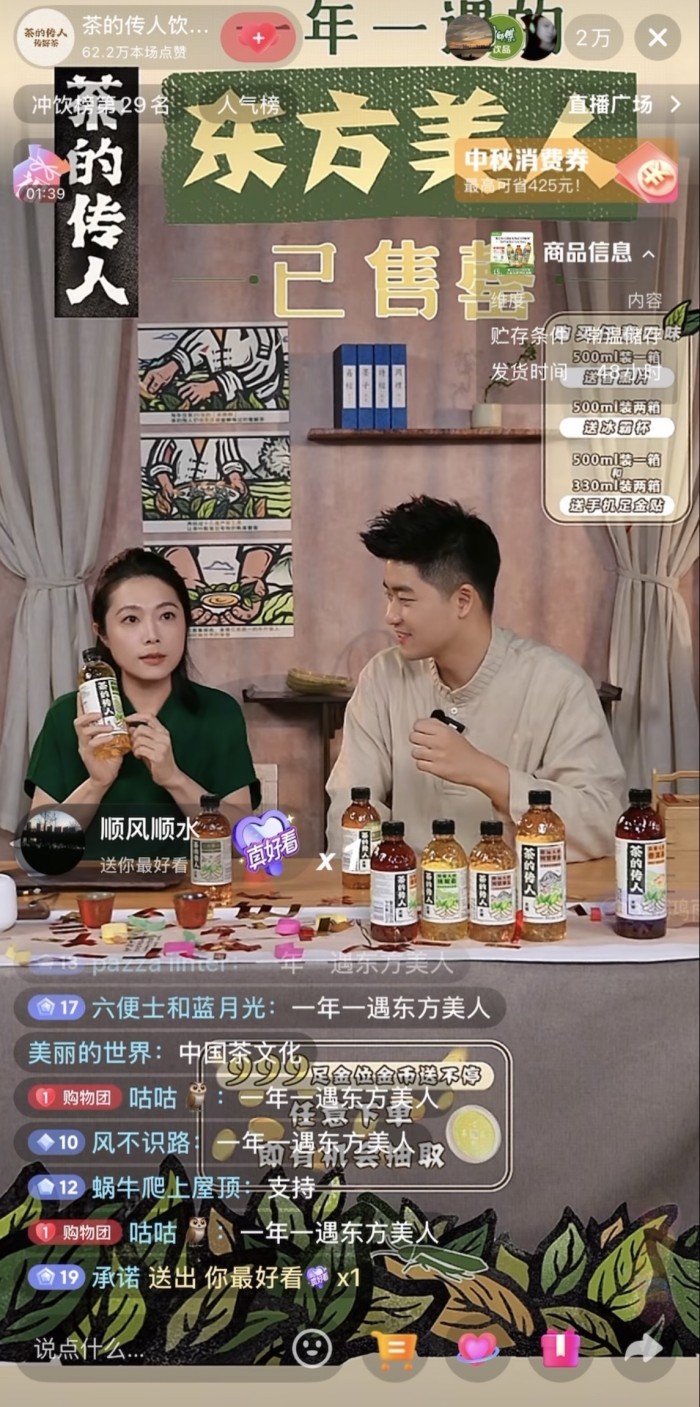
Core Insights - The launch of the limited edition "Oriental Beauty" tea by "Tea's Inheritor" has created significant buzz in the tea beverage market, selling out in just 83 minutes and attracting over 100,000 viewers during the live stream [1][4] - The rarity of "Oriental Beauty" is highlighted, with only about 0.2% of tea gardens in China able to produce it, requiring specific ecological conditions and meticulous harvesting processes [4][6] Company Overview - "Tea's Inheritor" has established itself as a leader in the sugar-free tea market by using high-quality, rare tea leaves and maintaining a strong supply chain and product development capabilities [6][12] - The company emphasizes a commitment to quality over quick market trends, focusing on a long-term strategy that integrates traditional tea-making techniques with modern consumer preferences [12][14] Industry Impact - The introduction of "Oriental Beauty" sets a new benchmark for sugar-free tea, pushing the industry towards higher quality standards and value competition [7][11] - "Tea's Inheritor" has created a value loop through its "True Land + True Tea + True Craftsmanship" model, which ensures that consumers can enjoy premium tea at accessible prices [9][12] Future Outlook - The sugar-free tea market is expected to continue evolving, with a need for innovation and high-quality offerings to stand out in a competitive landscape [15] - The success of "Tea's Inheritor" suggests that brands focusing on quality and deep market understanding will thrive in the future [15]
天福9月15日斥资1.21万港元回购4000股
Zhi Tong Cai Jing· 2025-09-15 09:14
天福(06868)发布公告,该公司于2025年9月15日斥资1.21万港元回购4000股股份,每股回购价格为3.02- 3.04港元。 ...