
核能

Search documents
聚变能纳入“十五五”发展蓝图 产学研各方共推产业破局
Zhong Guo Zheng Quan Bao· 2025-10-27 22:19
Core Insights - The Chinese government is prioritizing the development of advanced industries such as quantum technology, bio-manufacturing, hydrogen energy, nuclear fusion, brain-computer interfaces, embodied intelligence, and sixth-generation mobile communications as new economic growth points, aiming to reshape the high-tech industry over the next decade [1] Industry Developments - The controlled nuclear fusion sector is gaining significant attention from capital markets, with a growing confidence that fusion energy could be harnessed for power generation by the middle of this century [1][2] - The International Atomic Energy Agency (IAEA) reported that global commercial funding for fusion energy is expected to exceed $10 billion by 2025, with an unprecedented number of operational fusion devices [2] - The U.S. National Ignition Facility achieved a significant milestone in 2022 by demonstrating energy gain (Q>1), which is a critical step in proving the feasibility of controlled nuclear fusion [2] Technological Advancements - High-temperature superconducting magnets are identified as a transformative technology for the next generation of magnetic confinement fusion devices, enabling higher magnetic field strengths in more compact geometries [2] - China's new artificial sun, the "China Circulation No. 3" (HL-3), achieved significant temperature milestones, with atomic nuclei reaching 117 million degrees Celsius and electron temperatures at 160 million degrees Celsius [3] Company Initiatives - Various companies, including China Fusion Energy Co., Fusion New Energy, New Hope Group, Energy Singularity, and Star Ring Fusion, are exploring different technological pathways in the fusion energy sector, contributing to a diverse support structure for the nuclear fusion industry [3] - New Hope Group is pursuing a hydrogen-boron fusion reaction, which is non-radioactive and has abundant resources, although it presents greater technical challenges compared to deuterium-tritium fusion [5] Investment and Collaboration - The establishment of the China Fusion Energy Co. by China National Nuclear Corporation aims to focus on large scientific experiments and fusion reactor materials, with an expanding collaborative network involving 38 member units from state-owned enterprises, private companies, universities, and research institutions [6] - The fusion energy sector is experiencing increased competition and vitality due to the influx of commercial capital, which is expected to enhance technological breakthroughs and innovation [6] Global Cooperation - The IAEA emphasizes the importance of international collaboration in achieving commercial viability for fusion energy, advocating for shared scientific research, technology development, and engineering experiments [9] - China is actively integrating into the global fusion research network while accelerating its own innovations, contributing to the collective effort to realize fusion energy as a sustainable power source [8]

聚变能纳入“十五五”发展蓝图产学研各方共推产业破局
Zhong Guo Zheng Quan Bao· 2025-10-27 21:03
Core Insights - The Chinese government is prioritizing the development of advanced industries such as quantum technology, bio-manufacturing, hydrogen energy, nuclear fusion, brain-computer interfaces, embodied intelligence, and sixth-generation mobile communications as new economic growth points, aiming to reshape the high-tech industry over the next decade [1] - The controlled nuclear fusion sector is experiencing significant investment and technological advancements, with a focus on transitioning from research to engineering and commercial applications [2][3] - The global commercial interest in fusion energy has surged, with over $10 billion in funding expected by 2025, driven by recent technological breakthroughs [2][3] Industry Developments - The International Atomic Energy Agency (IAEA) has indicated that the global fusion energy exploration is entering a decisive new phase, with commercial funding in the fusion sector exceeding $10 billion by 2025 [2] - The U.S. Federal Fusion Systems Company has successfully tested high-temperature superconducting magnets, enhancing confidence in the engineering and commercialization of fusion energy [3] - China's fusion energy commercialization is accelerating, with various companies like China Fusion Energy Co., Fusion New Energy, and New Energy Group exploring different technological pathways [3][4] Technological Advancements - The Tokamak magnetic confinement method is recognized as the most mature technology for achieving controllable nuclear fusion, with significant progress made in China's artificial sun project [4] - The "Kua Fu Qi Ming" compact fusion energy experimental device is set to be completed by the end of 2027, utilizing advanced superconducting magnets and deuterium-tritium fusion fuel [4] - New Energy Group is pursuing a hydrogen-boron fusion reaction, which is less radioactive and has abundant resources, although it presents greater technical challenges [5][6] Investment and Collaboration - The establishment of the China Fusion Energy Co. by China National Nuclear Corporation aims to focus on large-scale experiments and fusion reactor materials, with a growing number of participants in the fusion innovation consortium [6] - The consortium has expanded to 38 members, including state-owned enterprises, private companies, and research institutions, fostering collaboration between academia and industry [6] - The need for talent in the fusion energy sector is critical, with a significant gap in skilled professionals due to the interdisciplinary nature of the field [7] Global Cooperation - The development of fusion energy is not only a challenge for China but a global issue, necessitating open innovation and international collaboration [8] - The IAEA emphasizes the importance of broad international cooperation to achieve commercial viability in fusion energy, including shared research and technology development [8]
新力量NewForce总第4890期
First Shanghai Securities· 2025-10-27 11:18
Group 1: Company Research - Cameco (CCJ.US) is rated as a "Buy" with a target price of $101, indicating a potential upside of 20.9% from the current price of $83.5[7] - The company holds an 18% global market share in uranium production, with a 2023 average extraction cost of $26–32 per pound U3O8, which is competitive compared to other regions[5] - Expected revenues for Cameco are projected at RMB 348.9 billion, RMB 403.7 billion, and RMB 436.7 billion for 2025, 2026, and 2027 respectively, with net profits of RMB 70.7 billion, RMB 111 billion, and RMB 133.5 billion[7] Group 2: Industry Commentary - Centrus Energy (LEU.US) is rated as a "Sell" with a target price of $231, reflecting a downside of 26.6% from the current price of $314.8[11] - The company is one of only two authorized to produce commercial low-enriched uranium (LEU), with a significant market opportunity due to U.S. policies reducing reliance on Russian uranium[11] - Oklo (OKLO.US) is also rated as a "Sell" with a target price of $92.5, indicating a potential downside of 23% from the current price of $120.1[17]



第一上海:铀迎来发展新周期 需持续关注重点公司机会
智通财经网· 2025-10-27 08:53
Group 1 - The new cycle for uranium is driven by three factors: sustained demand upgrades, tight midstream (conversion/enrichment) capacity, and a decline in secondary supply proportion, leading to a structurally tight balance [1] - The uranium industry is characterized by being technology-intensive and highly concentrated, with a few large companies controlling the upstream and midstream segments, significantly impacting the supply to downstream nuclear power plants [1] - Nuclear energy currently contributes 10% of global electricity generation, with 25% in Europe and 20% in the United States, making it a crucial source of power [1] Group 2 - According to WNA, global uranium concentrate supply and demand is expected to be barely balanced from 2025 to 2027, with a projected gap widening from -6 million pounds in 2026 to -14 million pounds by 2029 [2] - Secondary supply is expected to account for 13% of global reactor demand in 2025, but primary supply is anticipated to decline to 6% in the long term [2] - The conversion segment is facing ongoing shortages, while enrichment is experiencing regional gaps due to the de-Russification policies in Europe and North America, with an estimated enrichment gap of 30% by 2030 [2]
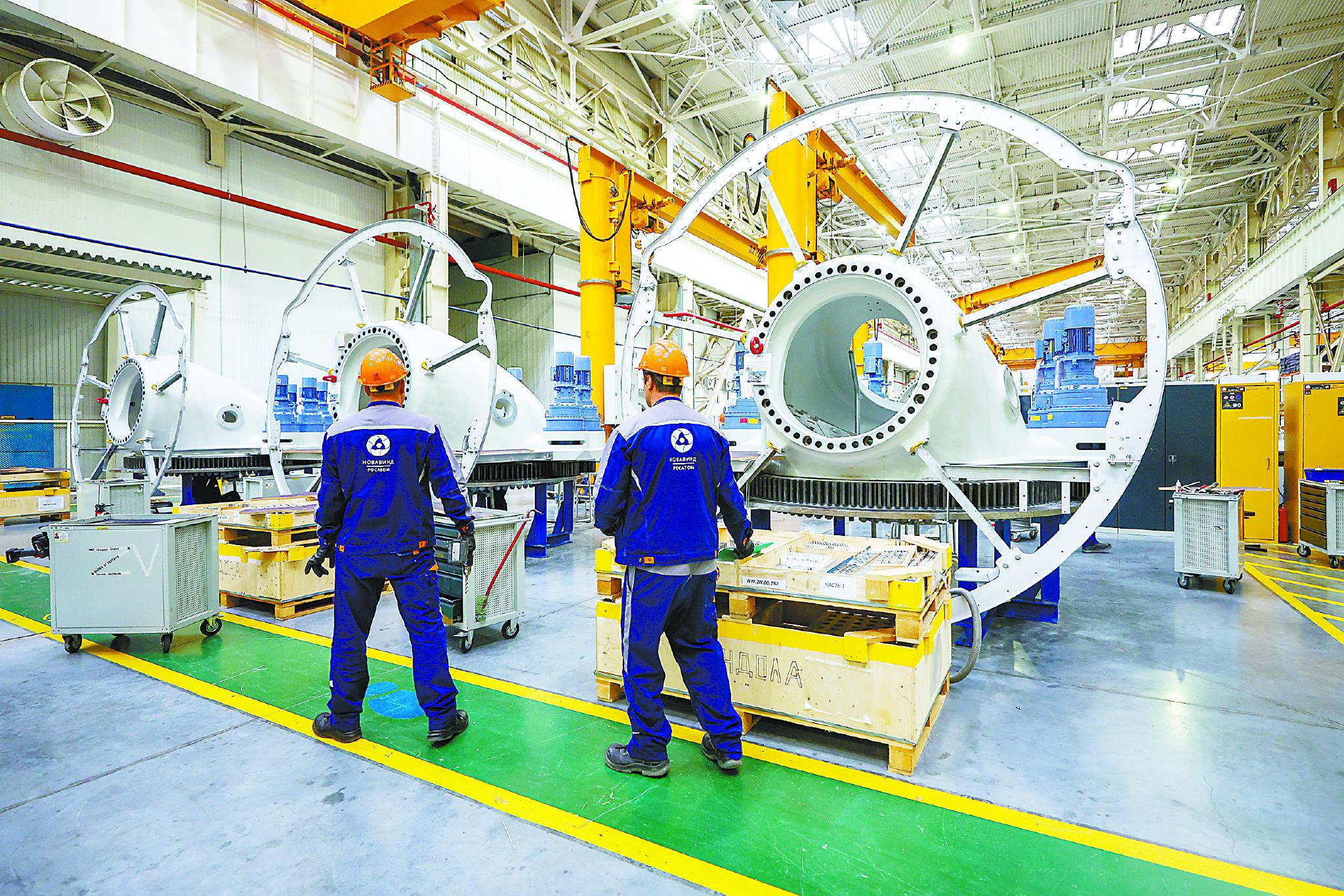
俄罗斯庆祝核工业诞生80周年
Huan Qiu Wang· 2025-10-26 23:01
Core Viewpoint - The article highlights the 80th anniversary of Russia's nuclear industry, celebrating its historical achievements and looking forward to new projects by the Russian State Atomic Energy Corporation [1][9]. Group 1: Historical Development - The establishment of the nuclear industry in Russia dates back to August 20, 1945, when the Soviet Union formed a special committee for atomic energy utilization, marking the beginning of its nuclear history [3]. - Key figures in the development of the Soviet nuclear industry included prominent scientists and Nobel laureates, contributing to the establishment of closed nuclear cities for research and development [4]. Group 2: Technological Achievements - The first nuclear power plant for peaceful energy use, the Obninsk Nuclear Power Plant, was launched in 1954, significantly changing global perceptions of nuclear energy [5]. - Russia currently operates 11 nuclear power plants, contributing nearly 20% to the country's total electricity generation, with plans for additional plants under construction [5]. Group 3: Current Operations and Global Presence - The Russian State Atomic Energy Corporation is a leading producer of radioactive pharmaceuticals and ranks among the top five isotope producers globally, with operations in over 60 countries [7][8]. - The corporation has significant uranium reserves, ranking second globally, and is the third-largest in uranium mining and nuclear fuel production [8]. Group 4: Economic Impact - In 2024, the corporation's revenue is projected to exceed 3 trillion rubles, with record investments in the Russian economy and social sectors [8]. - The official slogan for the 80th anniversary celebration, "Glory, Inspiration, Dreams," reflects the industry's commitment to peaceful nuclear energy and its ongoing expansion [8].

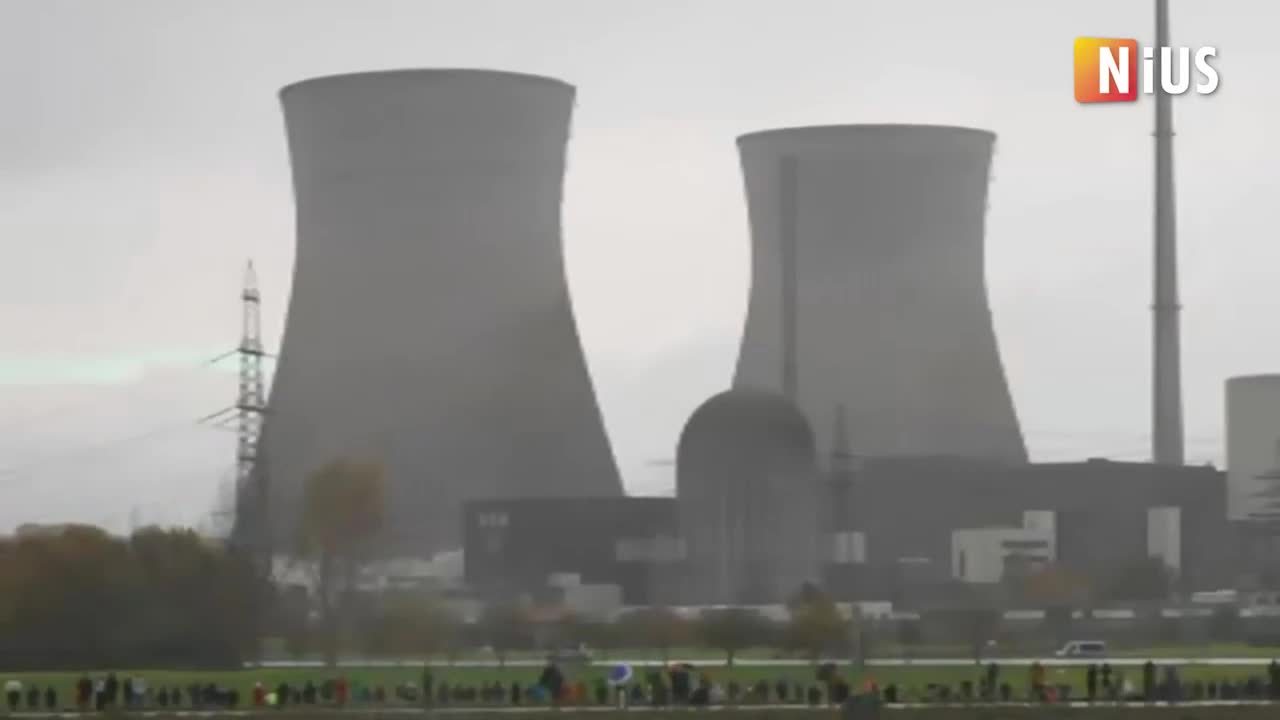
告别核能时代:德国爆破国内最强大核电站
Xin Lang Cai Jing· 2025-10-26 22:32
Core Points - Germany has officially ended its nuclear energy era with the demolition of the Gundremmingen nuclear power plant on October 25, 2023, marked by the collapse of two 160-meter cooling towers [1] - The last three operational nuclear power plants in Germany ceased operations in April 2023, contributing approximately 6% to the country's total electricity generation in 2022 [4] - The shutdown of nuclear power plants in Germany has been a gradual process, initiated by the amendment of the Atomic Energy Act in 2002, with a definitive decision made post-Fukushima disaster in 2011 to close all 17 nuclear plants by the end of 2022 [4] Industry Developments - Following the closure of all nuclear power plants, Westfalen Weser, a municipal energy company, plans to construct a battery storage facility on the site of a decommissioned nuclear power plant, aiming to create one of Germany's largest battery storage facilities with an initial capacity of 120 MW / 280 MWh [4]
集体拉升!美国突传大消息!
天天基金网· 2025-10-25 06:27
牛市来了还没上车?上天天基金APP搜索777注册即可领500元券包,优选基金10元起投!限 量发放!先到先得! 根据上述媒体获取的文件,美国能源部长克里斯·赖特(Chris Wright)近日敦促联邦能源监管委员会对 数据中心并网申请实施快速审批程序。根据赖特提交的拟议规则草案,此类审批将压缩至60天内完成, 这对当前可能长达数年的审批流程堪称重大变革。 报道称,加速审批将助力特朗普政府实现其人工智能发展蓝图。而对于急需建设高耗能数据中心的超大规 模企业而言,新规更是雪中送炭——这些企业正面临日益严峻的用电质疑,担心其巨大能耗会推高周边社 区的居民电费。 赖特在致美国联邦能源监管委员会(FERC)的信中强调:"为开创美国繁荣新纪元,我们必须保障全体 国民及本土产业获得可负担、可靠且安全的电力。要实现这一目标,包括人工智能数据中心在内由公用事 业公司供电的大型负荷用户,必须能够及时、有序且不受歧视地接入输电网系统。" AI的快速发展,离不开庞大的电力供应! 最新消息显示,特朗普政府正在推动监管机构大幅缩短数据中心接入电网的审批流程,以支持人工智能 (AI)数据中心的建设热潮。 受 上 述 消 息 影 响 , 周 ...

核聚变板块躁动,A股投资超级节点来了?
2 1 Shi Ji Jing Ji Bao Dao· 2025-10-24 23:25
Group 1: Core Insights - The International Atomic Energy Agency (IAEA) will release the "2025 World Fusion Outlook" report during the 30th Fusion Energy Conference in Chengdu, China, in October 2025, highlighting significant advancements in nuclear fusion and its transition from concept to reality through scientific breakthroughs, industrial capital, and international collaboration [1] - The domestic nuclear fusion project "BEST" has made breakthrough progress this year, with the establishment of local fusion industry entities and ongoing engineering tenders, indicating a rapid transition from laboratory to practical applications [1] - The A-share nuclear fusion sector has shown strong performance, with the Wind nuclear fusion index rising by 6.87% since October 1, 2023, and a peak increase of over 14% during this period [1] Group 2: Investment Pathways - The BEST project in Hefei, Anhui, has achieved a key breakthrough with the successful development and installation of the Dewar base, marking a new phase in the project's construction, expected to be completed by 2027 and demonstrate power generation by 2030 [2][3] - Nuclear fusion differs from traditional nuclear fission in terms of technology principles, maturity, and industry chain composition, with fission relying on uranium resources and fusion primarily utilizing deuterium, which can be extracted from seawater [5][6] - Companies involved in deuterium production include China Shipbuilding Special Gas (688146.SH), which has an annual production capacity of 10 tons of deuterium with high purity [7][8] Group 3: Key Materials and Technologies - Tritium, a critical fuel for nuclear fusion, is radioactive and scarce in nature, presenting a significant challenge for commercialization. Current methods involve breeding tritium through neutron bombardment of lithium-6 within reactors [8][9] - Companies providing tritium factory technology or key materials for tritium breeding, such as Dongfang Tantalum (000962.SZ) with beryllium materials, are essential for the industry [9] - The BEST project requires advanced vacuum environments for plasma containment, leading to high demand for vacuum chambers and core components, with companies like Hunan Zhiye (603011.SH) gaining popularity in this sector [9][10] Group 4: Industry Players - Major players in the nuclear fusion sector include Shanghai Electric (601727.SH) and Dongfang Electric (600875.SH), which have been involved in various fusion projects and are key contributors to the development of critical components for fusion reactors [10] - The ongoing collaboration among industry partners in large-scale nuclear fusion experiments is focused on addressing the early-stage challenges of commercializing laboratory fusion devices, indicating that the A-share nuclear fusion concept may not generate stable cash flow in the short term [10]


NANO Nuclear Energy Inc. (NNE) Discusses Commencement of Micro Modular Reactor Prototype Project and Stakeholder Support Transcript
Seeking Alpha· 2025-10-24 21:57
Core Points - NANO Nuclear Energy is initiating AECOM Drilling at the project site, indicating a significant step forward in their operations [1] - The event features remarks from various stakeholders, including NANO Nuclear's management, University of Illinois leadership, and representatives from engineering and construction firms [3] Company Overview - NANO Nuclear Energy is a publicly-traded company, and the management will be making forward-looking statements during the event, which are protected under U.S. securities law [2] - The management team will discuss the company's strategy, project support, and the value proposition of their technology [3] Stakeholder Engagement - The event includes participation from the University of Illinois, highlighting strong institutional support for the project [3] - Engineering, procurement, and construction management firm Hatch, along with construction firm PCL, will also express their support and interest in the project [3]


NANO Nuclear Energy (NasdaqCM:NNE) Partnerships / Collaborations Transcript
2025-10-24 16:32
Summary of NANO Nuclear Energy Conference Call Company and Industry Overview - **Company**: NANO Nuclear Energy Inc. (NasdaqCM: NNE) - **Industry**: Nuclear Energy, specifically focusing on micro modular reactors (MMRs) Key Points and Arguments 1. **Partnerships and Collaborations**: NANO Nuclear Energy is collaborating with the University of Illinois, engineering firm Hatch, and construction firm PCL to advance the KRONOS MMR technology, which is designed to meet complex power needs, particularly for data centers and military applications [1][2][3][4][5][6] 2. **Market Positioning**: NANO Nuclear Energy has raised over $600 million and achieved a market cap exceeding $3 billion, positioning itself as a leader in the microreactor space both in the U.S. and globally [9][11][12] 3. **Technological Advancements**: The KRONOS MMR is a high-temperature gas-cooled reactor that utilizes TRISO fuel, which is known for its safety and efficiency. The reactor is designed to be modular and transportable, allowing for deployment in various settings, including remote locations and military bases [28][29][30][31][34] 4. **Safety Features**: The KRONOS MMR boasts passive safety features, significantly reducing the emergency planning zone to the building itself, which enhances public acceptance and integration into existing infrastructures [35][36] 5. **Economic Viability**: The reactor's design allows for economies of scale through mass production, which can lower costs and improve deployment timelines compared to traditional large-scale reactors [17][39] 6. **Regulatory Support**: There is unprecedented federal support for nuclear energy, with significant funding allocated for infrastructure development, which is beneficial for NANO Nuclear Energy's initiatives [23][25] 7. **Workforce Development**: The project aims to create a new workforce skilled in advanced nuclear technologies, addressing the industry's need for trained professionals [58][59] Additional Important Content 1. **Community and Educational Impact**: The project is expected to create opportunities for students and researchers at the University of Illinois, aligning with the university's mission to serve society and advance clean energy goals [5][6][50] 2. **Construction and Engineering Expertise**: Hatch and PCL bring extensive experience in managing complex nuclear projects, ensuring that the KRONOS MMR is constructed efficiently and effectively [61][70] 3. **Future Prospects**: The successful deployment of the KRONOS MMR could pave the way for further advancements in nuclear technology, addressing urgent energy needs in various sectors, including data centers and remote communities [65][66] This summary encapsulates the key discussions and insights from the conference call, highlighting NANO Nuclear Energy's strategic initiatives, technological innovations, and collaborative efforts in the nuclear energy sector.