
网约车

Search documents
透视网约车“切单”乱象
Zhong Guo Qi Che Bao Wang· 2025-10-30 09:36
Core Viewpoint - The article discusses the issue of "order cutting" in the ride-hailing industry, where platforms reassign orders to other drivers, often leading to lower earnings for the original drivers and raising concerns about fairness and transparency in the industry [2][3][4]. Group 1: Order Cutting Phenomenon - "Order cutting" refers to the practice where platforms reassign orders to nearby drivers, even if the original driver is close to picking up the passenger, under the guise of optimizing service efficiency [2][3]. - Drivers have reported that after being cut from an order, the platform often resells the order at a lower price to other platforms, increasing the platform's commission while not benefiting the drivers [3][4]. - The prevalence of "order cutting" has led to widespread dissatisfaction among drivers, who feel that their chances of receiving lucrative orders are diminished [3][4]. Group 2: Legal and Regulatory Implications - Legal experts suggest that platforms may be in breach of contract if they enforce "order cutting" through automated systems, and passengers have the right to seek explanations for order cancellations [6]. - Various regions are exploring regulatory measures to address "order cutting," including blockchain technology for order tracking and requiring platforms to disclose their order assignment logic [6][7]. - The success rate of lawsuits initiated by drivers against "order cutting" practices stands at 38%, indicating some legal support for drivers' rights, although the process can be resource-intensive [5][6]. Group 3: Market Dynamics and Industry Challenges - The ride-hailing industry in China is projected to reach a market size of approximately 317.6 billion yuan by the end of 2024, reflecting a year-on-year growth of 24.5% [7]. - Despite the growth in market size, the oversupply of drivers has led to decreased earnings, with average hourly income for drivers dropping by 12.9% in 2024 compared to 2023 [7][8]. - The competitive landscape has driven platforms to adopt low-price strategies, resulting in a cycle of low quality and low earnings, which further complicates the industry's economic viability [8][9]. Group 4: Future Directions and Recommendations - The future of the ride-hailing industry hinges on achieving a balance between market scale and industry value, with a focus on service quality rather than price competition [9]. - Platforms are encouraged to enhance operational efficiency through intelligent dispatching and to consider driver welfare in their business models [9]. - Regulatory bodies are urged to create long-term mechanisms that adapt to market changes, ensuring fair practices and protecting the rights of both drivers and passengers [9].


上汽孵化、阿里“宁王”押注,享道出行冲刺港股IPO
Sou Hu Cai Jing· 2025-10-30 08:21
Core Viewpoint - The company, Xiangdao Mobility, has officially submitted its IPO application to the Hong Kong Stock Exchange, aiming to raise funds for autonomous driving research, Robotaxi operations, and expanding its user and driver base [2][3]. Group 1: Company Overview - Xiangdao Mobility, originally established as Shanghai Saike Mobility Technology Service Co., Ltd. in April 2018, was restructured into a joint-stock company in September 2023 [3]. - The company has achieved significant growth, with over 20 million registered users and a 97% user satisfaction rate within two years of operation [4]. - As of June 2023, Xiangdao Mobility has expanded its services to 85 cities in China, with approximately 1.062 million registered drivers [8]. Group 2: Financial Performance - In the first half of 2023, the company reported revenues exceeding 3 billion RMB, with a net loss narrowing to 115 million RMB [11]. - The revenue breakdown for 2022-2024 shows that income from ride-hailing services was approximately 33.61 billion RMB in 2022, 42.09 billion RMB in 2023, and projected at 49.91 billion RMB in 2024 [9][10]. - The company has raised a total of 2.63 billion RMB through three rounds of financing, with the latest C round raising 1.3 billion RMB [6][8]. Group 3: Market Position and Strategy - Xiangdao Mobility ranks fifth among domestic ride-hailing platforms by Gross Transaction Value (GTV) and second in Shanghai by completed orders [8]. - The company has established a comprehensive service model that includes ride-hailing, vehicle rental, and Robotaxi services, aiming to provide a one-stop travel solution [8][9]. - The company is also focusing on the development of its Robotaxi service, having received the first demonstration operation license for unmanned driving in Shanghai [10].


最高法典型案例:网约车交通事故致乘客损害,平台应依法担责
Nan Fang Du Shi Bao· 2025-10-30 07:57
Group 1 - The case highlights the responsibility of ride-hailing platform companies as carriers to ensure passenger safety and uphold their legal rights [2][3] - A technology company operating a ride-hailing platform was ordered to compensate a passenger for injuries sustained due to driver negligence, amounting to over 230,000 yuan [1][2] - The court established a contractual relationship between the passenger and the ride-hailing platform, affirming the platform's liability for damages incurred during transportation [2][3] Group 2 - The Supreme Court emphasized the growing importance of ride-hailing services in daily transportation and the need for platforms to enhance safety management and service quality [3] - The ruling serves as a precedent to encourage ride-hailing companies to improve operational safety and provide a reliable travel experience for passengers [3]
Uber CEO:20多年后所有汽车都能自动驾驶 开车像骑马
Feng Huang Wang· 2025-10-30 01:54
Group 1 - Uber CEO Dara Khosrowshahi predicts that in over 20 years, all cars will be fully autonomous, potentially reducing the number of private vehicles and improving safety metrics due to fewer errors compared to human drivers [1] - Khosrowshahi emphasizes that society must consider whether human driving should be allowed on open roads as autonomous driving technology matures, suggesting that human driving will eventually be less safe than automated systems [1] - The discussion comes at a time when various companies are launching autonomous taxi services and introducing autonomous driving systems for private vehicles, highlighting the ongoing developments in the industry [1] Group 2 - Waymo has expanded its autonomous vehicles to multiple cities but maintains a cautious approach regarding business expansion, often opting for strategic contraction when deploying autonomous taxis [2] - Uber has partnered with Waymo to manage Waymo's autonomous fleet in Austin, marking Uber's first integration of fully driverless ride-hailing services into its app [2]


滴滴又在日本发力,但逻辑变了
3 6 Ke· 2025-10-30 00:38
Core Insights - Didi's operational strategy in Japan reflects a broader shift among Chinese internet companies venturing abroad, moving from aggressive expansion to focusing on finding seed users [1][11] - The challenges faced by Didi in Japan highlight the difficulties of replicating successful business models in foreign markets, particularly due to local market conditions and consumer habits [2][4][5] Market Challenges - The inability to replicate the original business logic of ride-hailing services in Japan, where the existing taxi system is well-protected and difficult to disrupt [3][4] - Price advantages are not evident in Japan, as traditional taxi services are readily available and priced similarly to online services, making the latter less appealing [4][5] - Japanese consumers tend to prefer public transportation due to high taxi fares, and the older demographic of taxi drivers may resist adopting new technologies [5] Operational Strategy Shift - Didi has integrated its app for Chinese tourists, allowing for easier access and usage, which could help establish a user base among the influx of Chinese visitors [2][7] - The company is focusing on leveraging the large number of Chinese tourists visiting Japan, with 7.98 million arrivals in the first three quarters of 2025, representing a 60% year-on-year increase [7] - Didi's approach includes language support and payment options that cater to Chinese tourists, addressing common barriers faced when traveling abroad [8] Finding Seed Users - The strategy of identifying seed users is crucial for Didi's success in Japan, as even a small number of users can lead to significant order volumes [11] - The competition between Didi and Meituan in South America illustrates the challenges of entering new markets, where existing business models may not apply [11] - The experience of other Chinese internet companies suggests that simply copying domestic success is not a viable strategy for international expansion [11][12]

享道出行赴港IPO,上月减资37.56亿元补亏
Sou Hu Cai Jing· 2025-10-30 00:06
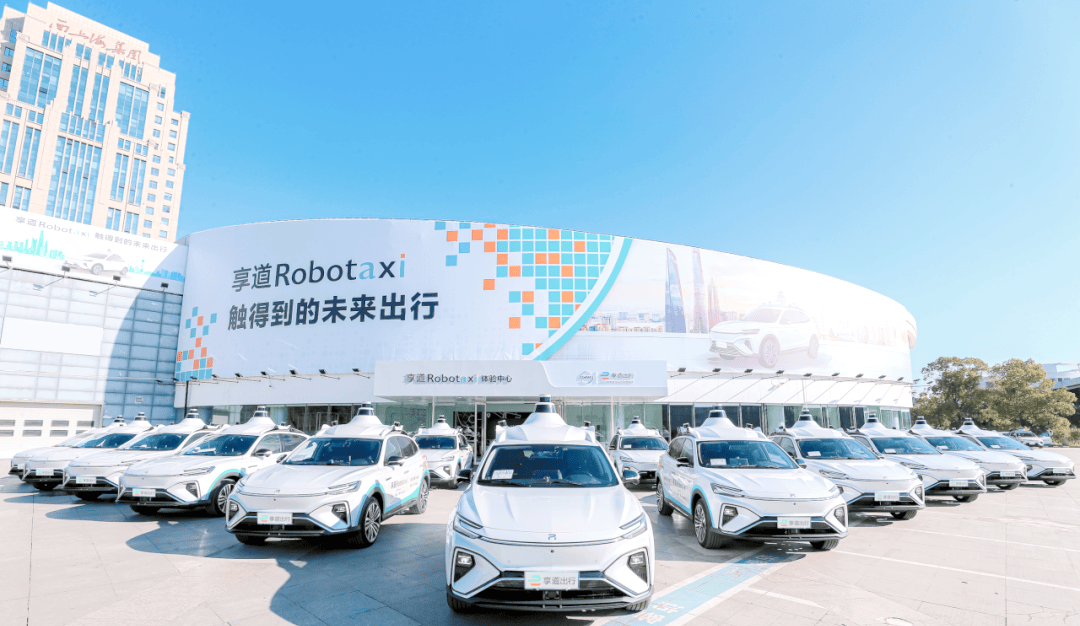
来源:泰山财经 享道出行成立于2018年4月,前身为上海赛可出行科技服务有限公司,注册资本3.5亿元,位于上海市嘉定区,法定代表人、董事长为吴冰。公司主要业务 为提供网约车及车辆租赁服务,并正在推进Robotaxi服务商业化运营落地。 据统计,在2020年12月至2023年2月期间,享道出行先后获得来自阿里巴巴及宁德时代合约3.3亿元A轮融资,原股东及Momenta合约9.98亿元B轮融资。今 年6月,公司再获13.05亿元C轮融资,投资方包括上汽集团、上海国际汽车城(集团)有限公司等4家国有资本。 在上述融资完成后,享道出行注册资本达到41.06亿元。此前,享道出行7月14日发布公告显示,公司将减少注册资本专项用于弥补公司亏损。企查查显 示,9月25日,公司注册资本减少37.56亿元至3.5亿元,并完成股改。 股权结构显示,公司控股股东上汽集团及其旗下常州赛可移动出行投资合伙企业(有限合伙)分别持股6.43%、68.94%,其他持股5%以上股东包括高行 (天津)管理咨询有限公司、初速度出行科技有限公司、上海仪享私募基金合伙企业(有限合伙),持股比例分别为6.47%、5.29%、5.21%。 经营业绩方面,享 ...
上海Robotaxi冲刺香港IPO:上汽阿里Momenta都是股东
3 6 Ke· 2025-10-29 23:50
Core Insights - The article discusses the rapid expansion of the Robotaxi ecosystem, highlighting the IPO ambitions of Xiangdao Mobility, a subsidiary of SAIC, which positions itself as the first L4 Robotaxi operating platform backed by an automotive company in China [2][21]. Financial Performance - Xiangdao Mobility reported revenues of approximately 4.729 billion RMB, 5.718 billion RMB, 6.395 billion RMB, and 3.013 billion RMB for the fiscal years 2022, 2023, 2024, and the first half of 2025, respectively [3]. - The compound annual growth rate (CAGR) from 2022 to 2024 is projected at 16.3%, with gross profits of approximately 49.487 million RMB, 376 million RMB, 448 million RMB, and 341 million RMB, leading to an increase in gross margin from 1.0% in 2022 to 11.3% in the first half of 2025 [5][8]. Operational Insights - Despite significant revenue growth, Xiangdao Mobility remains in a loss-making state, although losses have narrowed by nearly 80% in the first half of 2025 compared to 2022, and operating cash flow has turned positive [6][8]. - As of June this year, Xiangdao Mobility has over 1.06 million registered drivers and approximately 20,000 self-owned vehicles, covering 95 cities in China [13]. Market Position - In 2024, Xiangdao Mobility's revenue from ride-hailing services is expected to contribute 49.91 billion RMB, accounting for 78.0% of total revenue, indicating a strong reliance on traditional ride-hailing operations [16]. - The company is positioned as a significant player in the Robotaxi market, leveraging partnerships with key industry players like Momenta and Alibaba to enhance its technological capabilities and operational efficiency [16][19]. Industry Trends - The article notes a shift in the Robotaxi narrative from testing to actual operations, driven by technological advancements and supportive policies in major cities like Beijing and Shanghai [17]. - The financing landscape for tech companies looking to go public in Hong Kong has improved, with relaxed requirements for unprofitable companies, facilitating the entry of various Robotaxi players into the market [19][21].
紧追中国!美国四巨头组建自动驾驶超级舰队
汽车商业评论· 2025-10-29 23:06
Core Viewpoint - The collaboration between Stellantis, Nvidia, Uber, and Foxconn aims to develop level 4 autonomous taxis, addressing the growing global demand for self-driving vehicles [4][6][12]. Group 1: Collaboration Details - Stellantis will deliver at least 5,000 autonomous taxis equipped with Nvidia chips for Uber's operations in the U.S. and internationally, with mass production set to begin in 2028 [6][10]. - The partnership integrates the strengths of four major companies, creating a comprehensive supply chain for level 4 autonomous taxis, from design and manufacturing to operational deployment [8][11]. - Nvidia's Drive AV software and the newly launched Drive AGX Hyperion 10 platform will provide the necessary technology for autonomous driving capabilities [10][12]. Group 2: Industry Impact - The collaboration is part of a broader strategy by Uber and Nvidia to establish a global ecosystem for level 4 autonomous vehicles, with plans to deploy a fleet of up to 100,000 autonomous taxis by 2027 [13][15]. - The partnership aims to revolutionize transportation, making it safer, cleaner, and more efficient, as highlighted by Nvidia's CEO [15][17]. - The competitive landscape is shifting, with Uber and Nvidia's ambitious goals contrasting sharply with competitors like Waymo, which operates a significantly smaller fleet [15][24]. Group 3: Global Expansion and Market Potential - Chinese autonomous driving companies are rapidly advancing towards commercialization, with several firms preparing for IPOs and expanding their operations internationally [20][24]. - The Chinese market for autonomous taxis is projected to grow explosively, with estimates suggesting around 500,000 Robotaxis could be operational by 2030, generating potential revenues of $47 billion [23][24]. - The structural advantages of China's electric vehicle industry are positioning its companies favorably against U.S. competitors, as they leverage established supply chains and technology [23][24].



优步联手Lucid与Nuro官宣:明年在旧金山推出无人驾驶出租车
Zhi Tong Cai Jing· 2025-10-29 14:55
Core Insights - Uber plans to launch a ride-hailing service using autonomous vehicles developed in collaboration with Lucid and Nuro in the San Francisco Bay Area next year, marking a direct competition with Waymo's autonomous taxi service [1] - The initial fleet of vehicles equipped with Nuro's autonomous technology is currently undergoing road testing, with plans to expand the fleet to over 100 vehicles in the coming months [1][2] - Uber has invested hundreds of millions of dollars in Lucid and Nuro and aims to build a fleet of 100,000 autonomous vehicles by 2027, including 20,000 robot taxis from Lucid-Nuro [2] Company Strategy - Uber has partnered with over ten autonomous driving developers in the past year, betting on a future where autonomous vehicles and human drivers can operate in tandem on its platform [2] - The company emphasizes ongoing communication with policymakers and regulatory bodies to ensure compliance with operational requirements [2] Competitive Landscape - Waymo has expanded its service from urban areas to the South Bay region and has obtained operating permits for key transportation hubs, which are crucial for ride-hailing business [2] - Nuro currently holds testing and deployment permits in certain areas of South Bay but lacks the necessary permits for passenger operations in San Francisco [2]
滴滴:在全国落地近3000个助老打车站,为老年人提供2.65亿次出行服务
Xin Lang Ke Ji· 2025-10-29 13:45
Core Insights - The article highlights the importance of providing technological convenience to the elderly in the digital age, particularly through Didi's services aimed at this demographic [1] Group 1: Service Overview - Didi's "Didi Longbei Version" service has provided over 265 million rides for elderly users by September 2025 [1] - The service was officially launched in January 2021, addressing the challenges faced by elderly individuals in accessing transportation [1] - The app simplifies the process for elderly users, allowing them to call a taxi without entering a destination and retaining cash payment options [1] Group 2: Special Features and Coverage - Didi offers priority dispatch services for elderly users heading to hospitals, having provided over 202,000 such services by September 2025 [2] - The service is available in 355 cities across China, providing convenient transportation options for elderly users [2] - Didi has collaborated with various organizations to establish nearly 3,000 smart transportation stations for elderly users, impacting around 850,000 seniors [2]